
European
The Endless Glory of the Rāmāyaṇa
0:15 - 1:06 (51 min)
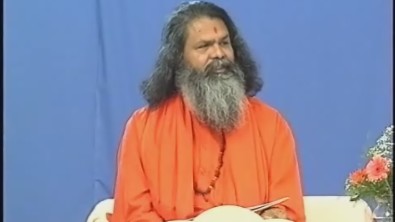
A discourse on the glory of the Rāmāyaṇa and the sacred city of Ayodhyā.
"The glory of God is Ānanda, endless. There is never an end to God’s glory."
"In those hearts where God is known, that heart is a temple. Otherwise, it is a cave of the Rakṣasas, or a grave."
The speaker expounds on the infinite, joyful nature of the Rāmāyaṇa's wisdom, explaining its transmission from Lord Śiva to Pārvatī and then through Tulsīdās. He describes the divine qualities of Lord Rāma, the holiness of Ayodhyā and the Sarayū River, and emphasizes remembering God in all circumstances. The talk connects devotion to environmental reverence and concludes with the liberating power of the sacred land.
Filming location: Strilky, Czech Republic
Juga Juga Jivo - Gurupurnima 2016
1:10 - 1:16 (6 min)
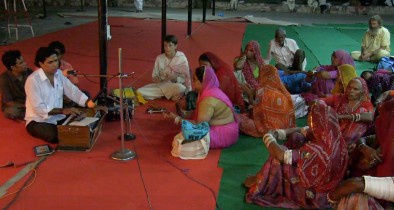
Om Ashram
1:20 - 1:29 (9 min)
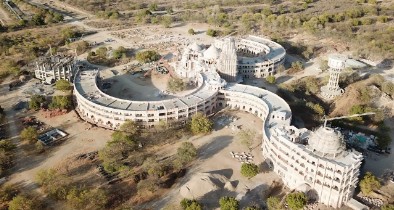
A promotional video about the Omkara Mahavira, a large-scale world peace monument and humanitarian complex under construction in Rajasthan.
"Since 1993, this structure has been under construction for the welfare of humanity, the protection of animals and nature, for teaching yoga, meditation, and philosophy."
"To bring this vision to full fruition, it needs everybody’s contribution. You are not a drop in the ocean. You are the entire ocean in a single drop."
The video details the vision of yogi Paramahamsa Swami Maheshvarananda to build the world's largest Om symbol, which will contain 108 residential compartments. It highlights the existing, operational facets of the site including a free school and college, a hospital, and a large artificial lake for water conservation. The narrative connects this to the global activities of the "Yoga in Daily Life" system, such as tree planting and animal shelters, framing the entire project as a holistic effort for peace, health, and environmental revival. It concludes with a call for donations to complete the monument.
Filming locations: Jhadan, Rajasthan, India.
Practical guide to meditation (10/11)
1:30 - 3:29 (119 min)
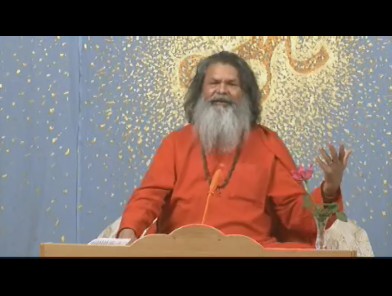
Webcast of evening satsang from Strilky, Czech Republic on 21st February 2009.
I will be Thine
3:35 - 4:34 (59 min)
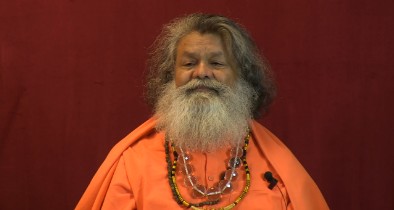
Evening satsang with Vishwaguruji from Vienna, Austria (in German and English language). God is everywhere. Where there is devotion and love, there is no distance. Fear comes out of ignorance. Jealousy awakens because of this fear, and jealousy creates separation. In this lecture Vishwaguruji explores the inner obstacles on the spiritual path to Liberation, or Atma Gyana. He points out solutions for us as well: sadhana, mantra, awareness of God, satsang.
Mother Earth
4:40 - 5:16 (36 min)
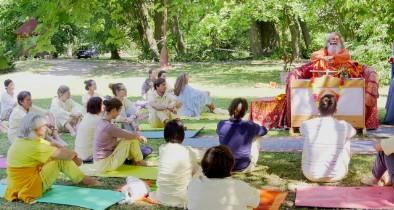
A guided outdoor yoga session focusing on connecting with the earth, followed by a spiritual discourse and ceremony.
"Feel like you are touching your mother's body. It is our mother."
"The clay says to the potter, 'Why are you tormenting me?' One day will come, that I will torment you within myself."
A yoga instructor guides participants through grounding postures, encouraging them to touch the clean soil and feel its healing energy. He shares a parable of a potter and the speaking clay, a German anecdote about allergy relief from farm life, and reflections on environmental harm. The session transitions into a celebration for Gurudev's birthday and Janmāṣṭamī, involving prayers, mantras, and a collective pūjā.
Filming location: Strilky, Czech Republic
The Primacy of the Name in the Kali Yuga
5:20 - 5:54 (34 min)
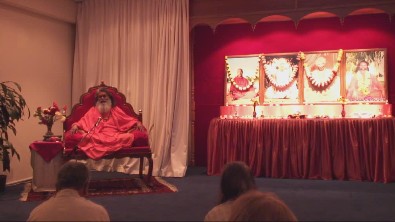
A discourse on the nature of the Kali Yuga and the power of the divine name.
"Kali Yuga is Kriyā Yuga. Kriyā Yuga means Karma Yuga. Karma is primary."
"Kali yuga kevala nāma ādhāra, sumira sumira nara hoi bhava pāra. (In the Kali Yuga, the name alone is the foundation; by repeating, repeating, a person crosses the ocean of existence.)"
Swami Maheshwarananda explains that the Kali Yuga is an age dominated by action (karma), but its true foundation is the repetition of God's name, as stated by Tulsidas. He shares a personal memory of his Guru appearing to him at the Strelky ashram and narrates a Puranic story about the sage Vishvamitra to illustrate the supreme value of satsang. The talk emphasizes that diligent spiritual practice (purushartha) is essential, yet liberation comes from anchoring oneself in the divine name.
Filming location: Wellington, New Zealand
When sataguru comes to our door
6:00 - 6:32 (32 min)
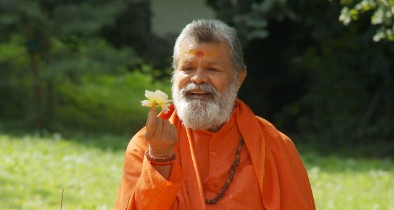
A satsang exploring the devotional bhajan "Kali Kali Āraṣavatahe Hari" and the nature of spiritual joy.
"If love is pure and selfless, it is limitless. If there is selfishness, then it is limited."
"Your one word expresses the entire universe... That is called Gagar me Sāgara in India."
Swami Maheshvarananda explains the bhajan written by Swami Lālā Nānjī upon the arrival of his Guru, Mahāprabhujī. He describes the immeasurable joy of a devotee using the analogy of plants reviving after rain, and expands on themes of pure love, the art of condensing vast wisdom into a few words (Gagar me Sāgara), and finding contentment. The talk includes personal anecdotes, a Hungarian joke about comparison, and a call to protect nature and cultivate happiness.
Filming location: Strilky, Czech Republic
What makes me human?
6:40 - 7:08 (28 min)
A discourse on the purpose of human life and holistic health through yoga.
"Negative qualities make, in human form, asuras. So first, humans have to realize, discover, and awaken the human qualities."
"Yoga in Daily Life has got the main principles: physical health, mental health, social health, spiritual health, and finally, God-realization."
Swami Maheshwarananda (Swamiji) delivers an evening satsang, continuing a series on human dharma. He explains that the human body is a precious instrument for Self-realization and critiques over-dependence on modern comforts, which weakens endurance. He introduces the "Yoga in Daily Life" system as a comprehensive path to cultivate health on all levels—physical, mental, social, and spiritual—ultimately leading to a better society and self-realization.
Filming location: Jadan, Rajasthan, India
Perfections
7:15 - 8:13 (58 min)
An evening satsang on the gurukul tradition, spiritual abilities, and the importance of live spiritual practice.
"Humans are born as embodiments of God, but God found that he made a mistake. Therefore, he took away or hid within them those miracles, abilities, and knowledge."
"Through that sādhana, the opening of the third eye of Śiva, they could see far distances, hear far distances, and communicate over far distances."
The lecturer addresses attendees at a seminar, framing the gathering as a modern 'gurukul of the heart'. He discusses the guru-disciple relationships of divine figures like Rama and Krishna, laments the loss of ancient spiritual sciences and siddhis (powers) in the modern age, and explains why such abilities are concealed from humanity to prevent misuse. He shares a story of Mahaprabhuji's clairvoyant healing, illustrates the need to purify mental impurities, and emphasizes the irreplaceable value of being physically present in a sanctified environment over watching webcasts. The talk concludes with thanks to volunteers and an invitation to a pilgrimage.
Filming location: Vép, Hungary
The Yogic Science
8:20 - 9:19 (59 min)
Evening satsang with Vishwaguruji from Strilky Ashram, Czech Republic. We want to become one as a human. Quality is one of the best. A good education gives good quality as a nice statue can be formed from a big rock. Energy and the five elements are connecting to the Yogi. We are entering into the oneness when entering into the practice hall. Atma is the pilot or captain of our airplane. If something is not good we can't fly. We have to be alert, the Sadhana is very important, as Holy Guruji wrote in one bhajan.
The Unselfish Work
9:25 - 9:51 (26 min)
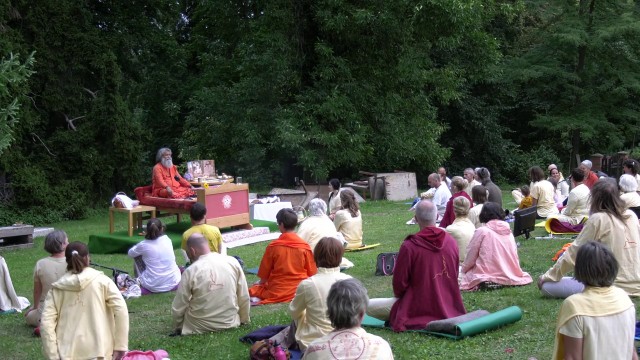
A satsang discourse on karma yoga, selfless service, and the four aims of life.
"Sometimes, when we engage in seva, work, and karma yoga, we think, 'I am doing this. If I were not here, who would do it?'"
"Swāmījī says, 'The greatest sin is to waste time. Use it or lose it.'"
The speaker shares a parable from Swāmījī about a dog who mistakenly believes it is pulling a cart, illustrating the illusion of self-importance in service. The talk emphasizes performing niṣkāma karma (selfless action) as a privilege and explores the four Puruṣārthas (dharma, artha, kāma, mokṣa) as life goals attainable only through dedicated effort and Guru's grace, referencing teachings and bhajans from saints like Ācāla Rāmajī.
Filming location: Strilky, Czech Republic
Without work, nothing can happen
9:55 - 10:53 (58 min)
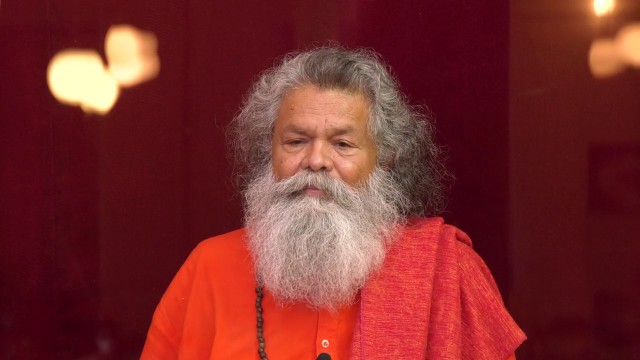
A spiritual discourse weaving ancient creation myths with teachings on dharma and modern life.
"Jīva jīva bhakṣate: all creatures eat other creatures. So that began to move."
"Dharma is spirituality and good, not killing anyone, taking care of everyone. Adharma is the opposite."
A spiritual teacher narrates a syncretic creation story, blending tales of Varāha lifting the earth, Brahmā's emergence from a lotus, and the evolutionary rise of life. He explains the primordial cycle of life consuming life (jīva jīva bhakṣate) and the subsequent establishment of dharma. The discourse shifts to contemporary lessons, advocating for non-violence, mindful consumption, self-reliance, and environmental responsibility, while cautioning against addiction.
Filming location: Strilky, Czech Republic
Practice with Swamiji
11:00 - 12:07 (67 min)

Practice with Swamiji from Auckland, New Zealand.
I am not the doer
12:15 - 12:37 (22 min)
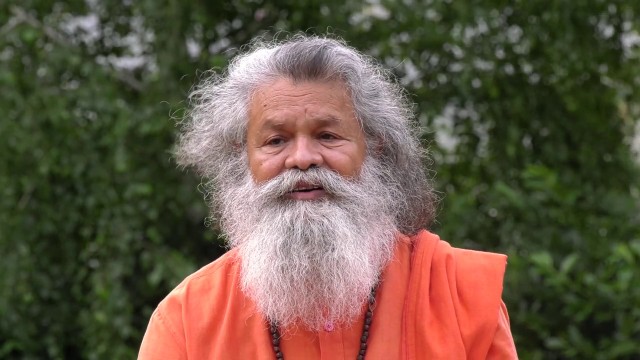
Evening satsang with Vishwaguruji from Strilky Ashram, Czech Republic. Bhajan singing. Chanting mantras. We are not the doer. During all of our life a Supreme leads us and does everything. We are swiming in the ocean of life. Our spiritual life should be happy. The story of a bird on the boat in the ocean.
Karma and destiny
12:45 - 13:38 (53 min)
A satsang featuring a personal testimony followed by a discourse on divine justice and karma.
"My life has been connected with spirituality since I was 21. At that point, my life changed a lot. I caused an accident while driving to work and ran over a person."
"It is the justice of God. When the soul goes, there are two ways: Svarga or Naraka, heaven or hell. Hell is presided over by Yama, the god of death."
A seeker named Janez shares his spiritual journey, beginning with a traumatic accident that led him to spirituality. Swāmījī then responds by giving him the spiritual name Dharmadrasa and launches into an extensive teaching on the afterlife. He describes the roles of Yamarāja (the lord of death) and Dharmarāja (the lord of righteousness) in judging souls based on their karma, emphasizing the consequences of actions like meat-eating and the importance of kindness. He illustrates these principles with stories, including one from the Mahāśivapurāṇa about Śiva protecting a devotee from Yama.
Filming location: Strilky, Czech Republic
Outer and inner meditation
13:45 - 14:38 (53 min)
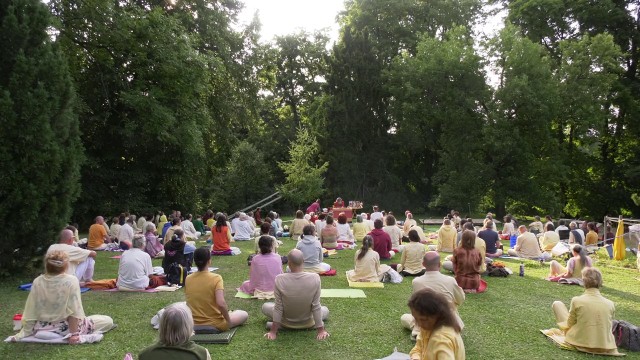
A spiritual discourse on meditation, inner science, and the living tradition of the guru.
"Meditation is within. But how? And who is really the best?"
"Therefore, this science is also very good, and that is also good... So it is better that we should be neutral."
Swami Ji addresses a gathering, contrasting external observation with true inner meditation. He shares a story of an old yogī with a profound indifference to the physical body to illustrate a deeper science. He discusses the upcoming Kriyā Initiation, outlining its prerequisites and daily practice, and expands on the nature of a living spiritual lineage, where every individual is part of a continuous flow of knowledge from generation to generation.
Filming location: Strilky, Czech Republic
Jyotish is the third eye of God
14:45 - 15:52 (67 min)
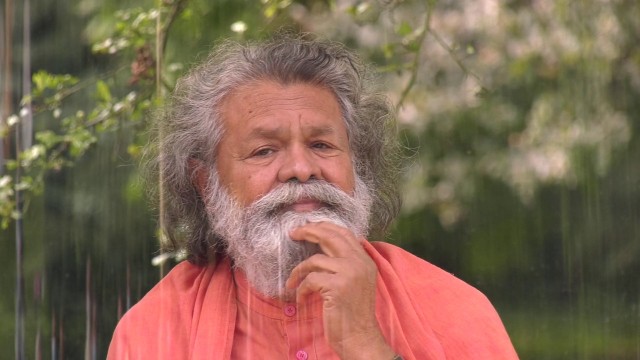
A spiritual discourse on tradition, knowledge, and the eternal path.
"Sometimes it is said that something was only in the old times and no longer matters now. But consider this: in the past, when a couple married... That was a marriage. And now? Bye-bye."
"Our lineage is from Satyuga, from Śiva’s time, and that is called Ālak Purījī... There was no duality. There was no name of religion. It was Sanātana. 'San' means all, and all are one."
A spiritual teacher delivers a wide-ranging satsang, contrasting modern life with ancient traditions. He speaks of the timeless Sanātana Dharma, the composition of the Vedas by Vyāsa with Gaṇeśa as scribe, and the importance of respecting parents and teachers. The talk delves into the ancient science of Jyotiṣ (Vedic astrology), illustrating its precision with personal anecdotes, and concludes by framing yoga as more than physical practice.
Filming location: Strilky, Czech Republic
Wisdom of the Holy Scriptures
15:55 - 16:56 (61 min)
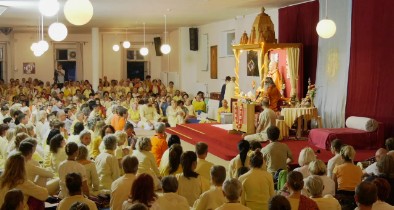
Evening satsang with Vishwaguruji from Strilky Ashram, Czech Republic. Many many Masters knew the past and present and wrote numerous books and scriptures. Some books were destroyed, but light can't be destroyed. Knowledge awakening within us is Guru Vidya. Our brain is slowly becoming sleepy and we don't realize this. Hatha Yoga is to purify ourselves.
Karma Yoga
16:00 - 16:34 (34 min)
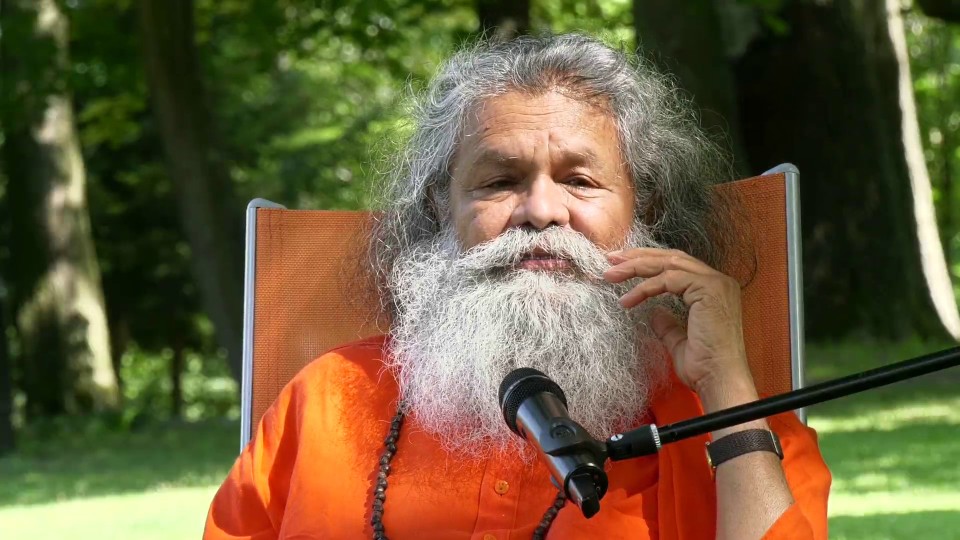
Morning satsang with Vishwaguruji from Strilky Ashram, Czech Republic. The Bhagavad Gita says that yoga is fulfilled through work. Doing something good or bad is also karma. God has given us to be born in this human form. We have to act in such a way that we attain cosmic light. Practising Asana and Bhramari pranayama.
The fire element
17:05 - 17:56 (51 min)
A spiritual discourse on the five elements, focusing on the fire principle and its impact on health and consciousness.
"Fire is very holy. There are different kinds of fire. The first is the light of God, the divine light."
"Without fire, we cannot survive at all. This is the element we have to maintain. Our health depends on this principle, the fire element."
A spiritual teacher explains the dual nature of the fire element, contrasting the divine light of wisdom and peace with the destructive fires of anger, ignorance, and burnout. He connects this principle to mental health, societal behavior, and traditional Vedic ceremonies for homes and life stages. The talk concludes with a Q&A session addressing charity, balancing work and family, and dealing with falsehoods.
Filming location: UK
Dharma and adharma
18:00 - 18:35 (35 min)
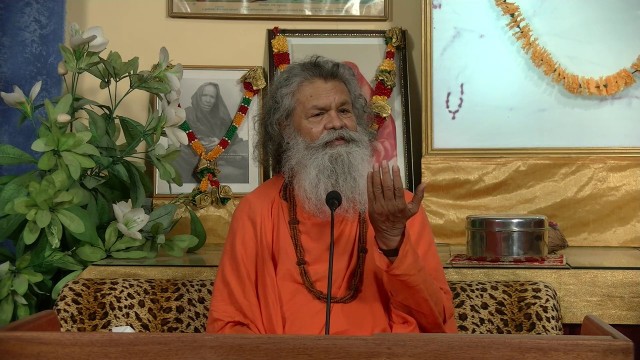
Evening satsang with Viswhaguruji from Jadan Ashram, Rajasthan, India. Our prayers have strength only if we follow ahimsa. Also don't say painful words to anyone. Don't use water unnecessarily because it is our life. Air is also life. Tulsi is not only a saint plant but it is God himself. Don't think negative of others. Bhajan singing.
The Thirsty Horse and the Path of Spirituality
18:40 - 19:32 (52 min)
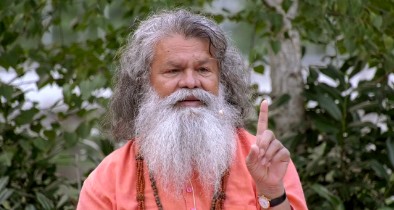
An evening satsang on overcoming worldly stress and pursuing spiritual practice.
"We are thirsty horses in this world, from little children to older people. We are all in this stress."
"If you want to quench your thirst for spirituality, then you should do it... amidst the sound of the generator... amidst this noise of the world."
The lecturer addresses the pervasive stress of modern life, using the parable of a thirsty horse afraid of a water pump to illustrate the need to practice spirituality amidst worldly noise. He discusses the inescapable realities of time and karma, explaining concepts of sin (pāpa) and piety (puṇya) and the impurities of the inner instrument (Antaḥkaraṇa). He narrates the transformative stories of the sage Valmiki, a bandit who became a seer through chanting, and the poet Tulsidas, who was inspired by his wife to turn his love toward God. The talk emphasizes continuing spiritual practice (sādhanā) with humility despite life's obligations.
Filming location: Strilky, Czech Republic
Our duty to have a devotion
19:40 - 20:56 (76 min)
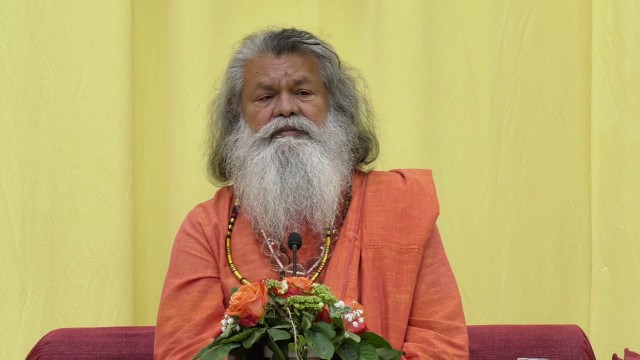
A spiritual discourse on lineage, devotion, and the nature of the soul.
"Our generation to generation to generation is of Alak Purījī. It is a tradition, and the tradition is not merely a tradition; it is, and it has to be, to receive the blessing of adoration."
"The reality is clear: spirituality needs to be in our heart. It does not matter what happens; I will not give up."
Swami Maheshwarananda (Swamiji) addresses a gathering, centering on the rediscovered lineage from Alak Purījī through Devpurījī and Mahāprabhujī to the present. He emphasizes unwavering devotion to the guru, illustrates the master-disciple relationship with anecdotes, and discusses the responsibilities and detachment required of a sannyāsī. The talk expands into teachings on the layers of existence (kośas), karma, and the soul's journey, using everyday metaphors for spiritual concepts.
Filming location: Slovenia
The Path of the Pilot: Mastering the Inner Aeroplane
21:00 - 21:52 (52 min)
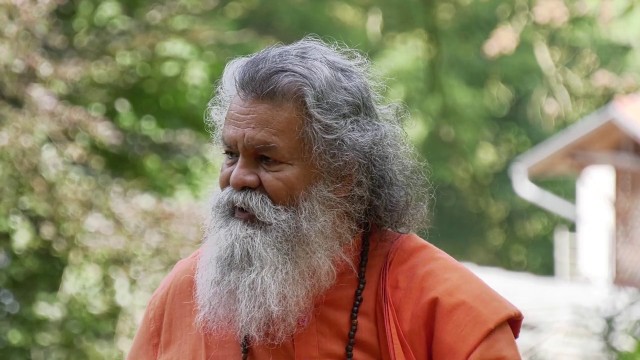
A spiritual discourse using the metaphor of a pilot to discuss self-mastery and inner power.
"The pilot knows what is happening, yet he remains peaceful. When they all land in the same place, they are happy again."
"Therefore, how we are sitting here is not possible; it is not easy. Power, inner power."
The lecturer leads a satsang, explaining that the individual is the pilot of the body's "aeroplane." He discusses the need to control the mind and nervous system (Vajranāḍī), shares stories about disciples undergoing surgery without anesthesia through yogic focus, and describes witnessing fire-walking rituals to illustrate the power of mantra and sādhanā.
Filming location: Strilky, Czech Republic
Part 1: The Role of Yoga and Meditation in Improving Quality of Life for Cancer Patients
22:00 - 23:07 (67 min)
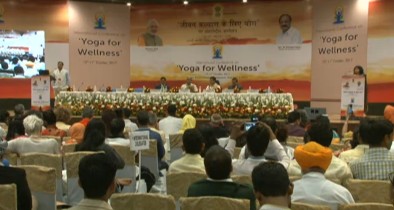
A medical lecture on the role of yoga and meditation as supportive care for cancer patients.
"We must note which specific yogic and meditative techniques were used, as these vary widely."
"Please do not give false hope that cancer will be cured... If a practitioner claims that prāṇāyāma, dhyāna, and some Ayurvedic herbs... can cure cancer, they are committing a grave sin against society."
A doctor from AIIMS Delhi presents a detailed analysis of scientific studies on yogic interventions for cancer patients, emphasizing they are complementary to standard treatments like chemotherapy. He strongly warns against practitioners falsely claiming yoga can cure cancer, shares data on benefits for quality of life and stress, and proposes a large-scale research trial combining yoga, meditation, and herbal products for cancer prevention and care.
Filming location: Delhi, India
We need purification
23:15 - 0:09 (54 min)
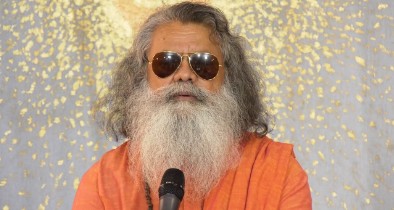
Evening satsang with Vishwaguruji from Strilky Ashram, Czech Republic. Vishwaguruji explains the bhajan Chaddarya Jhini Re Jhini of the saint Sri Kabirdas. We should purify ourselves. For that, we need to go through Tapasya - austerities. If we give milk to the snake it will turn into poison. If someone eats meat and you are intimate with this person, it is like you were eating. Keep yourself pure, reach the state of suddha, purity.
Guru is the first
23:30 - 0:06 (36 min)
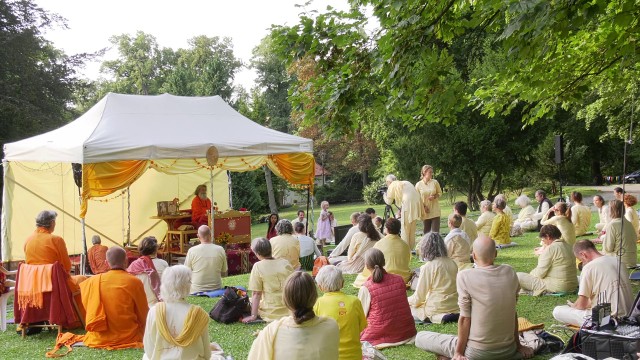
A spiritual discourse on the continuity of sādhanā and the centrality of the Guru.
"Your sādhanā was very beautiful, very good. Many experienced beautiful powers, feelings, and even incarnations. Yes, we should continue this until the end of our life."
"Holy Gurujī, our Swamījī Madhavānandajī Bhagavān, he always said that Seva is all the time with us. We are going, as all goes, to the Cosmic Self."
A teacher addresses students after a spiritual retreat, using the metaphor of a stone creating eternal ripples in a pond to describe the lasting impact of their practice. He emphasizes selfless service (Seva) and explains the Guru's paramount importance, stating all spiritual activities must follow devotion to the Guru. The talk covers the meaning of mantra, the significance of the prayer mala, and outlines the traditional four stages of life (āśramas).
Filming location: Strilky, Czech Republic
American
Australian