
European
Enjoy your life
0:00 - 0:39 (39 min)
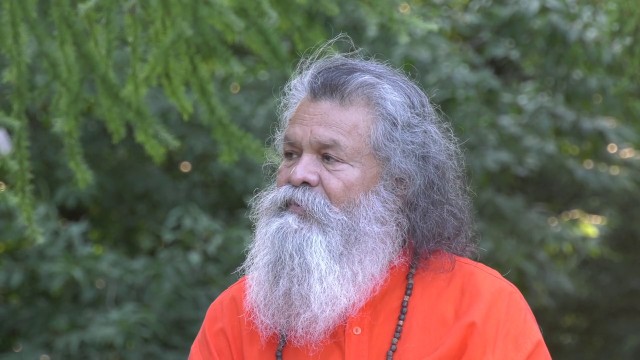
Evening satsang with Vishwaguruji from Strilky Ashram, Czech Republic. Strilky Ashram is not for one it is for all. Many people died by corona. It has many hidden signs. We are the real yoga from the earth till the cosmic. When we leave our body we don't know about how is in the world. God gave us the possibility not to be born again. Sometimes people are afraid of ghosts in the darkness. There is no ghost in reality. We can come back to the earth only through the mother's womb. Nowadays people have many problems with the health of their bodies. Maybe the cause of this is some karma from our past lives. Every creature feels pain and sadness when they die. Sometimes our soul is suffering in this body but we don't want to die. the whole ocean consists of drops. Yogic science knows how it will be afraid we leave this body. So we want to live and enjoy our life.
The Nāḍīs, Cakras, and the Mūlādhāra Foundation
0:15 - 1:12 (57 min)
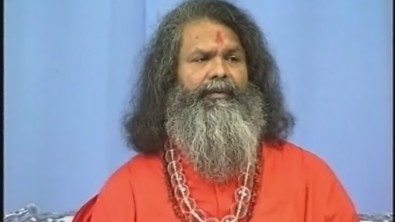
A spiritual lecture on the nāḍīs, cakras, and the foundational Mūlādhāra Cakra.
"The Mūlādhāra Cakra is at the bottom of the spinal column. It is a border between animal and human consciousness."
"Destiny was created first, and destiny is created individually. We should blame no one. We are ourselves responsible for our destiny."
The speaker continues a discourse from the previous day, focusing on the Mūlādhāra Cakra as the seat of destiny (prārabdha) and divine energy. He explains how this foundational energy influences life and can be purified through the threefold practice of svādhyāya (self-study), manana (contemplation), and abhyāsa (persistent practice), which remove the obstacles of impurity, distraction, and veils. The talk connects these concepts to Kuṇḍalinī Śakti, the role of Kriyā Yoga, and concludes with a symbolic discussion of the tilak mark.
Filming location: Umag, Croatia
What Guru Purnima means?
1:20 - 2:10 (50 min)
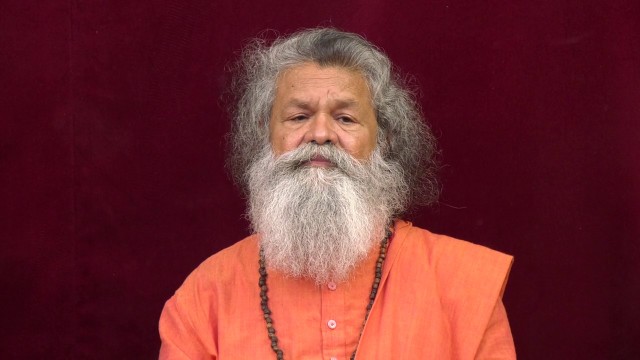
A discourse on the essence of Guru Pūrṇimā and the guru-disciple tradition.
"Gurur Brahmā, Gurur Viṣṇu, Gurur Devo Maheśvara, Gurur Sākṣāt Parabrahmā."
"A true Satguru will not say, 'I am the Satguru.' The day a Satguru says that, it means he does not truly know."
The lecturer addresses a global audience on the full moon day of Guru Pūrṇimā. He explores the profound meaning of the guru, explaining how the principle of the teacher exists in many forms before describing the supreme Satguru. He shares personal instructions from his own guru, Holī Gurujī, about the duty to serve all, and discusses the life of a sannyāsī, the guru paramparā (lineage), and the symbolism of the full moon.
Filming location: Strilky, Czech Republic
Never think that you are a Guru
2:15 - 2:58 (43 min)
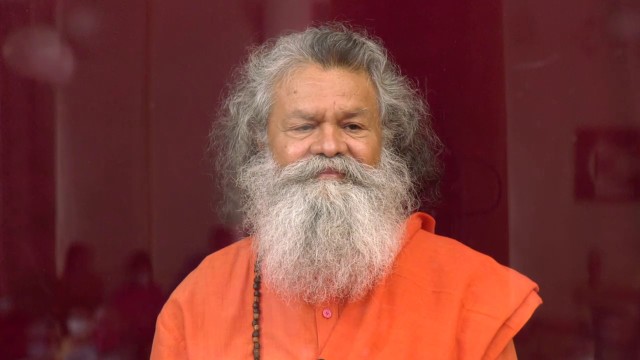
A satsang on the sacred practice of Kriyā and the necessity of the guru's grace.
"If I tell them, 'On the day you give up Guru Kṛpā, all sādhanā will be gone,' these people took the Kriyā and after one or two years they were gone."
"To become a disciple is not easy, not easy, not easy... we are also on that path of God, supreme, highest, and we are now walking on that path."
The lecturer addresses the gathering, emphasizing the gravity of Kriyā Anuṣṭhāna practice and the danger of undertaking it without genuine guru grace. Using metaphors of carrying a flame through a storm and walking a knife's edge, he illustrates the spiritual path's difficulty. He warns against students presuming to teach the technique, comparing it to a nurse performing heart surgery, and stresses that authentic practice comes only through the guru paramparā.
Filming location: Strilky, Czech Republic
Do Good
3:05 - 3:54 (49 min)
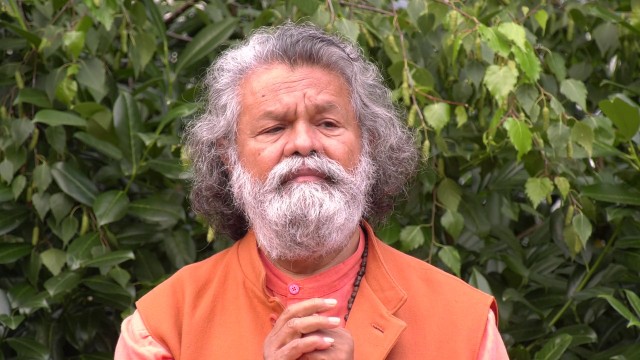
A spiritual discourse on the nature of the true guru, liberation, and spiritual practice.
"Sometimes it is good if we are running and running and running, and we don’t care about it... Then God said, 'I must give him some knowledge.'"
"Guru Brahmā, Guru Viṣṇu, Guru Devo Maheśvara. So where should we meditate so that we get all these three?"
The lecturer delivers a satsang, beginning with reflections on global challenges and India's cultural response during the pandemic. He critiques inauthentic yoga teachers and discusses the paradoxical path to mokṣa (liberation), explaining it as a state beyond positive and negative dualities. Using parables and teachings, he emphasizes the supreme nature of the true Guru and the importance of sincere, long-term practice over superficial achievements.
Filming location: Strilky, Czech Republic
Karma yoga means serving
4:00 - 4:40 (40 min)
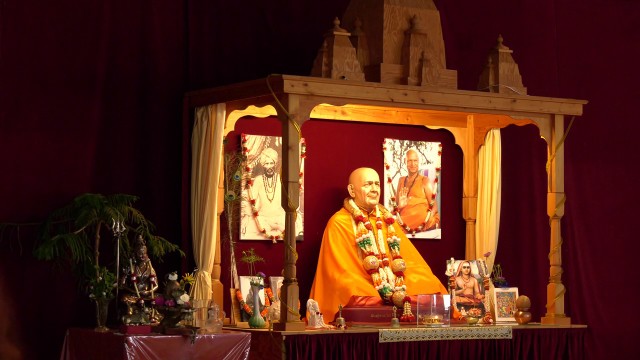
A morning satsang on karma yoga, seva, and skillful action.
"In karma yoga, it is easier to progress further in yogic sādhana, to reach the higher consciousness of the yogī."
"Yogaḥ karmasu kauśalam—yoga is skill in action. Yoga will be successful through the sādhana of karma."
Following a group practice in a meadow, the speaker addresses the assembly, describing the four groups present at the ashram. He defines karma yoga as selfless service, illustrating it with examples from Christian charity to simple daily kindnesses. A story about a disciple mistakenly moving a snail teaches that service must be skillful and informed. The talk emphasizes that seva is the foremost practice, accessible to everyone in countless ways.
Filming location: Strilky, Czech Republic
Bathing in the river Alakhnanda
4:45 - 5:36 (51 min)
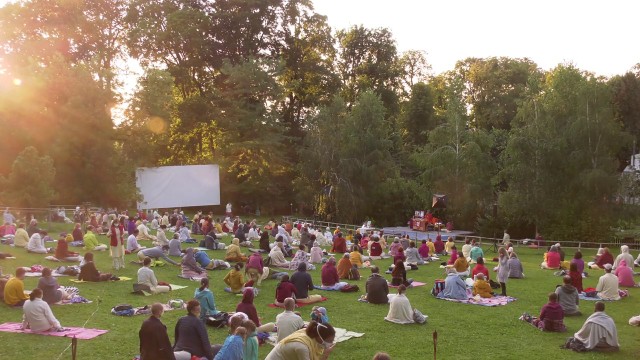
Evening satsang with Vishwaguruji from Strilky Ashram, Czech Republic. Alakhpuriji Parampara is from Satyayuga, from Shiva. Bhagirathi and Alaknanda river join at Devpryag and forms Ganga. Story of Nandadevi and Tiger. Explanation of the origin of the Ganga river. For those, who wash themselves in the Ganga or the Alakhnanda all impurities will be cleaned. Don't get stuck in desires, we desire to help everyone.
Spiritual message of ancient India
5:40 - 6:44 (64 min)
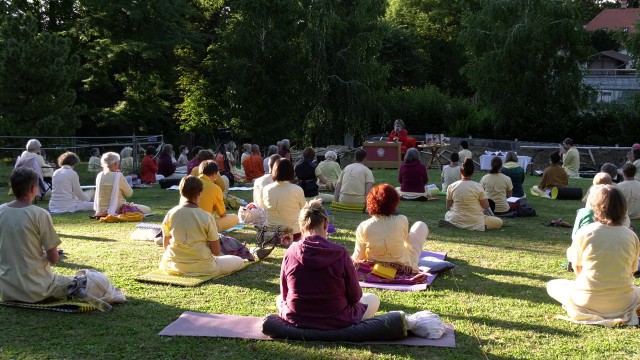
An evening satsang discourse on the Gurukul system and spiritual traditions.
"When I was there before, about 60 years ago, at that time, yoga was very pure, spiritual, healthy, and so on."
"And now also in our, it is male or female. Also, you know that Jainas, we are all more or less the same. Sannyāsa or making trust, and also Buddha."
A speaker reflects on the spiritual purity of past eras, describing the ascetic practices of Jain monks and the origins of Buddhism. The talk transitions to the ancient Indian Gurukul system, defined as a residential school where disciples live with and learn from a master. The essence of Gurukul is presented as the living relationship between master and disciple, which provides a spiritual foundation beyond mere physical yoga practice. The importance of maintaining a positive, compassionate, and neutral mind according to yogic principles is emphasized.
Filming location: Jadan, Rajasthan, India
Our children are very spiritual
6:50 - 7:43 (53 min)
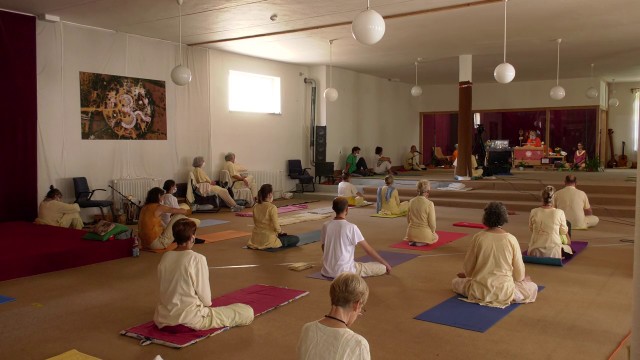
Morning satsang with Vishwaguruji from Strilky Ashram, Czech Republic. Children are very disciplined during the programs because their parents educated them towards spirituality. Vishwaguruji teaches many generations of yoga people. Sri Devpuriji appeared in some places at the same time. Holiguruji told many stories to Visheówaguruji in his childhood about Devpuriji and Mahaprabuji. Vishwaguruji realized the prediction of Devpuriji. We don't know where the seed will grow. Reading holy books every day new knowledge comes. The story of an Indian man who issued a newspaper in India and travelled with Viwshwaguruji in Europe. Knowledge takes the human healthy and happy. We should give further the knowledge of our forefathers to our children. The first university was in India. There were very many books but Muslims burnt them. God gives eating everybody in the world. Little more information about the first university in the world was in India.
Jyotish is the third eye of God
7:50 - 8:57 (67 min)
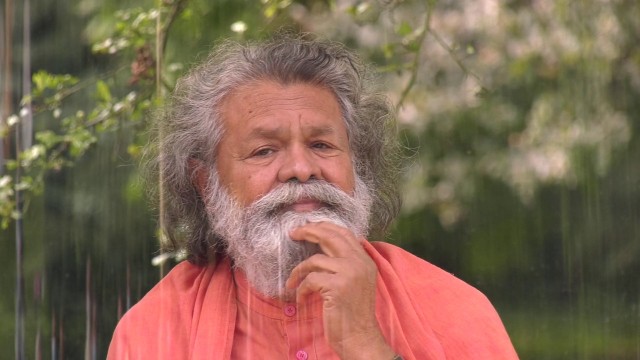
A spiritual discourse on tradition, knowledge, and the eternal path.
"Sometimes it is said that something was only in the old times and no longer matters now. But consider this: in the past, when a couple married... That was a marriage. And now? Bye-bye."
"Our lineage is from Satyuga, from Śiva’s time, and that is called Ālak Purījī... There was no duality. There was no name of religion. It was Sanātana. 'San' means all, and all are one."
A spiritual teacher delivers a wide-ranging satsang, contrasting modern life with ancient traditions. He speaks of the timeless Sanātana Dharma, the composition of the Vedas by Vyāsa with Gaṇeśa as scribe, and the importance of respecting parents and teachers. The talk delves into the ancient science of Jyotiṣ (Vedic astrology), illustrating its precision with personal anecdotes, and concludes by framing yoga as more than physical practice.
Filming location: Strilky, Czech Republic
Karma yoga means serving
9:05 - 9:45 (40 min)
A morning satsang on karma yoga, seva, and skillful action.
"In karma yoga, it is easier to progress further in yogic sādhana, to reach the higher consciousness of the yogī."
"Yogaḥ karmasu kauśalam—yoga is skill in action. Yoga will be successful through the sādhana of karma."
Following a group practice in a meadow, the speaker addresses the assembly, describing the four groups present at the ashram. He defines karma yoga as selfless service, illustrating it with examples from Christian charity to simple daily kindnesses. A story about a disciple mistakenly moving a snail teaches that service must be skillful and informed. The talk emphasizes that seva is the foremost practice, accessible to everyone in countless ways.
Filming location: Strilky, Czech Republic
Flowing of prana and consciousness
9:50 - 10:56 (66 min)
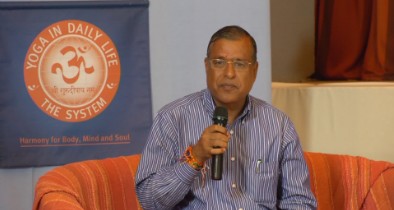
An evening satsang on spiritual anatomy and parenting.
"It is said that the body should not be damaged for the perfection of Siddhas. All the 72,000 nerves should be very clear and clean, where the prāṇa can flow freely."
"Parents have a very, very important role in how the child grows up. That is the time when we feed information into that system."
The lecturer begins by discussing the importance of an unblemished body (akhaṇḍa) for the free flow of prāṇa, explaining the network of nāḍīs and chakras. He shares a story about a king and a wound to illustrate the principle. He then hands the floor to Guru Śaṅkarajī, who speaks on the role of parents, outlining how proper physical nourishment, positive sensory input, and the inculcation of virtues shape a child's development from infancy.
Filming location: Vép, Hungary
Karma and destiny
11:00 - 11:53 (53 min)
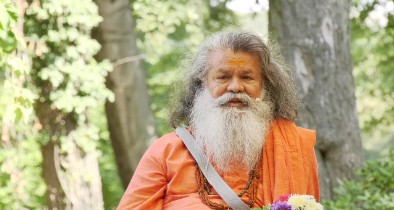
A satsang featuring a personal testimony followed by a discourse on divine justice and karma.
"My life has been connected with spirituality since I was 21. At that point, my life changed a lot. I caused an accident while driving to work and ran over a person."
"It is the justice of God. When the soul goes, there are two ways: Svarga or Naraka, heaven or hell. Hell is presided over by Yama, the god of death."
A seeker named Janez shares his spiritual journey, beginning with a traumatic accident that led him to spirituality. Swāmījī then responds by giving him the spiritual name Dharmadrasa and launches into an extensive teaching on the afterlife. He describes the roles of Yamarāja (the lord of death) and Dharmarāja (the lord of righteousness) in judging souls based on their karma, emphasizing the consequences of actions like meat-eating and the importance of kindness. He illustrates these principles with stories, including one from the Mahāśivapurāṇa about Śiva protecting a devotee from Yama.
Filming location: Strilky, Czech Republic
You will be according to what you eat
12:00 - 12:36 (36 min)
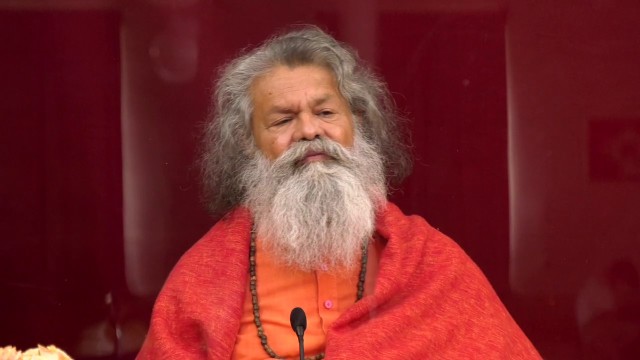
A spiritual discourse on nourishment, habits, and holistic well-being.
"If you want to enjoy the taste, then take less into the mouth and chew it well, so the tongue and the whole mouth experience the taste."
"That is why many yogīs, many, many, they said: eat less, drink only as needed, and meditate more."
The speaker addresses an audience after a spiritual retreat, using the example of eating halušky (dumplings) to discuss the principles of mindful eating, digestion, and respect for food preparers. He expands the topic to contrast ordinary food with 'ān' (divine seed or essence), discusses forming harmonious habits, and cautions against the misuse of substances like alcohol. The talk concludes with well-wishes for the journey home and an invitation for future gatherings.
Filming location: Strilky, Czech Republic
Tratak
12:40 - 13:19 (39 min)
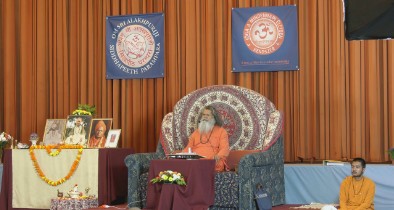
Evening satsang with Vishwaguruji on the topic of Hatha Yoga from Summer Yoga Camp, Vep, Hungary. Practising nauli and agnisar kriya is best in the morning. Neti, Dhauti, Bhasti, Nauli, Kapalabhati and Tratak are the six hatha yoga kriyas. Vishwaguruji explains in detail how to practice tratak.
I am one and you are all
13:25 - 14:04 (39 min)
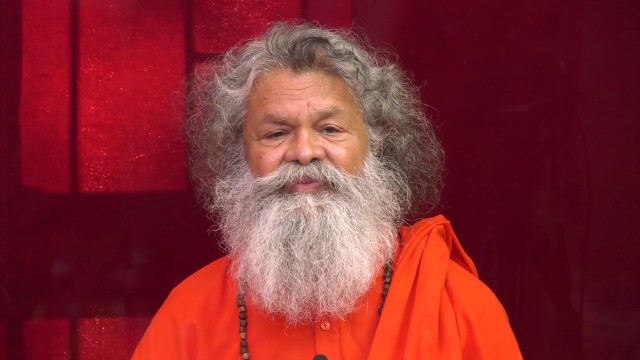
A satsang talk on spiritual practice and community life in an ashram.
"The past is past. Even the very beginning of one second is already gone."
"And we are, as Holī Gurujī said, one in all and all in one."
The lecturer addresses a gathering in the ashram hall, blessing attendees and reflecting on the sanctity of the present moment and the holy site. He discusses the irrelevance of the past, the unity of all beings, and offers practical, often humorous advice for daily ashram life, meditation, and bodily comfort during practice. The talk blends deep spiritual principles with communal warmth and guidance for a successful stay.
Filming location: Strilky, Czech Republic
The value of Satsang
14:10 - 14:55 (45 min)
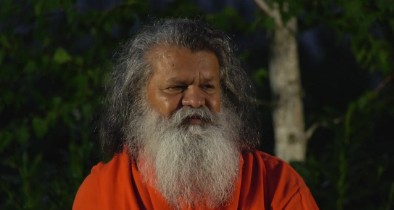
A spiritual discourse exploring the mantra "Hari Om" and sharing Puranic stories.
"Hari is the name of Bhagavān Viṣṇu. And Om, Om is Hari."
"72,000 years of sādhanā and one minute of satsaṅg... For one minute of satsaṅg, the whole earth raised up, and when it was 72,000 sādhanās, that was not moving."
The lecturer explains the divine essence of the "Hari Om" mantra, linking it to Vishnu and the primal sound of creation. He narrates the Puranic story of the earth's origin and the serpent Sheshanaga who supports it. The central teaching is conveyed through a parable where the sage Vishvamitra learns that one minute of true satsang (spiritual gathering) outweighs 72,000 years of solitary penance, highlighting the supreme power of devotion and community. The talk concludes with ethical exhortations for spiritual practice.
Filming location: Strilky, Czech Republic
Proudness
15:00 - 15:52 (52 min)
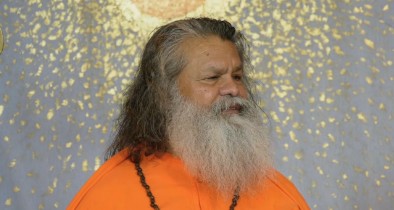
A spiritual discourse narrating two stories from the Ramayana about divine ego and its cure.
"Sometimes the buddhi, the intellect, can turn for a while in another direction." "Don’t think that through your help, Rāma was victorious... It was a test for you."
The speaker, Swami Avatarpuri, recounts the tale of Garuda losing devotion after rescuing Lord Rama from a snake arrow, and his healing by listening to the satsang of the crow Kakabhushundi. He then tells how Lord Rama cured Hanuman's pride by sending him on a mission to a sage, revealing countless identical rings to demonstrate the cyclical nature of divine incarnations. The talk concludes by relating these themes to the modern discovery of sacred Himalayan caves.
Filming location: Strilky, Czech Republic
Stories are within you
16:00 - 16:58 (58 min)
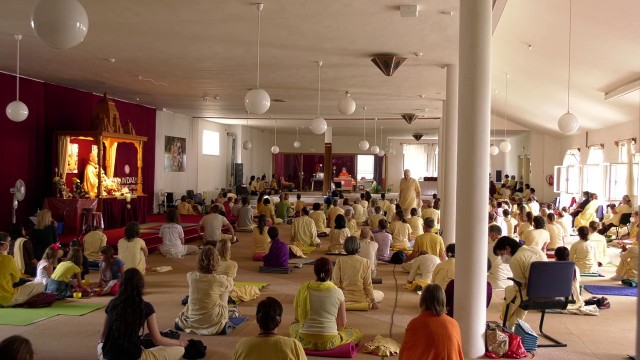
A morning satsang on the guru's grace, devotion, and the power of teaching through stories.
"Na’haṁ kartā means we are not the doer. We cannot do it. If we think we do, it may be confusing. So we give it with both our hands; we surrender it at the holy feet of Mahāprabhujī."
"So, when someone asks you, and you give… The answer first to them. First, give your answers... The answer is yours because you are now a great man."
The speaker, Swami Avatarpuri, opens with the principle of surrender to the guru's grace. He uses analogies, like a sculptor transforming stone into a worshipped deity, to illustrate how devotion elevates the ordinary. He shares a parable about a poor man whose selfless act of seeking answers for others ultimately solves his own plight, emphasizing the power of selfless service and positive speech. The talk concludes with personal anecdotes about the value of stories as a tool for learning and connection.
Filming location: Strilky, Czech Republic
In the end we all will be together
16:00 - 16:52 (52 min)
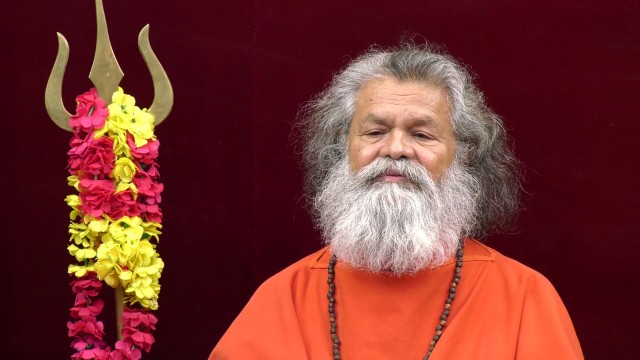
A morning satsang address reflecting on global travels, spiritual lineage, and universal teachings.
"Humans, we are here and there; we are moving. But we should understand that we are human. It doesn't matter from which country... all are one: human."
"And if you have a guru, you got mantras, then you are forever. You have a child forever."
Swami Ji welcomes the sangha after extensive travels, sharing experiences from ashrams in Australia, New Zealand, and Fiji. He speaks on unity beyond nationality, the guru-disciple relationship, parenting, and the cyclical nature of life, rejecting permanent concepts of heaven and hell. He concludes by connecting the assembly to the Alakpuriji lineage and invites questions.
Filming location: Strilky, Czech Republic
The real disciple
16:55 - 17:34 (39 min)
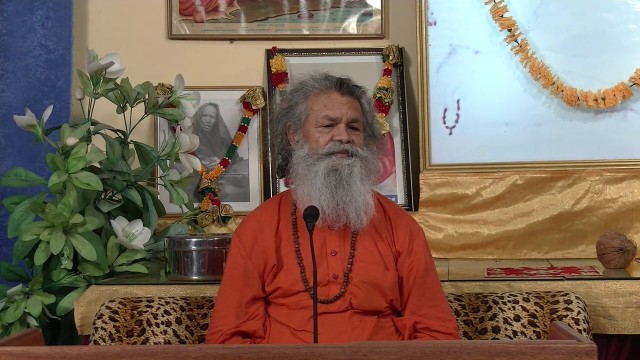
A satsang discourse on the greatness of Adi Shankaracharya and a story of discipleship.
"All of Sanātana Dharma is, in essence, Śaṅkarācārya. He is the one who brought people back to Satya Sanātana when they were lost."
"Gurujī knew that he was some great soul, already like a god, but he wanted to test him."
The speaker honors Adi Shankaracharya's birth anniversary, recounting his early life and his pivotal role in reviving Sanatana Dharma. He then narrates the tale of the young disciple Upamanyu, who endures severe tests of obedience and austerity from his guru, the Rishi Lomasha, culminating in a divine vision and restoration. The discourse contrasts this ideal of steadfast discipleship with the challenges of the modern age.
Filming location: Jadan, Rajasthan, India
The attributes of the Sun
17:35 - 18:47 (72 min)
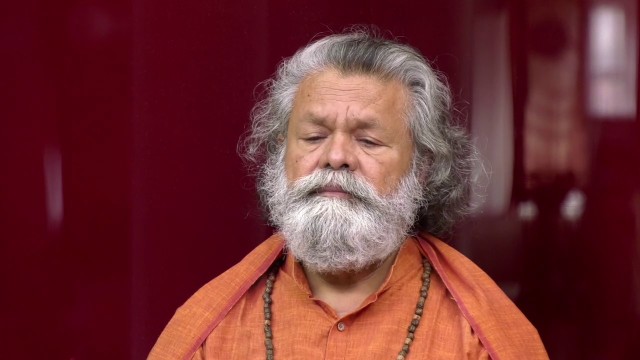
Morning satsang with Vishwaguruji from Strilky Ashram, Czech Republic. Indra is the God of the rain, and today we got a blessing from him. Principles of nature are present everywhere. The source of our energy and confidence is in the vajra nadi. Chakra means cycle and connected to the Sun, Surya. The explanation of the attributes of the Sun and the fourteen worlds. Explanation of success, development, and falling down.
Jyotish is the third eye of God
18:55 - 20:02 (67 min)
A spiritual discourse on tradition, knowledge, and the eternal path.
"Sometimes it is said that something was only in the old times and no longer matters now. But consider this: in the past, when a couple married... That was a marriage. And now? Bye-bye."
"Our lineage is from Satyuga, from Śiva’s time, and that is called Ālak Purījī... There was no duality. There was no name of religion. It was Sanātana. 'San' means all, and all are one."
A spiritual teacher delivers a wide-ranging satsang, contrasting modern life with ancient traditions. He speaks of the timeless Sanātana Dharma, the composition of the Vedas by Vyāsa with Gaṇeśa as scribe, and the importance of respecting parents and teachers. The talk delves into the ancient science of Jyotiṣ (Vedic astrology), illustrating its precision with personal anecdotes, and concludes by framing yoga as more than physical practice.
Filming location: Strilky, Czech Republic
Spiritual message of ancient India
20:10 - 21:14 (64 min)
An evening satsang discourse on the Gurukul system and spiritual traditions.
"When I was there before, about 60 years ago, at that time, yoga was very pure, spiritual, healthy, and so on."
"And now also in our, it is male or female. Also, you know that Jainas, we are all more or less the same. Sannyāsa or making trust, and also Buddha."
A speaker reflects on the spiritual purity of past eras, describing the ascetic practices of Jain monks and the origins of Buddhism. The talk transitions to the ancient Indian Gurukul system, defined as a residential school where disciples live with and learn from a master. The essence of Gurukul is presented as the living relationship between master and disciple, which provides a spiritual foundation beyond mere physical yoga practice. The importance of maintaining a positive, compassionate, and neutral mind according to yogic principles is emphasized.
Filming location: Jadan, Rajasthan, India
You will be according to what you eat
21:20 - 21:56 (36 min)
A spiritual discourse on nourishment, habits, and holistic well-being.
"If you want to enjoy the taste, then take less into the mouth and chew it well, so the tongue and the whole mouth experience the taste."
"That is why many yogīs, many, many, they said: eat less, drink only as needed, and meditate more."
The speaker addresses an audience after a spiritual retreat, using the example of eating halušky (dumplings) to discuss the principles of mindful eating, digestion, and respect for food preparers. He expands the topic to contrast ordinary food with 'ān' (divine seed or essence), discusses forming harmonious habits, and cautions against the misuse of substances like alcohol. The talk concludes with well-wishes for the journey home and an invitation for future gatherings.
Filming location: Strilky, Czech Republic
Around the world - YIDL at he Sziget Festival Budapest 2011
22:00 - 22:05 (5 min)
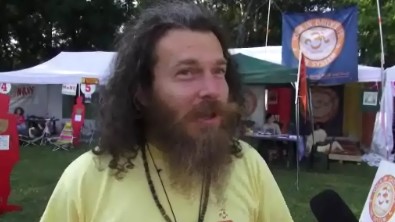
A promotional video about a yoga program at a major European music festival.
"For eleven years now, yoga has been our daily practice and system for showing young festival-goers how wonderful it is to relax deeply through yoga, without any side effects."
"We feel that the door of āśrama must not only be opened by the system of rites... but we must also go out to various community spaces and events."
A representative describes the 11-year-old Yogasātar tent at the Sziget Festival, which offers short, tailored yoga sessions to introduce festival-goers to practice, relaxation, and meditation. He explains the program's adaptability, its emphasis on authentic tradition over commercialized "power yoga," and its role as a spiritual outreach that has led some visitors to become disciples. He notes the surprising ability of practitioners to achieve deep relaxation and sensory withdrawal despite the loud festival environment.
Filming location: Budapest, Hungary
Yoga in Daily Life: Health Promotion in the Czech Republic
22:10 - 22:23 (13 min)

A presentation on the integration of yoga into national health strategy in the Czech Republic.
"The main message of Yoga in Daily Life is the constant endeavor to support health promotion systematically through yoga training on four levels: the physical, mental, social, and spiritual."
"Today, we are the biggest yoga association in the Czech Republic... this harmonizing of the physical, mental, social, and spiritual level, is truly the only chance to keep peace and development in our society."
A representative of the Czech Association of Yoga in Daily Life addresses a conference, detailing the organization's role in national health promotion since 1973. He aligns the yoga system's four-level approach with the Czech government's National Health Strategy 2020, highlighting specific action plans where yoga can contribute, such as promoting physical activity and mental health. The presentation concludes with statistical growth and a tribute to the founding inspiration of Vishwaguruji.
Filming location: Prague, Czech Republic
Karma yoga means serving
22:30 - 23:10 (40 min)
A morning satsang on karma yoga, seva, and skillful action.
"In karma yoga, it is easier to progress further in yogic sādhana, to reach the higher consciousness of the yogī."
"Yogaḥ karmasu kauśalam—yoga is skill in action. Yoga will be successful through the sādhana of karma."
Following a group practice in a meadow, the speaker addresses the assembly, describing the four groups present at the ashram. He defines karma yoga as selfless service, illustrating it with examples from Christian charity to simple daily kindnesses. A story about a disciple mistakenly moving a snail teaches that service must be skillful and informed. The talk emphasizes that seva is the foremost practice, accessible to everyone in countless ways.
Filming location: Strilky, Czech Republic
Karma yoga means serving
23:15 - 23:55 (40 min)
A morning satsang on karma yoga, seva, and skillful action.
"In karma yoga, it is easier to progress further in yogic sādhana, to reach the higher consciousness of the yogī."
"Yogaḥ karmasu kauśalam—yoga is skill in action. Yoga will be successful through the sādhana of karma."
Following a group practice in a meadow, the speaker addresses the assembly, describing the four groups present at the ashram. He defines karma yoga as selfless service, illustrating it with examples from Christian charity to simple daily kindnesses. A story about a disciple mistakenly moving a snail teaches that service must be skillful and informed. The talk emphasizes that seva is the foremost practice, accessible to everyone in countless ways.
Filming location: Strilky, Czech Republic
The name is important not the body
23:45 - 0:10 (25 min)
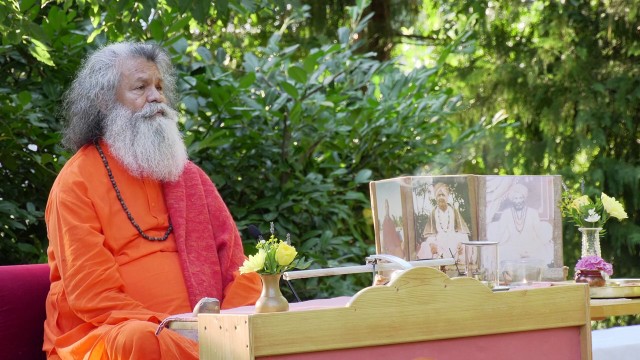
A spiritual discourse on unity, diversity, and the essence of yoga.
"In this Kali Yuga... The difference now is spirituality. You can call it yoga, meditation, prayer, or different religions, but we are all one."
"Holi Guruji said, 'One in all and all in one.'... We should not say, 'If you are not my disciple or my Gurujī’s disciple, then we do not want you.' That is not good."
The lecturer addresses a global television audience, emphasizing the underlying oneness of all spiritual paths, religions, and human beings despite different names and methods. Using analogies like children in a village, trees in a forest, and a football, he explains the philosophy of Yoga in Daily Life, stresses the importance of the immortal divine name over the physical body, and advocates for universal respect and inclusivity.
Filming location: Strilky, Czech Republic
American
Australian