
European
A Call for Peace and Self-Realization
0:15 - 1:22 (67 min)
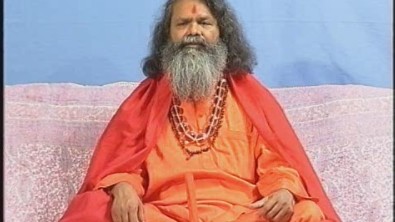
A public lecture on world peace, self-inquiry, and the science of yoga.
"With weapons, with guns, you cannot bring peace. But with flowers, and with love, you can bring peace to the world."
"Nothing belongs to us, says the wise man. The yogīs said, 'Nothing belongs to us. Everything is temporary. Even your body does not belong to you.'"
Swamiji addresses an evening gathering, calling for an end to violence and ignorance through self-realization. He explains the preciousness of human life, the futility of worldly conflict, and the path of yoga as a means to achieve inner and outer peace. The talk covers the nature of the mind, the five bodies, and includes a brief practical demonstration to feel energy in the palms.
Filming location: Croatia
Gurupurnima Satsang in Strilky Ashram 2021
1:00 - 2:08 (68 min)
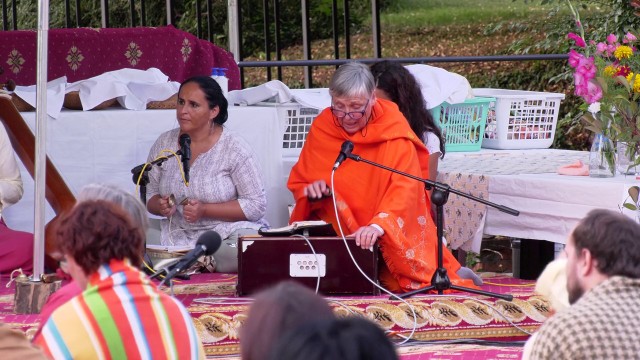
Gurupurnima Evening satsang with Vishwaguruji from Strilky Ashram, Czech Republic. Swami Shanti speaks some beautiful words about Vishwaguruji and her memories. Mahamandaleshwar Swami Vivekpuri speaks beautiful words about love and brotherhood and the meaning of Gurupurnima. Many people worked very much in the Strilky Ashram to prepare a beautiful Gurupurnima day. To welcome a newcomer with bread and salt means that he is received with great love. In this Kali Yuga, we don't know what means yes. Swami Shanti did great work to find the origin of our yoga system in the Himalayas. Vishwaguruji is for all of us. To give is very important.
Proudness
1:30 - 2:22 (52 min)
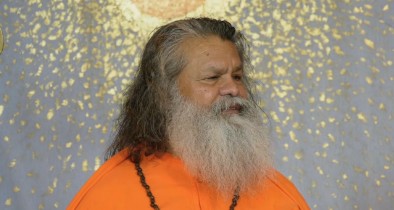
A spiritual discourse narrating two stories from the Ramayana about divine ego and its cure.
"Sometimes the buddhi, the intellect, can turn for a while in another direction." "Don’t think that through your help, Rāma was victorious... It was a test for you."
The speaker, Swami Avatarpuri, recounts the tale of Garuda losing devotion after rescuing Lord Rama from a snake arrow, and his healing by listening to the satsang of the crow Kakabhushundi. He then tells how Lord Rama cured Hanuman's pride by sending him on a mission to a sage, revealing countless identical rings to demonstrate the cyclical nature of divine incarnations. The talk concludes by relating these themes to the modern discovery of sacred Himalayan caves.
Filming location: Strilky, Czech Republic
What Guru Purnima means?
2:30 - 3:20 (50 min)
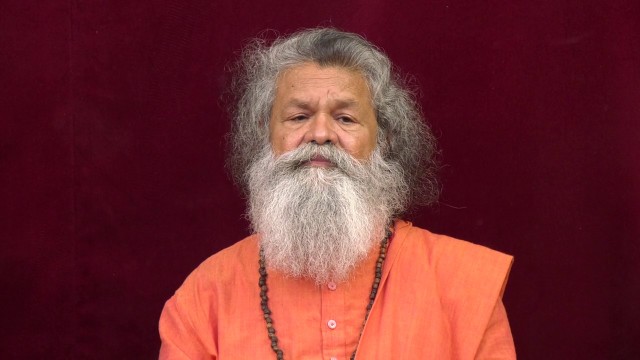
A discourse on the essence of Guru Pūrṇimā and the guru-disciple tradition.
"Gurur Brahmā, Gurur Viṣṇu, Gurur Devo Maheśvara, Gurur Sākṣāt Parabrahmā."
"A true Satguru will not say, 'I am the Satguru.' The day a Satguru says that, it means he does not truly know."
The lecturer addresses a global audience on the full moon day of Guru Pūrṇimā. He explores the profound meaning of the guru, explaining how the principle of the teacher exists in many forms before describing the supreme Satguru. He shares personal instructions from his own guru, Holī Gurujī, about the duty to serve all, and discusses the life of a sannyāsī, the guru paramparā (lineage), and the symbolism of the full moon.
Filming location: Strilky, Czech Republic
Every drop will merge with the ocean
3:25 - 4:12 (47 min)
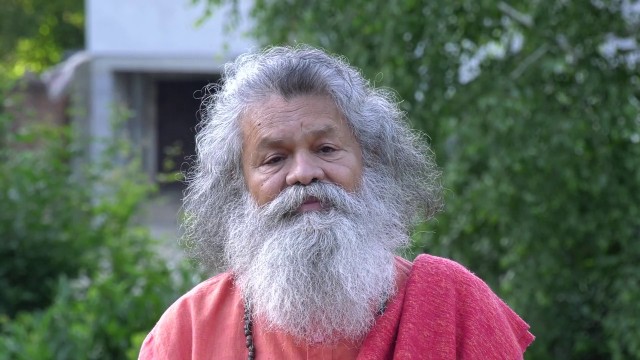
A spiritual discourse weaving ancient parables with personal reminiscences and teachings on humility and unity.
"God Rāma was sitting and watching everyone work... They said to him, 'Bhagavān Rām, you should not place stones below. If you do, then everybody will go deep into the water. Please, Rāma, you sit down, otherwise we all will sink.'"
"Holi Gurujī said: 'So world in all and all in one.'"
The speaker narrates the story of Lord Rama and the squirrel from the Ramayana to illustrate divine humility and the value of every devotee's effort. He seamlessly transitions to personal memories of his guru, Holī Gurujī, at the ashram, emphasizing the lasting spiritual power of holy places and saints. The talk expands into universal themes, referencing Jesus and the Mahabharata, to counsel against religious possessiveness and to advocate for a humble, kind, and unified approach to spiritual life, seeing the divine in all.
Filming location: Strilky, Czech Republic
Vegetarian food is good for prevention against covid
4:20 - 5:06 (46 min)
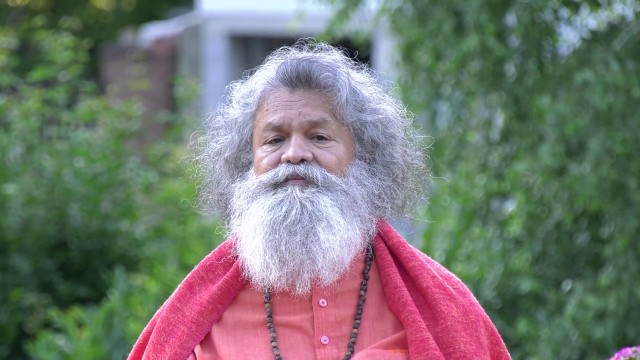
An evening satsang with announcements and a discussion on vegetarianism supported by medical research.
"Tomorrow will be nearly the fourth day. So, I was thinking of giving you half a day for free."
"Anyone of you or somebody else who would like to control it, so please just go on the internet and type 'British Medical Journal'... 'Plant-Based Diet, Pescetarian Diet and COVID-19 Severity'."
Swami Ji addresses the retreat participants, announcing a half-day break for a forest walk and reflecting on the day's practice. He then introduces a guest, Dr. Nemrud Bujakaya, who presents a major study linking plant-based diets to reduced COVID-19 severity. Dr. Vera and another doctor contribute further details and context, leading Swami Ji to conclude with a strong affirmation of vegetarianism as integral to yoga practice.
Filming location: Strilky, Czech Republic
Gurupurnima Blessing
5:10 - 5:17 (7 min)
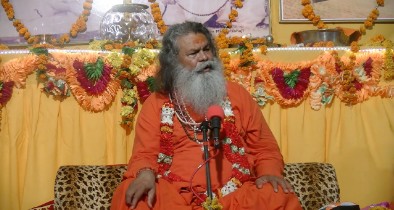
A spiritual discourse on the meaning of Guru Pūrṇimā, extending into social commentary on home cooking.
"'Gu' is darkness, and 'Ru' is the light. It is that light which dispels darkness."
"In this modern world, we cannot survive; we cannot do anything without a Guru. But 'Guru' does not mean only a sādhu or a ṛṣi. It is everything that gives you knowledge: how to drive a car... how to cook."
The speaker explains the traditional meaning of Guru Pūrṇimā as the journey from darkness to light. He then expands the definition of 'Guru' to include any source of practical knowledge, using the example of cooking to argue that modern life has lost essential skills. He criticizes the trend of eating restaurant food, praises the divinity of a mother's home-cooked food, and urges all families to cook at home for health and economy.
Filming location: Jadan, Rajasthan, India
What means Navratri
5:25 - 6:25 (60 min)

Evening satsang with Vishwaguruji from Jadan Ashram, Rajasthan, India. Navratri means the 9 nights of the Divine Mother. There should be great respect in the family towards the mother. Explanation of how to live a happy life, how to take care of the family. Shakti and Ancestors should be respected. Introduction of the Devi that should be worshipped on the third day of Navratri.
Guru Tattva
6:30 - 7:30 (60 min)
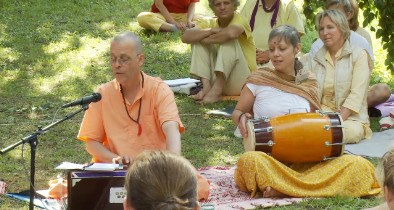
A satsang discourse on the nature of the soul and the Guru principle.
"Śrī Guru Ātmā. Śrī means happiness... That Ātmā is Paramātmā."
"Therefore, Ahiṃsā is such a beautiful word... Therefore, sin exists where there is violence."
Swami Avatarpuri gives a morning talk exploring the oneness of the ātmā (soul) and the essence of Guru Tattva. He explains the Vedic understanding of titles, contrasts the qualities of a Mahātmā with a Pāpātmā, and describes the karmic consequences of violence and ignorance. The discourse weaves philosophy with illustrative stories and concludes with the recitation of a sacred prayer.
Filming location: Strilky, Czech Republic
Great Saints set an example
7:35 - 8:35 (60 min)
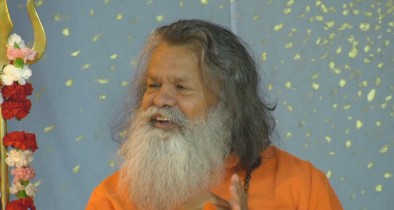
A spiritual discourse on dharma, sādhanā, and the essence of scripture.
"Dharma means rightness—the dharma of humans, animals, nature, seasons, husband, wife, children, friends, and neighbors. It is not about worshipping separate gods."
"The essence of all these scriptures is contained in just two words: 'Śuk diyā śuk hot hai, aur duk diyā duk hoī.' If you give pleasure to others, you will receive pleasure. If you give trouble to others, you will receive trouble."
Swami Satyāśāntānanda delivers a teaching, contrasting superficial yoga techniques with the higher path of sādhanā. He defines true dharma as universal righteousness beyond religious division, emphasizing satsaṅg and the study of saints' lives. Using parables and references to historical figures—from Jesus and Guru Gobind Singh's sons to a self-sacrificing ṛṣi—he illustrates the power of commitment to dharma and the inner study of the self (svādhyāya).
Filming location: Strilky, Czech Republic
What Is The Guru
8:40 - 9:40 (60 min)
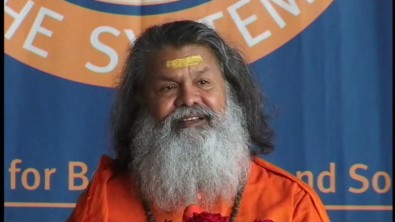
A morning satsang discourse on Guru's Day (Guruvāra), exploring sacred geography, spiritual practice, and the nature of the eternal Guru.
"This earth is our Karma Bhūmi, where we do our karmas."
"Gurudev is... 'Brahmanandam paramsukhadam kevalam jnanamurti'—the bliss of Brahman, the highest happiness, the very embodiment of wisdom."
The lecturer addresses the global gathering, beginning with the significance of Thursday, the day of Jupiter (Bṛhaspati), the Guru of the Devas. He explains the concepts of Janmabhūmi (birthplace), Karmabhūmi (place of work), Dharmabhūmi (land of spiritual duty), and Mokṣabhūmi, emphasizing Earth's unique role for spiritual development. He critiques modern materialism and the misappropriation of spiritual knowledge, urging honest work and protection of spiritual heritage. Through a story of a farmer's evolving perception of his Guru, he illustrates how sincere practice transforms one's vision, leading to the realization of the Guru as the formless, all-pervading Brahman—unmoving, spotless, and beyond duality.
Filming location: Vép, Hungary
Guru is Brahma
9:45 - 10:50 (65 min)
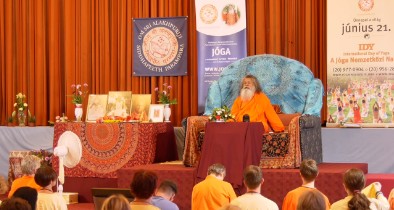
A spiritual discourse on the value of singular focus and devotion to the guru.
"If we have, and all of us have, a lot of pictures, we are something like these ten-year-old little guys who try to collect all Pokémons. Our mantra is 'Collect all.'"
"Therefore, it is said: 'Dhyāna mūlaṁ guru mūrtiḥ, pūjā mūlaṁ guru padam, mantra mūlaṁ guru vākyaṁ, mokṣa mūlaṁ guru kṛpā.'"
The speaker, Swami Vivek Puri, shares reflections from a satsang, emphasizing the spiritual power of focusing on one mantra and one form of the guru. He argues that collecting too many spiritual images dilutes their value and hinders clear visualization at critical moments like death. The talk expands into the profound reverence for the guru's feet (caraṇāmṛta), illustrated with stories from the tradition and the recent awarding of the Yoga Ratna to Vishva Guruji in London.
Filming location: Vép, Hungary
Yoga in Daily Life - excercise program
11:00 - 12:32 (92 min)
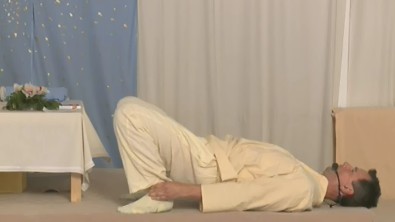
Morning Yoga excercise according to system Yoga in Daily Life from Mahaprabhudeep Ashram, Strilky, Czech Republic.
Guruvakya can protect you
12:40 - 13:50 (70 min)
Evening satsang with swamiji, Jadan Ashram, Rajasthan, India. Stories are life guidance. We do believe in the holy books and the words of the saints, means Guruvakya. If we do not follow, we will not receive the blessings. There are many kind of nourishments. The nourishment for our soul is the blessing. Everything needs Viveka, discrimination, according to Desh and Kal, the right time and the right place. To follow our daily schedule gives us strength, discipline and success.
Around the world - Yoga exercises specifically for women
14:00 - 14:36 (36 min)
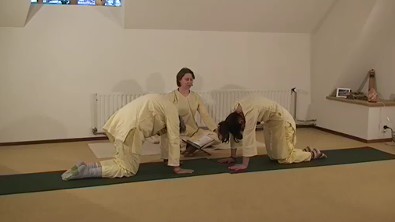
A guided yoga session focused on asanas for menstrual well-being and pelvic health.
"From my own experience, I can confirm it is truly helpful."
"Feel the effect of this exercise; it is also very good to do in the morning for a stiff back."
An instructor leads a gentle sequence designed for menstrual concerns, beginning with relaxation and yogic breathing in Anandāsana. The practice includes apānāsana (for the lower back and pelvic area), marjari (cat pose), hip-opening preparatory poses, and mālāsana (a squatting pose), with a personal anecdote shared about its benefits. The session continues with setu āsana (bridge pose) and a side-lying balance pose, concluding with a short relaxation and a final Om.
Around the world - Practice in Ukraine
14:40 - 15:30 (50 min)
A guided yoga practice session from the Yoga in Daily Life system.
"Physical relaxation leads to spiritual relaxation. Relaxation is an important element for the proper practice of yogic exercises."
"Ānanda Āsana translates as 'the posture of bliss.' Observe how bliss flows throughout your entire body."
An instructor leads a comprehensive sequence of postures (āsanas), breathwork (prāṇāyāma), and relaxation. The practice begins and ends with Ānanda Āsana for deep relaxation, and includes abdominal breathing, spinal twists, stretches, and joint mobility exercises while lying, sitting, and standing. The session concludes with a final relaxation and a moment of gratitude.
Filming location: UK
We all should feel Alakhpuriji's love
15:00 - 15:47 (47 min)
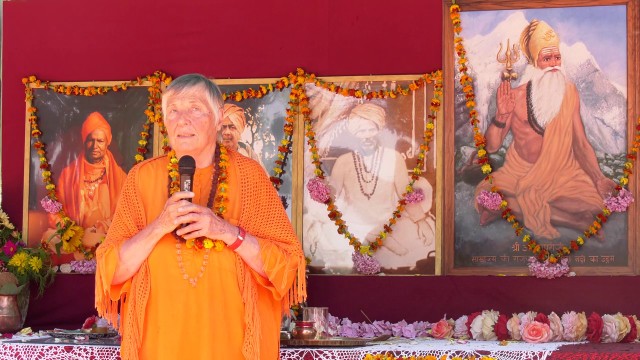
Gurupurnima Morning satsang with Vishwaguruji from Strilky Ashram, Czech Republic. A holy occasion when Alakhpuriji's picture was placed on the altar. Swami Shanti spoke some beautiful words about her travel in the Himalayas how did she find the cave of Sri Devpuriji and Sri Alakhpuriji. She told that how did Alakhpuriji appear to her. God can appear before you at any moment of your life.
Yoga in Daily Life Lineage
15:35 - 15:59 (24 min)
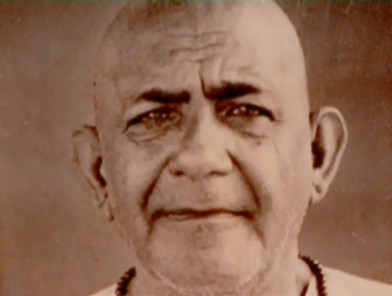
The guru lineage of Yoga in Daily Life. Presentation of YIDL.
Vegetarian cooking lesson 1
16:00 - 16:24 (24 min)
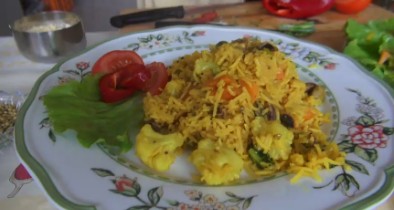
A cooking demonstration for a simple vegetarian Mediterranean meal.
"Today we are going to prepare a very simple vegetarian and Mediterranean meal."
"These spices are very useful for us. They help prevent any parasites in the digestion, in the stomach."
The host guides viewers through preparing a three-part meal: a pistachio and vegetable risotto, a creamy broccoli soup, and a fresh salad with a yogurt or chickpea-based dressing. Throughout the process, they explain techniques, such as grinding whole spices and managing water for the rice, and emphasize the health benefits and digestibility of ingredients like turmeric, cumin, and coriander. Practical tips are shared, including how to reduce salt intake via dressings and preserving nutrients in olive oil.
Filming location: Vép, Hungary
Divine knowledge
16:30 - 18:20 (110 min)
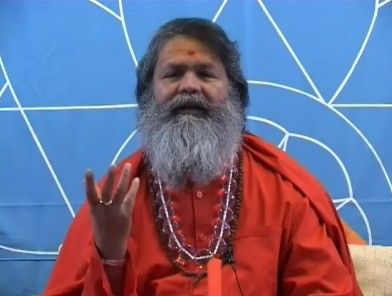
Johannesburg, South Africa in September 2004. Followed by "YIDL Lineage", "Unity in diversity". "Kundalini and Chakras". Finally follows a Lecture about Yoga Nidra followed by Awakening of the Healing powers.
Guru is here for the whole world
18:25 - 19:17 (52 min)
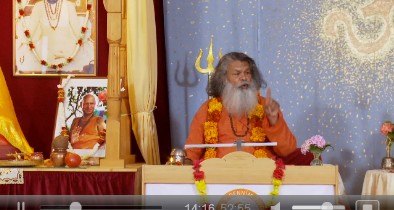
Satsang with Vishwaguruji, Summer Retreat in Strilky Ashram, Czech Republic. Social festivals are observed to maintain and protect society. Every human needs respect, understanding and kindness, regardless the culture. Guru is not only part of the Indian culture. According to the guru principle there is the leader for every creature. It is not the body of the Guru, but the Light of Knowledge.
The day I met Holy Guruji
19:25 - 20:20 (55 min)
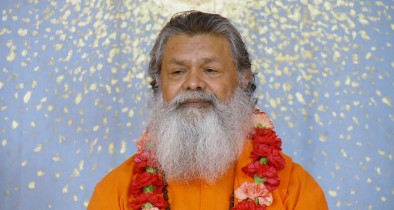
A spiritual discourse reflecting on divine descent, the guru-disciple relationship, and personal history.
"Every soul, when descending from the astral world to this mortal world, must be chosen by some higher hierarchies... You are not elected. You are selected, so such a divine great master comes to this world."
"The master is the master, and we are the raw rock. We have to go through all these situations. He will make you position, give you position on the altar, in the temple."
Swami Maheshwarananda (Swamiji) speaks intimately about the nature of a Satguru's incarnation, selected by divine will rather than personal karma. He shares the story of his own spiritual calling, describing his first encounter with his Guru, Swami Madhavananda, as a child and his determined journey to enter the ashram. He weaves in teachings on karma yoga, liberation, and the transformative, often arduous process of the disciple under the master's guidance, using the metaphor of a sculptor shaping a raw stone into a sacred statue.
Filming location: Strilky, Czech Republic
Follow the Guruvakyas and practice
20:25 - 21:23 (58 min)
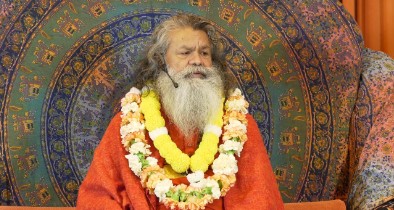
A spiritual discourse on the importance of consistent practice and good company.
"You were listening to what they were singing. It was beautiful. We are all on that path." and "If you are not practicing, you will not have success."
Swami Ji addresses a gathering after an evening of bhajans. He emphasizes that spiritual development comes from regular practice (sādhanā) and the company one keeps, using the proverb Jaisā kare saṅg, vaisā lāge raṅg. He shares personal anecdotes of his early morning practices with his Guru and warns against neglecting discipline, comparing it to medical treatments that only suppress illness if not fully addressed. The talk covers themes of karma, the human lifespan, and the necessity of following the Guru's guidance.
Filming location: Vép, Hungary
Interview with Vishwaguruji
21:30 - 21:54 (24 min)
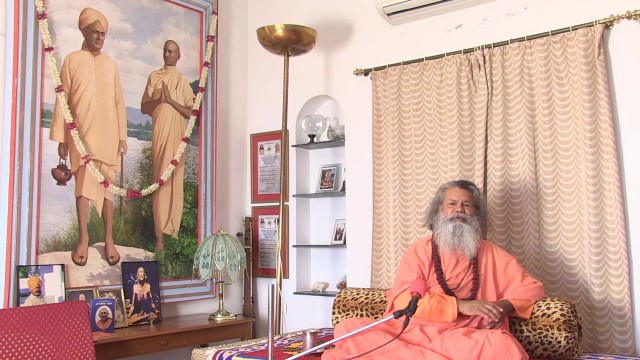
A live interview with His Holiness Vishwaguru Mahāmaṇḍaleśwar Paramahaṁsa Maheśvarānand Gurujī, founder of the "Yoga in Daily Life" system.
"It doesn’t matter if one is in a little village or a big city. It depends on the parents. When parents are full of love, harmony, and good education, and are very spiritual, they will always tell you what God is."
"Yoga is not only the physical body; it is more than that... Yoga is within human consciousness, in the human heart, in human humbleness, in a humble way of looking at everything."
The host, a disciple, introduces the guru's lineage before asking about his spiritual journey from childhood. Gurujī describes his upbringing, perpetual childlike purity, and his view of yoga. He discusses the ongoing construction of the O-Māśram monument, his first travels to Europe, and the essential guru-disciple relationship, emphasizing oneness and equal love for all.
World Peace is in Our Hands
22:00 - 22:05 (5 min)
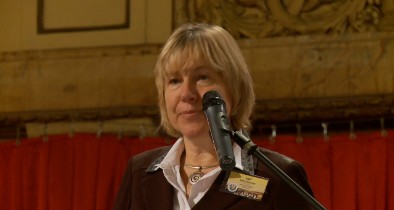
A keynote address on global responsibility and the path to world peace.
"A world without peace will not survive. A world without distributing wealth will not survive. A world without taking care of our beautiful planet will not survive."
"World peace is in our hands... Peace is never achieved without good intentions and cooperation with others. Even more importantly, it requires coherence or balance with one’s self."
The speaker, representing Slovenia, addresses an international conference, arguing that creating resilient societies and active global citizenship is essential for survival. They share Slovenia's initiative to co-create a national vision aligned with the UN Sustainable Development Goals as a model of responsible action. The speech concludes by linking outer peace to inner balance, proposing yoga as a means to achieve it.
Filming location: Prague, Czech Republic
Yoga, Health, and Peace: A Medical Perspective
22:10 - 22:22 (12 min)

A medical doctor presents a scientific perspective on yoga's role in holistic health and peace.
"To create a healthy world, we must be healthy ourselves."
"Yoga techniques influence us on all levels: physical, mental, social, and spiritual."
The speaker, addressing an audience including Vishwa Guruji, explains how modern lifestyles cause stress and disease, contrasting this with the integrated approach of the Yoga in Daily Life system. He details how specific yoga practices—like meditation, prāṇāyāma, and āsanas—scientifically support health by influencing the brain's cortical and subcortical levels and peripheral organs. The talk covers preventing memory loss and depression, advocates for a vegetarian diet, and concludes that balanced self-realization through yoga fosters global peace.
Filming location: Prague, Czech Republic
What Guru Purnima means?
22:30 - 23:20 (50 min)
A discourse on the essence of Guru Pūrṇimā and the guru-disciple tradition.
"Gurur Brahmā, Gurur Viṣṇu, Gurur Devo Maheśvara, Gurur Sākṣāt Parabrahmā."
"A true Satguru will not say, 'I am the Satguru.' The day a Satguru says that, it means he does not truly know."
The lecturer addresses a global audience on the full moon day of Guru Pūrṇimā. He explores the profound meaning of the guru, explaining how the principle of the teacher exists in many forms before describing the supreme Satguru. He shares personal instructions from his own guru, Holī Gurujī, about the duty to serve all, and discusses the life of a sannyāsī, the guru paramparā (lineage), and the symbolism of the full moon.
Filming location: Strilky, Czech Republic
We should respect Time
23:25 - 23:56 (31 min)
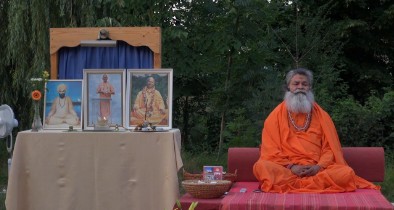
Evening satsang with Vishwaguruji from Vep, Hungary. The river Alakhnand flows in the Himalaya and connects us with the Supreme. We should respect the Time which was given us to realize our aim. Time doesn’t wait for us. Satsang and improvement in the practice will help. Concentrate on your development instead of saying bad words.
American
Australian