
European
Soul is One
0:00 - 1:12 (72 min)
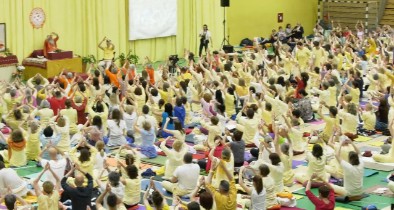
Evening satsang with Vishwaguruji from weekend Yoga Seminar in Novo Mesto, Slovenia. We are all like paras. We can create good qualities in others. When paras touch the iron it becomes gold. Guru is more than paras, Guru can transform the disciple into Guru. If not, either Gurudev is not right, either there is a distance between the Master and disciple. The physical body is called annamaya kosa, while the energy body is called pranamaya kosa. Water is water in each of the forms. Similarly, Soul is one.
The Unselfish Work
0:00 - 0:26 (26 min)
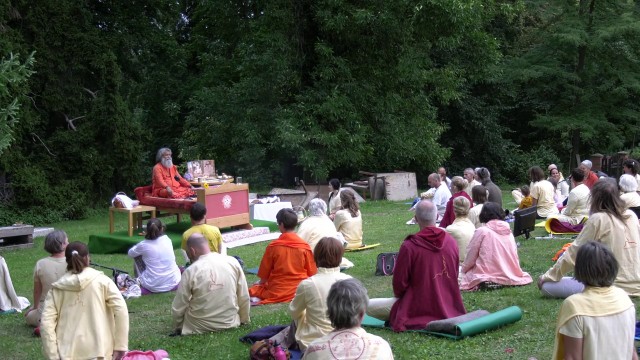
A satsang discourse on karma yoga, selfless service, and the four aims of life.
"Sometimes, when we engage in seva, work, and karma yoga, we think, 'I am doing this. If I were not here, who would do it?'"
"Swāmījī says, 'The greatest sin is to waste time. Use it or lose it.'"
The speaker shares a parable from Swāmījī about a dog who mistakenly believes it is pulling a cart, illustrating the illusion of self-importance in service. The talk emphasizes performing niṣkāma karma (selfless action) as a privilege and explores the four Puruṣārthas (dharma, artha, kāma, mokṣa) as life goals attainable only through dedicated effort and Guru's grace, referencing teachings and bhajans from saints like Ācāla Rāmajī.
Filming location: Strilky, Czech Republic
The beauty of yoga nidra
1:20 - 2:33 (73 min)
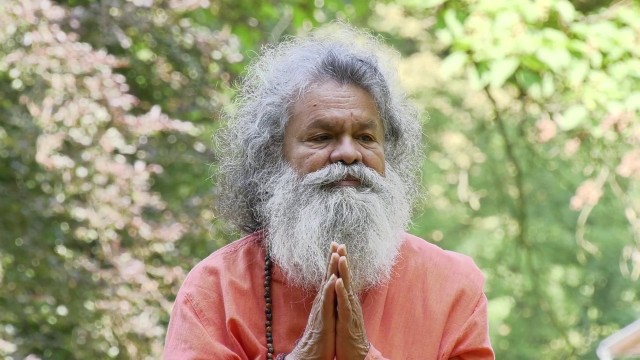
Morning satsang with Vishwaguruji from Strilky Ashram, Czech Republic. We can realize the proper time of something by Jyotish and by the actual strength of our ida and pingala nadis. In the morning we should think first that we are human. It means I should not do wrong things for others. Nidra means half sleep and half awaken. There are three statuses aware sleep and dream. When you drive a car you have to be always awakened. In yoga nidra there are all three situations. We came from the earth we live in the earth and we shall go to the earth. We need a Guru to give us instructions and taking care of us if we do something wrong. Yoga is that force that consciousness that driver which leads our car which is our body.
Flowing of prana and consciousness
2:40 - 3:46 (66 min)
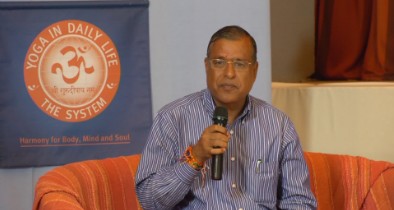
An evening satsang on spiritual anatomy and parenting.
"It is said that the body should not be damaged for the perfection of Siddhas. All the 72,000 nerves should be very clear and clean, where the prāṇa can flow freely."
"Parents have a very, very important role in how the child grows up. That is the time when we feed information into that system."
The lecturer begins by discussing the importance of an unblemished body (akhaṇḍa) for the free flow of prāṇa, explaining the network of nāḍīs and chakras. He shares a story about a king and a wound to illustrate the principle. He then hands the floor to Guru Śaṅkarajī, who speaks on the role of parents, outlining how proper physical nourishment, positive sensory input, and the inculcation of virtues shape a child's development from infancy.
Filming location: Vép, Hungary
The ways of Purification
3:50 - 4:53 (63 min)
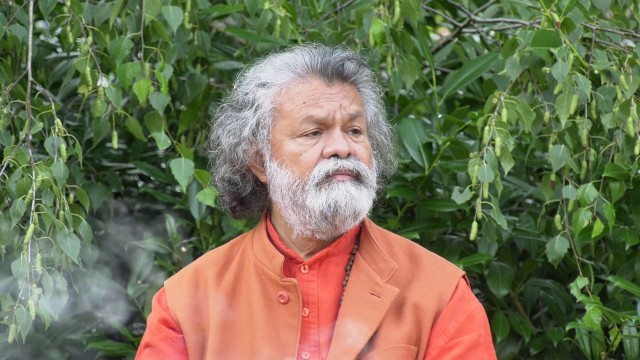
Evening satsang from Strilky Ashram, Czech Republic. Chanting and explanation of the mantra OM Namo Sri Prabhu Deepa Narayan. We came from Mother, from the earth and we will go again. The whole Earth is like the Mother. Where is water, there is a God. The argument between Holy Guruji and the King about eating meat. Pranayama and Kriya is a way of purification like we are singing Mantras or Bhajans.
Never think that you are a Guru
5:00 - 5:43 (43 min)
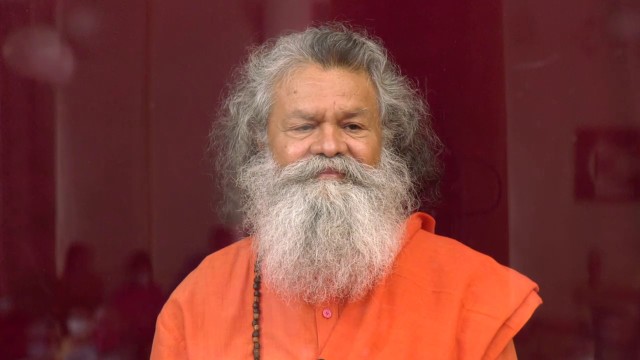
A satsang on the sacred practice of Kriyā and the necessity of the guru's grace.
"If I tell them, 'On the day you give up Guru Kṛpā, all sādhanā will be gone,' these people took the Kriyā and after one or two years they were gone."
"To become a disciple is not easy, not easy, not easy... we are also on that path of God, supreme, highest, and we are now walking on that path."
The lecturer addresses the gathering, emphasizing the gravity of Kriyā Anuṣṭhāna practice and the danger of undertaking it without genuine guru grace. Using metaphors of carrying a flame through a storm and walking a knife's edge, he illustrates the spiritual path's difficulty. He warns against students presuming to teach the technique, comparing it to a nurse performing heart surgery, and stresses that authentic practice comes only through the guru paramparā.
Filming location: Strilky, Czech Republic
Only Guru can change our destiny
5:50 - 6:44 (54 min)
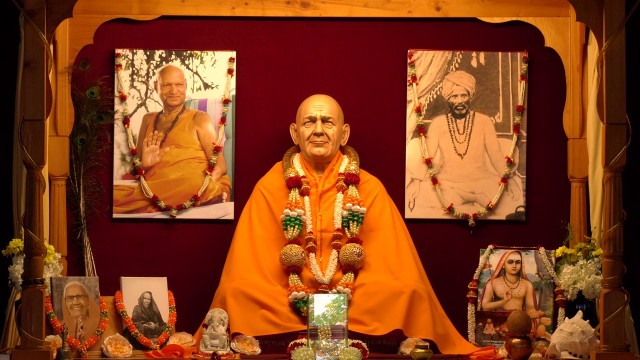
Morning satsang with Vishwaguruji from Strilky Ashram, Czech Republic. Karma is only one. Karma is only there if we give seva. The story of Ravana his daughter and her husband. With negative speaking, we get double of negative karma of the other person. Destiny is coming from karma. We can't change our destiny but Guru can change it. Our destiny is written in our palms and in our soles.
Spiritual message of ancient India
6:50 - 7:54 (64 min)
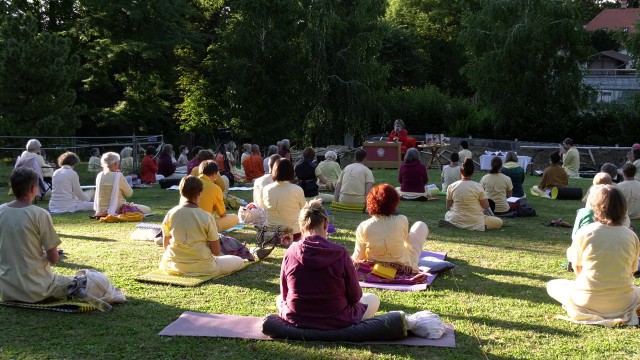
An evening satsang discourse on the Gurukul system and spiritual traditions.
"When I was there before, about 60 years ago, at that time, yoga was very pure, spiritual, healthy, and so on."
"And now also in our, it is male or female. Also, you know that Jainas, we are all more or less the same. Sannyāsa or making trust, and also Buddha."
A speaker reflects on the spiritual purity of past eras, describing the ascetic practices of Jain monks and the origins of Buddhism. The talk transitions to the ancient Indian Gurukul system, defined as a residential school where disciples live with and learn from a master. The essence of Gurukul is presented as the living relationship between master and disciple, which provides a spiritual foundation beyond mere physical yoga practice. The importance of maintaining a positive, compassionate, and neutral mind according to yogic principles is emphasized.
Filming location: Jadan, Rajasthan, India
Pranayama with Vishwaguruji
8:00 - 9:04 (64 min)
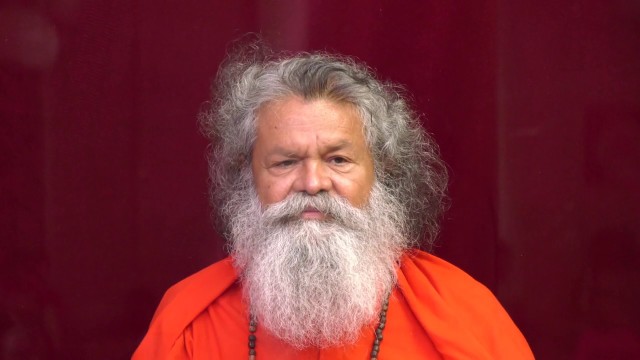
Morning satsang with Vishwaguruji from Strilky Ashram, Czech Republic. Yoga in daily life teachers and practitioners are very kind humble and spiritual. Practising pranayama relaxation and bhramari pranayama.
A Gathering of Hearts
9:08 - 10:33 (85 min)
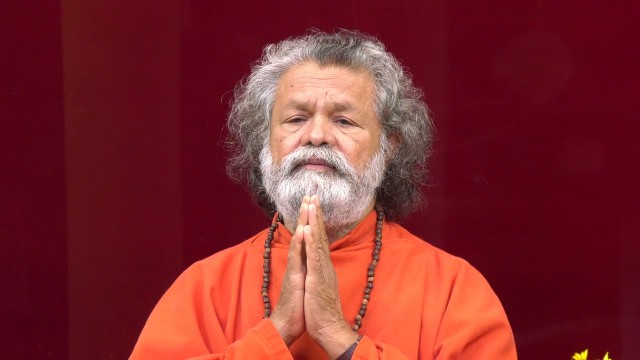
A closing address and spiritual discourse following a week-long yoga seminar.
"In our Yoga in Daily Life, everyone is like brothers and sisters, a family... We are all from this Earth."
"Spirituality is purity, kindness, humbleness, ahiṃsā, and respect... Walk on your own path, the path of our tradition."
The lecturer addresses participants at the conclusion of a seminar at Mahaprabhuji Deep Ashram. He expresses gratitude for the disciplined and loving community effort, defines spirituality as living virtues, and encourages carrying these principles into daily life and local engagement. He concludes with teachings from the Kākabhatī, emphasizing the importance of a guru, inner energy, and devotion.
Filming location: Strilky, Czech Republic
Educate your children spiritualy
10:40 - 12:06 (86 min)
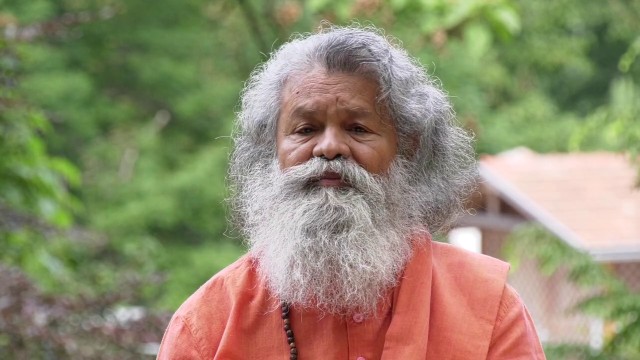
Morning satsang with Vishwaguruji from Strilky Ashram, Czech Republic. We should eat less not to be too sleepy. Many people sleep during kryja anusthan meditation. If you eat less your life will be longer and you will be more healthy. Many things changed in the education of children. In the beginning, many people went to yoga in Chechoslovakia. Slowly the whole Yoga in Daily Life system built. Before marrying boys and girls have to eat very sattvic meals to purify her body. Parents should educate their children about spirituality. Young couples would see Jyotish to decide in which constellation would be married. Humans shouldn't kill at all. Up to now, very many people became vegetarian in Europe also. Practising sarva hita asanas and ptanayama.
Practicing of the system 'Yoga in Daily Life', Level 1 - Part 6
11:00 - 12:05 (65 min)
Practicing of the system "Yoga in Daily Life", Level 1 - Part 6, in Om Vishwa Deep Gurukul Swami Maheshwaranand Ashram, Jadan, Rajasthan, India on 24th of October 2009.
Vegetarian food is good for prevention against covid
12:10 - 12:56 (46 min)
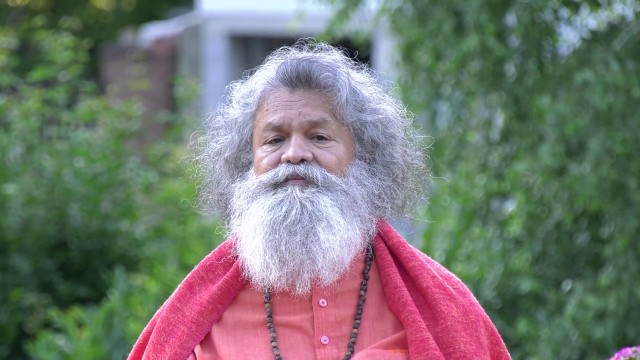
An evening satsang with announcements and a discussion on vegetarianism supported by medical research.
"Tomorrow will be nearly the fourth day. So, I was thinking of giving you half a day for free."
"Anyone of you or somebody else who would like to control it, so please just go on the internet and type 'British Medical Journal'... 'Plant-Based Diet, Pescetarian Diet and COVID-19 Severity'."
Swami Ji addresses the retreat participants, announcing a half-day break for a forest walk and reflecting on the day's practice. He then introduces a guest, Dr. Nemrud Bujakaya, who presents a major study linking plant-based diets to reduced COVID-19 severity. Dr. Vera and another doctor contribute further details and context, leading Swami Ji to conclude with a strong affirmation of vegetarianism as integral to yoga practice.
Filming location: Strilky, Czech Republic
The Practice and Power of Trāṭaka
13:00 - 13:52 (52 min)
An evening satsang on the theory and practice of Trāṭaka, or yogic gazing.
"Trāṭaka means gazing on one point. The best object is the flame from a lamp of good ghee from a cow—not from buffaloes, goats, or sheep."
"While practicing Trāṭaka, if you practice every day, morning and evening, without interruption for twelve years, you will attain a siddhi... a very pure, very kind, and merciful look in your eyes."
Swami Prakashananda Saraswati provides detailed instructions for the cleansing technique of Trāṭaka. He explains suitable objects for gazing, such as a pure ghee flame or a black dot, and warns against using a mirror. He describes the profound benefits, including purification of mind, improved speech, and the awakening of divine energy and intuition, while stressing the necessity of guidance from a properly trained teacher and the use of a Guru Mantra. The talk includes a cautionary story about two monks to illustrate the importance of inner purity and forgiveness.
Filming location: Australia
You will be according to what you eat
14:00 - 14:36 (36 min)
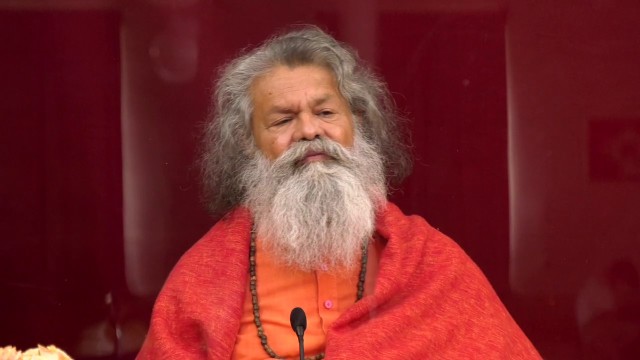
A spiritual discourse on nourishment, habits, and holistic well-being.
"If you want to enjoy the taste, then take less into the mouth and chew it well, so the tongue and the whole mouth experience the taste."
"That is why many yogīs, many, many, they said: eat less, drink only as needed, and meditate more."
The speaker addresses an audience after a spiritual retreat, using the example of eating halušky (dumplings) to discuss the principles of mindful eating, digestion, and respect for food preparers. He expands the topic to contrast ordinary food with 'ān' (divine seed or essence), discusses forming harmonious habits, and cautions against the misuse of substances like alcohol. The talk concludes with well-wishes for the journey home and an invitation for future gatherings.
Filming location: Strilky, Czech Republic
There is nothing higher than the Guru
14:40 - 15:23 (43 min)
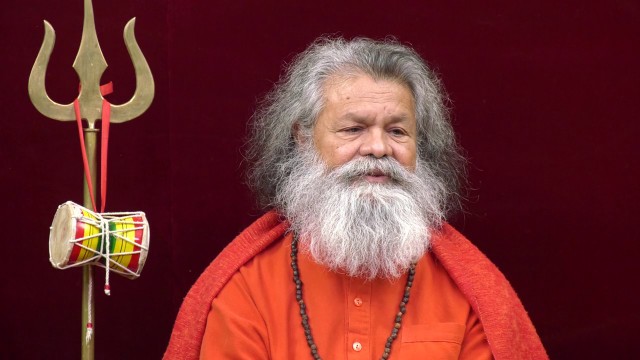
An evening satsang discourse on the supreme importance of the Guru principle.
"Who is greater than Bhagavān Rāma and Kṛṣṇa? They too must have a guru."
"Guru Brahma, Guru Viṣṇu, Guru Devo Maheśvarāha, Guru Sākṣāt Parabrahma... Thus, there is nothing higher than the Guru."
The lecturer addresses a diverse spiritual gathering, expounding on the Guru's primacy over even divine incarnations like Rama and Krishna. He explains that the Guru is the formless, eternal principle and source of all knowledge, using examples from scripture, daily life, and a traditional prayer to illustrate that all progress requires a guide. The talk concludes with a preview of the next day's topic on the Guru's transformative grace.
Filming location: Strilky, Czech Republic
Yoga is for the whole Earth
15:30 - 16:03 (33 min)
A personal narrative blending a medical emergency with reflections on yoga and human nature.
"My doctor said, 'Swāmījī, I will not take money from you, I will give you everything.'"
"Yoga is not only my country or your country, or my religion or your religion. No. Yoga is life, the whole earth."
Swami Maheshvaranand recounts a detailed story of falling ill in Jodhpur, India, and the complex, caring international effort involving his disciples and Austrian health insurance to safely return him to Vienna. He uses this experience to transition into a discourse on the essence of yoga as a universal practice connecting all life, the challenges of the current age (Kali Yuga), and the importance of seeing beyond divisions of religion and nationality to our shared humanity.
Filming location: Delhi, India
Rules and regulations are important
17:05 - 17:56 (51 min)
Morning Satsang with Vishwaguruji, Strilky Ashram, Czech Republic. When you are angry, greedy and jealous it touches the Manipur chakra, and heat rises up. The words of the master help us to overcome some psychological conditions. It is very important to keep the four principles: proper behaviour, a good way of thinking, proper diet, and good actions.
Mind and desires
18:00 - 18:52 (52 min)
A spiritual discourse on the nature of the mind, mantra, and liberation from desire.
"Man marā, nāmamātrī marī, mar mar gayā śarīr, aisā tṛṣṇā nahīṅ gaī, ghe gayā Dasā Kabīr."
"Āśā means hope, and tṛṣṇā means thirst. And this will not give you this mind."
A speaker explores the classical definition of mantra as the restless mind ("man") and the trap of desire ("mamatā"), using poetry from Kabīr, parables about a camel and a thirsty deer, and personal anecdotes to illustrate how hope and thirst bind the individual. The talk examines the sequence from body and prāṇa to mind, knowledge, and ānanda, concluding that true mantra practice involves seeing through illusions to attain freedom.
Filming location: Strilky, Czech Republic
Live as a Yogi
19:00 - 19:36 (36 min)
A global address on adopting a yogic lifestyle for health and longevity.
"Paradoxically, the more doctors there are, the more people seem to fall ill."
"The best medicine is often found in our grandmothers' kitchens. This means we humans must return to a natural way."
A spiritual teacher speaks to a worldwide audience, advocating for a return to natural living as an antidote to modern disease. He critiques contemporary eating habits, over-reliance on chemical medicine, and the loss of traditional daily rhythms, emphasizing that the body itself is one's primary religion. He calls on all listeners, regardless of their faith, to become yogis by dedicating themselves to holistic practice and self-care, thereby achieving a long, peaceful, and healthy life.
Filming location: Strilky, Czech Republic
Instructions for mantra practicing
19:40 - 20:37 (57 min)
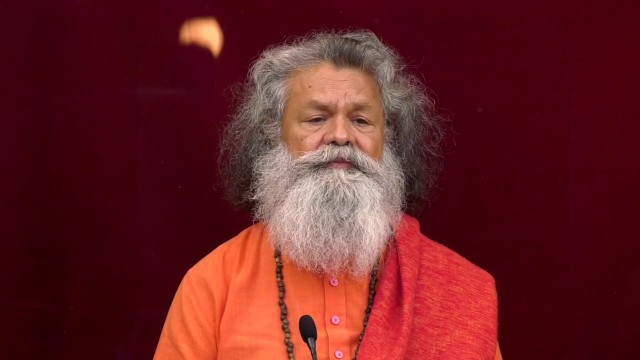
A spiritual seminar on the guru-disciple relationship and spiritual practice.
"Guru Kṛpā Hi Kevalam—the Gurudeva's blessings. And śiṣya kī ānanda maṅgalam. The disciples have happiness, joy."
"When we get mantra, guru mantra, then you should have that cloth. We are also going through the mantra. Then it means you have already taken your seat."
A spiritual teacher addresses a gathering, expounding on the principle that the guru's grace is everything and the disciple's state is one of auspicious joy. He discusses the nature of a true guru, the importance of the guru lineage (paramparā), and the correct use of a personal meditation seat (āsana). He shares a story about two disciples to illustrate the importance of following a guru's instructions without mental attachment, and concludes with practical advice for daily practice.
Filming location: Strilky, Czech Republic
The ways of Purification
20:45 - 21:48 (63 min)
Evening satsang from Strilky Ashram, Czech Republic. Chanting and explanation of the mantra OM Namo Sri Prabhu Deepa Narayan. We came from Mother, from the earth and we will go again. The whole Earth is like the Mother. Where is water, there is a God. The argument between Holy Guruji and the King about eating meat. Pranayama and Kriya is a way of purification like we are singing Mantras or Bhajans.
Flowing of prana and consciousness
21:55 - 23:01 (66 min)
An evening satsang on spiritual anatomy and parenting.
"It is said that the body should not be damaged for the perfection of Siddhas. All the 72,000 nerves should be very clear and clean, where the prāṇa can flow freely."
"Parents have a very, very important role in how the child grows up. That is the time when we feed information into that system."
The lecturer begins by discussing the importance of an unblemished body (akhaṇḍa) for the free flow of prāṇa, explaining the network of nāḍīs and chakras. He shares a story about a king and a wound to illustrate the principle. He then hands the floor to Guru Śaṅkarajī, who speaks on the role of parents, outlining how proper physical nourishment, positive sensory input, and the inculcation of virtues shape a child's development from infancy.
Filming location: Vép, Hungary
Power of our words
23:05 - 23:56 (51 min)
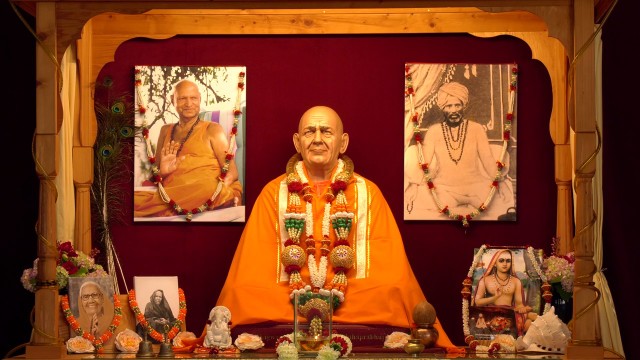
Morning satsang with Vishwaguruji from Strilky Ashram, Czech Republic. n the Ashram the atmosphere is divine. We are happy and believe that coronavirus will go. People can visit countries according to the rules that government says. We can also learn something from remaining home when this rule is applying. Holy scriptures like Bhagavad Gita keeps the strength of the words of Saint's. Shabda means not only our words but sounds of all living beings and nature. Good and bad words can change the atmosphere. We have an ocean of words. Mantra practicing and bhajan singing.
American
Australian