
European
Awakening of muladhar
0:15 - 0:57 (42 min)
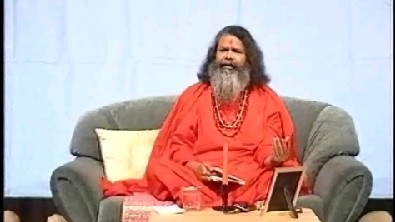
A lecture on the Mūlādhāra chakra, karma, and associated yoga practices.
"Prārabdha, or karma prārabdha, first your destiny is created, and then your body."
"The awakening of the Kuṇḍalinī means wisdom. You become very wise, you become self-confident."
The speaker delivers an in-depth explanation of the root (Mūlādhāra) energy center, linking it to one's karma, destiny, and foundational consciousness. He describes its symbolism—the red color, four-petaled lotus, elephant, and coiled serpent representing past karmas—and clarifies the nature of a true Kuṇḍalinī awakening. The session includes practical guidance, with demonstrators showing postures like Bhujaṅgāsana and Śalabhāsana to activate and regulate this chakra.
Filming location: Croatia
What Guru Purnima means?
0:30 - 1:20 (50 min)
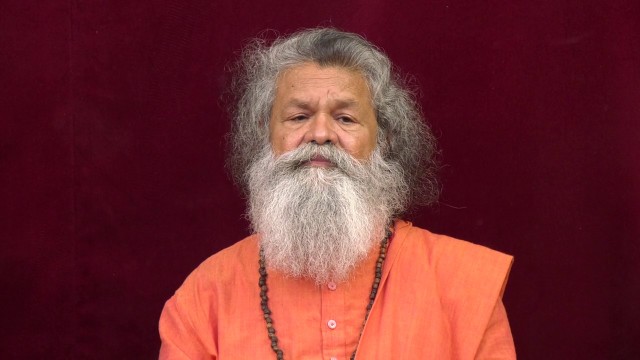
A discourse on the essence of Guru Pūrṇimā and the guru-disciple tradition.
"Gurur Brahmā, Gurur Viṣṇu, Gurur Devo Maheśvara, Gurur Sākṣāt Parabrahmā."
"A true Satguru will not say, 'I am the Satguru.' The day a Satguru says that, it means he does not truly know."
The lecturer addresses a global audience on the full moon day of Guru Pūrṇimā. He explores the profound meaning of the guru, explaining how the principle of the teacher exists in many forms before describing the supreme Satguru. He shares personal instructions from his own guru, Holī Gurujī, about the duty to serve all, and discusses the life of a sannyāsī, the guru paramparā (lineage), and the symbolism of the full moon.
Filming location: Strilky, Czech Republic
Practical guide to meditation (5/11)
1:30 - 2:47 (77 min)
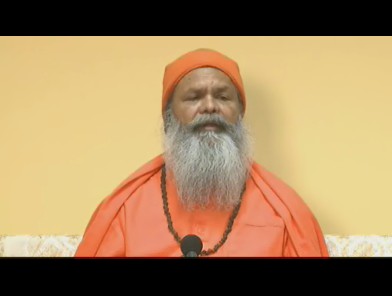
Webcast of Swamijis lecture about Meditation from Bratislava, Slovakia on 15th Feburary 2009.
Mind and desires
2:55 - 3:47 (52 min)
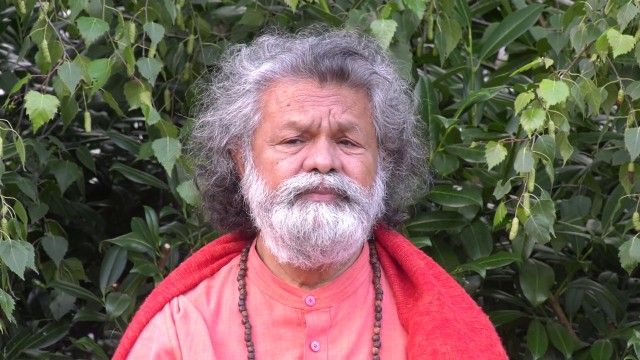
A spiritual discourse on the nature of the mind, mantra, and liberation from desire.
"Man marā, nāmamātrī marī, mar mar gayā śarīr, aisā tṛṣṇā nahīṅ gaī, ghe gayā Dasā Kabīr."
"Āśā means hope, and tṛṣṇā means thirst. And this will not give you this mind."
A speaker explores the classical definition of mantra as the restless mind ("man") and the trap of desire ("mamatā"), using poetry from Kabīr, parables about a camel and a thirsty deer, and personal anecdotes to illustrate how hope and thirst bind the individual. The talk examines the sequence from body and prāṇa to mind, knowledge, and ānanda, concluding that true mantra practice involves seeing through illusions to attain freedom.
Filming location: Strilky, Czech Republic
Guru gives us the good path
3:55 - 4:33 (38 min)
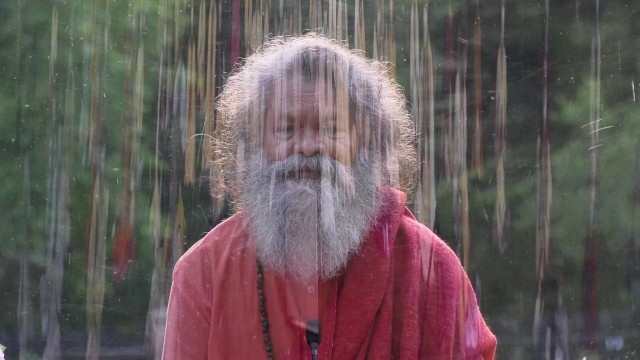
A spiritual discourse on navigating the Kali Yuga and following the guru's path.
"Śiva is balancing. Śiva is giving blessings and controlling everything for all: the ṛṣis, the yogīs, the spiritual ones, and also others, what we call rākṣasas."
"We give you the path, but you have to go. Sometimes one wants to work on something, and then you go to the other side. You are learning something halfway, and then you go to the other side. That is your problem."
The lecturer addresses a global audience, speaking outdoors as rain falls. He discusses the transition from Kali Yuga to Satya Yuga, the balancing role of Śiva, and the importance of steadfastly following one's spiritual path and guru. Using analogies of a traveler asking for directions and a mother's love for her child, he cautions against inconsistently seeking different gurus and emphasizes deepening practice beyond physical yoga. The talk also touches on the sciences of karma and jyotiṣ.
Filming location: Strilky, Czech Republic
We are a part of God
4:40 - 5:50 (70 min)
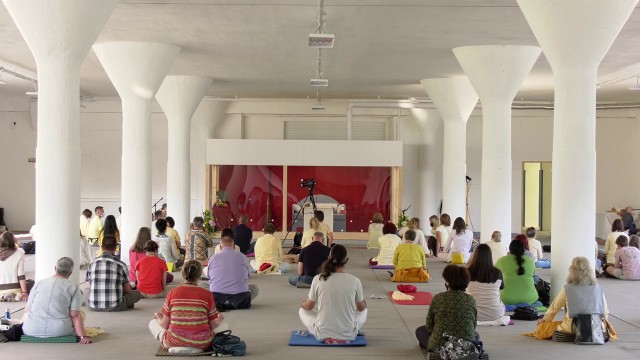
A spiritual discourse on the unity of yoga and the soul's journey.
"Yoga is not only physical, for the physical body, or just breath and concentration, etc. Yoga is very far-reaching."
"I said, your soul, your ātmā in you is your God."
A teacher addresses a gathering, explaining that all forms of yoga are one and that practice is a lifelong endeavor. He describes the soul's cyclical journey through 8.4 million life forms, the divine nature within each person, and the ultimate aim of merging with the cosmic consciousness. He concludes with a practical morning ritual, encouraging attendees to affirm "I am human" upon waking.
Filming location: Slovenia
Keep your inner temple clean
5:55 - 6:32 (37 min)
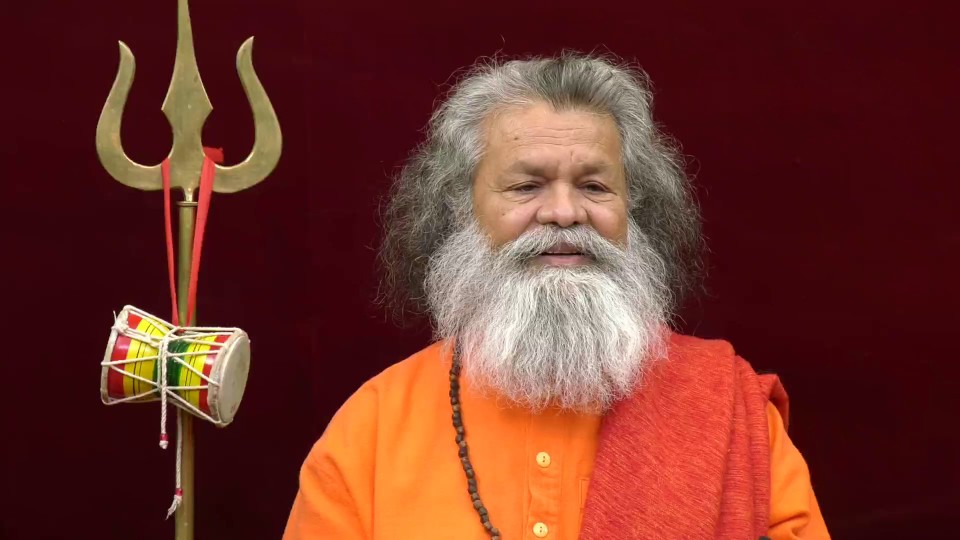
An evening satsang on viewing the human body as a divine temple.
"Therefore, we humans are the temple of God. We should keep that temple very clean, beautiful, and shining."
"And in our temple, God is seated. So do not go elsewhere. God said, 'I am in you.'"
The lecturer addresses the global Yoga and Daily Life community, explaining that the physical body is the primary temple housing the soul and divinity. He emphasizes maintaining purity through morning rituals, diet, and thought, and shares practical tips like applying oils to the navel and nostrils for well-being. The talk concludes with prayers and chants to Gurudev.
Filming location: Strilky, Czech Republic
Instructions for mantra practicing
6:40 - 7:37 (57 min)
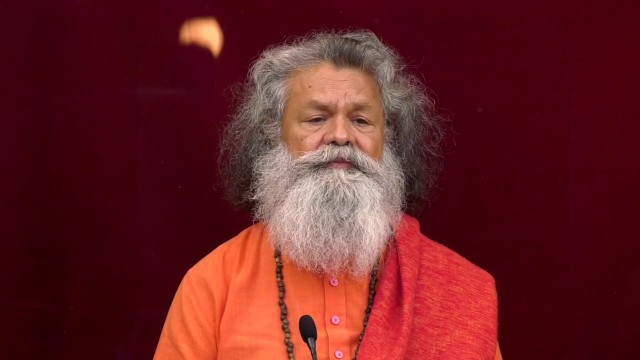
A spiritual seminar on the guru-disciple relationship and spiritual practice.
"Guru Kṛpā Hi Kevalam—the Gurudeva's blessings. And śiṣya kī ānanda maṅgalam. The disciples have happiness, joy."
"When we get mantra, guru mantra, then you should have that cloth. We are also going through the mantra. Then it means you have already taken your seat."
A spiritual teacher addresses a gathering, expounding on the principle that the guru's grace is everything and the disciple's state is one of auspicious joy. He discusses the nature of a true guru, the importance of the guru lineage (paramparā), and the correct use of a personal meditation seat (āsana). He shares a story about two disciples to illustrate the importance of following a guru's instructions without mental attachment, and concludes with practical advice for daily practice.
Filming location: Strilky, Czech Republic
Shiva tried to give immortality to Parvati
7:45 - 8:31 (46 min)
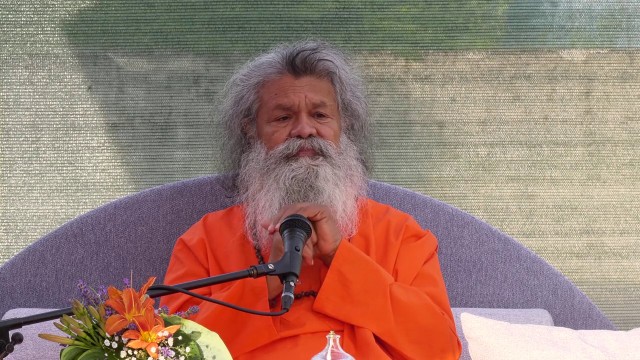
A spiritual discourse on the divine union of Śiva and Śakti, emphasizing gender equality and the unity of all beings.
"In many religions, and many countries, and many things, they were saying that women have no soul."
"It is said from the Satyugas, 'Mātṛ Devo Bhava, Pitṛ Devo Bhava.' First God, 'Mātṛ Devo Bhava.'"
The speaker, addressing a gathering, explores the inseparable nature of the divine masculine and feminine. He recounts the myth of Śiva and Satī, explaining how Viṣṇu used the Sudarśana Cakra to dismember Satī's body, creating the Śakti Pīṭhas. He also shares the story of Pārvatī's attempt to gain immortality through a mantra, which is overheard by a parrot. The talk stresses that the divine union exists within every person and advocates for pure living and respect for all.
Filming location: Slovenia
Past is gone future is not here yet
8:35 - 9:19 (44 min)
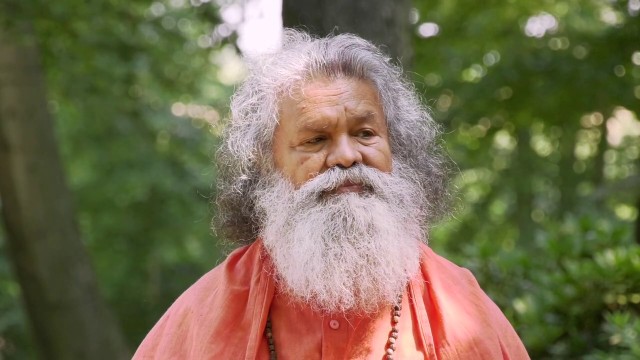
A spiritual discourse on living in the present moment and the nature of past, present, and future.
"Therefore, it is at present. Be in the present."
"So the past is gone. The present is here. But you think, 'In the future, I will also get this.' But you will not get it. That’s it."
An instructor addresses a group, advising them to release attachment to past experiences and future anxieties. He advocates for a simple, relaxed practice, contrasting it with other meditation techniques. Using stories, such as a dog losing its bread by coveting a reflection, he illustrates the futility of dwelling on what is gone or what might be, emphasizing that true practice (Anuṣṭhāna) is about being grounded in the now.
Filming location: Strilky, Czech Republic
Who am I?
9:25 - 10:13 (48 min)
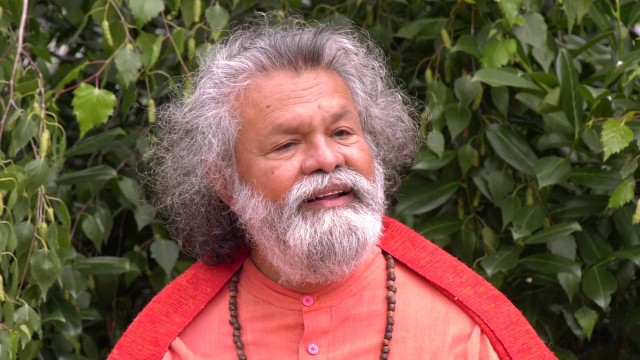
A spiritual discourse on the breath of life, the limits of the body, and destiny.
"Our breath is day and night equally, and it is written how many breaths we will have; then it is finished."
"Even God cannot prolong. That’s it."
The lecturer leads a satsang, exploring the relationship between breath, life, and a predetermined lifespan. He explains that while practices like yoga and prāṇāyāma can make life more comfortable, the ultimate duration is preordained. He illustrates this with an ancient story about a ṛṣi who repeatedly postpones his death to study the Vedas, only to be shown the futility of his endeavor by Dharmarāja. The talk weaves in reflections on the five elements, anecdotes about Czech yogis, and the spiritual nature of the region.
Filming location: Strilky, Czech Republic
The ways of Purification
10:20 - 11:23 (63 min)
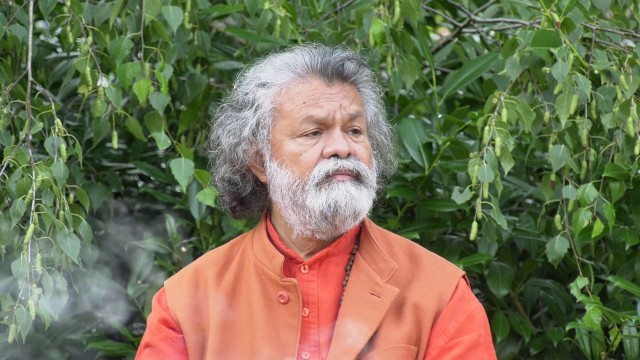
Evening satsang from Strilky Ashram, Czech Republic. Chanting and explanation of the mantra OM Namo Sri Prabhu Deepa Narayan. We came from Mother, from the earth and we will go again. The whole Earth is like the Mother. Where is water, there is a God. The argument between Holy Guruji and the King about eating meat. Pranayama and Kriya is a way of purification like we are singing Mantras or Bhajans.
One day we will be together
11:30 - 12:14 (44 min)
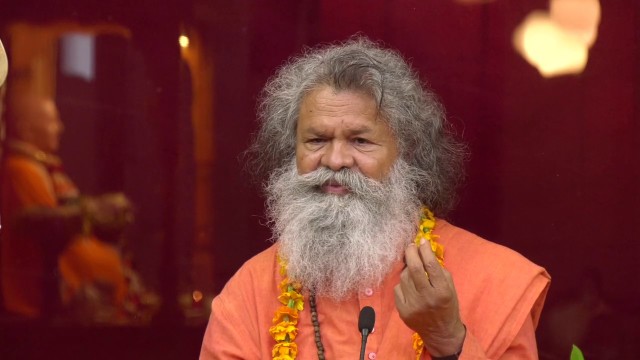
An evening satsang on spiritual unity and the essence of all paths.
"It is very important that everyone has their yoga center's name... but yoga is only one yoga; we simply have different names."
"All children are born into what we call a kindergarten. In the kindergarten, we see all children as very beautiful and very good."
The lecturer addresses the global Yoga in Daily Life community, using analogies of families, children, and the water cycle to illustrate the fundamental oneness underlying all yoga schools, religions, and human beings. He emphasizes respect for all traditions and lineages while cautioning against the discord created by attachment to names and identities. The talk concludes with a prayer for harmony and a reminder to seek inner unity.
Filming location: Strilky, Czech Republic
Practising with Vishwaguruji
12:20 - 13:17 (57 min)
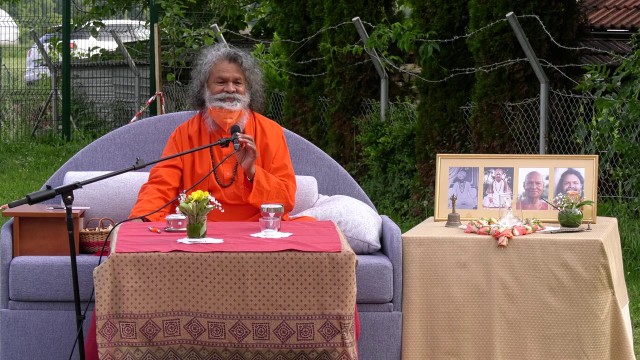
Evening Satsang with Vishwaguruji from Slovenia. Relaxation and bhajan singing. Vajra nadi gives the power of our whole body. Vajra nadi is like a tree it has a root and some branches. Practising sarva hita asanas and bhramari pranayama. If we practise asanas lifelong we will die very easy without pain.
Atma is one and body is different
13:25 - 14:18 (53 min)
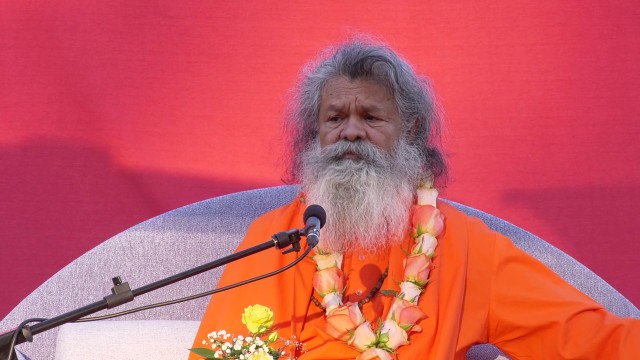
A spiritual discourse on the unity of all spiritual paths and the nature of God.
"So we should respect all yoga centers anywhere. One should not say, 'Only mine, that's all.'"
"As the Holy Gurujī said, one in all and all in one... So, one God is that, and the second is: all we are Gods."
The lecturer delivers a satsang, using metaphors of children in a village and drops in an ocean to illustrate the essential oneness behind all religions, yoga schools, and individuals. He emphasizes respect for all paths, explains that every being contains the divine essence, and discusses the journey of the soul toward the cosmic self.
Filming location: Ljubljana, Slovenia
Wherever you are Gurudev is with you
14:25 - 15:19 (54 min)
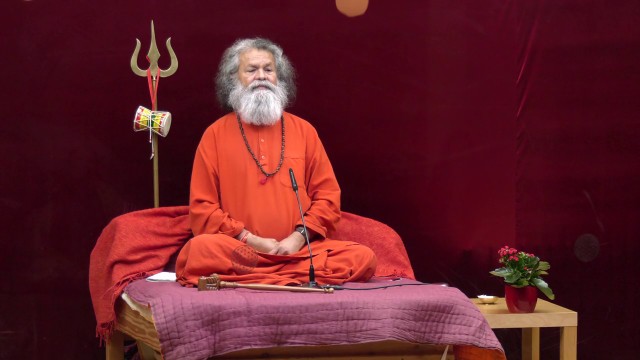
A spiritual discourse on the nature of the Guru and the path to liberation.
"Guru is Brahmā. Guru is Viṣṇu. Guru is Maheśvara. These all three—above them is the guru."
"Dhyāna Mūlam Guru Mūrti... the root of meditation is the form of the Guru. Pūjā Mūlam Guru Padam... the root of worship is the feet of the Guru."
Swami Madhavanji delivers an evening lecture, exploring the supreme importance of the Guru through traditional verses and analogies. He explains the Guru as the transcendent source encompassing the divine Trinity and the foundation of all spiritual practice—meditation, worship, mantra, and ultimate liberation. The talk includes practical instructions on reverence, the power of speech, and an introduction to prāṇa and the energy channels, concluding with a promise to continue the subject.
Filming location: Strilky, Czech Republic
Seeing the God
15:25 - 16:05 (40 min)
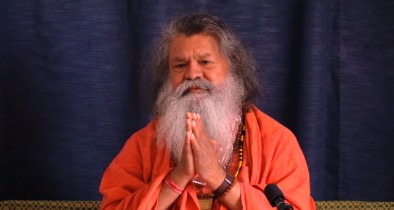
A spiritual discourse on the science and meaning of yoga.
"Yoga means oneness. Yoga means merging. Two in one."
"And so, where are we? How is our brain developing? Definitely, in the last few centuries, the human brain is developing and developing, and we are getting more and more and more. But still, in the human body, is the science."
The speaker, Swami Avatarpuri, explores the ancient science of yoga as a path to union and self-realization. He discusses the nature of consciousness, the human journey among 8.4 million life forms, and the limitations of conventional science compared to inner yogic research. Key themes include the search for "Who am I?", the structure of chakras and the nervous system, and the ultimate goal of merging individual consciousness with the Supreme (Śiva). Practical advice is given for daily, systematic practice involving relaxation, postures, pranayama, and meditation, alongside natural skincare recommendations.
Filming location: Auckland, New Zealand
Our children are very spiritual
15:30 - 16:23 (53 min)
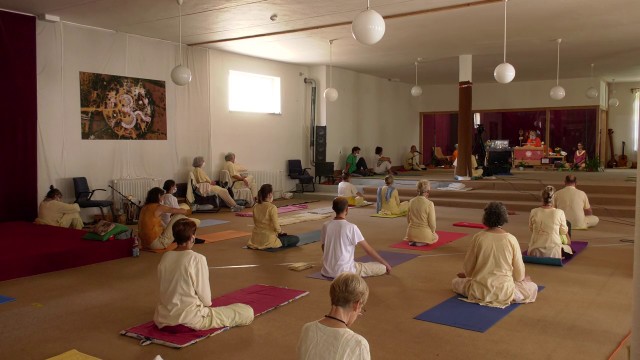
Morning satsang with Vishwaguruji from Strilky Ashram, Czech Republic. Children are very disciplined during the programs because their parents educated them towards spirituality. Vishwaguruji teaches many generations of yoga people. Sri Devpuriji appeared in some places at the same time. Holiguruji told many stories to Visheówaguruji in his childhood about Devpuriji and Mahaprabuji. Vishwaguruji realized the prediction of Devpuriji. We don't know where the seed will grow. Reading holy books every day new knowledge comes. The story of an Indian man who issued a newspaper in India and travelled with Viwshwaguruji in Europe. Knowledge takes the human healthy and happy. We should give further the knowledge of our forefathers to our children. The first university was in India. There were very many books but Muslims burnt them. God gives eating everybody in the world. Little more information about the first university in the world was in India.
Advice for practicing Yoga
16:10 - 17:01 (51 min)
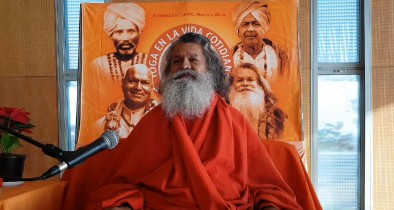
Satsang with Vishwaguruji from Barcelona, Spain. The body consists of five elements. These element are present within us and outside as well. There are different techniques to purify and balance the elements. We should take care of the body while practicing Yoga. Pranayama is also important to practice. It is said that every breath is counted.
You will be according to what you eat
17:05 - 17:41 (36 min)
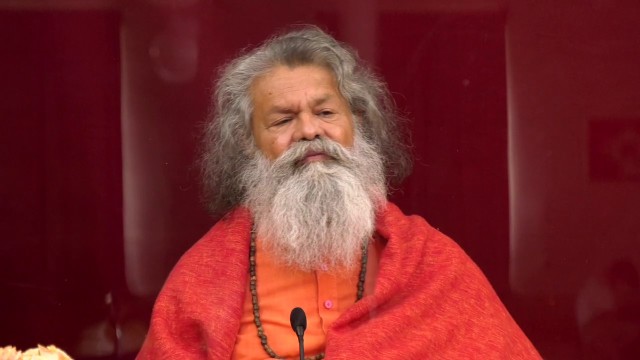
A spiritual discourse on nourishment, habits, and holistic well-being.
"If you want to enjoy the taste, then take less into the mouth and chew it well, so the tongue and the whole mouth experience the taste."
"That is why many yogīs, many, many, they said: eat less, drink only as needed, and meditate more."
The speaker addresses an audience after a spiritual retreat, using the example of eating halušky (dumplings) to discuss the principles of mindful eating, digestion, and respect for food preparers. He expands the topic to contrast ordinary food with 'ān' (divine seed or essence), discusses forming harmonious habits, and cautions against the misuse of substances like alcohol. The talk concludes with well-wishes for the journey home and an invitation for future gatherings.
Filming location: Strilky, Czech Republic
How did yoga begin in Czechoslovakia?
17:45 - 18:16 (31 min)
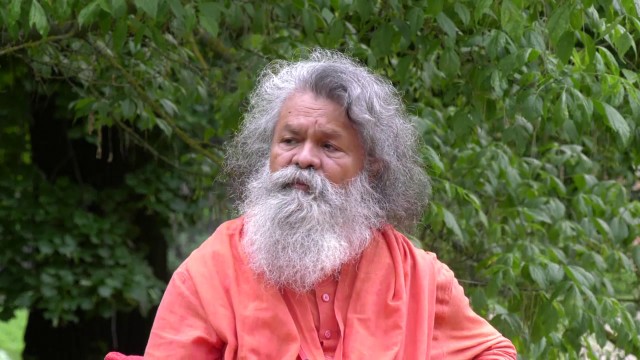
A spiritual teacher shares memories and reflections on introducing yoga and bhajans to Czechoslovakia during the communist era.
"Concentrate not only on the sound; you know what it means. Because if we know exactly what it means, then we have in our heart, in our brain, in our mind, it is the reality."
"They said that our workers should be healthy again thanks to yoga. But what you are singing, something we don’t understand, this is not yoga. I said, yes, it is called sound yoga."
Swami Avatarpuri recounts his early experiences teaching yoga and leading bhajan sessions in Czechoslovakia, emphasizing the importance of understanding the devotional songs' meaning. He narrates anecdotes about winter travels, friendly police interactions, and the three rules given to him: not to deal with money/gold, religion, or politics. A disciple interjects to recall the first seminar at the Kopná chalet, noting its spiritual history.
Filming location: Strilky, Czech Republic
Live as a Yogi
18:20 - 18:56 (36 min)
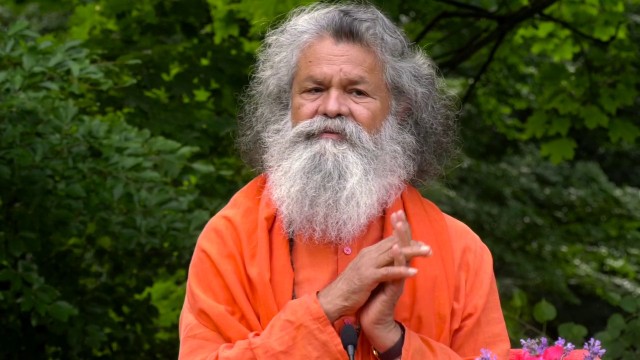
A global address on adopting a yogic lifestyle for health and longevity.
"Paradoxically, the more doctors there are, the more people seem to fall ill."
"The best medicine is often found in our grandmothers' kitchens. This means we humans must return to a natural way."
A spiritual teacher speaks to a worldwide audience, advocating for a return to natural living as an antidote to modern disease. He critiques contemporary eating habits, over-reliance on chemical medicine, and the loss of traditional daily rhythms, emphasizing that the body itself is one's primary religion. He calls on all listeners, regardless of their faith, to become yogis by dedicating themselves to holistic practice and self-care, thereby achieving a long, peaceful, and healthy life.
Filming location: Strilky, Czech Republic
God is within us
19:00 - 19:29 (29 min)
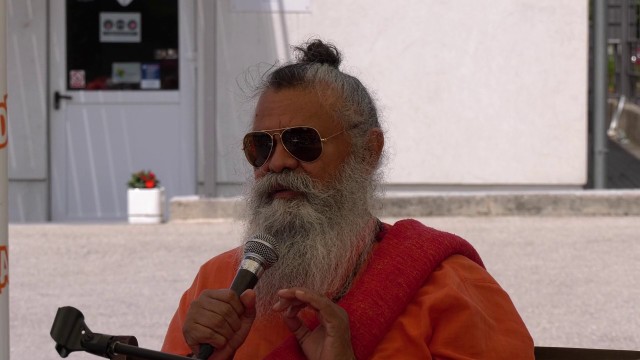
Morning satsang with Vishaguruji from Rijeka, Croatia. Karma yoga is the best yoga. How should we begin our day? Live happy healthy. Feel that I am a human so I don't harm any creatures. We search for God everywhere but we never look within ourselves. We should do our yoga practice regularly day by day. Vajra nadi is the base of our life. Practising bhramari pranayama.
Who am I?
19:35 - 20:23 (48 min)
A spiritual discourse on the breath of life, the limits of the body, and destiny.
"Our breath is day and night equally, and it is written how many breaths we will have; then it is finished."
"Even God cannot prolong. That’s it."
The lecturer leads a satsang, exploring the relationship between breath, life, and a predetermined lifespan. He explains that while practices like yoga and prāṇāyāma can make life more comfortable, the ultimate duration is preordained. He illustrates this with an ancient story about a ṛṣi who repeatedly postpones his death to study the Vedas, only to be shown the futility of his endeavor by Dharmarāja. The talk weaves in reflections on the five elements, anecdotes about Czech yogis, and the spiritual nature of the region.
Filming location: Strilky, Czech Republic
A Gathering of Hearts
20:30 - 21:55 (85 min)
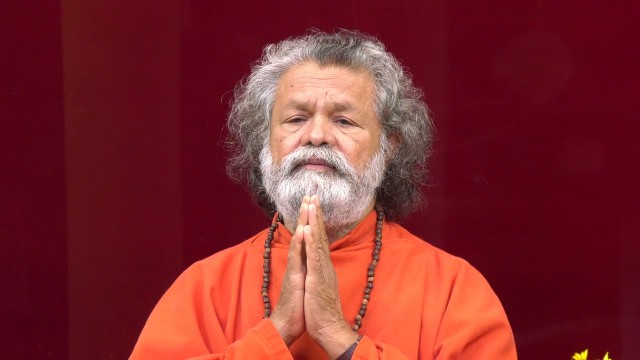
A closing address and spiritual discourse following a week-long yoga seminar.
"In our Yoga in Daily Life, everyone is like brothers and sisters, a family... We are all from this Earth."
"Spirituality is purity, kindness, humbleness, ahiṃsā, and respect... Walk on your own path, the path of our tradition."
The lecturer addresses participants at the conclusion of a seminar at Mahaprabhuji Deep Ashram. He expresses gratitude for the disciplined and loving community effort, defines spirituality as living virtues, and encourages carrying these principles into daily life and local engagement. He concludes with teachings from the Kākabhatī, emphasizing the importance of a guru, inner energy, and devotion.
Filming location: Strilky, Czech Republic
Around the world - Yoga from Presov
22:00 - 23:09 (69 min)
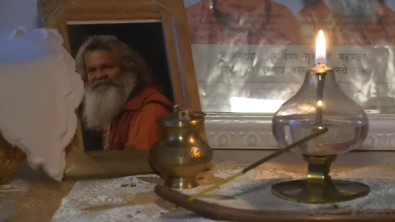
Presentation of Yoga In Daily Life from the city of Presov, Slovak Republic.
Practising concentration on one point
23:15 - 0:11 (56 min)
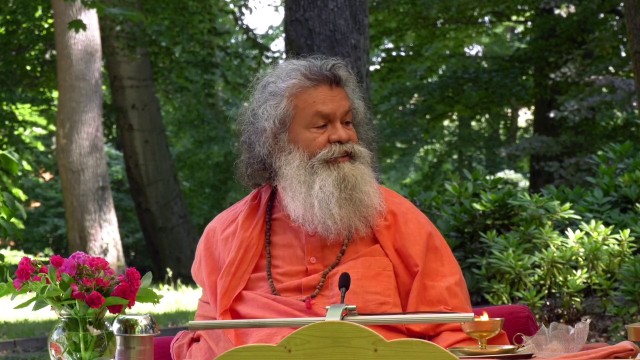
Morning satsang with Vishwaguruji from Strilky Ashram, Czech Republic. n Kryja Anusthan people get much clean spiritual energy. This sadhana is working on the inner side. Eagles see very far forward and backwards also. The elephant can concentrate only one thing at one time. Some people in the anusthan is half asleep and half awaken. It is important not to move at all. The story about Holiguruji and Vishwaguruji. A practise how long we can concentrate on one point. People tell their experiences during practising. We should go deeper and deeper into our concentration.
American
Australian