
European
Live as a Yogi
0:00 - 0:36 (36 min)
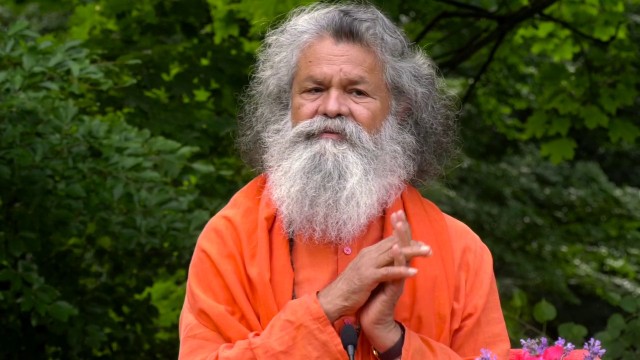
A global address on adopting a yogic lifestyle for health and longevity.
"Paradoxically, the more doctors there are, the more people seem to fall ill."
"The best medicine is often found in our grandmothers' kitchens. This means we humans must return to a natural way."
A spiritual teacher speaks to a worldwide audience, advocating for a return to natural living as an antidote to modern disease. He critiques contemporary eating habits, over-reliance on chemical medicine, and the loss of traditional daily rhythms, emphasizing that the body itself is one's primary religion. He calls on all listeners, regardless of their faith, to become yogis by dedicating themselves to holistic practice and self-care, thereby achieving a long, peaceful, and healthy life.
Filming location: Strilky, Czech Republic
Itna to karna guruji
0:05 - 0:12 (7 min)
Bhajan sang by Gajanand.
The Nāḍīs, Cakras, and the Mūlādhāra Foundation
0:15 - 1:12 (57 min)
A spiritual lecture on the nāḍīs, cakras, and the foundational Mūlādhāra Cakra.
"The Mūlādhāra Cakra is at the bottom of the spinal column. It is a border between animal and human consciousness."
"Destiny was created first, and destiny is created individually. We should blame no one. We are ourselves responsible for our destiny."
The speaker continues a discourse from the previous day, focusing on the Mūlādhāra Cakra as the seat of destiny (prārabdha) and divine energy. He explains how this foundational energy influences life and can be purified through the threefold practice of svādhyāya (self-study), manana (contemplation), and abhyāsa (persistent practice), which remove the obstacles of impurity, distraction, and veils. The talk connects these concepts to Kuṇḍalinī Śakti, the role of Kriyā Yoga, and concludes with a symbolic discussion of the tilak mark.
Filming location: Umag, Croatia
Brahmari Pranayam
1:15 - 1:28 (12 min)
The second in the serial of the capsule program webcasts led by Swamiji. Useful yoga techniques for daily life,this time the Brahmari Pranayam, which does not require much time but have a great benefit. Recorded on 19th May 2010 in Vienna, Austria.
Practical guide to meditation (4/11)
1:30 - 3:03 (93 min)
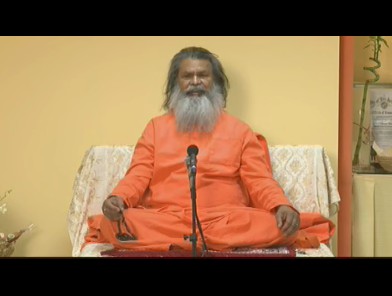
Morning satsang from weekend seminar in Vep, Hungary on 15th, Feburary 2009.
Practising with Vishwaguruji
3:10 - 4:07 (57 min)
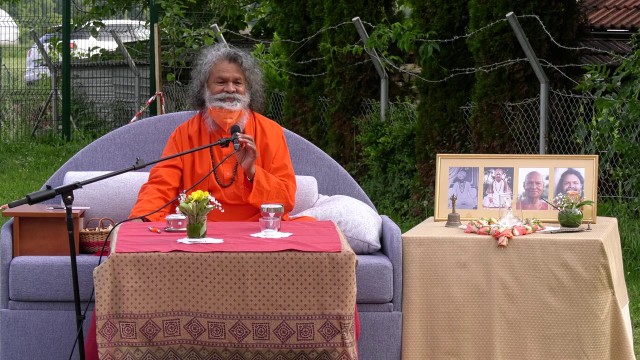
Evening Satsang with Vishwaguruji from Slovenia. Relaxation and bhajan singing. Vajra nadi gives the power of our whole body. Vajra nadi is like a tree it has a root and some branches. Practising sarva hita asanas and bhramari pranayama. If we practise asanas lifelong we will die very easy without pain.
Karma yoga means serving
4:15 - 4:55 (40 min)
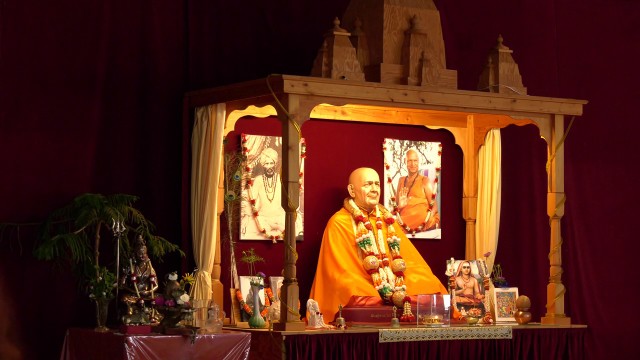
A morning satsang on karma yoga, seva, and skillful action.
"In karma yoga, it is easier to progress further in yogic sādhana, to reach the higher consciousness of the yogī."
"Yogaḥ karmasu kauśalam—yoga is skill in action. Yoga will be successful through the sādhana of karma."
Following a group practice in a meadow, the speaker addresses the assembly, describing the four groups present at the ashram. He defines karma yoga as selfless service, illustrating it with examples from Christian charity to simple daily kindnesses. A story about a disciple mistakenly moving a snail teaches that service must be skillful and informed. The talk emphasizes that seva is the foremost practice, accessible to everyone in countless ways.
Filming location: Strilky, Czech Republic
Control your energy and mind
5:00 - 6:03 (63 min)
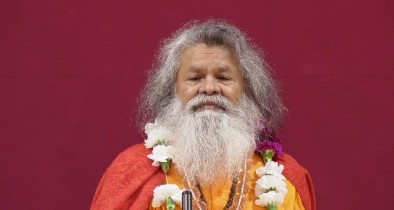
A spiritual discourse on the human journey and the five sheaths (kośas), following a tree-planting ceremony.
"The tree gives shade and fruit to everybody. Rain falls equally for everybody. The river flows for everybody, and the sun shines for everybody."
"Yoga is the science of humans... we have to go through Annamaya Kośa, Prāṇamayakośa, Manomayakośa, etc."
Swami Maheshwarananda (Viśva Gurujī) addresses an audience in Samobor, beginning with reflections on the symbolic planting of eleven trees. He expounds on the soul's journey through various life forms, the balancing principles of the sun and moon within yogic physiology, and the path of spiritual evolution through the five sheaths—from the physical body (Annamaya Kośa) to the bliss sheath (Ānandamaya Kośa). He emphasizes mastering the restless mind (Manomaya Kośa) as key to overcoming suffering and progressing toward higher consciousness.
Filming location: Croatia
We should reach the goal
6:10 - 7:06 (56 min)
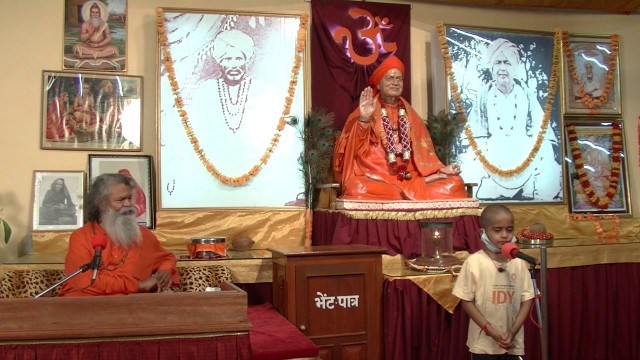
An evening satsang and discourse on moving forward from the pandemic and the importance of activity, community, and the guru.
"We are now making the second step. This second step means moving forward from the last nearly two years of confusion, from the corona disease and so on."
"Without Guru, we cannot know meditation. Without Guru, we cannot do pūjā. Without Guru Kṛpā, we have no mukti."
Swami Maheshwaranand Puri (Vishwaguruji) addresses the global community, encouraging strength and activity after the pandemic. He shares anecdotes about ashram life, introduces a new cafeteria, and discusses the role of a spiritual trust. Several disciples, including Swami Avatarpuri and students Upendra and Bhavani, then speak, offering prayers and explaining the traditional Hindu ashram system and the paramount importance of the guru.
Filming location: Jadan, Rajasthan, India
God is within us
7:10 - 7:39 (29 min)
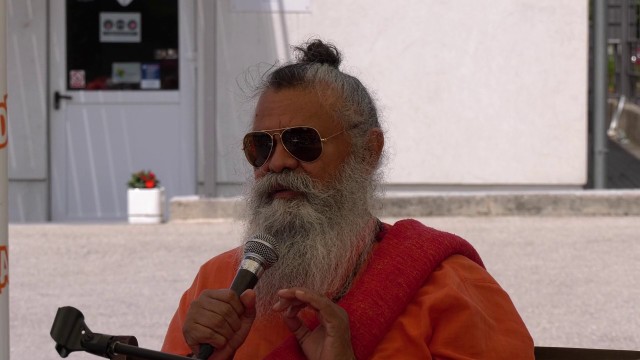
Morning satsang with Vishaguruji from Rijeka, Croatia. Karma yoga is the best yoga. How should we begin our day? Live happy healthy. Feel that I am a human so I don't harm any creatures. We search for God everywhere but we never look within ourselves. We should do our yoga practice regularly day by day. Vajra nadi is the base of our life. Practising bhramari pranayama.
Pranayama calms down the emotions
7:45 - 8:46 (61 min)
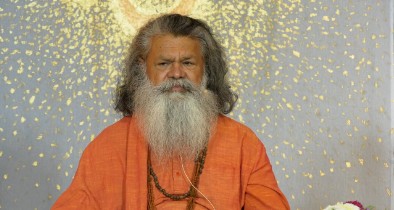
A satsang discourse on the foundational principles of yoga, discipline, and holistic health.
"Patañjali and the yogīs have said that yoga is successful only if you have discipline."
"Yoga will be successful through your karma yoga. And karma, anything that you do is karma. Even inhalation and exhalation are karma."
Swami Satyananda Saraswati addresses the assembly, emphasizing strict discipline in ashram life and spiritual practice. He critiques the lack of adherence to simple rules, urges everyone—including sannyāsīs—to engage in selfless service like gardening, and explains the health benefits of connecting with the earth. The talk expands into holistic yoga, covering diet, the importance of starting prāṇāyāma with the left nostril (Iḍā nāḍī), and the need for correct, supervised practice. He concludes by encouraging participation in deep meditation (anuṣṭhāna) and announces adjustments for future sessions.
Filming location: Strilky, Czech Republic
A Student's Gratitude and Svāmījī's Discourse on the Pandemic
8:50 - 9:48 (58 min)
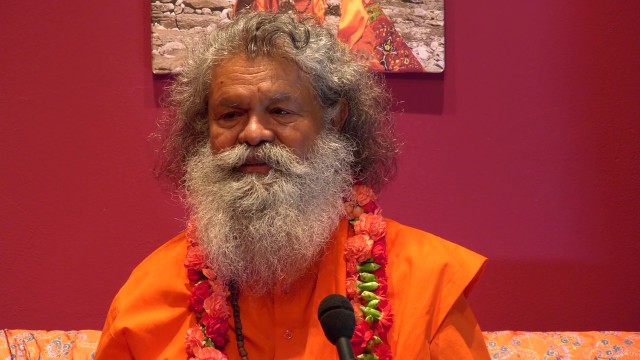
A student's expression of gratitude followed by Svāmījī's discourse on the pandemic and spiritual life.
"It is a great blessing to be a student of Svāmījī. It gives us a different perspective on life, allowing us to cope with circumstances better."
"O human, when we rise and open our eyes, we should say, I am human, I am human. Just one word and it immediately enters our thoughts, our feelings, our hearts."
A student shares heartfelt thanks for the guidance received during the pandemic, highlighting the power of mantra and a stable practice. Svāmījī then addresses the gathering, offering a wide-ranging spiritual perspective on the global crisis. He discusses the pandemic's causes, including collective karma and lifestyle, emphasizes the importance of prayer and the Yoga in Daily Life practice for health, and concludes with teachings on self-realization and meditation.
Filming location: Austria
Practising with Vishwaguruji
9:55 - 10:52 (57 min)
Evening Satsang with Vishwaguruji from Slovenia. Relaxation and bhajan singing. Vajra nadi gives the power of our whole body. Vajra nadi is like a tree it has a root and some branches. Practising sarva hita asanas and bhramari pranayama. If we practise asanas lifelong we will die very easy without pain.
Practicing Khatu Pranam
11:00 - 11:44 (44 min)
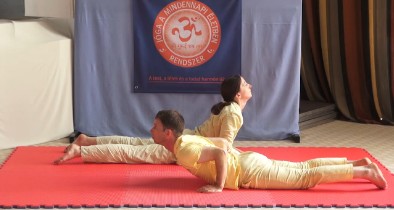
Satsang with Vishwaguruji from Vep, Hungary. Introduction to the second, extended version of Khatu Pranam.
Atma is one and body is different
11:50 - 12:43 (53 min)
A spiritual discourse on the unity of all spiritual paths and the nature of God.
"So we should respect all yoga centers anywhere. One should not say, 'Only mine, that's all.'"
"As the Holy Gurujī said, one in all and all in one... So, one God is that, and the second is: all we are Gods."
The lecturer delivers a satsang, using metaphors of children in a village and drops in an ocean to illustrate the essential oneness behind all religions, yoga schools, and individuals. He emphasizes respect for all paths, explains that every being contains the divine essence, and discusses the journey of the soul toward the cosmic self.
Filming location: Ljubljana, Slovenia
Karma yoga means serving
12:50 - 13:30 (40 min)
A morning satsang on karma yoga, seva, and skillful action.
"In karma yoga, it is easier to progress further in yogic sādhana, to reach the higher consciousness of the yogī."
"Yogaḥ karmasu kauśalam—yoga is skill in action. Yoga will be successful through the sādhana of karma."
Following a group practice in a meadow, the speaker addresses the assembly, describing the four groups present at the ashram. He defines karma yoga as selfless service, illustrating it with examples from Christian charity to simple daily kindnesses. A story about a disciple mistakenly moving a snail teaches that service must be skillful and informed. The talk emphasizes that seva is the foremost practice, accessible to everyone in countless ways.
Filming location: Strilky, Czech Republic
The Path of Sarvahita: Yoga, Health, and Resilience
13:35 - 14:25 (50 min)
A satsang on Sarvahita Yoga, health, and resilience during the pandemic.
"Those who did not practice properly may have gotten a little sick. Everyone stayed healthy because so many did not consume meat, alcohol, eggs, and so on, and we practiced."
"Sarvahitāsana is for everyone—a very old person lying in bed can also practice some of these services, and slowly, slowly, they will come back healthy again."
Swami Ji addresses the community, reflecting on the past year of the pandemic and advocating for the healing power of Sarvahita Yoga, a system he developed for all ages and abilities. He shares personal testimonies of recovery from health issues, explains the meaning of sarva (all) and hita (good), and emphasizes integrating yoga into daily life. The talk also touches on diet, the dangers of chemicals, and includes a listener's gratitude for specific breathing techniques like Brahmari.
Filming location: Vienna, Austria
The real friendship
14:30 - 15:23 (53 min)
A discourse on the festival of Diwali and the return of Lord Rama.
"Today is the holy day of Dīvālī, the festival associated with the Rāmāyaṇa and Bhagavān Śrī Rām."
"Dīvālī is a festival of light and a festival of spirituality."
Swami Niranjan Puri gives a satsang for Diwali, narrating the story of Lord Rama's return to Ayodhya and the celebrations of light and love that followed. He explains the spiritual significance of heart-to-heart connection, gift-giving, and brotherhood, drawing from the Ramayana and cross-cultural traditions. A disciple from the Czech Republic then elaborates on Diwali traditions within their ashram and the spiritual importance of Amavasya (new moon) days throughout the year.
Filming location: Strilky, Czech Republic
Instructions for practicing and teaching yoga
15:30 - 16:12 (42 min)
A closing address on integrating spiritual practice into daily life after a seminar.
"When you meditate or are walking somewhere—if you are walking with someone, of course, or driving in the car—it is better that you should not be talking. You can think more about your sādhanā."
"We should take into our heart, into our brain, into our thoughts and feelings, good things, peaceful things. And when we come home, of course, you have to be very good to your families."
The speaker, likely a yoga teacher or swami, concludes a seminar by advising participants on maintaining their practice (anuṣṭhāna) at home, emphasizing mindful conduct during daily activities like driving. He discusses creating a spiritual atmosphere, the importance of prāṇāyāma and cleansing techniques, and the value of in-person learning within a structured teacher-student hierarchy, while also praising the all-inclusive nature of satsaṅg.
Filming location: Strilky, Czech Republic
The Pranas
15:30 - 16:14 (44 min)
A spiritual discourse on the science of prāṇa and holistic health.
"You should look in our yoga book, as well as in Hidden Powers in Humans. Ten prāṇas are described: Prāṇa and Upaprāṇa."
"Systematically, when we do the prāṇāyāmas and āsanas, then meditation must be, because many things are affected by the reaction of the brain centers."
Following an opening chant, The lecturer delivers a teaching on the vital energies, or prāṇas, that govern bodily functions. He explains the roles of Prāṇa and Apāna, links physical ailments like constipation to prānic imbalances, and advocates for yoga, prāṇāyāma, and a vegetarian diet as foundational practices. The talk includes critiques of over-reliance on allopathic medicine, illustrated by an anecdote about a milk-drinking cow, and emphasizes practical application over intellectual knowledge.
Filming location: Bratislava, Slovakia
Dharma (1/2)
16:20 - 17:04 (44 min)
Satsang with Swami Gajanand from Strilky, Czech Republic.
Shiva tried to give immortality to Parvati
17:05 - 17:51 (46 min)
A spiritual discourse on the divine union of Śiva and Śakti, emphasizing gender equality and the unity of all beings.
"In many religions, and many countries, and many things, they were saying that women have no soul."
"It is said from the Satyugas, 'Mātṛ Devo Bhava, Pitṛ Devo Bhava.' First God, 'Mātṛ Devo Bhava.'"
The speaker, addressing a gathering, explores the inseparable nature of the divine masculine and feminine. He recounts the myth of Śiva and Satī, explaining how Viṣṇu used the Sudarśana Cakra to dismember Satī's body, creating the Śakti Pīṭhas. He also shares the story of Pārvatī's attempt to gain immortality through a mantra, which is overheard by a parrot. The talk stresses that the divine union exists within every person and advocates for pure living and respect for all.
Filming location: Slovenia
You are great but remain on the path
17:55 - 18:48 (53 min)
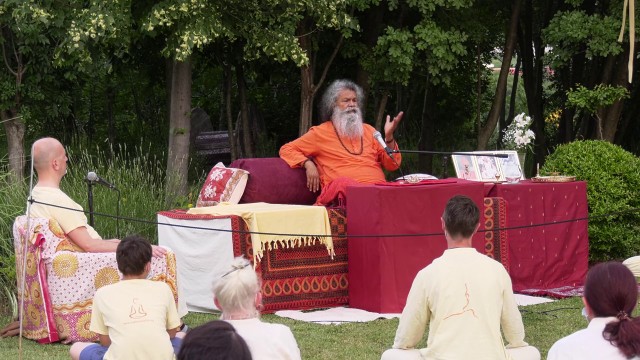
A satsang discourse on discerning true spirituality from ritual exploitation.
"Our Gurujī, Swāmī Madhavānandajī, the Holy Gurujī, always said, 'Next to God is the doctor.'"
"In such a way, we people are still not so far, but we are learning... Therefore, the real Guru, the real Ṛṣi, they are different than this."
The lecturer addresses a global audience via television, emphasizing respect for both science and spirituality. He shares a parable from Gurudev about a son who exposes pandits exploiting his mother's grief after his father's death, using it to illustrate the difference between living spiritual guidance and empty ritual. The talk covers the value of a yogic lifestyle, the concept of a living guru, and concludes with a contemplation on the breath.
Filming location: Rijeka, Croatia
Past is gone future is not here yet
18:55 - 19:39 (44 min)
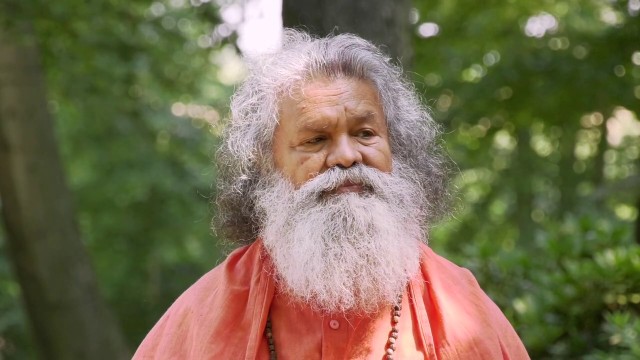
A spiritual discourse on living in the present moment and the nature of past, present, and future.
"Therefore, it is at present. Be in the present."
"So the past is gone. The present is here. But you think, 'In the future, I will also get this.' But you will not get it. That’s it."
An instructor addresses a group, advising them to release attachment to past experiences and future anxieties. He advocates for a simple, relaxed practice, contrasting it with other meditation techniques. Using stories, such as a dog losing its bread by coveting a reflection, he illustrates the futility of dwelling on what is gone or what might be, emphasizing that true practice (Anuṣṭhāna) is about being grounded in the now.
Filming location: Strilky, Czech Republic
The Nabhi
19:45 - 20:40 (55 min)
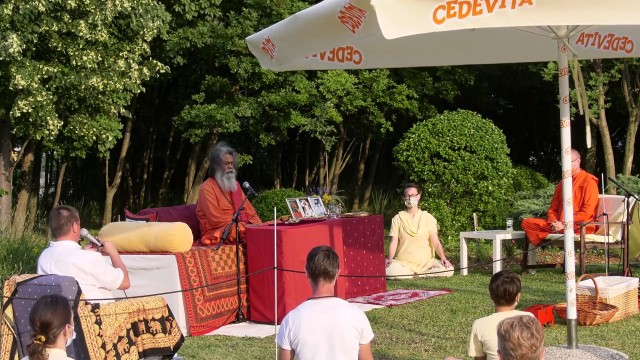
Evening satsang with Vishwaguruji from Rijeka, Croatia. We have to enter into the cosmic light. The Nabhi (Navel) is the root. Try to learn and see the navel properly. Diet and exercise balance our weight. In the human body, some will fall down, some will go to the Brahma Loka. Exercise to feel the navel. There are 52 letters and we should begin with the Om chanting. While chanting Ohm we can feel how nabhi awakes. Balancing brain functions by practicing Brahmari pranayama and chanting the mantra Om.
What does Holiness mean
20:45 - 21:52 (67 min)
A spiritual talk reflecting on thirty years of the Yoga in Daily Life community in Slovenia.
"You see, we think we are the bosses of our life. But in these few years, I realized that actually we are artists in the play—in Līlā, as it is called in Hindi—where we are playing the roles we received for this life."
"Wherever Gurudev, Viśva Gurujī, puts his holy feet, there gold will grow up. I do not mean the real one, but in different forms."
Swami Yogeshwaranand, a senior disciple, addresses the community, sharing personal stories of his spiritual journey that began with a book on yoga and led him to Gurudev. He reflects on the growth of the community over three decades, the importance of both material and spiritual education, and the guiding, often humorous, role of the Guru in life's events. The talk emphasizes seva, gratitude, and the collective project of building ashrams as a form of spiritual practice.
Filming location: Kranj, Slovenia
Around the world - Yoga Class of Level 6, Zagreb
22:00 - 23:01 (61 min)
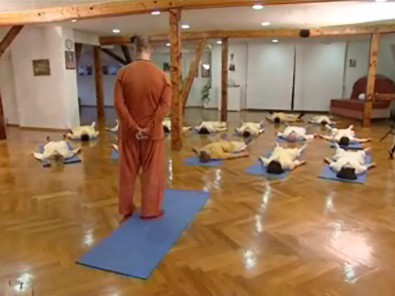
Yoga in Daily Life Class of Level 6 at Sri Devpuriji Ashram, Zagreb, Croatia.
One day we will be together
23:05 - 23:49 (44 min)
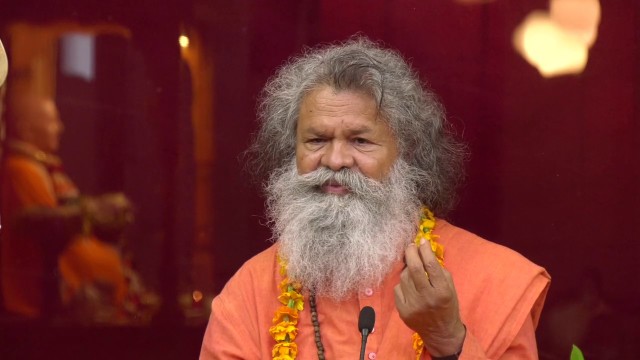
An evening satsang on spiritual unity and the essence of all paths.
"It is very important that everyone has their yoga center's name... but yoga is only one yoga; we simply have different names."
"All children are born into what we call a kindergarten. In the kindergarten, we see all children as very beautiful and very good."
The lecturer addresses the global Yoga in Daily Life community, using analogies of families, children, and the water cycle to illustrate the fundamental oneness underlying all yoga schools, religions, and human beings. He emphasizes respect for all traditions and lineages while cautioning against the discord created by attachment to names and identities. The talk concludes with a prayer for harmony and a reminder to seek inner unity.
Filming location: Strilky, Czech Republic
The Glory of Gurudeva's Name
23:55 - 0:14 (19 min)
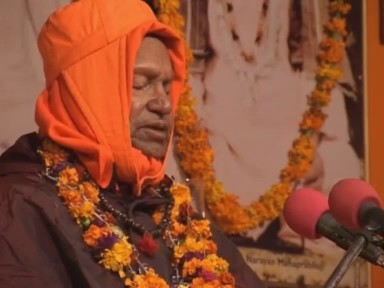
A satsang discourse on the essential role of the true Guru for liberation and bliss.
"Until today, no one in this world has attained the Ātmā-Paramātmā without Gurudev, and no one ever will." "If one chants the Guru's name with faith, one will surely reach the shore."
A speaker addresses the assembly, asserting that true happiness and Self-knowledge come only through grace of a Satguru. He illustrates this with stories of the powerful ascetic Sanghdev, who was liberated by Sant Gyaneshwar, and the egoistic tantric Bhaskarananda, who was humbled by Bhagavan Shri Dip Narayana Mahaprabhuji. The talk emphasizes that rituals and powers are insufficient without the Guru, who alone can dispel ignorance and bestow the bliss of liberation.
Filming location: Bari Khatu, Rajasthan, India
American
Australian