
European
Om Ashram
0:05 - 0:14 (9 min)
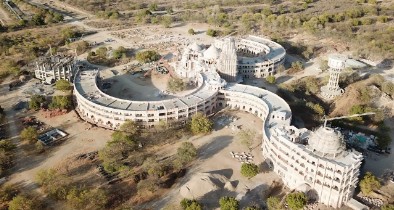
A promotional video about the Omkara Mahavira, a large-scale world peace monument and humanitarian complex under construction in Rajasthan.
"Since 1993, this structure has been under construction for the welfare of humanity, the protection of animals and nature, for teaching yoga, meditation, and philosophy."
"To bring this vision to full fruition, it needs everybody’s contribution. You are not a drop in the ocean. You are the entire ocean in a single drop."
The video details the vision of yogi Paramahamsa Swami Maheshvarananda to build the world's largest Om symbol, which will contain 108 residential compartments. It highlights the existing, operational facets of the site including a free school and college, a hospital, and a large artificial lake for water conservation. The narrative connects this to the global activities of the "Yoga in Daily Life" system, such as tree planting and animal shelters, framing the entire project as a holistic effort for peace, health, and environmental revival. It concludes with a call for donations to complete the monument.
Filming locations: Jhadan, Rajasthan, India.
In the home of the soul
0:15 - 1:18 (63 min)
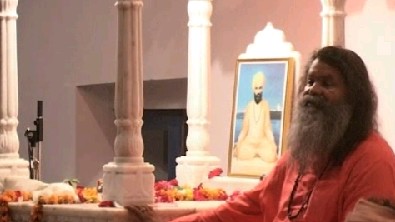
Summer 2003. in India with presentation of Yoga In Daily Life projects and Swamijis lecture
We should unite with the Supreme
1:25 - 1:44 (19 min)
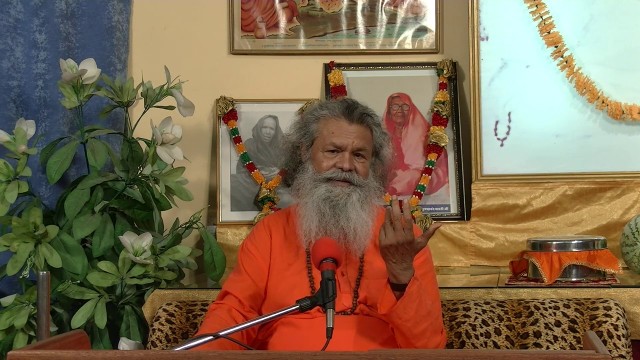
A spiritual discourse on the nature of the individual soul and its merging with the divine.
"Your father was, let’s say, 20, 35 years, and his mother also, something like that, and they gave the baby, the child, and that child begins from there."
"We are all like one drop. We know we are on this earth. We are individual, our body, everything. What it is, but we want to become one with that, so that I will not come again back."
The speaker addresses a gathering, using the metaphor of a single drop of water to explore the journey of the individual soul (ātman) toward merging with the infinite ocean of the divine. He discusses the temporary nature of earthly life, relationships, and identity, emphasizing the ultimate desire to transcend individuality and become one with the cosmic whole. The talk concludes with a chant and salutations.
Filming location: Jadan, Rajasthan, India
Sanyas Diksha of Swami Chandrapuriji
1:50 - 2:00 (10 min)
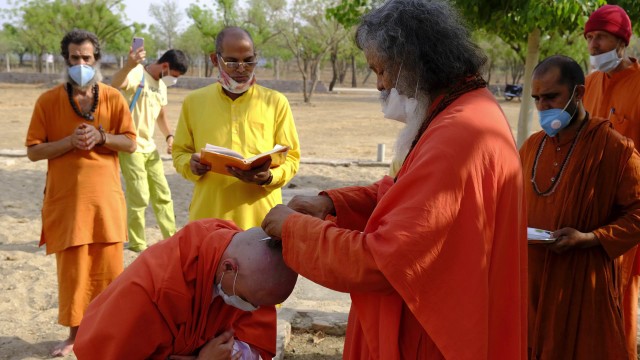
A devotional satsang featuring invocations, chants, and poetic verses.
"Śiva-śakti nahī̃ thā, liṅga nahī̃ thā, bhaga nahī̃ thā. Nakha cīr ke liṅga banāyā, kamar cīr ke bhaga banāyā."
"Kaun Guru Ne Kaata Kes, Kaun Purush Ne Diya Updes? Alakh Purush Ne Kaata Kes, Satguru Ne Diya Updes."
The session opens with a call for a spiritual journey and a collective resolve. It proceeds with a series of Sanskrit mantras and salutations to deities and gurus, including Guru Brahma and Śrī Durgā. A poetic verse describes a primordial creation myth, followed by a devotional dialogue between Ganesh and Mahesh (Shiva) inquiring about divine actions and teachings. The gathering concludes with triumphant praises to various manifestations of the divine and the eternal dharma.
Adi Shankaracharya and Advaita Vada
2:05 - 3:17 (72 min)
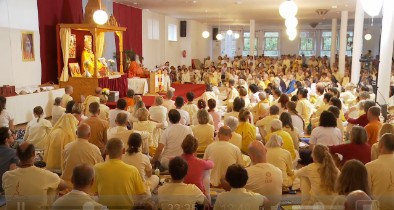
Satsang with Vishwaguruji Maheshwarananda, Summer Retreat in Strilky Ashram, Czech Republic.
What means sanyas diksha
3:25 - 4:54 (89 min)
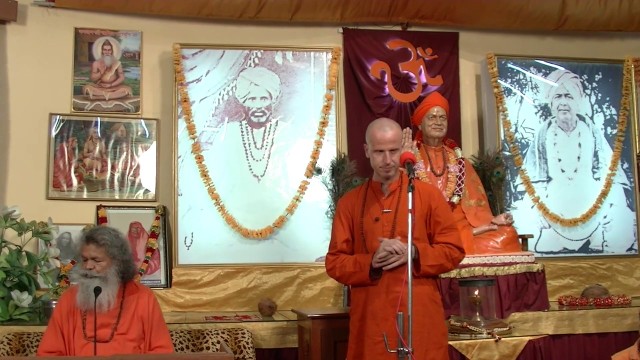
Evening satsang with VishwWaguruji from Jadan Ashram, Rajasthan, India. Singing bhajans, including Hanuman Chalisa. Chanting mantras. Introduction Swami Chandrapuri who became sanyasi. It is very important to achieve sannyas and seva in the life. It means purification and realization of the Self. You have to give up many things and live without attachments. Swami Chandrapuri tells how he met Vishwaguruji and explains the main steps towards sannyas diksha.
Adi Shankaracharya and Advaita Vada
5:00 - 6:12 (72 min)
Satsang with Vishwaguruji Maheshwarananda, Summer Retreat in Strilky Ashram, Czech Republic.
Go to the Satsang
6:20 - 7:11 (51 min)
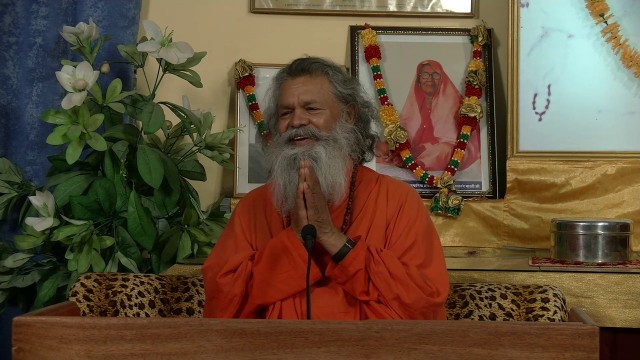
Evening satsang with Vishwaguruji from Jadan Ashram, Rajasthan, India. Sat means truth. Ku means negative. A person who all-time is very negative. In the hand, there is a knife, but they are saying sweet words. A story told by Holy Guruji about a disciple, who went to the festival. Our body looks like a human, but qualities are often not like that. Satsang will lead to the cosmic Self.
The real disciple
7:15 - 7:54 (39 min)
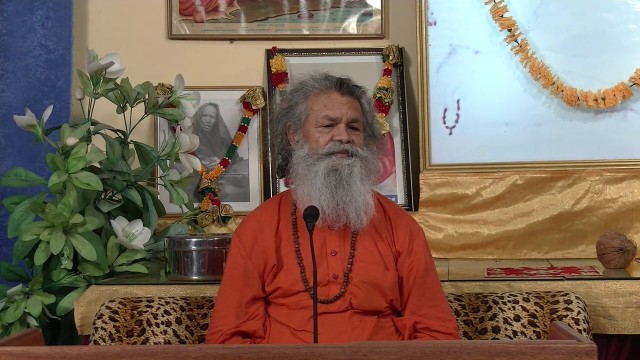
A satsang discourse on the greatness of Adi Shankaracharya and a story of discipleship.
"All of Sanātana Dharma is, in essence, Śaṅkarācārya. He is the one who brought people back to Satya Sanātana when they were lost."
"Gurujī knew that he was some great soul, already like a god, but he wanted to test him."
The speaker honors Adi Shankaracharya's birth anniversary, recounting his early life and his pivotal role in reviving Sanatana Dharma. He then narrates the tale of the young disciple Upamanyu, who endures severe tests of obedience and austerity from his guru, the Rishi Lomasha, culminating in a divine vision and restoration. The discourse contrasts this ideal of steadfast discipleship with the challenges of the modern age.
Filming location: Jadan, Rajasthan, India
Clean yourself to become a saint
8:00 - 8:55 (55 min)
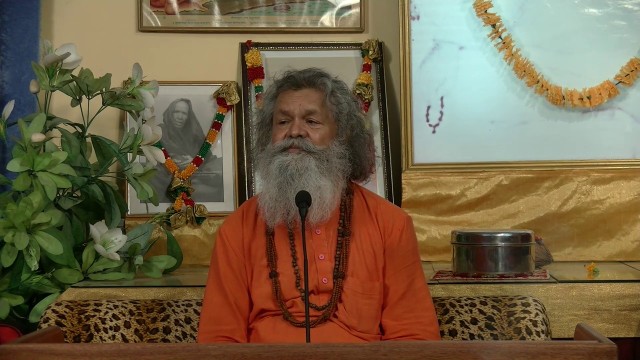
Evening satsang with Vishwaguruji from Jadan Ashram, Rajasthan, India. The story about Holigurujis first visit in Europe and how did he get the name Holi Guruji. That time was a communist time in Czechoslovakia and there was an iron curtain in the border. Everyone should be free in every aspect. Yogis should feel friendship and oneness for others. First, w should clean ourselves. Sanyas people also should clean everything. Serve all bhaktas. We need tyaga to become sanyas. The story about Vishwaguruji when he left Holiguruji as a Swami first time. The story about Swami Sivananda and a very learned man. The story bout Acalramji. Bhajan singing.
Be patient and faithful
9:00 - 9:58 (58 min)
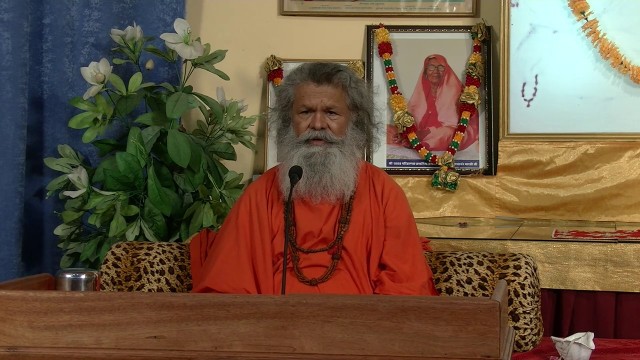
Evening satsang with Vishwaguruji from Jadan Ashram, Rajasthan, India. In this corona time we have more time to relax and to think who and how are we. During meditation, we should withdraw ourselves and try to be in oneness with our mala and mantra. We can sing also bhajans which are teachings. Great sadhus who wrote many bhajans they wrote their name to the bhajans to give their stamp on it. Stories about Holy Guruji and some man who asked questions for him. We can know, how is the distance from earth and haven what a new thing can write a bhakta about spirituality nowadays. Vishwaguruji explains the correct system of education for children. Children also need to have some rest between classes. Guru is like a pilot always aware. A story about Holiguruji and a disciple. Bhajan singing
Prayer and Bhajans
10:05 - 10:56 (51 min)
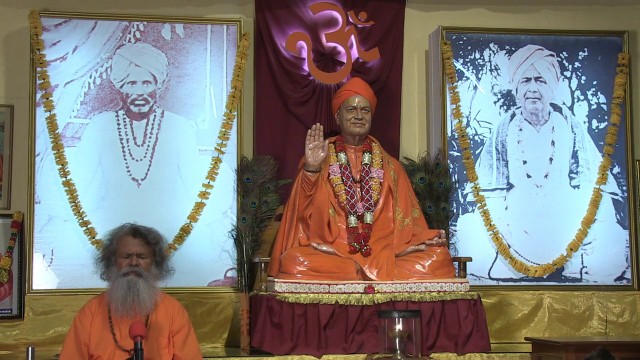
Evening satsang with Vishwaguruji from Jadan Ashram, Rajasthan, India. We all are connected with the Guru Parampara. We are praying for every entity, we are one. Singing bhajans.
Practicing Khatu Pranam
11:00 - 11:44 (44 min)
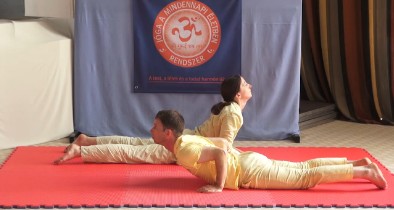
Satsang with Vishwaguruji from Vep, Hungary. Introduction to the second, extended version of Khatu Pranam.
The real disciple
11:50 - 12:29 (39 min)
A satsang discourse on the greatness of Adi Shankaracharya and a story of discipleship.
"All of Sanātana Dharma is, in essence, Śaṅkarācārya. He is the one who brought people back to Satya Sanātana when they were lost."
"Gurujī knew that he was some great soul, already like a god, but he wanted to test him."
The speaker honors Adi Shankaracharya's birth anniversary, recounting his early life and his pivotal role in reviving Sanatana Dharma. He then narrates the tale of the young disciple Upamanyu, who endures severe tests of obedience and austerity from his guru, the Rishi Lomasha, culminating in a divine vision and restoration. The discourse contrasts this ideal of steadfast discipleship with the challenges of the modern age.
Filming location: Jadan, Rajasthan, India
Everything is yoga
12:35 - 13:05 (30 min)
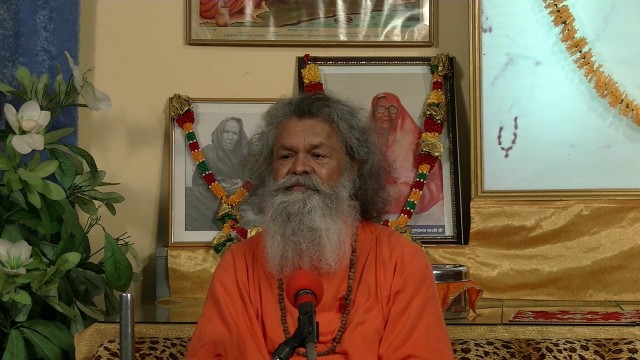
An evening discourse on universal spirituality and the essence of yoga.
"If we take one drop of water in our palm and hold it above the ocean, when that drop falls back into the ocean, there is no more separate drop. It becomes the whole ocean."
"Sanātana means each and every soul has God within himself, and they are the humans. If humans realize this, then they will not kill anyone."
Swami Alak Puriji Mahadeva addresses a global audience, exploring the unity of all life and the singular spiritual goal. Using the metaphor of a drop merging into the ocean, he discusses the soul's journey, critiques religious divisions, and explains yoga as an all-encompassing practice from physical health to divine realization, ultimately leading back to Shiva.
Filming location: Jadan, Rajasthan, India
Use it, or you will lose it
13:10 - 13:56 (46 min)

An evening satsang discourse on spiritual realization and the nature of existence.
"What we need more is that we have to come to that step which is the highest, meaning to the cosmic."
"Without Guru, we cannot know Brahmā, Viṣṇu, Maheś... Without Guru, we cannot do dhyāna. Without Guru, we cannot do pūjā."
The lecturer speaks on the human journey toward cosmic consciousness, using metaphors of nature's cycles, the elusive horizon, and a parable about hidden treasure to illustrate spiritual truths. He emphasizes the necessity of the guru's grace for meditation and liberation, concluding with a devotional bhajan.
Filming location: Jadan, Rajasthan, India
We should help
14:00 - 14:45 (45 min)
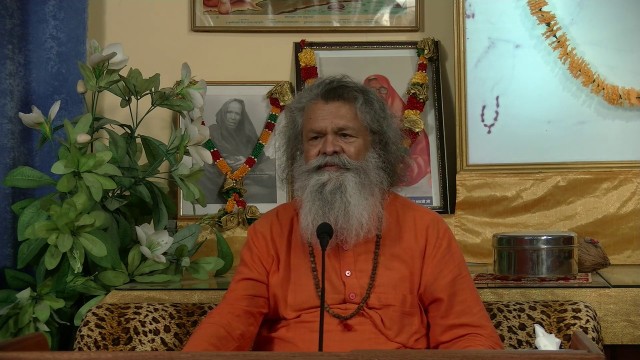
Evening satsang with Vishwaguruji from Jadan Ashram, Rajasthan, India. We, humans, learned a lot but we are not immortal. Rakshasas have so much power and they would like to be immortal. Atma is immortal and can reside in the Brahmaloka, but the physical body will dissolve again. We are meditating in our minds. Some doing puja and worshipping God because of fear, or because of some interest. With prayer, we can balance human powers. Ashram means: come and be here. It is for all, we should help, help, and help. Let's come to the supreme consciousness within.
Follow your Gurudev
14:50 - 15:19 (29 min)
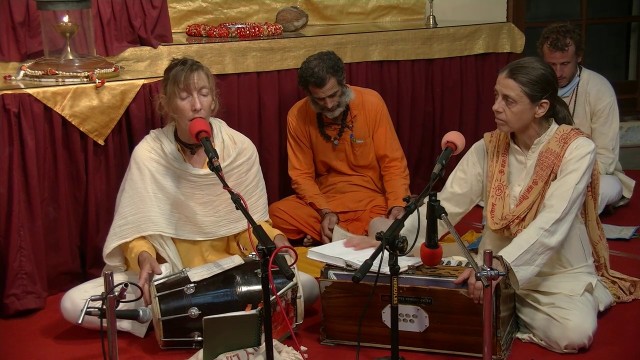
A spiritual discourse on devotion to the Guru and the sanctity of the ashram.
"When the lamp is here, we do not look at the lamp. We see everything else... But someone who sees that lamp—what is that lamp? That lamp is our beloved. And what is our beloved? Our Gurudev."
"Under this umbrella or in this meditation hall, one should not talk about anything negative... Only speak of spiritual matters. If you are trying to go here and there... then you have lost your whole life."
A speaker reflects on the profound presence of Holy Gurujī, recalling time spent with him in Gujarat and the early days of the ashram. He emphasizes unwavering devotion to one's own Guru as the singular path, warning against spiritual distraction. The talk concludes with the singing of devotional bhajans.
Filming location: Jadan, Rajasthan, India
Atma is the same in every being
15:25 - 16:03 (38 min)
Program from Village near Nipal, Rajasthan, India.
Kriya for opening to knowledge
16:10 - 16:58 (48 min)
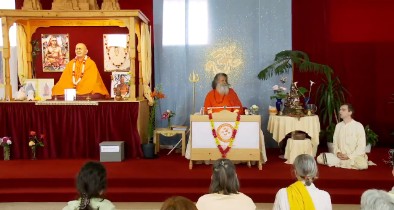
Satsang with Vishwaguru Mahamandaleshwar Paramhans Swami Maheshwarananda, Strilky Ashram, Czech Republic. Vishwaguruji speaks about the three centers, or chakras, where sound is created and gives a practical demonstration how mantras change our being.
Bhajan singing from Jadan Ashram
17:05 - 17:40 (35 min)
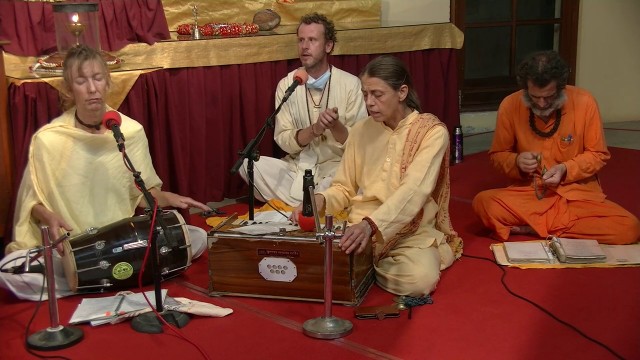
Evening Satsang with Vishwaguruji from Jadan Ashram, Rajasthan, India. Singing bhajans.
Don't ask anything from God
17:45 - 18:35 (50 min)
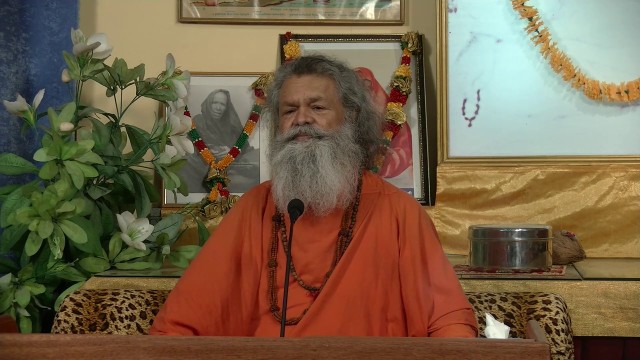
Evening Satsang with Vishwaguruji from Jadan Ashram, Rajasthan, India. There are much suffering and sadness in the world now. Some people don't understand this situation but yogis and brahmans practise their sadhana and chanting mantras and praying. Morning some negative things try to remove from our body and mind so we should begin our day by cleaning and praying. We shouldn't ask anything from God but he knows what we need. We need positive thinking to save our health. There is some impurities in our body. Laziness means that our energy is not clean. Bhajan singing.
Always be positive
18:40 - 19:23 (43 min)
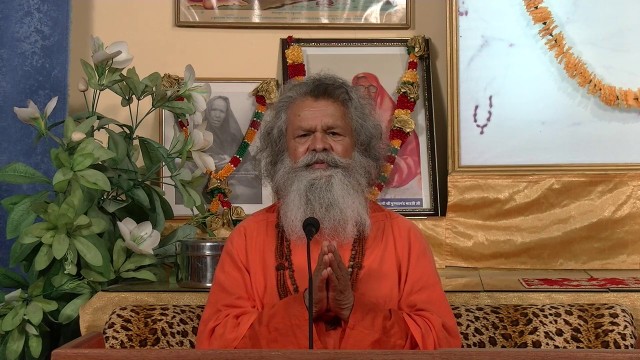
Evening satsang with Vishwaguruji from Jadan Ashram, Rajasthan, India. We should send our love to all creatures. We should respect each other and the religious belief of others. Do something which is protection for others and animals also. We should give something to others and don't be greedy. Bhajan singing.
Dharma and adharma
19:30 - 20:05 (35 min)
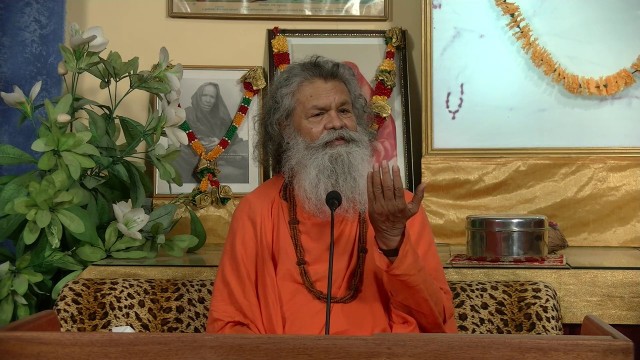
Evening satsang with Viswhaguruji from Jadan Ashram, Rajasthan, India. Our prayers have strength only if we follow ahimsa. Also don't say painful words to anyone. Don't use water unnecessarily because it is our life. Air is also life. Tulsi is not only a saint plant but it is God himself. Don't think negative of others. Bhajan singing.
What means sanyas diksha
20:10 - 21:39 (89 min)
Evening satsang with VishwWaguruji from Jadan Ashram, Rajasthan, India. Singing bhajans, including Hanuman Chalisa. Chanting mantras. Introduction Swami Chandrapuri who became sanyasi. It is very important to achieve sannyas and seva in the life. It means purification and realization of the Self. You have to give up many things and live without attachments. Swami Chandrapuri tells how he met Vishwaguruji and explains the main steps towards sannyas diksha.
We should reach the goal
21:10 - 22:06 (56 min)
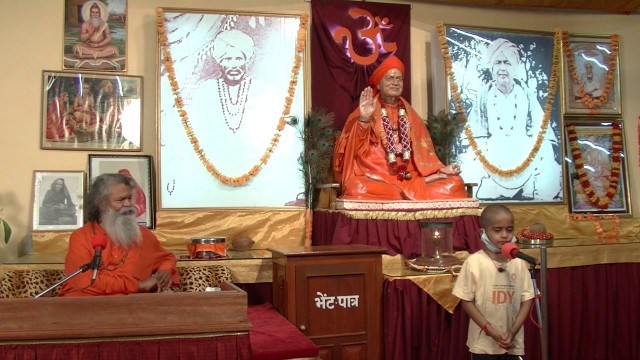
An evening satsang and discourse on moving forward from the pandemic and the importance of activity, community, and the guru.
"We are now making the second step. This second step means moving forward from the last nearly two years of confusion, from the corona disease and so on."
"Without Guru, we cannot know meditation. Without Guru, we cannot do pūjā. Without Guru Kṛpā, we have no mukti."
Swami Maheshwaranand Puri (Vishwaguruji) addresses the global community, encouraging strength and activity after the pandemic. He shares anecdotes about ashram life, introduces a new cafeteria, and discusses the role of a spiritual trust. Several disciples, including Swami Avatarpuri and students Upendra and Bhavani, then speak, offering prayers and explaining the traditional Hindu ashram system and the paramount importance of the guru.
Filming location: Jadan, Rajasthan, India
Sanyas Diksha of Swami Chandrapuriji
21:45 - 21:55 (10 min)
A devotional satsang featuring invocations, chants, and poetic verses.
"Śiva-śakti nahī̃ thā, liṅga nahī̃ thā, bhaga nahī̃ thā. Nakha cīr ke liṅga banāyā, kamar cīr ke bhaga banāyā."
"Kaun Guru Ne Kaata Kes, Kaun Purush Ne Diya Updes? Alakh Purush Ne Kaata Kes, Satguru Ne Diya Updes."
The session opens with a call for a spiritual journey and a collective resolve. It proceeds with a series of Sanskrit mantras and salutations to deities and gurus, including Guru Brahma and Śrī Durgā. A poetic verse describes a primordial creation myth, followed by a devotional dialogue between Ganesh and Mahesh (Shiva) inquiring about divine actions and teachings. The gathering concludes with triumphant praises to various manifestations of the divine and the eternal dharma.
Around the world - Opening of new YIDL center in Nadlac, Romania
22:00 - 22:40 (40 min)
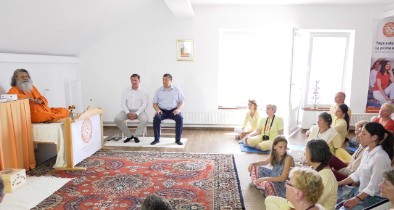
Morning satsang with Vishwaguruji from Nadlac, Romania.
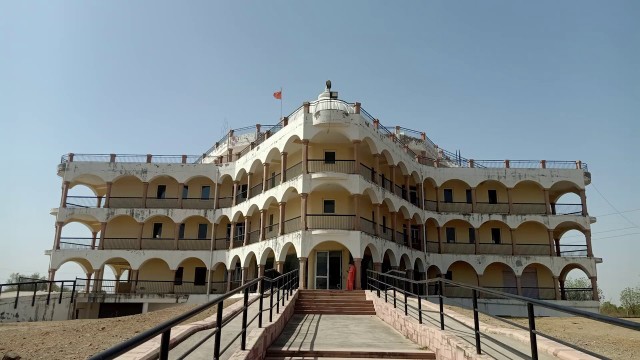
Covid Quarantine Centre Jadan Hospital
22:45 - 22:58 (13 min)
Shiva will bless All
23:05 - 23:28 (23 min)
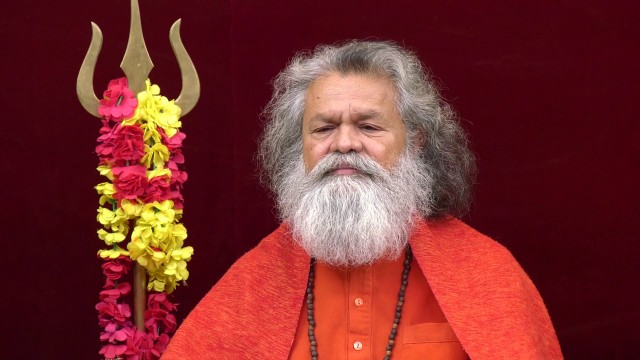
A spiritual discourse on the importance of devotion to Śiva in the current age.
"In this time of the Kali Yuga, we all have to become one."
"Therefore, our holy Gurujī said, 'One in all and all in one.'"
Following opening prayers, the speaker addresses a global audience, warning of the coming hardships of the Kali Yuga and proclaiming that Śiva's unifying grace is the solution. He explains that Śiva accepts all people, unlike other deities, and urges constant remembrance through chanting. The talk includes a recitation and explanation of a Hindi bhajan about the preciousness and fleeting nature of human life.
Filming location: Strilky, Czech Republic
We should unite with the Supreme
23:35 - 23:54 (19 min)
A spiritual discourse on the nature of the individual soul and its merging with the divine.
"Your father was, let’s say, 20, 35 years, and his mother also, something like that, and they gave the baby, the child, and that child begins from there."
"We are all like one drop. We know we are on this earth. We are individual, our body, everything. What it is, but we want to become one with that, so that I will not come again back."
The speaker addresses a gathering, using the metaphor of a single drop of water to explore the journey of the individual soul (ātman) toward merging with the infinite ocean of the divine. He discusses the temporary nature of earthly life, relationships, and identity, emphasizing the ultimate desire to transcend individuality and become one with the cosmic whole. The talk concludes with a chant and salutations.
Filming location: Jadan, Rajasthan, India
American
Australian