
European
Only wisdom can digest ego
0:15 - 1:13 (58 min)
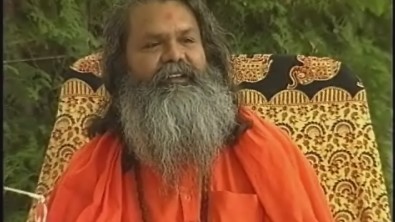
Lecture from Vep, Hungary
Follow the path
1:20 - 2:37 (77 min)
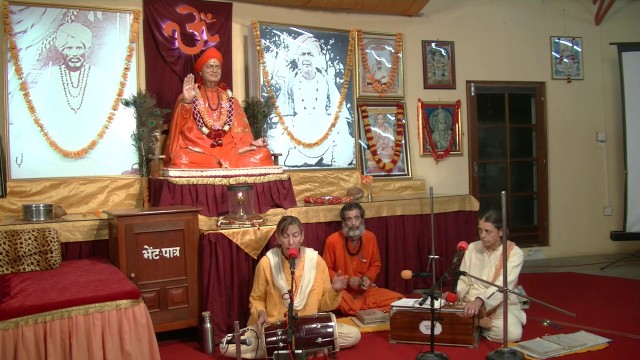
Evening satsang with Vishwaguruji from Jadan Ashram, Rajasthan, India. Bhajan singing. Bhajans have more power and knowledge than kirtans. The story about Rama Sita Hanuman and his bhakti towards Rama. If we have Gurudev he will be always our spiritual father. We should always know where is the place of our Guru and where is our place. Do not lose your mother father and your Guru.
Be careful with the mind
2:45 - 4:08 (83 min)
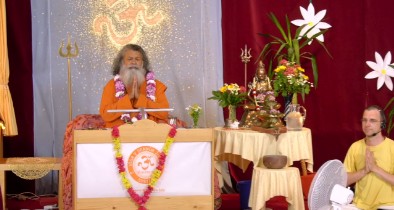
A spiritual discourse warning against complacency and negative influences on the path.
"Therefore, as much as you are developing spiritually, you are in danger. As much as you spiritually develop, you are in danger."
"Mahāprabhujī said that in the satsaṅg, if some kuṣaṅga comes, then it's like a bite of a poisonous snake."
The lecturer addresses devotees at an ashram, cautioning that spiritual progress brings vulnerability. He uses parables, like a mighty tree felled by a small axe, and references to Hindu scriptures to illustrate how ego, negative company, and mental afflictions can destroy a seeker. He emphasizes the necessity of vigilance, satsang, and humility, sharing personal stories and answering a devotee's account of pilgrimage.
Filming location: Strilky, Czech Republic
Our origin is in God
4:15 - 4:56 (41 min)
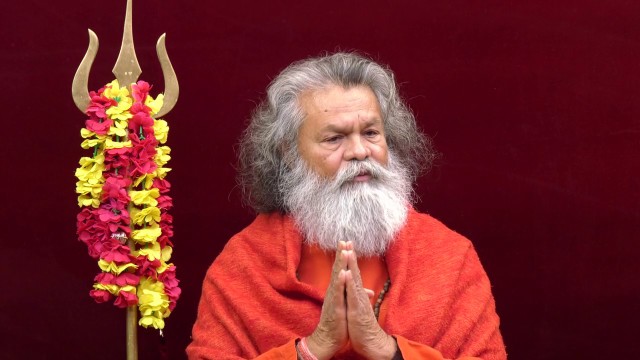
A spiritual discourse on the five sheaths of existence and the nature of life.
"God has given us this body. When the soul, the ātmā, enters the body, it comes into this world, to Earth."
"These five kośas, one after the other, Annamaya kośa, prāṇamaya kośa, manomaya kośa, vijñānamaya kośa, ānandamaya kośa."
A speaker, conveying blessings from Gurudeva Swāmī Madhavānanda, explores the journey of the soul into the human body and the five energetic sheaths (kośas) that surround it. The talk contemplates the cycle of life, the nature of God across traditions, and ethical principles like non-violence and forgiveness, weaving in references to Jesus and a parable about a fruit tree. The session concludes with a tribute to Satguru Dev on the anniversary of his Mahāsamādhi, honoring his life and teachings.
Filming location: Strilky, Czech Republic
Prayer and Bhajans
5:00 - 5:51 (51 min)
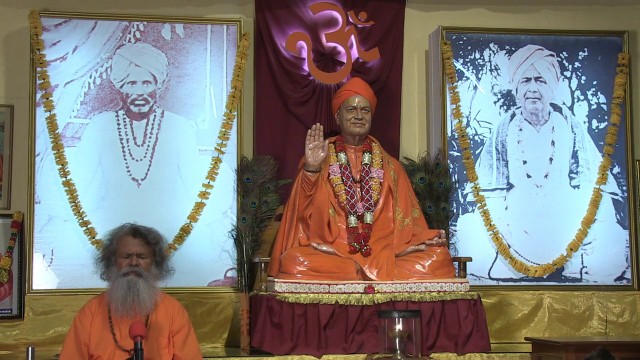
Evening satsang with Vishwaguruji from Jadan Ashram, Rajasthan, India. We all are connected with the Guru Parampara. We are praying for every entity, we are one. Singing bhajans.
Going to Brahmaloka
5:55 - 6:54 (59 min)
An introductory talk on yoga philosophy and practice at an ashram.
"Even if you are an advanced practitioner, you should do the beginner exercises at least once a week, or you must practice them before performing advanced postures."
"Tons of theory is nothing; a gram of practice."
The lecturer addresses attendees, clarifying misconceptions about terms like Aṣṭāṅga and Haṭha Yoga while emphasizing the foundational importance of basic practices in the "Yoga in Daily Life" system. He discusses the challenges of Vairāgya (detachment) and Jñāna Yoga, using anecdotes and humor to illustrate the gap between theory and practice, and outlines the week's upcoming program of Kriyā Yoga, meditation, and fasting.
Filming location: Strilky, Czech Republic
Be careful with the mind
7:00 - 8:23 (83 min)
A spiritual discourse warning against complacency and negative influences on the path.
"Therefore, as much as you are developing spiritually, you are in danger. As much as you spiritually develop, you are in danger."
"Mahāprabhujī said that in the satsaṅg, if some kuṣaṅga comes, then it's like a bite of a poisonous snake."
The lecturer addresses devotees at an ashram, cautioning that spiritual progress brings vulnerability. He uses parables, like a mighty tree felled by a small axe, and references to Hindu scriptures to illustrate how ego, negative company, and mental afflictions can destroy a seeker. He emphasizes the necessity of vigilance, satsang, and humility, sharing personal stories and answering a devotee's account of pilgrimage.
Filming location: Strilky, Czech Republic
Follow the path
8:30 - 9:47 (77 min)
Evening satsang with Vishwaguruji from Jadan Ashram, Rajasthan, India. Bhajan singing. Bhajans have more power and knowledge than kirtans. The story about Rama Sita Hanuman and his bhakti towards Rama. If we have Gurudev he will be always our spiritual father. We should always know where is the place of our Guru and where is our place. Do not lose your mother father and your Guru.
The Essence of Prāṇa, Guru, and Disciple
9:55 - 10:53 (58 min)
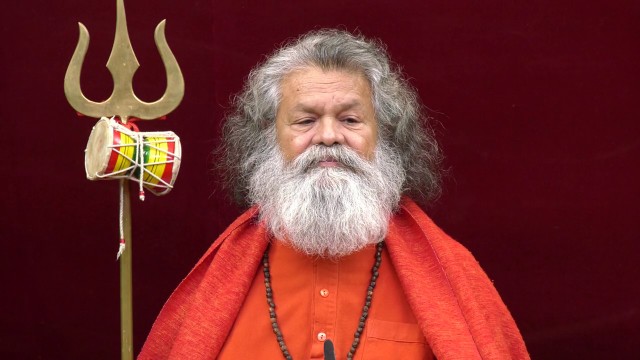
An evening satsang on prāṇa, consciousness, and the guru-disciple relationship.
"Everything is in our prāṇa. Prāṇa. And prāṇa, many times we think someone died. But still, there is prāṇa inside."
"Inside is giving love, and outside is giving you something to give the shape. And to give the shape of the disciples, a real shape is not easy."
Swami Maheshvarananda addresses a global audience, weaving teachings on the vital breath (prāṇa) and states of consciousness (waking, dreaming, deep sleep) with personal reminiscences of his gurus, Śrī Dīp Nārāyaṇa Mahāprabhujī and Swami Madhavanandji. He illustrates the essence of discipleship through stories of their divine interactions and announces observances for the coming days, including fasting and prayer for Mahāprabhujī.
Filming location: Strilky, Czech Republic
Practicing of the system 'Yoga in Daily Life', Level 3 - Part 2
11:00 - 12:07 (67 min)
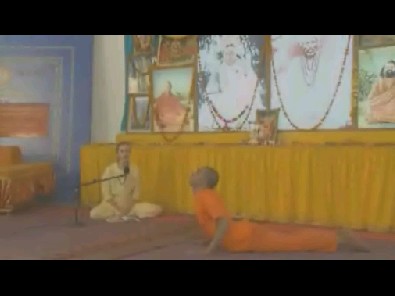
Practicing of the system "Yoga in Daily Life", Level 3 - Part 2, in Om Vishwa Deep Gurukul Swami Maheshwaranand Ashram, Jadan, Rajasthan, India on 27th of October 2009.
Be conscious in the present
12:15 - 12:59 (44 min)
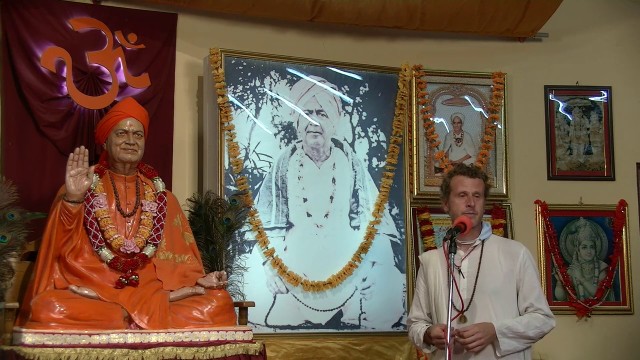
A satsang discourse on spiritual practice, community, and lessons from life in a small ashram.
"In satsaṅg, in prayer, you should open your ears and fill your chest with oxygen. This is how you always cleanse yourself."
"Throughout the fights or the debates, slowly, slowly, we are polished. And through the grace of Viśva Gurujī, we can work on these qualities to become more aware, to become a better person."
Swami Vishwaguruji opens the session with reflections on prayer, purification, and the essence of an ashram as a place of work (sāram). He shares anecdotes, including a story about a worker and a wheelbarrow, to illustrate the need for attentive effort. The disciple Chandra Puri then speaks, sharing his experience of living for many years with Mataji (Sadhvi Yogamaya/Mayok Shaktipuri) in the small Seva Ashram in Kāṭhū. He describes their initial clashes and how this close environment forced self-confrontation, detailing Mataji's teachings on self-observation, presence, and seeing one's own qualities reflected in conflicts.
Filming location: Jadan, Rajasthan, India
The nature of the Guru
13:05 - 13:45 (40 min)
A spiritual discourse on the oneness of the soul and the path to supreme consciousness.
"Our ātmā, your ātmā, every ātmā is one ātmā."
"Step by step, our ātmā, our soul, will merge into the eternal. This is Gurudev's Vākya."
He describes the spiritual journey through the five layers of the body (kośas) toward higher states like Mahātmā and Paramātmā, emphasizing that this one soul exists in every being and element. The talk includes practical advice on meditation (dhun), avoiding negative speech, and humorous observations on language misunderstandings.
Filming location: Prague, Czech Republic
Bhajan singing from Jadan Ashram
13:50 - 14:25 (35 min)
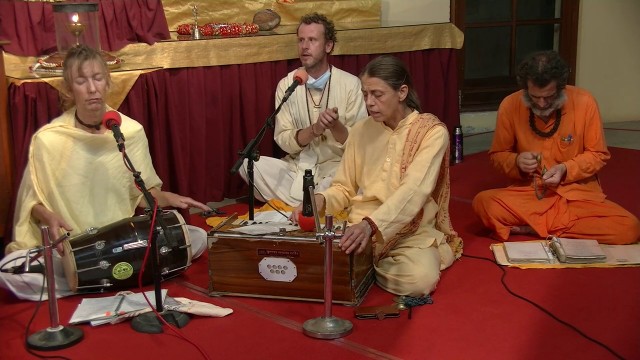
Evening Satsang with Vishwaguruji from Jadan Ashram, Rajasthan, India. Singing bhajans.
Shiva will bless All
14:30 - 14:53 (23 min)
A spiritual discourse on the importance of devotion to Śiva in the current age.
"In this time of the Kali Yuga, we all have to become one."
"Therefore, our holy Gurujī said, 'One in all and all in one.'"
Following opening prayers, the speaker addresses a global audience, warning of the coming hardships of the Kali Yuga and proclaiming that Śiva's unifying grace is the solution. He explains that Śiva accepts all people, unlike other deities, and urges constant remembrance through chanting. The talk includes a recitation and explanation of a Hindi bhajan about the preciousness and fleeting nature of human life.
Filming location: Strilky, Czech Republic
Pilgrimage
15:00 - 15:47 (47 min)
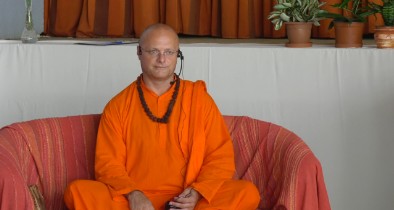
Morning satsang from Vep, Hungary.
We should help
15:55 - 16:40 (45 min)
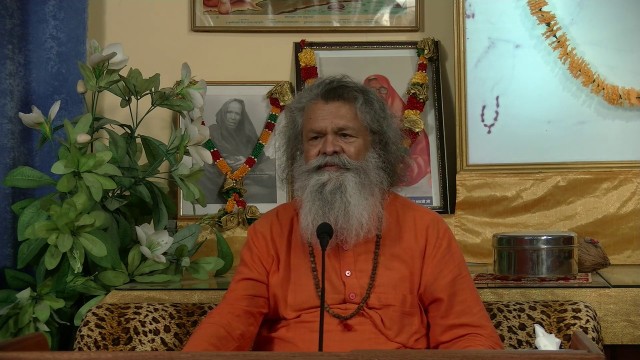
Evening satsang with Vishwaguruji from Jadan Ashram, Rajasthan, India. We, humans, learned a lot but we are not immortal. Rakshasas have so much power and they would like to be immortal. Atma is immortal and can reside in the Brahmaloka, but the physical body will dissolve again. We are meditating in our minds. Some doing puja and worshipping God because of fear, or because of some interest. With prayer, we can balance human powers. Ashram means: come and be here. It is for all, we should help, help, and help. Let's come to the supreme consciousness within.
Purify your body and eat proper food
16:45 - 17:42 (57 min)
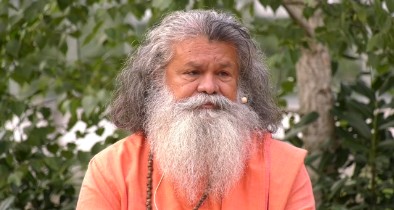
A satsang on the regenerative power of collective spiritual practice and the concept of Kāya Kalpa.
"This Kriyā Anuṣṭhāna has a regenerating function for our energy and our spirituality. It is like Kāya Kalpa."
"Kāya Kalpa means that you are like a newborn. Your hair will be its original color from birth... all the systems are very healthy and very good."
The lecturer explains the benefits of group spiritual practice (anuṣṭhāna), describing it as a mutual exchange of energy that prevents the loneliness and difficulty of solitary practice. He expands the theme into a discourse on Kāya Kalpa, or bodily regeneration, linking it to diet, natural living, and purification through practices like prānāyāma. He offers specific, Āyurveda-inspired advice on ghee, sugar, and oral hygiene, while cautioning against meat and processed foods, using anecdotes about cows and disciples to illustrate his points.
Filming location: Strilky, Czech Republic
The reality is within you
17:50 - 18:27 (37 min)
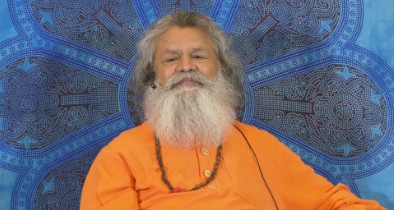
A spiritual discourse on discipline, grace, and the enduring nature of authentic practice.
"Yoga in Daily Life did not become different. That is its quality."
"Gurujī always said, 'Guru Kṛpā Hi Kevalam.' As long as you have the mercy, the Kṛpā, of Gurudeva, you will be on the good path."
The lecturer addresses a gathering, emphasizing unwavering discipline in spiritual practice and loyalty to one's guru. He explains the unique, unchanging quality of the Yoga in Daily Life system over decades, using the analogy of a single flame to represent the soul. The talk covers themes of oneness in Sanātana Dharma, the importance of family, and the need for inner work amidst life's impermanence.
Filming location: Vép, Hungary
Never lose the name of God
18:35 - 19:29 (54 min)
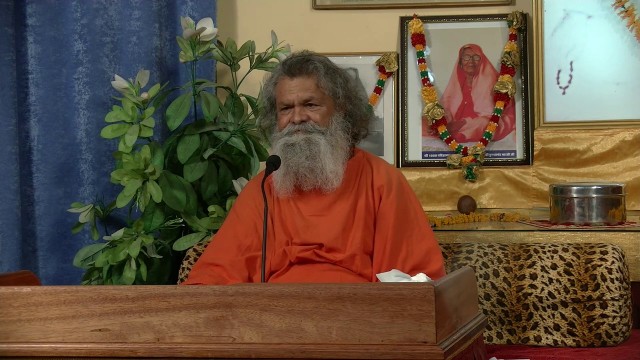
Evening satsang with Vishwaguruji from Jadan Ashram, Rajasthan, India. Corona time to time come back again so we have to be careful. Many people died and also many have lung problems. In India also many people died and many people were not careful enough. Nowadays it is not good to shake hand and hug each other. Nowadays many families fall apart and children are suffering very much because of it. If there is a bad connection between the father and the mother many diseases will come sooner all later such as cancer. Many people get depression after a corona. You have good health when you are happy. Mantra brings us happiness. Now we should learn to become happy. Gulabji tells how did he find his Guru and how did he experience the blessing of his Masters.
Keep the original message of Yoga
19:35 - 21:03 (88 min)
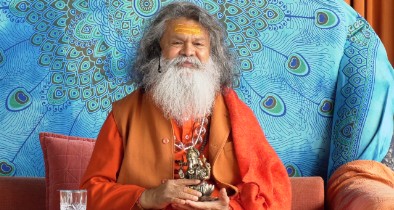
Morning satsang with Vishwaguruji from Vep, Hungary. We worship the Moon, the Sun and all of the creatures. One in All - the Jiva is everywhere. The speech of the Ambassador of India to Hungary Mr. Kumar Tuhin. It is important to keep the original message of the Yoga. It is Sanatana Dharma, India is the cradle of culture. If we are doing only physical asanas we are not going to be successful at all. Sanatana Dharma stands above the duality. Ayurveda and yoga are much elder than five thousand years.
What means sanyas diksha
20:50 - 22:19 (89 min)
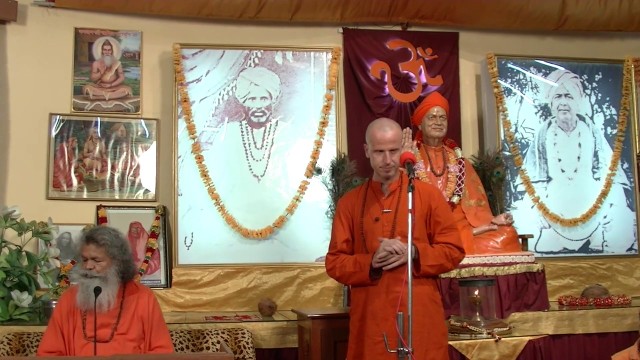
Evening satsang with VishwWaguruji from Jadan Ashram, Rajasthan, India. Singing bhajans, including Hanuman Chalisa. Chanting mantras. Introduction Swami Chandrapuri who became sanyasi. It is very important to achieve sannyas and seva in the life. It means purification and realization of the Self. You have to give up many things and live without attachments. Swami Chandrapuri tells how he met Vishwaguruji and explains the main steps towards sannyas diksha.
Unity in spirituality
21:10 - 21:53 (43 min)
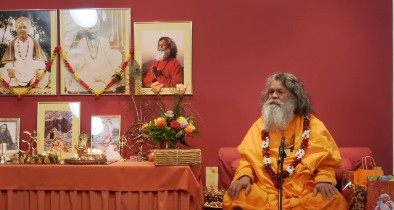
A Christmas satsang reflecting on spiritual unity and personal mission.
"Meine Mission oder meine Aufgabe von dem höheren und höchsten Gott, durch meinen Meister, einen Botschaften, ohne irgendwelchen Dualismus, alle Religionen, alle spirituellen Organisationen, etc., alles ist eins."
"Religion means to realize your relation to God; this is called religion. Realize, realize your relation to God."
The lecturer addresses a diverse European gathering during the Christmas season. He shares stories from his early days of teaching yoga across Austria and Eastern Europe, including travels by train and experiences in communist Czechoslovakia. He reflects on the life of Jesus and Mother Mary to illustrate themes of faith, societal judgment, and the universal message of oneness among all religions and peoples. The talk weaves personal anecdotes with spiritual philosophy, concluding with blessings for Christmas and the New Year.
Filming location: Austria
Yoga, Faith, and Integration: A Personal Journey and Panel Discussion
22:00 - 23:04 (64 min)
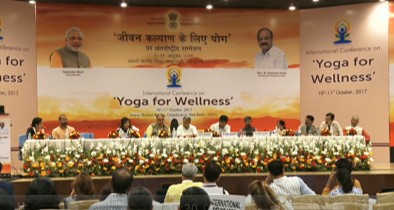
A personal testimony on faith-based yoga healing and a panel discussion on integrating traditional medical systems.
"I refused chemotherapy, radiotherapy, and surgery... I believed those fresh, positive thoughts in my consciousness would bleed down into my nervous system and start to talk to my cells."
"Yoga is not about the āsana. Why not? It is about God. If you allow God's energy to run into your system... God will provide the miracles."
Neil Patel shares his personal journey of using yoga and conscious thought to survive cancer for 18 years after refusing conventional treatment. Following his testimony, a moderated panel featuring practitioners of Homeopathy, Ayurveda, Siddha, and Yoga discusses pathways to integrate these AYUSH systems with modern medicine for holistic wellness. Key themes include treating the whole person, cost-effective care, managing non-communicable diseases, and yoga's role in raising consciousness beyond mere physical health.
Filming location: Delhi, India
Who will liberate us?
23:10 - 23:44 (34 min)
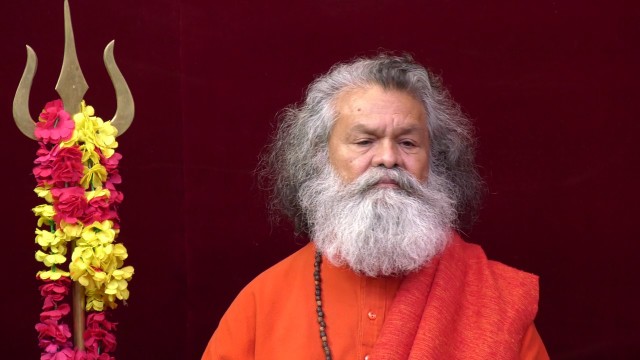
A spiritual discourse on the unity of all paths and the grace of the guru, delivered on Christmas.
"Names are different, places are different, languages are different, yet they are all. If you do not understand this and do not want equality, then know we have the same blood, same nerves, same bones; everything is the same."
"The guru is that who gives us knowledge... Guru Kṛupāhi Kevalaṁ Śiṣyaki Ānanda Maṅgalaṁ. When the Gurudeva is there, the disciple is happy, full of joy."
A spiritual teacher addresses a gathering, honoring Christmas and the universal teachings of all saints and religions. He emphasizes the non-dual unity behind all names and forms, discusses the essential roles of the divine mother (Śakti) and father (Śiva), and explains the irreplaceable role of the Satguru in liberating the individual from worldly attachment, illustrated through a metaphor of a spider trapped in its own web.
Filming location: Strilky, Czech Republic
Practicing pranayama
23:45 - 0:10 (25 min)
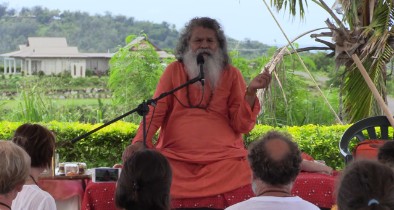
A spiritual retreat in Fiji focused on prāṇāyāma and natural living.
"This air that we are inhaling... has a kind of purification of our vocal cords, which is very good here, very, very good."
"The kava is a beautiful ceremonial drink... It is something that makes you relaxed without alcohol."
The teacher describes the pure, healing environment of Fiji, framing the retreat as Ekānta Vāsa (time in a silent place). He details the morning's prāṇāyāma practice, explaining techniques like Chandra Śodhana and Nāḍī Śodhana, and plans for a traditional kava ceremony. The talk emphasizes learning from the local natural lifestyle and the self-sustaining benefits of the retreat for both visitors and the Fijian community.
Filming location: Fiji Islands
American
Australian