
European
The blessed day of Gurupurnima
0:15 - 0:55 (40 min)
A satsang discourse on the significance of Guru Pūrṇimā.
"Gu means darkness, and ru means light. When the darkness disappears, the light appears."
"Gurudev is the jewel of the Parāś, and the disciple is the iron. When the disciple comes to the Gurudev, he changes from iron into gold."
A speaker explains the cosmic and spiritual importance of Guru Pūrṇimā, describing the Guru as the highest principle and the day as the start of the spiritual year. He discusses the Guru's role in transforming the disciple, shares devotional poetry and bhajans about longing for the master, and uses the analogy of a farmer's harvest to describe how devotees should present their spiritual progress. The talk concludes with blessings for the congregation's spiritual practice.
Filming location: Vép, Hungary
Follow the path
1:00 - 2:17 (77 min)
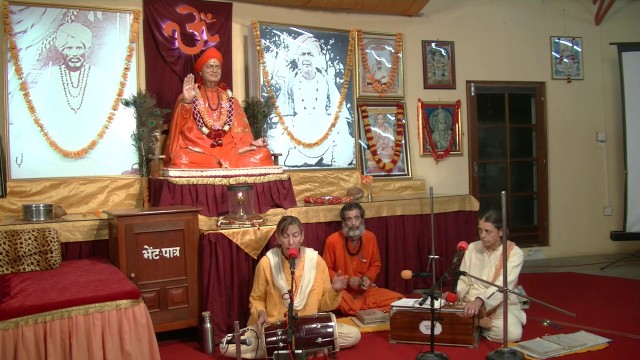
Evening satsang with Vishwaguruji from Jadan Ashram, Rajasthan, India. Bhajan singing. Bhajans have more power and knowledge than kirtans. The story about Rama Sita Hanuman and his bhakti towards Rama. If we have Gurudev he will be always our spiritual father. We should always know where is the place of our Guru and where is our place. Do not lose your mother father and your Guru.
Be careful with the mind
2:25 - 3:48 (83 min)
A spiritual discourse warning against complacency and negative influences on the path.
"Therefore, as much as you are developing spiritually, you are in danger. As much as you spiritually develop, you are in danger."
"Mahāprabhujī said that in the satsaṅg, if some kuṣaṅga comes, then it's like a bite of a poisonous snake."
The lecturer addresses devotees at an ashram, cautioning that spiritual progress brings vulnerability. He uses parables, like a mighty tree felled by a small axe, and references to Hindu scriptures to illustrate how ego, negative company, and mental afflictions can destroy a seeker. He emphasizes the necessity of vigilance, satsang, and humility, sharing personal stories and answering a devotee's account of pilgrimage.
Filming location: Strilky, Czech Republic
Going to Brahmaloka
3:55 - 4:54 (59 min)
An introductory talk on yoga philosophy and practice at an ashram.
"Even if you are an advanced practitioner, you should do the beginner exercises at least once a week, or you must practice them before performing advanced postures."
"Tons of theory is nothing; a gram of practice."
The lecturer addresses attendees, clarifying misconceptions about terms like Aṣṭāṅga and Haṭha Yoga while emphasizing the foundational importance of basic practices in the "Yoga in Daily Life" system. He discusses the challenges of Vairāgya (detachment) and Jñāna Yoga, using anecdotes and humor to illustrate the gap between theory and practice, and outlines the week's upcoming program of Kriyā Yoga, meditation, and fasting.
Filming location: Strilky, Czech Republic
Be conscious in the present
5:00 - 5:44 (44 min)
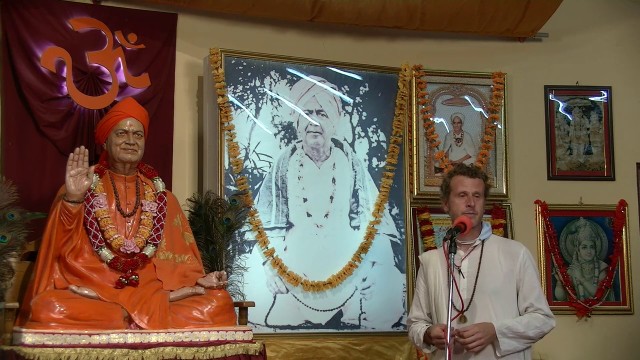
A satsang discourse on spiritual practice, community, and lessons from life in a small ashram.
"In satsaṅg, in prayer, you should open your ears and fill your chest with oxygen. This is how you always cleanse yourself."
"Throughout the fights or the debates, slowly, slowly, we are polished. And through the grace of Viśva Gurujī, we can work on these qualities to become more aware, to become a better person."
Swami Vishwaguruji opens the session with reflections on prayer, purification, and the essence of an ashram as a place of work (sāram). He shares anecdotes, including a story about a worker and a wheelbarrow, to illustrate the need for attentive effort. The disciple Chandra Puri then speaks, sharing his experience of living for many years with Mataji (Sadhvi Yogamaya/Mayok Shaktipuri) in the small Seva Ashram in Kāṭhū. He describes their initial clashes and how this close environment forced self-confrontation, detailing Mataji's teachings on self-observation, presence, and seeing one's own qualities reflected in conflicts.
Filming location: Jadan, Rajasthan, India
Be careful with the mind
5:50 - 7:13 (83 min)
A spiritual discourse warning against complacency and negative influences on the path.
"Therefore, as much as you are developing spiritually, you are in danger. As much as you spiritually develop, you are in danger."
"Mahāprabhujī said that in the satsaṅg, if some kuṣaṅga comes, then it's like a bite of a poisonous snake."
The lecturer addresses devotees at an ashram, cautioning that spiritual progress brings vulnerability. He uses parables, like a mighty tree felled by a small axe, and references to Hindu scriptures to illustrate how ego, negative company, and mental afflictions can destroy a seeker. He emphasizes the necessity of vigilance, satsang, and humility, sharing personal stories and answering a devotee's account of pilgrimage.
Filming location: Strilky, Czech Republic
Going to Brahmaloka
7:20 - 8:19 (59 min)
An introductory talk on yoga philosophy and practice at an ashram.
"Even if you are an advanced practitioner, you should do the beginner exercises at least once a week, or you must practice them before performing advanced postures."
"Tons of theory is nothing; a gram of practice."
The lecturer addresses attendees, clarifying misconceptions about terms like Aṣṭāṅga and Haṭha Yoga while emphasizing the foundational importance of basic practices in the "Yoga in Daily Life" system. He discusses the challenges of Vairāgya (detachment) and Jñāna Yoga, using anecdotes and humor to illustrate the gap between theory and practice, and outlines the week's upcoming program of Kriyā Yoga, meditation, and fasting.
Filming location: Strilky, Czech Republic
Who will be the successor?
8:25 - 9:29 (64 min)
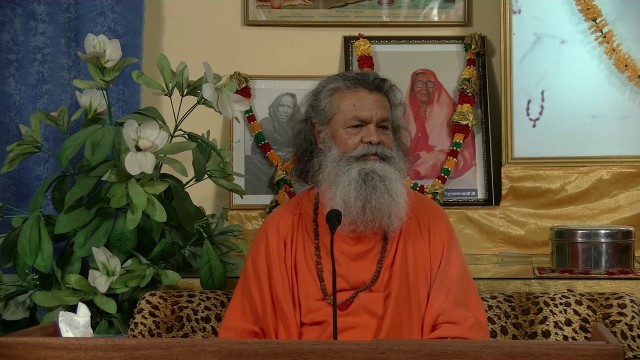
An evening satsang on divine will, the guru's grace, and the challenges of the modern age.
"God said, 'Okay, so next, the last month of where the farmer has to do everything.' So they went to their gardens on a farm, and then they said, 'Rain, rain, come.' So very much rain was coming."
"Guru, Guru is that like Alak Purījī, Devpurījī, Mahāprabhujī and Madhavānandajī Guru. We are just waiting to see how we will be."
Swami Maheshwaranand Puri Ji addresses the gathering, using a parable of farmers who fail when they try to control the rain to illustrate the folly of questioning God's divine order. He speaks of the guru's supreme power, recounting a miraculous healing by Devpurījī, and contrasts this with human limitation in the face of modern ailments and distractions like technology, which he identifies with the Kali Yuga. He reflects on the qualities of his sannyasi disciples and cautions the congregation not to spoil potential spiritual successors through misplaced admiration.
Filming location: Jadan, Rajasthan, India
Follow the path
9:35 - 10:52 (77 min)
Evening satsang with Vishwaguruji from Jadan Ashram, Rajasthan, India. Bhajan singing. Bhajans have more power and knowledge than kirtans. The story about Rama Sita Hanuman and his bhakti towards Rama. If we have Gurudev he will be always our spiritual father. We should always know where is the place of our Guru and where is our place. Do not lose your mother father and your Guru.
Practicing of the system 'Yoga in Daily Life', Level 1 - Part 6
11:00 - 12:05 (65 min)
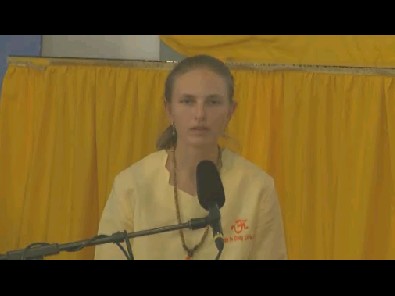
Practicing of the system "Yoga in Daily Life", Level 1 - Part 6, in Om Vishwa Deep Gurukul Swami Maheshwaranand Ashram, Jadan, Rajasthan, India on 24th of October 2009.
How can we reach the Supreme?
12:10 - 12:49 (39 min)
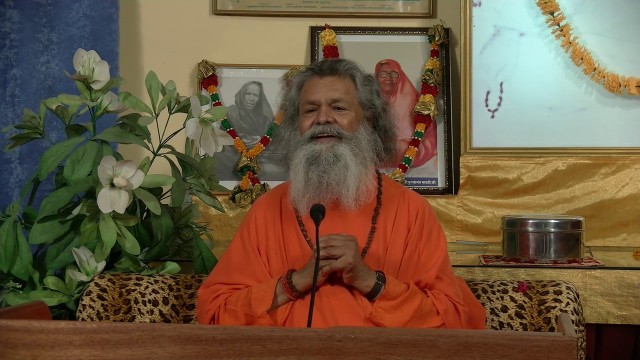
Evening satsang with Vishwaguruji from Jadan Ashram, Rajasthan, India. Only bhaktas can come to the Satsang. The story about a rishi who read the Vedas for a very long time. Only reading books can not lead to the Supreme. We need a mantra and the words of the Guru also. Bhajan singing.
The Essence of Prāṇa, Guru, and Disciple
12:55 - 13:53 (58 min)
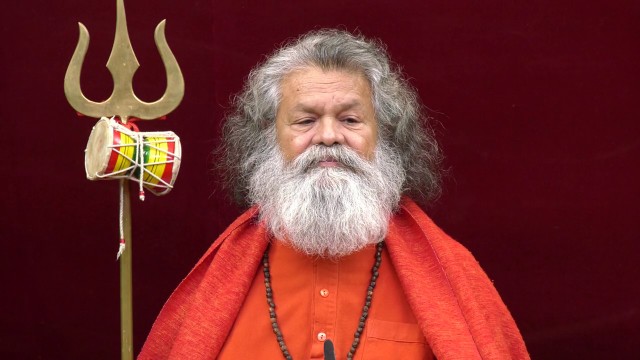
An evening satsang on prāṇa, consciousness, and the guru-disciple relationship.
"Everything is in our prāṇa. Prāṇa. And prāṇa, many times we think someone died. But still, there is prāṇa inside."
"Inside is giving love, and outside is giving you something to give the shape. And to give the shape of the disciples, a real shape is not easy."
Swami Maheshvarananda addresses a global audience, weaving teachings on the vital breath (prāṇa) and states of consciousness (waking, dreaming, deep sleep) with personal reminiscences of his gurus, Śrī Dīp Nārāyaṇa Mahāprabhujī and Swami Madhavanandji. He illustrates the essence of discipleship through stories of their divine interactions and announces observances for the coming days, including fasting and prayer for Mahāprabhujī.
Filming location: Strilky, Czech Republic
Meditation with Vishwaguruji from "Yoga for Wellness" Conference, India
14:00 - 14:20 (20 min)
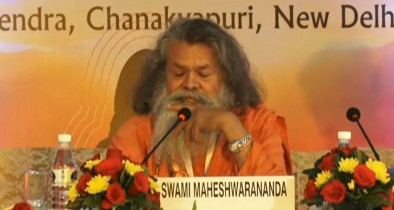
Vishwaguruji leads a Meditation at the International Conference 'Yoga for Wellness' organized by the Ministry of AYUSH, Government of India and held at Pravasi Bariyat Kendra in New Delhi. The inaugural session was attended by the Vice President of India.
Inaugurual session of the conference "Yoga for Wellness"
14:25 - 15:34 (69 min)
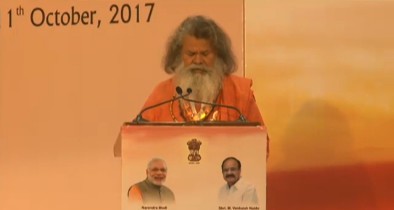
Inaugurual session of the conference on 'Yoga for Wellness' organized by the Ministry of AYUSH, Government of India and held at Pravasi Bariyat Kendra in New Delhi. The inaugural session was attended by the Vice President of India.
Lord Shiva Is The Most Merciful
15:35 - 15:59 (24 min)
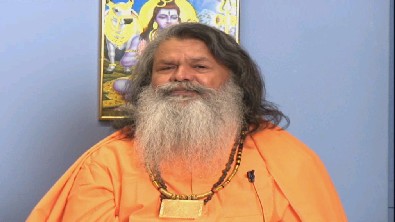
A spiritual discourse on the concepts of Saṅkalpa, Kalpa, and the significance of Śivarātri.
"Controlling thoughts is the hardest work. We think and we say, 'Let's be positive. Do not do to others what you do not want done to you.' Lightly spoken, but difficult to follow."
"Śiva is the most merciful father... I will take over all your sins and problems, and pray for you to be free."
A spiritual teacher addresses an ashram gathering, explaining the power and ethical necessity of a firm spiritual resolve (Saṅkalpa). He explores the cosmic concept of Kalpa (aeons), shares the story of a hunter and the merciful blessings of Lord Śiva that established Śivarātri, and discusses the purifying nature of Mother Gaṅgā. The talk concludes with the recitation of the Mahā Mrityunjaya Mantra and blessings for the global audience.
Filming location: Vienna, Austria
Vegetarian cooking lesson 12, Indian Upma
16:00 - 16:07 (7 min)

A cooking demonstration for preparing Upma, a simple semolina dish.
"Ghee greatly improves the entire body, helps create more bodily tissues, and is very beneficial for our brain, aiding in good memory."
"This is a very simple dish that will be ready in about ten minutes... it is really done very quickly."
Hemmati, a participant from Croatia, demonstrates how to make Upma at a yoga seminar. She explains the benefits of ingredients like ghee and roasted semolina, fries vegetables, adds a spice mixture, and combines everything with boiling water. The tutorial emphasizes the dish's simplicity, speed, and versatility for a light meal.
Filming location: Vép, Hungary
Purify your body and eat proper food
16:15 - 17:12 (57 min)
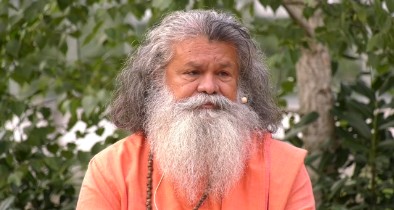
A satsang on the regenerative power of collective spiritual practice and the concept of Kāya Kalpa.
"This Kriyā Anuṣṭhāna has a regenerating function for our energy and our spirituality. It is like Kāya Kalpa."
"Kāya Kalpa means that you are like a newborn. Your hair will be its original color from birth... all the systems are very healthy and very good."
The lecturer explains the benefits of group spiritual practice (anuṣṭhāna), describing it as a mutual exchange of energy that prevents the loneliness and difficulty of solitary practice. He expands the theme into a discourse on Kāya Kalpa, or bodily regeneration, linking it to diet, natural living, and purification through practices like prānāyāma. He offers specific, Āyurveda-inspired advice on ghee, sugar, and oral hygiene, while cautioning against meat and processed foods, using anecdotes about cows and disciples to illustrate his points.
Filming location: Strilky, Czech Republic
Oneness
17:20 - 17:52 (32 min)
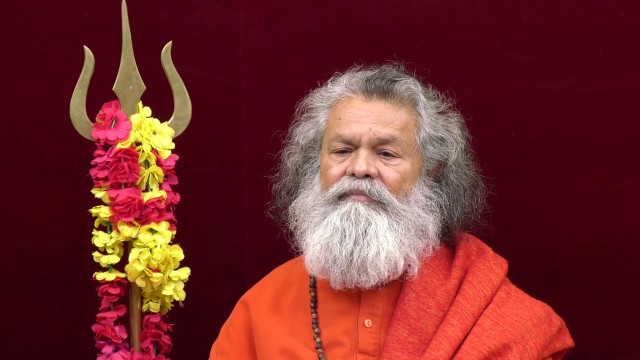
A year-end satsang on religious harmony, yoga traditions, and the necessity of the Guru.
"We should not believe that all other religions and their dates, their months and their observances, should be deleted."
"Without Gurudev, who can let us cross the ocean of that saṃsāra?"
The lecturer addresses the global Yoga in Daily Life community as the year closes. He emphasizes respecting all religions, cultures, and their calendars, warning against efforts to erase traditions. He explains the unity of yoga beneath different school names, using the analogy of a nation and its citizens. The core teaching is the indispensable role of the Satguru in guiding the soul beyond physical and mental practices toward liberation, ultimately paying homage to the lineage of Gurudev Swami Madhavanandaji.
Filming location: Strilky, Czech Republic
Bhajan evening from Jadan Ashram
18:00 - 18:37 (37 min)
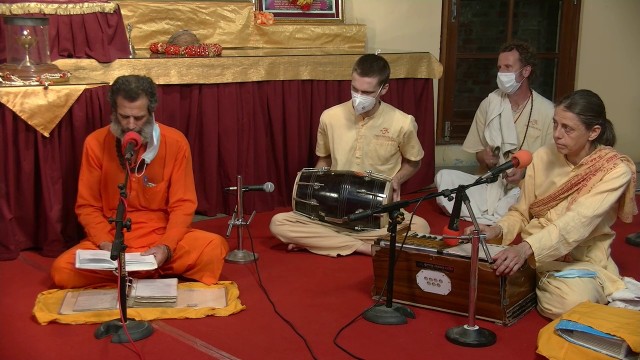
Evening satsang with Vishwaguruji from Jadan Ashram, Rajasthan, India. Bhajan singing.
The reality is within you
18:45 - 19:22 (37 min)
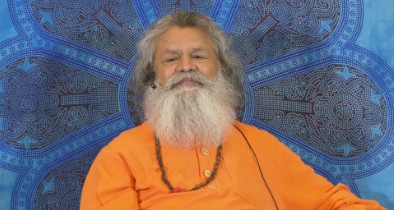
A spiritual discourse on discipline, grace, and the enduring nature of authentic practice.
"Yoga in Daily Life did not become different. That is its quality."
"Gurujī always said, 'Guru Kṛpā Hi Kevalam.' As long as you have the mercy, the Kṛpā, of Gurudeva, you will be on the good path."
The lecturer addresses a gathering, emphasizing unwavering discipline in spiritual practice and loyalty to one's guru. He explains the unique, unchanging quality of the Yoga in Daily Life system over decades, using the analogy of a single flame to represent the soul. The talk covers themes of oneness in Sanātana Dharma, the importance of family, and the need for inner work amidst life's impermanence.
Filming location: Vép, Hungary
Never lose the name of God
19:30 - 20:24 (54 min)
Evening satsang with Vishwaguruji from Jadan Ashram, Rajasthan, India. Corona time to time come back again so we have to be careful. Many people died and also many have lung problems. In India also many people died and many people were not careful enough. Nowadays it is not good to shake hand and hug each other. Nowadays many families fall apart and children are suffering very much because of it. If there is a bad connection between the father and the mother many diseases will come sooner all later such as cancer. Many people get depression after a corona. You have good health when you are happy. Mantra brings us happiness. Now we should learn to become happy. Gulabji tells how did he find his Guru and how did he experience the blessing of his Masters.
Guru and disciple
20:30 - 21:02 (32 min)
Evening satsang with Vishwaguruji from Jadan Ashram, Rajasthan, India. Guru kripa is a blessing that is more powerful than anything. When somebody dies who was near us he or she will live further in our heart. Satagurudev is in every bhaktas heart. Only one satagurudev can be for a person. Gulabji speaks about the Guru and the disciples and the connection between them.
Clean yourself to become a saint
20:50 - 21:45 (55 min)
Evening satsang with Vishwaguruji from Jadan Ashram, Rajasthan, India. The story about Holigurujis first visit in Europe and how did he get the name Holi Guruji. That time was a communist time in Czechoslovakia and there was an iron curtain in the border. Everyone should be free in every aspect. Yogis should feel friendship and oneness for others. First, w should clean ourselves. Sanyas people also should clean everything. Serve all bhaktas. We need tyaga to become sanyas. The story about Vishwaguruji when he left Holiguruji as a Swami first time. The story about Swami Sivananda and a very learned man. The story bout Acalramji. Bhajan singing.
Unity in spirituality
21:10 - 21:53 (43 min)
A Christmas satsang reflecting on spiritual unity and personal mission.
"Meine Mission oder meine Aufgabe von dem höheren und höchsten Gott, durch meinen Meister, einen Botschaften, ohne irgendwelchen Dualismus, alle Religionen, alle spirituellen Organisationen, etc., alles ist eins."
"Religion means to realize your relation to God; this is called religion. Realize, realize your relation to God."
The lecturer addresses a diverse European gathering during the Christmas season. He shares stories from his early days of teaching yoga across Austria and Eastern Europe, including travels by train and experiences in communist Czechoslovakia. He reflects on the life of Jesus and Mother Mary to illustrate themes of faith, societal judgment, and the universal message of oneness among all religions and peoples. The talk weaves personal anecdotes with spiritual philosophy, concluding with blessings for Christmas and the New Year.
Filming location: Austria
Around the world - Yoga Class of Level 6, Zagreb
22:00 - 23:01 (61 min)
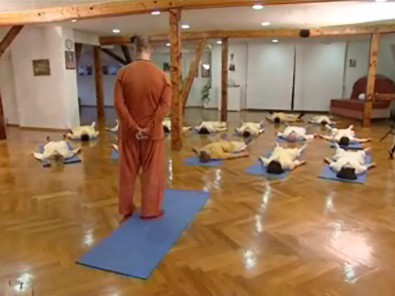
Yoga in Daily Life Class of Level 6 at Sri Devpuriji Ashram, Zagreb, Croatia.
We need real dedication
23:05 - 0:03 (58 min)
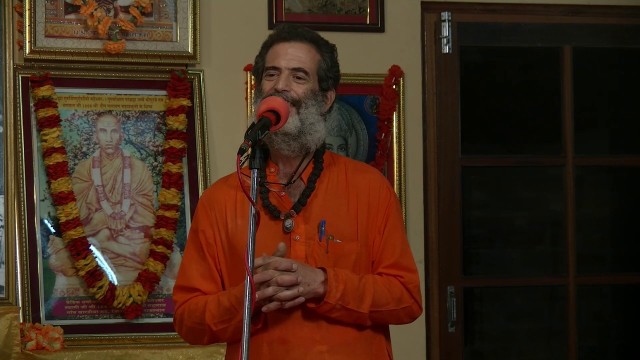
Evening Satsang with Vishwaguruji from Jadan Ashram, Rajasthan, India. There are two kinds of people living separately or in the family. Orange dress means renunciation. The story about two brothers one of them was studied and the other lived a spiritual life alone in a forest. There are two kinds of bhava. One is where there is some wish and the other has no wish. Birds know that there is their child in the eggs. Swami Haripuri speaks about his daily life and his spiritual experiences in different Ashrams.
American
Australian