
European
Yoga and Bhramari Pranayama
0:05 - 0:54 (49 min)
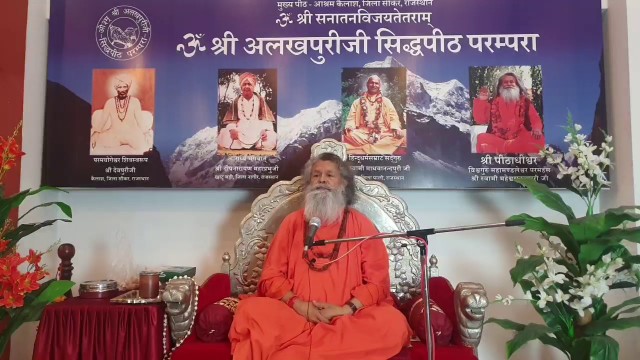
Evening Satsang with Vishwaguruji from Jaipur, Rajasthan, India. Introduction to yoga. Yoga is more than practicing asana and pranayama. A detailed explanation of Brahmari pranayama.
Keep the original message of Yoga
1:00 - 2:28 (88 min)
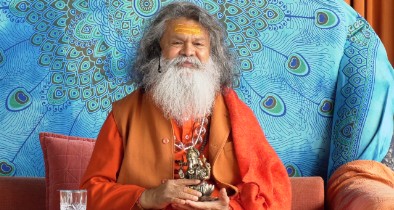
Morning satsang with Vishwaguruji from Vep, Hungary. We worship the Moon, the Sun and all of the creatures. One in All - the Jiva is everywhere. The speech of the Ambassador of India to Hungary Mr. Kumar Tuhin. It is important to keep the original message of the Yoga. It is Sanatana Dharma, India is the cradle of culture. If we are doing only physical asanas we are not going to be successful at all. Sanatana Dharma stands above the duality. Ayurveda and yoga are much elder than five thousand years.
Keep the original message of Yoga
2:35 - 4:03 (88 min)
Morning satsang with Vishwaguruji from Vep, Hungary. We worship the Moon, the Sun and all of the creatures. One in All - the Jiva is everywhere. The speech of the Ambassador of India to Hungary Mr. Kumar Tuhin. It is important to keep the original message of the Yoga. It is Sanatana Dharma, India is the cradle of culture. If we are doing only physical asanas we are not going to be successful at all. Sanatana Dharma stands above the duality. Ayurveda and yoga are much elder than five thousand years.
Shakti is everywhere
4:10 - 4:54 (44 min)
A spiritual discourse on the unity of Śiva and Śakti, connecting universal family to inner power.
"Vasudhaiva Kuṭumbakam—the whole world is one family. The whole world is the children of one God."
"Śakti means strength, knowledge... Your willpower is your Śakti. This willpower should not be with anger, hate, or jealousy."
Swami Maheshwarananda speaks in a cultural city in Slovakia, explaining the non-dual principles of Śiva (consciousness) and Śakti (power/energy) that exist within everyone. He discusses the origins of yoga, the importance of persistent practice, and the choice between divine (Daivī) and demonic (Āsurī) manifestations of power, using analogies from aviation to water cutting stone. The talk concludes with a promise to lead a practical technique.
Filming location: Slovakia
Jivatma, Atma, Paramatma
5:00 - 6:08 (68 min)
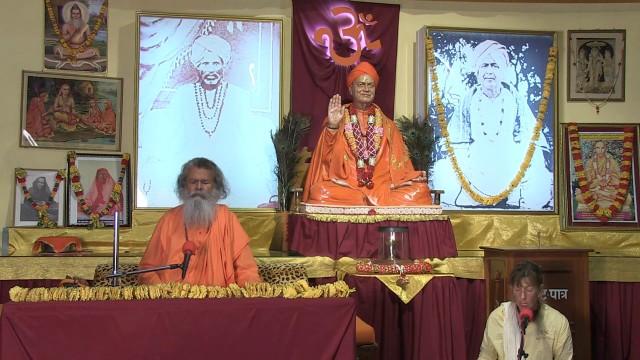
Evening satsang with Vishwaguruji from Jadan Ashram, Rajasthan, India. All practice of yoga leads to one point. Yogi lives in peace and harmony. Singing bhajan Parama Guru Swamiji and more. The drop of the water from the ocean is separated but still the same and will unite again. When a seed is sprouting first roots are developing the leaves. About the rising of the Kundalini. Singing bhajan Cetan ka Cilka Swami Ne.
Drops go back to the ocean
6:15 - 7:42 (87 min)
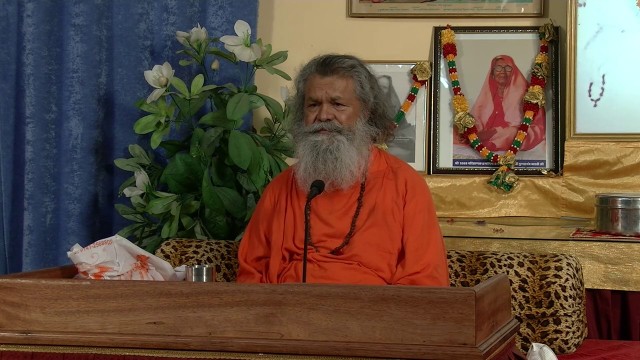
Evening satsang with Vishwaguruji from Jadan Ashram, Rajasthan, India. Celebration of Swamiji's return to Jadan Ashram by adults and children. Bhajan singing. The story about a Master who sends his disciple for oil. Explanation of what is the vritti. What should we think and do when we wake up in the morning? Jadan is a safe place for the bhaktas like the ocean for a drop of water. Everybody has different thoughts in his mind in the Ashram also. Our souls also go back to God at the end like a drop of water to the ocean. Gyan bhakti and everything comes from our Gurudev.
Singing mantras for Shiva
7:50 - 8:17 (27 min)
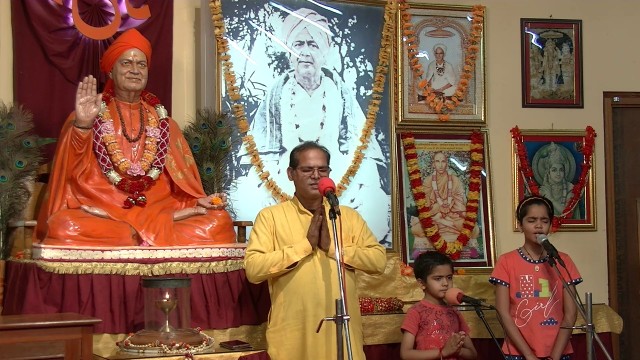
A spiritual gathering featuring devotional chanting and discourse on the eve of Somatī Amāvasyā.
"This is our very great fortune and the good result of our past birth's karma."
"Na jānāmi yogam japam naiva pūjāṃ... I do not know what is yoga, I do not know what is japa, I do not know worship, but I am your bhakta by way of a very clean heart."
A speaker addresses a group, explaining the significance of the upcoming holy days, including Somatī Amāvasyā and Navarātri. He introduces and then leads the recitation of the Śiva Tāṇḍava Stotram and the Śiva Rudrāṣṭakam, explaining the former was composed by Rāvaṇa and the latter by Śrī Rām. He emphasizes the path of pure devotion (bhakti) to the Guru, who is revered as an embodiment of Lord Śiva, as the sole means to liberation.
Filming location: Jadan, Rajasthan, India
What means Satsang
8:25 - 9:41 (76 min)
Evening satsang with Vishwaguruji from Jadan, Rajasthan, India. Nearly one-hour bhajan singing. Without prayers, meditation and singing bhajans humans life is not complete. When we are coming to the prayer we are in oneness again. In Satsang, we are in the truth. Do not continue with negative thinking. That one is lost.
How could Tulsidas see Rama?
9:45 - 10:53 (68 min)
A spiritual discourse exploring the nature of the soul, divine vision, and the sanctity of the human body.
"The soul that comes into this mortal world is, in one way, caught in this body. It neither wants to go out of it nor likes being in it."
"In every temple is your statue, but I cannot see your face, my Lord... Therefore, we have to understand what human body God has given us. And that is within us, but we cannot see it."
The speaker delivers a teaching on the eternal soul (Ātmā) and the human condition, questioning common beliefs about the afterlife and divine perception. He narrates the transformative stories of the bandit-turned-sage Vālmīki and the poet Tulsīdās's missed encounter with Lord Rāma to illustrate the power of mantra and the need for spiritual alertness. The discourse emphasizes the human body as a sacred temple, discusses the law of karma, and concludes with a call for self-knowledge and devotion through chanting.
Filming location: Slovakia
Practicing of the system 'Yoga in Daily Life', Level 2 - Part 2
11:00 - 12:11 (71 min)
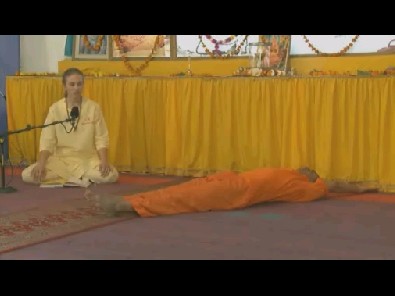
A guided yoga practice session for Level Two of the "Yoga in Daily Life" system.
"This light has been transferred through the centuries from one master to another without any interruption."
"Āsana means, except for other meanings, also comfortable. So āsana should be a comfortable position."
An instructor leads a comprehensive yoga class at Parananda Ashram, systematically guiding practitioners through the second level of the "Yoga in Daily Life" system. The session begins with relaxation and breath awareness (full yoga breath), followed by a series of āsanas including Meru Pṛṣṭhāsana, Catuṣpada Āsana, Cakrāsana, Dvikoṇāsana, Bhūta Āsana, Setu Āsana, Hastapādāṅguṣṭhāsana, Sumeru Āsana, and Meruvakrāsana. Each posture is explained with detailed alignment cues and its physical and energetic benefits. The practice concludes with deep relaxation, a prāṇāyāma (alternate nostril breathing) exercise, and a closing meditation with Oṁ and Śānti chants.
Filming location: Jadan, Rajasthan, India
Yoga is endless
12:15 - 12:58 (43 min)
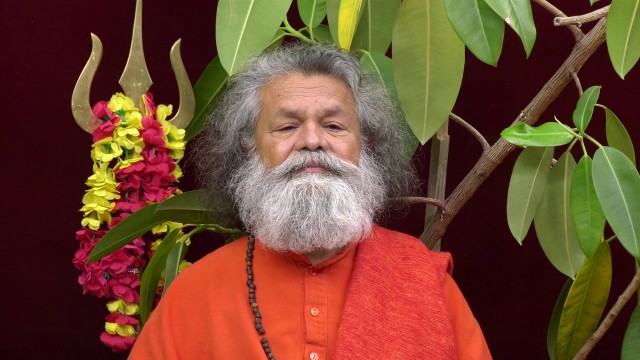
A spiritual discourse on the infinite nature of yoga and the self's journey.
"Yoga is not only what we always think: exercises, prāṇāyāmas, etc. Each and every breath in our body is a yoga."
"Holy Gurujī said, 'If you want to meditate, and if you want to liberate for all, then don't, don't ask for anything.'"
Swami Avatarpuri, invoking the lineage of gurus, explores yoga as the fundamental connection present in every cell and element of the universe. He describes the soul's cyclical journey of expansion and contraction, hindered by attachment, and uses metaphors of ocean waves and government to illustrate cosmic cycles. The guidance culminates in meditation instruction, emphasizing simple breath awareness and focus on the guru within.
Filming location: Strilky, Czech Republic
The Purifying Path of Haṭha Yoga: An Introduction to Ṣaṭkarma
13:00 - 13:47 (47 min)

An instructional webcast introducing the Haṭha Yoga purification techniques (Ṣaṭkarma).
"Haṭha Yoga is not only that we clean and purify our whole system, our whole body, but it also has a very great effect on our nervous system."
"Haṭha means willpower to do these Haṭha Yoga techniques. And with this, you also get the willpower, the strength to persevere, to continue, to get rid of the laziness."
A teacher from the Śrīkī Ashram, joined by assistants, explains the purpose and benefits of the six purification acts. The session features a detailed, practical demonstration of Jala Netī (nasal cleansing with salt water) and Kapāla Bhāti, followed by an introduction to Agni Sāra and the Naulī Kriyā for digestive health. The instruction emphasizes using natural elements, proper technique, and the holistic effects on physical and energetic systems.
Filming location: Strilky, Czech Republic
Keep the original message of Yoga
13:55 - 15:23 (88 min)
Morning satsang with Vishwaguruji from Vep, Hungary. We worship the Moon, the Sun and all of the creatures. One in All - the Jiva is everywhere. The speech of the Ambassador of India to Hungary Mr. Kumar Tuhin. It is important to keep the original message of the Yoga. It is Sanatana Dharma, India is the cradle of culture. If we are doing only physical asanas we are not going to be successful at all. Sanatana Dharma stands above the duality. Ayurveda and yoga are much elder than five thousand years.
Message of the three monkeys
15:30 - 16:36 (66 min)
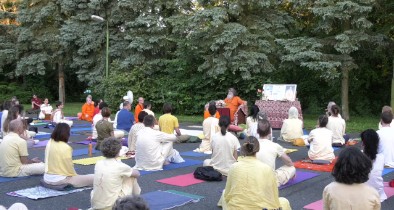
A spiritual discourse on the universal ātmā and the misuse of the label "fanatic."
"Every ātmā, each and every entity—where there is life, there is ātmā too." "Do not speak badly. If someone tells you something bad, you can either stop them, plug your ears, or don’t give any commentary."
A spiritual teacher leads a satsang, beginning with the principle that the soul (ātmā) exists in all living beings, advocating for respect for all life. The talk then focuses on refuting the negative label of "fanatic," arguing it is often misapplied to genuine devotion, humility, and non-violence. He uses parables, including one about Gandhi, and shares personal anecdotes to illustrate that true spirituality involves seeing good, speaking good, and serving others (seva), while criticizing hypocrisy.
Filming location: Vép, Hungary
In the service of Gurudev
16:40 - 17:40 (60 min)
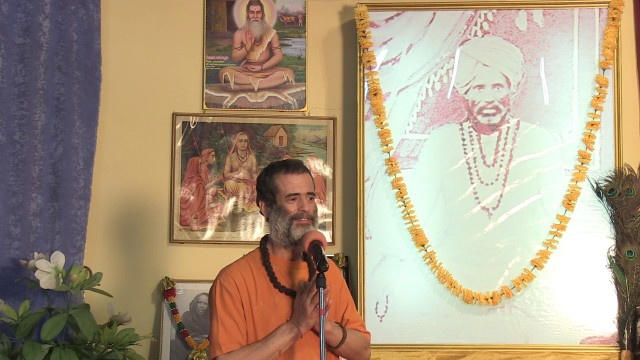
Evening Satsang from Jadan Ashram, Rajasthan, India. Singing bhajans. Introduction of Jadan Ashram and karma yogis that are working there. The real Seva is selfless. Explanation about Kumbha Mela at Haridwar.
Stories about Bhagwan Krishna
17:45 - 18:44 (59 min)
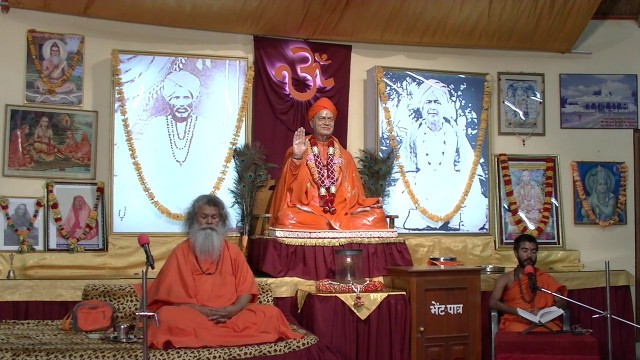
A discourse on the Śrīmad Bhagavad Gītā and a story from the Śrīmad Bhāgavat.
"Lord Kṛṣṇa says in the next śloka that it is better; He prefers when people worship His form, His physical form."
"The gopīs said, 'We are not abalās... Kṛṣṇa cannot leave us. Maybe He left us in the physical form, but He is always here with us.'"
Following an opening prayer, the speaker introduces the 12th chapter of the Bhagavad Gītā on Bhakti Yoga. He then narrates the story of Uddhava's mission to Vṛndāvan, sent by Lord Kṛṣṇa to console the grieving residents. The narrative focuses on Uddhava, a learned proponent of formless (nirguṇa) worship, attempting to lecture the gopīs and Yaśodā, only to be profoundly taught by them about the power of loving devotion (bhakti) to the personal form of God. The story illustrates the superiority of devotional love over mere intellectual knowledge, culminating in Uddhava's transformation.
Filming location: Jadan, Rajasthan, India
Jyotish and marriage
18:50 - 19:48 (58 min)
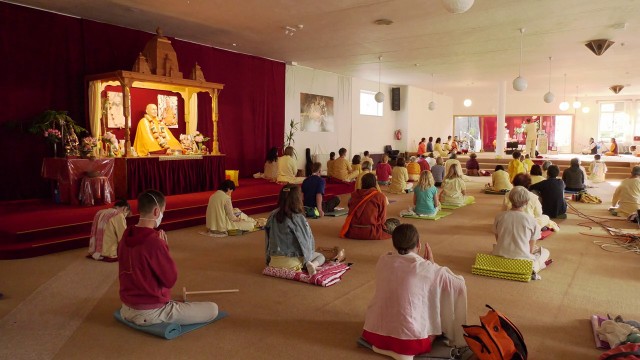
A satsang discourse on the sacred month of Śrāvaṇa, traditional rituals, and spiritual practice.
"In this month, mostly all women and girls come to give water and offer a nice rakhī. They do not see it merely as a tree, but as a person, and it is very, very powerful."
"Do not marry because of love. Do not make it only an emotion. It is your life. It is said that husband and wife, in marriage, become oneness."
Swami Ji addresses the assembly during the holy month of Śrāvaṇa. He begins by describing the ritual worship of trees like the pīpal and banyan, explaining their ecological and symbolic significance. The talk then shifts to a discussion on marriage, where he advises against decisions based solely on emotion or beauty, emphasizing instead the traditional importance of parental guidance and astrological compatibility (Jyotiṣa). He cautions that ignoring these principles leads to suffering. The discourse concludes with instructions on mantra practice, outlining the progression from spoken to written to mental repetition as the highest form of sādhanā.
Filming location: Strilky, Czech Republic
Kundalini and bhramari pranayama
19:55 - 20:49 (54 min)
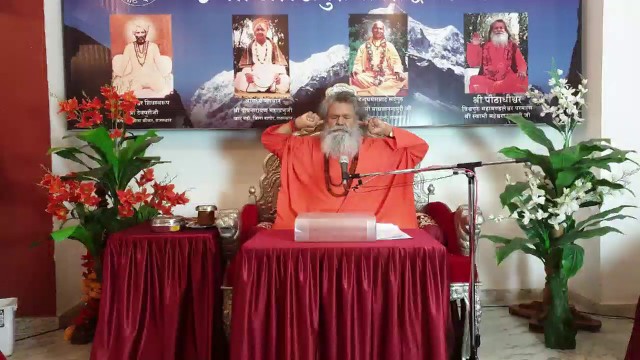
Eveng satsang with Vishwaguruji from Jaipur, Rajasthan, India. Chakras have 52 lotus petals and the Sanskrit alphabet have the same number of letters. Everybody speaks in his mother language at first. Vishwaguruji reads the Sataguru Chalisa- It is read and explained the Sri Kaka Battisi written by Holiguruji. In the Muladhara chakra, there are the 7 datus the 7 important elements of the human body. When kundalini awakens there is not any movements. Brahmari brings us harmony and peace. Demonstrating and practising some brahmari pranayama technics.
Mind and desires
20:55 - 21:47 (52 min)
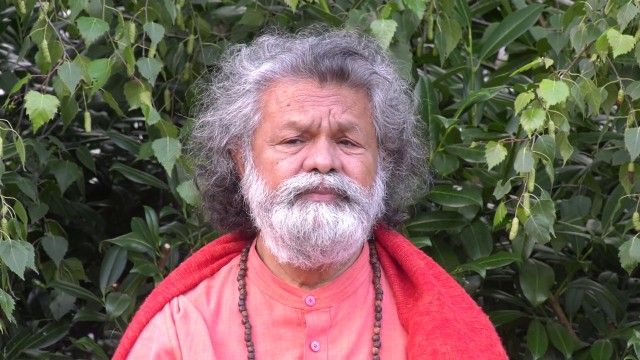
A spiritual discourse on the nature of the mind, mantra, and liberation from desire.
"Man marā, nāmamātrī marī, mar mar gayā śarīr, aisā tṛṣṇā nahīṅ gaī, ghe gayā Dasā Kabīr."
"Āśā means hope, and tṛṣṇā means thirst. And this will not give you this mind."
A speaker explores the classical definition of mantra as the restless mind ("man") and the trap of desire ("mamatā"), using poetry from Kabīr, parables about a camel and a thirsty deer, and personal anecdotes to illustrate how hope and thirst bind the individual. The talk examines the sequence from body and prāṇa to mind, knowledge, and ānanda, concluding that true mantra practice involves seeing through illusions to attain freedom.
Filming location: Strilky, Czech Republic
Why is God only in India?
21:30 - 22:05 (35 min)
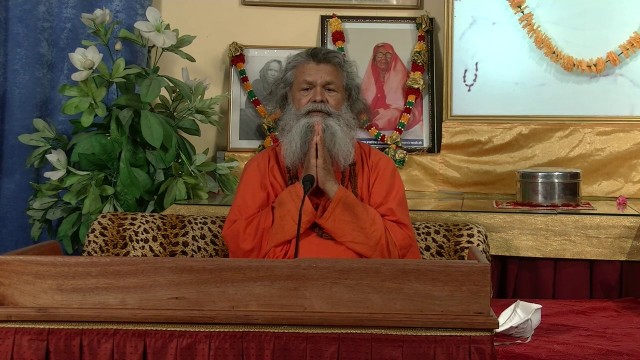
A satsang discourse on the necessity of spirituality in the modern age.
"Now it is time for us to practice more spirituality and prayer."
"Where there is gold in the earth, it will come the gold, and where there is coal, it will come the coal."
A speaker addresses a gathering, contrasting ancient human conditions with the current Kali Yuga, which is marked by environmental destruction and materialism. He laments the global decline in spiritual practice, using the example of India to argue that the land itself determines spiritual realization, and calls for a return to prayer, meditation, and a compassionate lifestyle free from alcohol and meat.
Filming location: Jadan, Rajasthan, India
Instructions for practising
21:55 - 22:46 (51 min)
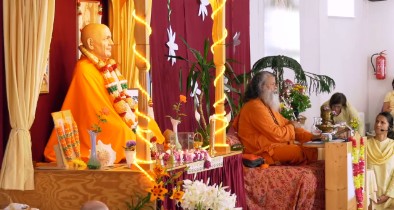
A seminar lecture for yoga teachers on adapting practice to individual capacity and preserving knowledge.
"Every yoga teacher's first duty and priority is to know what to do and what not to do for themselves."
"Knowledge must be renewed daily; otherwise, we are lost... what you have, give it; otherwise, it will be lost forever."
Swami Maheshwarananda (Swamiji) addresses a group of teachers and practitioners, focusing on the Bārikhāṭu Praṇām system. He stresses the importance of following a chosen system's discipline while adapting postures like Vajrāsana to one's physical limits, citing contraindications for back and heart issues. He critiques excessive relaxation in classes, shares yogic sleep principles, and emphasizes daily practice and the imperative to transmit knowledge, concluding with a preview of an upcoming technique on the mantra Aum.
Filming location: Strilky, Czech Republic
Do seva with your heart
22:50 - 23:41 (51 min)
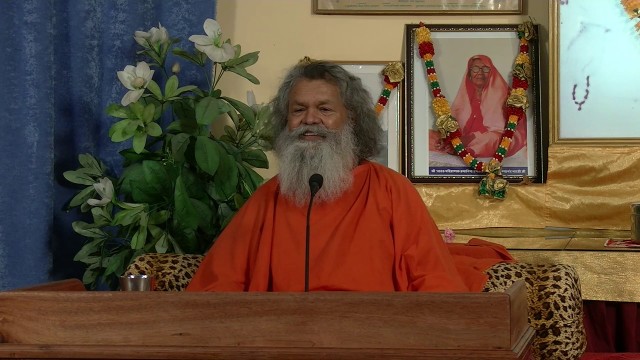
Evening satsang with Vishwaguruji from Jadan Ashram, Rajasthan, India. Seva is greatest than anything. Seva should be done by your body mind and words. We should be good polite and humble enough to do real seva. Money is God in this Kal Yuga. Holiguruji only wanted to do seva for Mahaprabhuji. Bhajan singing.
The Human Dharma
23:45 - 0:34 (49 min)
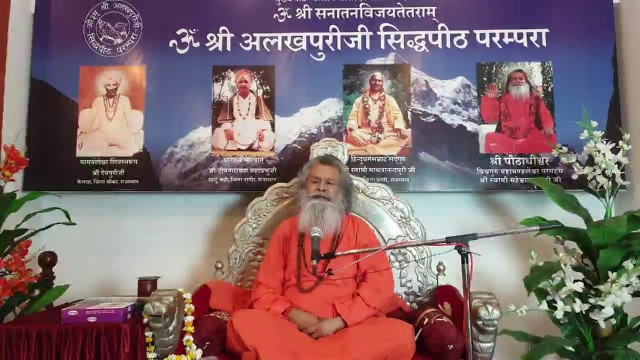
Evening satsang with Vishwaguruji from Jaipur, Rajasthan, India. Animals are eating each other. Human has given everything for humans. A human should not eat dead bodies. The essence of life is the same in every creature, like water in the raindrop and the ocean. God is ever with us. Explanation of the lineage of Gurus and the way how to chant Om properly.
American
Australian