
European
The Power of Tapasyā: Pārvatī's Resolve
0:15 - 1:03 (48 min)
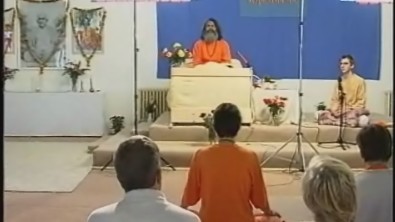
A spiritual discourse narrating the story of Pārvatī's resolve to perform tapasyā (austerity) and explaining its power.
"Tapasya is the giver of happiness and the remover of all troubles."
"Through the power of tapasyā, Brahmā is able to create this world. Through the power of that tapasyā... Viṣṇu is able to protect the world. And through that power of tapasyā, Śiva, is able to destroy all the negative powers."
The speaker recounts how Pārvatī, consoling her mother Mēnā, describes a dream in which a Brāhmaṇa instructs her to undertake severe spiritual austerity, affirming the truth of sage Nārada's words. The narrative details the immense power of tapasyā, using the examples of the Hindu trinity and Śeṣanāga, and describes Pārvatī's subsequent journey into the forest for a prolonged, extreme penance to attain Lord Śiva. The discourse frequently shifts to address a modern audience directly, exhorting them to cultivate similar willpower in their own sādhanā (practice) to overcome mental obstacles and attachments.
Filming location: Strilky, Czech Republic
Shakti is everywhere
1:10 - 1:54 (44 min)
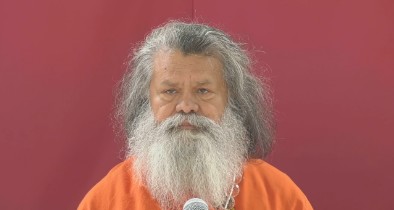
A spiritual discourse on the unity of Śiva and Śakti, connecting universal family to inner power.
"Vasudhaiva Kuṭumbakam—the whole world is one family. The whole world is the children of one God."
"Śakti means strength, knowledge... Your willpower is your Śakti. This willpower should not be with anger, hate, or jealousy."
Swami Maheshwarananda speaks in a cultural city in Slovakia, explaining the non-dual principles of Śiva (consciousness) and Śakti (power/energy) that exist within everyone. He discusses the origins of yoga, the importance of persistent practice, and the choice between divine (Daivī) and demonic (Āsurī) manifestations of power, using analogies from aviation to water cutting stone. The talk concludes with a promise to lead a practical technique.
Filming location: Slovakia
Bhajan singing in the Jadan Ashram
2:00 - 3:18 (78 min)
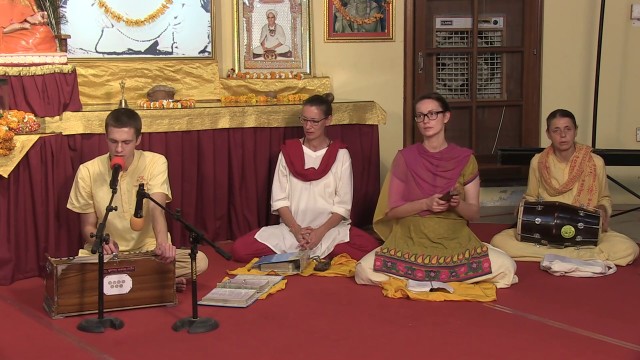
Evening satsang with Vishwaguruji from Jadan Ashram, Rajasthan, India. Bhajan singing evening.
Drops go back to the ocean
3:25 - 4:52 (87 min)
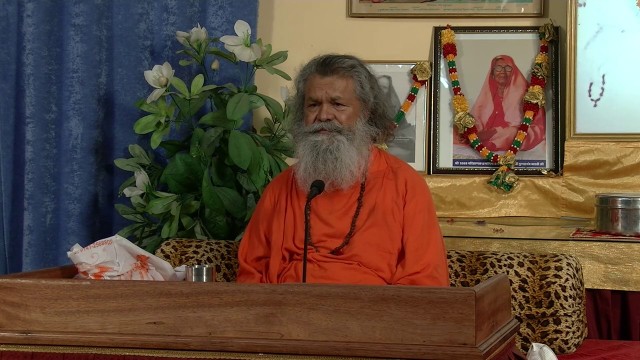
Evening satsang with Vishwaguruji from Jadan Ashram, Rajasthan, India. Celebration of Swamiji's return to Jadan Ashram by adults and children. Bhajan singing. The story about a Master who sends his disciple for oil. Explanation of what is the vritti. What should we think and do when we wake up in the morning? Jadan is a safe place for the bhaktas like the ocean for a drop of water. Everybody has different thoughts in his mind in the Ashram also. Our souls also go back to God at the end like a drop of water to the ocean. Gyan bhakti and everything comes from our Gurudev.
Fire is God
5:00 - 5:56 (56 min)
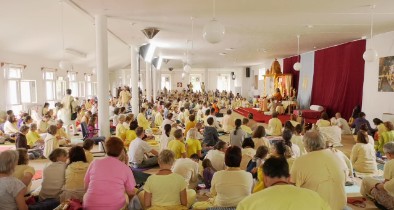
Morning satsang with Vishwaguruji from Strilky Ashram, Czech Republic. Agnisar kriya is good for the fire center, for solar plexus. There are many different kinds of fire, not only fire of digestsion. Explanation about importance of fire, how to make a fire place with respect to the Divine Shakti.
In the service of Gurudev
6:00 - 7:00 (60 min)
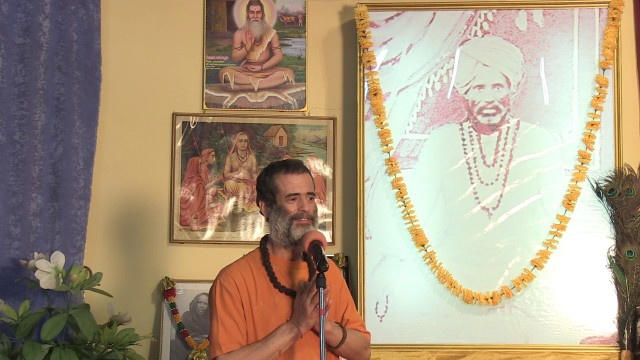
Evening Satsang from Jadan Ashram, Rajasthan, India. Singing bhajans. Introduction of Jadan Ashram and karma yogis that are working there. The real Seva is selfless. Explanation about Kumbha Mela at Haridwar.
Bhajan singing in the Jadan Ashram
7:05 - 8:23 (78 min)
Evening satsang with Vishwaguruji from Jadan Ashram, Rajasthan, India. Bhajan singing evening.
Message of the three monkeys
8:30 - 9:36 (66 min)
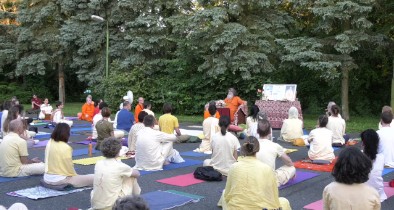
A spiritual discourse on the universal ātmā and the misuse of the label "fanatic."
"Every ātmā, each and every entity—where there is life, there is ātmā too." "Do not speak badly. If someone tells you something bad, you can either stop them, plug your ears, or don’t give any commentary."
A spiritual teacher leads a satsang, beginning with the principle that the soul (ātmā) exists in all living beings, advocating for respect for all life. The talk then focuses on refuting the negative label of "fanatic," arguing it is often misapplied to genuine devotion, humility, and non-violence. He uses parables, including one about Gandhi, and shares personal anecdotes to illustrate that true spirituality involves seeing good, speaking good, and serving others (seva), while criticizing hypocrisy.
Filming location: Vép, Hungary
What means Satsang
9:40 - 10:56 (76 min)
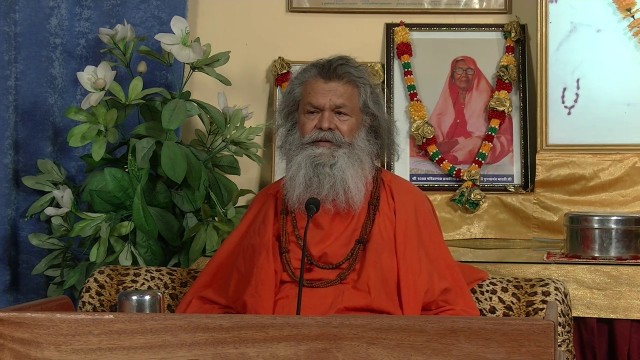
Evening satsang with Vishwaguruji from Jadan, Rajasthan, India. Nearly one-hour bhajan singing. Without prayers, meditation and singing bhajans humans life is not complete. When we are coming to the prayer we are in oneness again. In Satsang, we are in the truth. Do not continue with negative thinking. That one is lost.
Practicing of the system 'Yoga in Daily Life', Level 1 - Part 4
11:00 - 12:04 (64 min)
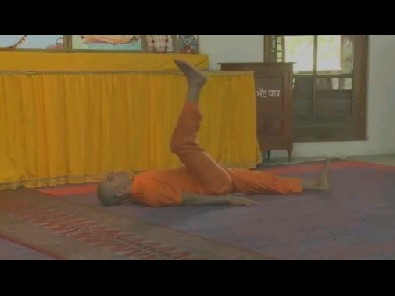
Practicing of the system "Yoga in Daily Life", Level 1 - Part 4, in Om Vishwa Deep Gurukul Swami Maheshwaranand Ashram, Jadan, Rajasthan, India on 23rd of October 2009.
Drops go back to the ocean
12:10 - 13:37 (87 min)
Evening satsang with Vishwaguruji from Jadan Ashram, Rajasthan, India. Celebration of Swamiji's return to Jadan Ashram by adults and children. Bhajan singing. The story about a Master who sends his disciple for oil. Explanation of what is the vritti. What should we think and do when we wake up in the morning? Jadan is a safe place for the bhaktas like the ocean for a drop of water. Everybody has different thoughts in his mind in the Ashram also. Our souls also go back to God at the end like a drop of water to the ocean. Gyan bhakti and everything comes from our Gurudev.
The mantra RAM
13:45 - 14:36 (51 min)
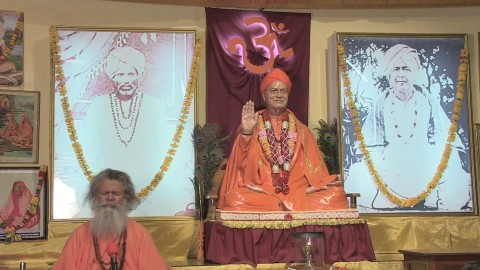
Evening satsang with Vishwaguruji from Jadan Ashram, Rajasthan, India. Chanting the RAM mantra. Feel the oneness with the Universe. Come within thyself. You are the light of God. Feel peace and Atma in your heart. We are running 24 hours a day, at least one our find peace. Singing bhajans.
Shakti is everywhere
14:40 - 15:24 (44 min)
A spiritual discourse on the unity of Śiva and Śakti, connecting universal family to inner power.
"Vasudhaiva Kuṭumbakam—the whole world is one family. The whole world is the children of one God."
"Śakti means strength, knowledge... Your willpower is your Śakti. This willpower should not be with anger, hate, or jealousy."
Swami Maheshwarananda speaks in a cultural city in Slovakia, explaining the non-dual principles of Śiva (consciousness) and Śakti (power/energy) that exist within everyone. He discusses the origins of yoga, the importance of persistent practice, and the choice between divine (Daivī) and demonic (Āsurī) manifestations of power, using analogies from aviation to water cutting stone. The talk concludes with a promise to lead a practical technique.
Filming location: Slovakia
Stories about Bhagwan Krishna
15:30 - 16:29 (59 min)
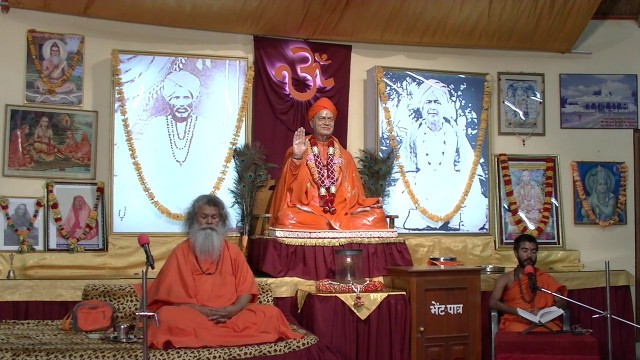
A discourse on the Śrīmad Bhagavad Gītā and a story from the Śrīmad Bhāgavat.
"Lord Kṛṣṇa says in the next śloka that it is better; He prefers when people worship His form, His physical form."
"The gopīs said, 'We are not abalās... Kṛṣṇa cannot leave us. Maybe He left us in the physical form, but He is always here with us.'"
Following an opening prayer, the speaker introduces the 12th chapter of the Bhagavad Gītā on Bhakti Yoga. He then narrates the story of Uddhava's mission to Vṛndāvan, sent by Lord Kṛṣṇa to console the grieving residents. The narrative focuses on Uddhava, a learned proponent of formless (nirguṇa) worship, attempting to lecture the gopīs and Yaśodā, only to be profoundly taught by them about the power of loving devotion (bhakti) to the personal form of God. The story illustrates the superiority of devotional love over mere intellectual knowledge, culminating in Uddhava's transformation.
Filming location: Jadan, Rajasthan, India
Yoga and Bhramari Pranayama
16:35 - 17:24 (49 min)
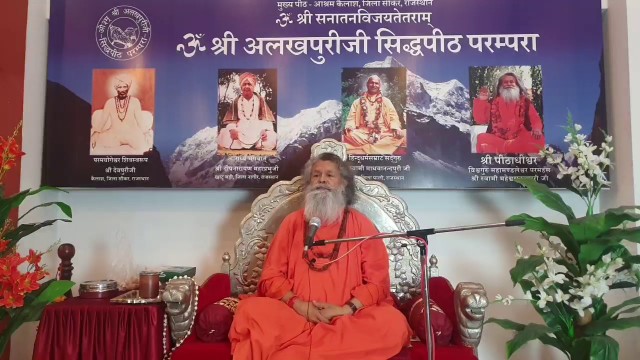
Evening Satsang with Vishwaguruji from Jaipur, Rajasthan, India. Introduction to yoga. Yoga is more than practicing asana and pranayama. A detailed explanation of Brahmari pranayama.
The Human Dharma
17:30 - 18:19 (49 min)
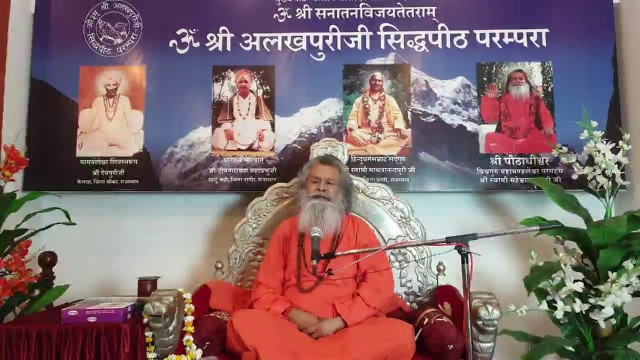
Evening satsang with Vishwaguruji from Jaipur, Rajasthan, India. Animals are eating each other. Human has given everything for humans. A human should not eat dead bodies. The essence of life is the same in every creature, like water in the raindrop and the ocean. God is ever with us. Explanation of the lineage of Gurus and the way how to chant Om properly.
Instructions for practising
18:25 - 19:16 (51 min)
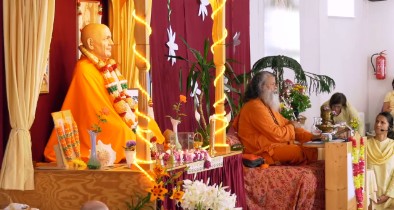
A seminar lecture for yoga teachers on adapting practice to individual capacity and preserving knowledge.
"Every yoga teacher's first duty and priority is to know what to do and what not to do for themselves."
"Knowledge must be renewed daily; otherwise, we are lost... what you have, give it; otherwise, it will be lost forever."
Swami Maheshwarananda (Swamiji) addresses a group of teachers and practitioners, focusing on the Bārikhāṭu Praṇām system. He stresses the importance of following a chosen system's discipline while adapting postures like Vajrāsana to one's physical limits, citing contraindications for back and heart issues. He critiques excessive relaxation in classes, shares yogic sleep principles, and emphasizes daily practice and the imperative to transmit knowledge, concluding with a preview of an upcoming technique on the mantra Aum.
Filming location: Strilky, Czech Republic
Kundalini and bhramari pranayama
19:20 - 20:14 (54 min)
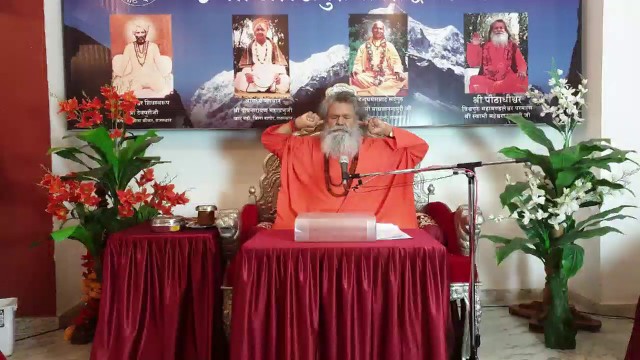
Eveng satsang with Vishwaguruji from Jaipur, Rajasthan, India. Chakras have 52 lotus petals and the Sanskrit alphabet have the same number of letters. Everybody speaks in his mother language at first. Vishwaguruji reads the Sataguru Chalisa- It is read and explained the Sri Kaka Battisi written by Holiguruji. In the Muladhara chakra, there are the 7 datus the 7 important elements of the human body. When kundalini awakens there is not any movements. Brahmari brings us harmony and peace. Demonstrating and practising some brahmari pranayama technics.
Keep the original message of Yoga
20:20 - 21:48 (88 min)
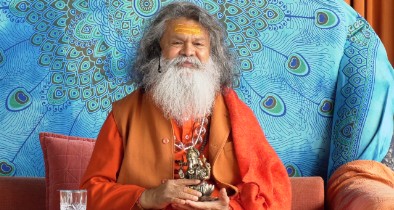
Morning satsang with Vishwaguruji from Vep, Hungary. We worship the Moon, the Sun and all of the creatures. One in All - the Jiva is everywhere. The speech of the Ambassador of India to Hungary Mr. Kumar Tuhin. It is important to keep the original message of the Yoga. It is Sanatana Dharma, India is the cradle of culture. If we are doing only physical asanas we are not going to be successful at all. Sanatana Dharma stands above the duality. Ayurveda and yoga are much elder than five thousand years.
Impression from Nepal - The Shiva Temple
21:50 - 21:59 (9 min)
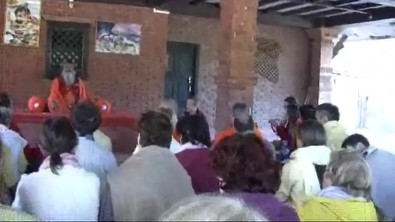
A spiritual discourse on the significance of Kedāreśvara.
"The name of Bhagavān Śiva here is Kedāreśvara. Yes, like Kedārnāth, he is the same."
"In the Himalayas, there are Badrināth and Kedārnāth. Badrināth is Viṣṇu, Kedārnāth is Śiva. And that is the same."
A speaker explains the identity and sacred geography of the deity Kedāreśvara, directly equating this form of Shiva with the famous Kedārnāth temple in the Himalayas. The discourse highlights the complementary divine presences of Shiva (Kedārnāth) and Vishnu (Badrināth) within the Himalayan pilgrimage tradition.
Filming location: Nepal
A Divine Call and the Search for a True Guru
22:00 - 22:48 (48 min)

A devotee recounts her spiritual journey, from a divine call to finding her Guru.
"I turned to my right side, and I could see Śrī Kṛṣṇa in my heart, holding a small bowl... and asking for kheer." "He looked into my eyes and said, 'You are looking for a true guru, haven’t you?'"
Rukhswani, an Indian woman living in New Zealand, describes a 1992 vision of Lord Krishna compelling her to make a milk pudding, which leads her to a satsang with Swāmī Śrī Māheśvarañjī. She expresses her search for a true guru and later travels to India, where she meets Holy Gurujī, receives mantra-dīkṣā, and undertakes translation work for him. She shares stories of divine grace, obedience, and her profound emotional connection to her Guru over subsequent years.
Filming location: Wellington, New Zealand
Yoga and nature is one
22:55 - 23:22 (27 min)
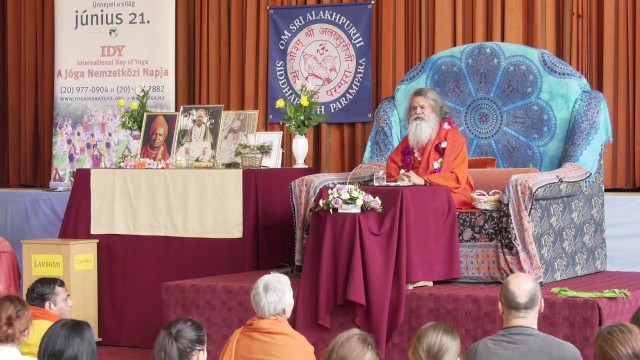
A spiritual address on the essence of yoga and Ayurveda as a natural way of life.
"Yoga is the science of humans. Yoga is a natural way of life."
"Āyurveda is one of the first ancient medicines. It originates from what we call the Yugas, which span millions of years."
Swami Ji addresses an international gathering at a college in Hungary, following a tree-planting ceremony. He explains the ancient, plant-based origins of Ayurveda and contrasts it with modern chemical medicine, acknowledging the value of both. He discusses the role of diet, particularly sugar, in health, and criticizes purely acrobatic approaches to yoga, emphasizing that "Yoga in Daily Life" is a holistic system for health and longevity. The talk expands into spiritual themes, stating we are all God and that our actions determine our fate.
Filming location: Vép, Hungary
Yoga and nature is one
23:30 - 23:57 (27 min)
A spiritual address on the essence of yoga and Ayurveda as a natural way of life.
"Yoga is the science of humans. Yoga is a natural way of life."
"Āyurveda is one of the first ancient medicines. It originates from what we call the Yugas, which span millions of years."
Swami Ji addresses an international gathering at a college in Hungary, following a tree-planting ceremony. He explains the ancient, plant-based origins of Ayurveda and contrasts it with modern chemical medicine, acknowledging the value of both. He discusses the role of diet, particularly sugar, in health, and criticizes purely acrobatic approaches to yoga, emphasizing that "Yoga in Daily Life" is a holistic system for health and longevity. The talk expands into spiritual themes, stating we are all God and that our actions determine our fate.
Filming location: Vép, Hungary
American
Australian