
European
Live webcast from Vienna
0:00 - 1:30 (90 min)
Evening satsang with Vishwaguruji from Guruji Ashram, Vienna, Austria.
The River of Selfless Service
0:15 - 0:47 (32 min)
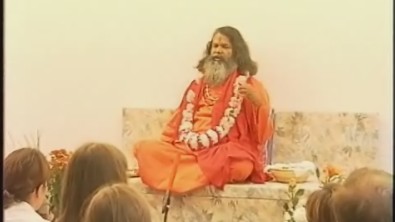
A satsang discourse on karma yoga, selfless service, and spiritual practice.
"Work is the beauty of life, but this work should be positive, selfless service."
"All that he did is for himself, for his soul, for his liberation."
The lecturer addresses ashram residents, praising their recent karma yoga efforts. He explores the nature of selfless service, using the example of Hanuman from the Ramayana to illustrate that all spiritual work ultimately benefits the doer's own soul. He outlines the threefold path of svādhyāya (self-study), manan (contemplation), and abhyāsa (practice), urging attendees to overcome personal likes and dislikes to foster inner harmony and continue flowing like a river in service.
Filming location: Zagreb, Croatia
Origin of the Spiritual Science
0:55 - 2:33 (98 min)
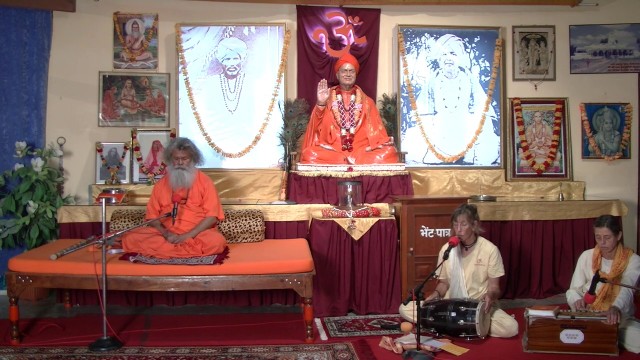
Evening satsang with Vishwaguruji from Jadan Ashram, Rajasthan, India. There are many-many technics like Kriya Shakti, Pranayama. Value of these sometimes forgotten. True stories about the mountains of the Himalayas. Some Rishis are transferring this knowledge into the present. Performing pujas, following ceremonies, is not a question of religion, it is a question of purity.
Development of consciousness
2:40 - 4:36 (116 min)
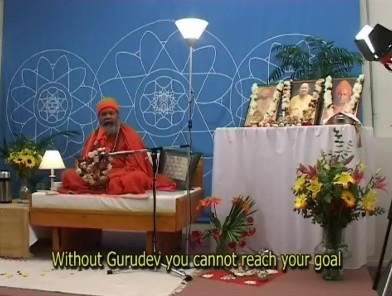
"Unity in diversity", "Kundalini and Chakras", followed by bhajan: "Guru Sa Bina, Karaja Nay Sare", followed by "Development of consciousness" from Melbourne, Australia, March 2004 in two parts.
Feel your heart
4:40 - 4:56 (16 min)
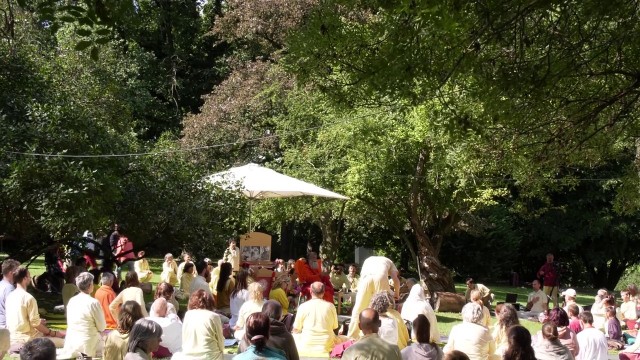
A guided meditation on heart-centered awareness and breath.
"Place your right hand gently on your heart. You will feel warmth. The breath originates from here; it is warm."
"The main thing is only to think in your heart. This is not easy. We think about other people, about where we are going, or what we can do."
A spiritual teacher guides participants through a meditation, instructing them to place a hand on the heart to feel its warmth as the source of the breath. The focus shifts between the heart and the navel, with an emphasis on inward attention, a straight posture, and a gentle breath. The teacher interjects with lighthearted, practical remarks to maintain a relaxed atmosphere while explaining the significance of these points from a yogic perspective regarding prāṇa.
Filming location: Strilky, Czech Republic
The Awakening of Kuṇḍalinī: A Journey to Happiness, Love, and Wisdom
5:00 - 5:28 (28 min)
A spiritual discourse on the awakening of Kuṇḍalinī and the structure of human consciousness.
"The awakening of the Kuṇḍalinī means happiness, universal love, and wisdom." "The soul is not the ātmā. The soul is only the collection of our karmas, destinies, and our qualities."
A teacher explains the nature of Kuṇḍalinī awakening, describing it as a state of bliss and universal love. He details the human energy system, including the five kośas (sheaths) and the chakras, using the metaphor of salt dissolving in water to describe the persistence of karma. The talk covers the etymology of "Kuṇḍalinī," its association with serpentine energy, and the importance of spiritual guidance for a stable awakening.
Filming location: Debrecen, Hungary
You are Infinite, Pula
5:35 - 7:11 (96 min)
Public Lecture, Pula, Croatia, 2004
Origin of the Spiritual Science
7:15 - 8:53 (98 min)
Evening satsang with Vishwaguruji from Jadan Ashram, Rajasthan, India. There are many-many technics like Kriya Shakti, Pranayama. Value of these sometimes forgotten. True stories about the mountains of the Himalayas. Some Rishis are transferring this knowledge into the present. Performing pujas, following ceremonies, is not a question of religion, it is a question of purity.
Development of consciousness
9:00 - 10:56 (116 min)
"Unity in diversity", "Kundalini and Chakras", followed by bhajan: "Guru Sa Bina, Karaja Nay Sare", followed by "Development of consciousness" from Melbourne, Australia, March 2004 in two parts.
Practicing of the system 'Yoga in Daily Life', Level 2 - Part 2
11:00 - 12:11 (71 min)
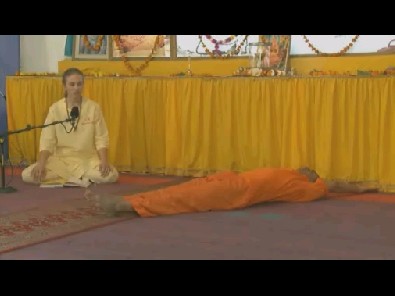
A guided yoga practice session for Level Two of the "Yoga in Daily Life" system.
"This light has been transferred through the centuries from one master to another without any interruption."
"Āsana means, except for other meanings, also comfortable. So āsana should be a comfortable position."
An instructor leads a comprehensive yoga class at Parananda Ashram, systematically guiding practitioners through the second level of the "Yoga in Daily Life" system. The session begins with relaxation and breath awareness (full yoga breath), followed by a series of āsanas including Meru Pṛṣṭhāsana, Catuṣpada Āsana, Cakrāsana, Dvikoṇāsana, Bhūta Āsana, Setu Āsana, Hastapādāṅguṣṭhāsana, Sumeru Āsana, and Meruvakrāsana. Each posture is explained with detailed alignment cues and its physical and energetic benefits. The practice concludes with deep relaxation, a prāṇāyāma (alternate nostril breathing) exercise, and a closing meditation with Oṁ and Śānti chants.
Filming location: Jadan, Rajasthan, India
Purify Yourselves
12:15 - 13:21 (66 min)
A spiritual discourse on creation, purity, and faith during a global pandemic.
"Out of 8.4 million creatures... all are the one heart, one soul, which is Śiva."
"If you have fear, then half you are dead... Gurudev is with us."
Swami Vashon (Vāslohriyog) leads a wide-ranging satsang, weaving together cosmology, devotion, and practical advice. He describes creation as emanating from the resonance (Nāda) of Śiva, explores the purifying nature of the sun, and emphasizes the power of chanting God's name. Addressing the pandemic context, he urges a pure vegetarian diet, home practice of yoga, faith over fear, and charitable giving, while cautioning against creating new spiritual texts.
Filming location: Jadan, Rajasthan, India
Do not eat meat, eggs and alcohol!
13:25 - 14:14 (49 min)
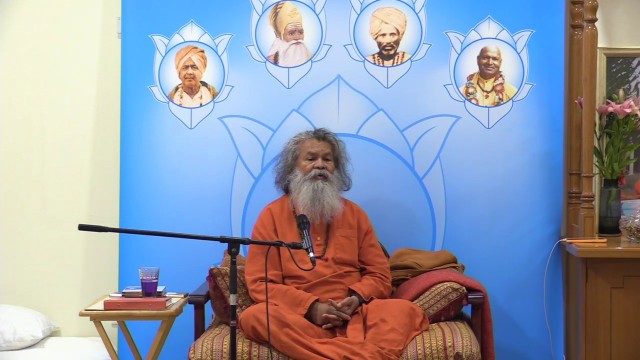
A spiritual discourse by a motherly figure on diet, family, and divine principles.
"And you know that my disciples, they are not eating meat, alcohol, and something more. Eggs."
"Bhagavān Śiva said that no one will be able to eat the meat of anyone; it will remain as it is."
The speaker, addressing her disciples, shares teachings on a sattvic lifestyle, emphasizing abstinence from meat, eggs, and alcohol. She uses the metaphor of a bird nurturing its eggs to discuss motherhood and creation, encourages having many children, and speaks of Lord Śiva's compassion for all life. The talk meanders through themes of human responsibility, the current Kali Yuga, and the sacredness of the mother.
Filming location: Sydney, Australia
Ragas and basics of Ayurveda
14:20 - 15:15 (55 min)
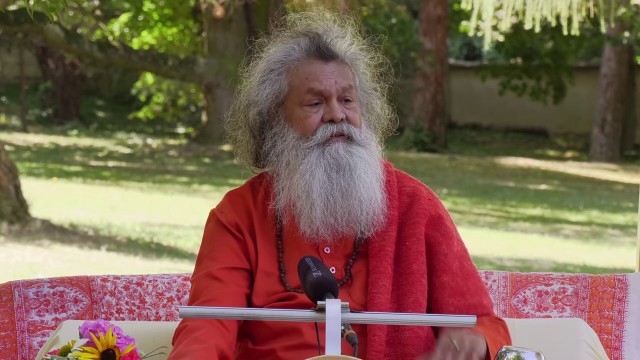
Morning satsang from Strilky Ashram, Czech Republic. There are many good people in Strilky Ashram from different countries. Madhavanandji also was in this place. We should go from time to time to the Strilky Ashram. Swami Madhuram is playing a raga in an Indian bansuri flute. This raga helped Buddha to start the way to spirituality. Christian people say amen at the end of their prayers, Muslim people say amin, Hindus say OM. They are dialects of each other. Many medical systems originated from Ayurveda. We have introduced some Ayurvedic disciplines and diagnostic methods. The word Bhagawan is consists of the first letters of the Sanskrit names of the five elements. There are also 108 junctions of nadis in our bodies.
We need peace in the whole world
15:20 - 16:05 (45 min)
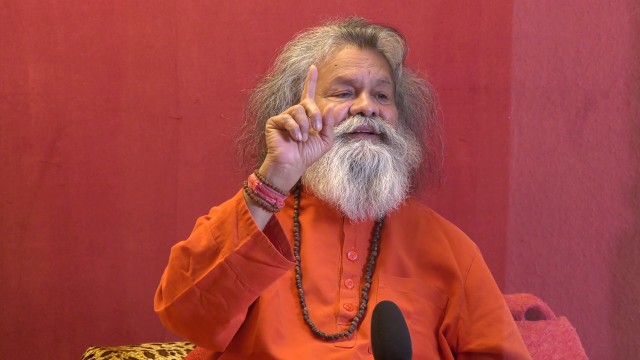
A spiritual discourse on peace, life, and daily practice.
"Śānti is both a feminine principle and the state of perfect happiness and joy. This peace is what the entire world needs so desperately."
"Everyone has this life. This life is like this fire. When everything, like ghee, is consumed, it will go away."
The lecturer delivers a talk centered on the principle of peace (Śānti) and the metaphor of the flame as life. He discusses the importance of daily rituals, prayer, and maintaining the sacred lamp in the ashram, weaving in personal anecdotes from his travels, observations on practice, and teachings on non-violence and compassion. The talk includes practical advice and concludes with a mention of Trāṭak (concentrated gazing) and the distribution of prasāda.
Filming location: Vienna, Austria
Keep your Anamaya Kosha clean
16:10 - 17:33 (83 min)
Evening satsang with Vishwaguruji from weekend Yoga Seminar in Novo Mesto, Slovenia. Badjan singing. Indian ambassador speaks about the importance of to keep the traditions unchanged. Every sound influence to ous brain. O human don't be proud of your being as a human. O man don't think that you are the best. Little ant has the same feeling as we have. We can't compare anything with God. We should keep our body healthy. We can become the slave of our tongue. We should clean our anamaya kosha. Every day practise is important. You can become your mantra. The development process is slow. Guru Kripa is the highest blessing. Where there is water there is God.
Satsang with Vishwaguruji
17:40 - 18:23 (43 min)
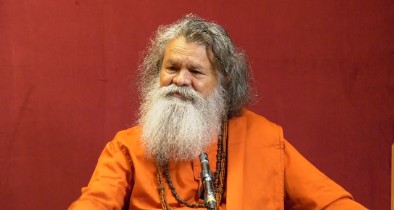
Satsang in honor of 15th year anniversary of Sri Holy Guruji Hindu Dharmsamrat Paramhans Sri Swami Madhavanand's Mahasamadhi, commemorated in Vienna.
Ragas and basics of Ayurveda
18:30 - 19:25 (55 min)
Morning satsang from Strilky Ashram, Czech Republic. There are many good people in Strilky Ashram from different countries. Madhavanandji also was in this place. We should go from time to time to the Strilky Ashram. Swami Madhuram is playing a raga in an Indian bansuri flute. This raga helped Buddha to start the way to spirituality. Christian people say amen at the end of their prayers, Muslim people say amin, Hindus say OM. They are dialects of each other. Many medical systems originated from Ayurveda. We have introduced some Ayurvedic disciplines and diagnostic methods. The word Bhagawan is consists of the first letters of the Sanskrit names of the five elements. There are also 108 junctions of nadis in our bodies.
Awakening of the knowledge
19:30 - 20:31 (61 min)
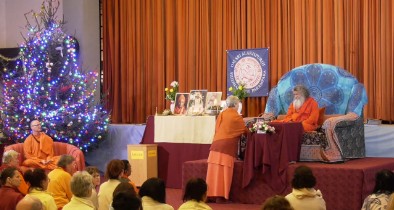
Evening satsang with Vishwaguruji from Vep, Hungary. Singing and explanation of Bhajans of Sri Mahaprabhuji. Cetan means awakened, acetan is like in the sleep. The awakened yogi sees the reflection of the Sun. Reflection means light, the light means the knowledge. There is great knowledge that can be found in these bhajans. What kind of feelings and thoughts are we have in this year? I am sure that we all had positive thinking.
The Interconnection of Yoga and Āyurveda: A Discourse on Mind, Body, and Soul
20:35 - 21:39 (64 min)
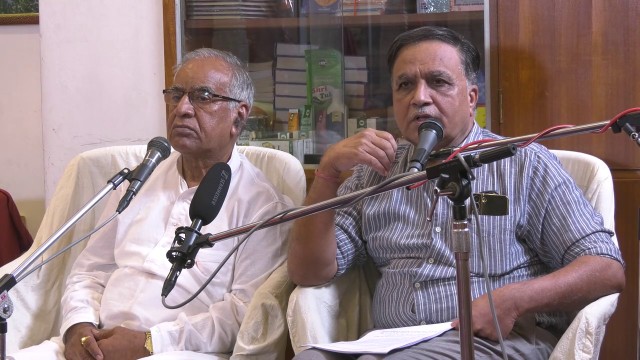
A lecture on the interconnection of Yoga and Āyurveda from an ancient Indian philosophical perspective.
"Yoga is an instrument to control your cittavṛtti—the fluctuations of the mind, the thoughts that continuously arise."
"From Maharṣi Caraka’s viewpoint... Ātmā sthe manasi sthire: when the mind is stable and controlled in the Ātmā. This is Yoga."
A retired Vice-Chancellor of Āyurvedic universities delivers a lecture on International Yoga Day, exploring how Āyurveda and Yoga are complementary sciences for controlling the mind and body. He explains Maharṣi Caraka's philosophical framework, the role of the soul and mind in karma, and the eightfold yogic path leading to samādhi and potential supernormal powers (aiśvarya). The session includes translation and concludes with remarks on the guru's global work.
Filming location: Jaipur, Rajasthan, India
How do we practice Bhramari?
21:40 - 21:59 (19 min)
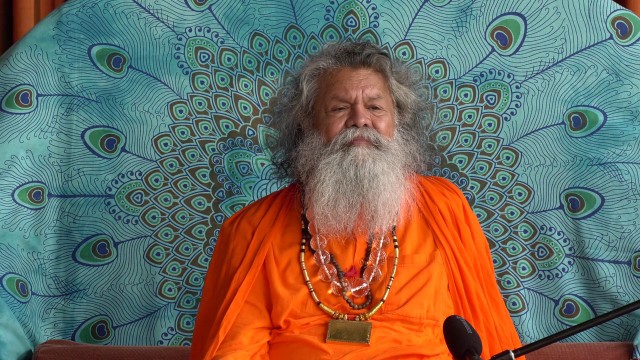
A teaching session on breathwork and the Brahmari technique.
"You are very good persons, and you must practice every day." "You should do only three practices: on the chest, on the heart, in the navel, and then Brahmari."
A spiritual teacher instructs a group on daily breathing practices, using the analogy of a varied meal to explain the need for different techniques. He outlines a sequence focusing on the heart and navel, details methods of inhalation and exhalation through the nose and mouth, and gives specific guidance on practicing the Brahmari sound. The talk includes practical warnings about social settings and concludes with an encouragement to practice at home.
Filming location: Vép, Hungary
Around The World - Vegetarianism and top sport, Part 2
22:00 - 22:33 (33 min)
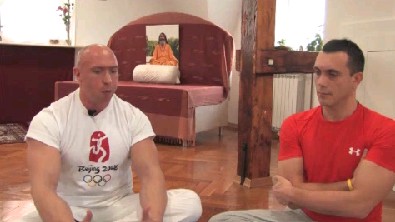
A dialogue between two vegetarian athletes about diet, discipline, and performance.
"The distrust was great. I wasn't 100% sure whether it would affect my development. Specifically, I have been practicing bodybuilding for the past 17 years."
"In our race, we do not have such results... we all do it for ourselves, for our own pleasure, for our own enjoyment, for pushing the boundaries."
Hanuman Purī, a bodybuilder, and Govind Purī, a yoga instructor and Ironman triathlete, discuss their journeys to vegetarianism—one through yoga and ethics, the other initially for athletic performance. They detail the practical challenges of plant-based nutrition for sports, addressing protein sourcing, meal timing, and the mental discipline required, while debunking myths about meat being essential for strength or muscle development.
Filming location: Zagreb, Croatia
The basics of the effects of yoga practices
22:40 - 22:55 (15 min)
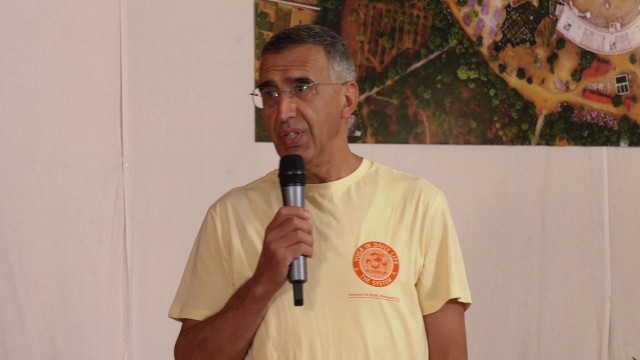
A talk on the dangers of substance abuse and the healing power of specific yoga practices.
"Me, as a medical doctor, am of course against the drugs and against that cannabis or hashish should be legalized here in Europe."
"This positive energy we feel when we are in yoga nidrā, this scans our... Body, it starts with think about your right toe, left toe, heel, etc."
A medical doctor and yoga practitioner addresses a retreat, first warning against the legalization of drugs like cannabis and sharing experiences with addiction. He then presents prāṇāyāma and yoga nidrā as essential tools for cultivating attention, well-being, and a healthy prefrontal cortex, explaining the mind-body connection. The talk concludes with a request for blessings.
Filming location: Strilky, Czech Republic
The love between Guru and disciple
23:00 - 23:22 (22 min)
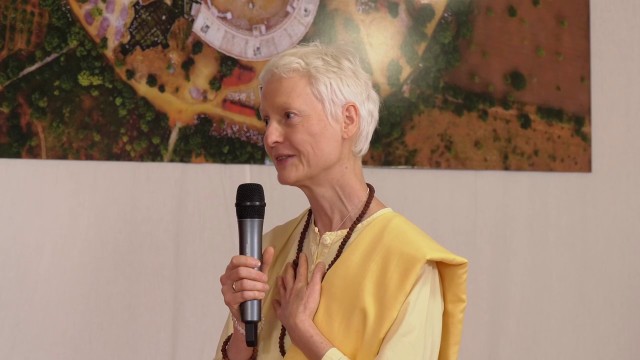
A satsang discourse on spiritual practice and the guru-disciple relationship.
"We are performing this Anuṣṭhāna sādhana, and it is bringing many things to the surface. Many memories are arising from the past, along with many, many situations. And this must happen."
"The Guru also has a human body, like other people... But inside lies the difference: the love that the Guru can give to his disciple—love, love, love. Yes, this cannot be done by anyone else."
A speaker reflects on the inner purification of sādhana, comparing it to cleaning a pond where dirt surfaces to be cleared. They discuss using discernment (viveka) to manage negative qualities and reframe the ego (ahaṃkāra) positively as necessary willpower. The talk then turns to the nature of the Guru's divine love, illustrated with a parable of a priceless diamond inside a common box and the metaphor of a Guru as a self-sacrificing candle. A second speaker shares a personal story of a car accident to illustrate how direct experiences build absolute trust in the Guru's guidance and protection.
Filming location: Strilky, Czech Republic
Feel your heart
23:30 - 23:46 (16 min)
A guided meditation on heart-centered awareness and breath.
"Place your right hand gently on your heart. You will feel warmth. The breath originates from here; it is warm."
"The main thing is only to think in your heart. This is not easy. We think about other people, about where we are going, or what we can do."
A spiritual teacher guides participants through a meditation, instructing them to place a hand on the heart to feel its warmth as the source of the breath. The focus shifts between the heart and the navel, with an emphasis on inward attention, a straight posture, and a gentle breath. The teacher interjects with lighthearted, practical remarks to maintain a relaxed atmosphere while explaining the significance of these points from a yogic perspective regarding prāṇa.
Filming location: Strilky, Czech Republic
We are one family
23:50 - 0:07 (17 min)
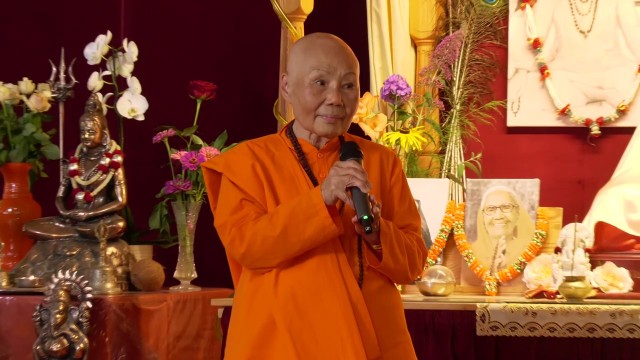
A satsang on spiritual family, surrender, and practice within a guru-disciple lineage.
"This is our Gurudeva, our father and mother. So spiritually, we have our home here."
"If you have complete faith, if you have one hundred percent trust, that is what matters. And that faith, the number one rule, is surrendering."
A spiritual teacher addresses a gathering, welcoming both longtime and new disciples. She describes the ashram as a spiritual home and the guru as a parental figure, contrasting these eternal bonds with temporary worldly family ties born of karma. She emphasizes the necessity of complete faith and surrender to the guru for solving life's problems, linking this to the need for inner purification through mantra, prayer, and satsang. The talk concludes with a call to sing the surrender mantra Nāhaṁ Karatā and the Guru Brahma prayer.
Filming location: Strilky, Czech Republic
American
Australian