
European
How came Vishwaguruji to Hungary first
0:45 - 1:07 (22 min)
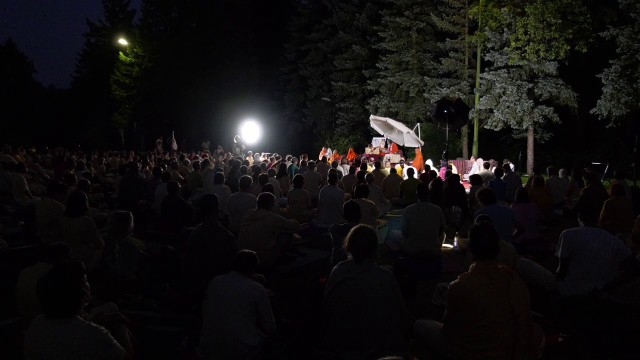
A devotee shares personal memories of first meeting and hosting her spiritual master, Svāmījī, in Hungary.
"We were really lucky that in 1976 we had the chance to go to Czechoslovakia, and we got to know Libuše Pilárová. I saw Svāmījī for the first time on the wall of her home."
"Svāmījī went to see this flat and looked around at the mattresses and said, 'This is what I need, this is what I need, this is what I need.' And my ego jumped to the ceiling."
The speaker recounts how, after seeing a picture of Svāmījī in Czechoslovakia, she and her companion Kṛṣṇānanda worked to invite him to Hungary. She describes his arrival by train, the humble accommodations in a neighbor's small flat filled with mattresses, and the month-long stay that began their discipleship. She recalls the emotional farewell at the train station and early yoga camps, expressing deep gratitude for the grace of meeting her master.
Filming location: Vép, Hungary
We can change the world together
0:50 - 1:46 (56 min)
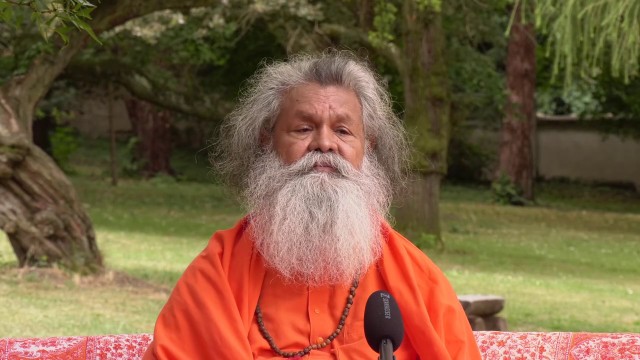
A satsang addressing the consumption of insects in food and advocating for consumer awareness and unity.
"They have decided in the whole world, and they also give to India. Some said, 'Good, it is very good,' and some said, 'No, we will not.'"
"The best food for our health is no-label food. What does 'eat at home' mean? Prepare your bread, prepare your chapati, roti, or falahari diet."
Following a personal anecdote about a health issue, a speaker discusses the global introduction of insects into the food supply. A representative from the Czech Republic explains local regulations requiring ingredient labeling, while a devotee from London shares efforts to lobby in the UK and EU parliaments. The discussion expands to cover the spiritual and health implications of diet, referencing Ayurvedic concepts like prāṇa. The final speaker calls for collective action, endurance, and self-reliance in food preparation, drawing inspiration from historical figures like Mahatma Gandhi.
Filming location: Strilky, Czech Republic
We should have roots
1:50 - 2:49 (59 min)
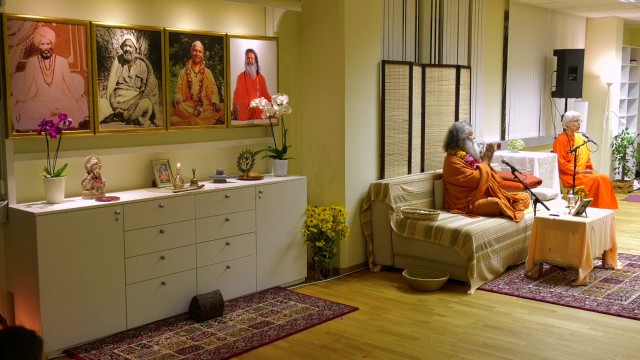
A spiritual discourse on yoga teaching, tradition, and the importance of roots.
"We must always create slightly different techniques for everyone. And all of you should become good teachers, our yoga teachers."
"Where are the roots of your village, your city, and your parents?... So where is the root for you?"
An elder teacher addresses a gathering, emphasizing the need for personalized yoga instruction and for students to become qualified teachers themselves. He critiques superficial academic approaches to yoga while paradoxically advocating for establishing yoga in universities. Using metaphors of children, families, and falling leaves, he stresses the importance of spiritual lineage (parampara) and staying connected to one's roots, ultimately pointing toward the soul's journey and liberation.
Filming location: Slovenia
Sound and resonance
2:55 - 3:51 (56 min)
Morning Satsang with Vishwaguruji from Vep, Hungary. Regardless whether you understand bhajans or not, the resonance awakens spirituality in you. The resonance of the songs is reflected in our ten indriyas (organs of perception and action). Swami Sivananda said in his bhajan: those are my friends who understand my words. Shabda means sound, words. In the Gurukul, the warrior students learnt all mantras for archery. By the power of these mantras the arrow goes straight to where the sound of the tiger came from. Vishwaguruji explains the karmic sin of King Dasharatha, father of God Rama.
The real Guru is in oneness
3:55 - 4:56 (61 min)
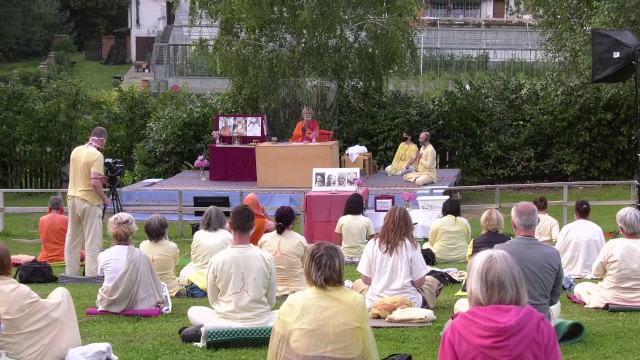
A spiritual discourse on universal oneness and the nature of the divine path.
"If a God says, 'Do not worship that God,' then neither is that God right, nor are you good. We have to come to oneness."
"The drop is not there. I am not a drop. I am the ocean. Similarly, we are in that condition. But you are still not near the beach of the ocean."
The speaker, likely a spiritual teacher, leads a satsang exploring the essential unity of all spiritual paths and deities. He emphasizes that a true guru or God would never forbid the worship of another, advocating for a non-sectarian devotion. Using metaphors like a drop merging into the ocean and the irreversible flight of an airplane, he discusses the preciousness of time, the journey of the soul, and the nature of prana (life force) as both a suffering entity and a divine connection. The talk weaves between philosophical points, practical advice, and anecdotal reflections, concluding with a call for inner purity and an end to religious duality.
Filming location: Strilky, Czech Republic
Ragas and basics of Ayurveda
5:00 - 5:55 (55 min)
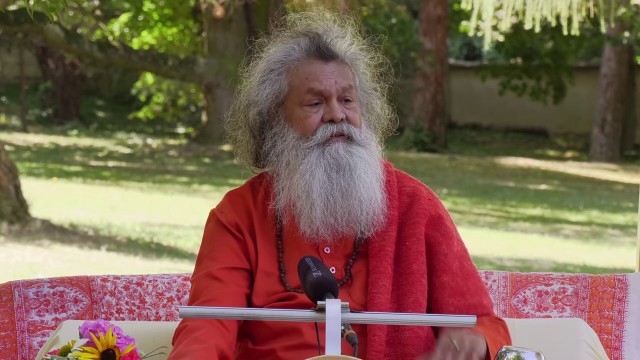
Morning satsang from Strilky Ashram, Czech Republic. There are many good people in Strilky Ashram from different countries. Madhavanandji also was in this place. We should go from time to time to the Strilky Ashram. Swami Madhuram is playing a raga in an Indian bansuri flute. This raga helped Buddha to start the way to spirituality. Christian people say amen at the end of their prayers, Muslim people say amin, Hindus say OM. They are dialects of each other. Many medical systems originated from Ayurveda. We have introduced some Ayurvedic disciplines and diagnostic methods. The word Bhagawan is consists of the first letters of the Sanskrit names of the five elements. There are also 108 junctions of nadis in our bodies.
When I was a child
6:00 - 6:51 (51 min)
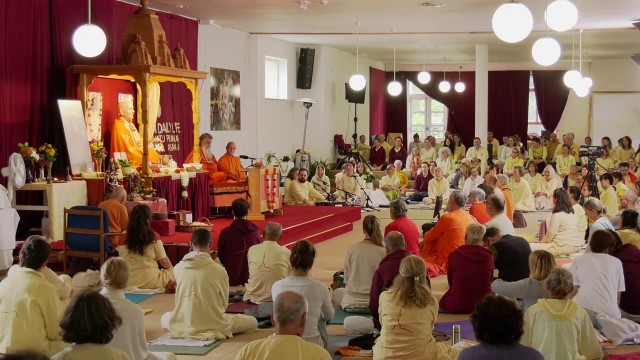
A spiritual discourse blending personal history, karma yoga, and life guidance.
"Only through karma yoga will you be again with your friends, and you will become family and friends."
"Do something, and in that moment, something is able to happen in your destiny."
Vishwaguruji shares a stream-of-consciousness talk, recounting pivotal moments from his youth—including his father's predictions, meeting his Guruji, and running away to a spiritual life. He narrates his early travels to Europe to teach yoga and advocate for vegetarianism, which led to founding ashrams. The talk emphasizes active spiritual practice (karma yoga) over passive waiting, applying this to seeking partnerships and personal growth. A disciple concludes by summarizing the core message of taking destiny into one's own hands.
Filming location: Strilky, Czech Republic
Bhajans evening from the Strilky Ashram
6:55 - 7:58 (63 min)
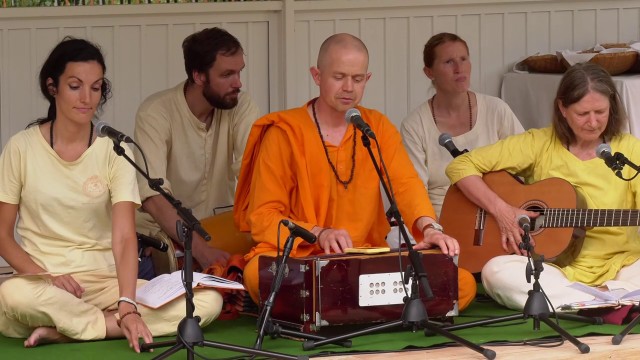
Evening satsang from Strilky Ashram, Czech Republic. Bhajan singing and translation.
Ragas and basics of Ayurveda
8:05 - 9:00 (55 min)
Morning satsang from Strilky Ashram, Czech Republic. There are many good people in Strilky Ashram from different countries. Madhavanandji also was in this place. We should go from time to time to the Strilky Ashram. Swami Madhuram is playing a raga in an Indian bansuri flute. This raga helped Buddha to start the way to spirituality. Christian people say amen at the end of their prayers, Muslim people say amin, Hindus say OM. They are dialects of each other. Many medical systems originated from Ayurveda. We have introduced some Ayurvedic disciplines and diagnostic methods. The word Bhagawan is consists of the first letters of the Sanskrit names of the five elements. There are also 108 junctions of nadis in our bodies.
Live pure life and be happy
9:05 - 10:09 (64 min)
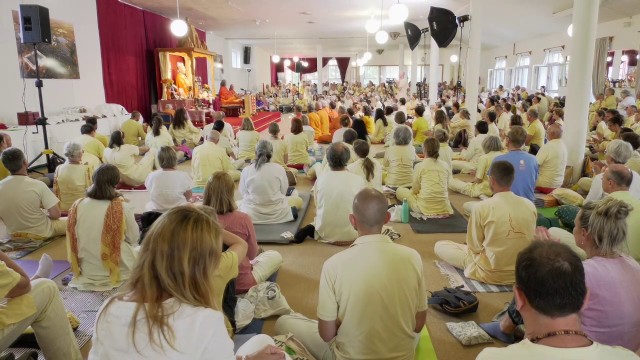
Evening satsang from Strilky Ashram, Czech Republic. Introduction to a very beautiful program with Vishwaguruji and many swamis. Many people came from different places for example Swami Mataji. In India unfortunately, many people begin to eat meat and drink alcohol. Yoga people are very pure in every country. Some people begin to eat meat but it is very bad. Sometimes young couples are not happy with each other. We should decide to marry or not. People in India many people are married according to astrology. To be happy with your partner is also yoga. Bhajan singing. Swani Madhuram speaks about his life in New Zealand and his longing to meet Vishwaguruji.
A New World Begins
10:15 - 10:54 (39 min)
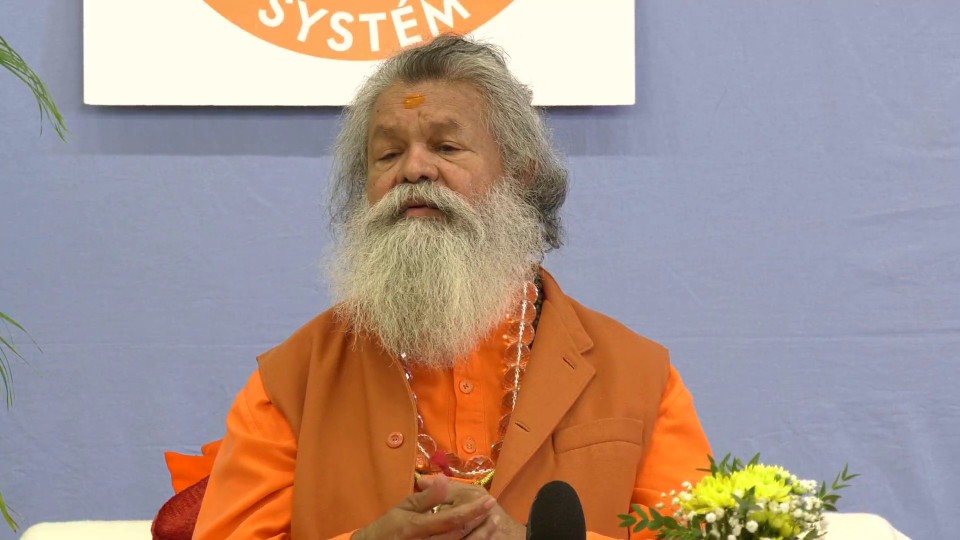
A spiritual address announcing a new beginning for humanity.
"It is already here; it has already happened. I am happy to tell you."
"Every morning when you stand up... Open your eyes: 'I am human.' Only this one word."
A speaker addresses an audience, sharing a vision for a new world rooted in purity and a reaffirmed human identity. He urges daily writing, spreading the message, and returning to pure food, water, and local temples. The talk blends practical instructions with spiritual calls for purity, concluding with a morning ritual affirmation of being human and chants.
Filming location: Slovakia
Practising from Jadan
11:00 - 11:27 (27 min)
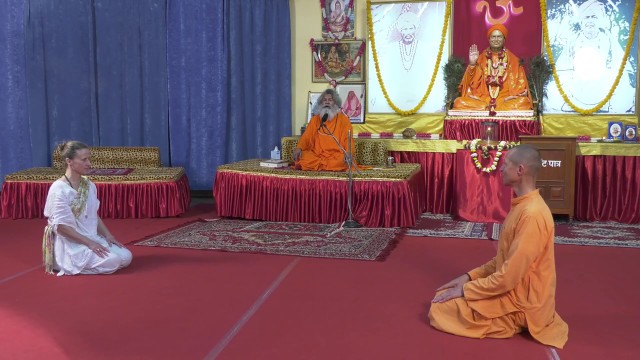
Evening satsang with Vishwaguruji from Jadan Ashram, Rajasthan, India. Practising Bari Khatu Pranam.
We can bring Yoga back to India
11:35 - 12:00 (25 min)
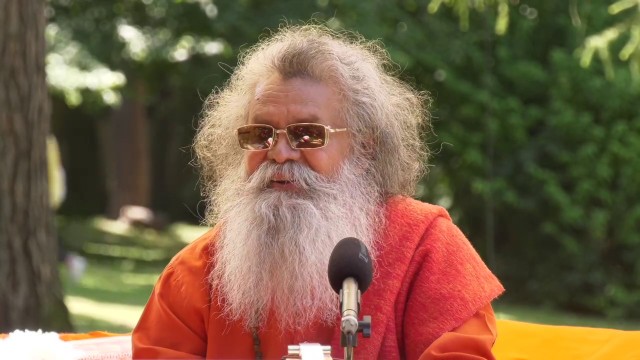
A spiritual teacher addresses a gathering of long-time disciples, reflecting on community and the principles of Yoga in Daily Life.
"Only that one who doesn't eat meat, eggs, and alcohol—then you are really a great yogī."
"I told today, for all of you, that everywhere where you are, practice yoga in daily life."
The teacher speaks to a multi-generational community, emphasizing vegetarianism as a core tenet of yoga and the importance of consistent spiritual practice. He discusses the idea of bringing pure yoga back to India from Europe and shares teachings on mindful marriage and procreation. A disciple then shares a personal testimony about her family's decades-long devotion, harmonious marriages, and spiritual continuity across generations, which the teacher celebrates.
Filming location: Strilky, Czech Republic
Do not eat meat, eggs and alcohol!
12:05 - 12:54 (49 min)
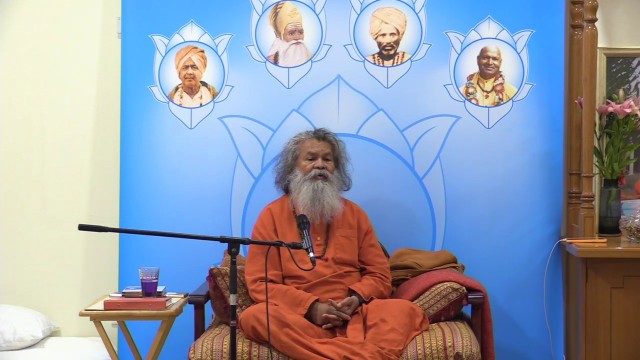
A spiritual discourse by a motherly figure on diet, family, and divine principles.
"And you know that my disciples, they are not eating meat, alcohol, and something more. Eggs."
"Bhagavān Śiva said that no one will be able to eat the meat of anyone; it will remain as it is."
The speaker, addressing her disciples, shares teachings on a sattvic lifestyle, emphasizing abstinence from meat, eggs, and alcohol. She uses the metaphor of a bird nurturing its eggs to discuss motherhood and creation, encourages having many children, and speaks of Lord Śiva's compassion for all life. The talk meanders through themes of human responsibility, the current Kali Yuga, and the sacredness of the mother.
Filming location: Sydney, Australia
The Purifying Path of Haṭha Yoga: An Introduction to Ṣaṭkarma
13:00 - 13:47 (47 min)

An instructional webcast introducing the Haṭha Yoga purification techniques (Ṣaṭkarma).
"Haṭha Yoga is not only that we clean and purify our whole system, our whole body, but it also has a very great effect on our nervous system."
"Haṭha means willpower to do these Haṭha Yoga techniques. And with this, you also get the willpower, the strength to persevere, to continue, to get rid of the laziness."
A teacher from the Śrīkī Ashram, joined by assistants, explains the purpose and benefits of the six purification acts. The session features a detailed, practical demonstration of Jala Netī (nasal cleansing with salt water) and Kapāla Bhāti, followed by an introduction to Agni Sāra and the Naulī Kriyā for digestive health. The instruction emphasizes using natural elements, proper technique, and the holistic effects on physical and energetic systems.
Filming location: Strilky, Czech Republic
We are the Ocean
13:55 - 15:02 (67 min)
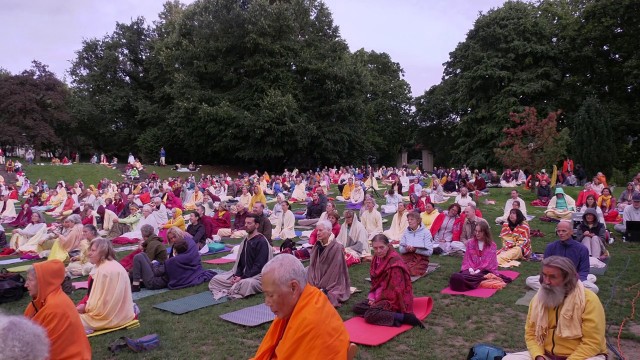
Evening satsang with Vishwaguruji from Strilky Ashram, Czech Republic. We came here from many countries to practice and we did a very good job in this beautiful place, our Ashram. I don't know who will be my successor. You know, Guru is Guru. Holy Guruji has so much love for me. He always supported me. You are all one in my heart. The humidity rises from the sea, we are like the ocean. Now close your eyes and take time in your hearts.
Ganesha
15:10 - 15:59 (49 min)
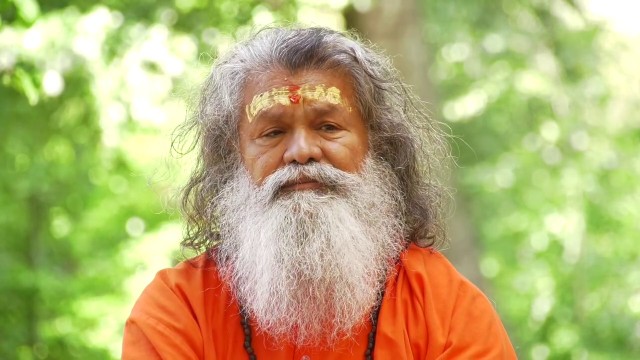
Vishwaguruji´s morning Satsang at Strilky Ashram, Czech Republic
Without Gurudev the whole world cries
15:30 - 15:46 (16 min)
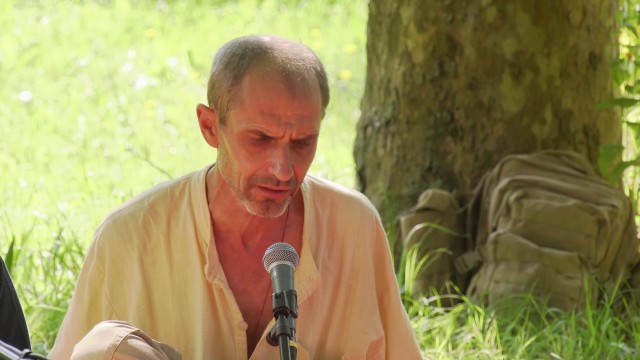
A devotee shares an interpretation and sings a devotional bhajan.
"I was wandering around the world. I searched the entire world but could not find a friend like Gurudev."
"Satguru āye, mera mana harṣāye. Dhanyabhāga mere Satguru āye. (My Satguru has come, my mind is delighted. Fortunate am I, my Satguru has come.)"
The speaker expresses a deep longing for the Guru, offering a personal interpretation of a hymn's meaning before clarifying it is not a proper translation. He then sings the bhajan "Dhania Bagha Mere Sat Guru Aya," which praises the arrival of the Satguru and the joy and liberation it brings. The session concludes with extended devotional chanting.
Filming location: Vép, Hungary
We come and go
16:05 - 16:51 (46 min)
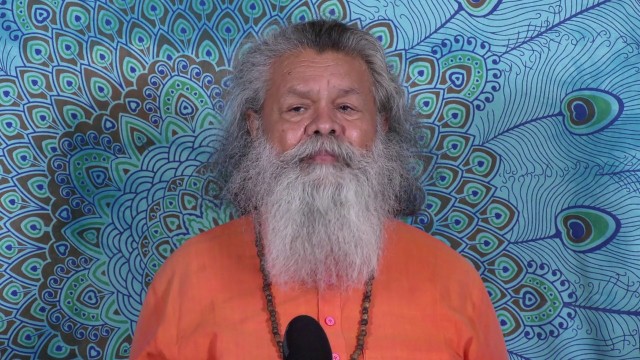
A spiritual talk and community address in a holy place after a long absence.
"After a long time, we are again here—nearly about three years or a little more. We were all very much thinking about when we would come here for our practice, yoga, etc."
"The memory, the memory remains... But they are gone. Their body is gone. But they remain. What? Their name. Their name. And this name remains forever."
Swami Maheshvaranandji addresses a gathering, reflecting on the long-awaited return to a sacred location and honoring the legacy of devotees like Krishnananda. He discusses the eternal nature of the Guru's name, the human journey from animal-like origins to spiritual awareness, and offers guidance on diet, dress, and the importance of practice for health and spiritual growth. The talk includes personal observations and calls for communal participation.
Filming location: Vép, Hungary
We need peace in the whole world
16:55 - 17:40 (45 min)
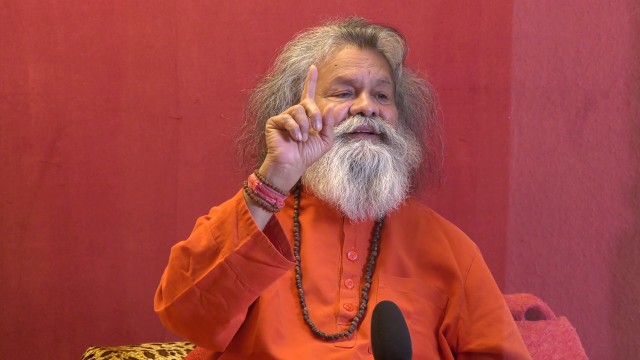
A spiritual discourse on peace, life, and daily practice.
"Śānti is both a feminine principle and the state of perfect happiness and joy. This peace is what the entire world needs so desperately."
"Everyone has this life. This life is like this fire. When everything, like ghee, is consumed, it will go away."
The lecturer delivers a talk centered on the principle of peace (Śānti) and the metaphor of the flame as life. He discusses the importance of daily rituals, prayer, and maintaining the sacred lamp in the ashram, weaving in personal anecdotes from his travels, observations on practice, and teachings on non-violence and compassion. The talk includes practical advice and concludes with a mention of Trāṭak (concentrated gazing) and the distribution of prasāda.
Filming location: Vienna, Austria
I am Thine
17:45 - 18:29 (44 min)
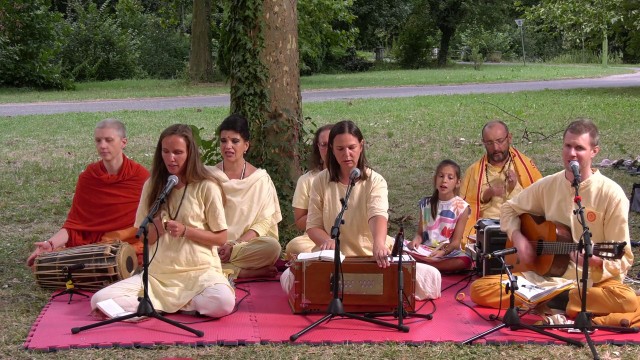
Evening satsang with Vishwaugurji from Vep, Hungary. Singing bhajans Sajjana vali lage sa, Kya tum jano hala hamara. Singing and translation of bhajan Prema ka pyala hari kaba mera bharase. Mahapraphuji say many times, that he will fill the heart of Bhaktas. Singing bhajan Ceta Ceta, ab jiva agyani.
Do not eat eggs!
18:35 - 19:19 (44 min)
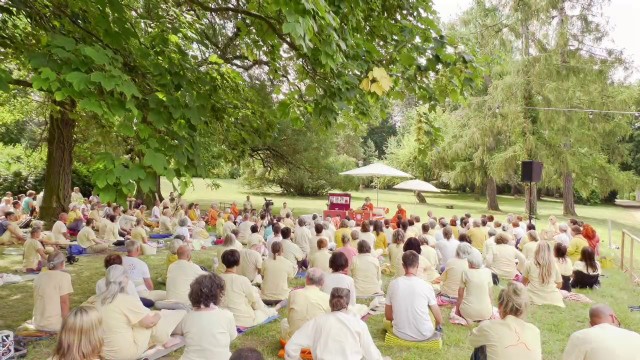
A satsang on dietary purity, health, and spiritual discipline within the Yoga in Daily Life system.
"Please, don't eat the eggs. Eggs, they sing, but I can tell you, it will go many problems, and you die."
"Our people, how long? Thirty years. And all people like with me... she did not eat any meat... and she is all the way, she is working very good, and that's why you see how health."
The spiritual teacher, Swamiji, addresses a gathering, advocating strongly for a vegetarian lifestyle free from meat, eggs, and honey, linking it to the good health and longevity of his long-term disciples. He shares anecdotes about dietary practices in India and the West, warns against new food trends, and briefly touches on family stability. The session concludes with children from the community presenting paintings and performing a skit demonstrating how yoga poses help with various ailments.
Filming location: Strilky, Czech Republic
Do good and be human
19:25 - 20:07 (42 min)
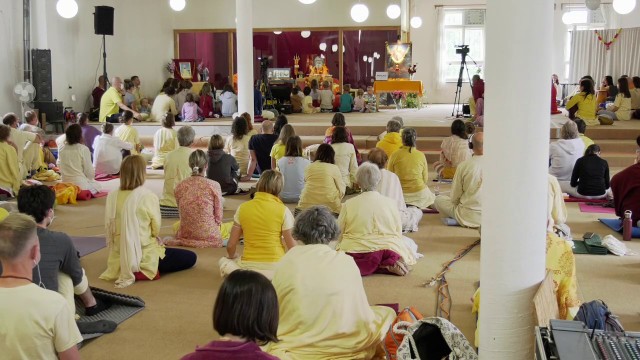
Morning satsang with Vishwaguruji from Strilky Ashram, Czech Republic. We should feel every morning that we are human. The ocean and the drop of water is the same. Human should be like God. WE should do only things that are good for all. Bhajan singing.
God resides in every living being
20:15 - 20:45 (30 min)
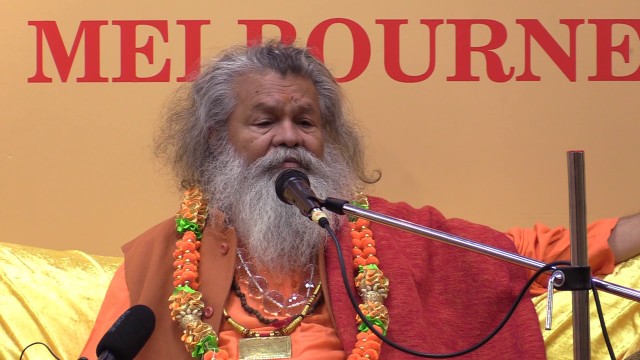
A spiritual discourse on universal unity and human identity.
"When the soul leaves this body... then tell me, what is on top of the skin? It is all there—whether one is Hindu or Muslim, that is what it is."
"See, we are human beings, we are human beings... So, O sādhus, what difference is there between you and them?"
A speaker delivers an impassioned, stream-of-consciousness talk on transcending religious and national divisions to recognize a shared human and spiritual essence. He discusses the soul's journey, advocates for non-violence and prayer, and reflects on karmic consequences, while expressing gratitude for his disciples and the spiritual heritage of India. The talk concludes with a blessing.
Filming location: Melbourne, Australia
A human should not kill
20:50 - 21:15 (25 min)
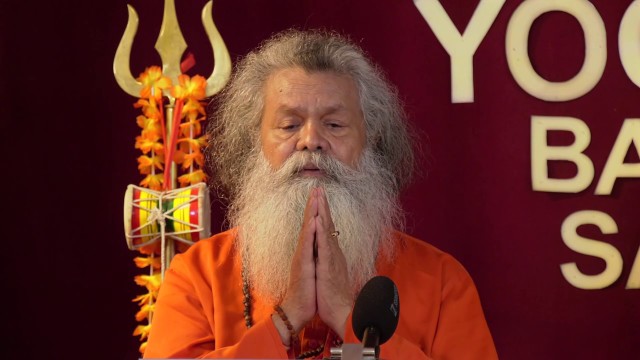
Evening satsang from Strilky Ashram, Czech Republic. Introduction of Mahamandaleshwar Swami Vivekpuriji. Yoga in Daily Life is a system for everyone. Yoga was brought by Bhagwan Shiva for people to reach God. Nowadays many people eat meat and do similar bad things. People should not kill. But you already know and follow this. You should not eat meat. Because of an illness I cannot find the words but I am with you and I am very happy that you are not negative. The bhajans are very important, they tell people what is good and what is not.
The love between Guru and disciple
21:20 - 21:42 (22 min)
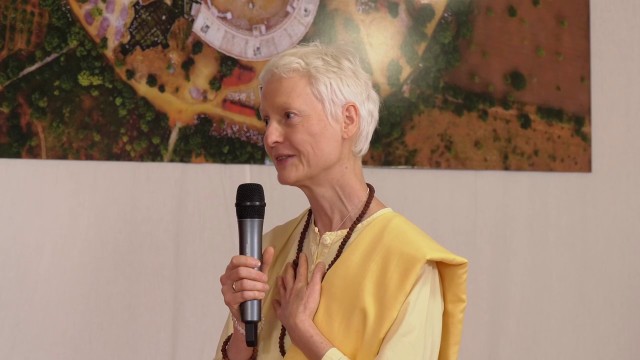
A satsang discourse on spiritual practice and the guru-disciple relationship.
"We are performing this Anuṣṭhāna sādhana, and it is bringing many things to the surface. Many memories are arising from the past, along with many, many situations. And this must happen."
"The Guru also has a human body, like other people... But inside lies the difference: the love that the Guru can give to his disciple—love, love, love. Yes, this cannot be done by anyone else."
A speaker reflects on the inner purification of sādhana, comparing it to cleaning a pond where dirt surfaces to be cleared. They discuss using discernment (viveka) to manage negative qualities and reframe the ego (ahaṃkāra) positively as necessary willpower. The talk then turns to the nature of the Guru's divine love, illustrated with a parable of a priceless diamond inside a common box and the metaphor of a Guru as a self-sacrificing candle. A second speaker shares a personal story of a car accident to illustrate how direct experiences build absolute trust in the Guru's guidance and protection.
Filming location: Strilky, Czech Republic
Feel your heart
21:50 - 22:06 (16 min)
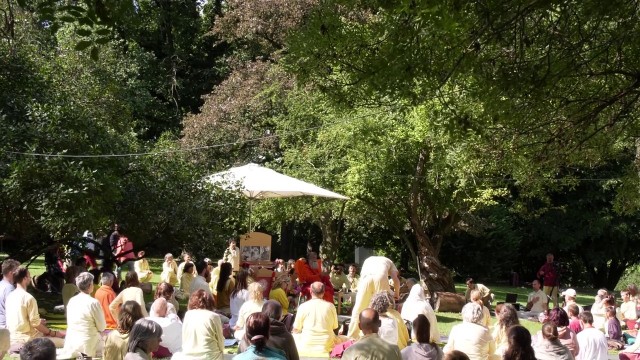
A guided meditation on heart-centered awareness and breath.
"Place your right hand gently on your heart. You will feel warmth. The breath originates from here; it is warm."
"The main thing is only to think in your heart. This is not easy. We think about other people, about where we are going, or what we can do."
A spiritual teacher guides participants through a meditation, instructing them to place a hand on the heart to feel its warmth as the source of the breath. The focus shifts between the heart and the navel, with an emphasis on inward attention, a straight posture, and a gentle breath. The teacher interjects with lighthearted, practical remarks to maintain a relaxed atmosphere while explaining the significance of these points from a yogic perspective regarding prāṇa.
Filming location: Strilky, Czech Republic
We are the Ocean
22:10 - 23:17 (67 min)
Evening satsang with Vishwaguruji from Strilky Ashram, Czech Republic. We came here from many countries to practice and we did a very good job in this beautiful place, our Ashram. I don't know who will be my successor. You know, Guru is Guru. Holy Guruji has so much love for me. He always supported me. You are all one in my heart. The humidity rises from the sea, we are like the ocean. Now close your eyes and take time in your hearts.
Ragas and basics of Ayurveda
23:25 - 0:20 (55 min)
Morning satsang from Strilky Ashram, Czech Republic. There are many good people in Strilky Ashram from different countries. Madhavanandji also was in this place. We should go from time to time to the Strilky Ashram. Swami Madhuram is playing a raga in an Indian bansuri flute. This raga helped Buddha to start the way to spirituality. Christian people say amen at the end of their prayers, Muslim people say amin, Hindus say OM. They are dialects of each other. Many medical systems originated from Ayurveda. We have introduced some Ayurvedic disciplines and diagnostic methods. The word Bhagawan is consists of the first letters of the Sanskrit names of the five elements. There are also 108 junctions of nadis in our bodies.
American
Australian