
European
The Inner Conflict of Śiva
0:15 - 1:10 (55 min)
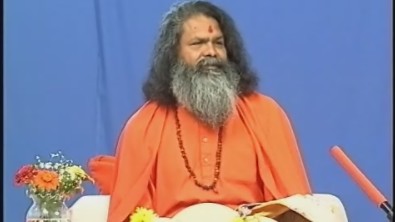
A narrative discourse exploring the inner conflict of Lord Śiva following Satī's test of Lord Rāma.
"Sometimes, to speak the truth is not easy. You hesitate to tell something; you do not want to lose face."
"Therefore, God, please, you can take everything away, or may I lose everything, but not one thing: my belief, my devotion to you."
The speaker recounts the mythological story where Satī, after testing Rāma by disguising herself as Sītā, lies to Śiva about her actions. Śiva, the knower of all, discovers the truth through his divine sight and is plunged into a profound inner conflict. He wrestles with a dilemma: to love Satī in her transformed state feels like a sin that would compromise his pure devotion (bhakti) to Rāma, yet he cannot reject his pure and faithful consort. The discourse uses this story to examine themes of truth, doubt, devotion, and the painful inner arguments that arise when faith is tested, concluding that only divine mercy can resolve such struggles.
Ragas and basics of Ayurveda
1:15 - 2:10 (55 min)
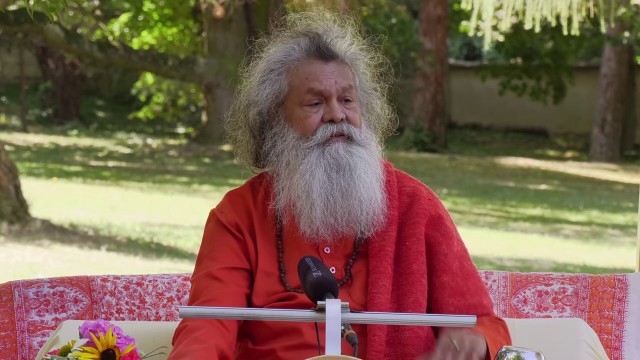
Morning satsang from Strilky Ashram, Czech Republic. There are many good people in Strilky Ashram from different countries. Madhavanandji also was in this place. We should go from time to time to the Strilky Ashram. Swami Madhuram is playing a raga in an Indian bansuri flute. This raga helped Buddha to start the way to spirituality. Christian people say amen at the end of their prayers, Muslim people say amin, Hindus say OM. They are dialects of each other. Many medical systems originated from Ayurveda. We have introduced some Ayurvedic disciplines and diagnostic methods. The word Bhagawan is consists of the first letters of the Sanskrit names of the five elements. There are also 108 junctions of nadis in our bodies.
Do not eat meat, eggs and alcohol!
2:15 - 3:04 (49 min)
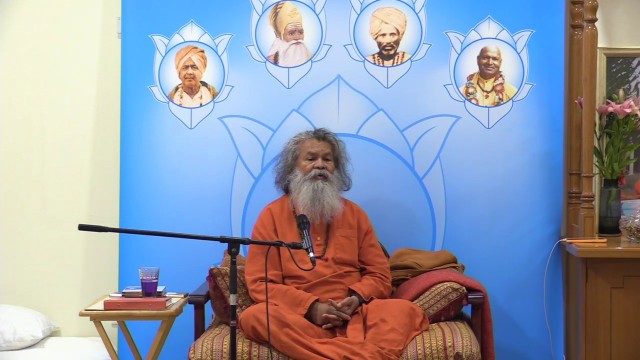
A spiritual discourse by a motherly figure on diet, family, and divine principles.
"And you know that my disciples, they are not eating meat, alcohol, and something more. Eggs."
"Bhagavān Śiva said that no one will be able to eat the meat of anyone; it will remain as it is."
The speaker, addressing her disciples, shares teachings on a sattvic lifestyle, emphasizing abstinence from meat, eggs, and alcohol. She uses the metaphor of a bird nurturing its eggs to discuss motherhood and creation, encourages having many children, and speaks of Lord Śiva's compassion for all life. The talk meanders through themes of human responsibility, the current Kali Yuga, and the sacredness of the mother.
Filming location: Sydney, Australia
Ganesha
3:10 - 3:59 (49 min)
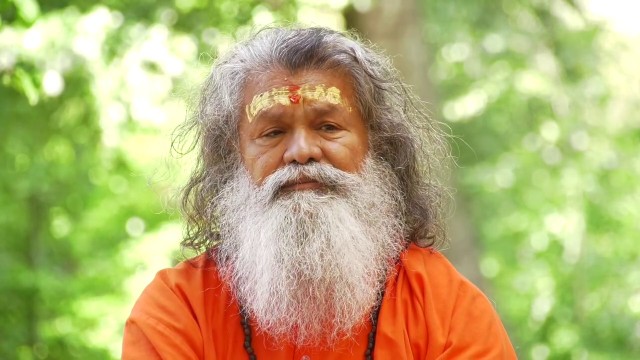
Vishwaguruji´s morning Satsang at Strilky Ashram, Czech Republic
We come and go
4:05 - 4:51 (46 min)
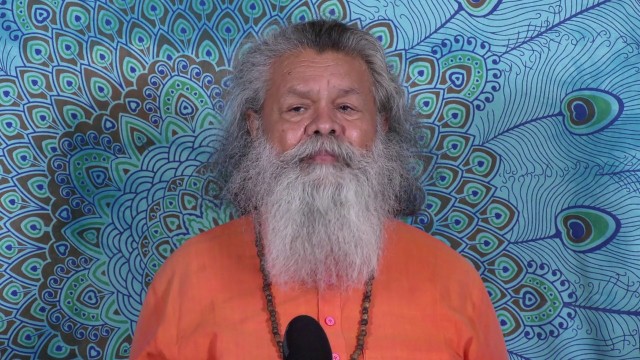
A spiritual talk and community address in a holy place after a long absence.
"After a long time, we are again here—nearly about three years or a little more. We were all very much thinking about when we would come here for our practice, yoga, etc."
"The memory, the memory remains... But they are gone. Their body is gone. But they remain. What? Their name. Their name. And this name remains forever."
Swami Maheshvaranandji addresses a gathering, reflecting on the long-awaited return to a sacred location and honoring the legacy of devotees like Krishnananda. He discusses the eternal nature of the Guru's name, the human journey from animal-like origins to spiritual awareness, and offers guidance on diet, dress, and the importance of practice for health and spiritual growth. The talk includes personal observations and calls for communal participation.
Filming location: Vép, Hungary
Svargaloka
4:55 - 6:00 (65 min)
Morning satsang with Vishwaguruji from Rijeka, Croatia. There are only two things: Ayurveda and Yoga. Yoga will be successful through doing karma yoga. Karma means action. In kaliyuga we are have become slaves of money. Good actions lead us to Heaven/ Svarga Loka, while devotion to the master leads us to the highest world of Brahman - Brahma Loka.
Swara Yoga
6:05 - 6:42 (37 min)
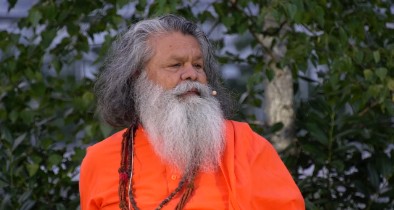
A teaching session on the theory and daily application of Svara Yoga, the yoga of the vital breath.
"Svara Yoga gives indications about your whole life. It provides information about your past and what is happening in the present, and it offers information about the future."
"When you want to see the moon, you should see it. The breath must flow through the right and left nostril. What to do if it is not? You cannot say, 'Moon, stop for a while; I will open my eyes then.' Time does not wait for anyone."
The lecturer explains this ancient science of breath rhythms, relating it to the Ida and Pingala nadis. He details practical techniques, such as checking the active nostril upon waking and stepping forward with the corresponding foot to ensure success in daily activities. The talk covers its predictive potential, warns against suicide, and uses the observation of the new moon as a key practice to harmonize with cosmic cycles for health and clarity.
Filming location: Strilky, Czech Republic
Remembering of Sri Devpurijis mahasamadhi day
6:50 - 8:09 (79 min)

A satsang gathering commemorating the Mahāsamādhi of Śrī Devpurījī.
"The entire paramparā is not a dead one that requires nothing from us. We have our Gurudev, our living Gurudev, who is the whole paramparā speaking through him to us."
"If you really open your heart and have lots of unconditional love, then you will find miracles are there all the time—but miracles not really meaning only good things."
Multiple devotees share personal reflections, stories, and expressions of gratitude for their Guru and spiritual lineage. A central theme is the living connection to the paramparā (lineage) through the living Guru, Viśva Gurujī, who embodies and transmits the blessings of all previous masters. Speakers discuss faith, obedience, personal transformation, and the experience of divine unity.
Filming location: Strilky, Czech Republic
Mahamrityunjaya Mantra And Swara Yoga
8:15 - 9:24 (69 min)
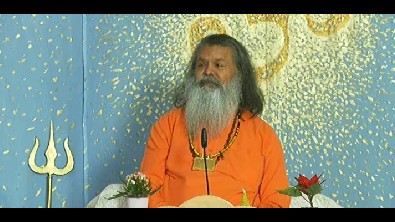
Morning Satsang with Swamiji from Strilky Ashram, Czech Republic. The Mahamrityunjaya mantra is known as the great death - conquering mantra, also called the Tryambakam mantra and is a verse of the Rig Veda. It is addressed to Lord Shiva. This mantra is a great protection and prevention of accidents and negative happenings. Swara Yoga enables us to understand the nature of breath and its influence on the body. Different modes of breathing leads to different types of actions, physical, mental and spiritual. Swara means sound of one's own breath and its fundamental application is to realize the breath as being the medium of the cosmic life force
How the energy circulating in our body
9:30 - 10:54 (84 min)
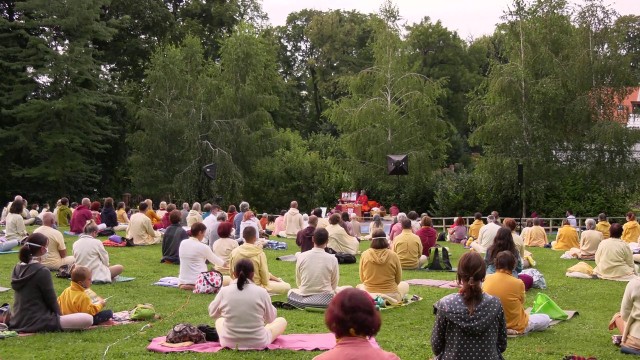
Evening satsang with Vishwaguruji from Strilky Ashram, Czech Republic. Moon is one of the Siva's symbols. Married couples have also that symbol of the moon on their head. In the Indian wedding ceremony, the female represents the Moon and the mail represents the Sun. Movements are in the nerve system to balance the Sun and Moon energy in the body in a serpent way. Snake is a symbol of its kind of movement. The Earth is held by a snake inbalance. When it moves a little there are many problems. Water and fire can not exist without each other. Practising kriya helps us to manifest our real human qualities. The story about two brothers who have educated themselves in different directions. In every petal of our chakras, there is a certain energy in it. Our roots are in the navel. In every chakra there is resonance. When we chant OM our tongue shouldn't move.
Practising sarva hitta asanas
11:00 - 11:44 (44 min)
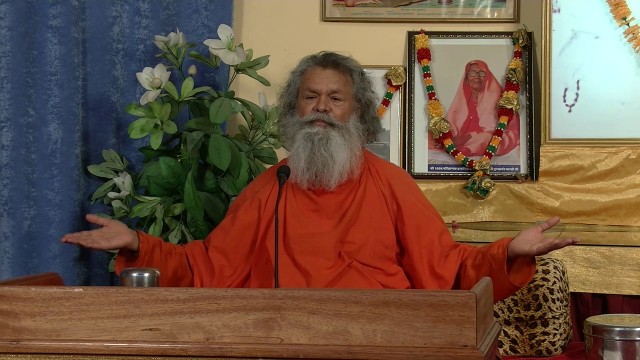
Evening satsang with Vishwaguruji from Jadan Ashram, Rajasthan, India. Practising sarva hita asanas in standing position.
Value of Satsang and practicing
11:50 - 12:43 (53 min)
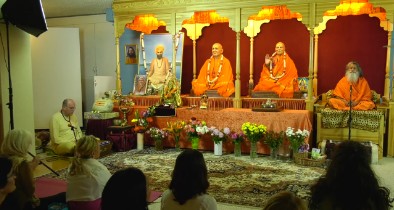
A satsang discourse on the rarity of spiritual community and the foundational science of yoga.
"Sant Samāgam Hari Kathā... these are rare."
"Yoga is that science whose original seed... is Śiva."
The lecturer leads a satsang in Vienna, emphasizing the preciousness of such spiritual gatherings. He explores yoga as a divine science, explaining how the Sanskrit alphabet resonates within the body's chakras and discussing the origins of consciousness as the union of Śiva and Śakti. The talk covers the importance of balanced practice, the nature of mental impurities (vikāras), and the karmic consequences of thought and action.
Filming location: Vienna, Austria
The way to Sri Devpuriji's cave
12:50 - 13:35 (45 min)
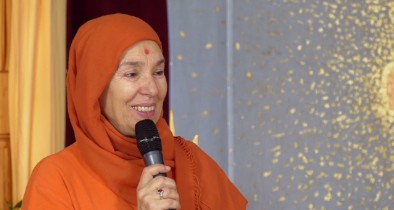
Evening satsang from Strilky Ashram, Czech Republic. Sadhvi Umapuri reports on the Sri Devpuriji cave trip. The journey started from Delhi towards Rishikesh - at the foot of the Himalayas - then Josimath and Badrinath, at an elevation of about 3000m. Sri Alakhpuriji's cave is located near Vasudhara Falls, in a beautiful valley near the 'last village' of India called Mana. Lakshmi Van is the first landmark towards Sri Devpuriji's cave, which is located at about 5000m, close to the peak called Neelkanth.
The nature of Vikara
13:40 - 14:32 (52 min)
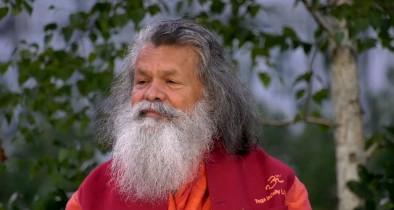
An evening satsang on the nature of vikāra (modifications) and the light of true knowledge.
"Vikāra is also in everyone. It is not easy to remove the vikāra. Physical vikāra is physical vikāra, and the mental vikāras are mental vikāras."
"Jñāna is one of the best protectors for our life... what to do and what not to do."
The lecturer leads a discourse exploring the physical and mental modifications that affect human beings. He discusses the anatomy of the body as vikāra, and the mental vikāras like anger, jealousy, and ego that lie dormant in the intellect. Using analogies like popcorn to describe anger and a story of a yogi and a skeptical scientist, he emphasizes the role of true wisdom (jñāna) and spiritual practice in overcoming these impurities. The talk concludes with a bhajan.
Filming location: Strilky, Czech Republic
Guru Tattva cleans everything
14:40 - 15:28 (48 min)
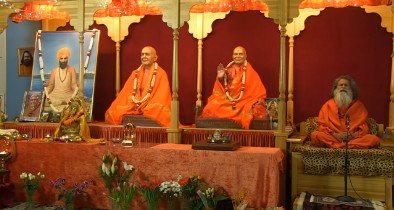
A Guru Purnima discourse on the essence of the Guru principle and spiritual practice.
"We have two Gurus. One is our Gurudev in saguṇa svarūpa, in a physical body... The second is nirguṇa, that is within ourself; the same Gurudev is within."
"So Holy Gurujī answered, 'In Ahmedabad, I was with Gurujī... When your mother comes, which temptation do you have? When your sister comes, what kind of temptation do you have?... So why don't you awaken that kind of thought in you, in which form you want to see?'"
A spiritual teacher delivers a satsang on Guru Purnima, exploring the dual nature of the Guru as both formless consciousness and physical guide. He discusses purifying the mind through sacred perception—seeing others as mother, sister, or daughter—to transform energy and dissolve ego. The talk weaves in teachings on the Nātha lineage, the power of Guru's words as divine nectar, and the necessity of surrendering the heart to achieve equal vision and liberation.
Filming location: Vienna, Austria
Shiva changed poison into nectar
15:35 - 16:27 (52 min)
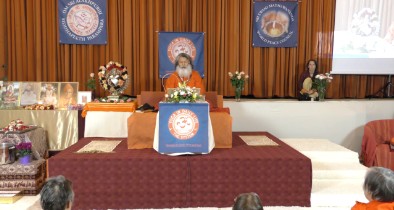
Evening satsang with Vishwaguruji from Vep, Hungary.
In honor of Sri Devpuriji's Mahasamadhi
16:35 - 17:21 (46 min)
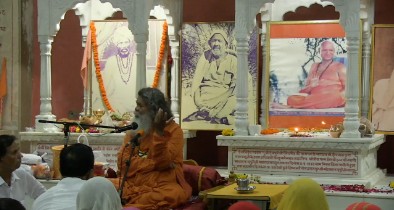
A spiritual discourse on the sacred lineage of Alag Purī and a Himalayan pilgrimage.
"In our renunciation, in our saints, there is no attachment. We do not speak of it as a great sorrow; we say that divine soul has merged with Brahman."
"The guru, Gurudev, never truly departs; even if he leaves the body, what does it matter? They have given the mantra, it is with you."
A spiritual teacher addresses a gathering on the holy day of Śrāvaṇa Dūj. He begins by honoring the departed saint Dev Purī Jī and the nature of renunciation. He shares his own spiritual journey and a "magic" of mental worship before Gurudev. The discourse shifts to social commentary on family, culture, and Hindu identity before focusing on the core theme: the sacred paramparā (lineage). He narrates the legendary abode of Alag Purī in the Himalayas, describing its association with Dev Purījī, Kubera, and the confluence of sacred rivers. He details a personal pilgrimage to the remote region, including visiting a cave, bathing in the Vashudhārā waterfall, and interactions with priests and officials, ultimately affirming the reality of this spiritual seat. He concludes by citing textual references like the Meghadūta and inviting all to sing bhajans.
Filming location: Rajasthan, India
Shiva Tattva
17:25 - 17:59 (34 min)
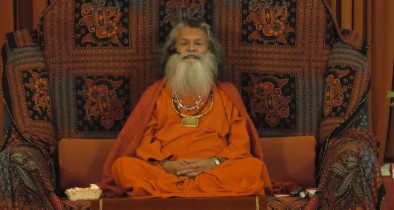
A spiritual discourse on cosmic cycles, human suffering, and the path to liberation.
"Every Yuga I come, I manifest, or I come through my Yogamāyā."
"Kali Yuga keval nām ādhāra... repeat your Mantra, repeat your Mantra to cross the ocean of this ignorance."
The speaker explains the cyclical process of creation (Sṛṣṭi) and dissolution, describing the appearances of Viṣṇu and Śiva across different Yugas. He emphasizes that repeating the divine name is the primary hope in the current Kali Yuga. The discourse outlines the inherent sufferings of human life, from birth to old age, framing existence as a form of Tapasyā (austerity) meant to ultimately merge the individual soul (Jīva) with the supreme consciousness (Śiva). The talk concludes with a call for disciplined practice and an announcement for the next meditation session.
Filming location: Vép, Hungary
Knowledge is given to give further
18:05 - 19:04 (59 min)
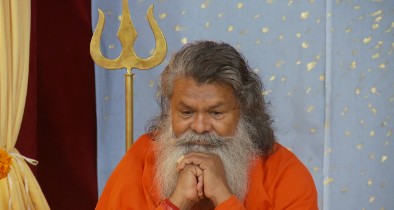
Satsang with Vishwaguru Mahamandaleshwar Paramhans Swami Maheshwarananda, Strilky Ashram, Czech Republic. Vishwaguruji explains what knowledge is, and how to utilize and preserve it in a good way. If we are not using the knowledge, we will lose the ability of using it. Remain with discipline, follow your master lifelong. The words of the Gurudev are for you the highest mantra.
Practice leads to the development
19:10 - 19:53 (43 min)
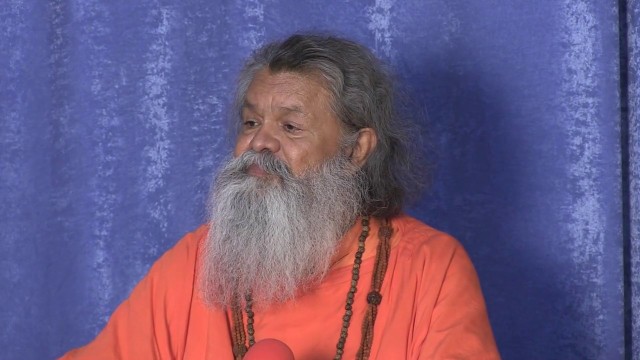
Evening satsang with Vishwaguruji from Jadan Ashram, Rajasthan, India. We are not connected to the time. There is only oneness in the oneness. The best way is yoga. Do not meditate on outer things. The development will come by practicing. Shiva puja gives calmness. It is very important how to worship Gurupurnima, tomorrow we are going to show it.
Yoga is for the whole Earth
20:00 - 20:33 (33 min)
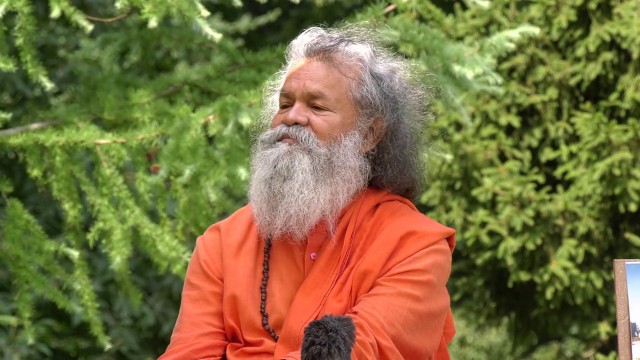
A personal narrative blending a medical emergency with reflections on yoga and human nature.
"My doctor said, 'Swāmījī, I will not take money from you, I will give you everything.'"
"Yoga is not only my country or your country, or my religion or your religion. No. Yoga is life, the whole earth."
Swami Maheshvaranand recounts a detailed story of falling ill in Jodhpur, India, and the complex, caring international effort involving his disciples and Austrian health insurance to safely return him to Vienna. He uses this experience to transition into a discourse on the essence of yoga as a universal practice connecting all life, the challenges of the current age (Kali Yuga), and the importance of seeing beyond divisions of religion and nationality to our shared humanity.
Filming location: Delhi, India
OM
20:40 - 21:32 (52 min)
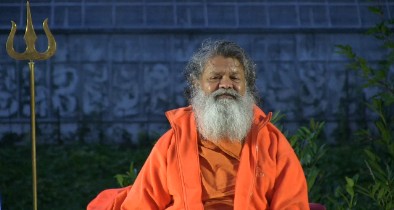
An evening satsang on the sacred sound OM and the nature of divinity.
"The Vedas say, Nāda-rūpa-parabrahma: the Supreme is the resonance. The entire universe is full of that resonance."
"Bhagavān Kṛṣṇa says that for being a physical being, it is good to worship Saguṇa, the one with form. Nirguṇa is in your Self and everywhere."
A spiritual teacher guides the gathering in OM chanting technique, explaining its origin at the navel. He delves into the nature of God, distinguishing between the personal (Saguṇa) and impersonal (Nirguṇa) divine, supported by references from the Bhagavad Gītā. The discourse explores the philosophy of sound, the role of consciousness and energy (icchā śakti) in creation, and the eternal nature of Sanātana Dharma and the guru-disciple tradition. The session concludes with practical announcements for the ashram schedule.
The Hidden Powers in Humans
21:35 - 21:58 (23 min)
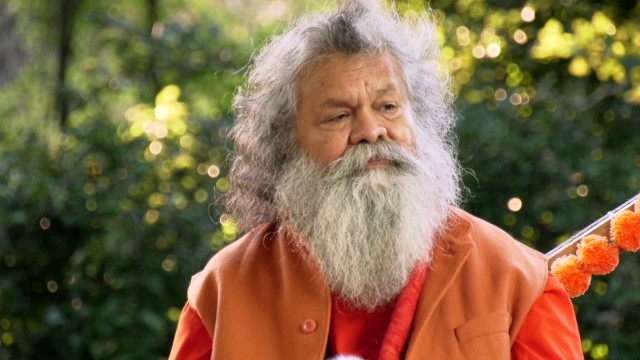
A satsang reflecting on spiritual practice during the pandemic and introducing the study of chakras.
"From our group, about one to two percent got the coronavirus. They were mildly affected, but they did not die."
"What we eat is sāttvic. Sāttvic means no alcohol, no meat, and not eating various kinds of food. I have the results."
Swami Maheshwarananda addresses gathered yoga teachers and students, sharing observations on how a sattvic lifestyle and practices like bhajan singing helped the global Yoga in Daily Life community during the pandemic. He transitions to introducing the study of hidden inner powers, referencing the book The Hidden Power in Man: Chakras and Kundalinī, and begins to explain the significance of Sanskrit letters and chakras, promising a detailed exploration in the coming days.
Filming location: Strilky, Czech Republic
Around the world - Opening of new YIDL center in Nadlac, Romania
22:00 - 22:40 (40 min)
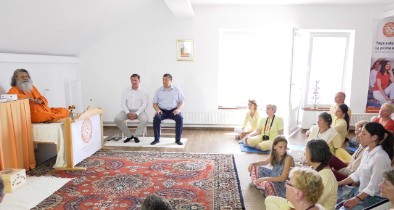
Morning satsang with Vishwaguruji from Nadlac, Romania.
Bring back the good things to India
22:45 - 23:50 (65 min)
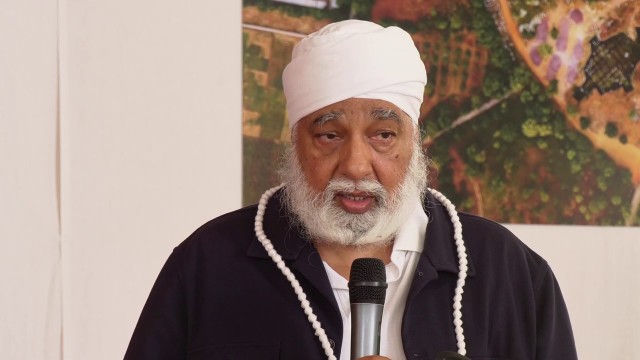
Morning satsang from Strilky Ashram, Czech Republic.
Ashram is a transitory place
23:55 - 0:12 (17 min)
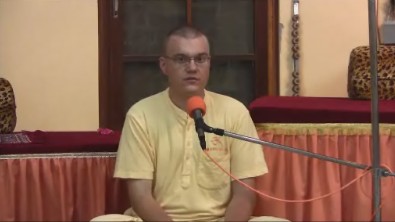
A satsang talk on spiritual transformation within ashram life.
"These pieces of pink stones, it is like us... and the workshop where they bring these pink stones is like this ashram."
"Yoga is love. Yoga is joy... it's a very, very important part of any sādhanā. It cannot just be all hard work."
Karma yogi Divya Purī opens the session from Jadan Ashram, using the metaphor of raw pink stone being carved in a workshop to describe the ashram's role in sculpting devotees through seva and sādhanā. He shares his personal journey since 2007, describing how the process, though sometimes painful, removes negative qualities and changes one's perception of the world. A second, unnamed speaker then reflects on the transformative power of the community, emphasizing the joy, mutual support, and acceptance found in long-term ashram living and the shared path of the resident karma yogis.
Filming location: Jadan Ashram, Rajasthan, India
American
Australian