
European
Everything is in your hands
0:15 - 0:50 (35 min)
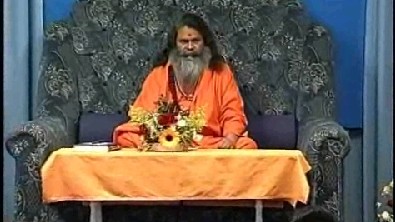
A discourse on the initiation of eight new sannyāsīs and the principle of personal responsibility.
"Whether this bird is alive or dead depends on your hands. That I cannot say to you. That depends on you."
"Everything is in your hands; your enlightenment is in your hands. Your liberation is in your hands."
The speaker recounts the recent initiation of eight disciples into sannyāsa during a journey to the Kumbh Melā, describing the character and journey of several, including Yogīś, Premānandjī, and devotees from Australia and Israel. He emphasizes that the decision for spiritual progress and liberation ultimately rests with the individual, illustrating this with a parable about a bird whose fate lies in a disciple's hands. The talk concludes with practical instructions on attire for disciples and reflections on the serious commitment of sannyāsa.
Filming location: Vép, Hungary
We should live in real love
0:55 - 1:43 (48 min)
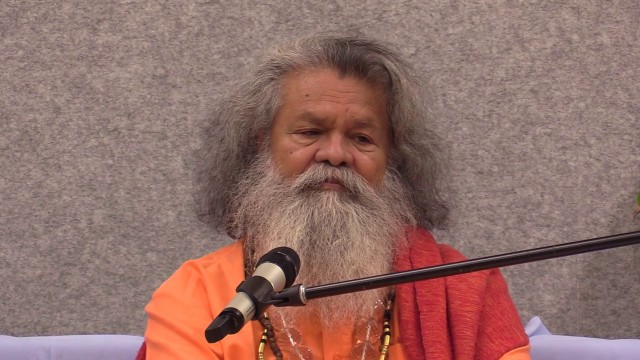
Morning satsang with Vishwaguruji from Trentwood Community Hub, Melbourne, Australia. Marriage means merge. It is a very beautiful ceremony. The story of a boy and a girl who married but they had a problem with the hard part of the bread. Married couples should live whole life happy together but kali yuga changed many things. Love is that where we are all happy healthy and helping each other. Explanation and singing of bhajan Sataguru satasangi and Sobavo satasangari.
A guide to practicing mantra
1:50 - 2:35 (45 min)
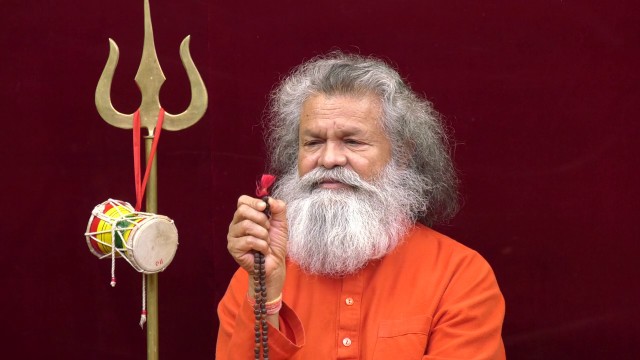
A spiritual discourse on the practice of using a prayer mala and the significance of the tulsi plant.
"Many people use the mala only for mantra and then go deep into meditation, but that is not the complete path. If you use your mala until you are tired, fall asleep, and drop it, then wake and take it again—the mala itself is the path."
"The Sumeru bead should have no blockage, allowing constant movement. You can do the mala five, ten, two, or a hundred times for meditation and mantra, and can practice constantly. This is called sumarana, meaning constant practice, like our breath going in and out."
The lecturer addresses practitioners, explaining the mala as a spiritual tool and passport. He details the correct technique for holding and moving the beads, the symbolism of the 108 count and the Sumeru bead, and the practice of purifying the five koshas through mantra repetition. He also expounds on the sacred nature of the tulsi plant, its varieties, and its uses in Ayurveda and devotion.
Filming location: Strilky, Czech Republic
Satsang helps everyone
2:40 - 3:06 (26 min)
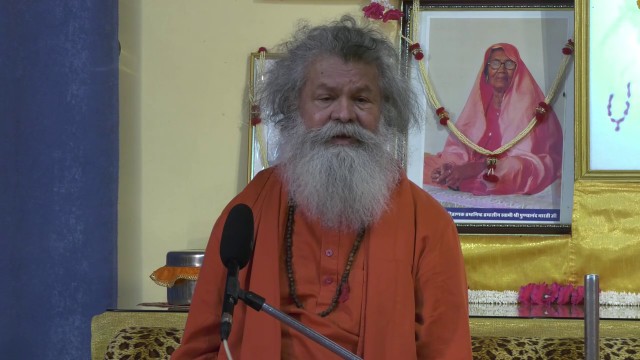
Evening satsang with Vishwaguruji from Jadan Ashram, Rajasthan, India.
We must become one
3:10 - 3:33 (23 min)
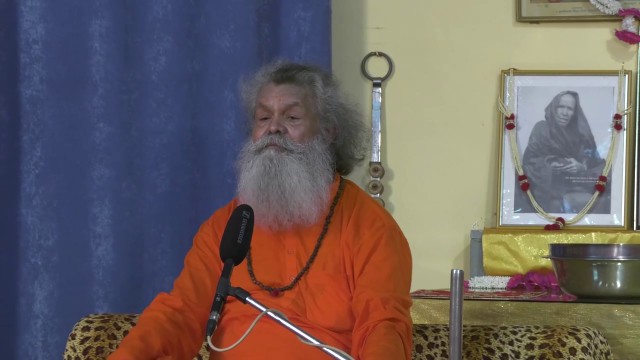
A spiritual discourse exploring the nature of consciousness during sleep and dreams.
"Night and day, what do we want? Only at night, in sleeping, this and that."
"And what is that? 'I was sleeping.' And when I was sleeping, and when there is sleep, and sleep is there, then I am nothing."
The speaker contemplates the states of deep sleep and dreaming, questioning the location and nature of the "I." He narrates a fragmented parable about an ascetic in a forest and recalls instructions from Bābājī about using a garland to fall asleep. The talk meanders through themes of self-identity, perception, and the desire for ultimate peace and unity, concluding with a focus on inner practice and bhajan.
Filming location: Jadan, Rajasthan, India
The wisdom of the bhajans
3:40 - 4:01 (21 min)
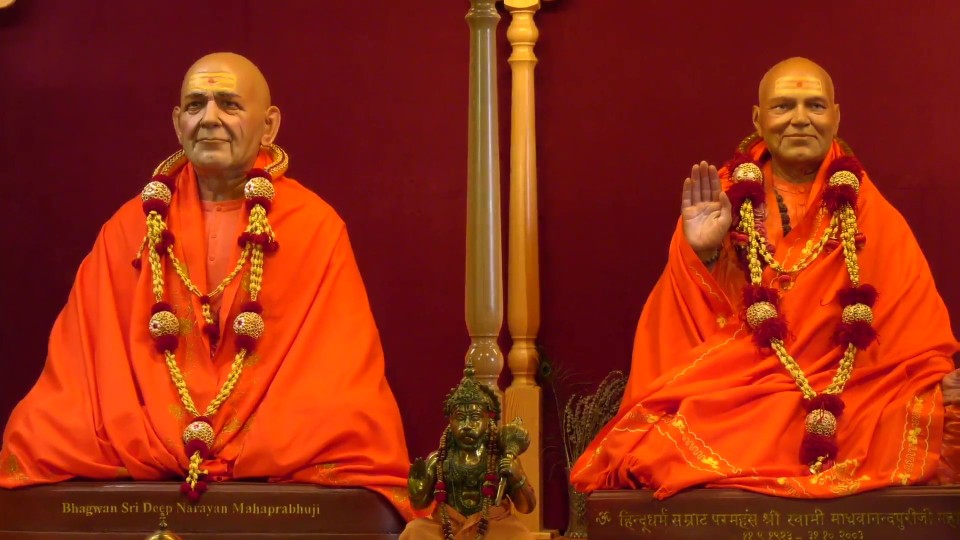
A satsang gathering focused on learning and understanding devotional bhajans.
"It is very good, beautiful bhajans are. Very good, but it is real because some people can understand, and many others, they like something is something, but we don't know the words about this."
"Gurujī Merā, my Gurū Dev. He gave me the Amara, which means the Unsterblichkeit, immortality... He came first to give me these herbs, so to speak, the immortality."
A speaker leads a session on the meaning of bhajans, emphasizing the need to understand the lyrics beyond just singing. They propose that the singer should explain each word. The session includes a detailed, bilingual (German and English) explanation of a specific bhajan dedicated to Gurudev, describing the gift of immortality and liberation from worldly attachments.
Filming location: Vienna, Austria
A Spiritual Journey: Lessons from the Himalayan Lakes and Caves
4:05 - 4:25 (20 min)
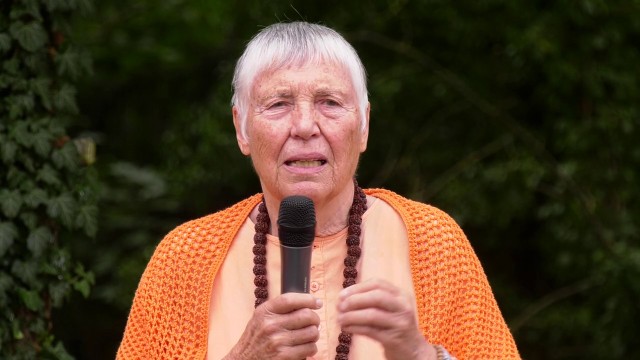
A satsang sharing spiritual lessons from Himalayan pilgrimage.
"I never give up. You also should never give up." "When things should be, they will be. You must agree with this."
Swami Shantipuri addresses the gathering on his Sannyasa birthday, recounting his journey to the Satopant Lake in the Himalayas after his Guruji's Mahasamadhi. He describes a profound meditation experience there, from which he received three core spiritual lessons symbolized by the lake: to accept life's events like the shore accepts waves, to cultivate inner calm by having no expectations, and to give freely from one's inner reservoir of wisdom like a flowing stream.
Filming location: Vép, Hungary
Sing Bhajans on the Satsang
4:30 - 4:50 (20 min)
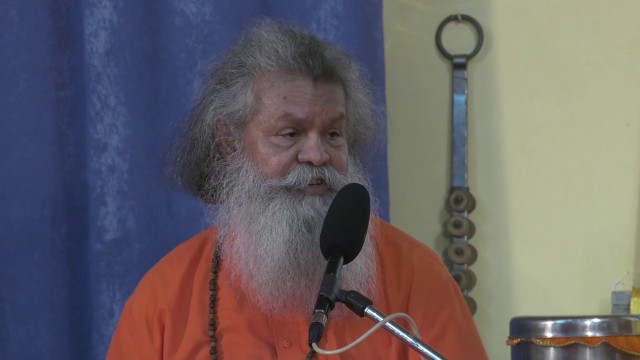
Evening satsang with Vishwaguruji from Jadan Ashram, Rajasthan, India. Lectures are also good, but the best is for us if we are singing bhajans on the Satsang.
The sleep makes you healthy
4:55 - 5:13 (18 min)
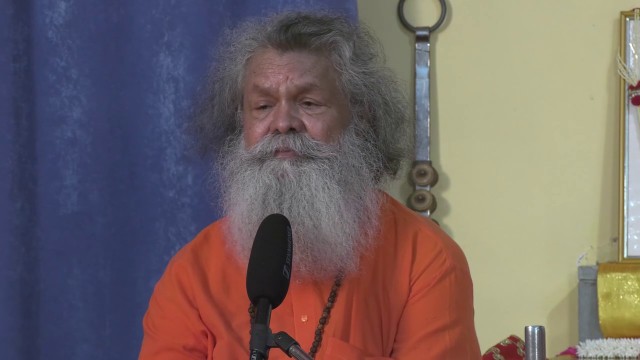
A spiritual discourse on the nature of sleep, consciousness, and the self.
"we are sleeping, but that is not us."
"Sleep will make us happy again, healthy, everything. So therefore, please sleep."
A spiritual teacher addresses an international gathering at an ashram, exploring the profound state of sleep. He describes how the true self withdraws from the body during deep sleep, discusses the travel of consciousness in dreams, and contrasts ordinary sleep with the yogic practice of yoga nidrā. The talk emphasizes achieving peace and correct understanding to sleep properly, without reliance on medicine.
Filming location: Jadan, Rajasthan, India
The Interconnection of Yoga and Āyurveda: A Discourse on Mind, Body, and Soul
5:20 - 6:24 (64 min)
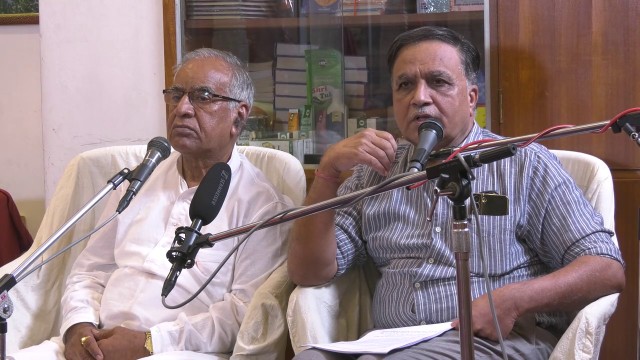
A lecture on the interconnection of Yoga and Āyurveda from an ancient Indian philosophical perspective.
"Yoga is an instrument to control your cittavṛtti—the fluctuations of the mind, the thoughts that continuously arise."
"From Maharṣi Caraka’s viewpoint... Ātmā sthe manasi sthire: when the mind is stable and controlled in the Ātmā. This is Yoga."
A retired Vice-Chancellor of Āyurvedic universities delivers a lecture on International Yoga Day, exploring how Āyurveda and Yoga are complementary sciences for controlling the mind and body. He explains Maharṣi Caraka's philosophical framework, the role of the soul and mind in karma, and the eightfold yogic path leading to samādhi and potential supernormal powers (aiśvarya). The session includes translation and concludes with remarks on the guru's global work.
Filming location: Jaipur, Rajasthan, India
We have to be in unity
6:30 - 7:26 (56 min)
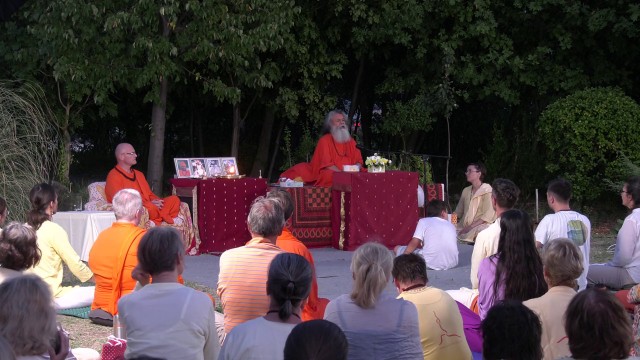
Evening satsang with Vishwaguruji from Rijeka Ashram, Croatia. We are different, but we are all going to the same destination. More and more people are following a vegan lifestyle, and you can see it on the planes. I have many students around the world who are practicing and meditating. Our goal is to achieve oneness, but we rarely do. Otherwise, duality remains. We have to achieve it within ourselves. We must all be good and peaceful, in unity.
Satsang from Strilky
7:30 - 8:35 (65 min)
Morning satsang with Vishwaguruji from Strilky Ashram, Czech Republic.
The wisdom of the bhajans
8:40 - 9:01 (21 min)
A satsang gathering focused on learning and understanding devotional bhajans.
"It is very good, beautiful bhajans are. Very good, but it is real because some people can understand, and many others, they like something is something, but we don't know the words about this."
"Gurujī Merā, my Gurū Dev. He gave me the Amara, which means the Unsterblichkeit, immortality... He came first to give me these herbs, so to speak, the immortality."
A speaker leads a session on the meaning of bhajans, emphasizing the need to understand the lyrics beyond just singing. They propose that the singer should explain each word. The session includes a detailed, bilingual (German and English) explanation of a specific bhajan dedicated to Gurudev, describing the gift of immortality and liberation from worldly attachments.
Filming location: Vienna, Austria
Bhramari pranayama
9:05 - 9:53 (48 min)
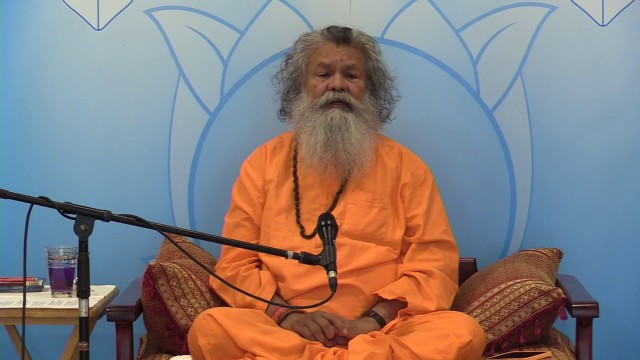
Morning program with Vishwaguruji from Sydney Ashram, Australia.
Give up your Laziness
10:00 - 10:55 (55 min)
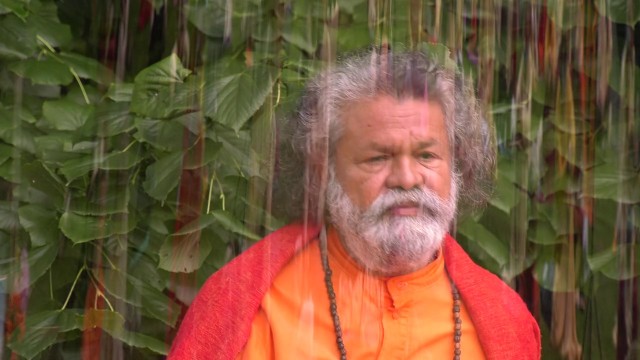
Evening satsang from Strilky Ashram, Czech Republic. Go to sleep early wake up early and you will get everything. This time is best for meditation and other things. Twenty minutes before workers come to the office the head of the company should be there. Please, give up the laziness. One of my disciples practiced early morning till his last breath. Singing bhajan Sri Guru Atma Paramatma. Disciples of Sri Mahaprabhuji wrote divine bhajans.
Morning Yoga practice, Umag, Croatia (1/9)
11:00 - 12:37 (97 min)
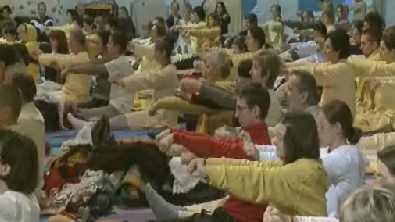
Morning Yoga practice from the international Yoga retreat Umag, Croatia on the 25th of September 2010
Atma is spotless
12:45 - 13:31 (46 min)
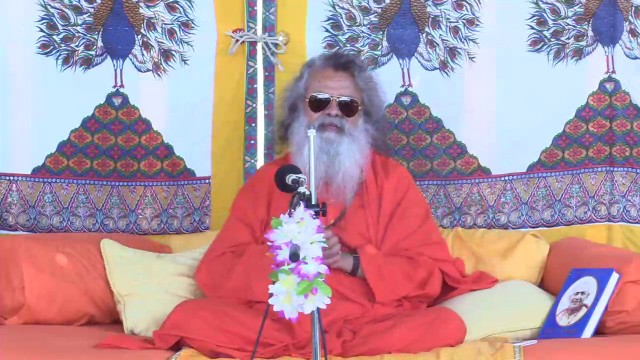
A spiritual discourse on divine presence, the nature of the soul, and the guru's grace, illustrated through parables and teachings.
"When the difficult time comes, then you should know that you are now with God."
"Śrī Guru Ātmā, that is the highest... our Ātmā is connected to Holy Gurujī."
A teacher shares parables, including one where God carries a devotee through hardship and another where a renunciate yogi refuses Lord Shiva's offer. He explains the spotless, all-pervading nature of the soul (Ātmā) and its connection to the Guru, weaving in teachings on devotion, renunciation, and the elements of the body.
Filming location: Australia
A Spiritual Journey: Lessons from the Himalayan Lakes and Caves
13:35 - 13:55 (20 min)
A satsang sharing spiritual lessons from Himalayan pilgrimage.
"I never give up. You also should never give up." "When things should be, they will be. You must agree with this."
Swami Shantipuri addresses the gathering on his Sannyasa birthday, recounting his journey to the Satopant Lake in the Himalayas after his Guruji's Mahasamadhi. He describes a profound meditation experience there, from which he received three core spiritual lessons symbolized by the lake: to accept life's events like the shore accepts waves, to cultivate inner calm by having no expectations, and to give freely from one's inner reservoir of wisdom like a flowing stream.
Filming location: Vép, Hungary
Part 1: Iyengar Yoga During Pregnancy: A Synthesis of Tradition and Experience
14:00 - 15:42 (102 min)
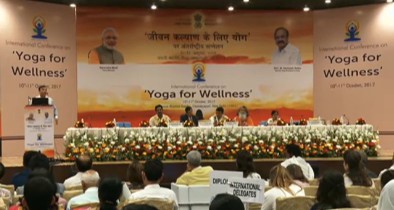
A lecture on applying Iyengar Yoga to pregnancy, blending scientific and experiential perspectives.
"Yoga is one, like God is one; different people call it by different names. There is nothing like Iyengar Yoga."
"Āsanas are descriptions, not prescriptions... the practice must be partly individualized within that framework under the guidance of an experienced teacher."
Dr. Rajiv Mehta, a scientist and longtime Iyengar student, explains the methodology's use of props for precision and safety. She details how tailored yoga can address pregnancy's physical and emotional challenges—like back pain, stress, and hormonal changes—by strengthening the body, calming the mind, and preparing for delivery, while strongly emphasizing the need for expert guidance and collaboration with modern medicine.
Filming location: Delhi, India
When Will You Fill My Cup?
15:45 - 15:57 (12 min)
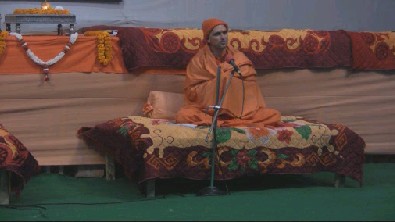
A spiritual discourse and bhajan explanation during the Kumbh Mela.
"Gurujī is asking, 'When will my cup be filled?' My Prabhupāda says, 'When will you fill it with love?'"
"Our job is simply to quieten and purify ourselves. That is what Gurujī is demanding in the bhajan. Then that cup can be filled."
A speaker, addressing an audience, explains the meaning of a bhajan about the soul's yearning for divine love. Using metaphors of an empty cup and a cluttered glass, he describes the need to purify and quiet the mind to receive grace. He relates this to the purpose of attending the Kumbh Mela, urging listeners to be mentally present and open to the spiritual opportunity.
Filming location: Maha Kumbha Mela, India
Remain pure
16:00 - 17:17 (77 min)
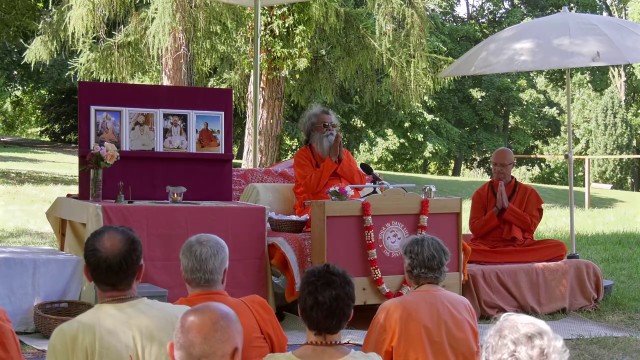
Morning satsang from Strilky Ashram, Czech Republic. The trees of Strilky ashram are so old that we are just children next to them. The story about Bhagwan Shiva. I tell you that you have to be very strong, follow the rules. The problems come from killing and eating animals. They say fights will come, but when they pass we will be very pure and go to God, and the others will fall. Stay pure, as the blue sky is. How should a good family live?
Vegetarian cooking lesson 17, Indian Karela Sabji
16:00 - 16:14 (14 min)

Karela, also known as bitter gourd, bitter melon or bitter squash has many beneficial effects on our health. Vegetarian cooking lesson from participants of the Yoga in Daily Life Summer seminar in Vep,Hungary 2014 Vegetarian cooking lesson with Sadhvi Umapuri
We are only one
16:20 - 17:00 (40 min)
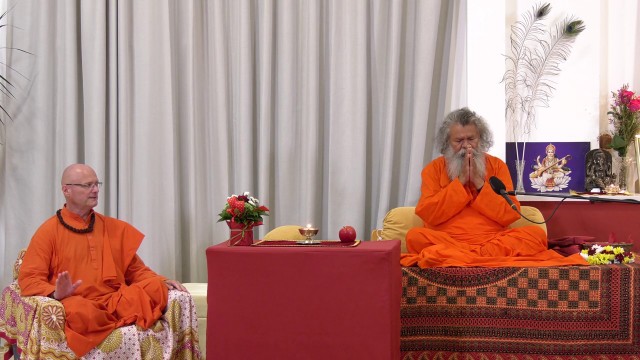
Evening satsang with Vishwaguruji from Rijeka Ashram, Croatia. We are the ones who are in this hall. When we come together and meditate we radiate good energy to each other. People who left our system sooner or later will come back because of the attraction of our energy. we should say good or bad if we get a question. We should be alert. Many people practise Yoga in Daily Life in Croatia. You and I are one in my heart.
People are very good all over the world
17:05 - 17:40 (35 min)
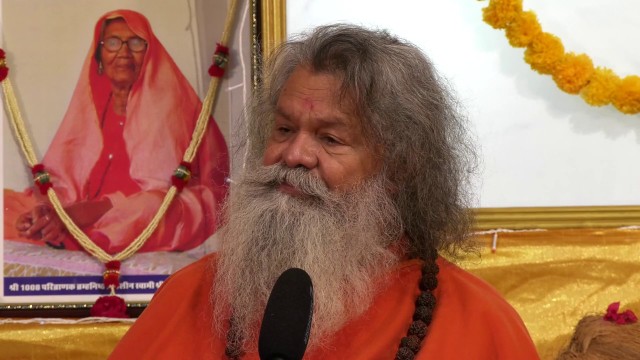
A satsang reflecting on global religious festivals, human diversity, and the principle of non-violence.
"Similarly, I did not see all of them, but also the children, girls, and women, and they also have this. Also, mostly the Christians and the Muslims, they are also saying something, their prayers or something."
"So, many people are ceremonizing with the killing of animals... we have to do only good, no killing this and that."
Following opening chants, The lecturer addresses the global community, observing the recent New Year and Christmas celebrations. He describes the peaceful, devotional practices he has witnessed among Christians, Muslims, Jews, Indigenous Americans, Africans, Japanese, and others, emphasizing the underlying goodness and shared humanity across cultures. The talk centers on the ethic of non-violence (ahiṃsā), criticizing animal sacrifice and advocating for compassion toward all creatures, from ants to trees. He concludes by encouraging a life dedicated to spirituality.
Filming location: Jadan, Rajasthan, India
What will happen when we will go out of the body
17:45 - 18:28 (43 min)
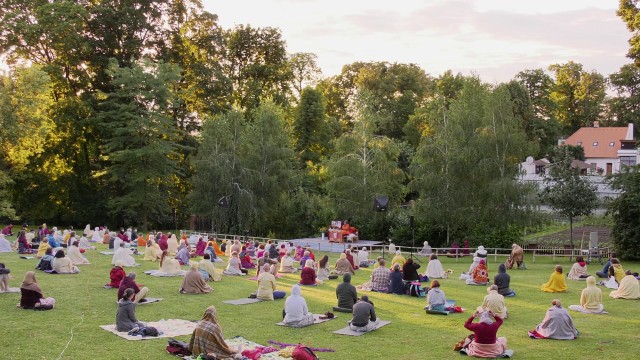
A spiritual discourse on the nature of reality, the soul, and liberation.
"We all say, 'Yes, it is.' But someone says, 'No, there is nothing.'" and "Holi Guruji said in one word, 'One in all and all in one.'"
A speaker addresses a gathering, exploring profound questions about existence, belief, and what follows death. Using metaphors like the ocean, fog, seeds, and the classic rope-snake illusion, he contemplates the soul's journey, the unity of all things, and the limitations of human understanding. He advises against fear, encourages joyful living and inner practice, while acknowledging the ultimate indescribability of these truths.
Filming location: Strilky, Czech Republic
Sing Bhajans on the Satsang
18:35 - 18:55 (20 min)
Evening satsang with Vishwaguruji from Jadan Ashram, Rajasthan, India. Lectures are also good, but the best is for us if we are singing bhajans on the Satsang.
Satsang helps everyone
19:00 - 19:26 (26 min)
Evening satsang with Vishwaguruji from Jadan Ashram, Rajasthan, India.
We should live in real love
19:30 - 20:18 (48 min)
Morning satsang with Vishwaguruji from Trentwood Community Hub, Melbourne, Australia. Marriage means merge. It is a very beautiful ceremony. The story of a boy and a girl who married but they had a problem with the hard part of the bread. Married couples should live whole life happy together but kali yuga changed many things. Love is that where we are all happy healthy and helping each other. Explanation and singing of bhajan Sataguru satasangi and Sobavo satasangari.
Keep the flame still
20:25 - 21:03 (38 min)
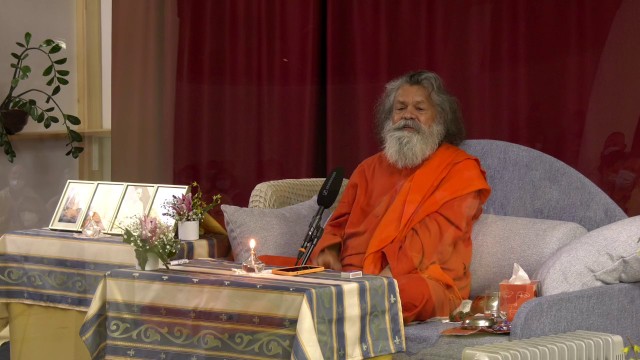
A spiritual discourse on maintaining the sacred flame of life within daily householder and community practice.
"You are already a yogī. You possess that science, yet you seek yogic attainment."
"This flame is what we call our ātmā, our spirit, which then departs. So when this is happening, we must learn from it."
The lecturer addresses a gathering, weaving together themes from the Yoga in Daily Life system. He emphasizes the dignity of the householder path, advocating for marriage and family life as spiritually vital. Using the extended metaphor of an oil lamp, he explains the body, life force, and spirit, urging the daily practice of lighting a lamp and maintaining temple pūjā in āśramas to nurture collective spirituality and personal health. He shares personal anecdotes and practical instructions, concluding with blessings and travel plans.
Filming location: Slovenia
A guide to practicing mantra
21:10 - 21:55 (45 min)
A spiritual discourse on the practice of using a prayer mala and the significance of the tulsi plant.
"Many people use the mala only for mantra and then go deep into meditation, but that is not the complete path. If you use your mala until you are tired, fall asleep, and drop it, then wake and take it again—the mala itself is the path."
"The Sumeru bead should have no blockage, allowing constant movement. You can do the mala five, ten, two, or a hundred times for meditation and mantra, and can practice constantly. This is called sumarana, meaning constant practice, like our breath going in and out."
The lecturer addresses practitioners, explaining the mala as a spiritual tool and passport. He details the correct technique for holding and moving the beads, the symbolism of the 108 count and the Sumeru bead, and the practice of purifying the five koshas through mantra repetition. He also expounds on the sacred nature of the tulsi plant, its varieties, and its uses in Ayurveda and devotion.
Filming location: Strilky, Czech Republic
Around the world - Bhajans from Kailash(1/3)
22:00 - 22:48 (48 min)
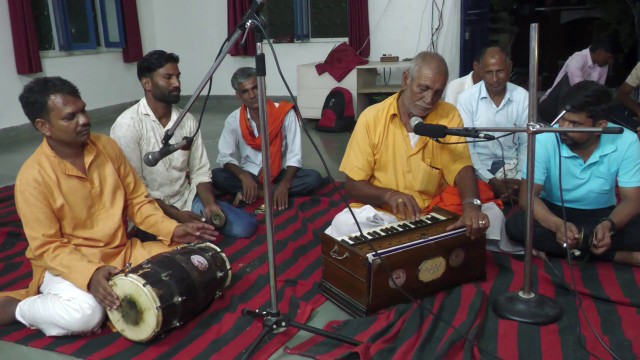
Evening satsang from Kaliash Ashram, Rajasthan, India. Bhajans on the occasion of Sri Devpuriji Mahasamadhi.
We must become one
22:55 - 23:18 (23 min)
A spiritual discourse exploring the nature of consciousness during sleep and dreams.
"Night and day, what do we want? Only at night, in sleeping, this and that."
"And what is that? 'I was sleeping.' And when I was sleeping, and when there is sleep, and sleep is there, then I am nothing."
The speaker contemplates the states of deep sleep and dreaming, questioning the location and nature of the "I." He narrates a fragmented parable about an ascetic in a forest and recalls instructions from Bābājī about using a garland to fall asleep. The talk meanders through themes of self-identity, perception, and the desire for ultimate peace and unity, concluding with a focus on inner practice and bhajan.
Filming location: Jadan, Rajasthan, India
Darshan. Visions Of The Divine
23:20 - 0:04 (44 min)
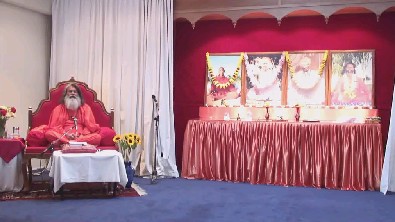
A spiritual discourse reflecting on the grace of the Guru and the soul's longing for divine vision.
"O Gurudev, we are stuck in the net of doubts, the net of conflicts."
"Those who sing the glory of Gurudev will not again come into these troubles. They will always be in Ānanda Loka, always in bliss."
A speaker narrates stories of the saint Devapurījī resolving communal tensions at Mount Abu, a sacred site for yogis. The central theme is the devotee's deep yearning for the Guru's darśan (sacred sight), explained through a translated bhajan plea, "Itnā to karnā gurujī, darśan jaldī denā." The talk explores how this vision dispels illusion (bhrama), destroys sins, and grants self-knowledge, using analogies like a mirage (Mṛga Tṛṣṇā) and the pure lake of the mind (Mānasārovar). It concludes with an anecdote about Devapurījī's simple stay in Nasirabad and the joyous, cultural celebrations of devotees awaiting his return.
Filming location: Wellington, New Zealand
Happiness in the family
23:30 - 0:46 (76 min)
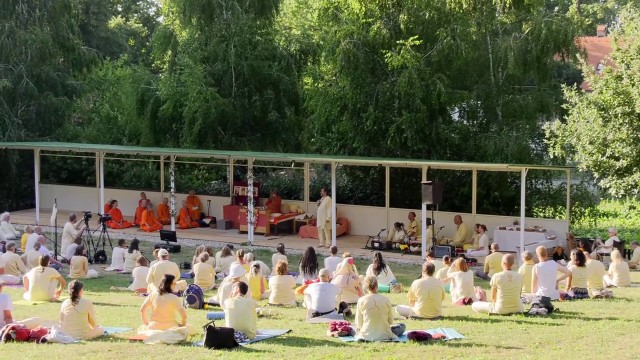
Evening satsang from Strilky Ashram, Czech Republic. Where is peace, what is it really? If it were really peace, we would be in complete unity, like a child with its mother. When parents are together with their little children, everything is very clear. They go everywhere together, they are happy together. Parents work for the children. And then comes a third spiritual person, like a Guru. The child grows up, he also has a child. It is best if they all stay together. But nowadays family members are leaving each other. What is very important is what we eat, what we drink. Practice, remain pure, remain friends of each other. Don't think negatively. Follow what is written in our books, don't change a single word.
American
Australian