
European
Marriage for a lifetime
0:15 - 0:53 (38 min)
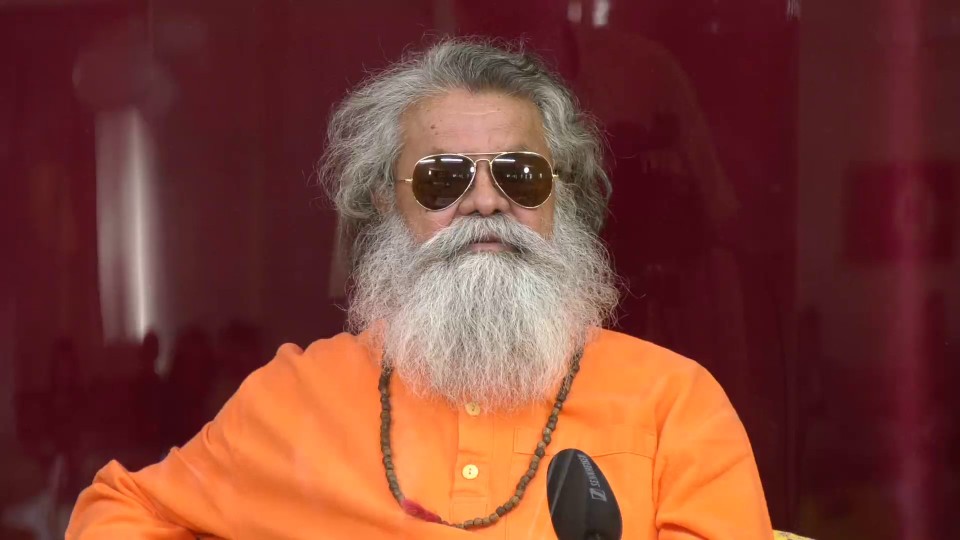
A spiritual discourse and bhajan explanation focusing on the divine couple of Krishna and Rukmini.
"For about seven years, they have promoted this: Rādhā, Rādhā, Rādhā. How old is Bhagavān Kṛṣṇa? That is the point."
"In all books, in the four [aspects] of Kṛṣṇa, among the many, Rukmiṇī was there. And now they always say, 'Rādhā, Rādhā.' It's okay, but it is not Rukmiṇī and Rādhā. So, it is Rukmiṇī and Kṛṣṇa."
The speaker, likely a swami or teacher, delivers a talk emphasizing the primacy of Krishna's marriage to Rukmini over the more popular focus on Radha within devotion. He discusses concepts of God, gurus, and draws an analogy to modern marital harmony. The session concludes with the group singing a bhajan, after which another speaker explains the song's spiritual meaning, describing it as a map of Kriya Yoga techniques and inner experiences leading to divine perception.
Filming location: Strilky, Czech Republic
Bhajan evening from Strilky Ashram
1:00 - 1:48 (48 min)
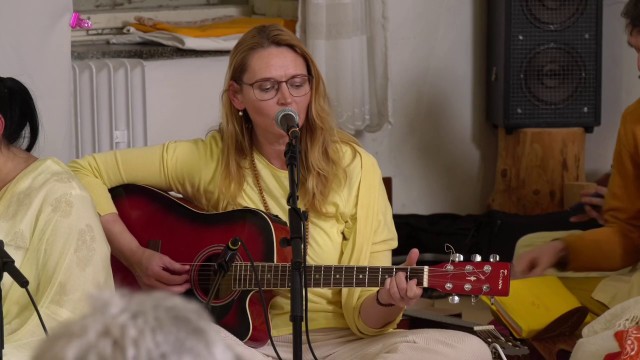
Evening satsang with Vishwaguruji from Strilky Ashram, Czech Republic. Bhajan singing.
Human is for God
1:55 - 2:15 (20 min)
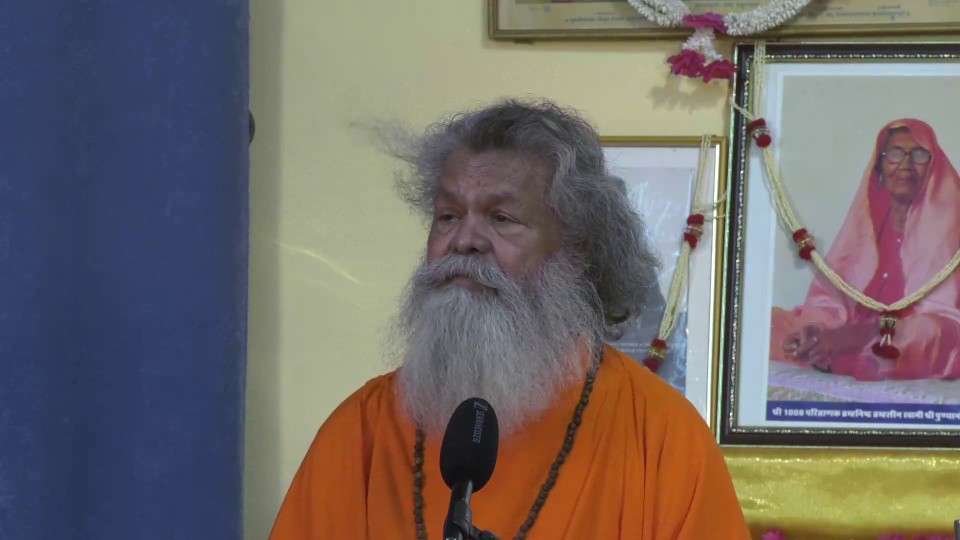
A spiritual discourse on integrating yoga and ethical principles into daily life.
"You have learned many things, very good. But only five of you spoke very nicely, expressing everything well."
"We must always say: if we want to have, we are human. The human is for God. But those who eat meat and this and that—you are a human, but you are going down."
A spiritual teacher addresses a gathering, emphasizing that true yoga is a constant practice for daily life, not just physical exercise. He stresses the importance of adhering to core principles like a vegetarian lifestyle, expressing concern over disciples who teach yoga but omit these ethical foundations. The talk includes anecdotes about traveling, teaching children, and the need for unity and authenticity among followers from all countries and faiths.
Filming location: Jadan, Rajasthan, India
Mahaprabhuji was like a father to everyone
2:20 - 2:50 (30 min)
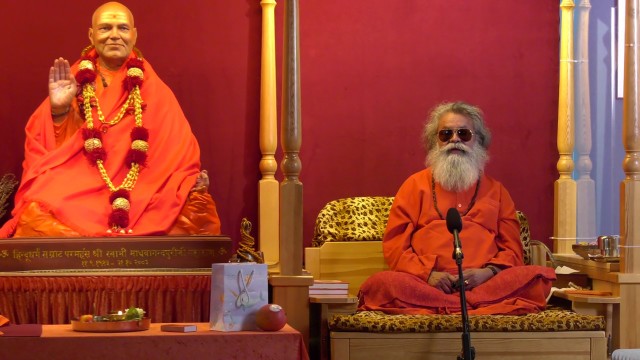
A spiritual discourse reflecting on the life and qualities of the sage Mahāprabhujī.
"Wherever Mahāprabhujī sat, people would come and attain spiritual ascent."
"He would ensure everybody was fed... Only after ensuring everyone had eaten would he say, 'Okay, now I will eat.' He was like a father or mother."
A speaker shares anecdotes about the great sage Mahāprabhujī, describing his simple, slow travels, his deep meditation in an underground chamber, and his parental care for all who came to him. The talk contrasts the communal, spiritual life of the past with modern distractions, and extends Mahāprabhujī's compassionate example into a call for vegetarianism and universal brotherhood in spiritual practice today.
Filming location: Vienna, Austria
Life will be easier if we don't eat meat
2:55 - 3:28 (33 min)
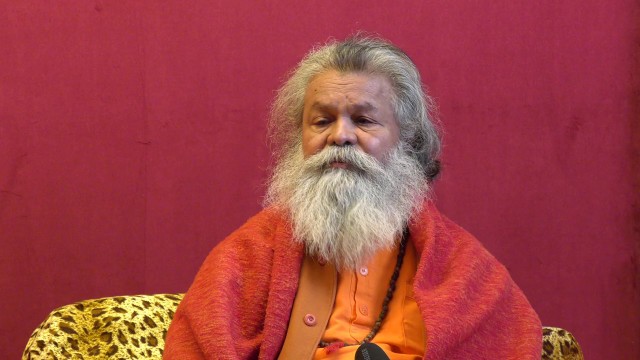
A spiritual discourse on compassion, non-violence, and karmic consequences.
"You see this in the whole world. In this village of the world, everyone is eating meat. And everyone—how much are they consuming? These people are all dying from this."
"Therefore, we should tell everyone: please, no meat and no alcohol... There are so many animals being killed, and they are given so much suffering."
Swami Avatarpuri responds to a request for healing from long-time disciples, using it as a foundation for a wider teaching. He laments the widespread consumption of meat and alcohol, linking it to personal suffering and karmic repercussions. He emphasizes the sacredness of all life (jīva), critiques human materialism and isolation, and shares parables—including one about a forgotten, once-great man—to illustrate the importance of compassion and ethical living.
Filming location: Vienna, Austria
Mahaprabhuji was like a father to everyone
3:35 - 4:05 (30 min)
A spiritual discourse reflecting on the life and qualities of the sage Mahāprabhujī.
"Wherever Mahāprabhujī sat, people would come and attain spiritual ascent."
"He would ensure everybody was fed... Only after ensuring everyone had eaten would he say, 'Okay, now I will eat.' He was like a father or mother."
A speaker shares anecdotes about the great sage Mahāprabhujī, describing his simple, slow travels, his deep meditation in an underground chamber, and his parental care for all who came to him. The talk contrasts the communal, spiritual life of the past with modern distractions, and extends Mahāprabhujī's compassionate example into a call for vegetarianism and universal brotherhood in spiritual practice today.
Filming location: Vienna, Austria
Guru is eternal
4:10 - 4:52 (42 min)
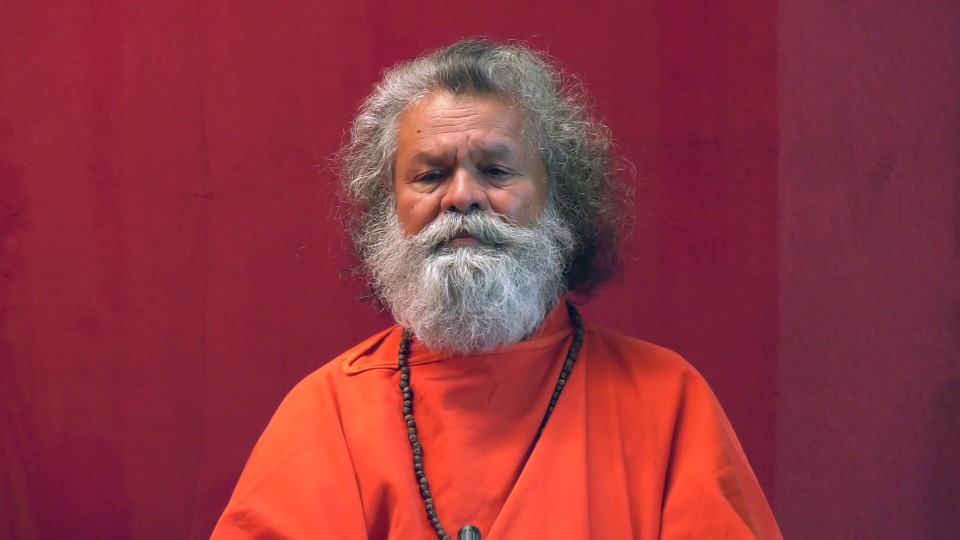
A spiritual discourse on the eternal Guru principle, divine cycles, and spiritual lineage.
"Brahmā, Viṣṇu, and Śiva will change, but the Guru will remain."
"One should not sit on that chair... I am taking care of this Gāḍī (seat)."
The lecturer delivers an evening talk, exploring the timeless nature of the Guru compared to the cyclical roles of the Hindu trinity. He discusses the concept of the Guru's seat (Gāḍī) in a lineage, emphasizing humility and service, and shares personal reflections on his teachers, including Gurujī and Shanti. The talk weaves together cosmology, caste as spiritual heritage, and the importance of spiritual practice.
Filming location: Vienna, Austria
Darshan and dhan
5:00 - 5:57 (57 min)
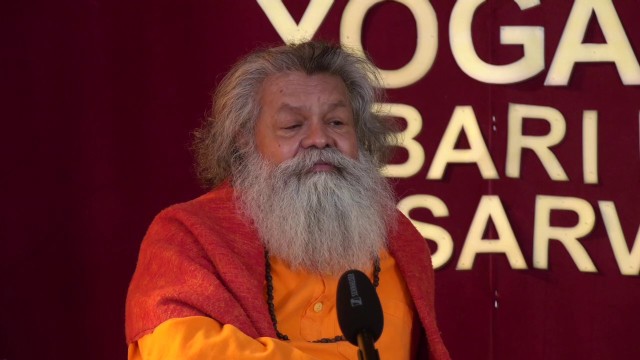
Evening satsang with Vishwaguruji from Strilky Ashram, Czech Republic. Bhajan singing and translation. Dhana is property. But our property is a knowledge that we get from Gurudev. Husband and wife should be together for their whole life. Darshan dhana what I see is a God. Now we are humans. Either we can go back or to heaven. The story of a mother who gave a ring to her child. Bhajan singing and translation.
Guru is eternal
6:05 - 6:47 (42 min)
A spiritual discourse on the eternal Guru principle, divine cycles, and spiritual lineage.
"Brahmā, Viṣṇu, and Śiva will change, but the Guru will remain."
"One should not sit on that chair... I am taking care of this Gāḍī (seat)."
The lecturer delivers an evening talk, exploring the timeless nature of the Guru compared to the cyclical roles of the Hindu trinity. He discusses the concept of the Guru's seat (Gāḍī) in a lineage, emphasizing humility and service, and shares personal reflections on his teachers, including Gurujī and Shanti. The talk weaves together cosmology, caste as spiritual heritage, and the importance of spiritual practice.
Filming location: Vienna, Austria
Bhajan evening from Strilky Ashram
6:55 - 7:43 (48 min)
Evening satsang with Vishwaguruji from Strilky Ashram, Czech Republic. Bhajan singing.
The konwledge of ancient yogis
7:50 - 8:57 (67 min)
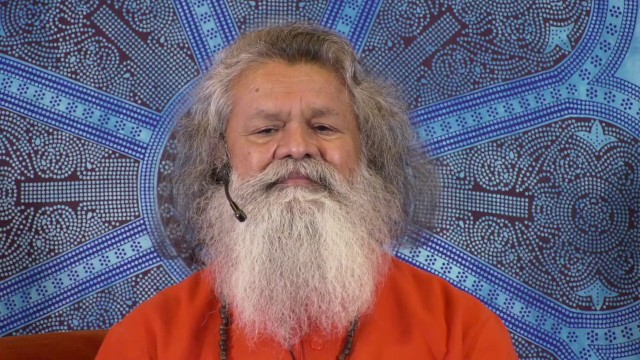
A satsang discourse on mantra practice, spiritual lineage, and the nature of yoga.
"The mantra, if you want to get the perfection... Then, like a little child from primary school to the university, it takes time."
"Yoga is not religion, but all religion is yoga. That's all."
The lecturer leads an evening gathering, explaining the stages of mantra practice from writing to the automatic Ajapa state. He shares stories of his gurus, Mahāprabhujī and Swami Madhavānandjī, illustrating the master-disciple relationship. He contrasts yogic knowledge with scientific arrogance, using a parable of a yogi and a scientist, and emphasizes that Sanātana Dharma is the eternal truth underlying all.
Filming location: Vép, Hungary
We will bring that divine light
9:05 - 9:53 (48 min)
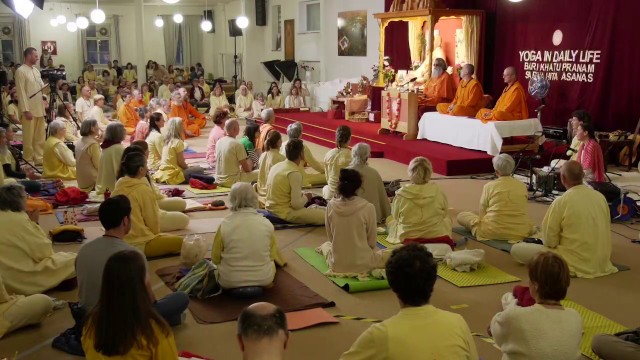
Evening satsang with Vishwaguruji from Strilky Ashram, Czech Republic. India is the store of knowledge and that knowledge reflects to the whole world. Vishwaguruji brought the pure essence of that knowledge to Europe. The knowledge of India belongs to everyone. There are people who are good speakers and there are others who really know the things hoew are they. Vishwaguruji is a combination of them. Practise and follow the words of our Master. Many people have only very limited knowledge about yoga in India also. Yoga brings different people to oneness. The story of Arjuna and the gopies. It is important to do our sadhana otherwise we become weak. The mantra is the essence of all energies and knowledge. We gained the light with our mantra. This light can change hell to heaven. The story of Mahamandaleswar Swami Vivekpuriji's younger age.
How is an aeroplane landed?
10:00 - 10:55 (55 min)
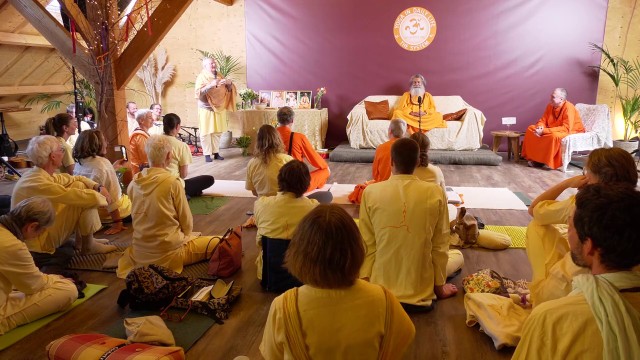
Evening satsang with Vishwaguruji from Oosterhout, Noord-Brabant, The Netherlands. Bhajan singing. Remembrance of an old disciple about how she got to Vishwaguruji. There are some generations of disciples of Vishwaguruji living in Europe. A disciple's heart can become gold. Don't give up practising. Our life can become like a safe journey in an aeroplane.
Morning Yoga practice, Umag, Croatia (7/9)
11:00 - 12:54 (114 min)
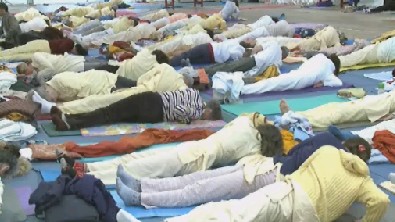
Morning Yoga practice from the international Yoga retreat Umag, Croatia on 1st of October
Human is for God
13:00 - 13:20 (20 min)
A spiritual discourse on integrating yoga and ethical principles into daily life.
"You have learned many things, very good. But only five of you spoke very nicely, expressing everything well."
"We must always say: if we want to have, we are human. The human is for God. But those who eat meat and this and that—you are a human, but you are going down."
A spiritual teacher addresses a gathering, emphasizing that true yoga is a constant practice for daily life, not just physical exercise. He stresses the importance of adhering to core principles like a vegetarian lifestyle, expressing concern over disciples who teach yoga but omit these ethical foundations. The talk includes anecdotes about traveling, teaching children, and the need for unity and authenticity among followers from all countries and faiths.
Filming location: Jadan, Rajasthan, India
Marriage for a lifetime
13:25 - 14:03 (38 min)
A spiritual discourse and bhajan explanation focusing on the divine couple of Krishna and Rukmini.
"For about seven years, they have promoted this: Rādhā, Rādhā, Rādhā. How old is Bhagavān Kṛṣṇa? That is the point."
"In all books, in the four [aspects] of Kṛṣṇa, among the many, Rukmiṇī was there. And now they always say, 'Rādhā, Rādhā.' It's okay, but it is not Rukmiṇī and Rādhā. So, it is Rukmiṇī and Kṛṣṇa."
The speaker, likely a swami or teacher, delivers a talk emphasizing the primacy of Krishna's marriage to Rukmini over the more popular focus on Radha within devotion. He discusses concepts of God, gurus, and draws an analogy to modern marital harmony. The session concludes with the group singing a bhajan, after which another speaker explains the song's spiritual meaning, describing it as a map of Kriya Yoga techniques and inner experiences leading to divine perception.
Filming location: Strilky, Czech Republic
We seek purity
14:10 - 14:21 (11 min)
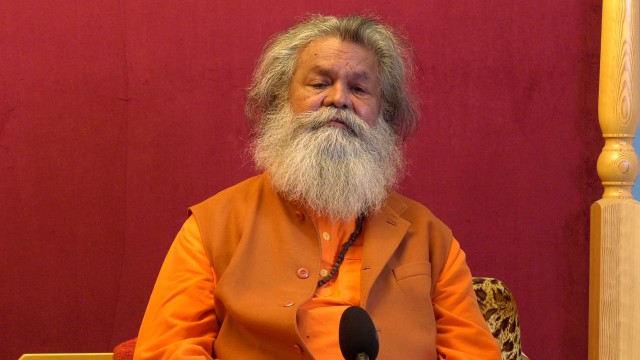
A spiritual discourse on purity and devotion in the modern age.
"Therefore, I always implore our devotees: 'Please do not be black, please do not be black.'"
"I want to be this drop. I want to drink... it desires only purity, directly from my God."
The lecturer reflects on the pervasive darkness of the Kali Yuga, observed in clothing and culture, and contrasts it with the purity found in sacred music and devotion. He shares teachings from his Gurudeva, using the metaphor of a pure drop of water (pū) to describe the soul's yearning for divine purity over worldly abundance, and calls for inner cleanliness and the declaration of the pure "I am."
Filming location: Vienna, Austria
We must now go further
14:25 - 14:54 (29 min)
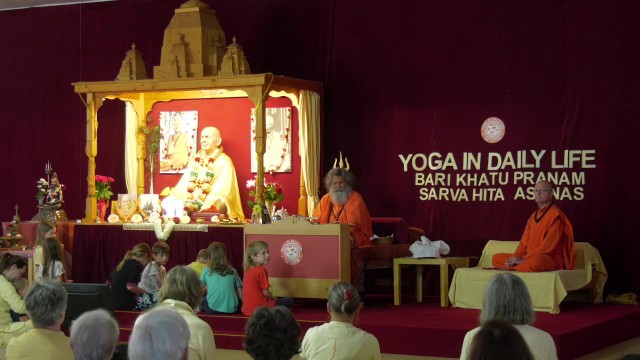
A spiritual talk on integrating practice into daily life and devotion.
"At home and everywhere, when we have the time, we should all be very nice. It is not only sitting and chanting 'om, om, om.' No, be very nice to your family."
"Until the last, until the last time, when you will be in your guru and in your sādhanā, then in the last minutes, then you will go as into Paramatmā."
A spiritual teacher addresses a gathering, emphasizing the importance of continuing yoga practice, prayer, and kindness within the family beyond retreats. The talk weaves personal anecdotes about the global yoga community during the pandemic and shares a story about the devoted passing of a disciple in America, illustrating the ideal of remaining in guru and sādhanā until the end.
Filming location: Strilky, Czech Republic
Never eat meat
15:00 - 15:19 (19 min)
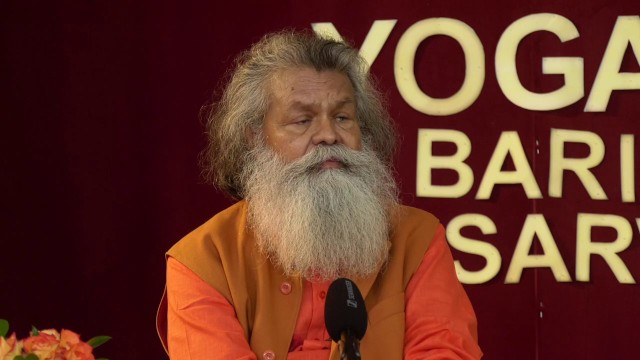
A spiritual talk advocating for vegetarianism and traditional values within yoga practice.
"People also say, 'Yes, we are coming more and more.' Unfortunately, much of this is coming from India now, for yoga practice... but they also say that if they want, they can eat meat too. And that is not good."
"You know that people who eat meat, at a certain age... they cannot even speak. And many, many people cannot think anything. This is because of the meat."
The speaker addresses an audience, expressing concern that modern yoga teachings from India are permitting meat consumption, which they see as a decline from pure, traditional practices. They praise the audience for maintaining vegetarianism and call for a return to strict principles, linking diet to spiritual and physical health. The talk concludes with an abrupt shift to advising on strong family and marital bonds.
Filming location: Strilky, Czech Republic
Om is Divine
15:25 - 16:01 (36 min)
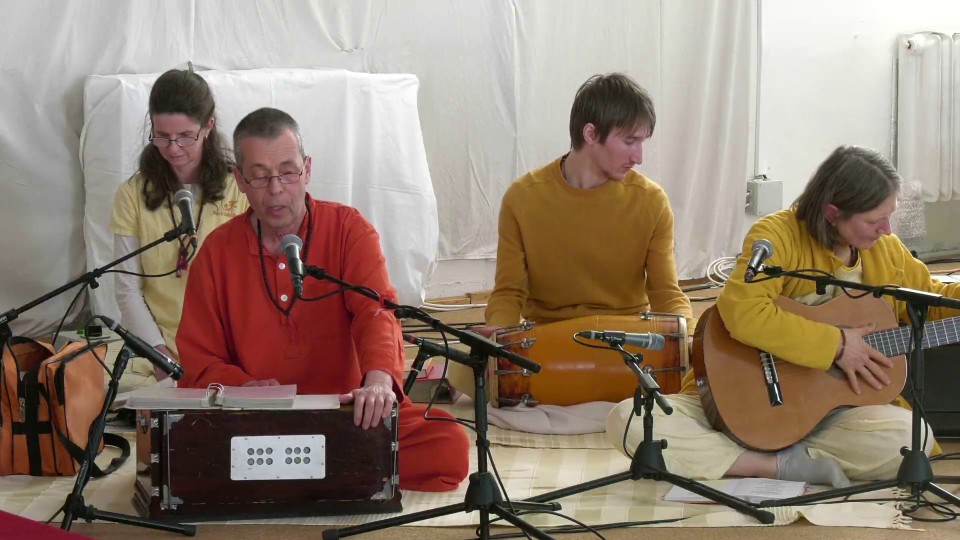
Morning satsang from Strilky Ashram, Czech Republic. Swami Gajanand sings and explains the bhajan Om Ki.
Life will be easier if we don't eat meat
16:05 - 16:38 (33 min)
A spiritual discourse on compassion, non-violence, and karmic consequences.
"You see this in the whole world. In this village of the world, everyone is eating meat. And everyone—how much are they consuming? These people are all dying from this."
"Therefore, we should tell everyone: please, no meat and no alcohol... There are so many animals being killed, and they are given so much suffering."
Swami Avatarpuri responds to a request for healing from long-time disciples, using it as a foundation for a wider teaching. He laments the widespread consumption of meat and alcohol, linking it to personal suffering and karmic repercussions. He emphasizes the sacredness of all life (jīva), critiques human materialism and isolation, and shares parables—including one about a forgotten, once-great man—to illustrate the importance of compassion and ethical living.
Filming location: Vienna, Austria
Mahaprabhuji was like a father to everyone
16:45 - 17:15 (30 min)
A spiritual discourse reflecting on the life and qualities of the sage Mahāprabhujī.
"Wherever Mahāprabhujī sat, people would come and attain spiritual ascent."
"He would ensure everybody was fed... Only after ensuring everyone had eaten would he say, 'Okay, now I will eat.' He was like a father or mother."
A speaker shares anecdotes about the great sage Mahāprabhujī, describing his simple, slow travels, his deep meditation in an underground chamber, and his parental care for all who came to him. The talk contrasts the communal, spiritual life of the past with modern distractions, and extends Mahāprabhujī's compassionate example into a call for vegetarianism and universal brotherhood in spiritual practice today.
Filming location: Vienna, Austria
Vishwaguruji's divine work for the world
17:20 - 17:40 (20 min)
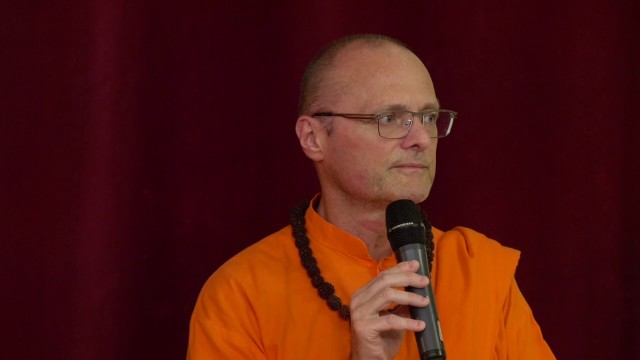
A satsang discourse on the importance of the Guru-disciple relationship and the presentation of a commemorative book.
"The most important thing is when we are with our Gurudev, when we have darśan, and when we have the opportunity to come to greet, to simply come near to Gurudev."
"Satsaṅg is for purifying our inner self. I hope that all of us will be good, clean iron. We have a pāras (philosopher's stone). The problem is not the distance... We only need to make ourselves into nice, clean iron."
A speaker emphasizes the unparalleled value of personal proximity to the Guru, using metaphors of dance, alchemy, and cleaning rust from a ship to describe the transformative power of satsang and dedicated practice (sādhanā). A second speaker then presents the book Golden Jubilee, detailing its contents which celebrate over 50 years of Swamiji's global service through yoga, peace, environmental, and humanitarian projects.
Filming location: Strilky, Czech Republic
Mahaprabhuji was like a father to everyone
17:45 - 18:15 (30 min)
A spiritual discourse reflecting on the life and qualities of the sage Mahāprabhujī.
"Wherever Mahāprabhujī sat, people would come and attain spiritual ascent."
"He would ensure everybody was fed... Only after ensuring everyone had eaten would he say, 'Okay, now I will eat.' He was like a father or mother."
A speaker shares anecdotes about the great sage Mahāprabhujī, describing his simple, slow travels, his deep meditation in an underground chamber, and his parental care for all who came to him. The talk contrasts the communal, spiritual life of the past with modern distractions, and extends Mahāprabhujī's compassionate example into a call for vegetarianism and universal brotherhood in spiritual practice today.
Filming location: Vienna, Austria
Darshan and dhan
18:20 - 19:17 (57 min)
Evening satsang with Vishwaguruji from Strilky Ashram, Czech Republic. Bhajan singing and translation. Dhana is property. But our property is a knowledge that we get from Gurudev. Husband and wife should be together for their whole life. Darshan dhana what I see is a God. Now we are humans. Either we can go back or to heaven. The story of a mother who gave a ring to her child. Bhajan singing and translation.
Mahaprabhuji was like a father to everyone
19:25 - 19:55 (30 min)
A spiritual discourse reflecting on the life and qualities of the sage Mahāprabhujī.
"Wherever Mahāprabhujī sat, people would come and attain spiritual ascent."
"He would ensure everybody was fed... Only after ensuring everyone had eaten would he say, 'Okay, now I will eat.' He was like a father or mother."
A speaker shares anecdotes about the great sage Mahāprabhujī, describing his simple, slow travels, his deep meditation in an underground chamber, and his parental care for all who came to him. The talk contrasts the communal, spiritual life of the past with modern distractions, and extends Mahāprabhujī's compassionate example into a call for vegetarianism and universal brotherhood in spiritual practice today.
Filming location: Vienna, Austria
Medical physical and spiritual aspects of YIDL
20:00 - 21:56 (116 min)
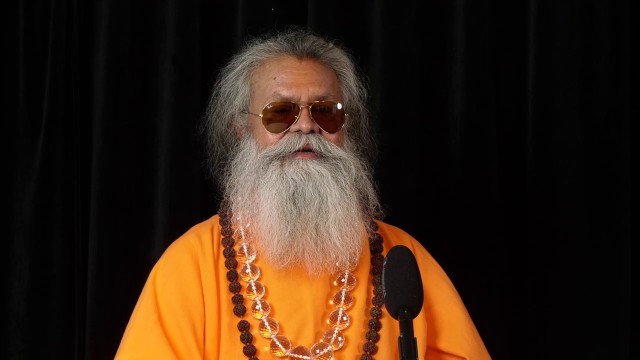
Evening satsang with Vishwaguruji from Jacob Hansens hus, Helsingborg, Sweden. Short conference on the medical psychological and spiritual aspects of Yoga in Daily Life. Asanas pranayamas and meditation have mefical effect. Yoga exercises affect our consciousness also. They are against depression and stress such as yoga nidra and pranayama. There are many holy things in our world and many unnecessary things also. We should think positively. To achieve our goal we should practice. After death, we can go to heaven or we can go back here. For a long time like Vishwaguruji visited many countries, and many people became vegetarian and vegan.
Around the world - Hidden beauty
22:00 - 22:22 (22 min)

Report about the beauties of underwater life and our current paths of their destruction. From Australia.
How is an aeroplane landed?
22:30 - 23:25 (55 min)
Evening satsang with Vishwaguruji from Oosterhout, Noord-Brabant, The Netherlands. Bhajan singing. Remembrance of an old disciple about how she got to Vishwaguruji. There are some generations of disciples of Vishwaguruji living in Europe. A disciple's heart can become gold. Don't give up practising. Our life can become like a safe journey in an aeroplane.
Marriage for a lifetime
23:30 - 0:08 (38 min)
A spiritual discourse and bhajan explanation focusing on the divine couple of Krishna and Rukmini.
"For about seven years, they have promoted this: Rādhā, Rādhā, Rādhā. How old is Bhagavān Kṛṣṇa? That is the point."
"In all books, in the four [aspects] of Kṛṣṇa, among the many, Rukmiṇī was there. And now they always say, 'Rādhā, Rādhā.' It's okay, but it is not Rukmiṇī and Rādhā. So, it is Rukmiṇī and Kṛṣṇa."
The speaker, likely a swami or teacher, delivers a talk emphasizing the primacy of Krishna's marriage to Rukmini over the more popular focus on Radha within devotion. He discusses concepts of God, gurus, and draws an analogy to modern marital harmony. The session concludes with the group singing a bhajan, after which another speaker explains the song's spiritual meaning, describing it as a map of Kriya Yoga techniques and inner experiences leading to divine perception.
Filming location: Strilky, Czech Republic
American
Australian