
European
A good education is important
0:50 - 1:50 (60 min)
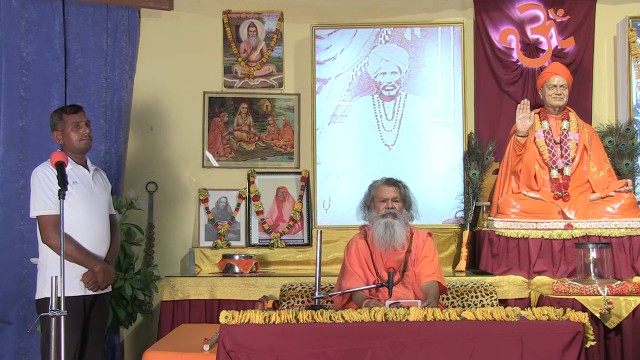
A satsang addressing community discipline, the importance of Hindi, and educational updates.
"If any bus is destroyed, the teachers have to pay the money... The trust means we are trusting you to keep our things okay."
"The Hindi language is the heart of Hindustan. And this Hindi language was born from Sanskrit."
The lecturer speaks to the ashram community, expressing concern over the careless treatment of property like school buses and furniture, instituting a system of financial responsibility. He then introduces the school principal, who delivers a discourse on the origins and significance of the Hindi language, tracing it from Sanskrit and explaining the etymology of the word 'Hindu'. The session includes translations, a financial appeal for the school, and concludes with a devotional song about the value of education.
Filming location: Jadan, Rajasthan, India
A good education is important
1:55 - 2:55 (60 min)
A satsang addressing community discipline, the importance of Hindi, and educational updates.
"If any bus is destroyed, the teachers have to pay the money... The trust means we are trusting you to keep our things okay."
"The Hindi language is the heart of Hindustan. And this Hindi language was born from Sanskrit."
The lecturer speaks to the ashram community, expressing concern over the careless treatment of property like school buses and furniture, instituting a system of financial responsibility. He then introduces the school principal, who delivers a discourse on the origins and significance of the Hindi language, tracing it from Sanskrit and explaining the etymology of the word 'Hindu'. The session includes translations, a financial appeal for the school, and concludes with a devotional song about the value of education.
Filming location: Jadan, Rajasthan, India
A Welcome Address on Peace and Yoga
3:00 - 3:07 (7 min)

A welcome address at a yoga and peace conference in Prague.
"Peace is a condition for which mankind has been longing to reach for thousands of years. But outer life circumstances are merely a reflection of the inner world of human beings."
"Through the system of Yoga in Daily Life given to us by Viśwa Gurujī, many thousands of people all over the world develop peace inside through practicing spiritual techniques."
A speaker from the International Śrī Svāmī Māta Vānanda Fellowship welcomes attendees, opening with a traditional peace mantra. The address frames world peace as an inner achievement, advocating for the "Yoga in Daily Life" system as a path to nonviolence. It honors the spiritual lineage of Viśwa Gurujī and Mahāprabhujī, and references the founding of a World Peace Council.
Filming location: Prague, Czech Republic
Part 1: The Role of Yoga and Meditation in Improving Quality of Life for Cancer Patients
3:15 - 4:22 (67 min)
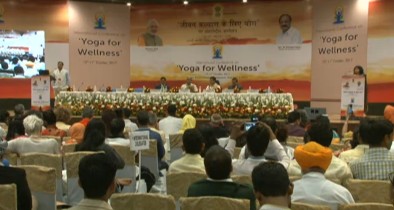
A medical lecture on the role of yoga and meditation as supportive care for cancer patients.
"We must note which specific yogic and meditative techniques were used, as these vary widely."
"Please do not give false hope that cancer will be cured... If a practitioner claims that prāṇāyāma, dhyāna, and some Ayurvedic herbs... can cure cancer, they are committing a grave sin against society."
A doctor from AIIMS Delhi presents a detailed analysis of scientific studies on yogic interventions for cancer patients, emphasizing they are complementary to standard treatments like chemotherapy. He strongly warns against practitioners falsely claiming yoga can cure cancer, shares data on benefits for quality of life and stress, and proposes a large-scale research trial combining yoga, meditation, and herbal products for cancer prevention and care.
Filming location: Delhi, India
The Viśuddhi Cakra and the Journey of Consciousness
4:30 - 5:16 (46 min)
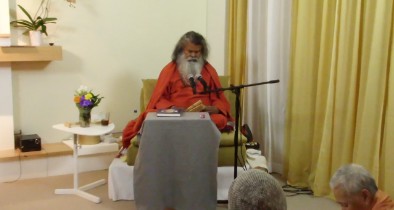
A spiritual discourse on the Viśuddhi (throat) chakra, consciousness, and karma.
"According to this philosophy, there is karma, and karma is action. Action is day and night continuing. Everything we do with body and mind, with our emotion and our intellect, is collecting in a particular part of the body."
"Therefore, many yoga practitioners are not successful. Either they will learn a little bit from me, a little from the Prema Purī, a little from the Svānāmukī, and then after go to the Dayāmātā. It’s nothing. You are cutting here, here."
The teacher explains the Viśuddhi chakra as an energy center affecting body, mind, and consciousness, framing it within the cycle of karma (action and reaction). He discusses higher states of samādhi, using the metaphor of mountain tunnels to warn against fragmented spiritual practice. He narrates the story of the bandit Vālmīki's transformation through mantra repetition to illustrate the purification of karma, and concludes by advising steadfastness on one spiritual path.
Filming location: Vancouver, Canada
Jivatma and anandamaya kosha
5:20 - 6:31 (71 min)
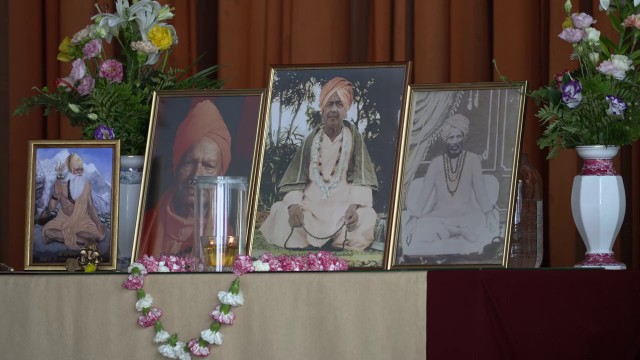
Morning satsang from Summer Yoga Retreat in Vep, Hungary. Lecture by M.M. Swami Vivekpuriji. Explanation of five koshas and the connection between them. Purification of the koshas. Lecture by Swami Madhuram. The love for our Gurudev brings all of us here. We water this seed day by day using different techniques. Playing a meditative raga on bansuri flute awakes the devotion. How to cook good sabji from dried vegetables (like gunda, babool, sangri).
Develop the quality
6:35 - 7:16 (41 min)
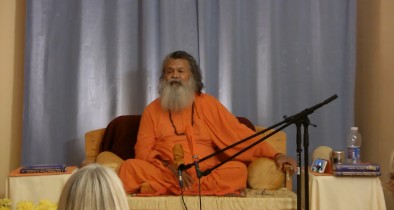
A spiritual discourse on the five koshas and the necessity of inner purity.
"Billions of people strive intensely for that Brahma Jñāna, for that self-realization. My dear, it is not so simple."
"You must purify your physical, mental, emotional, and intellectual energies; you have to clean them all."
The lecturer continues teachings on the five bodies (koshas), emphasizing the arduous pursuit of pure quality in one's energy and practice. He explains how impurity leads to confusion after death, using parables like the fly leaving sandalwood for filth to illustrate how aspirants reject sublime teachings. The talk covers the roles of mind, intellect, and senses, stressing renunciation of negative tendencies to attain higher consciousness.
Filming location: Alexandria, USA
Bhajan evening from Strilky Ashram
7:30 - 8:18 (48 min)
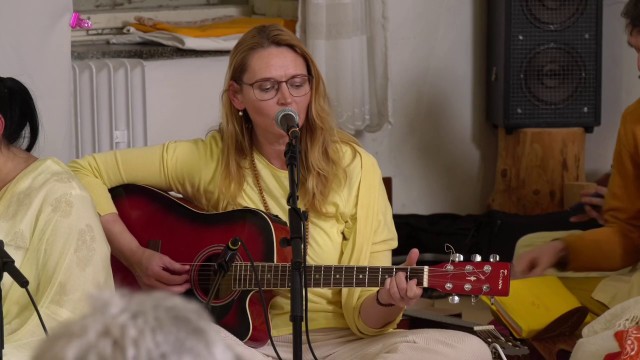
Evening satsang with Vishwaguruji from Strilky Ashram, Czech Republic. Bhajan singing.
The calling of Sri Alakhpuriji
8:25 - 8:36 (11 min)
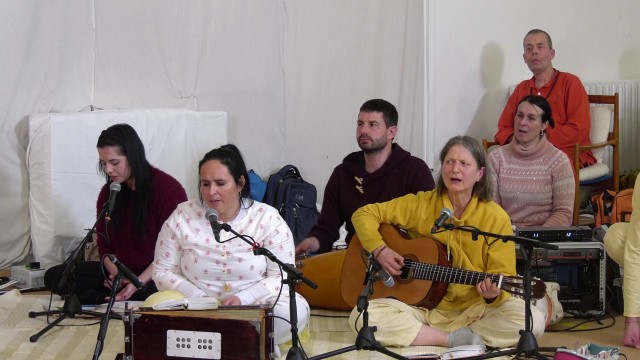
Evening satsang with Vishwaguruji from Strilky Ashram, Czech Republic. Bhajan Sataguru Alakha Puriji Avo.
Bhajans from Oosterhout
8:40 - 9:45 (65 min)
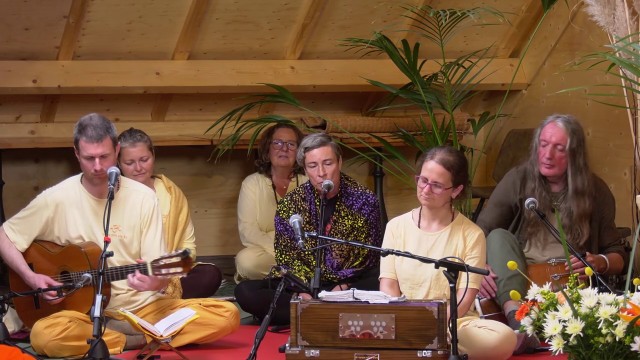
Evening satsang with Vishwaguruji from Oosterhout, Noord-Brabant, The Netherlands.
Bhajans for World Peace (1/3)
9:50 - 11:47 (117 min)
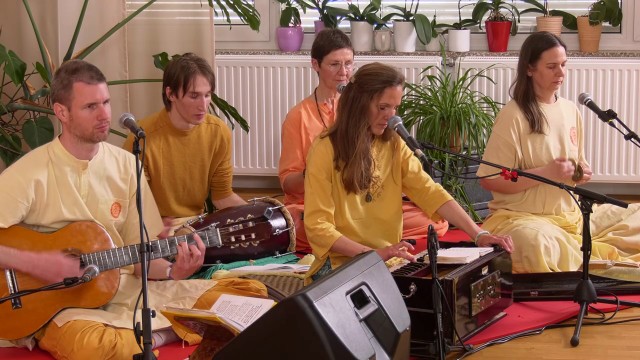
For world peace, first we need to find peace within ourselves. A recording of a live concert for world peace in YIDL center in Villach, Austria. Public concert lasted 6h with uninterrupted Bhajans. The concert was a part of a 24h of Bhajan Anushtana.
Suffering makes us strong
11:55 - 12:27 (32 min)
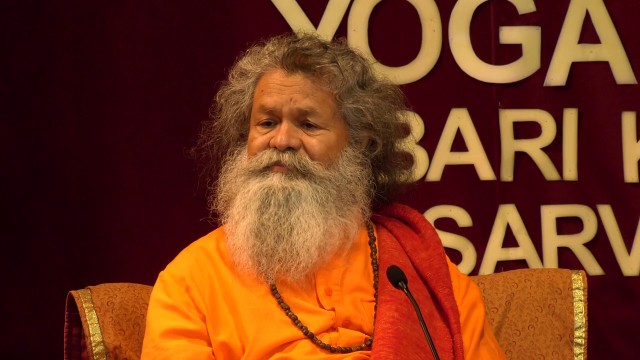
A spiritual discourse on suffering and divine incarnation, referencing Krishna and Jesus.
"In very hard times... those who are whole, suffering will be very strong. That means they are coming very solid, strong."
"Many sādhus, munis... all were suffering. Why are they suffering? They are taking from others our heart, our pain."
An unnamed speaker reflects on the universal nature of suffering in Kali Yuga, asserting that even divine incarnations like Krishna and Jesus endured great pain to absorb the suffering of humanity. The talk includes a personal anecdote about a lonely old man met in Austria, illustrating the impermanence of worldly success and the inevitability of suffering. The themes of divine descent, the purpose of hardship, and the transient nature of the material world are explored in a contemplative, narrative style.
Filming location: Strilky, Czech Republic
We are in a blessed place
12:35 - 13:49 (74 min)
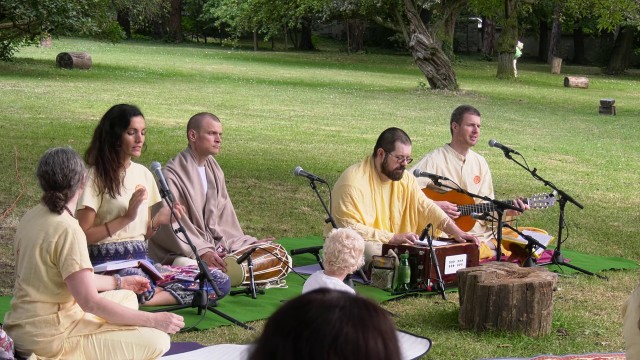
Morning satsang from Strilky Ashram, Czech Republic. Singing bhajans. Vishwaguruji tells a story about a huge satsang organized by Holy Guruji. Many people came there, including one Sadhu. Vishwaguruji showed the place in the ashram, where Holy Guruji was sitting. When we come here we are so happy, we feel the protection of our God. We humans like God, but we kill animals. Practicing anulom-vilom pranayama, led by Vishwaguruji.
The Pranas in practice
13:55 - 14:59 (64 min)
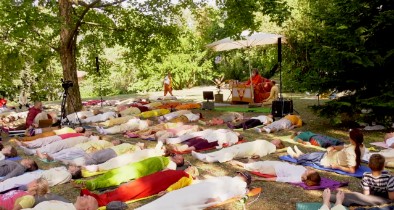
A guided yoga session focusing on Ānandāsana and the importance of Vajranāḍī for vitality.
"There is no existing Śavāsana. Śavāsana is a dead body’s posture, and you are living; you are not dead. Therefore, it is called Ānandāsana."
"Vajrāsana is one of the most powerful postures. It is strengthening first our Vajranāḍī, and Vajranāḍī is like the trunk of this body."
A yoga teacher instructs a large group through a series of postures and exercises, beginning with Ānandāsana and including twists and swings. He explains the physiological and energetic benefits, particularly for digestion and the apāna śakti, and details the role of the Vajranāḍī channel. The session incorporates chanting, demonstrations by students, and concludes with a collective prayer.
Filming location: Strilky, Czech Republic
Bhajans and Practicing form Vep
15:05 - 15:54 (49 min)
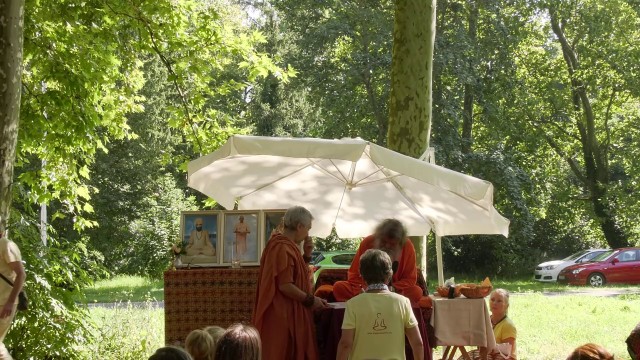
Morning program with Vishwaguruji from Vep, Hungary. Bhajan singing including Gurudeva Mere Jaba Pas Khare, Moye Lagi Lagana Guru Caranana Ki. Practicing Yoga Asanas with Gurudev.
Practising from Jadan
16:00 - 16:27 (27 min)
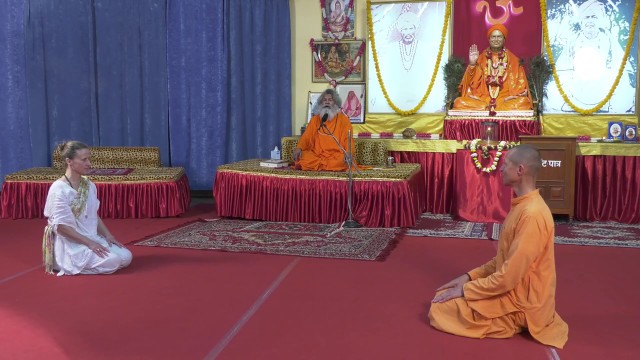
Evening satsang with Vishwaguruji from Jadan Ashram, Rajasthan, India. Practising Bari Khatu Pranam.
The Power of Mantra and the Significance of Śarad Pūrṇimā
16:35 - 17:22 (47 min)
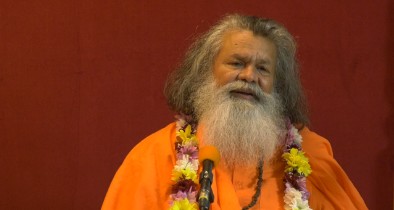
A satsang on the power of mantra and the significance of Śarad Pūrṇimā.
"The Gāyatrī Mantra is the mantra which purifies the atmosphere, the energy in our body, in our mind, in our thinking, in our whole family."
"Today, the moonlight, this moonlight, is very, very special because today, in this full moon, is radiating the energy of immortality."
A spiritual teacher leads a gathering, explaining the purifying power of the ancient Gāyatrī Mantra and its benefits for the individual's five bodies and environment. He then elaborates on the special astrological and spiritual significance of Śarad Pūrṇimā, describing the traditional practice of preparing milk rice charged by the moon's nectarous rays. The talk also honors the divine feminine, the guru principle, and Guruji's sannyāsa initiation anniversary, concluding with a group chanting of the Gāyatrī Mantra.
Filming location: Vienna, Austria
How came Vishwaguruji to Hungary first
17:30 - 17:52 (22 min)
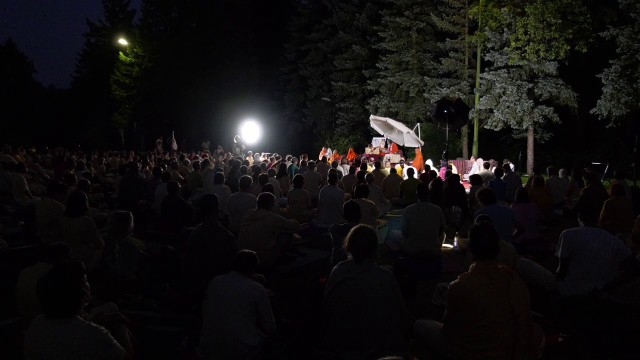
A devotee shares personal memories of first meeting and hosting her spiritual master, Svāmījī, in Hungary.
"We were really lucky that in 1976 we had the chance to go to Czechoslovakia, and we got to know Libuše Pilárová. I saw Svāmījī for the first time on the wall of her home."
"Svāmījī went to see this flat and looked around at the mattresses and said, 'This is what I need, this is what I need, this is what I need.' And my ego jumped to the ceiling."
The speaker recounts how, after seeing a picture of Svāmījī in Czechoslovakia, she and her companion Kṛṣṇānanda worked to invite him to Hungary. She describes his arrival by train, the humble accommodations in a neighbor's small flat filled with mattresses, and the month-long stay that began their discipleship. She recalls the emotional farewell at the train station and early yoga camps, expressing deep gratitude for the grace of meeting her master.
Filming location: Vép, Hungary
Śaṅkha Prakṣālana and Kunjal Kriyā: Purification of the Intestine and Stomach
18:00 - 18:40 (40 min)
A practical demonstration and instructional lecture on the Haṭha Yoga purification techniques of Śaṅkha Prakṣālana and Kunjal Kriyā.
"Śaṅkha Prakṣālana is a very good exercise, but it has to be done early in the morning, of course, on an empty stomach."
"After Śaṅkha Prakṣālana, after purification, you have to keep a diet for at least, strictly, seven days, one week, and up to one month."
An instructor leads a session at an ashram, detailing the procedures for intestinal and stomach cleansing. He explains the preparation, the specific exercises and drinking process for Śaṅkha Prakṣālana, and the subsequent technique for Kunjal Kriyā (Vaman Dhautī), assisted by two experienced practitioners. Key themes include the importance of timing, dietary restrictions post-practice, and the health benefits of these purification rituals.
Filming location: Strilky, Czech Republic
Nadis and pranayama
18:45 - 19:49 (64 min)
Morning satsang from Summer Yoga Retreat in Vep, Hungary. Lecture by M. M. Swami Vivekpuriji. If you are in good atmosphere you bring good atmosphere everywhere you come. Why we are starting pranayama with the right nostril? Try to inhale the divine, cosmic energy and trough positive thouhts and feelings exhale. Meditative bamboo flute music by Swami Madhuram.
Satsang from Vienna
19:55 - 20:56 (61 min)
Satsang with H.H. Vishwaguruji Maheshwarananda from Guruji Ashram, Vienna, Austria
Vegetarianism is spreading
21:00 - 22:01 (61 min)
Morning program with Vishwaguruji from Vep, Hungary. Practice led by Vishwaguruji. Short lectures about the advantages of being vegetarian and consuming bioproducts. How diet can make us healthy.
Quality of yoga is missing
22:05 - 23:05 (60 min)
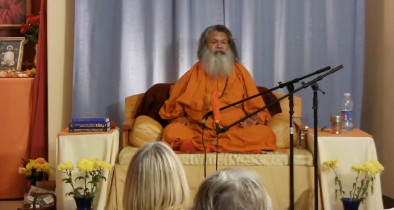
A morning satsang on the purpose of human life and authentic spiritual practice.
"Human life is rare. It is the last milestone for divine realization or becoming one with God."
"Yoga practice is good for our health, but then we should do the system scientifically. Never torture your body, never force your body."
The lecturer addresses a global audience, contrasting superficial modern yoga with the deep, enduring practice of true tapasyā (austerity). He discusses the rarity of human birth, the cycle of karma, and the need to cultivate qualities that lead to light, using examples from scripture, anecdotes of ancient sādhus, and everyday situations to illustrate the principles of endurance, forgiveness, and connecting to cosmic energy.
Filming location: USA
A good education is important
23:10 - 0:10 (60 min)
A satsang addressing community discipline, the importance of Hindi, and educational updates.
"If any bus is destroyed, the teachers have to pay the money... The trust means we are trusting you to keep our things okay."
"The Hindi language is the heart of Hindustan. And this Hindi language was born from Sanskrit."
The lecturer speaks to the ashram community, expressing concern over the careless treatment of property like school buses and furniture, instituting a system of financial responsibility. He then introduces the school principal, who delivers a discourse on the origins and significance of the Hindi language, tracing it from Sanskrit and explaining the etymology of the word 'Hindu'. The session includes translations, a financial appeal for the school, and concludes with a devotional song about the value of education.
Filming location: Jadan, Rajasthan, India
American
Australian