
European
Satsang and chanting of Hanuman Chalisa
0:25 - 1:42 (77 min)
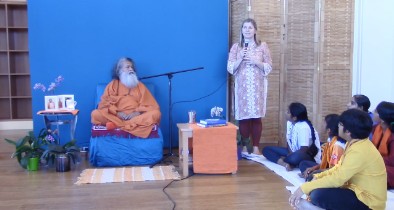
Program with Vishwaguru Maheshwarananda with chanting of Hanuman Chalisa and Bhagavad Gita Dhyana Sloka from San Francisco Bay Area, Oakland, USA.
Body liberation and moksha
1:50 - 2:52 (62 min)
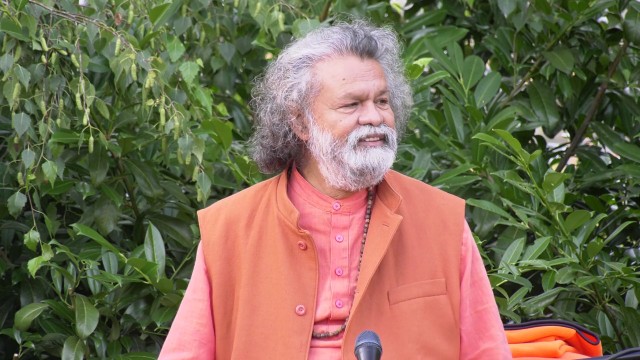
A satsang discourse on transcending body-mind duality through the five sheaths.
"Body and mind have no sense in it. And if you are saying body and mind, then both are wrong."
"We have to go: annamaya kośa, prāṇamaya kośa, manomaya kośa, vijñānamaya kośa, and ānandamaya kośa. Then we are only outside; it is in the body, but it is sending somewhere in different ways."
He argues that true yogic science requires progressing through the five koshas (sheaths) toward Anandamaya kosha and liberation, moving beyond the confusing duality of body and mind.
Filming location: Strilky, Czech Republic
A Divine Call and the Search for a True Guru
3:00 - 3:48 (48 min)

A devotee recounts her spiritual journey, from a divine call to finding her Guru.
"I turned to my right side, and I could see Śrī Kṛṣṇa in my heart, holding a small bowl... and asking for kheer." "He looked into my eyes and said, 'You are looking for a true guru, haven’t you?'"
Rukhswani, an Indian woman living in New Zealand, describes a 1992 vision of Lord Krishna compelling her to make a milk pudding, which leads her to a satsang with Swāmī Śrī Māheśvarañjī. She expresses her search for a true guru and later travels to India, where she meets Holy Gurujī, receives mantra-dīkṣā, and undertakes translation work for him. She shares stories of divine grace, obedience, and her profound emotional connection to her Guru over subsequent years.
Filming location: Wellington, New Zealand
Have A Feeling For Your Meditation
3:55 - 4:49 (54 min)
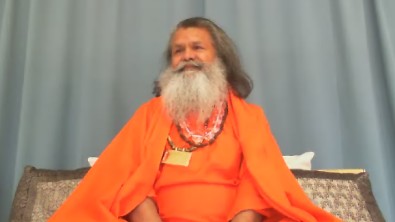
Satsang from Melbourne. It is said: When you are doing selfless work, the seva, God loves you, when you pray, God has a personal consultation with you, when you meditate, you are sitting in the heart or on the lap of God. Meditation is the most powerful technique to develop spirituality and to achieve the goal. Spirituality needs your discipline and continuity. Don't do it only occasionally. Prepare a place for it and have the inner feelings for your meditation. It is a path for you and meditation with the mantra is the light. After the introduction, Swamiji guides a meditation.
The value of Gurudev
5:00 - 6:07 (67 min)
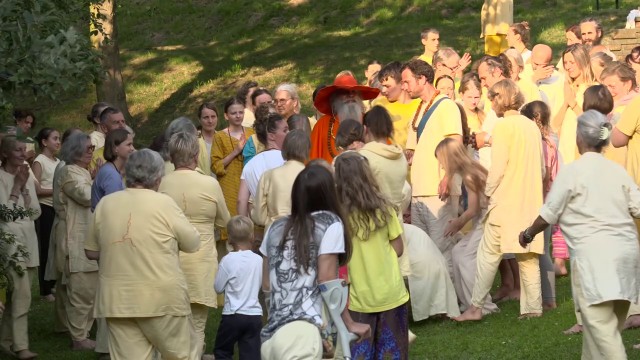
A satsang on the grace of the Guru and lessons from the Rāmāyaṇa.
"Even by the glance of the Guru towards you, that energy is more than enough to give you that push in your life."
"When you have Gurudev's kṛpā, his blessings, then the disciple's life is filled with happiness and joy."
A speaker addresses the assembly, weaving together a teaching on Guru's grace with a story from the Rāmāyaṇa about Hanumān's despair and renewal. He emphasizes that the Guru's presence and blessings are the ultimate source of happiness, surpassing material wealth. The discourse includes personal anecdotes, a bhajan, and chanting of the Guru Paduka Stotra, concluding with a commentary on the deeper, allegorical meaning of Rāma's defeat of Vālī from the Rāmāyaṇa.
Filming location: Strilky, Czech Republic
The Nāḍīs, Cakras, and the Mūlādhāra Foundation
5:15 - 6:12 (57 min)
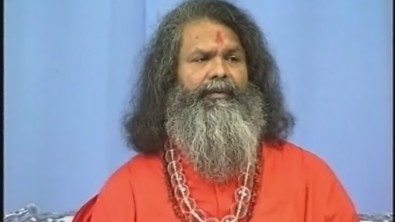
A spiritual lecture on the nāḍīs, cakras, and the foundational Mūlādhāra Cakra.
"The Mūlādhāra Cakra is at the bottom of the spinal column. It is a border between animal and human consciousness."
"Destiny was created first, and destiny is created individually. We should blame no one. We are ourselves responsible for our destiny."
The speaker continues a discourse from the previous day, focusing on the Mūlādhāra Cakra as the seat of destiny (prārabdha) and divine energy. He explains how this foundational energy influences life and can be purified through the threefold practice of svādhyāya (self-study), manana (contemplation), and abhyāsa (persistent practice), which remove the obstacles of impurity, distraction, and veils. The talk connects these concepts to Kuṇḍalinī Śakti, the role of Kriyā Yoga, and concludes with a symbolic discussion of the tilak mark.
Filming location: Umag, Croatia
How to reach perfection
6:20 - 7:12 (52 min)
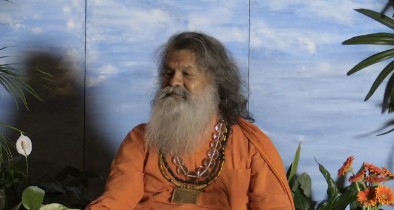
A spiritual discourse on the path of the true disciple and the journey to immortality.
"To be a disciple is not so easy. A disciple is an aspirant, which means you have inspiration."
"Yoga is that one which makes the human a divine, that divine which liberates and comes to the cosmic self forever and ever."
A spiritual teacher addresses a gathering, exploring the demanding nature of true discipleship versus mere aspiration. He emphasizes following the master's footsteps and guru-vākyā (the master's word), using teachings from various scriptures and parables, including lessons from Jesus and a story about a master and a critical shopkeeper. The talk covers the layers of spiritual practice from body to cosmic consciousness, stressing purification, humility, service, and the ultimate goal of liberation.
Filming location: Brisbane, Australia
Sri SatGuru Chalisa
7:15 - 7:28 (13 min)
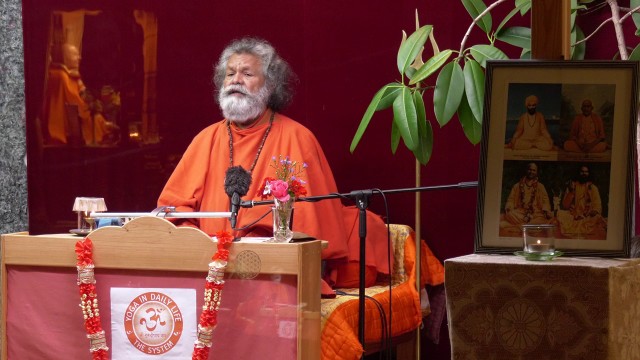
A commentary and translation of the Ātāśrī Satguru Chalīsā, a devotional hymn.
"You are the creator for everyone. You are present outside and inside. You are the Supreme Divine incarnate."
"Those who will read the Satguru Chalīsā... shall concentrate, meditate, and chant His name. Janam maraṇa bhava dukha mithi... You will be free from the fear of birth and death."
A speaker provides a line-by-line English translation and explanation of the Satguru Chalīsā's introductory poem and first verses. He describes the Guru as the omnipresent creator and protector, and explains the benefits of reciting the hymn, which include liberation from the cycle of birth and death, the destruction of sins, and the attainment of spiritual perfection and wishes.
Filming location: Strilky, Czech Republic
Bhajans for World Peace (3/3)
7:30 - 8:45 (75 min)
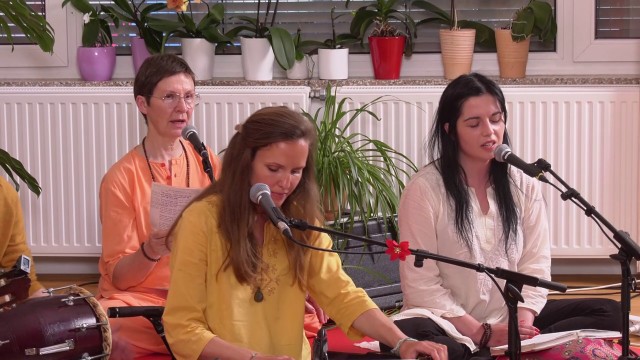
For world peace, first we need to find peace within ourselves. A recording of a live concert for world peace in YIDL center in Villach, Austria. Public concert lasted 6h with uninterrupted Bhajans. The concert was a part of a 24h of Bhajan Anushtana.
Bhajan evening from Vienna 1
8:50 - 9:18 (28 min)
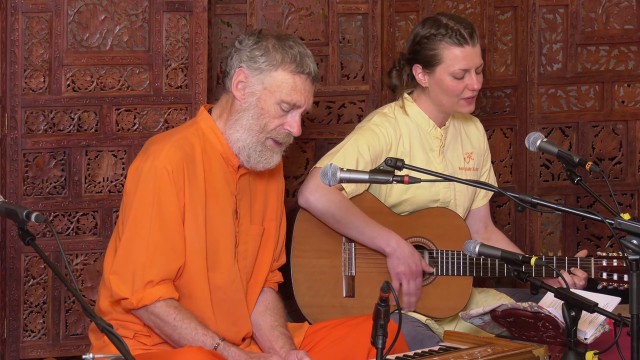
Evening Satsang with H.H.Vishwaguruji from Vienna, Austria. Bhajan singing.
Bhajan evening from Vienna 2
9:25 - 10:19 (54 min)
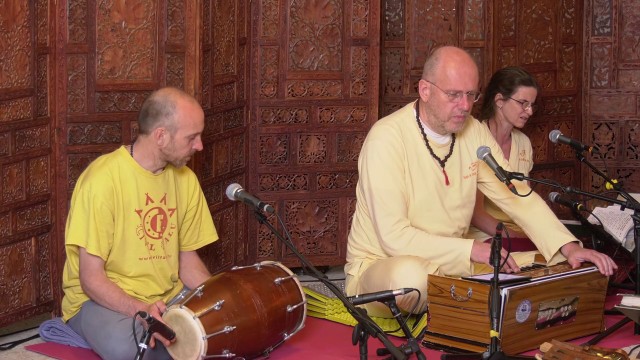
Evening Satsang with H.H. Vishwaguruji from Vienna, Austria. Bhajan singing.
Satsang from Wellington
10:25 - 11:49 (84 min)
Evening satsang with Vishwaguruji from Wellington Ashram, New Zealand.
Go back to Nature
11:55 - 12:45 (50 min)
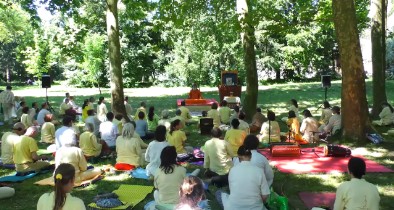
Morning satsang from Summer Retreat in Vep, Hungary. The natural environment has an immense amount of healthy prana, while using artificial things destroys the life energy.
Pilgrimage
12:50 - 13:37 (47 min)
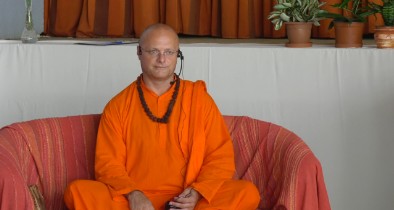
Morning satsang from Vep, Hungary.
Program from Vep -11
13:45 - 14:31 (46 min)
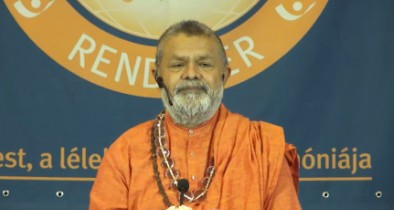
Evening satsang with Swamiji from Yoga Summer Seminar in Vep, Hungary.
The value of Satsang
14:35 - 15:20 (45 min)
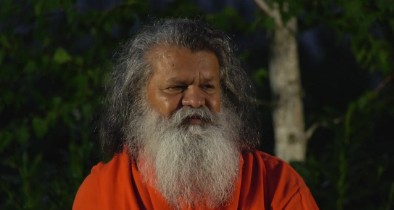
A spiritual discourse exploring the mantra "Hari Om" and sharing Puranic stories.
"Hari is the name of Bhagavān Viṣṇu. And Om, Om is Hari."
"72,000 years of sādhanā and one minute of satsaṅg... For one minute of satsaṅg, the whole earth raised up, and when it was 72,000 sādhanās, that was not moving."
The lecturer explains the divine essence of the "Hari Om" mantra, linking it to Vishnu and the primal sound of creation. He narrates the Puranic story of the earth's origin and the serpent Sheshanaga who supports it. The central teaching is conveyed through a parable where the sage Vishvamitra learns that one minute of true satsang (spiritual gathering) outweighs 72,000 years of solitary penance, highlighting the supreme power of devotion and community. The talk concludes with ethical exhortations for spiritual practice.
Filming location: Strilky, Czech Republic
The Path of Conscious Living and Mercy
15:25 - 16:05 (40 min)
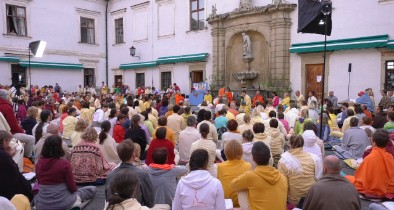
A satsang on spiritual development, karma, and conscious living.
"True spirituality purifies negative karmas and frees the soul. We are covered by vibrations, karmic influences, and ignorance."
"As humans among 8.4 million life forms, we possess intellect, vivekā, and karuṇā (mercy) in our hearts... Life is dear to everyone."
Swami Gajānandji addresses a global gathering at the ashram, discussing the distinction between religion and soul purification. He explains how unconscious actions, particularly harming life for food, create karmic burdens that obscure the soul. Using a bhajan by Saint Sūradāsa and teachings from the Bhagavad Gītā, he emphasizes the need for conscious action, discriminative wisdom (vivekā), and extending mercy to all beings to achieve liberation.
Filming location: Strilky, Czech Republic
The Essence of Kumbh Melā and Cultural Understanding
16:10 - 16:35 (25 min)
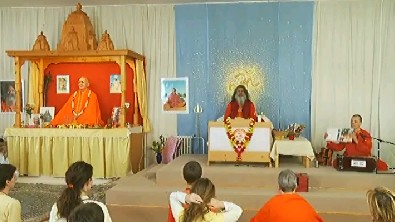
A morning discourse on the cultural and spiritual significance of the Kumbh Melā.
"Kumbh Melā originally was a meeting of intellectual people. It meant speaking about humanity, dharma, culture, ethics, spiritual principles."
"The tradition of the Kumbh Melā, as well as the Nāgabābā, is highly respected and seen as renunciation."
Swami Satyananda Saraswati addresses the assembly, explaining the deep symbolism of the Kumbh Melā's rivers and its original purpose as a gathering of learned sages. He defends the Nāgabābā tradition against sensationalist media portrayals, framing their renunciation as a historical, protective force. The talk broadens into a plea for cross-cultural understanding, using examples from global indigenous cultures to argue against judging differing ways of life.
Satsang from Wellington
16:40 - 18:04 (84 min)
Evening satsang with Vishwaguruji from Wellington Ashram, New Zealand.
The Essence of Kumbh Melā and Cultural Understanding
18:10 - 18:35 (25 min)
A morning discourse on the cultural and spiritual significance of the Kumbh Melā.
"Kumbh Melā originally was a meeting of intellectual people. It meant speaking about humanity, dharma, culture, ethics, spiritual principles."
"The tradition of the Kumbh Melā, as well as the Nāgabābā, is highly respected and seen as renunciation."
Swami Satyananda Saraswati addresses the assembly, explaining the deep symbolism of the Kumbh Melā's rivers and its original purpose as a gathering of learned sages. He defends the Nāgabābā tradition against sensationalist media portrayals, framing their renunciation as a historical, protective force. The talk broadens into a plea for cross-cultural understanding, using examples from global indigenous cultures to argue against judging differing ways of life.
Final Essence Of The Teachings
18:40 - 20:24 (104 min)
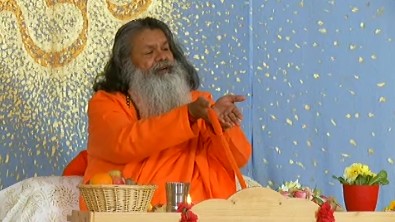
Evening satsang of Maha Shivaratri weekend seminar in Strilky, Czech Republic. Shiva is the first in the entire Universe. Shiva is the Lord of Yoga. All science comes from Shiva. The spirituality of yoga, the bandhas, mantras, yantras, tantras - all spiritual science is his manifestation. If we have a look to the final essence of all teachings as well as to the Holy Scriptures, it is very short explained: If you give someone happiness, you will get happiness. If you give someone troubles, you will get troubles. If you are good than the whole world is good.
Gurudev stands in the focus of our life
20:30 - 21:20 (50 min)
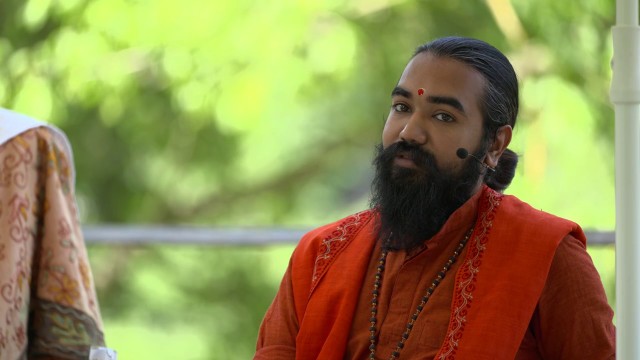
A satsang discourse on the interconnected spiritual paths of bhakti, jñāna, and karma yoga, illustrated with parables and teachings.
"It doesn't matter where we start; it all leads to the same thing. Bhakti Yog, Jñāna Yog, and Karma Yog... all paths lead to the same path."
"If there is a lock, there is a key, but by giving up, you're not going to find it. That key, if you look in the right direction without giving up, then we will know that the key is right next to us."
The lecturer leads the morning session, explaining how the three yogas are interwoven, using the analogy of marriage to describe moving from knowledge to love to selfless service. He emphasizes the importance of seva (selfless service) and humility, sharing a parable about a businessman's spoiled son who transforms his life through devoted seva. The discourse also includes alternative devotional narratives from the Ramayana about Kaikeyi and Hanuman, and concludes with the chanting and translation of the Guru Padukas Stotra.
Filming location: Strilky, Czech Republic
A Gathering of Hearts
20:35 - 22:00 (85 min)
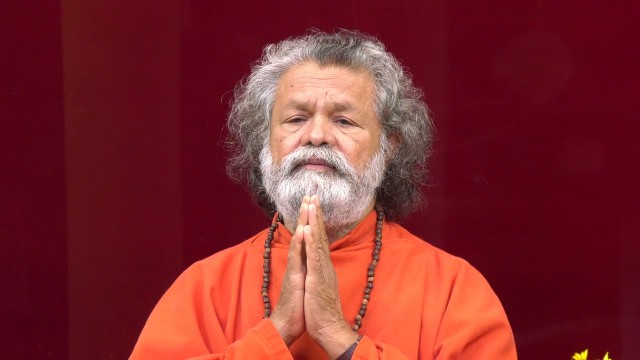
A closing address and spiritual discourse following a week-long yoga seminar.
"In our Yoga in Daily Life, everyone is like brothers and sisters, a family... We are all from this Earth."
"Spirituality is purity, kindness, humbleness, ahiṃsā, and respect... Walk on your own path, the path of our tradition."
The lecturer addresses participants at the conclusion of a seminar at Mahaprabhuji Deep Ashram. He expresses gratitude for the disciplined and loving community effort, defines spirituality as living virtues, and encourages carrying these principles into daily life and local engagement. He concludes with teachings from the Kākabhatī, emphasizing the importance of a guru, inner energy, and devotion.
Filming location: Strilky, Czech Republic
Pyare darashana diyo aj
21:00 - 21:03 (3 min)
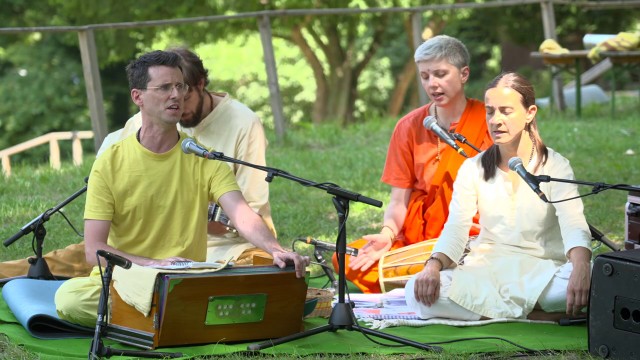
A spiritual song expressing longing for divine vision, followed by analytical remarks on the text's structure.
"Ākula vyākula fero re na dhinna" and "Darśan na dī chokhā. Darśan sannakā nindā, Nairin divasannā."
The content consists of poetic lyrics lamenting the agony of separation and the unfulfilled desire for divine sight (Darśan). This is followed by a separate section of critical remarks that analyze the song's text, pointing out its abrupt language shift, unclear referents, and narrative discontinuity.
Filming location: Strilky, Czech Republic
Experiencing Gurupurnima
22:05 - 23:25 (80 min)
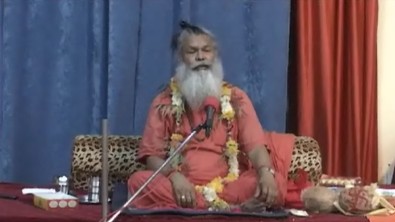
Satsang from Jadan. Various bhaktas from around the world, disciples of the Yoga in Daily Life system have taken part in the Gurupurnima festivities in Jadan Ashram in India. The day after they expressed their experiences which are messages of thankfulness, love and happiness in different languages. Swamiji remembers to let go past burdens and mistakes, to refresh the spiritual practice and to take a new shankalpa, a vow, for the spiritual progress. To do seva, the selfless service not only to humans but to plants or animals as well, is the best tool which will help to develop spirituality.
Body liberation and moksha
23:30 - 0:32 (62 min)
A satsang discourse on transcending body-mind duality through the five sheaths.
"Body and mind have no sense in it. And if you are saying body and mind, then both are wrong."
"We have to go: annamaya kośa, prāṇamaya kośa, manomaya kośa, vijñānamaya kośa, and ānandamaya kośa. Then we are only outside; it is in the body, but it is sending somewhere in different ways."
He argues that true yogic science requires progressing through the five koshas (sheaths) toward Anandamaya kosha and liberation, moving beyond the confusing duality of body and mind.
Filming location: Strilky, Czech Republic
American
Australian