
European
Building the Ashram
0:10 - 0:45 (35 min)
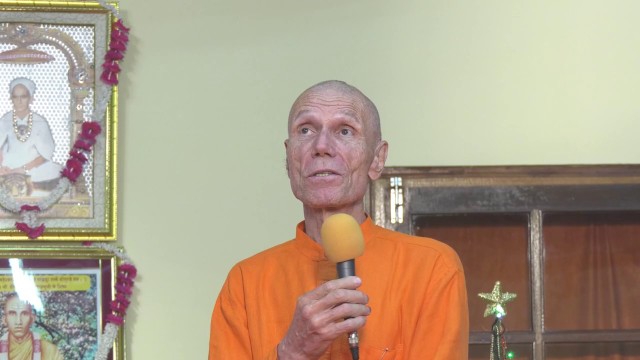
A spiritual discourse and practical lecture on ashram life and traditional construction.
"This is our ashram; this is our ashram. And when you see it, oh, it is very nice."
"The best material to build a building is wood... And you see the best people, there are two."
An initial, stream-of-consciousness spiritual monologue reflects on the ashram's essence, divinity in nature, and the cycle of life. The video then shifts to a practical lecture, where Gurudev Swami Mishranji explains the construction of the ashram's hall, detailing the use of steel trusses and a straw roof. He discusses the principles of Vāstu Śāstra and advocates for healthy, natural building materials like wood and lime over modern materials like granite and cement.
Filming location: Jadan, Rajasthan, India
Nature of our Atma
0:50 - 1:55 (65 min)
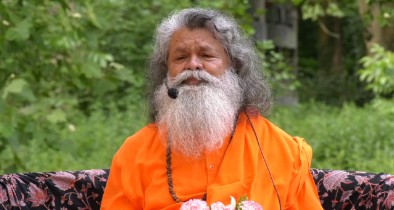
A spiritual discourse exploring the nature of mental habits (vṛtti) and the soul's (ātmā) oneness with the divine.
"Vṛtti is what you are doing. You have good food to eat. But after eating this and that, you go outside to eat some ice cream... So that is a vṛtti."
"Below is the ocean, Shiva, and this one drop is Jīva... Now, if this drop falls into the ocean, then this Jīva becomes Shiva."
Swami Vishwaguruji addresses a gathering, weaving together teachings on discipline, the nature of the mind, and the ultimate unity of the self. He uses anecdotes, like the reputation of his disciples and a story about a dinner party, to illustrate vṛtti. He then explains the soul's journey using the metaphor of a water droplet returning to the ocean (Śiva), discusses the concept of Svayambhū (self-manifested divinity), and concludes with prayers and mantras emphasizing meditation and inner purity.
Filming location: Vép, Hungary
Confidence
2:00 - 2:53 (53 min)
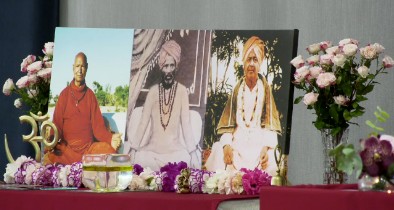
A spiritual discourse on the necessity of faith and commitment to a single path.
"If you meditate, concentrate, practice, perform prāṇāyāma, read the holy books—do everything—but there is no trust, it is futile."
"Ek saje sab saje, aur sab saje sab jāye. When you practice one, you will get all. And when you will try to do all, then you will get lost in all."
A spiritual teacher addresses his disciples, emphasizing unwavering faith and commitment to one chosen path as the foundation for all practice. He warns against the spiritual confusion of seeking multiple masters, using parables like a dog losing its bread by chasing its reflection. He discusses the lineage of masters like Alak Purījī and Devpurījī, and cautions against distractions like astrology, urging focused sādhanā.
Filming location: Zagreb, Croatia
A Message of Peace from Prague
3:00 - 3:07 (7 min)
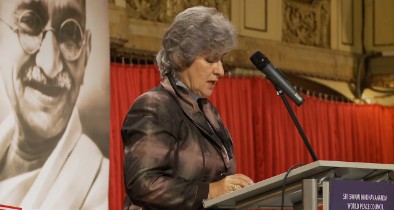
A Czech parliamentarian delivers a message of peace at a conference, drawing on spiritual and historical themes.
"There is only one God, the universal God, only one religion, humanity, and only one nation, humankind."
"Peace among nations is dependent on peace in human beings."
The speaker, a member of Parliamentarians for Nuclear Non-Proliferation and Disarmament (PNND), opens by quoting from Swamiji's Yoga in Daily Life. He shares an observation of harmony at Prague's Christmas market as a model for the world, then outlines diplomatic efforts for nuclear disarmament and addresses global conflicts. He conveys greetings from the Czech Prime Minister and concludes by thanking those who seek inner peace through yoga.
Filming location: Prague, Czech Republic
The Means Are the End: On Non-Violence, Patience, and Peace
3:15 - 3:29 (14 min)
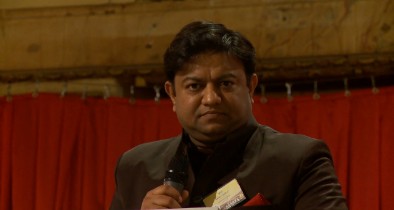
A keynote address on non-violence, patience, and peace at a World Peace Council conference.
"Wrong means will always fetch wrong ends. We must understand the basic fundamental: it is the means which become the ends."
"Happiness is a peaceful state of mind. If you have a peaceful mind, you live in the present, and when you live in the present, you are happy."
Swapnil Kothari, a teacher from India, delivers a speech exploring non-violence as a conscious philosophy, not just a default position. He argues for the primacy of ethical means over ends, asserting that violence breeds violence while non-violence breeds compassion and inner peace. He uses personal anecdotes, historical references, and a humorous story about marital patience to illustrate the stamina required for this path.
Filming location: Prague, Czech Republic
The basic qualities of our chakras
3:35 - 4:07 (32 min)
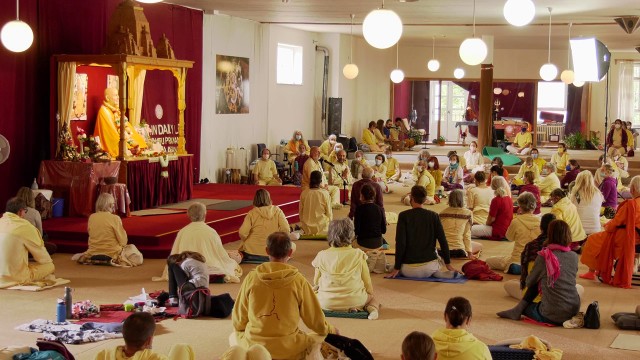
An introductory lecture on the chakras and hidden human powers, based on the book The Hidden Powers in Humans.
"If we touch words like yoga in life, words like sādhanā, our guru, then our life is directed positively."
"Swamījī said that if we are able to manage the Svādhiṣṭhāna Cakra, the power of concentration and the other powers there, we are halfway through on our path."
A speaker guides the satsang, reviewing the foundational powers within the first three chakras. He explains how dormant karmic power and Kuṇḍalinī reside in the Mūlādhāra, and how conscious living through sādhanā in the Svādhiṣṭhāna grants access to vital energies like Prāṇa-śakti. The talk outlines the progressive awakening through the Maṇipūra, Anāhata, and Viśuddhi chakras, emphasizing the guru's essential role in managing this process and illuminating the disciple's path from darkness to light.
Filming location: Strilky, Czech Republic
If you don’t accept, you will lose the chance
4:15 - 4:53 (38 min)
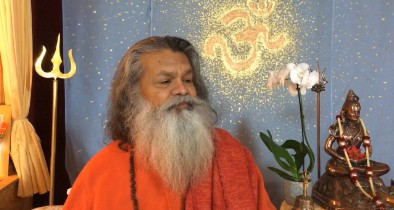
A discourse on the spiritual message of the Satguru, using a bhajan for reflection.
"Only the disciple whose antahkaraṇa (inner instrument) is pure will understand the indications Gurudev gives."
"Whatever is said by the Guru comes to truth."
A spiritual teacher unpacks the bhajan "Sandeśa," explaining how a Satguru's guidance, though sometimes difficult to accept, is a divine message meant for the disciple's ultimate liberation. He uses analogies of medicine, social education, and protection from negative influences (Ku-saṅga) to describe the process of purifying one's qualities to receive and understand the Guru's word (Guruvākya), which awakens the soul.
Filming location: Strilky, Czech Republic
We seek purity
5:00 - 5:11 (11 min)
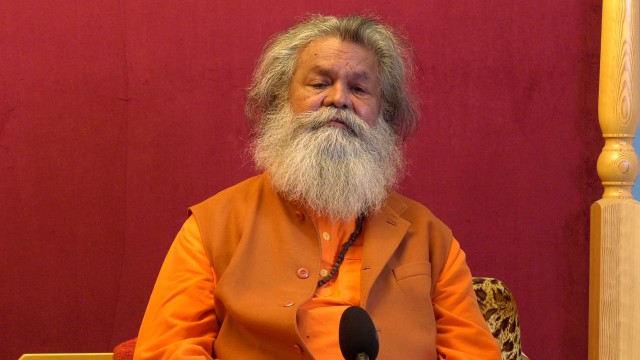
A spiritual discourse on purity and devotion in the modern age.
"Therefore, I always implore our devotees: 'Please do not be black, please do not be black.'"
"I want to be this drop. I want to drink... it desires only purity, directly from my God."
The lecturer reflects on the pervasive darkness of the Kali Yuga, observed in clothing and culture, and contrasts it with the purity found in sacred music and devotion. He shares teachings from his Gurudeva, using the metaphor of a pure drop of water (pū) to describe the soul's yearning for divine purity over worldly abundance, and calls for inner cleanliness and the declaration of the pure "I am."
Filming location: Vienna, Austria
Part 1: The Awakening of Consciousness: Kuṇḍalinī and Cakras
5:15 - 7:09 (114 min)
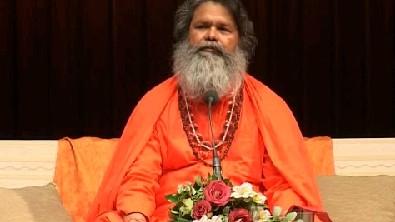
A lecture on Kundalini, chakras, and the science of yoga.
"Yoga is not a religion, it is not a philosophy, it is not a dogma, but it is the eternal principle in this universe, like the cosmic consciousness itself."
"The awakening of the Kuṇḍalinī is a divine process; you don't feel it as a physical sensation. You feel happy, as if in the lap of the mother."
Swami Maheshwarananda delivers an extensive discourse on the awakening of consciousness through Kundalini and the chakra system. He explains yogic anatomy, including the 72,000 nāḍīs (energy channels) and the major chakras, describing their roles in physical, mental, and spiritual development. The talk covers the interplay of mind, intellect, and subconscious impressions, the importance of dharma, and the ultimate goal of uniting individual consciousness with the Cosmic Consciousness.
Filming location: Zagreb, Croatia
Bhramari pranayama and concentration on the navel
6:30 - 7:33 (63 min)
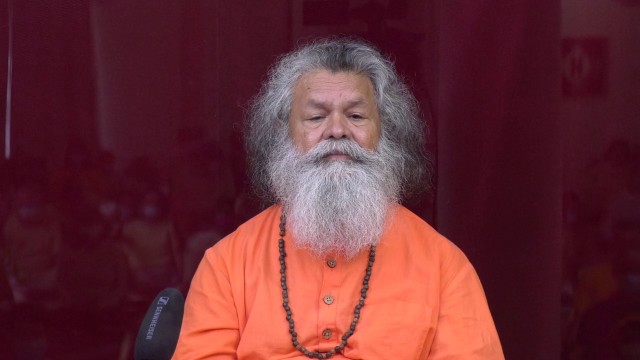
Morning satsang with Vishwaguruji from Strilky Ashram, Czech Republic. Bhajan singing. Practising bhramari pranayama relaxation and concentration on the navel.
Guru Tattva, Wellington, NZ
7:40 - 8:55 (75 min)
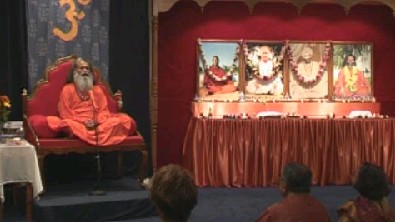
Guru Tattva is directly connected to God Shiva. Guru Tattva is the highest Tattva in the world. Shiva Tattva destroys all negative karmas, negative thoughts and qualities which we cannot overcome. Vishnu Tattva is protecting us and our destiny. Brahma Tattva creates in us good thoughts, the positive way of thinking. It creates within us a better, positive and wise man. Guru Tattva is not the physical embodiment of the Guru. Guru Tattva is the knowledge. It is the divine light and we adore that light. When we get this light it means Atma Gyana, Moksha, liberation. Guru Tattva is knower of everyone and lives in everyone. Gurudev is carrying the light within and is bringing us the wisdom. We are searching the light, keep it, don't lose it. Gurudev is that one which operate all negative karmas away because he has that knowledge. Guru consciousness is awaken and one who is awaken can awake others.
Worship every God and incarnation
9:00 - 10:15 (75 min)
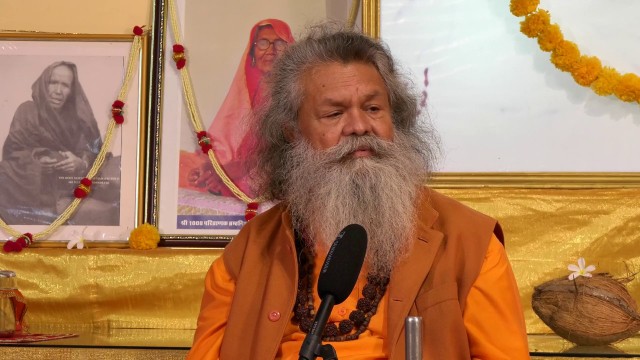
Evening satsang with Vishwaguruji from Jadan Ashram, Rajasthan, India. At this time of the year, many people in the world are waiting for Jesus to come. Krishna's mother was suffering very much like Jesus's mother Holy Maria. Now we worship every great saint. God is in every creature. Don't be the cause of the pain of any creatures. If you worship God first worship your mother. Mother animals also feel love for their babies and feel pain if they lose them. Bhajan singing.
The Journey Beyond Duality: Life, Self, and the Path to Oneness
10:20 - 11:32 (72 min)
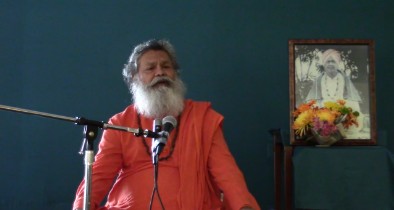
A spiritual discourse on yoga philosophy, the nature of the self, and the path to oneness.
"Our life, as we said, is a destiny and a journey. It is a journey; the destination is still not there."
"In Ātmā, in the self, there are no dualities; there is only oneness. So where there is heaven and hell, there is life and death... that's what we want to come out of, to become one with the highest, with our Self."
Swami Anand Arun delivers an extensive teaching, exploring the journey beyond dualities like life/death and divine/demonic energies. He explains core concepts of Ātmā, karma, and the three guṇas, detailing the system of senses (indriyas), vital energies (prāṇas), and channels (nāḍīs). The talk defines yoga as union, clarifies traditional Haṭha Yoga, and maps the subtle body's chakras, concluding with anecdotes about advanced practices like Khecharī Mudrā and the nectar of immortality.
Filming location: USA
Interview with Vishwaguruji on Lok Sabha
11:40 - 12:10 (30 min)
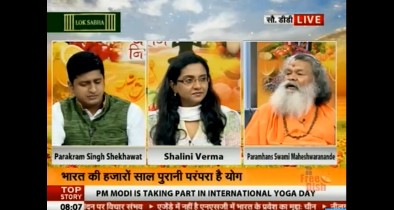
A television panel discussion on International Yoga Day, featuring a host and guests.
"Yoga is the mother of all sciences and arts. It is the science of human origin and evolution to a point where you can overcome the boundaries of space and time."
"Yoga should not be commercial. No. It should be free. A guru gives knowledge to the disciple not because of money or with money, but with blessings."
A host moderates a discussion with senior journalist Gyanendra Bhattaria and Swami Maheshvaranandji on the global celebration of Yoga Day, its origins, and its core principles. The panel addresses the event's scale, the essence of yoga beyond physical postures, the role of a guru, and concerns over commercialization and modern interpretation. The conversation references Prime Minister Narendra Modi's leadership in establishing the day and a live yoga session in Chandigarh.
Filming location: India
Yagya from Bari Khatu
12:15 - 12:43 (28 min)
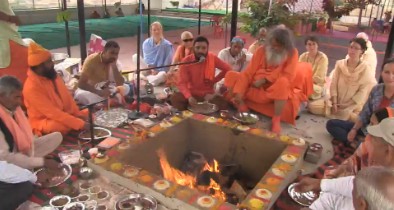
Program with Vishwaguruji in Bari Khatu.
Shiva is universal
12:50 - 13:11 (21 min)
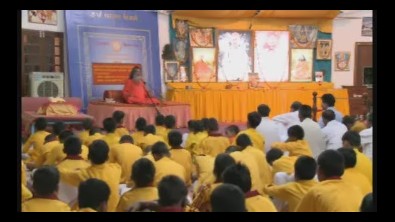
A spiritual discourse on environmental consciousness and devotion during the sacred month of Śrāvaṇa.
"Mahātmā Gandhījī said, 'Mother Earth has enough for everyone’s need, but not for their greed.'"
"Śiva says, 'I know what you are praying for. Don’t beg, just do prayer. Give your love.'"
A spiritual teacher broadcasts from an ashram, explaining the significance of the lunar month of Śrāvaṇa and its connection to the monsoon season. He links modern climate crises and water scarcity to human greed and mental pollution, urging heartfelt prayer and unconditional devotion to Lord Śiva. He advises dedicating the four monsoon months to meditation and mantra practice, emphasizing that true prayer comes from a heart full of selfless love.
Filming location: Jadan, Rajasthan, India
We seek purity
13:15 - 13:26 (11 min)
A spiritual discourse on purity and devotion in the modern age.
"Therefore, I always implore our devotees: 'Please do not be black, please do not be black.'"
"I want to be this drop. I want to drink... it desires only purity, directly from my God."
The lecturer reflects on the pervasive darkness of the Kali Yuga, observed in clothing and culture, and contrasts it with the purity found in sacred music and devotion. He shares teachings from his Gurudeva, using the metaphor of a pure drop of water (pū) to describe the soul's yearning for divine purity over worldly abundance, and calls for inner cleanliness and the declaration of the pure "I am."
Filming location: Vienna, Austria
How the energy circulating in our body
13:30 - 14:54 (84 min)
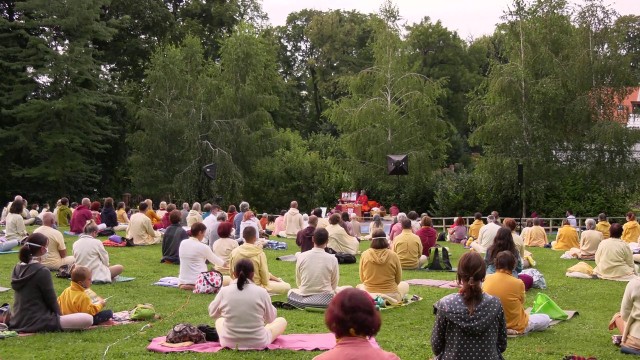
Evening satsang with Vishwaguruji from Strilky Ashram, Czech Republic. Moon is one of the Siva's symbols. Married couples have also that symbol of the moon on their head. In the Indian wedding ceremony, the female represents the Moon and the mail represents the Sun. Movements are in the nerve system to balance the Sun and Moon energy in the body in a serpent way. Snake is a symbol of its kind of movement. The Earth is held by a snake inbalance. When it moves a little there are many problems. Water and fire can not exist without each other. Practising kriya helps us to manifest our real human qualities. The story about two brothers who have educated themselves in different directions. In every petal of our chakras, there is a certain energy in it. Our roots are in the navel. In every chakra there is resonance. When we chant OM our tongue shouldn't move.
Our heart knows the path
15:00 - 15:56 (56 min)
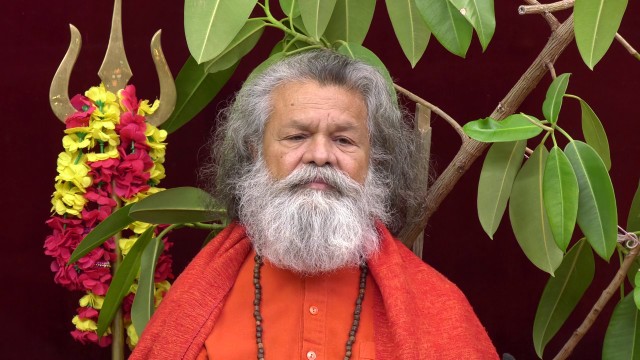
A spiritual discourse on finding the inner path and the role of guidance.
"Our path, the yogic path—I would say a yogī means all, it does not matter from which countries, religions, or techniques; they all have good things."
"The path is within your heart. In my heart, and then in my brain. These are both together. The heart and brain, this both together, is like we and God."
A swami leads a satsang, offering blessings and discussing the journey of spiritual practice. He emphasizes that the true guiding path is found within one's own heart and self, yet uses the parable of a blind man missing a door to illustrate how ego can cause one to reject external help and become lost. He explores themes of meditation, the necessity of a mala and mantra as anchors, and the foundational importance of the Mūlādhāra chakra, concluding that a strong spiritual foundation is essential for progress.
Filming location: Strilky, Czech Republic
Practicing from Strilky
16:00 - 17:31 (91 min)
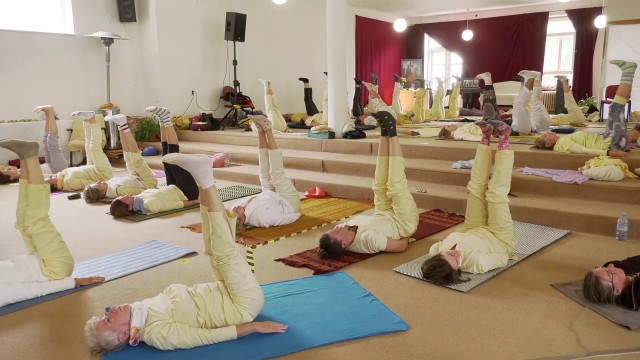
Morning satsang from Strilky Ashram, Czech Republic. Practice with Vishwaguruji and Swami Umapuriji.
Nature of our Atma
17:35 - 18:40 (65 min)
A spiritual discourse exploring the nature of mental habits (vṛtti) and the soul's (ātmā) oneness with the divine.
"Vṛtti is what you are doing. You have good food to eat. But after eating this and that, you go outside to eat some ice cream... So that is a vṛtti."
"Below is the ocean, Shiva, and this one drop is Jīva... Now, if this drop falls into the ocean, then this Jīva becomes Shiva."
Swami Vishwaguruji addresses a gathering, weaving together teachings on discipline, the nature of the mind, and the ultimate unity of the self. He uses anecdotes, like the reputation of his disciples and a story about a dinner party, to illustrate vṛtti. He then explains the soul's journey using the metaphor of a water droplet returning to the ocean (Śiva), discusses the concept of Svayambhū (self-manifested divinity), and concludes with prayers and mantras emphasizing meditation and inner purity.
Filming location: Vép, Hungary
Yoga in Daily Life is everywhere in the world
18:45 - 20:43 (118 min)
A satsang gathering featuring testimonies on the global spread of the Yoga in Daily Life system.
"Through Yoga in Daily Life, we are bringing everybody together. I think I need all of your help, perhaps to expand hospitality to Asia."
"Before meeting Yoga in Daily Life, I had a very strong desire in my heart... I thought about if there was a yoga system with a master where we could find the truth of life."
Swami Avatarpuri (Gurudev) hosts a session where disciples share their experiences. Dayāmātā (Matajī) speaks about introducing the system to China, facing a market dominated by gymnastic yoga. Her student, Chandra, shares her emotional journey from China to Europe and the transformative love found in the community. Other teachers from New Zealand, the USA, and Brazil also offer brief reflections. Gurudev concludes with teachings on connecting with the earth, practical yoga techniques like Agniṣār Kriyā, and a warning against the dangers of drugs and disconnection from nature.
Filming location: Strilky, Czech Republic
Worship every God and incarnation
20:50 - 22:05 (75 min)
Evening satsang with Vishwaguruji from Jadan Ashram, Rajasthan, India. At this time of the year, many people in the world are waiting for Jesus to come. Krishna's mother was suffering very much like Jesus's mother Holy Maria. Now we worship every great saint. God is in every creature. Don't be the cause of the pain of any creatures. If you worship God first worship your mother. Mother animals also feel love for their babies and feel pain if they lose them. Bhajan singing.
How to overcome the obstacles of practicing
22:10 - 23:28 (78 min)
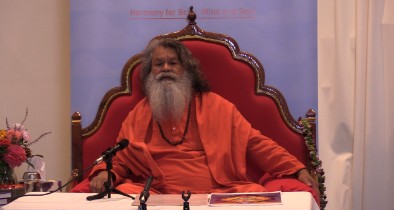
A spiritual discourse on the chakra system, focusing on the Maṇipūra chakra and the journey of self-mastery.
"My first master was my father, who imparted immense knowledge in a simple way. Through his instruction, I found my path."
"Strive for oneness, purity, without blemish. Do not stain your body."
Swami Maheśvarānand leads a satsang, weaving teachings on the manipura (navel) chakra with personal stories from his childhood and path to sannyas. He explains the symbolic animals and deities within each chakra, the role of the guṇas (qualities), and the necessity of a guru's guidance. The talk emphasizes practical discipline, advocating for specific prāṇāyāma techniques like Kapālabhāti and Bhastrikā to awaken inner energy, and concludes with a blessing.
Filming location: Wellington, New Zealand
The Journey Beyond Duality: Life, Self, and the Path to Oneness
23:35 - 0:47 (72 min)
A spiritual discourse on yoga philosophy, the nature of the self, and the path to oneness.
"Our life, as we said, is a destiny and a journey. It is a journey; the destination is still not there."
"In Ātmā, in the self, there are no dualities; there is only oneness. So where there is heaven and hell, there is life and death... that's what we want to come out of, to become one with the highest, with our Self."
Swami Anand Arun delivers an extensive teaching, exploring the journey beyond dualities like life/death and divine/demonic energies. He explains core concepts of Ātmā, karma, and the three guṇas, detailing the system of senses (indriyas), vital energies (prāṇas), and channels (nāḍīs). The talk defines yoga as union, clarifies traditional Haṭha Yoga, and maps the subtle body's chakras, concluding with anecdotes about advanced practices like Khecharī Mudrā and the nectar of immortality.
Filming location: USA
American
Australian