
European
Quality of yoga is missing
0:10 - 1:10 (60 min)
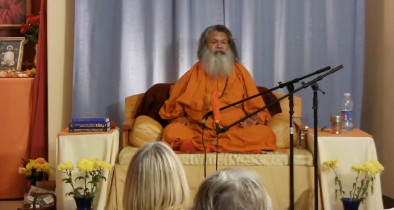
A morning satsang on the purpose of human life and authentic spiritual practice.
"Human life is rare. It is the last milestone for divine realization or becoming one with God."
"Yoga practice is good for our health, but then we should do the system scientifically. Never torture your body, never force your body."
The lecturer addresses a global audience, contrasting superficial modern yoga with the deep, enduring practice of true tapasyā (austerity). He discusses the rarity of human birth, the cycle of karma, and the need to cultivate qualities that lead to light, using examples from scripture, anecdotes of ancient sādhus, and everyday situations to illustrate the principles of endurance, forgiveness, and connecting to cosmic energy.
Filming location: USA
Mahaprabhuji is endless joy
1:15 - 1:34 (19 min)
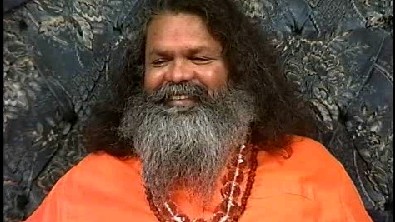
A satsang discourse on the duality of worldly joy and the singular refuge of divine grace.
"The joy of the joyous is very short, but the suffering of the joyous is longer."
"He can give you everything, but he can’t give you what he can give you. We need only confidence, that’s all."
The speaker reflects on the fleeting nature of worldly happiness, which is always paired with hidden sorrow, contrasting it with the endless joy of the divine. He proclaims Mahāprabhujī as the incarnate God and liberator, emphasizing that true peace is found only in unwavering devotion and surrender to this grace, using the metaphor of a seabird that must return to its ship in a vast ocean.
Filming location: Vép, Hungary
Science of chakras
1:40 - 2:56 (76 min)
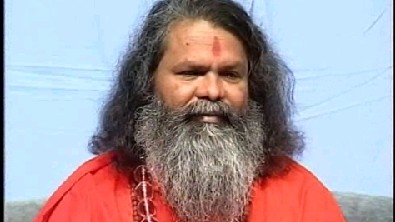
An introductory lecture on yoga philosophy, culminating in a practical demonstration for activating healing energy.
"Yoga means union—the union of the individual consciousness with the cosmic consciousness."
"In every creature, human or animal, where there is life, there is a light of God. That is God, the Creator of all creatures."
Swami Jyotirmayananda opens a discourse on "Kundalini and the Chakras" by defining yoga as a path to cosmic consciousness. He explains the journey of the soul, the yogic anatomy of energy channels (nāḍīs), and the system of chakras. The session includes a guided exercise to awaken the healing energy in one's palms, followed by practical tips for activating the Bindu chakra to improve eyesight and memory.
Filming location: Croatia
Confidence
3:00 - 3:53 (53 min)
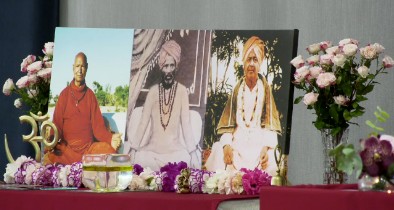
A spiritual discourse on the necessity of faith and commitment to a single path.
"If you meditate, concentrate, practice, perform prāṇāyāma, read the holy books—do everything—but there is no trust, it is futile."
"Ek saje sab saje, aur sab saje sab jāye. When you practice one, you will get all. And when you will try to do all, then you will get lost in all."
A spiritual teacher addresses his disciples, emphasizing unwavering faith and commitment to one chosen path as the foundation for all practice. He warns against the spiritual confusion of seeking multiple masters, using parables like a dog losing its bread by chasing its reflection. He discusses the lineage of masters like Alak Purījī and Devpurījī, and cautions against distractions like astrology, urging focused sādhanā.
Filming location: Zagreb, Croatia
Practice and eat healthy food
4:00 - 4:58 (58 min)
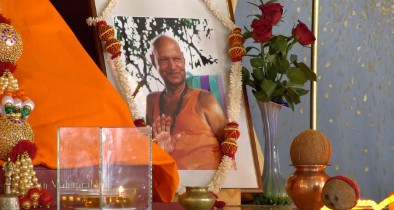
A spiritual discourse on yoga practice, holistic health, and traditional knowledge.
"Sarvāṅgāsana is very useful, very powerful, and especially, it is very good for the thyroid gland."
"We have everything with us, but to know how, that’s very important."
The lecturer leads a satsang, explaining the specific benefits and correct practice of postures like Sarvāṅgāsana and Viparītakaraṇī Mudrā. He expands into broader themes, lamenting the loss of traditional knowledge about European herbs and natural foods, and critiques modern lifestyles and medicine. The talk emphasizes the need for holistic understanding—of the body through appropriate yoga, and of nature through rediscovering local plants—for true health, weaving in personal anecdotes and spiritual reminders.
Filming location: Strilky, Czech Republic
Spiritual poems
5:05 - 5:55 (50 min)
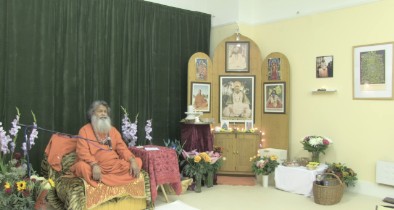
A discourse on spiritual writing, mindfulness, and awakening through a bhajan.
"One writer writes with the intellect and the present situation. The spiritual writer writes about all three times: past, present, and future."
"Chet means awake, be alert, be conscious. Don't run here and there in the world... You have to wake up and go inside."
The lecturer discusses the nature of spiritual writing, contrasting it with ordinary writing. He explains how saints compose bhajans and dohās from deep meditation and self-inquiry. Using the example of a bhajan by Holī Gurujī, he explores the theme of awakening from ignorance, urging listeners to use their human life for spiritual work. He shares a parable about a yogic king testing his courtiers' loyalty to illustrate how worldly attachments and promises are often betrayed.
Filming location: London, UK
Remembrance of old disciples to their beginning
6:00 - 7:41 (101 min)
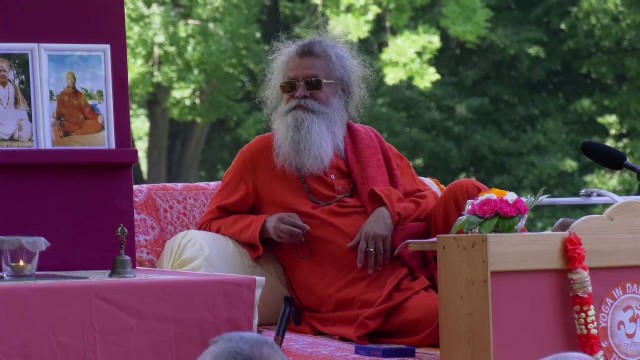
A satsang gathering where disciples share personal stories of meeting their guru and the transformative impact of his teachings.
"I looked to this window, and I saw a clear face, clear. I don't know who this is. For me, at that time, it seemed like Jesus."
"Swāmījī was saying... that the world is actually going down... I was listening for about five minutes, and I was bored. And then, at one point, something happened. They call it resonance."
Multiple disciples from Slovakia, the Czech Republic, Slovenia, and Hungary address Swāmījī (Viśvagurujī), recounting their first encounters with him and the Yoga in Daily Life system, often during the political changes of the late 1980s and early 1990s. They describe experiences of deep spiritual connection, receiving mantra initiation, and profound life changes, including shifts to vegetarianism and dedicated service. The common themes are gratitude, divine guidance, and the perceived miracles stemming from the guru-disciple relationship.
Filming location: Strilky, Czech Republic
Yoga in Daily Life is everywhere in the world
7:45 - 9:43 (118 min)
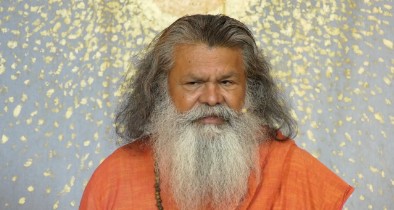
A satsang gathering featuring testimonies on the global spread of the Yoga in Daily Life system.
"Through Yoga in Daily Life, we are bringing everybody together. I think I need all of your help, perhaps to expand hospitality to Asia."
"Before meeting Yoga in Daily Life, I had a very strong desire in my heart... I thought about if there was a yoga system with a master where we could find the truth of life."
Swami Avatarpuri (Gurudev) hosts a session where disciples share their experiences. Dayāmātā (Matajī) speaks about introducing the system to China, facing a market dominated by gymnastic yoga. Her student, Chandra, shares her emotional journey from China to Europe and the transformative love found in the community. Other teachers from New Zealand, the USA, and Brazil also offer brief reflections. Gurudev concludes with teachings on connecting with the earth, practical yoga techniques like Agniṣār Kriyā, and a warning against the dangers of drugs and disconnection from nature.
Filming location: Strilky, Czech Republic
Gurupurnima Satsang with Vishwaguruji (1/2)
9:50 - 11:54 (124 min)
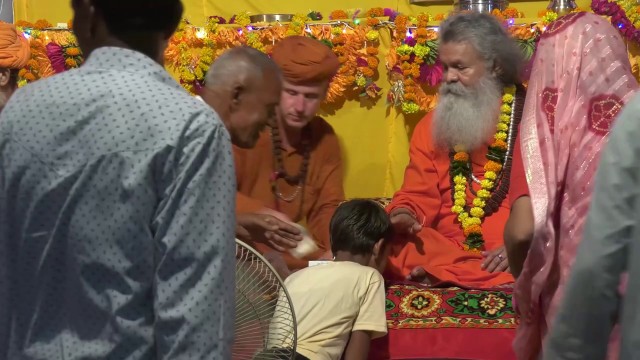
Gurupurnima Celebration with Vishwaguruji, Jadan Ashram, Pali, Rajasthan, India.
Practicing led by Vishwaguruji
12:00 - 12:39 (39 min)
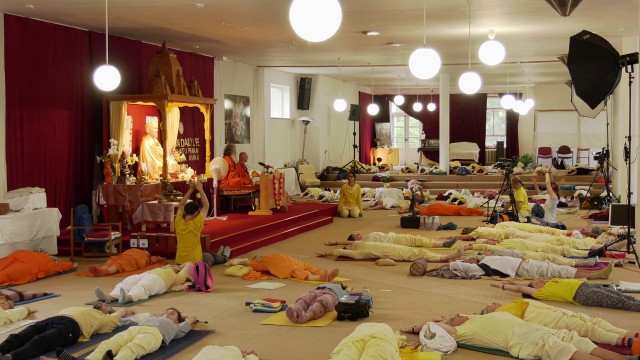
Morning satsang from Strilky Ashram, Czech Republic.
Nature of our Atma
12:45 - 13:50 (65 min)
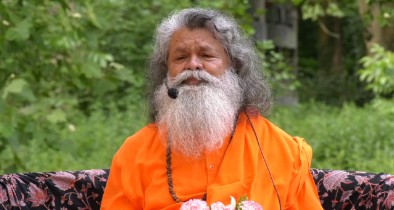
A spiritual discourse exploring the nature of mental habits (vṛtti) and the soul's (ātmā) oneness with the divine.
"Vṛtti is what you are doing. You have good food to eat. But after eating this and that, you go outside to eat some ice cream... So that is a vṛtti."
"Below is the ocean, Shiva, and this one drop is Jīva... Now, if this drop falls into the ocean, then this Jīva becomes Shiva."
Swami Vishwaguruji addresses a gathering, weaving together teachings on discipline, the nature of the mind, and the ultimate unity of the self. He uses anecdotes, like the reputation of his disciples and a story about a dinner party, to illustrate vṛtti. He then explains the soul's journey using the metaphor of a water droplet returning to the ocean (Śiva), discusses the concept of Svayambhū (self-manifested divinity), and concludes with prayers and mantras emphasizing meditation and inner purity.
Filming location: Vép, Hungary
Gurupurnima Satsang with Vishwaguruji (2/2)
13:55 - 15:51 (116 min)
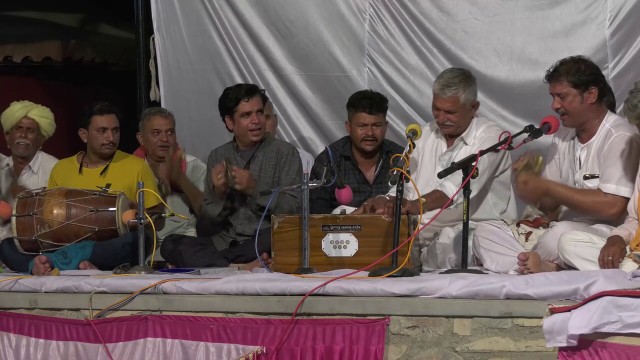
Gurupurnima satsang with Vishwaguruji from Jadan Ashram, Rajasthan, India.
Quality of yoga is missing
15:55 - 16:55 (60 min)
A morning satsang on the purpose of human life and authentic spiritual practice.
"Human life is rare. It is the last milestone for divine realization or becoming one with God."
"Yoga practice is good for our health, but then we should do the system scientifically. Never torture your body, never force your body."
The lecturer addresses a global audience, contrasting superficial modern yoga with the deep, enduring practice of true tapasyā (austerity). He discusses the rarity of human birth, the cycle of karma, and the need to cultivate qualities that lead to light, using examples from scripture, anecdotes of ancient sādhus, and everyday situations to illustrate the principles of endurance, forgiveness, and connecting to cosmic energy.
Filming location: USA
How to overcome the obstacles of practicing
17:00 - 18:18 (78 min)
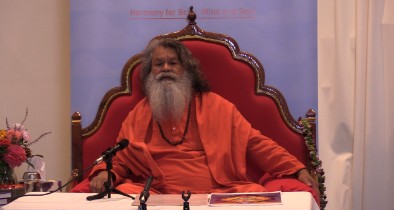
A spiritual discourse on the chakra system, focusing on the Maṇipūra chakra and the journey of self-mastery.
"My first master was my father, who imparted immense knowledge in a simple way. Through his instruction, I found my path."
"Strive for oneness, purity, without blemish. Do not stain your body."
Swami Maheśvarānand leads a satsang, weaving teachings on the manipura (navel) chakra with personal stories from his childhood and path to sannyas. He explains the symbolic animals and deities within each chakra, the role of the guṇas (qualities), and the necessity of a guru's guidance. The talk emphasizes practical discipline, advocating for specific prāṇāyāma techniques like Kapālabhāti and Bhastrikā to awaken inner energy, and concludes with a blessing.
Filming location: Wellington, New Zealand
Satsang from Spisska Nova ves
18:25 - 19:36 (71 min)
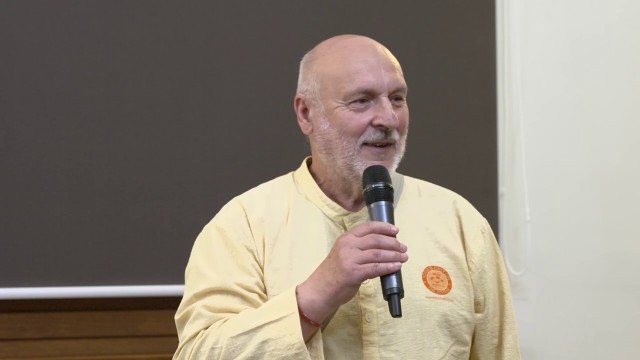
Evening satsang with Vishwaguruji from Spisska Nova Ves, Slovak Republic. Bhajan singing. Talk of the bhaktas about the construction and opening ceremony of the Om Ashram.
From darkness to light
19:40 - 20:55 (75 min)
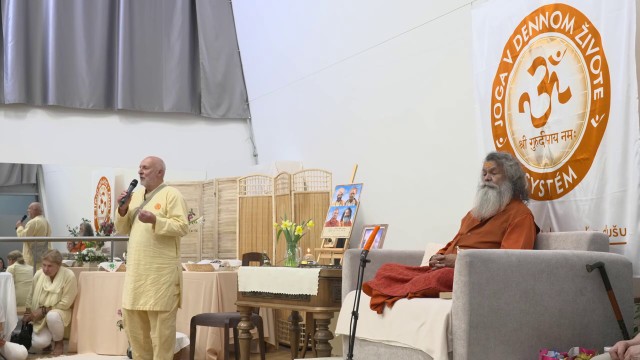
Evening satsang with Viswhaguruji from Presov, Slovak Republic. Bhajan singing. Talk about the meaning of the word Guru.
Bhajan singing on the Satsang
21:00 - 21:27 (27 min)
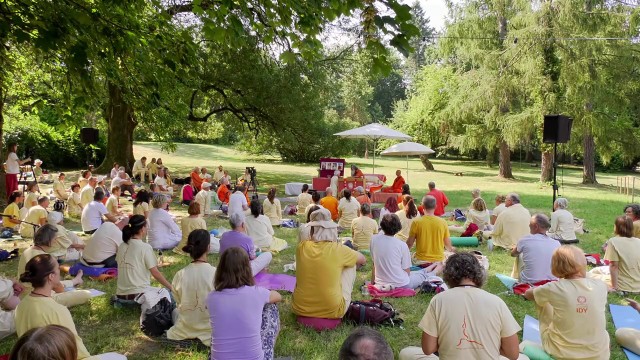
A devotional introduction and singing of a traditional bhajan.
"We can sing a very beautiful bhajan from Swāmī Lālā Nānjī. It is called Manarata Nāma, and it means, 'Oh my mind, repeat the name of God, repeat your mantra.'"
"Give your body and mind to Sāddhā Gurudeva, and he will destroy all your doubts and all your bad qualities. In the holy lotus feet of Satguru Deva reside all holy pilgrimages."
The speaker introduces a lesser-sung bhajan by Swāmī Lālā Nānjī, emphasizing the urgency of spiritual practice in human life. They explain the bhajan's theme of repeating the divine name and extol the glory and essential role of the true Guru in guiding devotees across the ocean of worldly existence. The session includes singing verses from the bhajan and concludes with salutations.
Filming location: Strilky, Czech Republic
Atmadarshan
22:10 - 22:52 (42 min)
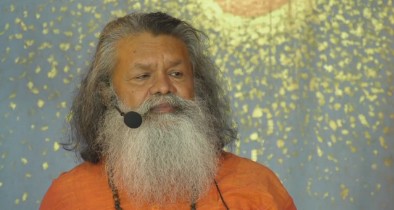
A satsang discourse on the grace and vision of the Guru, continuing a series on the bhajan "Gurudev Darśan Dhan Ho."
"Jasī dṛṣṭi, vasī sṛṣṭi. The creation you see corresponds to your feelings and perception—your dṛṣṭi shapes your sṛṣṭi."
"Gurudev darśan dāna ho... When you have the darśan of Gurudeva, then all holy pilgrim places are accomplished."
The speaker explores the profound concept of darśan (vision/sight), distinguishing between uplifting and fearful sights. He explains how our perception shapes our reality and extends the principle to the grace found in seeing the Guru, the Guru principle (Guru Tattva), and each other. The talk includes warnings about the pitfalls of miracle-working (siddhis) as a form of māyā, and culminates in singing and explaining verses from the devotional bhajan, emphasizing the Guru's role as the embodiment of all pilgrimage and divine blessing.
Filming location: Strilky, Czech Republic
Education for Flexible Identities
23:00 - 23:15 (15 min)
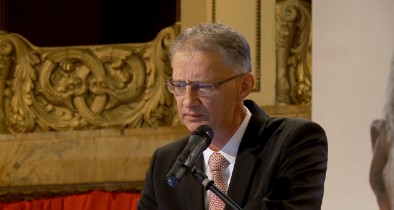
A conference presentation on education, identity, and spiritual philosophy.
"If you are not able to recognize the guru in yourself, how can you recognize your guru in another person?"
"We have to introduce a new... concept: that the other person is not an obstacle but a necessity for me to live my freedom."
The speaker addresses the conference, exploring the themes of self-education and flexible identity. He argues that one must integrate the roles of teacher and learner, awaken self-education within, and move beyond systems that create fixed identities. He advocates for a concept of freedom where others are necessary for one's own liberty, and concludes by referencing Masaru Emoto's water crystal experiments to illustrate the impact of thought and words.
Filming location: Prague, Czech Republic
This ashram is your work
23:20 - 23:55 (35 min)
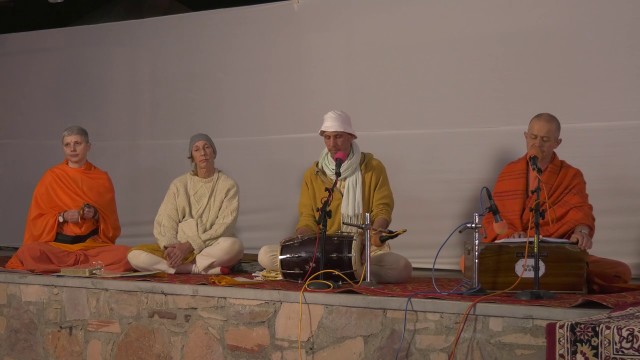
Evening satsang with Vishwaguruji from Jadan Ashram, Rajasthan, India. Bhajan singing. Welcoming words from Vishwaguruji. I was so happy how we made this Ashram, people from many many countries. Indian people are also coming and see how great it is.
American
Australian