
European
Bhajan singing in the presence of Vishwaguruji
0:05 - 1:40 (95 min)
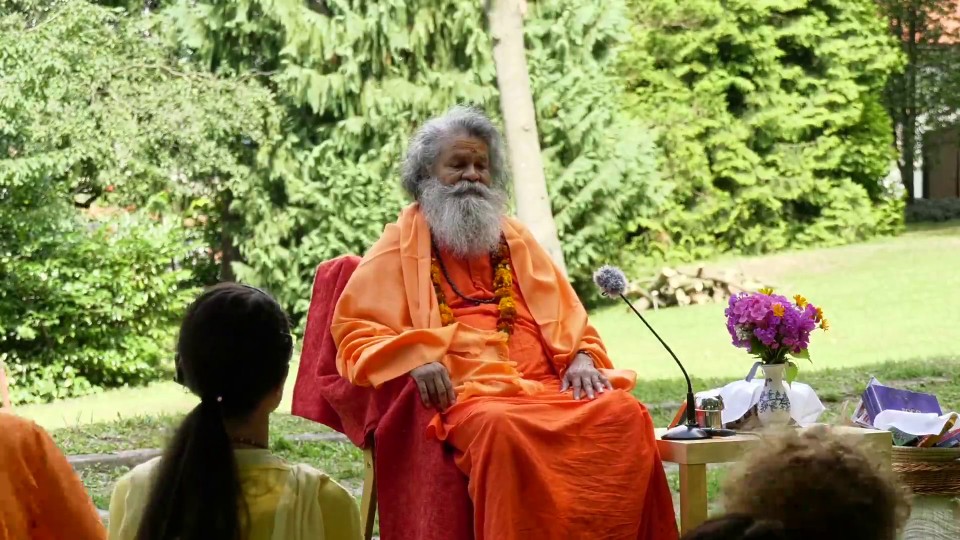
Morning satsang with Vishwaguruji from Strilky Ashram, Czech Republic.
The wisdom of Chakras
1:45 - 3:07 (82 min)
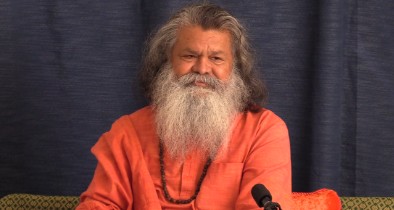
A yoga and meditation session focusing on hand mudrās, chakras, and daily spiritual practice.
"Symbolically, as a mudrā in yogic science, the thumb represents the Supreme... The index finger represents our self. Our aim is to become one."
"Research in many European hospitals shows they practice this... When we adopt this mudrā, peace comes automatically."
A spiritual teacher instructs the group in the symbolic and practical use of a hand mudrā representing the union of the individual soul (Jīvātmā) with the supreme consciousness (Paramātmā). He explains its calming effect on the nervous system and its use in greeting and prayer. The teaching expands into managing daily stress, the influence of thoughts and words on the chakras, and practical remedies for ailments like headaches. The session includes chanting the peace mantra and other prayers, concluding with advice on spiritual study.
Filming location: Auckland, New Zealand
The coronation of Swami Avatarpuri
3:15 - 4:09 (54 min)
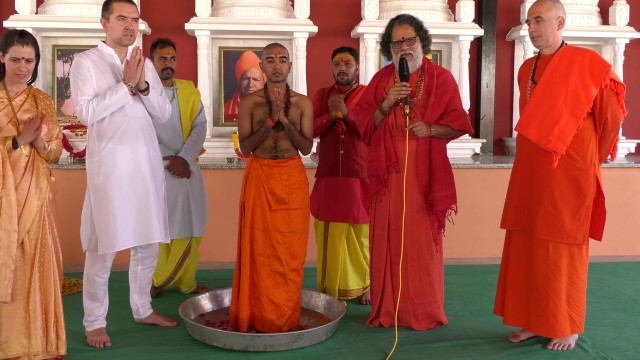
Morning program from Bhari Khatu, Rajasthan, India. On the occasion of Holiguruji's Mahasamdhi day, Swami Avatarpuri got the title that he becomes the successor of Vishwaguruji. Swami Avatarpuri had a ritual bath. Then he showed puja for Vishwaguruji by washing his feet. In the end, Swami Avatarpuri got a traditional cap and a sal from Vishwaguruji and many other sals from sanyasis.
Learning from Guruji
4:15 - 5:54 (99 min)
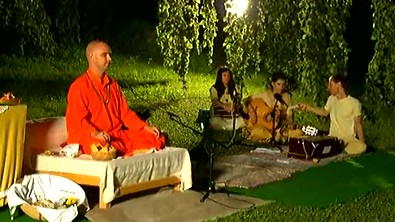
Evening Satsang with Mahamandaleshwar Swami Jasrajpuriji at Strilky Ashram, Czech Republic
Practicing of the system 'Yoga in Daily Life', Level 1 - Part 5
6:00 - 7:06 (66 min)
Practicing of the system "Yoga in Daily Life", Level 1 - Part 5, in Om Vishwa Deep Gurukul Swami Maheshwaranand Ashram, Jadan, Rajasthan, India on 24th of October 2009.
Live webcast from Raumati Beach Ashram
6:15 - 7:45 (90 min)
Evening satsang with Avatarpuri from Kapiti, Raumati Beach, New Zealand.
My Property Is In My Heart
7:10 - 8:25 (75 min)
Evening Satsang with Mahamandaleshwar Swami Jasrajpuriji at Strilky Ashram, Czech Republic
Navel is the centre of our body
8:30 - 9:14 (44 min)
A spiritual discourse on the human body as a divine temple and the path of inner sound (nāda).
"Our body is our temple. How we take care of it, how we feel, and how we live in it—that is our body."
"Nāda, the sound. Nāda, the form of Parabrahma. That is Parabrahma. That is the sound, Parabrahma, Puruṣottam Bhagavān. That we come to."
Swami Sukh Sagar leads a satsang, elaborating on the concept of the body as God's temple and the central role of the navel as the source of the primal sound (nāda). He explains the journey of consciousness through the chakras, emphasizing the practice of focusing on the navel to awaken the body's resonance. The talk includes a guided moment for listeners to place a hand on the navel and concludes with prayers and chants to the Guru lineage.
Filming location: Strilky, Czech Republic
Victory Of The Divine
9:20 - 10:09 (49 min)
Morning Session from Strilky Ashram, Czech Republic. Jaya means victory or glory. It is the victory of the divine over the negative or devil energy. Two kinds of energies are ruling our being. This are the good or bad energies. A sin is the result of creating pain to others. This means doing bad to anyone in physical, mental, intellectual, political, ethical,economical or emotional way. The positive should dominate in our life. Searching where we can help and serve, a universal thinking and surrendering will help us to realize God within and then we will be happy.
Human mission is to realize God
10:15 - 11:08 (53 min)
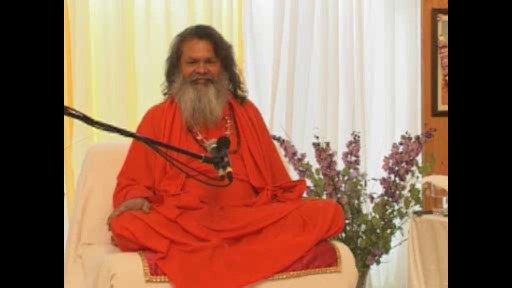
A satsang on the mission of human life and spiritual education.
"To be born, eat, drink, sleep, and procreate is not the sole aim of human life; other creatures are also expert at this."
"Rahiman dhāgā prem kā, mat todo chitkāya, toḍā phir jūḍe nahīṁ, jūḍe gāṁṭ paḍ jāya. (The thread of love, do not break it out of some doubt or anger. Once broken, it cannot be joined again. If joined, there will be a knot.)"
Swami Maheshwarananda welcomes parents and attendees, dedicating the gathering to supporting a disciple's new yoga center. He explores the unique purpose of human life, emphasizing the cultivation of kindness, forgiveness, and understanding. The discourse outlines three essential forms of education: from parents and family, from school for intellectual development, and spiritual knowledge (parā vidyā). He stresses that the ultimate human mission is to realize God and unity, advocating for a life of selfless service, maintaining loving relationships, and building a legacy of good deeds.
Filming location: London, UK
Abhishek is worship of the entire Universe
11:15 - 11:51 (36 min)
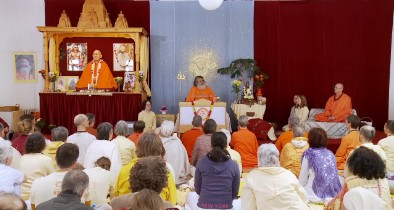
Lecture by Vishwaguru Mahamandaleshwar Paramhans Swami Maheshwarananda, Strilky Ashram, Czech Republic. Shivalingam represents the universe itself - full of consciousness, energy, life. When we are doing abhishek, we are worshipping the whole universe.
How could Tulsidas see Rama?
11:55 - 13:03 (68 min)
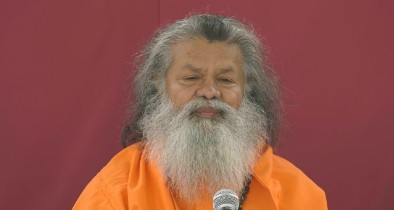
A spiritual discourse exploring the nature of the soul, divine vision, and the sanctity of the human body.
"The soul that comes into this mortal world is, in one way, caught in this body. It neither wants to go out of it nor likes being in it."
"In every temple is your statue, but I cannot see your face, my Lord... Therefore, we have to understand what human body God has given us. And that is within us, but we cannot see it."
The speaker delivers a teaching on the eternal soul (Ātmā) and the human condition, questioning common beliefs about the afterlife and divine perception. He narrates the transformative stories of the bandit-turned-sage Vālmīki and the poet Tulsīdās's missed encounter with Lord Rāma to illustrate the power of mantra and the need for spiritual alertness. The discourse emphasizes the human body as a sacred temple, discusses the law of karma, and concludes with a call for self-knowledge and devotion through chanting.
Filming location: Slovakia
The Final Satsaṅg
13:10 - 13:58 (48 min)
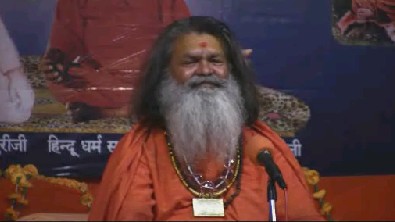
A final satsang discourse on spiritual practice, destiny, and devotion.
"Our good or bad destiny is created by our actions and deeds." "Only the one who is fortunate will get it, and the one who is sinful will not get it."
A spiritual teacher addresses the gathering on their last day, reflecting on the recent Kumbh Mela and the nature of grace. He explains concepts like destiny (karma), the two types of seekers (Lakṣārthī and Vācaratī), and the importance of sincere devotion over selfish desire. Using parables about a sandalwood fly, a crow and a swan, and a test with a moong grain, he illustrates how past actions and inner purity determine one's attraction to truth. He stresses the need for unity, criticizes casteism and hypocrisy, and concludes by emphasizing that true meditation and knowledge come only through a Guru's grace.
Filming locations: To be determined.
Our source is Alakhpuriji
14:05 - 14:57 (52 min)
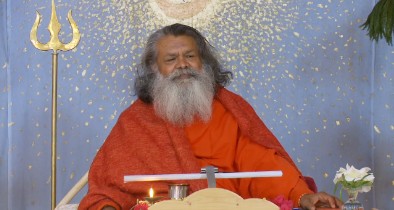
A spiritual discourse on the path of yoga and inner mastery, emphasizing the necessity of a guru and disciplined practice.
"After training comes perfection. After perfection, you practice. Then you can teach others. It is the same in yoga."
"Without a master, you cannot be perfect... The perfection in that reality, in the real meaning of what yoga is... your work cannot be completed without the Master."
The teacher, referred to as Śrīdīp Nārāyaṇa Bhagavān, explains that true mastery in yoga requires perfection in physical and breath practices before one can teach, paralleling the long training of a medical specialist. He stresses that real mastery involves controlling the senses and inner desires through the five kośas (sheaths), which is impossible without a guru's guidance. He shares a personal account of a Himalayan pilgrimage to the sacred region of Alak Purījī, describing the extreme environment and spiritual energy encountered there, to illustrate the depth of commitment required on the path.
Filming location: Strilky, Czech Republic
Yoga and meditation
15:05 - 16:09 (64 min)
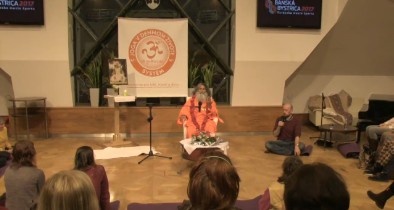
Public lecture with Vishwaguruji from Banska Bystrica, Slovakia. Life is a journey. Meditation is the path to our aim. The roots of the mantra lie in the heart. The heart and the consciousness is pure, thoughts can be different. They create other quality in our whole being. We should master this process.
Use it, or you will lose it
16:15 - 17:01 (46 min)

Evening Satsang with Vishwaguruji from Jadan Ashram , Rajasthan, India. Plants and animals follow strictly their nature. Human has more freedom but needs teacher, Guru to develop. We have to learn a lot. Holy means good, like Bhagavad Gita. We need to reach the cosmic consciousness, the explanation of what means that. Our mind has immense power, and it should be controlled by exercise. The space is fine and clear, without problems. The story of Holy Guruji about the three brothers. They found the treasure that was hidden in the wall. Practice yoga and prathana, or you will lose everything. Try to catch the horizon.
The Power of Hatha Yoga and the Journey Within
17:05 - 17:42 (37 min)
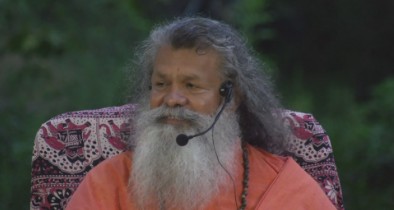
A discourse on the classical definition and power of Haṭha Yoga.
"A Haṭha Yogī endures all kinds of difficulties and never breaks their rules."
"The Haṭha Yogī is above every other yogī, if you understand. But of course, this is not merely doing Netī and having water come out; the Haṭha Yogī is doing sādhanā."
Swami Ji explains the profound discipline of Haṭha Yoga, distinguishing it from the common Western reduction to mere postures. He narrates a story where even Lord Śiva cannot impose a boon on a renounced Haṭha Yogī, illustrating the yogī's supreme willpower. The talk details the six purification techniques (ṣaṭkarma) and clarifies that Haṭha Yoga's true aim is to purify the nāḍīs (energy channels) to awaken Kuṇḍalinī and achieve samādhi.
Filming location: Vép, Hungary
Gurudev always works for his bhaktas
17:50 - 18:48 (58 min)
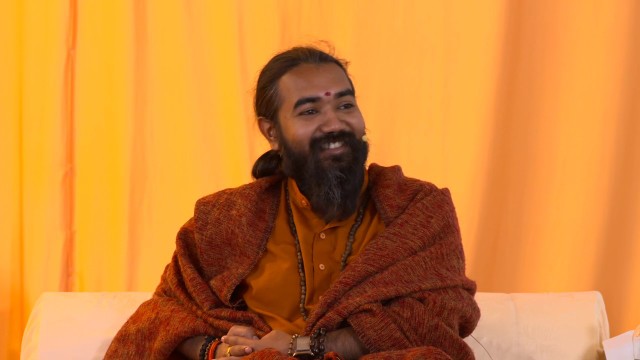
Evening satsang from Strilky Ashram, Czech Republic. Atma is immortal. The story of Naciketa and Yanaraj. Yamaraj tells Nacikata the nature of the Atman. Gurudev forms us like a smith forms the iron into a beautiful shape. But we need patience. Gurudev helps us attain liberation. A story of a man who didn’t want to go with his Guru. If we solve one problem the same time we create two other. Only surrender to Gurudev can really solve our problems.
We must become one
18:50 - 19:13 (23 min)
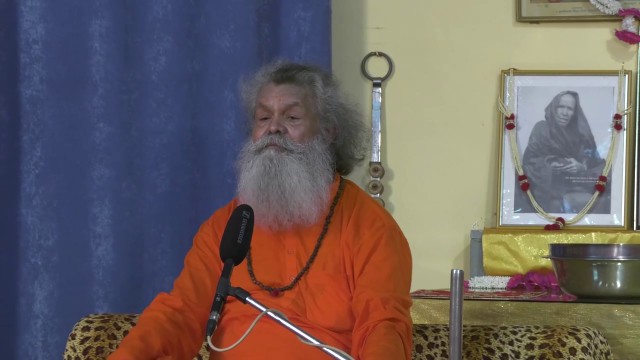
Evening satsang with Vishwaguruji from Jadan Ashram, Rajasthan, India. Shanti means peace. When we sleep, we are not conscious of ourselves. Then we leave our body. Our body sleeps here while we are in Australia. We may die in our sleep and then wake up. Guruji practised with the mala day and night, even in his sleep. We must become one, then we will be like light.
Only wisdom can digest ego
19:15 - 20:13 (58 min)
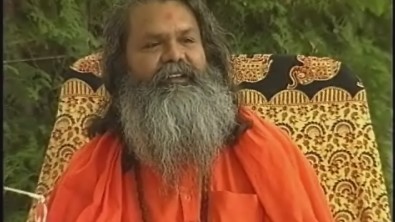
Lecture from Vep, Hungary
Do not live a selfish life
20:20 - 20:49 (29 min)
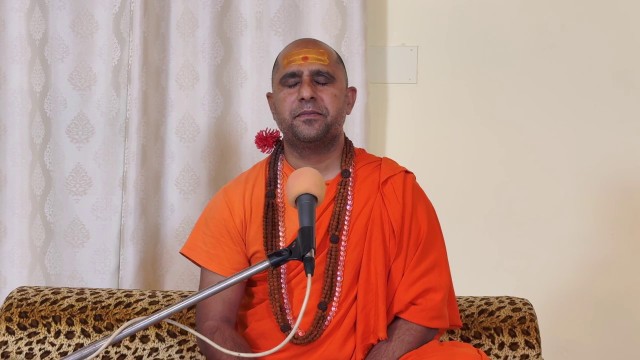
A discourse on the divine origin and essence of the Vedas.
"The Vedas mark the beginning, the dawn of human civilization on this planet. The divine knowledge received at that time to advance human civilization is called the Vedas."
"Ekam Sad Viprā Bahudā Vadanti... The Truth is one, God is one... But wise people... describe God in different ways according to their opinion and knowledge."
A speaker addresses an assembly at the Om Ashram, offering salutations to the guru lineage. He expounds on the Vedas as divine knowledge given for all humanity, explaining their four divisions—Ṛgveda, Yajurveda, Sāmaveda, and Atharvaveda—and their core teachings on oneness, truth, devotion, and humanity's purpose to protect and enhance the world. He emphasizes that the paramparā's bhajans distill this Vedic essence for practical devotion.
Filming location: Jadan, Rajasthan, India
Do not live a selfish life
20:55 - 21:24 (29 min)
A discourse on the divine origin and essence of the Vedas.
"The Vedas mark the beginning, the dawn of human civilization on this planet. The divine knowledge received at that time to advance human civilization is called the Vedas."
"Ekam Sad Viprā Bahudā Vadanti... The Truth is one, God is one... But wise people... describe God in different ways according to their opinion and knowledge."
A speaker addresses an assembly at the Om Ashram, offering salutations to the guru lineage. He expounds on the Vedas as divine knowledge given for all humanity, explaining their four divisions—Ṛgveda, Yajurveda, Sāmaveda, and Atharvaveda—and their core teachings on oneness, truth, devotion, and humanity's purpose to protect and enhance the world. He emphasizes that the paramparā's bhajans distill this Vedic essence for practical devotion.
Filming location: Jadan, Rajasthan, India
Bhajans from Strilky
21:30 - 21:54 (24 min)
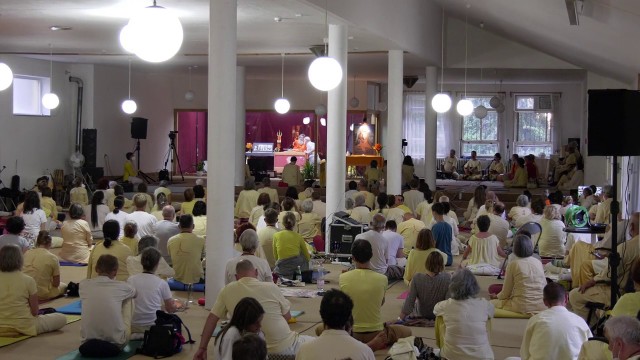
Evening satsang with Vishwaguruji from Strilky Ashram, Czech Republic.
Bhajan singing from Vep
22:00 - 22:23 (23 min)
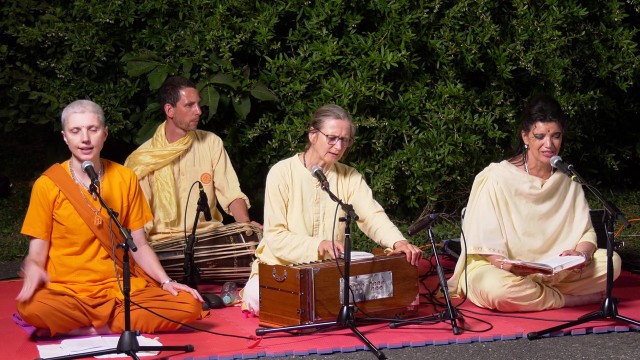
Morning satsang with Vishwaguruji from Vep, Hungary. Bhajan singing.
Bhajans from Rijeka
22:30 - 22:58 (28 min)
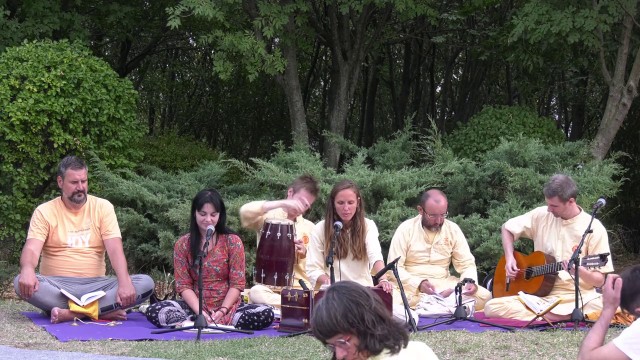
Evening satsang with Vishwaguruji from Rijeka Ashram, Croatia.
Bhajan evening in Jadan Ashram
23:05 - 23:47 (42 min)
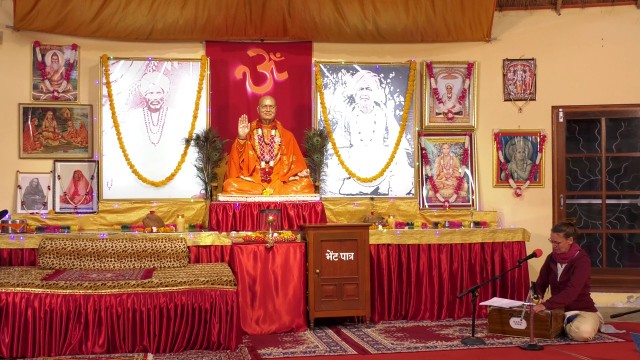
Evening satsang from Jadan Ashram, Rajasthan, India. Bhajan singing
Bhajan singing from Jadan Ashram
23:55 - 0:41 (46 min)
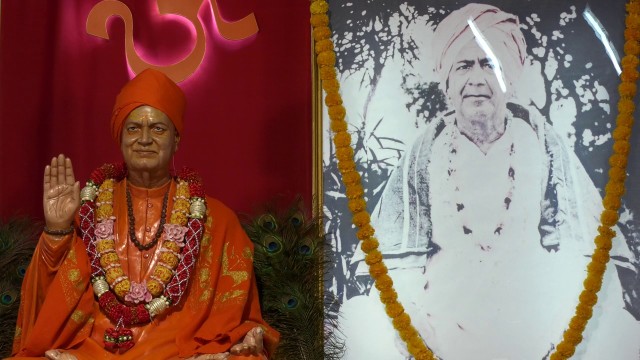
Evening satsang with Vishwaguruji from Jadan Ashram, Rajasthan, India.
American
Bhajans from Strilky Ashram
4:25 - 5:59 (94 min)
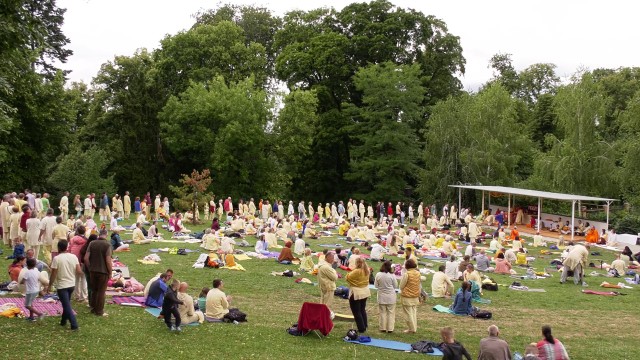
Morning satsang from Strilky Ashram, Czech Republic.
Bhajan singing in the presence of Vishwaguruji
6:05 - 7:40 (95 min)
Morning satsang with Vishwaguruji from Strilky Ashram, Czech Republic.
Live webcast from Raumati Beach Ashram
6:15 - 7:45 (90 min)
Evening satsang with Avatarpuri from Kapiti, Raumati Beach, New Zealand.
The wisdom of Chakras
7:45 - 9:07 (82 min)
A yoga and meditation session focusing on hand mudrās, chakras, and daily spiritual practice.
"Symbolically, as a mudrā in yogic science, the thumb represents the Supreme... The index finger represents our self. Our aim is to become one."
"Research in many European hospitals shows they practice this... When we adopt this mudrā, peace comes automatically."
A spiritual teacher instructs the group in the symbolic and practical use of a hand mudrā representing the union of the individual soul (Jīvātmā) with the supreme consciousness (Paramātmā). He explains its calming effect on the nervous system and its use in greeting and prayer. The teaching expands into managing daily stress, the influence of thoughts and words on the chakras, and practical remedies for ailments like headaches. The session includes chanting the peace mantra and other prayers, concluding with advice on spiritual study.
Filming location: Auckland, New Zealand
The coronation of Swami Avatarpuri
9:15 - 10:09 (54 min)
Morning program from Bhari Khatu, Rajasthan, India. On the occasion of Holiguruji's Mahasamdhi day, Swami Avatarpuri got the title that he becomes the successor of Vishwaguruji. Swami Avatarpuri had a ritual bath. Then he showed puja for Vishwaguruji by washing his feet. In the end, Swami Avatarpuri got a traditional cap and a sal from Vishwaguruji and many other sals from sanyasis.
Learning from Guruji
10:15 - 11:54 (99 min)
Evening Satsang with Mahamandaleshwar Swami Jasrajpuriji at Strilky Ashram, Czech Republic
Practicing of the system 'Yoga in Daily Life', Level 1 - Part 5
12:00 - 13:06 (66 min)
Practicing of the system "Yoga in Daily Life", Level 1 - Part 5, in Om Vishwa Deep Gurukul Swami Maheshwaranand Ashram, Jadan, Rajasthan, India on 24th of October 2009.
My Property Is In My Heart
13:10 - 14:25 (75 min)
Evening Satsang with Mahamandaleshwar Swami Jasrajpuriji at Strilky Ashram, Czech Republic
Navel is the centre of our body
14:30 - 15:14 (44 min)
A spiritual discourse on the human body as a divine temple and the path of inner sound (nāda).
"Our body is our temple. How we take care of it, how we feel, and how we live in it—that is our body."
"Nāda, the sound. Nāda, the form of Parabrahma. That is Parabrahma. That is the sound, Parabrahma, Puruṣottam Bhagavān. That we come to."
Swami Sukh Sagar leads a satsang, elaborating on the concept of the body as God's temple and the central role of the navel as the source of the primal sound (nāda). He explains the journey of consciousness through the chakras, emphasizing the practice of focusing on the navel to awaken the body's resonance. The talk includes a guided moment for listeners to place a hand on the navel and concludes with prayers and chants to the Guru lineage.
Filming location: Strilky, Czech Republic
Victory Of The Divine
15:20 - 16:09 (49 min)
Morning Session from Strilky Ashram, Czech Republic. Jaya means victory or glory. It is the victory of the divine over the negative or devil energy. Two kinds of energies are ruling our being. This are the good or bad energies. A sin is the result of creating pain to others. This means doing bad to anyone in physical, mental, intellectual, political, ethical,economical or emotional way. The positive should dominate in our life. Searching where we can help and serve, a universal thinking and surrendering will help us to realize God within and then we will be happy.
Human mission is to realize God
16:15 - 17:08 (53 min)
A satsang on the mission of human life and spiritual education.
"To be born, eat, drink, sleep, and procreate is not the sole aim of human life; other creatures are also expert at this."
"Rahiman dhāgā prem kā, mat todo chitkāya, toḍā phir jūḍe nahīṁ, jūḍe gāṁṭ paḍ jāya. (The thread of love, do not break it out of some doubt or anger. Once broken, it cannot be joined again. If joined, there will be a knot.)"
Swami Maheshwarananda welcomes parents and attendees, dedicating the gathering to supporting a disciple's new yoga center. He explores the unique purpose of human life, emphasizing the cultivation of kindness, forgiveness, and understanding. The discourse outlines three essential forms of education: from parents and family, from school for intellectual development, and spiritual knowledge (parā vidyā). He stresses that the ultimate human mission is to realize God and unity, advocating for a life of selfless service, maintaining loving relationships, and building a legacy of good deeds.
Filming location: London, UK
Abhishek is worship of the entire Universe
17:15 - 17:51 (36 min)
Lecture by Vishwaguru Mahamandaleshwar Paramhans Swami Maheshwarananda, Strilky Ashram, Czech Republic. Shivalingam represents the universe itself - full of consciousness, energy, life. When we are doing abhishek, we are worshipping the whole universe.
How could Tulsidas see Rama?
17:55 - 19:03 (68 min)
A spiritual discourse exploring the nature of the soul, divine vision, and the sanctity of the human body.
"The soul that comes into this mortal world is, in one way, caught in this body. It neither wants to go out of it nor likes being in it."
"In every temple is your statue, but I cannot see your face, my Lord... Therefore, we have to understand what human body God has given us. And that is within us, but we cannot see it."
The speaker delivers a teaching on the eternal soul (Ātmā) and the human condition, questioning common beliefs about the afterlife and divine perception. He narrates the transformative stories of the bandit-turned-sage Vālmīki and the poet Tulsīdās's missed encounter with Lord Rāma to illustrate the power of mantra and the need for spiritual alertness. The discourse emphasizes the human body as a sacred temple, discusses the law of karma, and concludes with a call for self-knowledge and devotion through chanting.
Filming location: Slovakia
The Final Satsaṅg
19:10 - 19:58 (48 min)
A final satsang discourse on spiritual practice, destiny, and devotion.
"Our good or bad destiny is created by our actions and deeds." "Only the one who is fortunate will get it, and the one who is sinful will not get it."
A spiritual teacher addresses the gathering on their last day, reflecting on the recent Kumbh Mela and the nature of grace. He explains concepts like destiny (karma), the two types of seekers (Lakṣārthī and Vācaratī), and the importance of sincere devotion over selfish desire. Using parables about a sandalwood fly, a crow and a swan, and a test with a moong grain, he illustrates how past actions and inner purity determine one's attraction to truth. He stresses the need for unity, criticizes casteism and hypocrisy, and concludes by emphasizing that true meditation and knowledge come only through a Guru's grace.
Filming locations: To be determined.
Our source is Alakhpuriji
20:05 - 20:57 (52 min)
A spiritual discourse on the path of yoga and inner mastery, emphasizing the necessity of a guru and disciplined practice.
"After training comes perfection. After perfection, you practice. Then you can teach others. It is the same in yoga."
"Without a master, you cannot be perfect... The perfection in that reality, in the real meaning of what yoga is... your work cannot be completed without the Master."
The teacher, referred to as Śrīdīp Nārāyaṇa Bhagavān, explains that true mastery in yoga requires perfection in physical and breath practices before one can teach, paralleling the long training of a medical specialist. He stresses that real mastery involves controlling the senses and inner desires through the five kośas (sheaths), which is impossible without a guru's guidance. He shares a personal account of a Himalayan pilgrimage to the sacred region of Alak Purījī, describing the extreme environment and spiritual energy encountered there, to illustrate the depth of commitment required on the path.
Filming location: Strilky, Czech Republic
Yoga and meditation
21:05 - 22:09 (64 min)
Public lecture with Vishwaguruji from Banska Bystrica, Slovakia. Life is a journey. Meditation is the path to our aim. The roots of the mantra lie in the heart. The heart and the consciousness is pure, thoughts can be different. They create other quality in our whole being. We should master this process.
Use it, or you will lose it
22:15 - 23:01 (46 min)
Evening Satsang with Vishwaguruji from Jadan Ashram , Rajasthan, India. Plants and animals follow strictly their nature. Human has more freedom but needs teacher, Guru to develop. We have to learn a lot. Holy means good, like Bhagavad Gita. We need to reach the cosmic consciousness, the explanation of what means that. Our mind has immense power, and it should be controlled by exercise. The space is fine and clear, without problems. The story of Holy Guruji about the three brothers. They found the treasure that was hidden in the wall. Practice yoga and prathana, or you will lose everything. Try to catch the horizon.
The Power of Hatha Yoga and the Journey Within
23:05 - 23:42 (37 min)
A discourse on the classical definition and power of Haṭha Yoga.
"A Haṭha Yogī endures all kinds of difficulties and never breaks their rules."
"The Haṭha Yogī is above every other yogī, if you understand. But of course, this is not merely doing Netī and having water come out; the Haṭha Yogī is doing sādhanā."
Swami Ji explains the profound discipline of Haṭha Yoga, distinguishing it from the common Western reduction to mere postures. He narrates a story where even Lord Śiva cannot impose a boon on a renounced Haṭha Yogī, illustrating the yogī's supreme willpower. The talk details the six purification techniques (ṣaṭkarma) and clarifies that Haṭha Yoga's true aim is to purify the nāḍīs (energy channels) to awaken Kuṇḍalinī and achieve samādhi.
Filming location: Vép, Hungary
Gurudev always works for his bhaktas
23:50 - 0:48 (58 min)
Evening satsang from Strilky Ashram, Czech Republic. Atma is immortal. The story of Naciketa and Yanaraj. Yamaraj tells Nacikata the nature of the Atman. Gurudev forms us like a smith forms the iron into a beautiful shape. But we need patience. Gurudev helps us attain liberation. A story of a man who didn’t want to go with his Guru. If we solve one problem the same time we create two other. Only surrender to Gurudev can really solve our problems.
Australian
Live webcast from Raumati Beach Ashram
6:15 - 7:45 (90 min)
Evening satsang with Avatarpuri from Kapiti, Raumati Beach, New Zealand.
Bhajans from Strilky Ashram
10:25 - 11:59 (94 min)
Morning satsang from Strilky Ashram, Czech Republic.
Bhajan singing in the presence of Vishwaguruji
12:05 - 13:40 (95 min)
Morning satsang with Vishwaguruji from Strilky Ashram, Czech Republic.
The wisdom of Chakras
13:45 - 15:07 (82 min)
A yoga and meditation session focusing on hand mudrās, chakras, and daily spiritual practice.
"Symbolically, as a mudrā in yogic science, the thumb represents the Supreme... The index finger represents our self. Our aim is to become one."
"Research in many European hospitals shows they practice this... When we adopt this mudrā, peace comes automatically."
A spiritual teacher instructs the group in the symbolic and practical use of a hand mudrā representing the union of the individual soul (Jīvātmā) with the supreme consciousness (Paramātmā). He explains its calming effect on the nervous system and its use in greeting and prayer. The teaching expands into managing daily stress, the influence of thoughts and words on the chakras, and practical remedies for ailments like headaches. The session includes chanting the peace mantra and other prayers, concluding with advice on spiritual study.
Filming location: Auckland, New Zealand
The coronation of Swami Avatarpuri
15:15 - 16:09 (54 min)
Morning program from Bhari Khatu, Rajasthan, India. On the occasion of Holiguruji's Mahasamdhi day, Swami Avatarpuri got the title that he becomes the successor of Vishwaguruji. Swami Avatarpuri had a ritual bath. Then he showed puja for Vishwaguruji by washing his feet. In the end, Swami Avatarpuri got a traditional cap and a sal from Vishwaguruji and many other sals from sanyasis.
Learning from Guruji
16:15 - 17:54 (99 min)
Evening Satsang with Mahamandaleshwar Swami Jasrajpuriji at Strilky Ashram, Czech Republic
Practicing of the system 'Yoga in Daily Life', Level 1 - Part 5
18:00 - 19:06 (66 min)
Practicing of the system "Yoga in Daily Life", Level 1 - Part 5, in Om Vishwa Deep Gurukul Swami Maheshwaranand Ashram, Jadan, Rajasthan, India on 24th of October 2009.
My Property Is In My Heart
19:10 - 20:25 (75 min)
Evening Satsang with Mahamandaleshwar Swami Jasrajpuriji at Strilky Ashram, Czech Republic
Navel is the centre of our body
20:30 - 21:14 (44 min)
A spiritual discourse on the human body as a divine temple and the path of inner sound (nāda).
"Our body is our temple. How we take care of it, how we feel, and how we live in it—that is our body."
"Nāda, the sound. Nāda, the form of Parabrahma. That is Parabrahma. That is the sound, Parabrahma, Puruṣottam Bhagavān. That we come to."
Swami Sukh Sagar leads a satsang, elaborating on the concept of the body as God's temple and the central role of the navel as the source of the primal sound (nāda). He explains the journey of consciousness through the chakras, emphasizing the practice of focusing on the navel to awaken the body's resonance. The talk includes a guided moment for listeners to place a hand on the navel and concludes with prayers and chants to the Guru lineage.
Filming location: Strilky, Czech Republic
Victory Of The Divine
21:20 - 22:09 (49 min)
Morning Session from Strilky Ashram, Czech Republic. Jaya means victory or glory. It is the victory of the divine over the negative or devil energy. Two kinds of energies are ruling our being. This are the good or bad energies. A sin is the result of creating pain to others. This means doing bad to anyone in physical, mental, intellectual, political, ethical,economical or emotional way. The positive should dominate in our life. Searching where we can help and serve, a universal thinking and surrendering will help us to realize God within and then we will be happy.
Human mission is to realize God
22:15 - 23:08 (53 min)
A satsang on the mission of human life and spiritual education.
"To be born, eat, drink, sleep, and procreate is not the sole aim of human life; other creatures are also expert at this."
"Rahiman dhāgā prem kā, mat todo chitkāya, toḍā phir jūḍe nahīṁ, jūḍe gāṁṭ paḍ jāya. (The thread of love, do not break it out of some doubt or anger. Once broken, it cannot be joined again. If joined, there will be a knot.)"
Swami Maheshwarananda welcomes parents and attendees, dedicating the gathering to supporting a disciple's new yoga center. He explores the unique purpose of human life, emphasizing the cultivation of kindness, forgiveness, and understanding. The discourse outlines three essential forms of education: from parents and family, from school for intellectual development, and spiritual knowledge (parā vidyā). He stresses that the ultimate human mission is to realize God and unity, advocating for a life of selfless service, maintaining loving relationships, and building a legacy of good deeds.
Filming location: London, UK
Abhishek is worship of the entire Universe
23:15 - 23:51 (36 min)
Lecture by Vishwaguru Mahamandaleshwar Paramhans Swami Maheshwarananda, Strilky Ashram, Czech Republic. Shivalingam represents the universe itself - full of consciousness, energy, life. When we are doing abhishek, we are worshipping the whole universe.
How could Tulsidas see Rama?
23:55 - 1:03 (68 min)
A spiritual discourse exploring the nature of the soul, divine vision, and the sanctity of the human body.
"The soul that comes into this mortal world is, in one way, caught in this body. It neither wants to go out of it nor likes being in it."
"In every temple is your statue, but I cannot see your face, my Lord... Therefore, we have to understand what human body God has given us. And that is within us, but we cannot see it."
The speaker delivers a teaching on the eternal soul (Ātmā) and the human condition, questioning common beliefs about the afterlife and divine perception. He narrates the transformative stories of the bandit-turned-sage Vālmīki and the poet Tulsīdās's missed encounter with Lord Rāma to illustrate the power of mantra and the need for spiritual alertness. The discourse emphasizes the human body as a sacred temple, discusses the law of karma, and concludes with a call for self-knowledge and devotion through chanting.
Filming location: Slovakia