
European
Bhajan singing from Jadan
0:00 - 0:17 (17 min)
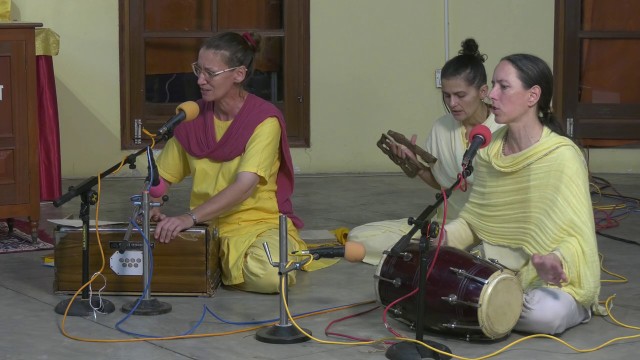
Evening satsang with Vishwaguruji from Jadan Ashram, Rajasthan, India.
Bhajan singing from Strilky Ashram
0:25 - 1:06 (41 min)
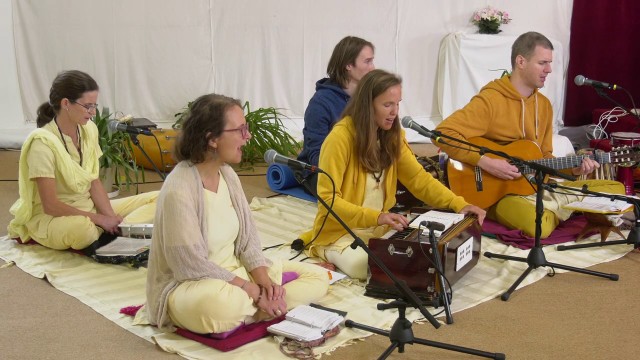
Morning program from Strilky, Czech Republic. Bhajan singing.
Bhajans on the Satsang
1:10 - 2:00 (50 min)
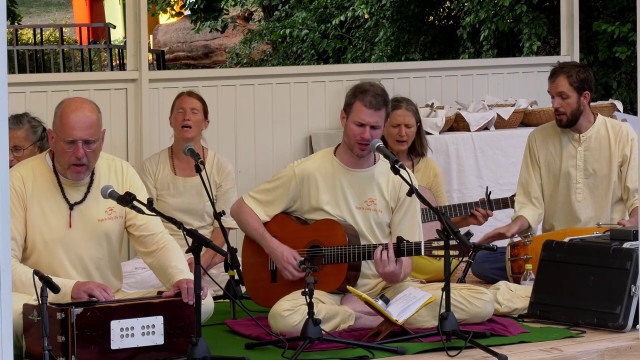
Evening satsang with Vishwaguruji. Bhajan singing.
How do we practice Bhramari?
2:05 - 2:24 (19 min)
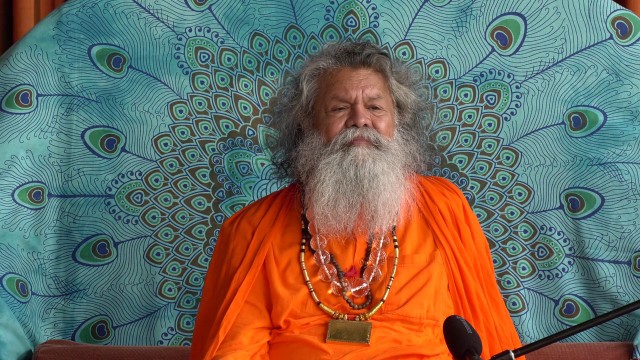
A teaching session on breathwork and the Brahmari technique.
"You are very good persons, and you must practice every day." "You should do only three practices: on the chest, on the heart, in the navel, and then Brahmari."
A spiritual teacher instructs a group on daily breathing practices, using the analogy of a varied meal to explain the need for different techniques. He outlines a sequence focusing on the heart and navel, details methods of inhalation and exhalation through the nose and mouth, and gives specific guidance on practicing the Brahmari sound. The talk includes practical warnings about social settings and concludes with an encouragement to practice at home.
Filming location: Vép, Hungary
Purify yourself inside and out
2:30 - 4:13 (43 min)
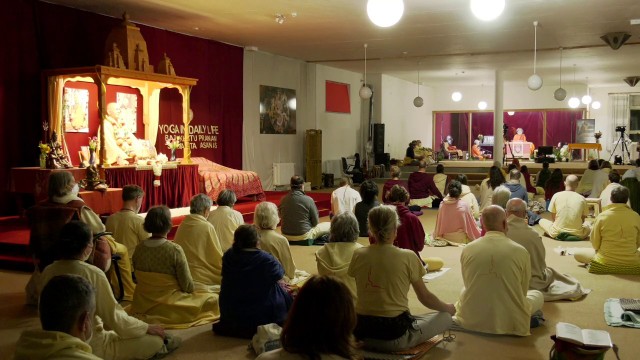
Evening Satsang with Vishwaguruji from Strilky Ashram, Czech Republic. Satguru is a Guru who knows everything and gives knowledge to everyone. The words of Satguru Chalisa are like pearls coming from the haven. God's energy is pure and goes to everyone. We can do neti every morning to clean our nose and lungs also. It is better to clean our teeth with our fingers without a brush. Sometimes animals are also cleaning their teeth. Many diseases begin to develop from the tension which can be between husband and wife. We learn the movements of animals with the help of yoga.
The Path of Discipline: Kriyā Anuṣṭhāna and the Inner Chariot
4:20 - 5:07 (47 min)
A discourse on the Kriyā Anuṣṭhāna discipline and mastering the senses.
"You are lucky to be able to practice it. Firstly, it develops your spirituality, bringing peace and balance to body and mind."
"Patañjali said, 'Atha yoga anuśāsanam'—the discipline. Out of a hundred people, perhaps thirty percent will be successful."
The lecturer addresses practitioners, detailing the rigorous three-month Kriyā Anuṣṭhāna involving silence, isolation, and specific dietary rules. He explains that the current practice is a reduced version, emphasizing the need for bodily control (kāya-sthairya) and discipline over the ten indriyas (senses), which he metaphorically describes as horses pulling the chariot of the body. He discusses obstacles like vāsanā (latent desires), shares personal anecdotes about sensory perception, and concludes by encouraging focused practice for the remaining days of the program.
Filming location: Vép, Hungary
Everyday practising is important
5:15 - 5:36 (21 min)
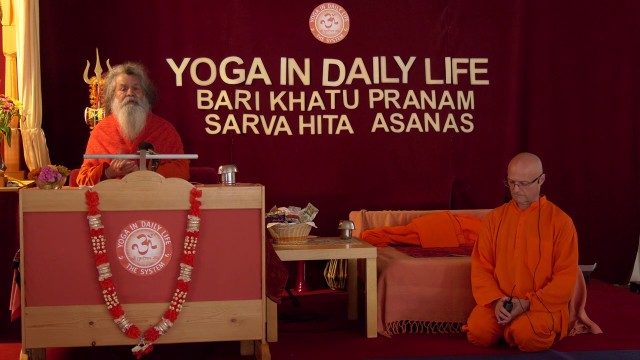
Morning satsang with Vishwaguruji from Strilky Ashram, Czech Republic. Yoga is very good for us in all aspects. But we have to practice every day. We have family at home, we have to go to work, so we can't spend very much time practising. It is very good if we can find time to practice every day. When you go home, you have to practice on your own.
The Incarnation of Holy Guruji
5:40 - 6:29 (49 min)
A satsang commemorating the incarnation day of Satguru Dharamsamrat Sri Swami Madhavanandji.
"The bhajans we are singing are the words of the Vedas." "To wear orange robes is not to be a real sannyāsī. You have to live life as a sannyāsī."
A speaker venerates his Satguru, Guruji, on his auspicious incarnation day. He describes Guruji as a Nitya Avatara whose divinely inspired bhajans carry the resonance of Brahmajnana. He shares personal stories illustrating Guruji's oneness with his own Guru, Mahaprabhuji, and the tests of faith and surrender on the path, including an account of being sent on a journey without provisions. The talk also covers the spiritual lineage and practical instructions for an upcoming pilgrimage to Alakpuriji's cave in the Himalayas.
Filming location: Strilky, Czech Republic
The Science of Kriyā Yoga
6:35 - 7:15 (40 min)
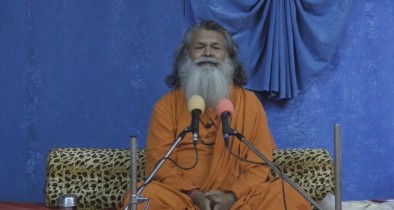
A spiritual discourse on the science and purpose of Kriyā Yoga.
"Yoga is a science of the body, mind, and consciousness. Yoga harmonizes body, mind, and soul."
"Kriyā Yoga is the highest technique within the yoga. But with that, you have to have a blessing."
A spiritual teacher from the Dalak Purījī Siddhāpīṭha Paramparā delivers a talk on Kriyā Yoga, tracing its origin to Swayambhū Śiva. He explains yoga as a holistic science for purification and self-realization, contrasting human spiritual potential with self-destructive tendencies like ego and hatred. He defines Kriyā as sacred action and movement inherent in the universe and the human body, detailing various purification techniques and emphasizing the necessity of Guru's grace and disciplined practice to ascend spiritually.
Filming location: Jadan, Rajasthan, India
Become one with the energy of Bhagawan
7:20 - 7:53 (33 min)
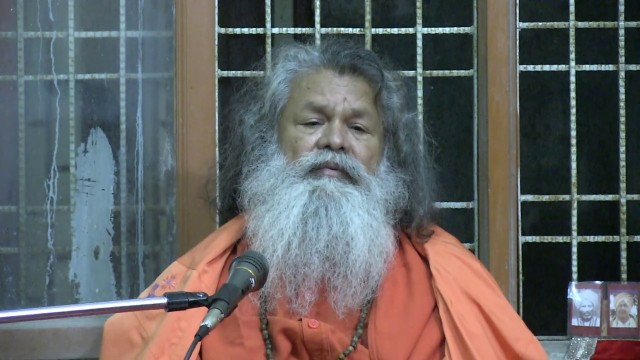
A spiritual discourse on pilgrimage and devotion delivered at Badrinath.
"All dear ones, you are, luckily, ātmā—soul. You are engaged in such a sādhanā... that you could come here to Badrī Viśāl, to Bhagavān Badrināth."
"In India it is like that... in a diamond mine there is only diamond; in a white stone quarry there is only white stone."
A spiritual teacher addresses a group of pilgrims at the Badrinath temple. He explains the rarity and merit of completing such a pilgrimage, using the metaphor of a cherry tree where few blossoms survive to become ripe fruit. He contrasts ancient, arduous pilgrimages with modern travel, emphasizes the sacred energy of the site, and discusses themes of devotion, non-attachment (vairāgya), and India's unique spiritual status as Bhārat Mātā. The talk includes references to the Kedarnath flood as a divine lesson and concludes with an invitation to daily satsang.
Filming location: India
Practicing Khatu Pranam
8:00 - 8:44 (44 min)
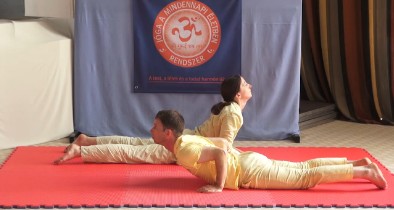
Satsang with Vishwaguruji from Vep, Hungary. Introduction to the second, extended version of Khatu Pranam.
Peace Tree planting in Villach
8:50 - 9:07 (17 min)
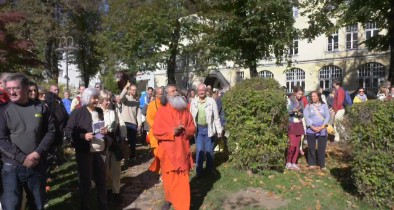
A spiritual ceremony for the planting of a "Peace Tree" in a park.
"You have chosen the tree well. It will be beautiful. It has a long life, right? About 350 years at least."
"This tree is peace. Second is nonviolence. Nonviolence, let's say ahiṁsā, please, nonviolence, and we need that very much."
A spiritual teacher, accompanied by a group, dedicates a newly planted tree as a "Peace Tree." After reading a German peace prayer attached to the tree, the leader chants mantras for peace (Oṁ Śānti) and universal well-being, and explains the tree's symbolism as a steadfast, parental presence representing peace and nonviolence. He blesses the tree, suggesting positive wishes made while circling it may be fulfilled, and declares it a spiritual center or "navel." The event concludes with a group photo and final blessings.
Filming location: Austria
Practising yoga strengthens the immune system
9:15 - 9:33 (18 min)
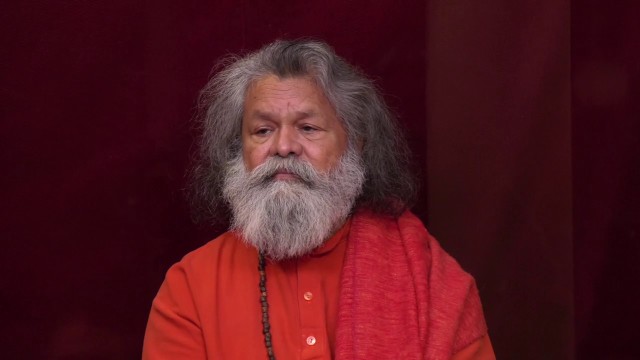
A satsang on yoga's role in health and global community, featuring Swami Maheshvarananda and the Indian Ambassador to the Czech Republic.
"Mostly, myself, I can tell you that I am out of the countries, from India. So, all these yogīs in their lives around the whole world were practicing very peacefully and very well, healthy."
"Swamiji has rightly pointed out that during the COVID times, yoga has really helped us in developing our immune system. And I’m glad that people who are practicing this form of yoga have remained safe and healthy despite the pandemic."
Swami Maheshvarananda opens the gathering, discussing the health of the global Yoga in Daily Life community during the pandemic and comparing yoga practice in India and abroad. The Indian Ambassador then speaks, thanking the organization and highlighting yoga's resurgence in India and their collaborative embassy classes, concluding with an invitation to celebrate India's Republic Day.
Filming location: Strilky, Czech Republic
The love between Guru and disciple
9:35 - 9:57 (22 min)
A satsang discourse on spiritual practice and the guru-disciple relationship.
"We are performing this Anuṣṭhāna sādhana, and it is bringing many things to the surface. Many memories are arising from the past, along with many, many situations. And this must happen."
"The Guru also has a human body, like other people... But inside lies the difference: the love that the Guru can give to his disciple—love, love, love. Yes, this cannot be done by anyone else."
A speaker reflects on the inner purification of sādhana, comparing it to cleaning a pond where dirt surfaces to be cleared. They discuss using discernment (viveka) to manage negative qualities and reframe the ego (ahaṃkāra) positively as necessary willpower. The talk then turns to the nature of the Guru's divine love, illustrated with a parable of a priceless diamond inside a common box and the metaphor of a Guru as a self-sacrificing candle. A second speaker shares a personal story of a car accident to illustrate how direct experiences build absolute trust in the Guru's guidance and protection.
Filming location: Strilky, Czech Republic
Śaṅkha Prakṣālana and Kunjal Kriyā: Purification of the Intestine and Stomach
10:00 - 10:40 (40 min)
A practical demonstration and instructional lecture on the Haṭha Yoga purification techniques of Śaṅkha Prakṣālana and Kunjal Kriyā.
"Śaṅkha Prakṣālana is a very good exercise, but it has to be done early in the morning, of course, on an empty stomach."
"After Śaṅkha Prakṣālana, after purification, you have to keep a diet for at least, strictly, seven days, one week, and up to one month."
An instructor leads a session at an ashram, detailing the procedures for intestinal and stomach cleansing. He explains the preparation, the specific exercises and drinking process for Śaṅkha Prakṣālana, and the subsequent technique for Kunjal Kriyā (Vaman Dhautī), assisted by two experienced practitioners. Key themes include the importance of timing, dietary restrictions post-practice, and the health benefits of these purification rituals.
Filming location: Strilky, Czech Republic
The Path of Discipline: Kriyā Anuṣṭhāna and the Inner Chariot
10:45 - 11:32 (47 min)
A discourse on the Kriyā Anuṣṭhāna discipline and mastering the senses.
"You are lucky to be able to practice it. Firstly, it develops your spirituality, bringing peace and balance to body and mind."
"Patañjali said, 'Atha yoga anuśāsanam'—the discipline. Out of a hundred people, perhaps thirty percent will be successful."
The lecturer addresses practitioners, detailing the rigorous three-month Kriyā Anuṣṭhāna involving silence, isolation, and specific dietary rules. He explains that the current practice is a reduced version, emphasizing the need for bodily control (kāya-sthairya) and discipline over the ten indriyas (senses), which he metaphorically describes as horses pulling the chariot of the body. He discusses obstacles like vāsanā (latent desires), shares personal anecdotes about sensory perception, and concludes by encouraging focused practice for the remaining days of the program.
Filming location: Vép, Hungary
Be the tool
11:40 - 12:24 (44 min)
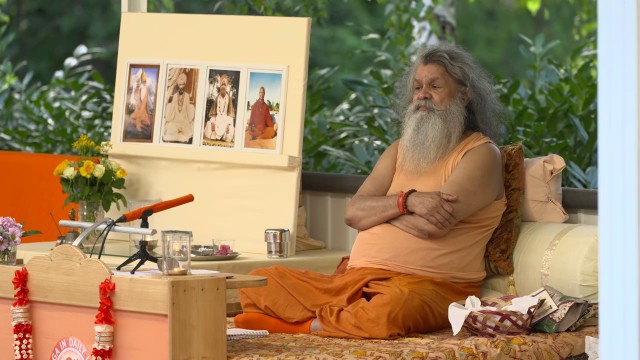
An evening satsang on humility, grace, and being an instrument for divine will.
"Only what is important for us is to understand and to pray to be the tool."
"Always be aware and pray. Please, God, give me opportunity. Give me a chance to be your tool."
Following opening prayers and chants to the guru's sandals, a speaker addresses the gathered and online audience. He shares a parable about a dog who mistakenly believes it is pulling a chariot, and the story of Hanuman receiving a lesson from a sage about the endless cycle of divine service. The core teaching emphasizes surrendering the ego, becoming a selfless instrument for grace, and performing service without seeking recognition, contrasting this with spiritual showmanship.
Filming location: Strilky, Czech Republic
Everyday practising is important
12:30 - 12:51 (21 min)
Morning satsang with Vishwaguruji from Strilky Ashram, Czech Republic. Yoga is very good for us in all aspects. But we have to practice every day. We have family at home, we have to go to work, so we can't spend very much time practising. It is very good if we can find time to practice every day. When you go home, you have to practice on your own.
Discover peace and happiness within you
12:55 - 13:59 (64 min)
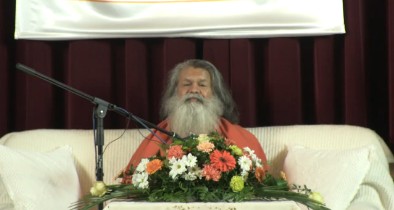
Vishwaguru Maheshwarananda Public Lecture, Kosice, Slovak Republic. Vishwaguruji reveals the secrets of our birth. We come from the beautiful Universe with peace and happiness within. This kind of realization is awakened by practicing meditation.
The Journey of the Soul: From the Ocean to the Drop
14:05 - 14:59 (54 min)
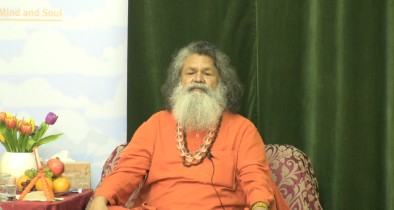
A spiritual discourse using the water cycle as a metaphor for the soul's journey.
"This jīvā, the soul, is on the journey of the eternal."
"When this drop falls into the ocean, the Jīva becomes the Ātmā. This drop becomes the ocean."
Swami Avatarpuri gives a satsang, explaining the soul's separation from and longing to return to the divine source through an extended analogy of evaporation and rainfall. He emphasizes the purifying role of satsang and the Guru, shares anecdotes about introducing mantra in Eastern Europe and criticizes modern chemical pollution and vanity as spiritual impediments, concluding with a call for natural living and collective chanting.
Filming location: London, UK
Practising yoga strengthens the immune system
15:05 - 15:23 (18 min)
A satsang on yoga's role in health and global community, featuring Swami Maheshvarananda and the Indian Ambassador to the Czech Republic.
"Mostly, myself, I can tell you that I am out of the countries, from India. So, all these yogīs in their lives around the whole world were practicing very peacefully and very well, healthy."
"Swamiji has rightly pointed out that during the COVID times, yoga has really helped us in developing our immune system. And I’m glad that people who are practicing this form of yoga have remained safe and healthy despite the pandemic."
Swami Maheshvarananda opens the gathering, discussing the health of the global Yoga in Daily Life community during the pandemic and comparing yoga practice in India and abroad. The Indian Ambassador then speaks, thanking the organization and highlighting yoga's resurgence in India and their collaborative embassy classes, concluding with an invitation to celebrate India's Republic Day.
Filming location: Strilky, Czech Republic
Purify yourself inside and out
15:30 - 16:13 (43 min)
Evening Satsang with Vishwaguruji from Strilky Ashram, Czech Republic. Satguru is a Guru who knows everything and gives knowledge to everyone. The words of Satguru Chalisa are like pearls coming from the haven. God's energy is pure and goes to everyone. We can do neti every morning to clean our nose and lungs also. It is better to clean our teeth with our fingers without a brush. Sometimes animals are also cleaning their teeth. Many diseases begin to develop from the tension which can be between husband and wife. We learn the movements of animals with the help of yoga.
How do we practice Bhramari?
16:20 - 16:39 (19 min)
A teaching session on breathwork and the Brahmari technique.
"You are very good persons, and you must practice every day." "You should do only three practices: on the chest, on the heart, in the navel, and then Brahmari."
A spiritual teacher instructs a group on daily breathing practices, using the analogy of a varied meal to explain the need for different techniques. He outlines a sequence focusing on the heart and navel, details methods of inhalation and exhalation through the nose and mouth, and gives specific guidance on practicing the Brahmari sound. The talk includes practical warnings about social settings and concludes with an encouragement to practice at home.
Filming location: Vép, Hungary
The Incarnation of Holy Guruji
16:45 - 17:34 (49 min)
A satsang commemorating the incarnation day of Satguru Dharamsamrat Sri Swami Madhavanandji.
"The bhajans we are singing are the words of the Vedas." "To wear orange robes is not to be a real sannyāsī. You have to live life as a sannyāsī."
A speaker venerates his Satguru, Guruji, on his auspicious incarnation day. He describes Guruji as a Nitya Avatara whose divinely inspired bhajans carry the resonance of Brahmajnana. He shares personal stories illustrating Guruji's oneness with his own Guru, Mahaprabhuji, and the tests of faith and surrender on the path, including an account of being sent on a journey without provisions. The talk also covers the spiritual lineage and practical instructions for an upcoming pilgrimage to Alakpuriji's cave in the Himalayas.
Filming location: Strilky, Czech Republic
Everything is created by sound
17:40 - 18:42 (62 min)
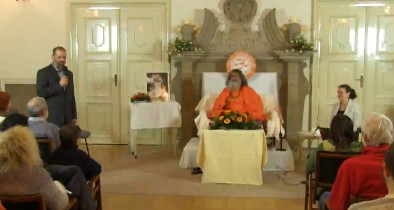
A lecture on the holistic yoga system "Yoga in Daily Life," blending philosophy, science, and practical guidance.
"Yoga means uniting, harmonizing, and balancing. And this is our body, symbolically, yoga."
"Yoga in daily life for physical, mental, social, and spiritual health. Live a happy life, lifelong and healthy."
Following an introduction and the chanting of Aum, Viśvagurujī Paramahaṁsavāmī Maheśvarānanda delivers a talk. He explains yoga as the harmonization of body, mind, and intellect, connecting the science of mantras, chakras, and creation from the Vedas to everyday well-being. He emphasizes non-violence, self-awareness, and how actions (karma) shape destiny, concluding with blessings for a healthy, peaceful life.
Filming location: Czech Republic
Become one with the energy of Bhagawan
18:50 - 19:23 (33 min)
A spiritual discourse on pilgrimage and devotion delivered at Badrinath.
"All dear ones, you are, luckily, ātmā—soul. You are engaged in such a sādhanā... that you could come here to Badrī Viśāl, to Bhagavān Badrināth."
"In India it is like that... in a diamond mine there is only diamond; in a white stone quarry there is only white stone."
A spiritual teacher addresses a group of pilgrims at the Badrinath temple. He explains the rarity and merit of completing such a pilgrimage, using the metaphor of a cherry tree where few blossoms survive to become ripe fruit. He contrasts ancient, arduous pilgrimages with modern travel, emphasizes the sacred energy of the site, and discusses themes of devotion, non-attachment (vairāgya), and India's unique spiritual status as Bhārat Mātā. The talk includes references to the Kedarnath flood as a divine lesson and concludes with an invitation to daily satsang.
Filming location: India
Peace Tree planting in Villach
19:30 - 19:47 (17 min)
A spiritual ceremony for the planting of a "Peace Tree" in a park.
"You have chosen the tree well. It will be beautiful. It has a long life, right? About 350 years at least."
"This tree is peace. Second is nonviolence. Nonviolence, let's say ahiṁsā, please, nonviolence, and we need that very much."
A spiritual teacher, accompanied by a group, dedicates a newly planted tree as a "Peace Tree." After reading a German peace prayer attached to the tree, the leader chants mantras for peace (Oṁ Śānti) and universal well-being, and explains the tree's symbolism as a steadfast, parental presence representing peace and nonviolence. He blesses the tree, suggesting positive wishes made while circling it may be fulfilled, and declares it a spiritual center or "navel." The event concludes with a group photo and final blessings.
Filming location: Austria
Introduction to Bhramari Pranayama
19:55 - 20:50 (55 min)
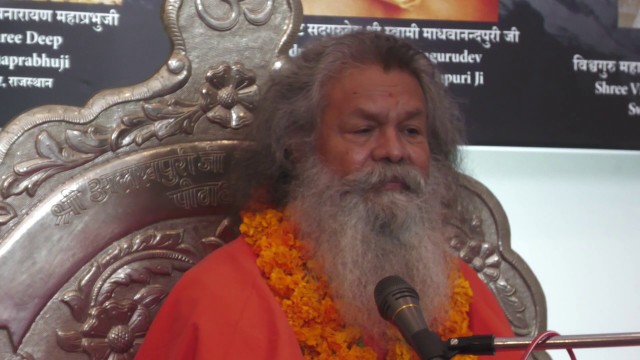
Evening satsang from Jaipur Ashram, Rajasthan India. Bhajan singing. Today, we will again deal with the Bhramari pranayama. Yoga is more than just doing exercises and meditation. Sound means vibration, words. When we speak, both hemispheres of the brain vibrate, and the Sanskrit language is very balanced in this respect. Bhramari pranayama also vibrates the brain hemispheres. Practicing Bhramari pranayama.
The Science of Kriyā Yoga
20:55 - 21:35 (40 min)
A spiritual discourse on the science and purpose of Kriyā Yoga.
"Yoga is a science of the body, mind, and consciousness. Yoga harmonizes body, mind, and soul."
"Kriyā Yoga is the highest technique within the yoga. But with that, you have to have a blessing."
A spiritual teacher from the Dalak Purījī Siddhāpīṭha Paramparā delivers a talk on Kriyā Yoga, tracing its origin to Swayambhū Śiva. He explains yoga as a holistic science for purification and self-realization, contrasting human spiritual potential with self-destructive tendencies like ego and hatred. He defines Kriyā as sacred action and movement inherent in the universe and the human body, detailing various purification techniques and emphasizing the necessity of Guru's grace and disciplined practice to ascend spiritually.
Filming location: Jadan, Rajasthan, India
The spiritual family
21:40 - 22:31 (51 min)
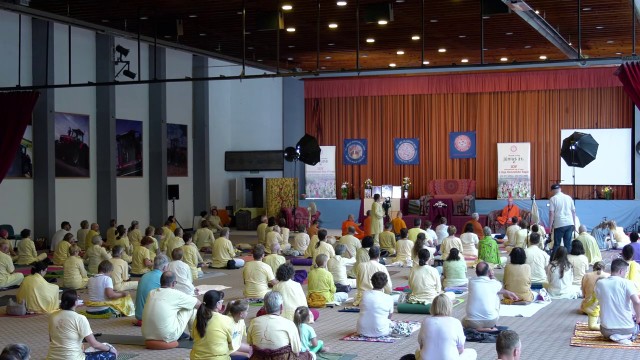
An opening talk at a spiritual seminar addressing the absence of the guru and the purpose of gathering.
"People are always complaining, 'Oh, Kali Yuga is not good, Kali Yuga is a terrible time.' But if you know how to utilize it, Kali Yuga is also excellent."
"We need to be like a Paramahaṁsa... We should be like that. In this world, we have so many things... we should be like the Haṁsa: take the pearls, take the milk, and leave the water."
A senior disciple addresses the assembled spiritual family at the Vép seminar, acknowledging the physical absence of Viśvagurūjī. He reframes the gathering as a vital opportunity to recharge, strengthen spiritual family bonds, and deepen personal practice. Key themes include extracting the essence from the Kali Yuga, the necessity of a supportive community for sādhanā, and using the seminar for introspection, mauna (silence), and focused practice of āsana and prāṇāyāma to calm the mind.
Filming location: Vép, Hungary
Day of happiness
22:35 - 23:25 (50 min)
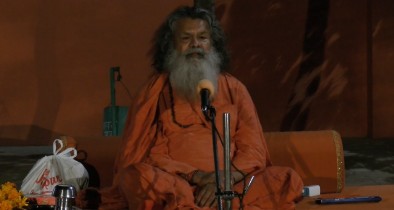
A spiritual discourse on the meaning of Deepavali, weaving together a personal anecdote and the epic story of Rama's exile and return.
"Where there is no pure relation, devotion, bhakti, or longing for wisdom, that kind of love—if it is selfish—gets lost."
"Rāma said, 'No, no, no. I am the happiest person in this world today.' He said, 'Look, my father became free from that vow which he promised my mother.'"
The speaker begins with a Sanskrit prayer and a contemporary story of a farmer consciously preparing for his samadhi, illustrating devotion and obedience. The main narrative is a recounting of the Ramayana, focusing on the events leading to Prince Rama's fourteen-year exile due to Queen Kaikeyi's manipulated wishes, his dutiful acceptance, and the ultimate celebration of his return to Ayodhya, which is established as the origin of the Deepavali festival of lights. The talk connects the ancient story to modern practices, including the worship of Lakshmi, and concludes with devotional chanting.
Filming location: Jadan, Rajasthan, India
Bhajan singing on the Satsang
23:30 - 23:57 (27 min)
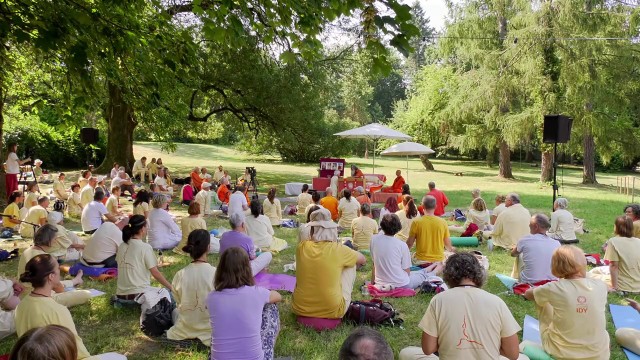
A devotional introduction and singing of a traditional bhajan.
"We can sing a very beautiful bhajan from Swāmī Lālā Nānjī. It is called Manarata Nāma, and it means, 'Oh my mind, repeat the name of God, repeat your mantra.'"
"Give your body and mind to Sāddhā Gurudeva, and he will destroy all your doubts and all your bad qualities. In the holy lotus feet of Satguru Deva reside all holy pilgrimages."
The speaker introduces a lesser-sung bhajan by Swāmī Lālā Nānjī, emphasizing the urgency of spiritual practice in human life. They explain the bhajan's theme of repeating the divine name and extol the glory and essential role of the true Guru in guiding devotees across the ocean of worldly existence. The session includes singing verses from the bhajan and concludes with salutations.
Filming location: Strilky, Czech Republic
Bhajans evening from the Strilky Ashram
0:40 - 1:43 (63 min)
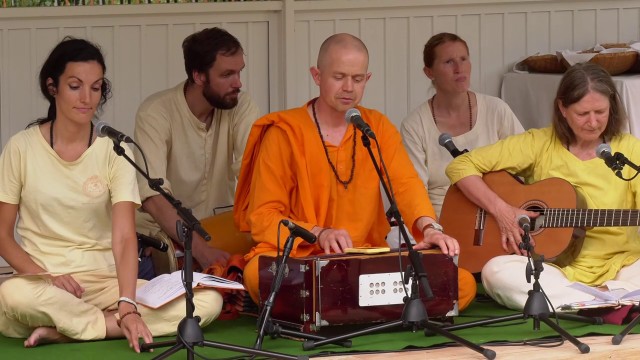
Evening satsang from Strilky Ashram, Czech Republic. Bhajan singing and translation.
American
Australian