
European
Bhajan singing from Strilky
0:15 - 0:50 (35 min)
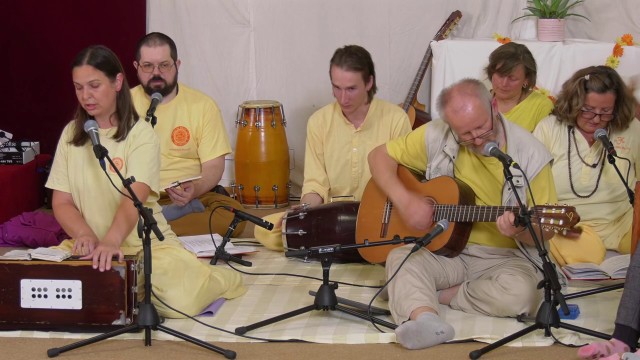
Evening satsang from Strilky Ashram, Czech Republic.
Bhajan evening from Strilky Ashram
0:55 - 1:21 (26 min)
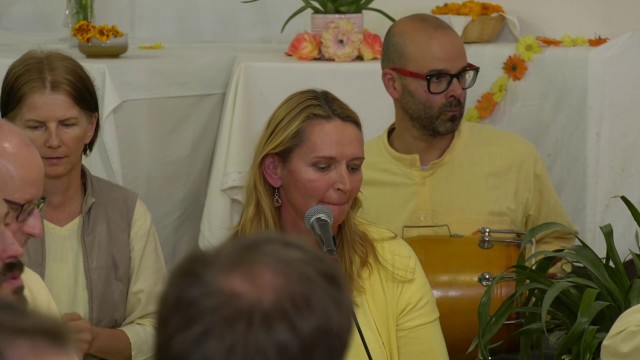
Evening satsang with Vishwaguruji from Strilky Ashram, Czech Republic.
The Incarnation of Holy Guruji
1:25 - 2:14 (49 min)
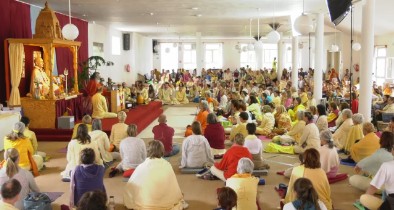
A satsang commemorating the incarnation day of Satguru Dharamsamrat Sri Swami Madhavanandji.
"The bhajans we are singing are the words of the Vedas." "To wear orange robes is not to be a real sannyāsī. You have to live life as a sannyāsī."
A speaker venerates his Satguru, Guruji, on his auspicious incarnation day. He describes Guruji as a Nitya Avatara whose divinely inspired bhajans carry the resonance of Brahmajnana. He shares personal stories illustrating Guruji's oneness with his own Guru, Mahaprabhuji, and the tests of faith and surrender on the path, including an account of being sent on a journey without provisions. The talk also covers the spiritual lineage and practical instructions for an upcoming pilgrimage to Alakpuriji's cave in the Himalayas.
Filming location: Strilky, Czech Republic
Yoga leads to the healthy way of life
2:20 - 3:04 (44 min)
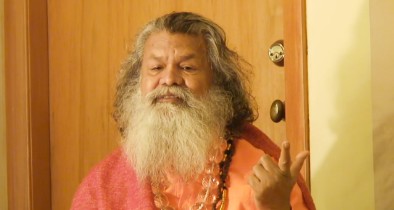
A spiritual gathering and discourse celebrating a new mayor and exploring yoga's role in society.
"Yoga is not a part of any religion. If, then, all religion is a part of yoga, because yoga is good health, happiness, harmony, peace, non-violence, understanding, kindness, and love."
"Rāja Yoga means discipline... So, what is a Rājayoga? So long ago, there were people... So, how the rāja-nīti, how the politics was born? The politics came in life."
Swami Viśvagunānanda (Viśva Gurujī) leads a ceremony at Śrī Devapurījī Ashram following the election of Gurū Nāthanjī as Mayor of the Kāpiti Coast. After introductory remarks and a speech from the new mayor, Swamijī delivers a discourse. He connects the concept of Rāja Yoga (the yoga of discipline and kingship) to ethical governance, explains the universal principles of yoga beyond physical postures, and blesses the mayor's mission to build community. The talk includes commentary on the International Day of Yoga and concludes with Vedic prayers for peace.
Filming location: New Zealand
Purify yourself inside and out
3:10 - 3:53 (43 min)
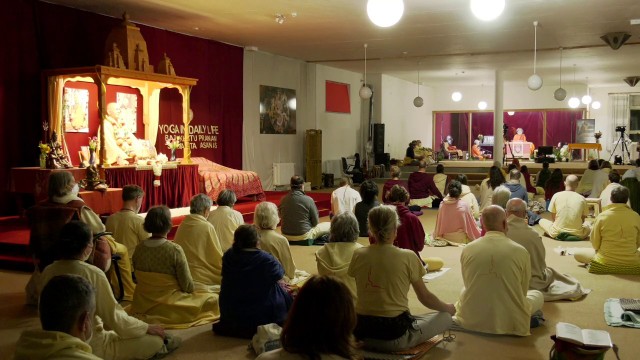
Evening Satsang with Vishwaguruji from Strilky Ashram, Czech Republic. Satguru is a Guru who knows everything and gives knowledge to everyone. The words of Satguru Chalisa are like pearls coming from the haven. God's energy is pure and goes to everyone. We can do neti every morning to clean our nose and lungs also. It is better to clean our teeth with our fingers without a brush. Sometimes animals are also cleaning their teeth. Many diseases begin to develop from the tension which can be between husband and wife. We learn the movements of animals with the help of yoga.
The Incarnation of Holy Guruji
4:00 - 4:49 (49 min)
A satsang commemorating the incarnation day of Satguru Dharamsamrat Sri Swami Madhavanandji.
"The bhajans we are singing are the words of the Vedas." "To wear orange robes is not to be a real sannyāsī. You have to live life as a sannyāsī."
A speaker venerates his Satguru, Guruji, on his auspicious incarnation day. He describes Guruji as a Nitya Avatara whose divinely inspired bhajans carry the resonance of Brahmajnana. He shares personal stories illustrating Guruji's oneness with his own Guru, Mahaprabhuji, and the tests of faith and surrender on the path, including an account of being sent on a journey without provisions. The talk also covers the spiritual lineage and practical instructions for an upcoming pilgrimage to Alakpuriji's cave in the Himalayas.
Filming location: Strilky, Czech Republic
The Science of Kriyā Yoga
4:55 - 5:35 (40 min)
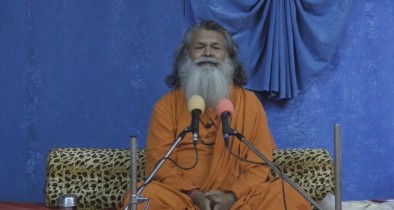
A spiritual discourse on the science and purpose of Kriyā Yoga.
"Yoga is a science of the body, mind, and consciousness. Yoga harmonizes body, mind, and soul."
"Kriyā Yoga is the highest technique within the yoga. But with that, you have to have a blessing."
A spiritual teacher from the Dalak Purījī Siddhāpīṭha Paramparā delivers a talk on Kriyā Yoga, tracing its origin to Swayambhū Śiva. He explains yoga as a holistic science for purification and self-realization, contrasting human spiritual potential with self-destructive tendencies like ego and hatred. He defines Kriyā as sacred action and movement inherent in the universe and the human body, detailing various purification techniques and emphasizing the necessity of Guru's grace and disciplined practice to ascend spiritually.
Filming location: Jadan, Rajasthan, India
How do we practice Bhramari?
5:40 - 5:59 (19 min)
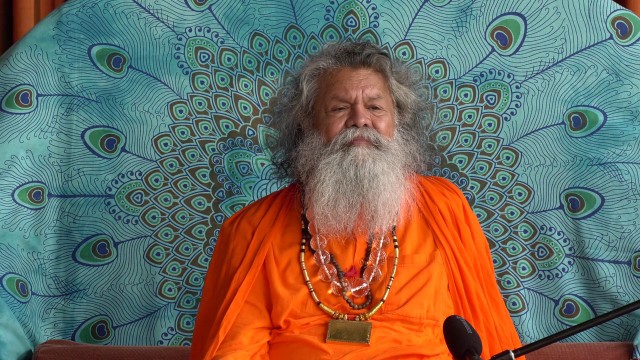
A teaching session on breathwork and the Brahmari technique.
"You are very good persons, and you must practice every day." "You should do only three practices: on the chest, on the heart, in the navel, and then Brahmari."
A spiritual teacher instructs a group on daily breathing practices, using the analogy of a varied meal to explain the need for different techniques. He outlines a sequence focusing on the heart and navel, details methods of inhalation and exhalation through the nose and mouth, and gives specific guidance on practicing the Brahmari sound. The talk includes practical warnings about social settings and concludes with an encouragement to practice at home.
Filming location: Vép, Hungary
The Path of Discipline: Kriyā Anuṣṭhāna and the Inner Chariot
6:05 - 6:52 (47 min)
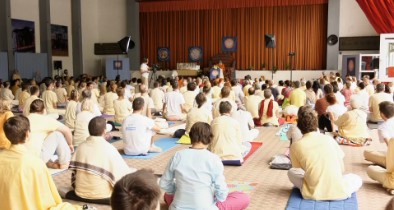
A discourse on the Kriyā Anuṣṭhāna discipline and mastering the senses.
"You are lucky to be able to practice it. Firstly, it develops your spirituality, bringing peace and balance to body and mind."
"Patañjali said, 'Atha yoga anuśāsanam'—the discipline. Out of a hundred people, perhaps thirty percent will be successful."
The lecturer addresses practitioners, detailing the rigorous three-month Kriyā Anuṣṭhāna involving silence, isolation, and specific dietary rules. He explains that the current practice is a reduced version, emphasizing the need for bodily control (kāya-sthairya) and discipline over the ten indriyas (senses), which he metaphorically describes as horses pulling the chariot of the body. He discusses obstacles like vāsanā (latent desires), shares personal anecdotes about sensory perception, and concludes by encouraging focused practice for the remaining days of the program.
Filming location: Vép, Hungary
Practising fifth level of Yoga in Daily Life System
7:00 - 8:26 (86 min)
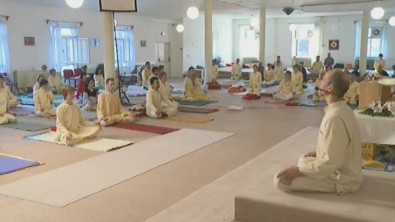
Morning practising. Fifth level of the System" Yoga in Daily Life" from Mahaprabhudeep Ashram, Strilky, Czech Republic on 9th of July 2010.
The spiritual family
8:30 - 9:21 (51 min)
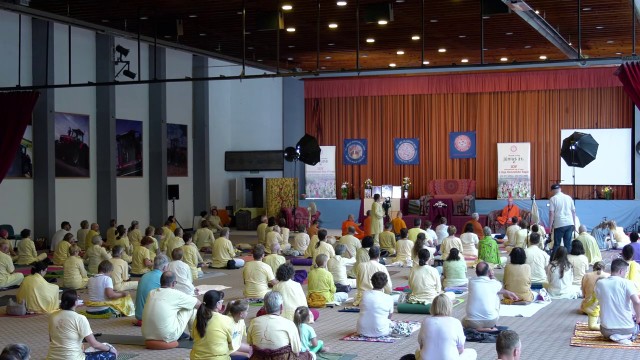
An opening talk at a spiritual seminar addressing the absence of the guru and the purpose of gathering.
"People are always complaining, 'Oh, Kali Yuga is not good, Kali Yuga is a terrible time.' But if you know how to utilize it, Kali Yuga is also excellent."
"We need to be like a Paramahaṁsa... We should be like that. In this world, we have so many things... we should be like the Haṁsa: take the pearls, take the milk, and leave the water."
A senior disciple addresses the assembled spiritual family at the Vép seminar, acknowledging the physical absence of Viśvagurūjī. He reframes the gathering as a vital opportunity to recharge, strengthen spiritual family bonds, and deepen personal practice. Key themes include extracting the essence from the Kali Yuga, the necessity of a supportive community for sādhanā, and using the seminar for introspection, mauna (silence), and focused practice of āsana and prāṇāyāma to calm the mind.
Filming location: Vép, Hungary
Practising yoga strengthens the immune system
9:25 - 9:43 (18 min)
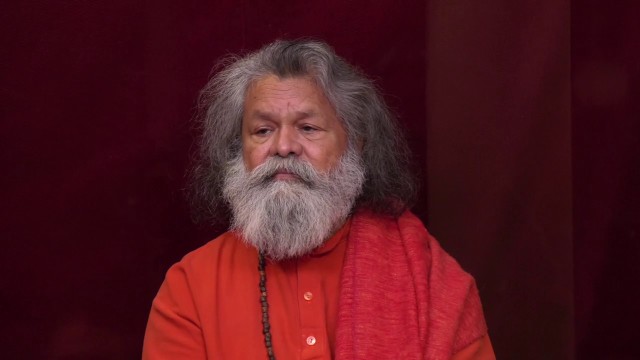
A satsang on yoga's role in health and global community, featuring Swami Maheshvarananda and the Indian Ambassador to the Czech Republic.
"Mostly, myself, I can tell you that I am out of the countries, from India. So, all these yogīs in their lives around the whole world were practicing very peacefully and very well, healthy."
"Swamiji has rightly pointed out that during the COVID times, yoga has really helped us in developing our immune system. And I’m glad that people who are practicing this form of yoga have remained safe and healthy despite the pandemic."
Swami Maheshvarananda opens the gathering, discussing the health of the global Yoga in Daily Life community during the pandemic and comparing yoga practice in India and abroad. The Indian Ambassador then speaks, thanking the organization and highlighting yoga's resurgence in India and their collaborative embassy classes, concluding with an invitation to celebrate India's Republic Day.
Filming location: Strilky, Czech Republic
The Journey Beyond the Three States
9:45 - 9:59 (14 min)
A philosophical exposition on the fourth state of consciousness, Turīya, based on Upanishadic teachings.
"The one who experiences these three states is the Jīva, the individual soul."
"Turīya is the witness of all three states. It is the silent, unchanging consciousness that illuminates the waking, dreaming, and sleeping experiences."
The narration explains the three common states of consciousness—waking, dreaming, and deep sleep—and introduces Turīya as the transcendent witness behind them. It cites the Bṛhadāraṇyaka Upaniṣad and uses the analogy of two birds from the Muṇḍaka Upaniṣad to distinguish the experiencing individual soul (Jīva) from the witnessing Self. The goal is presented as realizing one's identity as Turīya through hearing, reflection, and meditation, culminating in the recognition of the great declaration "Tat Tvam Asi" (That thou art).
Filming location: Khatu, Rajasthan, India
Part 1: The Role of Yoga and Meditation in Improving Quality of Life for Cancer Patients
10:00 - 11:07 (67 min)
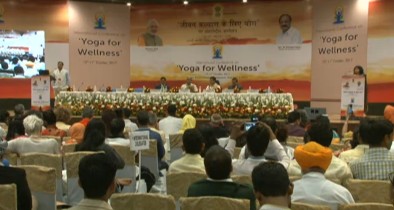
A medical lecture on the role of yoga and meditation as supportive care for cancer patients.
"We must note which specific yogic and meditative techniques were used, as these vary widely."
"Please do not give false hope that cancer will be cured... If a practitioner claims that prāṇāyāma, dhyāna, and some Ayurvedic herbs... can cure cancer, they are committing a grave sin against society."
A doctor from AIIMS Delhi presents a detailed analysis of scientific studies on yogic interventions for cancer patients, emphasizing they are complementary to standard treatments like chemotherapy. He strongly warns against practitioners falsely claiming yoga can cure cancer, shares data on benefits for quality of life and stress, and proposes a large-scale research trial combining yoga, meditation, and herbal products for cancer prevention and care.
Filming location: Delhi, India
Part 1: Welcoming Address and Valedictory Session on Yoga for Wellness
11:15 - 12:23 (68 min)
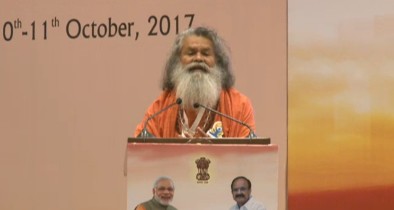
A valedictory session for a conference on "Yoga for Wellness," featuring addresses by government ministers and spiritual leaders.
"Yoga for wellness is this year’s subject. It is not just about the practice of yoga, but also about using it in the lives of every human being for achieving better health and wellness."
"Our method of treatment does not have any side effects. That is why we develop research about it, develop websites, develop programming, develop its videos."
The session opens with a welcome address emphasizing yoga's global role and the need to integrate traditional and modern medicine. Union Minister Nitin Gadkari delivers a valedictory address, sharing his personal health transformation through yoga and proposing structured training and research to professionalize the field. Following remarks from other ministers, Professor H.R. Nagendra gives a speech contrasting the multidimensional approach of yoga with modern medicine's limitations for non-communicable diseases. Swami Maheshvarananda and actress Anu Agarwal also share perspectives, with Agarwal recounting her recovery from a major accident through yoga.
Filming location: Delhi, India
Day of happiness
12:30 - 13:20 (50 min)
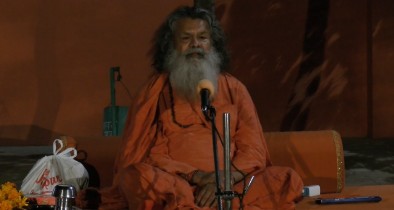
A spiritual discourse on the meaning of Deepavali, weaving together a personal anecdote and the epic story of Rama's exile and return.
"Where there is no pure relation, devotion, bhakti, or longing for wisdom, that kind of love—if it is selfish—gets lost."
"Rāma said, 'No, no, no. I am the happiest person in this world today.' He said, 'Look, my father became free from that vow which he promised my mother.'"
The speaker begins with a Sanskrit prayer and a contemporary story of a farmer consciously preparing for his samadhi, illustrating devotion and obedience. The main narrative is a recounting of the Ramayana, focusing on the events leading to Prince Rama's fourteen-year exile due to Queen Kaikeyi's manipulated wishes, his dutiful acceptance, and the ultimate celebration of his return to Ayodhya, which is established as the origin of the Deepavali festival of lights. The talk connects the ancient story to modern practices, including the worship of Lakshmi, and concludes with devotional chanting.
Filming location: Jadan, Rajasthan, India
Peace Tree planting in Villach
13:25 - 13:42 (17 min)
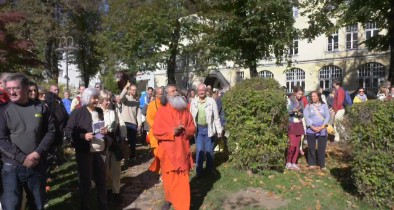
A spiritual ceremony for the planting of a "Peace Tree" in a park.
"You have chosen the tree well. It will be beautiful. It has a long life, right? About 350 years at least."
"This tree is peace. Second is nonviolence. Nonviolence, let's say ahiṁsā, please, nonviolence, and we need that very much."
A spiritual teacher, accompanied by a group, dedicates a newly planted tree as a "Peace Tree." After reading a German peace prayer attached to the tree, the leader chants mantras for peace (Oṁ Śānti) and universal well-being, and explains the tree's symbolism as a steadfast, parental presence representing peace and nonviolence. He blesses the tree, suggesting positive wishes made while circling it may be fulfilled, and declares it a spiritual center or "navel." The event concludes with a group photo and final blessings.
Filming location: Austria
Everything is created by sound
13:50 - 14:52 (62 min)
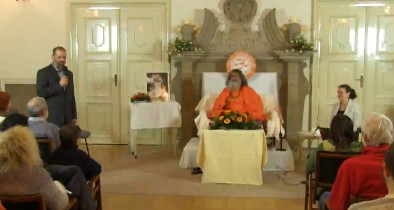
A lecture on the holistic yoga system "Yoga in Daily Life," blending philosophy, science, and practical guidance.
"Yoga means uniting, harmonizing, and balancing. And this is our body, symbolically, yoga."
"Yoga in daily life for physical, mental, social, and spiritual health. Live a happy life, lifelong and healthy."
Following an introduction and the chanting of Aum, Viśvagurujī Paramahaṁsavāmī Maheśvarānanda delivers a talk. He explains yoga as the harmonization of body, mind, and intellect, connecting the science of mantras, chakras, and creation from the Vedas to everyday well-being. He emphasizes non-violence, self-awareness, and how actions (karma) shape destiny, concluding with blessings for a healthy, peaceful life.
Filming location: Czech Republic
Introduction to Bhramari Pranayama
15:00 - 15:55 (55 min)
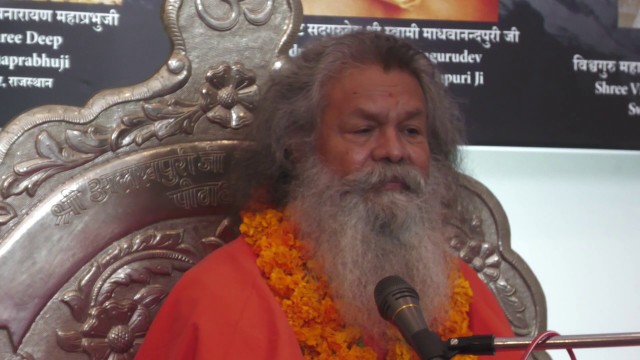
Evening satsang from Jaipur Ashram, Rajasthan India. Bhajan singing. Today, we will again deal with the Bhramari pranayama. Yoga is more than just doing exercises and meditation. Sound means vibration, words. When we speak, both hemispheres of the brain vibrate, and the Sanskrit language is very balanced in this respect. Bhramari pranayama also vibrates the brain hemispheres. Practicing Bhramari pranayama.
Be the tool
16:00 - 16:44 (44 min)
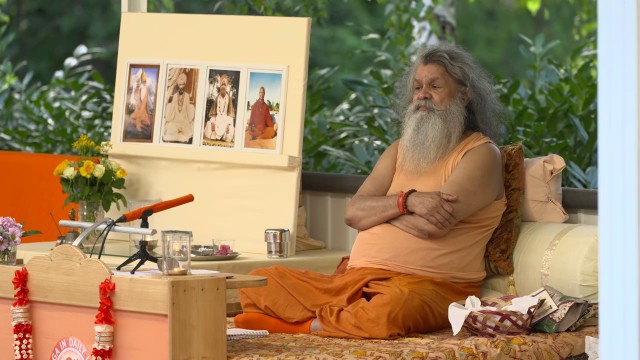
An evening satsang on humility, grace, and being an instrument for divine will.
"Only what is important for us is to understand and to pray to be the tool."
"Always be aware and pray. Please, God, give me opportunity. Give me a chance to be your tool."
Following opening prayers and chants to the guru's sandals, a speaker addresses the gathered and online audience. He shares a parable about a dog who mistakenly believes it is pulling a chariot, and the story of Hanuman receiving a lesson from a sage about the endless cycle of divine service. The core teaching emphasizes surrendering the ego, becoming a selfless instrument for grace, and performing service without seeking recognition, contrasting this with spiritual showmanship.
Filming location: Strilky, Czech Republic
Discover peace and happiness within you
16:50 - 17:54 (64 min)
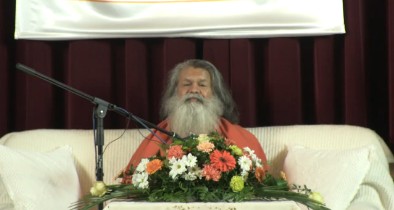
Vishwaguru Maheshwarananda Public Lecture, Kosice, Slovak Republic. Vishwaguruji reveals the secrets of our birth. We come from the beautiful Universe with peace and happiness within. This kind of realization is awakened by practicing meditation.
Around the world - YIDL at he Sziget Festival Budapest 2011
18:00 - 18:05 (5 min)
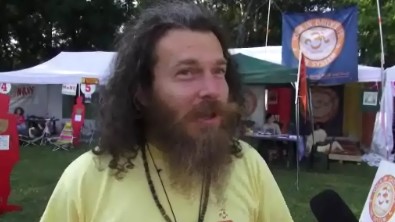
A promotional video about a yoga program at a major European music festival.
"For eleven years now, yoga has been our daily practice and system for showing young festival-goers how wonderful it is to relax deeply through yoga, without any side effects."
"We feel that the door of āśrama must not only be opened by the system of rites... but we must also go out to various community spaces and events."
A representative describes the 11-year-old Yogasātar tent at the Sziget Festival, which offers short, tailored yoga sessions to introduce festival-goers to practice, relaxation, and meditation. He explains the program's adaptability, its emphasis on authentic tradition over commercialized "power yoga," and its role as a spiritual outreach that has led some visitors to become disciples. He notes the surprising ability of practitioners to achieve deep relaxation and sensory withdrawal despite the loud festival environment.
Filming location: Budapest, Hungary
Around the world - YIDL at the Budapest Carfree Day
18:10 - 18:13 (3 min)

A presentation about a yoga organization's participation in Budapest's Car-Free Day.
"We have a yoga center at 121 Baross Street, 8th floor. In the district, this is our guru āśrama, our first center in Hungary."
"It’s a very interesting experience that you can practice yoga even in such a place, and nothing really disturbs you. On the contrary, the curious onlookers inspire us greatly in our practice."
A representative of the Yoga in Daily Life system describes their annual participation in the event on car-free Andrássy Avenue. She explains the organization's origins under Paramahaṁsavāmī Maheśvarānanda and highlights their long-standing Budapest center. The talk emphasizes the unique experience of practicing yoga in the transformed urban space and invites the public to join.
Filming location: Budapest, Hungary
Around the world - YIDL at the Budapest Vegetarian Festival 2011
18:20 - 18:25 (5 min)

A presentation on the Yoga in Everyday Life system at a Vegetarian Festival.
"Among these, the foremost is to maintain a vegetarian lifestyle."
"Our first aim is to gain good health. The major part of our illnesses... originates from our stomach."
A representative describes their organization's long-standing participation in the festival, highlighting yoga demonstrations and classes accessible to all. This year's focus was explaining the Falahārī diet, a concept from Swami Maheśvarānanda. The talk connects vegetarianism with physical yoga, prāṇāyāma, and relaxation, framing the practice as a holistic path to health and self-discovery.
Filming location: Budapest, Hungary
Yoga leads to the healthy way of life
18:30 - 19:14 (44 min)
A spiritual gathering and discourse celebrating a new mayor and exploring yoga's role in society.
"Yoga is not a part of any religion. If, then, all religion is a part of yoga, because yoga is good health, happiness, harmony, peace, non-violence, understanding, kindness, and love."
"Rāja Yoga means discipline... So, what is a Rājayoga? So long ago, there were people... So, how the rāja-nīti, how the politics was born? The politics came in life."
Swami Viśvagunānanda (Viśva Gurujī) leads a ceremony at Śrī Devapurījī Ashram following the election of Gurū Nāthanjī as Mayor of the Kāpiti Coast. After introductory remarks and a speech from the new mayor, Swamijī delivers a discourse. He connects the concept of Rāja Yoga (the yoga of discipline and kingship) to ethical governance, explains the universal principles of yoga beyond physical postures, and blesses the mayor's mission to build community. The talk includes commentary on the International Day of Yoga and concludes with Vedic prayers for peace.
Filming location: New Zealand
Day of happiness
19:20 - 20:10 (50 min)
A spiritual discourse on the meaning of Deepavali, weaving together a personal anecdote and the epic story of Rama's exile and return.
"Where there is no pure relation, devotion, bhakti, or longing for wisdom, that kind of love—if it is selfish—gets lost."
"Rāma said, 'No, no, no. I am the happiest person in this world today.' He said, 'Look, my father became free from that vow which he promised my mother.'"
The speaker begins with a Sanskrit prayer and a contemporary story of a farmer consciously preparing for his samadhi, illustrating devotion and obedience. The main narrative is a recounting of the Ramayana, focusing on the events leading to Prince Rama's fourteen-year exile due to Queen Kaikeyi's manipulated wishes, his dutiful acceptance, and the ultimate celebration of his return to Ayodhya, which is established as the origin of the Deepavali festival of lights. The talk connects the ancient story to modern practices, including the worship of Lakshmi, and concludes with devotional chanting.
Filming location: Jadan, Rajasthan, India
The spiritual family
20:15 - 21:06 (51 min)
An opening talk at a spiritual seminar addressing the absence of the guru and the purpose of gathering.
"People are always complaining, 'Oh, Kali Yuga is not good, Kali Yuga is a terrible time.' But if you know how to utilize it, Kali Yuga is also excellent."
"We need to be like a Paramahaṁsa... We should be like that. In this world, we have so many things... we should be like the Haṁsa: take the pearls, take the milk, and leave the water."
A senior disciple addresses the assembled spiritual family at the Vép seminar, acknowledging the physical absence of Viśvagurūjī. He reframes the gathering as a vital opportunity to recharge, strengthen spiritual family bonds, and deepen personal practice. Key themes include extracting the essence from the Kali Yuga, the necessity of a supportive community for sādhanā, and using the seminar for introspection, mauna (silence), and focused practice of āsana and prāṇāyāma to calm the mind.
Filming location: Vép, Hungary
Chantiing A-U-M and Kundalini Shakti
21:10 - 22:23 (73 min)
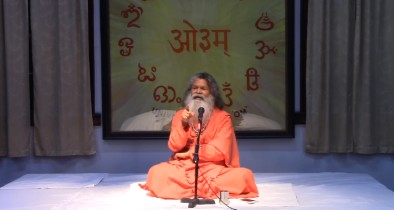
Program at Vedic Temple with Vishwaguruji from Atlanta, Georgia, USA. This place is like the center of the Universe. We need Vedic culture for the knowledge of how to be a human. According to the Upanishads, the first guru/God is the mother. The yogi is able to utilize amrit, the nectar which is coming from Bindu Chakra. Vishwaguruj explains how to chant A-U-M.
Bhajan singing from Strilky Ashram
22:30 - 23:03 (33 min)
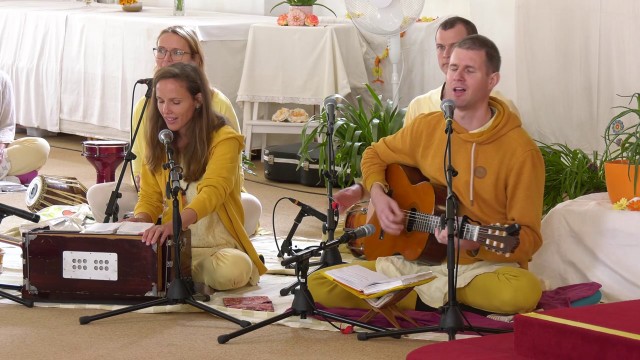
Morning satsang with Vishwaguruji from Strilky Ashram, Czech Republic.
Bhajan evening from Strilky
23:10 - 23:24 (14 min)
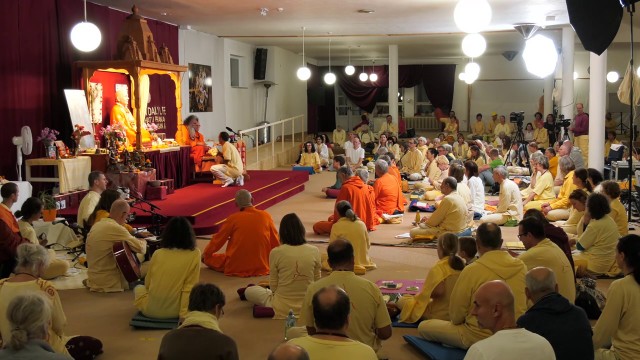
Evening satsang with Vishwaguruji from Strilky Ashram, Czech Republic.
Hymns of Adoration and the Nirvāṇa Ṣaṭkam
23:30 - 23:53 (23 min)
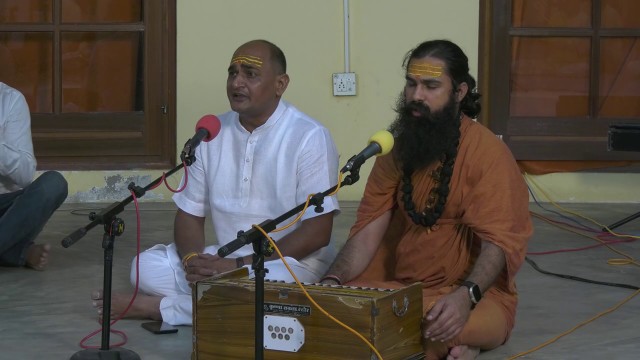
A devotional video featuring the chanting of Sanskrit hymns dedicated to Lord Shiva.
"Na me dveṣa rāgau. Na me lobho, na mādo, neva me neva sāryabhā. Na dharmo, na cārtho, na kāmo, na mokṣaḥ. Cidānanda-rūpaḥ śivo'ham, śivo'ham."
"Brahmā Murārī Surārchitaliṅgam, Nirmalabhāśita Śobhitaliṅgam, Janmajaḍukha Vināśakaliṅgam, Tat praṇamāmi Sadāśivaliṅgam."
The video consists of a continuous recitation of three primary hymns: the Rudrāṣṭakam, the Nirvāṇa Ṣaṭkam (a declaration of the true Self as consciousness and bliss), and the Liṅgāṣṭakam. The chanting is interspersed with and concluded by energetic salutations (jaya) to a lineage of spiritual masters, including Śrī Alakhpurīṣa Mahādeva, Śrī Devapurījī, Śrī Dīp Nārāyaṇa Mahāprabhujī, and others.
Filming location: Jadan, Rajasthan, India
American
Australian