
European
Bhajan evening in the Strilky Ashram
0:50 - 1:43 (53 min)
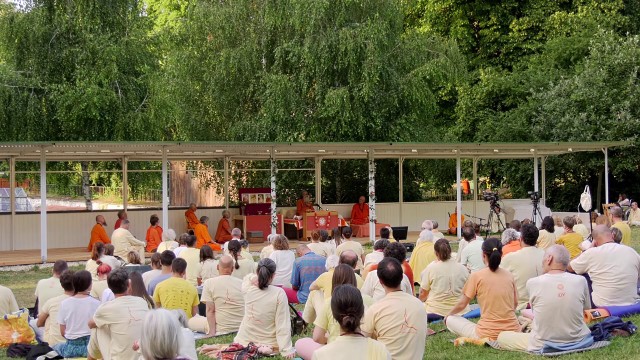
Evening satsang from Strilky Ashram, Czech Republic. Bhajan singing and translations. We shouldn't hold animals in a cage. They feel much pain there. Let them be free. We are also like that bird in the
The Pranas in practice
1:50 - 2:54 (64 min)
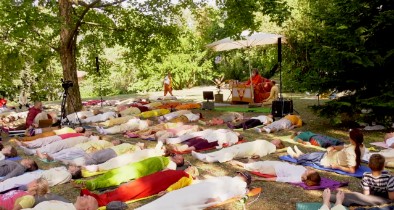
A guided yoga session focusing on Ānandāsana and the importance of Vajranāḍī for vitality.
"There is no existing Śavāsana. Śavāsana is a dead body’s posture, and you are living; you are not dead. Therefore, it is called Ānandāsana."
"Vajrāsana is one of the most powerful postures. It is strengthening first our Vajranāḍī, and Vajranāḍī is like the trunk of this body."
A yoga teacher instructs a large group through a series of postures and exercises, beginning with Ānandāsana and including twists and swings. He explains the physiological and energetic benefits, particularly for digestion and the apāna śakti, and details the role of the Vajranāḍī channel. The session incorporates chanting, demonstrations by students, and concludes with a collective prayer.
Filming location: Strilky, Czech Republic
Nadis and pranayama
3:00 - 4:04 (64 min)
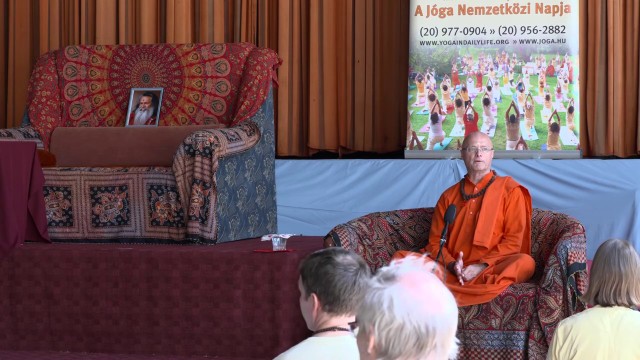
Morning satsang from Summer Yoga Retreat in Vep, Hungary. Lecture by M. M. Swami Vivekpuriji. If you are in good atmosphere you bring good atmosphere everywhere you come. Why we are starting pranayama with the right nostril? Try to inhale the divine, cosmic energy and trough positive thouhts and feelings exhale. Meditative bamboo flute music by Swami Madhuram.
Atma is king of the body
4:10 - 5:15 (65 min)
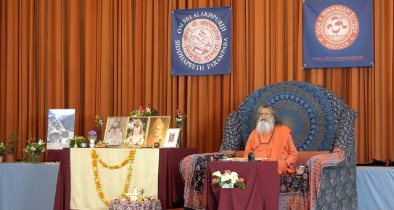
A spiritual discourse on perseverance, self-knowledge, and the inner faculties.
"It is not easy for anyone to remain steadfast on one path. This is true for everybody; it doesn't matter who you are. But when one has a single target, one can achieve it."
"He learned a lesson: if the ant cannot give up, why should I give up my sādhanā? I am sure one day I will achieve my goal. I may fall down many times, but I will get up again."
The speaker shares a parable about an ant persevering to carry a grain of rice, using it to illustrate the necessity of steadfastness on the spiritual path. He expands into an extended metaphor of the body as a coach, with the ten indriyas (faculties) as horses and the Ātmā as the king within. He emphasizes the crucial role of Viveka (discriminative intellect) as the king's advisor to guard against inner thieves like lust, anger, and greed, concluding that the Guru's word is the weapon that dispels them.
Filming location: Vép, Hungary
Sattvic food and healthy body
5:20 - 5:48 (28 min)
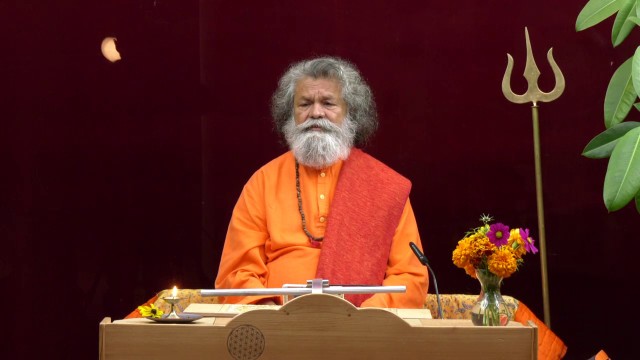
A satsang on integrating yoga and spirituality into daily life, focusing on health and cleansing practices.
"God said, Bhagavān Kṛṣṇa said that everything is within you. Your ātmā, your soul, your consciousness, everything is in us, and therefore we shall take care of our living God."
"Our body is our temple, and God is our ātmā, our soul in our body. We respect everyone, that you are that great person in the world."
The lecturer addresses a global audience, welcoming practitioners of Yoga in Daily Life. He discusses the increased turn towards sattvic food and spirituality during the pandemic, and the benefits of family time. He emphasizes the body as a temple and details two Haṭha Yoga cleansing techniques, jala-dhauti and sūtra-dhauti, explaining their procedures and benefits for the digestive system. He concludes with blessings for health and happiness.
Filming location: Strilky, Czech Republic
Satsang from Vienna
5:55 - 6:56 (61 min)
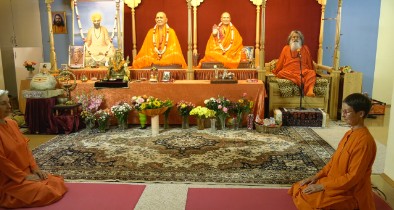
Satsang with H.H. Vishwaguruji Maheshwarananda from Guruji Ashram, Vienna, Austria
Practice with Swamiji
7:00 - 8:07 (67 min)
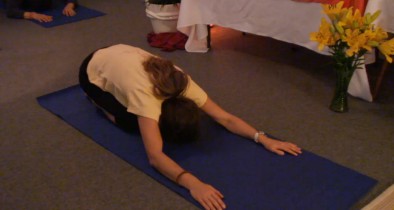
Practice with Swamiji from Auckland, New Zealand.
Good and bad destiny and karma
8:15 - 9:01 (46 min)
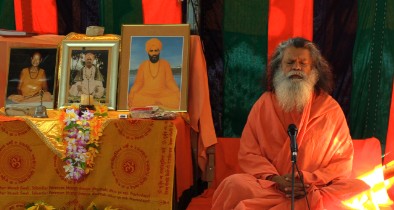
A spiritual discourse on destiny, karma, and religious tradition, incorporating stories and teachings.
"Someone has such a, what we call, good luck, so it comes in your hands... but what you have in yourself, no one can take away. They cannot take your destiny."
"Sanātana Dharma is declared as a living religion, and other religions are dead religions. I would not say death, but finished."
The lecturer leads an evening satsang, exploring the concept of destiny through the lens of karma and consciousness. He narrates a lengthy, illustrative story about the poet Kalidasa, from shepherd to prince to scholar, to demonstrate destiny's unpredictable nature. The talk expands into a comparative discussion of world religions, asserting the perpetual living tradition of Sanātana Dharma in contrast to others he describes as concluded.
Filming location: Australia
A good education is important
9:05 - 10:05 (60 min)
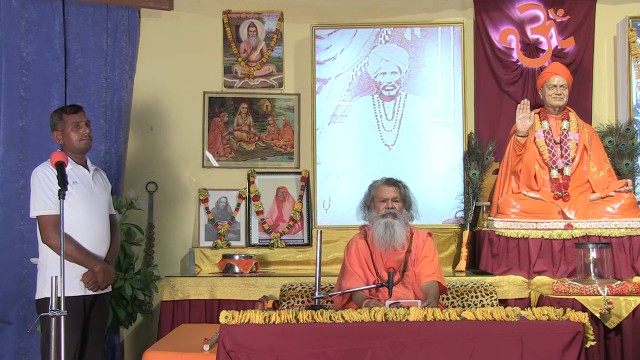
A satsang addressing community discipline, the importance of Hindi, and educational updates.
"If any bus is destroyed, the teachers have to pay the money... The trust means we are trusting you to keep our things okay."
"The Hindi language is the heart of Hindustan. And this Hindi language was born from Sanskrit."
The lecturer speaks to the ashram community, expressing concern over the careless treatment of property like school buses and furniture, instituting a system of financial responsibility. He then introduces the school principal, who delivers a discourse on the origins and significance of the Hindi language, tracing it from Sanskrit and explaining the etymology of the word 'Hindu'. The session includes translations, a financial appeal for the school, and concludes with a devotional song about the value of education.
Filming location: Jadan, Rajasthan, India
The spiritual family
10:10 - 11:01 (51 min)
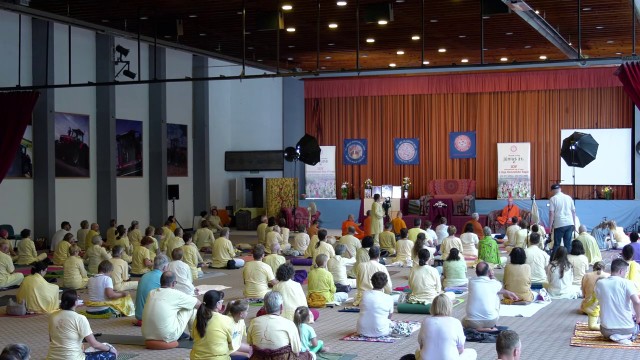
An opening talk at a spiritual seminar addressing the absence of the guru and the purpose of gathering.
"People are always complaining, 'Oh, Kali Yuga is not good, Kali Yuga is a terrible time.' But if you know how to utilize it, Kali Yuga is also excellent."
"We need to be like a Paramahaṁsa... We should be like that. In this world, we have so many things... we should be like the Haṁsa: take the pearls, take the milk, and leave the water."
A senior disciple addresses the assembled spiritual family at the Vép seminar, acknowledging the physical absence of Viśvagurūjī. He reframes the gathering as a vital opportunity to recharge, strengthen spiritual family bonds, and deepen personal practice. Key themes include extracting the essence from the Kali Yuga, the necessity of a supportive community for sādhanā, and using the seminar for introspection, mauna (silence), and focused practice of āsana and prāṇāyāma to calm the mind.
Filming location: Vép, Hungary
A good education is important
11:05 - 12:05 (60 min)
A satsang addressing community discipline, the importance of Hindi, and educational updates.
"If any bus is destroyed, the teachers have to pay the money... The trust means we are trusting you to keep our things okay."
"The Hindi language is the heart of Hindustan. And this Hindi language was born from Sanskrit."
The lecturer speaks to the ashram community, expressing concern over the careless treatment of property like school buses and furniture, instituting a system of financial responsibility. He then introduces the school principal, who delivers a discourse on the origins and significance of the Hindi language, tracing it from Sanskrit and explaining the etymology of the word 'Hindu'. The session includes translations, a financial appeal for the school, and concludes with a devotional song about the value of education.
Filming location: Jadan, Rajasthan, India
Protecting Nature
12:10 - 12:59 (49 min)
Morning satsang with Vishwaugurji from Voderady, Slovak Republic. The human is not the best creature on Earth. Humans have destroyed so much of nature and have created an immense amount of pollution. We have to go back to the natural way of life and to our real, original nature.
Use your common sense!
13:05 - 14:23 (78 min)
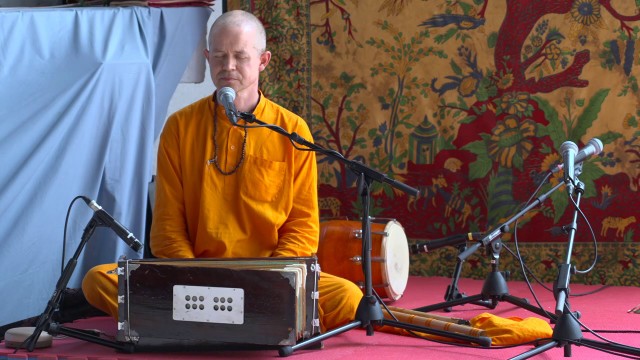
Morning satsang from Summer Yoga Retreat in Vep, Hungary.Lecture about Guruvakya and common sence. Personal guruvakya is ment only for the person who receive it, guruvaky also depend on specific situation. Nada yoga and relaxation. You can be your own therapist with Nada Yoga, chanting mantras.
Remain pure
14:30 - 15:19 (49 min)
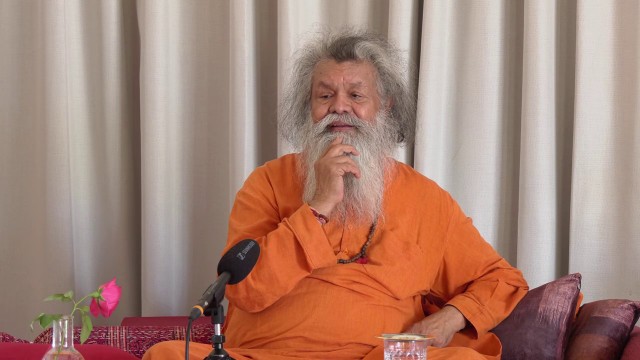
Morning program with Vishwaguruji from Rijeka, Croatia. Vishwaguruji explains problems if one of the parents eats meat. We should take care. He introduces a picture about the nadis. God made women and man, but the whole universe is one.
Jivatma and anandamaya kosha
15:25 - 16:36 (71 min)
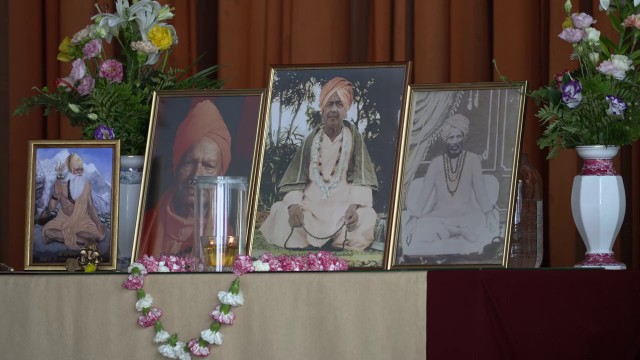
Morning satsang from Summer Yoga Retreat in Vep, Hungary. Lecture by M.M. Swami Vivekpuriji. Explanation of five koshas and the connection between them. Purification of the koshas. Lecture by Swami Madhuram. The love for our Gurudev brings all of us here. We water this seed day by day using different techniques. Playing a meditative raga on bansuri flute awakes the devotion. How to cook good sabji from dried vegetables (like gunda, babool, sangri).
The value of Gurudev
16:40 - 17:47 (67 min)
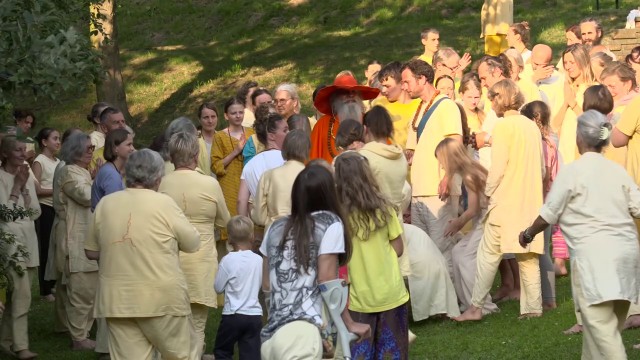
A satsang on the grace of the Guru and lessons from the Rāmāyaṇa.
"Even by the glance of the Guru towards you, that energy is more than enough to give you that push in your life."
"When you have Gurudev's kṛpā, his blessings, then the disciple's life is filled with happiness and joy."
A speaker addresses the assembly, weaving together a teaching on Guru's grace with a story from the Rāmāyaṇa about Hanumān's despair and renewal. He emphasizes that the Guru's presence and blessings are the ultimate source of happiness, surpassing material wealth. The discourse includes personal anecdotes, a bhajan, and chanting of the Guru Paduka Stotra, concluding with a commentary on the deeper, allegorical meaning of Rāma's defeat of Vālī from the Rāmāyaṇa.
Filming location: Strilky, Czech Republic
Around the world - Inauguration Nandeshwar
18:00 - 18:05 (5 min)
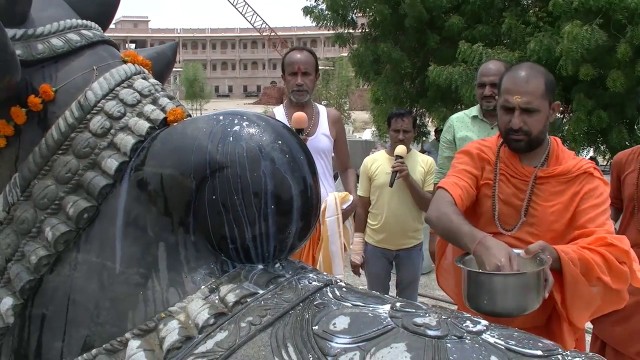
Arrival of Nandeshwar to Om Ashram. Jadan, Rajasthan, India.
The Essence of Yoga in Daily Life
18:10 - 18:45 (35 min)
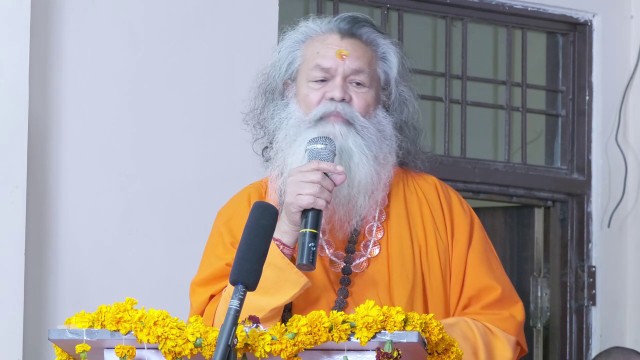
A spiritual discourse and award ceremony on integrating yoga and Sanātana Dharma into daily life.
"You should know why you have come to this world." "Yoga in daily life means in the whole world, in the whole world."
A speaker, referencing Gurudev and Swami Madhavanand, delivers a wide-ranging talk emphasizing the purpose of human life, the principles of yoga, and the protection of animals and Indian culture. He shares anecdotes about teaching yoga abroad, insists on vegetarianism for practitioners, and discusses the global spread of both meat-eating and veganism. The event includes the presentation of awards for promoting Indian culture and peace, with thanks given to organizing institutions like Apex University and the Yoga in Daily Life Foundation.
Filming location: Jaipur, Rajasthan, India
The Viśuddhi Cakra and the Journey of Consciousness
18:50 - 19:36 (46 min)
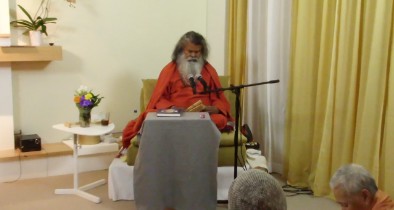
A spiritual discourse on the Viśuddhi (throat) chakra, consciousness, and karma.
"According to this philosophy, there is karma, and karma is action. Action is day and night continuing. Everything we do with body and mind, with our emotion and our intellect, is collecting in a particular part of the body."
"Therefore, many yoga practitioners are not successful. Either they will learn a little bit from me, a little from the Prema Purī, a little from the Svānāmukī, and then after go to the Dayāmātā. It’s nothing. You are cutting here, here."
The teacher explains the Viśuddhi chakra as an energy center affecting body, mind, and consciousness, framing it within the cycle of karma (action and reaction). He discusses higher states of samādhi, using the metaphor of mountain tunnels to warn against fragmented spiritual practice. He narrates the story of the bandit Vālmīki's transformation through mantra repetition to illustrate the purification of karma, and concludes by advising steadfastness on one spiritual path.
Filming location: Vancouver, Canada
Message of the Deepak
19:40 - 20:10 (30 min)
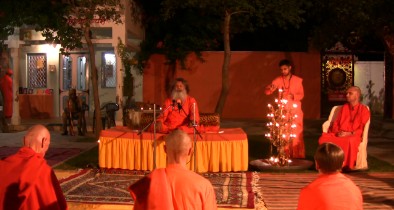
A spiritual discourse on the significance of Diwali (Dīpāvalī).
"This light is the truth, and we light these lights in everyone's heart. If we forget the sins of people, forgive them, and accept them, it means we light the candle again in their heart."
"Therefore, Dīvalī is not only for one day; Dīvalī is every day. When you open your eyes, you get the light, you see the light."
The speaker delivers a satsang on the festival of Diwali, explaining its origin in Lord Rama's return to Ayodhya and its deeper spiritual meaning as the inner light of Brahman. The talk explores the symbolism of the oil lamp—comparing the body to the pot, prana to the oil, the self to the wick, and the flame to the atman—and emphasizes themes of forgiveness, love (prem), non-violence (ahiṃsā), and daily spiritual practice. The discourse includes philosophical reflections, mantra chanting, and a critique of ritual animal sacrifice.
Filming location: Jadan, Rajasthan, India
In the home of the soul
20:15 - 21:18 (63 min)
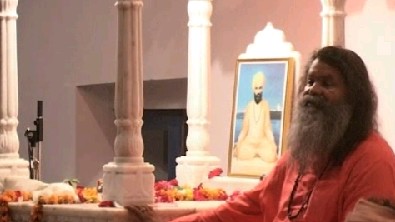
Summer 2003. in India with presentation of Yoga In Daily Life projects and Swamijis lecture
Be the example!
21:25 - 22:04 (39 min)
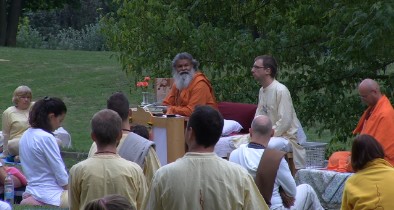
A yoga teacher's discourse on diet, discipline, and modern food adulteration.
"Yoga is a practical path. As we always say, someone stated, 'Tons of theory is nothing without a grain of practice.'"
"So, we are against nature. And nature takes revenge. What we eat is manipulated."
The lecturer addresses yoga teachers and students, emphasizing that instructors must embody the practice to inspire others. He identifies diet as the primary obstacle, detailing the widespread adulteration of modern foods like milk, bread, and dairy with chemicals, animal by-products, and harmful substances. He advocates for minimizing consumption, mastering the sense of taste, and maintaining disciplined practice, illustrated by a story of a disciple who regained health through strict adherence. The talk concludes with a practical challenge to perfect Paścimottānāsana and an encouragement to begin dietary discipline immediately.
Filming location: Strilky, Czech Republic
Live webcast from Vienna
22:00 - 23:30 (90 min)
Evening satsang from Vienna, Austria.
The effect of the Moon to our life
22:10 - 22:26 (16 min)
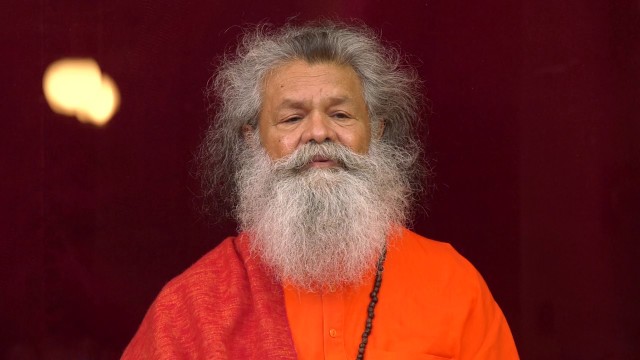
Evening satsang with Vishwaguruji from Strilky Ashram, Czech Republic. This is the day of water and forests and for crops because of the moving of the Moon. Moon is changing very much in our life. It balances the Earth. In a natural way, we can't eat the same fruit for the whole year. Moon has a stronger effect on us like Sun. In this time we can change our feelings and energies. Varaha brought the Earth out from the water. Swami Mataji sang one bhajan about Guru and Guru kripa.
Bhajan singing from Jadan
22:30 - 22:41 (11 min)
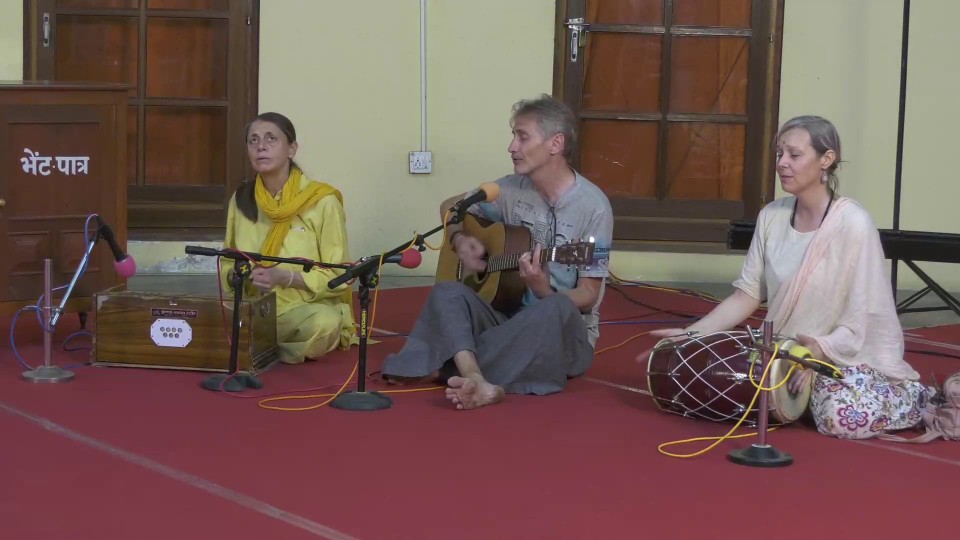
Evening satsang with Vishwaguruji from Jadan Ashram, Rajasthan, India.
Yuga Yuga Jivo Maheshwarananda
22:45 - 22:52 (7 min)
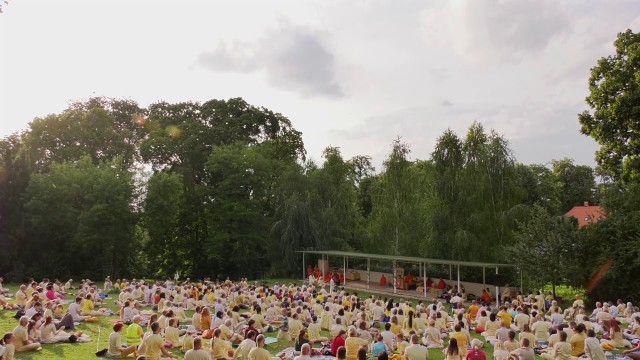
Evening satsang with Vishwaguruji from Strilky Ashram, Czech Republic. Bhajan singing on Gurupurnima satsang.
Sataguru rakho laj hamari
23:00 - 23:06 (6 min)
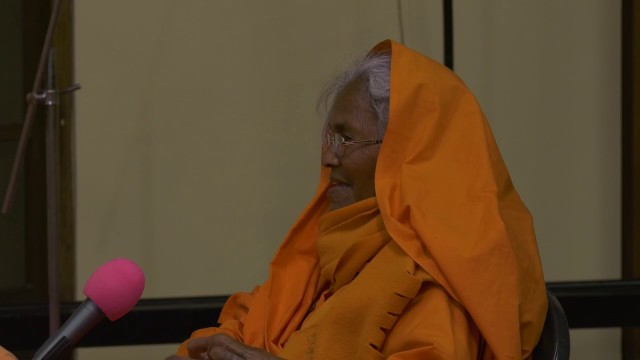
Evening satsang from Jadan Ashram, Rajasthan, India. Vishwaguruji"s sister sings Bhajans.
Repeat the name of Gurudev
23:10 - 23:37 (27 min)
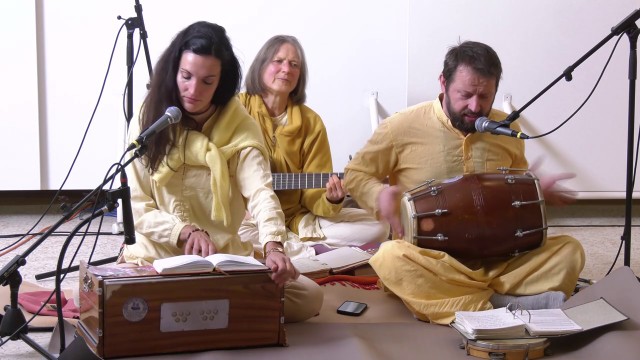
Evening satsang with Vishwaguruji from Vienna, Austria. Bhajan singinig to the Guru. Guru carano me arasatha tiratha he
Bhajan singing in the presence of the Master
23:45 - 0:32 (47 min)
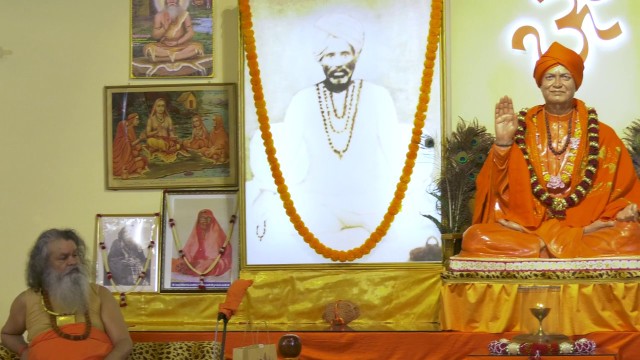
Evening satsang from Jadan Ashram, Rajasthan, India. Bhajan singing from Jadan. Including He nath ab to, Suno sakhi Sataguru aya, Guru carano me arasatha tiratha he
American
Australian