
European
Bhajan singing from Strilky
0:15 - 0:50 (35 min)
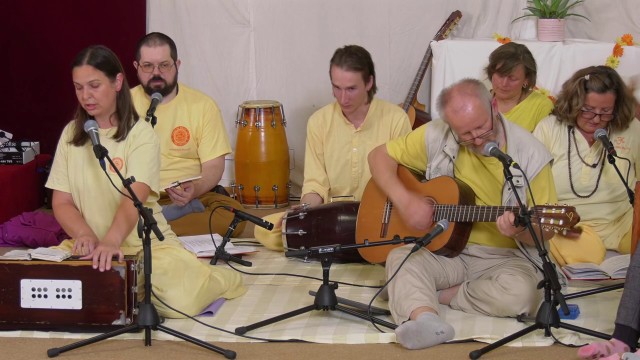
Evening satsang from Strilky Ashram, Czech Republic.
Bhajan evening from Strilky Ashram
0:55 - 1:21 (26 min)
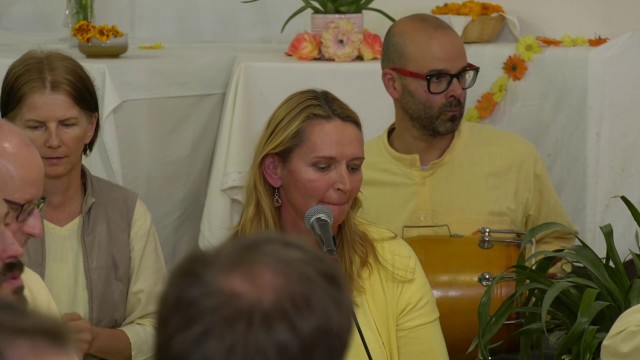
Evening satsang with Vishwaguruji from Strilky Ashram, Czech Republic.
From darkness to light
1:25 - 2:40 (75 min)
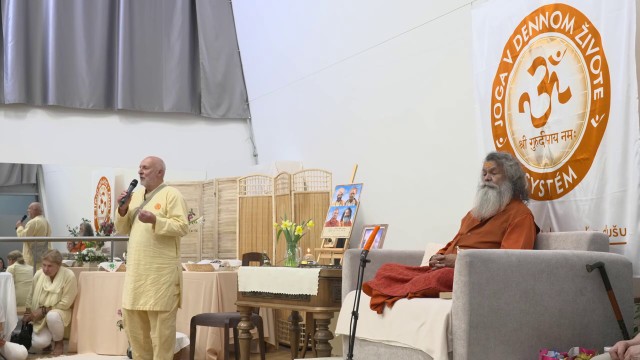
Evening satsang with Viswhaguruji from Presov, Slovak Republic. Bhajan singing. Talk about the meaning of the word Guru.
Remembrance of old disciples to their beginning
2:45 - 4:26 (101 min)
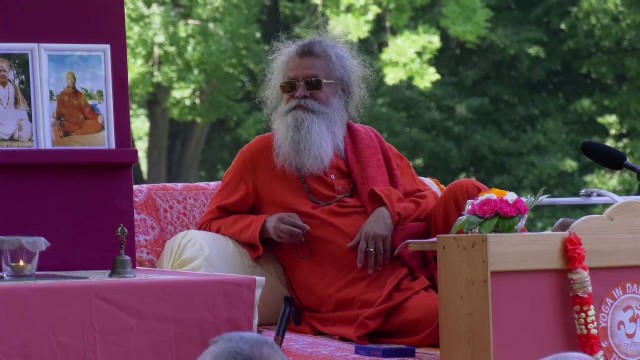
A satsang gathering where disciples share personal stories of meeting their guru and the transformative impact of his teachings.
"I looked to this window, and I saw a clear face, clear. I don't know who this is. For me, at that time, it seemed like Jesus."
"Swāmījī was saying... that the world is actually going down... I was listening for about five minutes, and I was bored. And then, at one point, something happened. They call it resonance."
Multiple disciples from Slovakia, the Czech Republic, Slovenia, and Hungary address Swāmījī (Viśvagurujī), recounting their first encounters with him and the Yoga in Daily Life system, often during the political changes of the late 1980s and early 1990s. They describe experiences of deep spiritual connection, receiving mantra initiation, and profound life changes, including shifts to vegetarianism and dedicated service. The common themes are gratitude, divine guidance, and the perceived miracles stemming from the guru-disciple relationship.
Filming location: Strilky, Czech Republic
How To Practice Pranayam
4:30 - 5:27 (57 min)
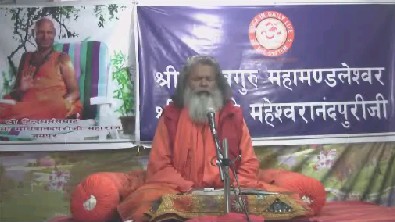
A detailed lecture on the chakras, kuṇḍalinī, and yogic practices.
"Each and every atom which develops in our body is filtered, taken care of, and checked by that energy, and each and every blood cell is charged with that energy."
"Patañjali said to his students, 'Your yoga sādhanā can only be successful if you have a discipline, anuśāsan, 'atha yoga anuśāsanam.' 'Atha' means now, now and now, not tomorrow."
A spiritual teacher delivers an evening program, explaining the Ādyā Śakti (Kuṇḍalinī) as the divine energy governing the universe and the individual. He details the eight main chakras, the three principal nāḍīs (Iḍā, Piṅgalā, Suṣumṇā), and the foundational practices for purification. The talk provides practical instructions for Nāḍī Śodhana Prāṇāyāma, abdominal breathing, Ujjāyī Prāṇāyāma, and the effects of bandhas, emphasizing discipline, correct posture, and the necessity of a teacher for proper practice.
Satsang and chanting of Hanuman Chalisa
5:35 - 6:52 (77 min)
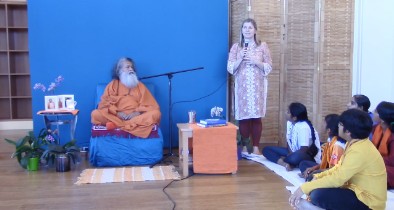
Program with Vishwaguru Maheshwarananda with chanting of Hanuman Chalisa and Bhagavad Gita Dhyana Sloka from San Francisco Bay Area, Oakland, USA.
Practicing of the system 'Yoga in Daily Life', Level 3 - Part 2
7:00 - 8:07 (67 min)
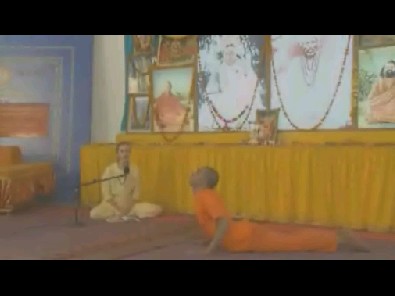
Practicing of the system "Yoga in Daily Life", Level 3 - Part 2, in Om Vishwa Deep Gurukul Swami Maheshwaranand Ashram, Jadan, Rajasthan, India on 27th of October 2009.
Why harmony is lost?
8:15 - 8:49 (34 min)
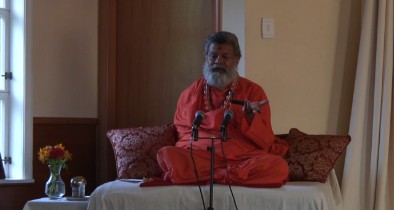
A spiritual discourse on harmony, the soul's journey, and the divine mother principle.
"The first god is mother. 'Pitṛ Devo Bhava'—then comes the father, and so on."
"Life is a journey, not a destination. And this journey is the last milestone to enter... heaven."
Swamiji addresses a gathering, exploring themes of spiritual origin and parental harmony. He describes the soul's descent from the astral world, emphasizing the sacred duty of parents and the foundational love of the mother. The talk focuses on purifying consciousness by abandoning negative thoughts and judgment, culminating in an invitation to a guided meditation.
Filming location: New Zealand
The importance of the Om Ashram
8:55 - 9:45 (50 min)
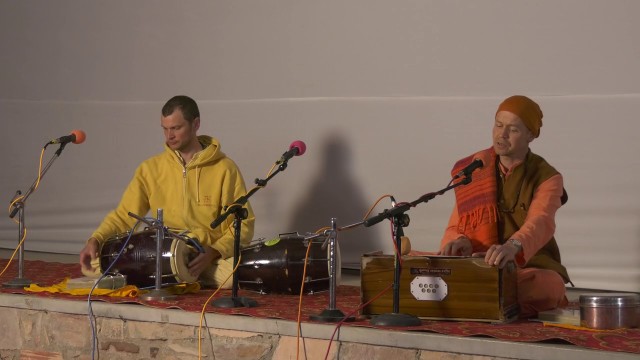
Evening satsang with Vishwaguruji from Jadan Ashram, Rajasthan, India. Welcoming words of Swami Gyaneshwarji, bhajan singing. Short talks about the features and the importance of the Om Ashram. Our eyes now can see our Gurudev and the result of the work done last 30 years. We are lucky ones to be here on this holy place and enjoying the darshan of Gurudev.
The four pillars of life
9:50 - 10:30 (40 min)
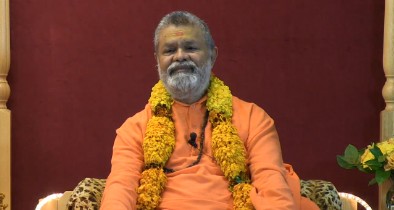
A discourse on the Vedic concepts of Puruṣa, Prakṛti, and the stages of life.
"Prakṛti is nature. Prakṛti is that which is created by God and is itself sustainable."
"Puruṣārtha is hard work, hard work to achieve something positive. And for that, you cannot do it in one year, two years, three years, or four years. It’s years and years and years."
A spiritual teacher delivers a satsang in Vienna, explaining the interplay between consciousness (Puruṣa) and nature (Prakṛti). He details the four human goals (Puruṣārthas)—Dharma, Artha, Kāma, Mokṣa—and the four corresponding life stages (Āśramas): Brahmacarya (student), Gṛhastha (householder), Vānaprastha (retirement), and Sannyāsa (renunciation). The talk emphasizes duty, selfless service, and the ultimate spiritual aim of life, illustrated with traditional teachings and personal anecdotes.
Filming location: Vienna, Austria
The Significance of Pūrṇimā and the Guru Principle
10:35 - 11:24 (49 min)
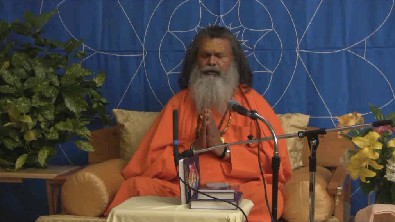
A satsang on the spiritual significance of the full moon (Pūrṇimā) and the Guru principle.
"Śiva means liberation. Śiva means the consciousness. Śiva means the beauty, and Śiva means the truth. Satyam Śivam Sundaram."
"Guru, who leads us from darkness to the light, Tamaso mā jyotir gamaya—lead us from the darkness to the light."
The lecturer delivers a discourse on the auspiciousness of Pūrṇimā, explaining its connection to Lord Śiva, the planet Jupiter (Guru), and the enlightenment of the Earth. He delves into the interplay of the mind (moon) and intellect (sun), the importance of balancing emotions, and the classical definitions of Haṭha Yoga as the six purification techniques. The talk includes practical guidance for yoga teachers, emphasizing relaxation and correct practice, and concludes with an invitation for Guru Pūrṇimā.
If you have dedication, you get everything
11:30 - 12:34 (64 min)
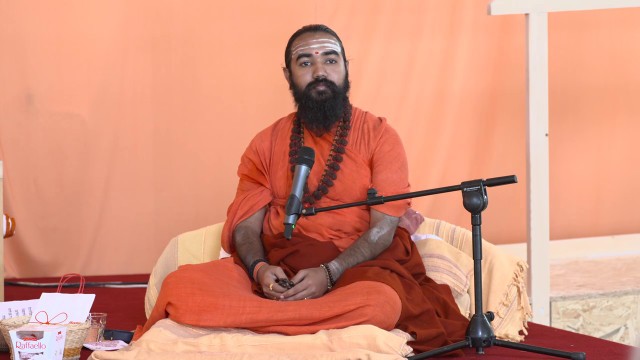
A morning satsang on simplicity, renunciation, and devotion.
"Life is simple. No need to complicate it. We just need two pieces of cloth, or even one."
"If you have true Guru Bhakti, if you have true dedication towards your Guru, if you believe in Him, then you will eventually get what you are waiting for."
The lecturer begins by demonstrating the traditional gati cloth worn by sadhus, explaining its symbolism and the meaning of the tripuṇḍ tilak. He shares a parable about a jealous priest and a magical conch to illustrate the folly of envy. The discourse then explores the life of Gautama Buddha as an exemplar of renunciation and dedication, followed by a story of the disciple Giri's devotion to Adi Shankaracharya. The session includes Sanskrit chants and concludes with a bhajan.
Filming location: Strilky, Czech Republic
Introduction to the science of Chakras
11:35 - 12:55 (80 min)
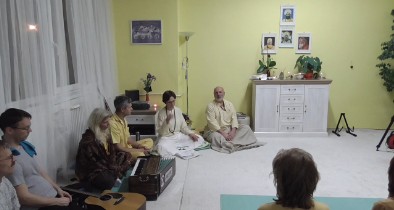
Introduction to Chakras, Presov, Slovak Republic. Muladhara stores much karmic information about us. What is dormant in Muladhara is sprouting in Svadisthana. This is the place of kriya shakti and iccha shakti. If we purify this chakra, half way to our final goal is behind us. Manipura is the powerhouse of our body. Anahat is the place of our feelings. Vishuddhi is the door to the astral world.
The form and the formless
13:05 - 13:57 (52 min)
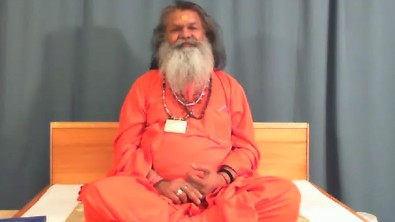
A spiritual discourse on purification, the body's energy systems, and mantra science.
"Any kind of illnesses you have, go and practice ṣaṭkarma: netī, dhautī, bastī, naulī, that kind of practice. This is inner purification."
"So, nirguṇa, it is a nādarūpa parabrahma. The resonance is the form of the Supreme."
A spiritual teacher addresses an assembly at an ashram, explaining the yogic science of purification. He begins by correlating the traditional four social classes (varnas) to different parts and functions of the human body, arguing the caste system is a bodily metaphor, not a social hierarchy. The core teaching outlines a threefold purification process: cleansing the physical body through Haṭha Yoga techniques like ṣaṭkarma, purifying the 72,000 nāḍīs (energy channels) through prāṇāyāma and mantra vibration, and finally cleansing the mind. He leads the audience in chanting exercises, such as feeling the vibration of "Oṃ," and emphasizes the importance of correct Sanskrit pronunciation for mantras to affect specific chakras. The talk expands to cover the five sheaths (kośas) and concludes that yoga is a practical science for realizing the formless reality within the temporary form.
Filming location: Melbourne, Australia
Gurupurnima Satsang with Vishwaguruji (1/2)
14:05 - 16:09 (124 min)
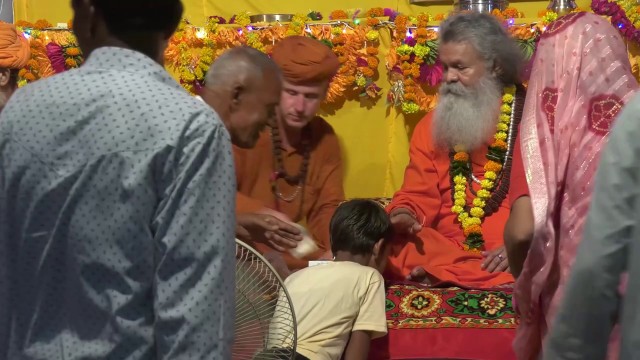
Gurupurnima Celebration with Vishwaguruji, Jadan Ashram, Pali, Rajasthan, India.
Bhajan singing on the Satsang
16:10 - 16:37 (27 min)
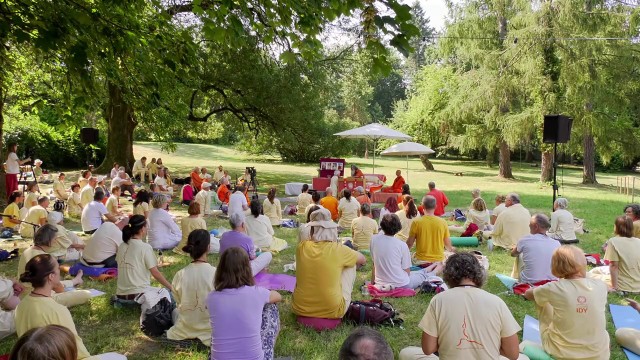
A devotional introduction and singing of a traditional bhajan.
"We can sing a very beautiful bhajan from Swāmī Lālā Nānjī. It is called Manarata Nāma, and it means, 'Oh my mind, repeat the name of God, repeat your mantra.'"
"Give your body and mind to Sāddhā Gurudeva, and he will destroy all your doubts and all your bad qualities. In the holy lotus feet of Satguru Deva reside all holy pilgrimages."
The speaker introduces a lesser-sung bhajan by Swāmī Lālā Nānjī, emphasizing the urgency of spiritual practice in human life. They explain the bhajan's theme of repeating the divine name and extol the glory and essential role of the true Guru in guiding devotees across the ocean of worldly existence. The session includes singing verses from the bhajan and concludes with salutations.
Filming location: Strilky, Czech Republic
Karma yoga means serving
17:20 - 18:00 (40 min)
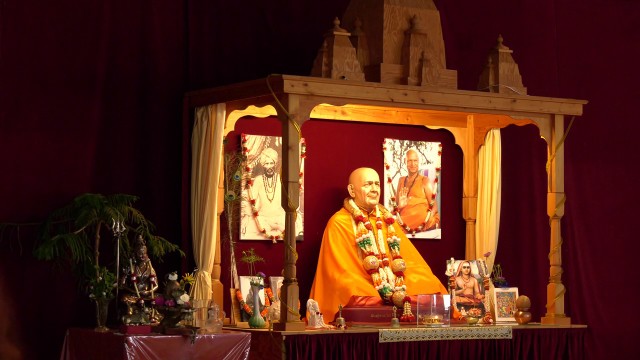
A morning satsang on karma yoga, seva, and skillful action.
"In karma yoga, it is easier to progress further in yogic sādhana, to reach the higher consciousness of the yogī."
"Yogaḥ karmasu kauśalam—yoga is skill in action. Yoga will be successful through the sādhana of karma."
Following a group practice in a meadow, the speaker addresses the assembly, describing the four groups present at the ashram. He defines karma yoga as selfless service, illustrating it with examples from Christian charity to simple daily kindnesses. A story about a disciple mistakenly moving a snail teaches that service must be skillful and informed. The talk emphasizes that seva is the foremost practice, accessible to everyone in countless ways.
Filming location: Strilky, Czech Republic
Around the world - Yoga for children CRO
18:01 - 18:09 (8 min)
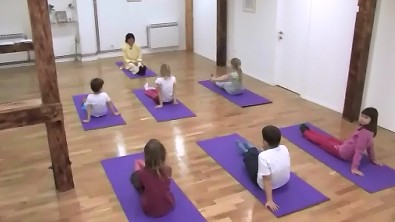
A yoga class for children, focusing on mindful movement, self-observation, and breathwork.
"You can repeat it silently three times. It is certain to manifest."
"There is no competition with others, no comparison like in other sports about who is better at something."
An instructor guides children through a session that begins with setting a personal intention (saṅkalpa) and body awareness. The class includes physical postures, described through alignment cues and animal-inspired movements (āsanas), and prepares for breathing practice (prāṇāyāma). The instructor reflects on the joy of witnessing the children's progress and the personal rejuvenation found in teaching.
Filming location: Croatia
Around the world - Yoga for Kids from Hungary
18:15 - 18:20 (5 min)
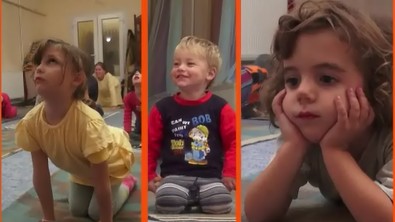
A family yoga program for children and parents at a Budapest sports club.
"Through the practice of yoga, a child gains not only flexibility, agility, and the ability to concentrate, but the practice of āsanas also helps keep many illnesses at bay."
"We practice based on the Paramhanszámi Mahasrananda Yoga Children's Kecsmi book. Using this, both children and adults can participate in playful yoga sessions."
The host, Kirām, welcomes participants to a monthly family yoga session, explaining its inclusive nature and benefits for children's holistic development. The practice uses a specific children's yoga book, connecting postures with animals and plants. The session includes storytelling, craft activities like candle decorating for upcoming festivals, and watching a short animated film about Hanumān.
Filming location: Hungary
Satsang from Maha Kumbha Mela
18:25 - 19:04 (39 min)
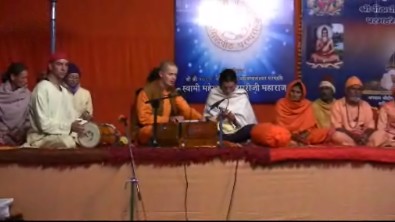
Satsang from Illahabad
The four pillars of life
19:10 - 19:50 (40 min)
A discourse on the Vedic concepts of Puruṣa, Prakṛti, and the stages of life.
"Prakṛti is nature. Prakṛti is that which is created by God and is itself sustainable."
"Puruṣārtha is hard work, hard work to achieve something positive. And for that, you cannot do it in one year, two years, three years, or four years. It’s years and years and years."
A spiritual teacher delivers a satsang in Vienna, explaining the interplay between consciousness (Puruṣa) and nature (Prakṛti). He details the four human goals (Puruṣārthas)—Dharma, Artha, Kāma, Mokṣa—and the four corresponding life stages (Āśramas): Brahmacarya (student), Gṛhastha (householder), Vānaprastha (retirement), and Sannyāsa (renunciation). The talk emphasizes duty, selfless service, and the ultimate spiritual aim of life, illustrated with traditional teachings and personal anecdotes.
Filming location: Vienna, Austria
How to train our mind?
20:00 - 20:21 (21 min)
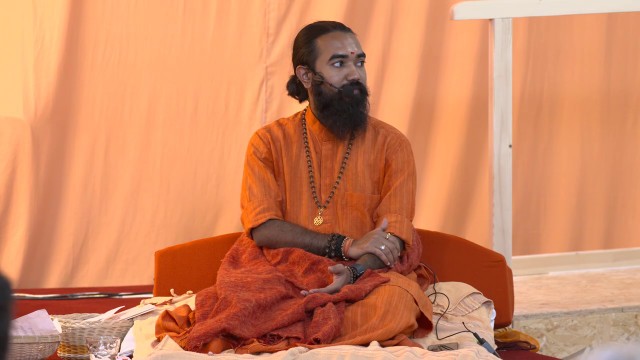
A spiritual discourse on taming the restless mind using a parable from Gurudeva.
"Our mind is chanchal. Chanchal means very restless, and that is normal for a human mind, but you need to learn how to train and tame your mind."
"In the same way, our minds are very restless, running around. We should just let it go; that is its job, to roam around and have thoughts continuously. Then, slowly, slowly, train your mind towards Guru Bhakti."
A speaker recounts Gurudeva's parable of a king's untamable horse and the patient trainer who tamed it through gentle, persistent companionship and reward. The story serves as an analogy for taming the restless mind through devotion to the Guru and the path of Bhakti, rather than forceful suppression. The session concludes with the guided recitation and explanation of a Sanskrit mantra focused on meditating on the Supreme Self within the heart.
Filming location: Strilky, Czech Republic
Only wisdom can digest ego
20:15 - 21:13 (58 min)
Lecture from Vep, Hungary
Vishwaguruji in Khatu
21:15 - 21:28 (13 min)
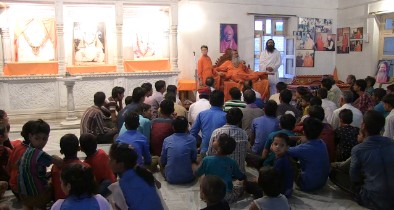
Evening program from India
Meditation from Strilky
21:30 - 22:25 (55 min)
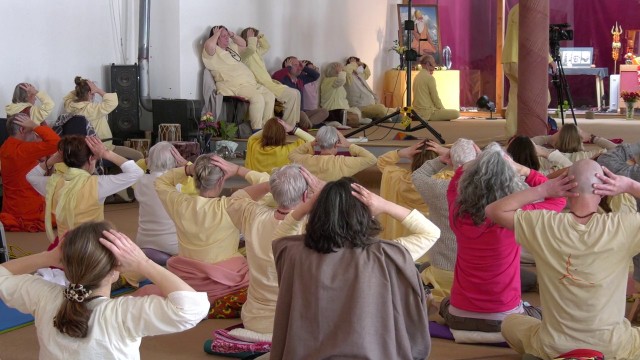
Practice. Morning program with Vishwaguruji from Strilky Ashram, Czech Republic.
Bhajan singing from Strilky Ashram
22:30 - 23:03 (33 min)
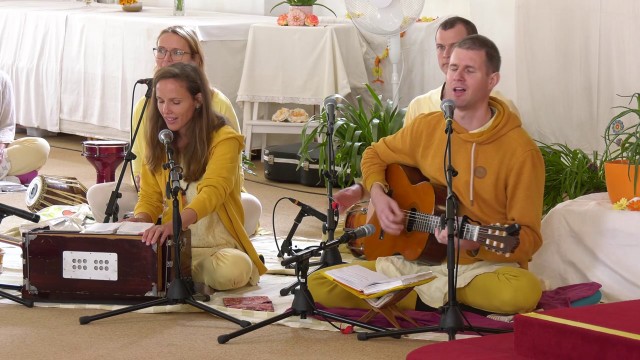
Morning satsang with Vishwaguruji from Strilky Ashram, Czech Republic.
Bhajan evening from Strilky
23:10 - 23:24 (14 min)
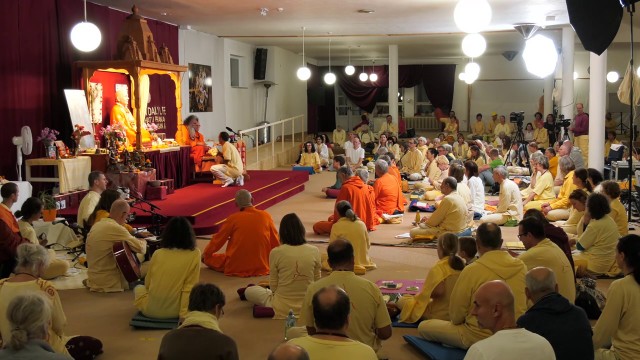
Evening satsang with Vishwaguruji from Strilky Ashram, Czech Republic.
Hymns of Adoration and the Nirvāṇa Ṣaṭkam
23:30 - 23:53 (23 min)
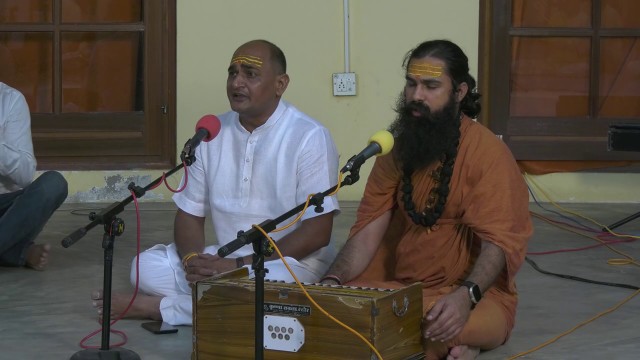
A devotional video featuring the chanting of Sanskrit hymns dedicated to Lord Shiva.
"Na me dveṣa rāgau. Na me lobho, na mādo, neva me neva sāryabhā. Na dharmo, na cārtho, na kāmo, na mokṣaḥ. Cidānanda-rūpaḥ śivo'ham, śivo'ham."
"Brahmā Murārī Surārchitaliṅgam, Nirmalabhāśita Śobhitaliṅgam, Janmajaḍukha Vināśakaliṅgam, Tat praṇamāmi Sadāśivaliṅgam."
The video consists of a continuous recitation of three primary hymns: the Rudrāṣṭakam, the Nirvāṇa Ṣaṭkam (a declaration of the true Self as consciousness and bliss), and the Liṅgāṣṭakam. The chanting is interspersed with and concluded by energetic salutations (jaya) to a lineage of spiritual masters, including Śrī Alakhpurīṣa Mahādeva, Śrī Devapurījī, Śrī Dīp Nārāyaṇa Mahāprabhujī, and others.
Filming location: Jadan, Rajasthan, India
American
Australian