
European
Be kind to all creatures
1:10 - 2:10 (60 min)
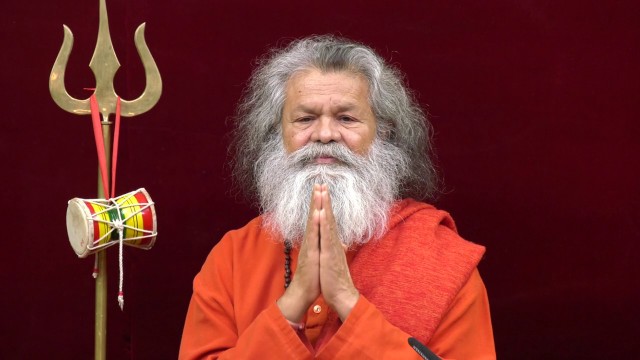
An evening satsang on spiritual authority, universal compassion, and steadfast practice.
"Humans know that all animals, everyone, even the trees, have pain, and we humans should help them, not kill them."
"Who is sitting there should not say, 'I am the higher and I am best.' Then it means you are not capable for this gāḍī. We must be more humble, more respectful, and more loving toward one another."
The lecturer addresses a gathering, exploring the sanctity of the spiritual seat (gāḍī) and the humility required of those who occupy it. He emphasizes love and compassion for all creatures, critiques gender exclusion in spiritual leadership, and advises a gradual development of consciousness. He concludes with a parable about a restless disciple digging many wells, illustrating the need for dedicated practice with one guru rather than seeking endlessly.
Filming location: Strilky, Czech Republic
Guru Tattva, Wellington, NZ
2:15 - 3:30 (75 min)
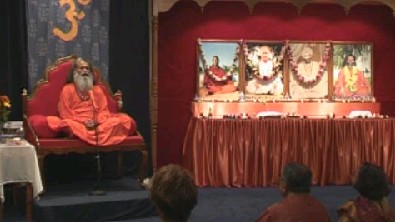
Guru Tattva is directly connected to God Shiva. Guru Tattva is the highest Tattva in the world. Shiva Tattva destroys all negative karmas, negative thoughts and qualities which we cannot overcome. Vishnu Tattva is protecting us and our destiny. Brahma Tattva creates in us good thoughts, the positive way of thinking. It creates within us a better, positive and wise man. Guru Tattva is not the physical embodiment of the Guru. Guru Tattva is the knowledge. It is the divine light and we adore that light. When we get this light it means Atma Gyana, Moksha, liberation. Guru Tattva is knower of everyone and lives in everyone. Gurudev is carrying the light within and is bringing us the wisdom. We are searching the light, keep it, don't lose it. Gurudev is that one which operate all negative karmas away because he has that knowledge. Guru consciousness is awaken and one who is awaken can awake others.
Our heart knows the path
3:35 - 4:31 (56 min)
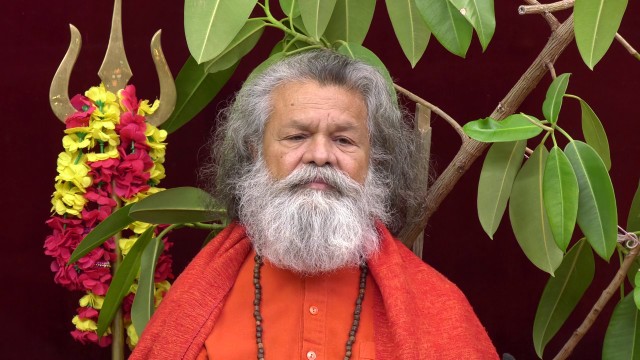
A spiritual discourse on finding the inner path and the role of guidance.
"Our path, the yogic path—I would say a yogī means all, it does not matter from which countries, religions, or techniques; they all have good things."
"The path is within your heart. In my heart, and then in my brain. These are both together. The heart and brain, this both together, is like we and God."
A swami leads a satsang, offering blessings and discussing the journey of spiritual practice. He emphasizes that the true guiding path is found within one's own heart and self, yet uses the parable of a blind man missing a door to illustrate how ego can cause one to reject external help and become lost. He explores themes of meditation, the necessity of a mala and mantra as anchors, and the foundational importance of the Mūlādhāra chakra, concluding that a strong spiritual foundation is essential for progress.
Filming location: Strilky, Czech Republic
Satsang is the source of happiness and enlightenment
4:35 - 5:35 (60 min)
Opening satsang from the weekend retreat in Strilky, Czech Republic. Satsang is the source of happiness and enlightenment and kusanga is the source of troubles and unhappiness. Swamiji tells the story about the three monkeys and emphsizes "dont see negative, dont speak negative, dont listen negative, see God in everyone."
Worship every God and incarnation
5:40 - 6:55 (75 min)
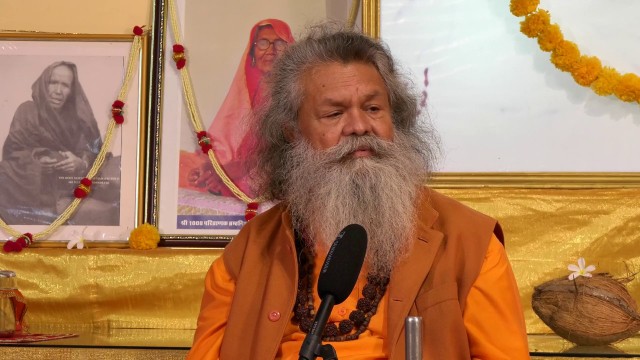
Evening satsang with Vishwaguruji from Jadan Ashram, Rajasthan, India. At this time of the year, many people in the world are waiting for Jesus to come. Krishna's mother was suffering very much like Jesus's mother Holy Maria. Now we worship every great saint. God is in every creature. Don't be the cause of the pain of any creatures. If you worship God first worship your mother. Mother animals also feel love for their babies and feel pain if they lose them. Bhajan singing.
A Gentle Yoga Practice
7:00 - 8:07 (67 min)
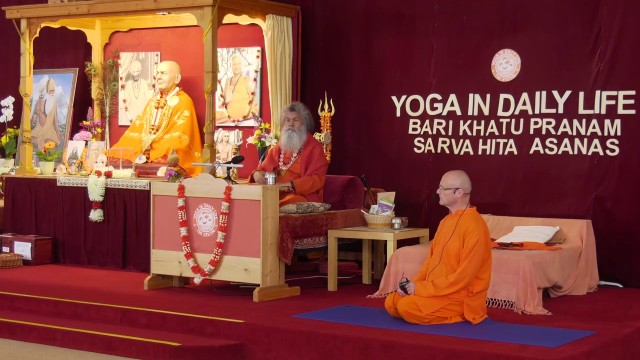
A guided gentle yoga class focusing on breath and alignment.
"Pavanamuktāsana is excellent for digestion." "When we start to breathe a little deeper, we immediately have more energy and less tension."
An instructor leads a group through a sequence of postures, including Pavanamuktāsana on the back and standing, Uttānāsana, and balancing poses like Ekapāda Uttānāsana. The guidance emphasizes anatomical awareness, the benefits for circulation and focus, and connects the physical practice to the cleansing of the nāḍīs for prāṇic flow. The session concludes with Bhujaṅgāsana and relaxation.
Filming location: Strilky, Czech Republic
Australia and Fijij
8:15 - 8:54 (39 min)
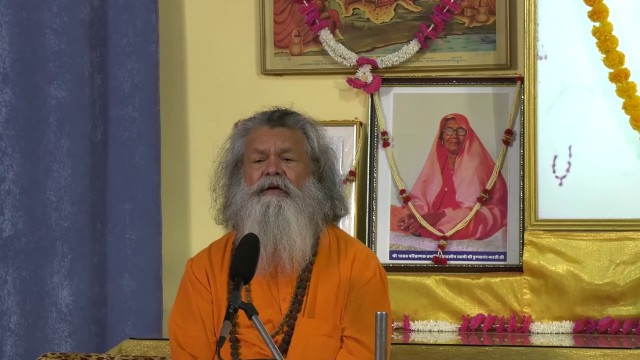
A spiritual teacher shares reflections on global travel, history, and community.
"Australia is a very large and beautiful country, but there are not too many people, and they do not wish for more." "Why do I do this? I go everywhere, and I'm thinking, so I see where, how people are living there."
The speaker recounts travels to Australia, Fiji, and other regions, discussing indigenous histories, colonial impacts, and the diaspora. He describes visiting disciples and ashrams, praising their spiritual devotion and peaceful life. The narrative weaves observations on geography, the role of the United Nations, and ethical living, concluding with reverence for his gurus and a critique of modern dietary habits.
Filming location: Fiji Islands
Śaṅkha Prakṣālana and Kunjal Kriyā: Purification of the Intestine and Stomach
9:00 - 9:40 (40 min)

A practical demonstration and instructional lecture on the Haṭha Yoga purification techniques of Śaṅkha Prakṣālana and Kunjal Kriyā.
"Śaṅkha Prakṣālana is a very good exercise, but it has to be done early in the morning, of course, on an empty stomach."
"After Śaṅkha Prakṣālana, after purification, you have to keep a diet for at least, strictly, seven days, one week, and up to one month."
An instructor leads a session at an ashram, detailing the procedures for intestinal and stomach cleansing. He explains the preparation, the specific exercises and drinking process for Śaṅkha Prakṣālana, and the subsequent technique for Kunjal Kriyā (Vaman Dhautī), assisted by two experienced practitioners. Key themes include the importance of timing, dietary restrictions post-practice, and the health benefits of these purification rituals.
Filming location: Strilky, Czech Republic
If you don’t accept, you will lose the chance
9:45 - 10:23 (38 min)
A discourse on the spiritual message of the Satguru, using a bhajan for reflection.
"Only the disciple whose antahkaraṇa (inner instrument) is pure will understand the indications Gurudev gives."
"Whatever is said by the Guru comes to truth."
A spiritual teacher unpacks the bhajan "Sandeśa," explaining how a Satguru's guidance, though sometimes difficult to accept, is a divine message meant for the disciple's ultimate liberation. He uses analogies of medicine, social education, and protection from negative influences (Ku-saṅga) to describe the process of purifying one's qualities to receive and understand the Guru's word (Guruvākya), which awakens the soul.
Filming location: Strilky, Czech Republic
Building the Ashram
10:30 - 11:05 (35 min)
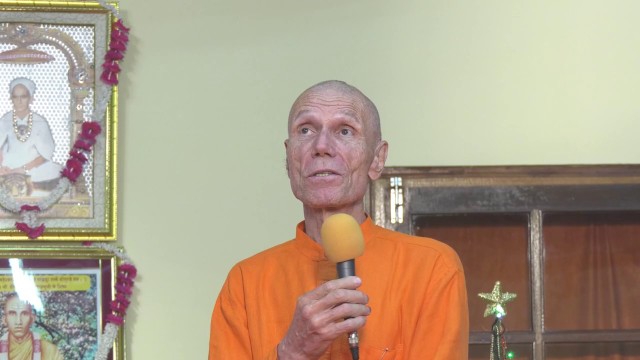
A spiritual discourse and practical lecture on ashram life and traditional construction.
"This is our ashram; this is our ashram. And when you see it, oh, it is very nice."
"The best material to build a building is wood... And you see the best people, there are two."
An initial, stream-of-consciousness spiritual monologue reflects on the ashram's essence, divinity in nature, and the cycle of life. The video then shifts to a practical lecture, where Gurudev Swami Mishranji explains the construction of the ashram's hall, detailing the use of steel trusses and a straw roof. He discusses the principles of Vāstu Śāstra and advocates for healthy, natural building materials like wood and lime over modern materials like granite and cement.
Filming location: Jadan, Rajasthan, India
The Union of Consciousness: Yoga, Chakras, and the Human Journey
11:10 - 11:41 (31 min)
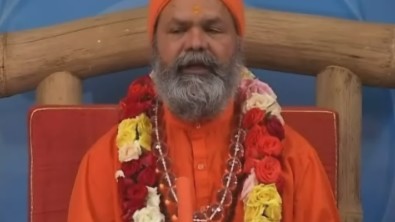
A spiritual lecture on yoga, consciousness, and the subtle body.
"Yoga means balance. Where there is balance, there is harmony. Where there is harmony, there is unity. Therefore, yoga means, literally, the union—the union of the individual consciousness with the cosmic consciousness."
"We are not the doer. He is the doer, Mahāprabhujī... We are only the instrument."
A spiritual teacher delivers an evening satsang, exploring the foundational principles of yoga as union and balance. He explains the creation from cosmic sound, the human intellect, and the subtle anatomy of 72,000 nāḍīs (energy channels) and the eight primary chakras. The discourse covers the awakening of Kuṇḍalinī energy, the interplay of consciousness (Śiva) and energy (Śakti), and the importance of guiding the mind rather than controlling it.
Filming location: Sunshine Coast, Australia
The Awakening of Kuṇḍalinī: A Journey to Happiness, Love, and Wisdom
11:45 - 12:13 (28 min)
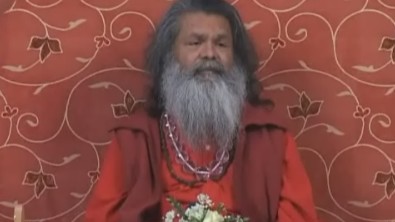
A spiritual discourse on the awakening of Kuṇḍalinī and the structure of human consciousness.
"The awakening of the Kuṇḍalinī means happiness, universal love, and wisdom." "The soul is not the ātmā. The soul is only the collection of our karmas, destinies, and our qualities."
A teacher explains the nature of Kuṇḍalinī awakening, describing it as a state of bliss and universal love. He details the human energy system, including the five kośas (sheaths) and the chakras, using the metaphor of salt dissolving in water to describe the persistence of karma. The talk covers the etymology of "Kuṇḍalinī," its association with serpentine energy, and the importance of spiritual guidance for a stable awakening.
Filming location: Debrecen, Hungary
Shiva is universal
12:20 - 12:41 (21 min)
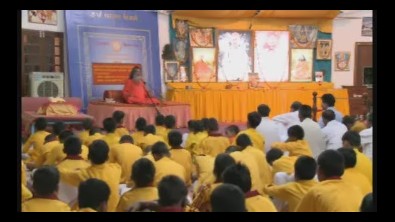
A spiritual discourse on environmental consciousness and devotion during the sacred month of Śrāvaṇa.
"Mahātmā Gandhījī said, 'Mother Earth has enough for everyone’s need, but not for their greed.'"
"Śiva says, 'I know what you are praying for. Don’t beg, just do prayer. Give your love.'"
A spiritual teacher broadcasts from an ashram, explaining the significance of the lunar month of Śrāvaṇa and its connection to the monsoon season. He links modern climate crises and water scarcity to human greed and mental pollution, urging heartfelt prayer and unconditional devotion to Lord Śiva. He advises dedicating the four monsoon months to meditation and mantra practice, emphasizing that true prayer comes from a heart full of selfless love.
Filming location: Jadan, Rajasthan, India
We seek purity
12:45 - 12:56 (11 min)
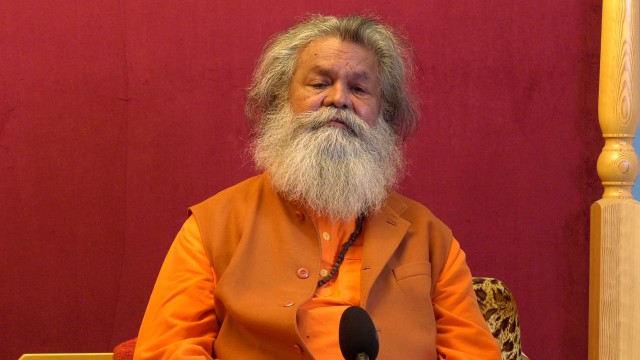
A spiritual discourse on purity and devotion in the modern age.
"Therefore, I always implore our devotees: 'Please do not be black, please do not be black.'"
"I want to be this drop. I want to drink... it desires only purity, directly from my God."
The lecturer reflects on the pervasive darkness of the Kali Yuga, observed in clothing and culture, and contrasts it with the purity found in sacred music and devotion. He shares teachings from his Gurudeva, using the metaphor of a pure drop of water (pū) to describe the soul's yearning for divine purity over worldly abundance, and calls for inner cleanliness and the declaration of the pure "I am."
Filming location: Vienna, Austria
The Journey Beyond Duality: Life, Self, and the Path to Oneness
13:00 - 14:12 (72 min)
A spiritual discourse on yoga philosophy, the nature of the self, and the path to oneness.
"Our life, as we said, is a destiny and a journey. It is a journey; the destination is still not there."
"In Ātmā, in the self, there are no dualities; there is only oneness. So where there is heaven and hell, there is life and death... that's what we want to come out of, to become one with the highest, with our Self."
Swami Anand Arun delivers an extensive teaching, exploring the journey beyond dualities like life/death and divine/demonic energies. He explains core concepts of Ātmā, karma, and the three guṇas, detailing the system of senses (indriyas), vital energies (prāṇas), and channels (nāḍīs). The talk defines yoga as union, clarifies traditional Haṭha Yoga, and maps the subtle body's chakras, concluding with anecdotes about advanced practices like Khecharī Mudrā and the nectar of immortality.
Filming location: USA
If you don’t accept, you will lose the chance
14:20 - 14:58 (38 min)
A discourse on the spiritual message of the Satguru, using a bhajan for reflection.
"Only the disciple whose antahkaraṇa (inner instrument) is pure will understand the indications Gurudev gives."
"Whatever is said by the Guru comes to truth."
A spiritual teacher unpacks the bhajan "Sandeśa," explaining how a Satguru's guidance, though sometimes difficult to accept, is a divine message meant for the disciple's ultimate liberation. He uses analogies of medicine, social education, and protection from negative influences (Ku-saṅga) to describe the process of purifying one's qualities to receive and understand the Guru's word (Guruvākya), which awakens the soul.
Filming location: Strilky, Czech Republic
Be kind to all creatures
15:05 - 16:05 (60 min)
An evening satsang on spiritual authority, universal compassion, and steadfast practice.
"Humans know that all animals, everyone, even the trees, have pain, and we humans should help them, not kill them."
"Who is sitting there should not say, 'I am the higher and I am best.' Then it means you are not capable for this gāḍī. We must be more humble, more respectful, and more loving toward one another."
The lecturer addresses a gathering, exploring the sanctity of the spiritual seat (gāḍī) and the humility required of those who occupy it. He emphasizes love and compassion for all creatures, critiques gender exclusion in spiritual leadership, and advises a gradual development of consciousness. He concludes with a parable about a restless disciple digging many wells, illustrating the need for dedicated practice with one guru rather than seeking endlessly.
Filming location: Strilky, Czech Republic
Confidence
16:10 - 17:03 (53 min)
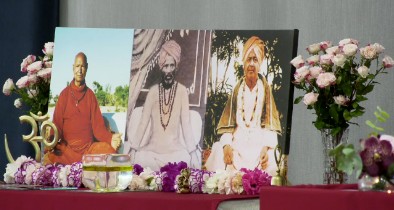
A spiritual discourse on the necessity of faith and commitment to a single path.
"If you meditate, concentrate, practice, perform prāṇāyāma, read the holy books—do everything—but there is no trust, it is futile."
"Ek saje sab saje, aur sab saje sab jāye. When you practice one, you will get all. And when you will try to do all, then you will get lost in all."
A spiritual teacher addresses his disciples, emphasizing unwavering faith and commitment to one chosen path as the foundation for all practice. He warns against the spiritual confusion of seeking multiple masters, using parables like a dog losing its bread by chasing its reflection. He discusses the lineage of masters like Alak Purījī and Devpurījī, and cautions against distractions like astrology, urging focused sādhanā.
Filming location: Zagreb, Croatia
Australia and Fijij
17:10 - 17:49 (39 min)
A spiritual teacher shares reflections on global travel, history, and community.
"Australia is a very large and beautiful country, but there are not too many people, and they do not wish for more." "Why do I do this? I go everywhere, and I'm thinking, so I see where, how people are living there."
The speaker recounts travels to Australia, Fiji, and other regions, discussing indigenous histories, colonial impacts, and the diaspora. He describes visiting disciples and ashrams, praising their spiritual devotion and peaceful life. The narrative weaves observations on geography, the role of the United Nations, and ethical living, concluding with reverence for his gurus and a critique of modern dietary habits.
Filming location: Fiji Islands
Our heart knows the path
17:55 - 18:51 (56 min)
A spiritual discourse on finding the inner path and the role of guidance.
"Our path, the yogic path—I would say a yogī means all, it does not matter from which countries, religions, or techniques; they all have good things."
"The path is within your heart. In my heart, and then in my brain. These are both together. The heart and brain, this both together, is like we and God."
A swami leads a satsang, offering blessings and discussing the journey of spiritual practice. He emphasizes that the true guiding path is found within one's own heart and self, yet uses the parable of a blind man missing a door to illustrate how ego can cause one to reject external help and become lost. He explores themes of meditation, the necessity of a mala and mantra as anchors, and the foundational importance of the Mūlādhāra chakra, concluding that a strong spiritual foundation is essential for progress.
Filming location: Strilky, Czech Republic
Building the Ashram
18:55 - 19:30 (35 min)
A spiritual discourse and practical lecture on ashram life and traditional construction.
"This is our ashram; this is our ashram. And when you see it, oh, it is very nice."
"The best material to build a building is wood... And you see the best people, there are two."
An initial, stream-of-consciousness spiritual monologue reflects on the ashram's essence, divinity in nature, and the cycle of life. The video then shifts to a practical lecture, where Gurudev Swami Mishranji explains the construction of the ashram's hall, detailing the use of steel trusses and a straw roof. He discusses the principles of Vāstu Śāstra and advocates for healthy, natural building materials like wood and lime over modern materials like granite and cement.
Filming location: Jadan, Rajasthan, India
Satsang is the source of happiness and enlightenment
19:35 - 20:35 (60 min)
Opening satsang from the weekend retreat in Strilky, Czech Republic. Satsang is the source of happiness and enlightenment and kusanga is the source of troubles and unhappiness. Swamiji tells the story about the three monkeys and emphsizes "dont see negative, dont speak negative, dont listen negative, see God in everyone."
Worship every God and incarnation
20:40 - 21:55 (75 min)
Evening satsang with Vishwaguruji from Jadan Ashram, Rajasthan, India. At this time of the year, many people in the world are waiting for Jesus to come. Krishna's mother was suffering very much like Jesus's mother Holy Maria. Now we worship every great saint. God is in every creature. Don't be the cause of the pain of any creatures. If you worship God first worship your mother. Mother animals also feel love for their babies and feel pain if they lose them. Bhajan singing.
The Union of Consciousness: Yoga, Chakras, and the Human Journey
22:00 - 22:31 (31 min)
A spiritual lecture on yoga, consciousness, and the subtle body.
"Yoga means balance. Where there is balance, there is harmony. Where there is harmony, there is unity. Therefore, yoga means, literally, the union—the union of the individual consciousness with the cosmic consciousness."
"We are not the doer. He is the doer, Mahāprabhujī... We are only the instrument."
A spiritual teacher delivers an evening satsang, exploring the foundational principles of yoga as union and balance. He explains the creation from cosmic sound, the human intellect, and the subtle anatomy of 72,000 nāḍīs (energy channels) and the eight primary chakras. The discourse covers the awakening of Kuṇḍalinī energy, the interplay of consciousness (Śiva) and energy (Śakti), and the importance of guiding the mind rather than controlling it.
Filming location: Sunshine Coast, Australia
Real health comes from Nature
22:35 - 23:34 (59 min)
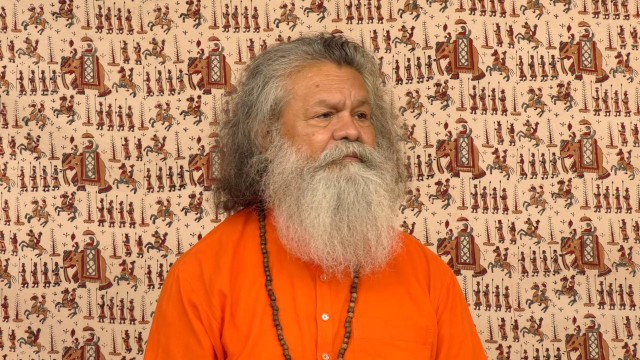
A satsang on health, natural remedies, and gentle yoga practice.
"I am not a doctor, yes? Please. I am Swami. I am a yogī. And I am you, a natural."
"So many things we do not know. We do not know that one has. If you know exactly, then everything is gone."
Swami Maheshvaranand leads a satsang, discussing the limitations of conventional medicine and praising natural, holistic approaches to health. He shares anecdotes about medicinal tree bark and the work of Yogī Ramdev, while also critiquing how doctors often manage rather than cure illness. The session concludes with instructions for a gentle, supine yoga exercise intended for digestive health.
Filming location: Strilky, Czech Republic
Guru Tattva, Wellington, NZ
23:40 - 0:55 (75 min)
Guru Tattva is directly connected to God Shiva. Guru Tattva is the highest Tattva in the world. Shiva Tattva destroys all negative karmas, negative thoughts and qualities which we cannot overcome. Vishnu Tattva is protecting us and our destiny. Brahma Tattva creates in us good thoughts, the positive way of thinking. It creates within us a better, positive and wise man. Guru Tattva is not the physical embodiment of the Guru. Guru Tattva is the knowledge. It is the divine light and we adore that light. When we get this light it means Atma Gyana, Moksha, liberation. Guru Tattva is knower of everyone and lives in everyone. Gurudev is carrying the light within and is bringing us the wisdom. We are searching the light, keep it, don't lose it. Gurudev is that one which operate all negative karmas away because he has that knowledge. Guru consciousness is awaken and one who is awaken can awake others.
American
Australian