
European
We seek purity
0:35 - 0:46 (11 min)
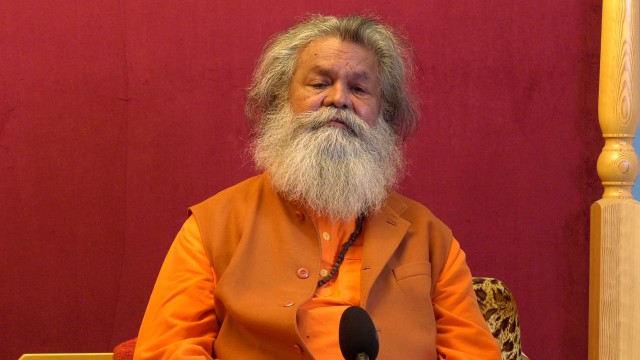
A spiritual discourse on purity and devotion in the modern age.
"Therefore, I always implore our devotees: 'Please do not be black, please do not be black.'"
"I want to be this drop. I want to drink... it desires only purity, directly from my God."
The lecturer reflects on the pervasive darkness of the Kali Yuga, observed in clothing and culture, and contrasts it with the purity found in sacred music and devotion. He shares teachings from his Gurudeva, using the metaphor of a pure drop of water (pū) to describe the soul's yearning for divine purity over worldly abundance, and calls for inner cleanliness and the declaration of the pure "I am."
Filming location: Vienna, Austria
Divine knowledge
0:50 - 2:40 (110 min)
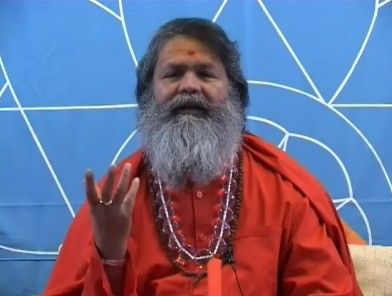
Johannesburg, South Africa in September 2004. Followed by "YIDL Lineage", "Unity in diversity". "Kundalini and Chakras". Finally follows a Lecture about Yoga Nidra followed by Awakening of the Healing powers.
Satsang is the source of happiness and enlightenment
2:45 - 3:45 (60 min)
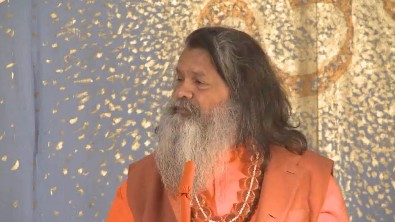
Opening satsang from the weekend retreat in Strilky, Czech Republic. Satsang is the source of happiness and enlightenment and kusanga is the source of troubles and unhappiness. Swamiji tells the story about the three monkeys and emphsizes "dont see negative, dont speak negative, dont listen negative, see God in everyone."
Kundalini: The Serpent Power of Destiny
3:50 - 4:40 (50 min)
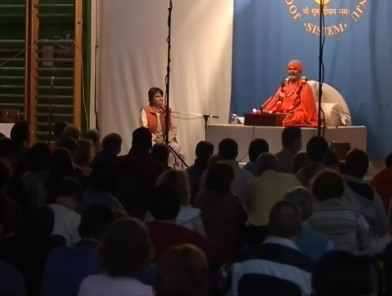
A discourse on Kundalini yoga, destiny, and spiritual wisdom.
"Kundalini is the Śakti, the power that directs our life. It is the dormant energy within our consciousness, connected to certain physical centers in the body."
"Destiny is the product of your own actions. No one is there to be blamed. You are only yourself responsible for your destiny."
Swami Satyananda Saraswati explains the nature of Kundalini as a dormant serpent power and its connection to personal destiny, which is shaped by past karma. He emphasizes the importance of acting with awareness of deśa (place) and kāla (time/circumstances) to achieve harmony and avoid problems. The talk explores the symbolism of the snake as both time/death and spiritual energy, concluding that self-realization frees one from destiny's power.
Filming location: Kranj, Slovenia
The Journey Beyond Duality: Life, Self, and the Path to Oneness
4:45 - 5:57 (72 min)
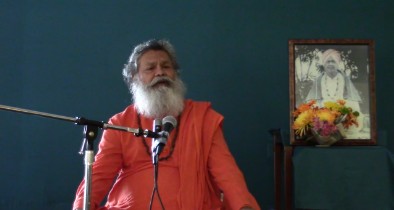
A spiritual discourse on yoga philosophy, the nature of the self, and the path to oneness.
"Our life, as we said, is a destiny and a journey. It is a journey; the destination is still not there."
"In Ātmā, in the self, there are no dualities; there is only oneness. So where there is heaven and hell, there is life and death... that's what we want to come out of, to become one with the highest, with our Self."
Swami Anand Arun delivers an extensive teaching, exploring the journey beyond dualities like life/death and divine/demonic energies. He explains core concepts of Ātmā, karma, and the three guṇas, detailing the system of senses (indriyas), vital energies (prāṇas), and channels (nāḍīs). The talk defines yoga as union, clarifies traditional Haṭha Yoga, and maps the subtle body's chakras, concluding with anecdotes about advanced practices like Khecharī Mudrā and the nectar of immortality.
Filming location: USA
The master and his disciple are one
6:05 - 6:56 (51 min)
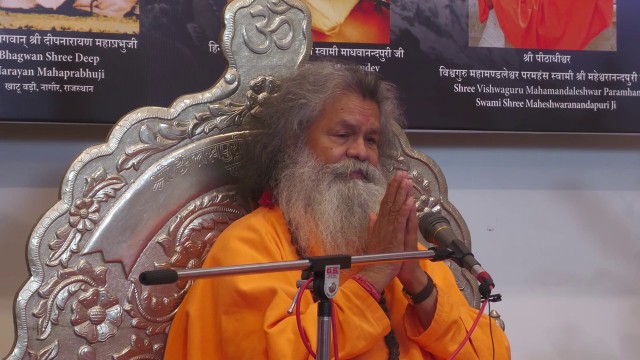
Evening satsang from Jaipur Ashram, Rajasthan, India. Alakhpuriji is the light of Siva. Mahaprabhuji is the light of the sun. The story how Vishwaguruji became sanyas and how he began his sanyas lefe with Guruji. Vishwaguruji tells some of his visions of Mahaprabhuji in Viena. He tells Holiguruji's vision of Sri Devpuriji in India. Guru and disciple should become one. Mother and father and their child are also one. The story of how a bhramari makes the worm to bhramari too. Practising bhramari pranayama with different positions of the hands. Concentration on the effects of bhramari pranayama.
Practising sarva hitta asanas
7:00 - 7:44 (44 min)
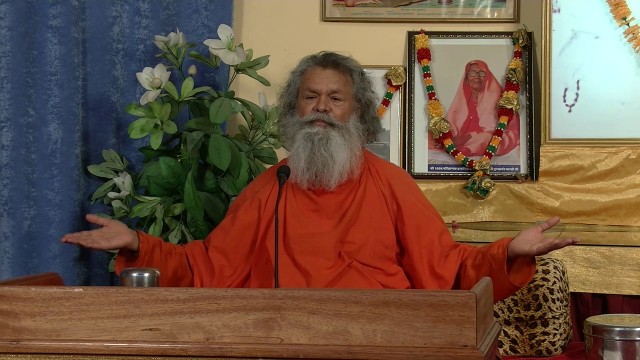
Evening satsang with Vishwaguruji from Jadan Ashram, Rajasthan, India. Practising sarva hita asanas in standing position.
Shiva is universal
7:50 - 8:11 (21 min)
A spiritual discourse on environmental consciousness and devotion during the sacred month of Śrāvaṇa.
"Mahātmā Gandhījī said, 'Mother Earth has enough for everyone’s need, but not for their greed.'"
"Śiva says, 'I know what you are praying for. Don’t beg, just do prayer. Give your love.'"
A spiritual teacher broadcasts from an ashram, explaining the significance of the lunar month of Śrāvaṇa and its connection to the monsoon season. He links modern climate crises and water scarcity to human greed and mental pollution, urging heartfelt prayer and unconditional devotion to Lord Śiva. He advises dedicating the four monsoon months to meditation and mantra practice, emphasizing that true prayer comes from a heart full of selfless love.
Filming location: Jadan, Rajasthan, India
Do good things and be happy
8:15 - 9:01 (46 min)
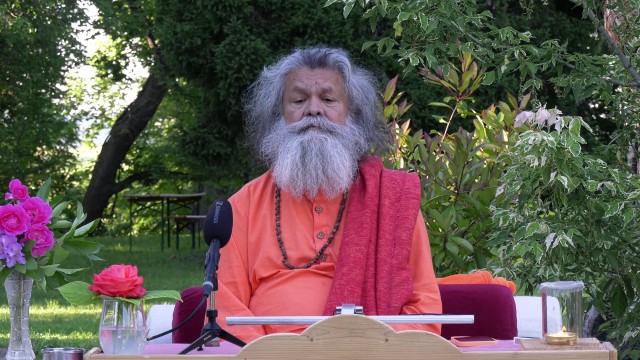
Evening satsang with Vishwaguruji from Strilky Ashram, Czech Republic. Bhajan singing. Bhajans are one of the best things in the world. When we sing good words come from our hearts and make other people happy. Sometimes people are happy also when they do bad things. The story of a sadhu and a tree. We should be peaceful and positive so we can go to God. Om Ashram is for the future generation. Half of iva was a woman and the other half was a man.
Building the Ashram
9:05 - 9:40 (35 min)
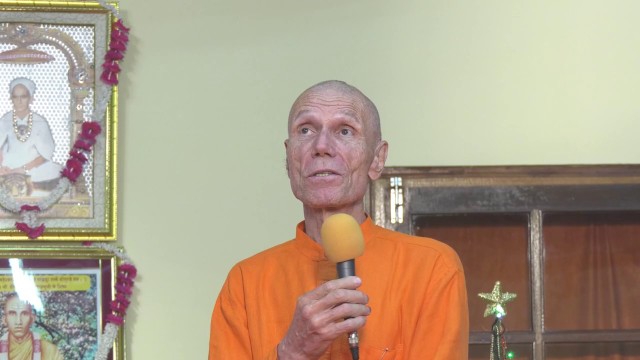
A spiritual discourse and practical lecture on ashram life and traditional construction.
"This is our ashram; this is our ashram. And when you see it, oh, it is very nice."
"The best material to build a building is wood... And you see the best people, there are two."
An initial, stream-of-consciousness spiritual monologue reflects on the ashram's essence, divinity in nature, and the cycle of life. The video then shifts to a practical lecture, where Gurudev Swami Mishranji explains the construction of the ashram's hall, detailing the use of steel trusses and a straw roof. He discusses the principles of Vāstu Śāstra and advocates for healthy, natural building materials like wood and lime over modern materials like granite and cement.
Filming location: Jadan, Rajasthan, India
In the service of Life
9:45 - 10:29 (44 min)
India, Summer 2005. Report about the Swamijis activities.
The Union of Consciousness: Yoga, Chakras, and the Human Journey
10:35 - 11:06 (31 min)
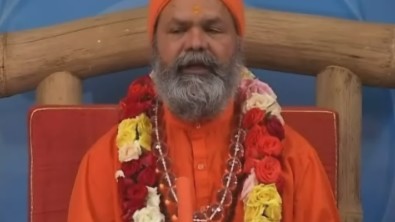
A spiritual lecture on yoga, consciousness, and the subtle body.
"Yoga means balance. Where there is balance, there is harmony. Where there is harmony, there is unity. Therefore, yoga means, literally, the union—the union of the individual consciousness with the cosmic consciousness."
"We are not the doer. He is the doer, Mahāprabhujī... We are only the instrument."
A spiritual teacher delivers an evening satsang, exploring the foundational principles of yoga as union and balance. He explains the creation from cosmic sound, the human intellect, and the subtle anatomy of 72,000 nāḍīs (energy channels) and the eight primary chakras. The discourse covers the awakening of Kuṇḍalinī energy, the interplay of consciousness (Śiva) and energy (Śakti), and the importance of guiding the mind rather than controlling it.
Filming location: Sunshine Coast, Australia
The Awakening of Kuṇḍalinī: A Journey to Happiness, Love, and Wisdom
11:10 - 11:38 (28 min)
A spiritual discourse on the awakening of Kuṇḍalinī and the structure of human consciousness.
"The awakening of the Kuṇḍalinī means happiness, universal love, and wisdom." "The soul is not the ātmā. The soul is only the collection of our karmas, destinies, and our qualities."
A teacher explains the nature of Kuṇḍalinī awakening, describing it as a state of bliss and universal love. He details the human energy system, including the five kośas (sheaths) and the chakras, using the metaphor of salt dissolving in water to describe the persistence of karma. The talk covers the etymology of "Kuṇḍalinī," its association with serpentine energy, and the importance of spiritual guidance for a stable awakening.
Filming location: Debrecen, Hungary
If you don’t accept, you will lose the chance
11:45 - 12:23 (38 min)
A discourse on the spiritual message of the Satguru, using a bhajan for reflection.
"Only the disciple whose antahkaraṇa (inner instrument) is pure will understand the indications Gurudev gives."
"Whatever is said by the Guru comes to truth."
A spiritual teacher unpacks the bhajan "Sandeśa," explaining how a Satguru's guidance, though sometimes difficult to accept, is a divine message meant for the disciple's ultimate liberation. He uses analogies of medicine, social education, and protection from negative influences (Ku-saṅga) to describe the process of purifying one's qualities to receive and understand the Guru's word (Guruvākya), which awakens the soul.
Filming location: Strilky, Czech Republic
Satsang is the source of happiness and enlightenment
12:30 - 13:30 (60 min)
Opening satsang from the weekend retreat in Strilky, Czech Republic. Satsang is the source of happiness and enlightenment and kusanga is the source of troubles and unhappiness. Swamiji tells the story about the three monkeys and emphsizes "dont see negative, dont speak negative, dont listen negative, see God in everyone."
Australia and Fijij
13:35 - 14:14 (39 min)
A spiritual teacher shares reflections on global travel, history, and community.
"Australia is a very large and beautiful country, but there are not too many people, and they do not wish for more." "Why do I do this? I go everywhere, and I'm thinking, so I see where, how people are living there."
The speaker recounts travels to Australia, Fiji, and other regions, discussing indigenous histories, colonial impacts, and the diaspora. He describes visiting disciples and ashrams, praising their spiritual devotion and peaceful life. The narrative weaves observations on geography, the role of the United Nations, and ethical living, concluding with reverence for his gurus and a critique of modern dietary habits.
Filming location: Fiji Islands
In the service of Life
14:20 - 15:04 (44 min)
India, Summer 2005. Report about the Swamijis activities.
Real health comes from Nature
15:10 - 16:09 (59 min)
A satsang on health, natural remedies, and gentle yoga practice.
"I am not a doctor, yes? Please. I am Swami. I am a yogī. And I am you, a natural."
"So many things we do not know. We do not know that one has. If you know exactly, then everything is gone."
Swami Maheshvaranand leads a satsang, discussing the limitations of conventional medicine and praising natural, holistic approaches to health. He shares anecdotes about medicinal tree bark and the work of Yogī Ramdev, while also critiquing how doctors often manage rather than cure illness. The session concludes with instructions for a gentle, supine yoga exercise intended for digestive health.
Filming location: Strilky, Czech Republic
Do good things and be happy
16:15 - 17:01 (46 min)
Evening satsang with Vishwaguruji from Strilky Ashram, Czech Republic. Bhajan singing. Bhajans are one of the best things in the world. When we sing good words come from our hearts and make other people happy. Sometimes people are happy also when they do bad things. The story of a sadhu and a tree. We should be peaceful and positive so we can go to God. Om Ashram is for the future generation. Half of iva was a woman and the other half was a man.
Kundalini: The Serpent Power of Destiny
17:05 - 17:55 (50 min)
A discourse on Kundalini yoga, destiny, and spiritual wisdom.
"Kundalini is the Śakti, the power that directs our life. It is the dormant energy within our consciousness, connected to certain physical centers in the body."
"Destiny is the product of your own actions. No one is there to be blamed. You are only yourself responsible for your destiny."
Swami Satyananda Saraswati explains the nature of Kundalini as a dormant serpent power and its connection to personal destiny, which is shaped by past karma. He emphasizes the importance of acting with awareness of deśa (place) and kāla (time/circumstances) to achieve harmony and avoid problems. The talk explores the symbolism of the snake as both time/death and spiritual energy, concluding that self-realization frees one from destiny's power.
Filming location: Kranj, Slovenia
Around The World - Vegetarianism and top sport, Part 1
18:00 - 18:24 (24 min)

A practical cooking demonstration and discussion on vegetarian nutrition for athletes from a yogic perspective.
"In our yoga tradition, everyone is vegetarian for moral reasons. For us, ahiṃsā paramo dharma—non-injury is the highest duty."
"The foundation of healthy vegetarian cooking is quality ingredients... Higher quality food is better utilized by the body, yielding better results."
Swami Avatarpuri, in the kitchen of Sridev Purījī Ashrama, explains the principles of a vegetarian diet tailored for elite sports performance. He emphasizes digestibility, energy provision, and muscle support, highlighting key ingredients like whole grains, tofu, and legumes. The talk covers the medicinal use of spices like turmeric and cumin, addresses protein and vitamin sources, and concludes by framing vegetarianism as a complete and health-supporting lifestyle rooted in the principle of non-harm.
Filming location: Zagreb, Croatia
We seek purity
18:30 - 18:41 (11 min)
A spiritual discourse on purity and devotion in the modern age.
"Therefore, I always implore our devotees: 'Please do not be black, please do not be black.'"
"I want to be this drop. I want to drink... it desires only purity, directly from my God."
The lecturer reflects on the pervasive darkness of the Kali Yuga, observed in clothing and culture, and contrasts it with the purity found in sacred music and devotion. He shares teachings from his Gurudeva, using the metaphor of a pure drop of water (pū) to describe the soul's yearning for divine purity over worldly abundance, and calls for inner cleanliness and the declaration of the pure "I am."
Filming location: Vienna, Austria
How the energy circulating in our body
18:45 - 20:09 (84 min)
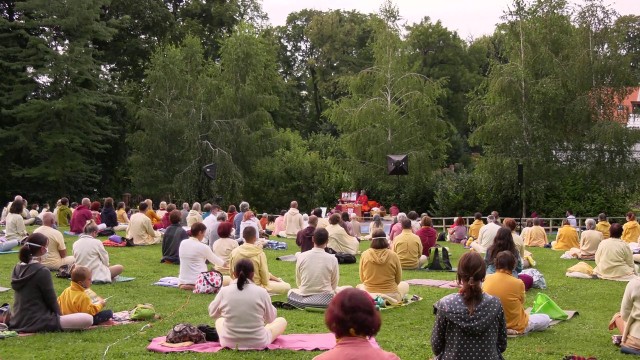
Evening satsang with Vishwaguruji from Strilky Ashram, Czech Republic. Moon is one of the Siva's symbols. Married couples have also that symbol of the moon on their head. In the Indian wedding ceremony, the female represents the Moon and the mail represents the Sun. Movements are in the nerve system to balance the Sun and Moon energy in the body in a serpent way. Snake is a symbol of its kind of movement. The Earth is held by a snake inbalance. When it moves a little there are many problems. Water and fire can not exist without each other. Practising kriya helps us to manifest our real human qualities. The story about two brothers who have educated themselves in different directions. In every petal of our chakras, there is a certain energy in it. Our roots are in the navel. In every chakra there is resonance. When we chant OM our tongue shouldn't move.
The Third Eye and the Awakening of the Mūlādhāra Cakra
20:15 - 20:53 (38 min)
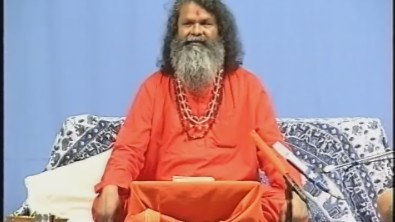
A spiritual discourse on the third eye and the Mūlādhāra Cakra.
"The third eye signifies wisdom. All your karmas will be burned, and everything becomes pure."
"When we begin to awaken the Mūlādhāra Cakra, it is a wonderful feeling. You feel like you are coming out of darkness, like a seed which was under the earth now begins to sprout."
The speaker delivers a teaching on subtle anatomy, beginning with the wisdom of the third eye before focusing on the foundational Mūlādhāra Cakra. Using the symbol's imagery—the lotus, the elephant of prosperity, the coiled serpent of time, and the Śiva Liṅga—they explain the cakra's role as the seat of dormant energy (Śakti) and its awakening as the start of the spiritual journey toward union with supreme consciousness. The talk includes practical spiritual advice, references to Gaṇeśa, and concludes with a chant.
Filming location: Umag, Croatia
Divine knowledge
21:00 - 22:50 (110 min)
Johannesburg, South Africa in September 2004. Followed by "YIDL Lineage", "Unity in diversity". "Kundalini and Chakras". Finally follows a Lecture about Yoga Nidra followed by Awakening of the Healing powers.
Guru Tattva, Wellington, NZ
22:55 - 0:10 (75 min)
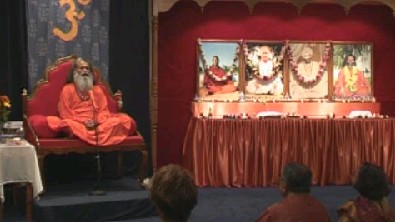
Guru Tattva is directly connected to God Shiva. Guru Tattva is the highest Tattva in the world. Shiva Tattva destroys all negative karmas, negative thoughts and qualities which we cannot overcome. Vishnu Tattva is protecting us and our destiny. Brahma Tattva creates in us good thoughts, the positive way of thinking. It creates within us a better, positive and wise man. Guru Tattva is not the physical embodiment of the Guru. Guru Tattva is the knowledge. It is the divine light and we adore that light. When we get this light it means Atma Gyana, Moksha, liberation. Guru Tattva is knower of everyone and lives in everyone. Gurudev is carrying the light within and is bringing us the wisdom. We are searching the light, keep it, don't lose it. Gurudev is that one which operate all negative karmas away because he has that knowledge. Guru consciousness is awaken and one who is awaken can awake others.
American
Australian