
European
Yoga Sadhana
0:00 - 0:53 (53 min)
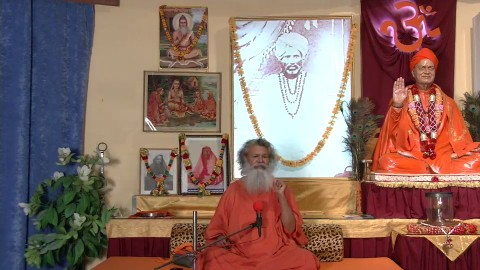
Evening satsang with Vishwaguruji from Jadan Ashram, Rajasthan, India. Shiva is a yogi. The Soul experiences different lives on this Earth. Where is life, there is God. Sadhana means that we have to go to the highest, to God. Mahaprabhuji gave hard training to Holy Guruji. A real disciple understood what means Guru and follows happily even if it seems strick. The holy place and shelter are near the foot of Gurudev.
Yoga Sadhana
1:00 - 1:53 (53 min)
Evening satsang with Vishwaguruji from Jadan Ashram, Rajasthan, India. Shiva is a yogi. The Soul experiences different lives on this Earth. Where is life, there is God. Sadhana means that we have to go to the highest, to God. Mahaprabhuji gave hard training to Holy Guruji. A real disciple understood what means Guru and follows happily even if it seems strick. The holy place and shelter are near the foot of Gurudev.
Feel the divine sounds of bhajans in your heart
2:00 - 3:02 (62 min)
Morning Satsang with Vishwaguruji from Strilky, Czech Republic. Sat means truth and sang means together. Our inner self and our outer self are together. We should respect our mother earth. In our dreams, we can go easily everywhere. the story of a wife and a husband who was a singer and wanted to eat ice cream. The story of a great yogi bhajan singer in India who is blind and Swami Gajanand in Kumbha Mela. Bhajan singers can sing the way that they feel and radiate the whole energy and vibration of the bhajans through their voice and their playing on the instrument.
We should develop positive qualities
3:10 - 4:14 (64 min)
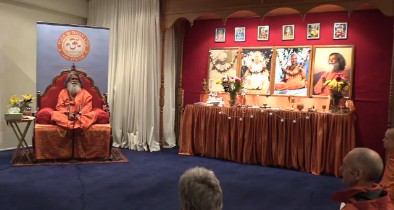
A spiritual discourse on the necessity of practice, overcoming obstacles, and living one's dharma.
"Tons of theory is nothing compared with a grain of practice. Abhyāsa, abhyāsa kaunte, abhyāsa."
"Dharmo rakṣita rakṣitaha. If you protect the dharma, the dharma will protect you."
Swami Ji addresses a gathering, emphasizing that true mastery in spirituality, like in archery or music, comes only from dedicated practice (abhyāsa) and love for the discipline. He explains that the real test of one's principles (dharma), patience (dhīraja), and relationships comes during times of adversity. The talk weaves through themes of faithfulness, the distractions of the mind (vikāras), and the importance of protecting one's spiritual and moral commitments in all aspects of life.
Filming location: Wellington, New Zealand
Remain pure
4:20 - 5:37 (77 min)
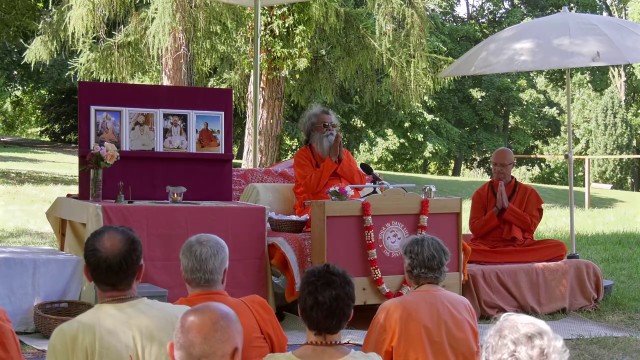
Morning satsang from Strilky Ashram, Czech Republic. The trees of Strilky ashram are so old that we are just children next to them. The story about Bhagwan Shiva. I tell you that you have to be very strong, follow the rules. The problems come from killing and eating animals. They say fights will come, but when they pass we will be very pure and go to God, and the others will fall. Stay pure, as the blue sky is. How should a good family live?
We seek purity
5:45 - 5:56 (11 min)
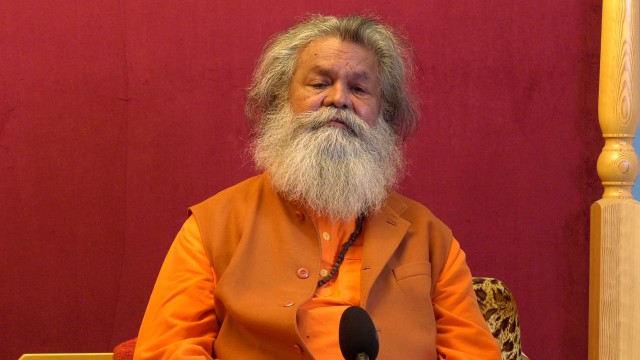
A spiritual discourse on purity and devotion in the modern age.
"Therefore, I always implore our devotees: 'Please do not be black, please do not be black.'"
"I want to be this drop. I want to drink... it desires only purity, directly from my God."
The lecturer reflects on the pervasive darkness of the Kali Yuga, observed in clothing and culture, and contrasts it with the purity found in sacred music and devotion. He shares teachings from his Gurudeva, using the metaphor of a pure drop of water (pū) to describe the soul's yearning for divine purity over worldly abundance, and calls for inner cleanliness and the declaration of the pure "I am."
Filming location: Vienna, Austria
Meditation
6:00 - 6:55 (55 min)
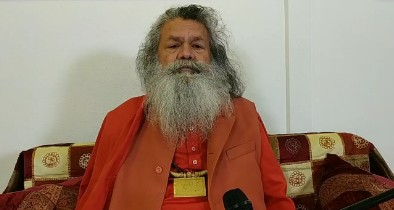
Evening satsang with Vishwaguruji from Cherkasy, Ukraine. Every human has an individual choice. We have to come to our destination on our own. The Soul is searching for the destination. Meditation comes from itself. When you meditate, you are one with yourself. The dream is your reality, to know the moment of falling asleep is the first step in meditation. Practicing meditation with Vishwaguruji.
Morning Yoga practice, Umag, Croatia (8/9)
7:00 - 7:42 (42 min)
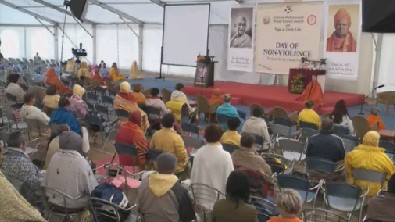
Morning Yoga practice from the international Yoga retreat Umag, Croatia
Raising the Kalash
7:50 - 8:33 (43 min)
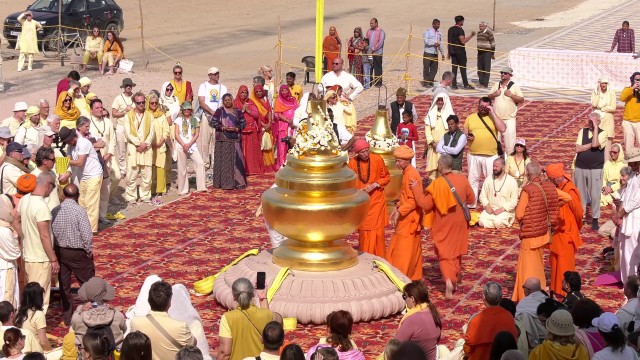
Satsang from Om Ashram, Rajasthan, India. Raising the Kalash on the Shiva Temple.
We suffer because we left Nature
8:40 - 9:30 (50 min)
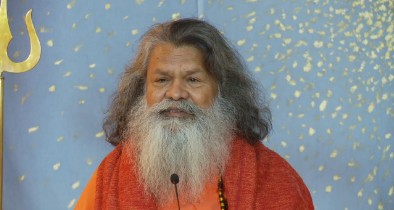
A satsang discourse on spiritual home, practice, and natural living.
"Only through the knowledge of yoga—and I emphasize, not from books but from a self-realized master—are we able to understand the messages hidden within religion."
"We just need to try to be that wooden spoon, to be in satsaṅg, to be in the honey. Slowly, we will gain that sweetness."
The speaker addresses the community, contrasting the challenges of biological family with the spiritual home found in sangha. Using metaphors like the wooden spoon and the ant seeking sugar, he emphasizes humility, opening the heart, and consistent practice. He discusses the role of a Satguru as the path, the importance of teaching knowledge forward, and the need to return to a natural way of living to end suffering.
Filming location: Strilky, Czech Republic
Atma and the Soul
9:35 - 10:16 (41 min)
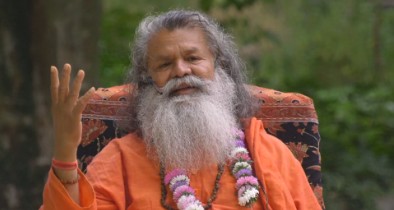
An introductory talk for a yoga retreat focused on self-realization.
"Anuṣṭhāna means we have a saṅkalpa, a resolve, and we practice according to that saṅkalpa to achieve certain aims: for health, for family harmony, for spiritual development, and for what we call Ātmā Jñāna—Ātmā Anubhūti."
"Śaṅkarācārya said there is duality in matter, but unity is in oneness in Ātmā. In diversity, there is unity."
A teacher opens a summer retreat, framing the "Yoga in Daily Life" program as a path to experiencing the Self (Ātmā Anubhūti). He explains non-dual philosophy using Śaṅkarācārya's analogies of water in different cups and the moon reflected in many vessels to illustrate the one Ātmā within all. He warns against procrastination in spiritual practice, sharing a parable about a greedy man delaying a purchase, and emphasizes the need for consistent practice (abhyāsa) to dispel the ignorance that creates suffering.
Filming location: Vép, Hungary
Let this life be the last one
10:20 - 10:45 (25 min)
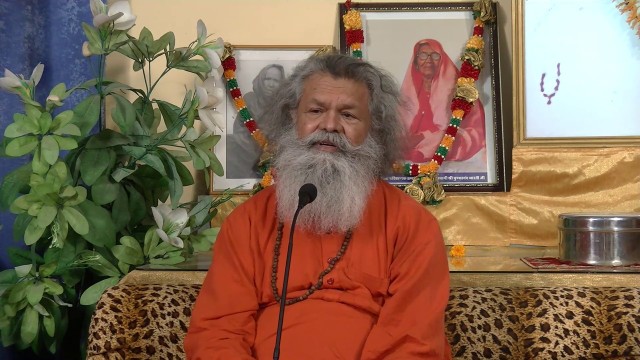
Evening satsang with Vishwaguruji from Jadan Ashram , Rajastham, India. We have no right to print and multiply Alakhpuriji's photo. It is saved by copyright. Yoga asanas are originated from the nature given by Siva. There are many other asanas which are originated from the movements of the rishis. We should come out from the cycles of birth and death. Practising asanas means respecting nature. Satsang bhajans and good words are our spiritual nourishing.
The Sun Shines in the Kingdom of God: On Habit, Mind, and the Kośas
10:50 - 11:41 (51 min)
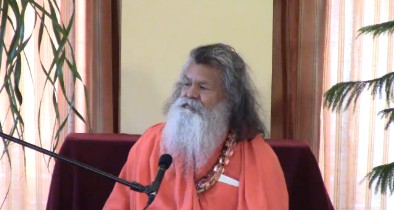
A spiritual discourse on the five sheaths (kośas), habit, and the nature of the mind.
"Whatever kind of habit you have, after a while, that will become your nature."
"The mind is the reflection. Or in the pond, in the water pond, very nice, clean, and very still water. You look, and your face is inside. But it's only a reflection."
The lecturer leads a morning satsang, exploring how habits become second nature, using a parable of a man and a bear to illustrate addiction. He explains the five kośas, focusing on the elusive manomaya kośa (mind sheath), describing it as a reflective layer governing the senses and storing impressions. The talk covers purification through prāṇāyāma, the trap of attachment (mamatā), and the importance of selfless giving.
Filming location: Alexandria, USA
We are going for oneness
11:45 - 12:33 (48 min)
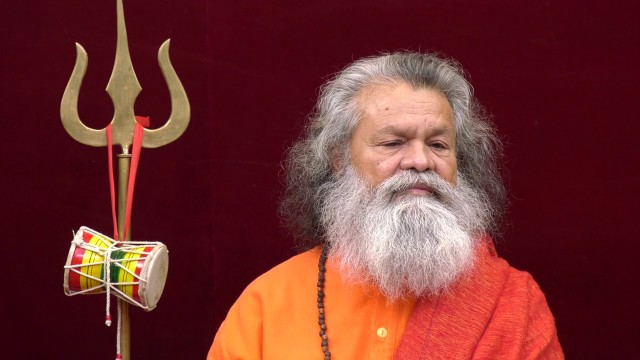
An evening satsang on spiritual oneness and the guru's role.
"The destination is one in all, as our Holy Gurujī said: one in all and all in one."
"Gurudev is one, but many times you see that with Śiva and the Jyotirliṅga."
A spiritual teacher addresses a global Yoga in Daily Life audience, exploring the non-dual path to merging with the divine. He emphasizes that the individual soul (jīvātmā) is always with God, critiques the illusion of separateness, and stresses constant remembrance of the guru as the essential practice to transcend duality and worldly troubles. The talk includes Sanskrit prayers and a mantra explanation.
Filming location: Maha Kumbha Mela, India
Pure nourishment
12:40 - 13:29 (49 min)
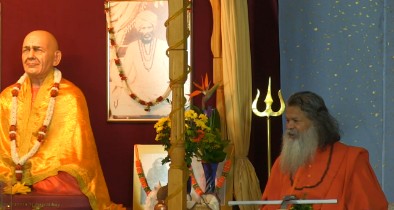
Evening satsang with Vishwaguruji from Strilky Ashram, Czech Republic. We should not destroy the whole plant in order to eat it and should support sattva guna - the quality of harmony and balance. The joy of life is to awaken the knowledge of what it means to be a human. Vishwaguruji explains that Yoga Nidra should be practiced as a meditation: travelling in our inner space.
Release your bad qualities
13:35 - 14:27 (52 min)
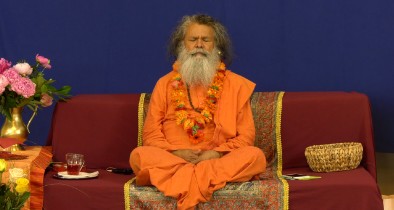
Morning satsang with Vishwaguruji from weekend Yoga seminar in Salzburg, Austria. Traditions are important and more or less similar in the whole world. The Austrian culture is very rich and beautiful. Many books of ancient Indian culture was destroyed by Moguls. We can digest everything except the truth. Tell honestly yourself your negative qualities. Remain natural as it is. Culture and education we should get from our parents. Short meditation how to turn negative to positive.
Preparing the Kalash
14:35 - 15:17 (42 min)
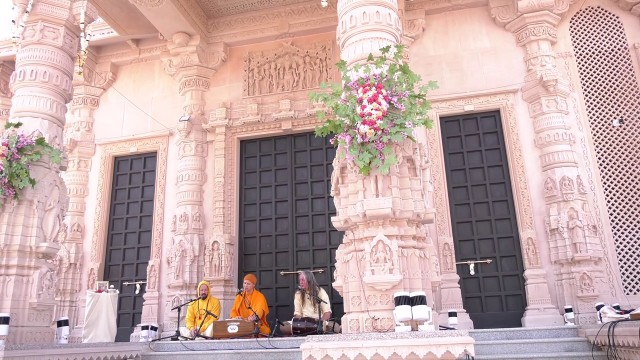
Morning program from Om Ashram, Rajasthan, India. Swami Madhuram Puri singing bhajans (Prakash Punja ...), and preparing the Kalash.
Morning lecture from Strilky seminar
15:25 - 16:07 (42 min)
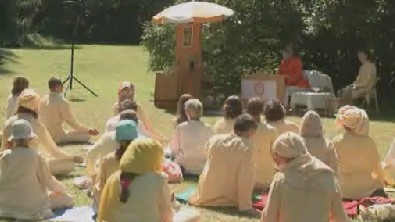
Morning lecture from Mahabrabhudeep Ashram, Strilky, Czech Republic
The Paths and Practices of Haṭha Yoga
16:15 - 16:45 (30 min)
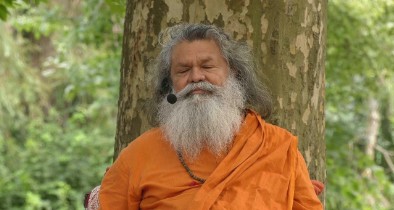
An introductory lecture on the philosophy and practices of Haṭha Yoga.
"According to Patañjali's teaching... the yogas are Karma Yoga, Bhakti Yoga, Jñāna Yoga, and Rāja Yoga."
"Haṭha Yoga pertains to the nervous system, specifically the three primary nāḍīs: Iḍā, Piṅgalā, and Suṣumṇā."
A spiritual teacher begins a weekend workshop by defining Haṭha Yoga's place among yoga's many paths. He explains multiple interpretations, including its definition as the union of the "Ha" (Iḍā) and "Tha" (Suṣumṇā) energies, and outlines its classical six cleansing techniques (Ṣaṭkarma). The talk provides practical guidance on practices like Netī and the foundational principle of beginning all practices on the left side to balance the lunar channel and calm the mind.
Filming location: Vép, Hungary
We should develop positive qualities
16:50 - 17:54 (64 min)
A spiritual discourse on the necessity of practice, overcoming obstacles, and living one's dharma.
"Tons of theory is nothing compared with a grain of practice. Abhyāsa, abhyāsa kaunte, abhyāsa."
"Dharmo rakṣita rakṣitaha. If you protect the dharma, the dharma will protect you."
Swami Ji addresses a gathering, emphasizing that true mastery in spirituality, like in archery or music, comes only from dedicated practice (abhyāsa) and love for the discipline. He explains that the real test of one's principles (dharma), patience (dhīraja), and relationships comes during times of adversity. The talk weaves through themes of faithfulness, the distractions of the mind (vikāras), and the importance of protecting one's spiritual and moral commitments in all aspects of life.
Filming location: Wellington, New Zealand
Around the world - Bhajans from Kailash(2/3)
18:00 - 18:34 (34 min)
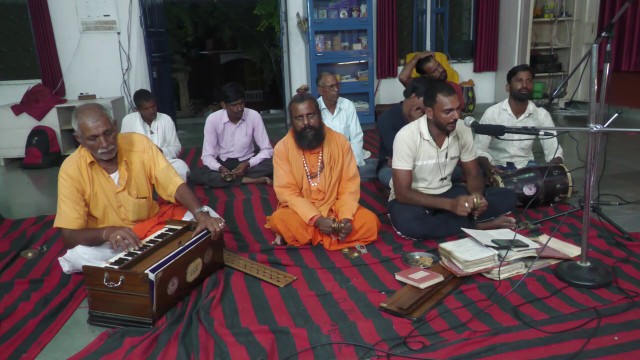
Evening satsang from Kaliash Ashram, Rajasthan, India. Bhajans on the occasion of Sri Devpuriji Mahasamadhi.
The Paths and Practices of Haṭha Yoga
18:40 - 19:10 (30 min)
An introductory lecture on the philosophy and practices of Haṭha Yoga.
"According to Patañjali's teaching... the yogas are Karma Yoga, Bhakti Yoga, Jñāna Yoga, and Rāja Yoga."
"Haṭha Yoga pertains to the nervous system, specifically the three primary nāḍīs: Iḍā, Piṅgalā, and Suṣumṇā."
A spiritual teacher begins a weekend workshop by defining Haṭha Yoga's place among yoga's many paths. He explains multiple interpretations, including its definition as the union of the "Ha" (Iḍā) and "Tha" (Suṣumṇā) energies, and outlines its classical six cleansing techniques (Ṣaṭkarma). The talk provides practical guidance on practices like Netī and the foundational principle of beginning all practices on the left side to balance the lunar channel and calm the mind.
Filming location: Vép, Hungary
Meditation
19:15 - 20:10 (55 min)
Evening satsang with Vishwaguruji from Cherkasy, Ukraine. Every human has an individual choice. We have to come to our destination on our own. The Soul is searching for the destination. Meditation comes from itself. When you meditate, you are one with yourself. The dream is your reality, to know the moment of falling asleep is the first step in meditation. Practicing meditation with Vishwaguruji.
The Inner Conflict of Śiva
20:15 - 21:10 (55 min)
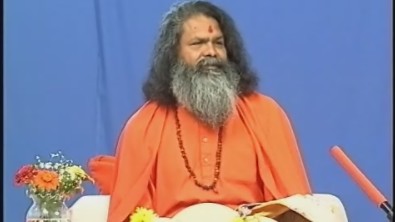
A narrative discourse exploring the inner conflict of Lord Śiva following Satī's test of Lord Rāma.
"Sometimes, to speak the truth is not easy. You hesitate to tell something; you do not want to lose face."
"Therefore, God, please, you can take everything away, or may I lose everything, but not one thing: my belief, my devotion to you."
The speaker recounts the mythological story where Satī, after testing Rāma by disguising herself as Sītā, lies to Śiva about her actions. Śiva, the knower of all, discovers the truth through his divine sight and is plunged into a profound inner conflict. He wrestles with a dilemma: to love Satī in her transformed state feels like a sin that would compromise his pure devotion (bhakti) to Rāma, yet he cannot reject his pure and faithful consort. The discourse uses this story to examine themes of truth, doubt, devotion, and the painful inner arguments that arise when faith is tested, concluding that only divine mercy can resolve such struggles.
Pure nourishment
21:15 - 22:04 (49 min)
Evening satsang with Vishwaguruji from Strilky Ashram, Czech Republic. We should not destroy the whole plant in order to eat it and should support sattva guna - the quality of harmony and balance. The joy of life is to awaken the knowledge of what it means to be a human. Vishwaguruji explains that Yoga Nidra should be practiced as a meditation: travelling in our inner space.
Release your bad qualities
22:10 - 23:02 (52 min)
Morning satsang with Vishwaguruji from weekend Yoga seminar in Salzburg, Austria. Traditions are important and more or less similar in the whole world. The Austrian culture is very rich and beautiful. Many books of ancient Indian culture was destroyed by Moguls. We can digest everything except the truth. Tell honestly yourself your negative qualities. Remain natural as it is. Culture and education we should get from our parents. Short meditation how to turn negative to positive.
The Sun Shines in the Kingdom of God: On Habit, Mind, and the Kośas
23:10 - 0:01 (51 min)
A spiritual discourse on the five sheaths (kośas), habit, and the nature of the mind.
"Whatever kind of habit you have, after a while, that will become your nature."
"The mind is the reflection. Or in the pond, in the water pond, very nice, clean, and very still water. You look, and your face is inside. But it's only a reflection."
The lecturer leads a morning satsang, exploring how habits become second nature, using a parable of a man and a bear to illustrate addiction. He explains the five kośas, focusing on the elusive manomaya kośa (mind sheath), describing it as a reflective layer governing the senses and storing impressions. The talk covers purification through prāṇāyāma, the trap of attachment (mamatā), and the importance of selfless giving.
Filming location: Alexandria, USA
American
Australian