
European
Bhajan evening from Vienna 2
0:25 - 1:19 (54 min)
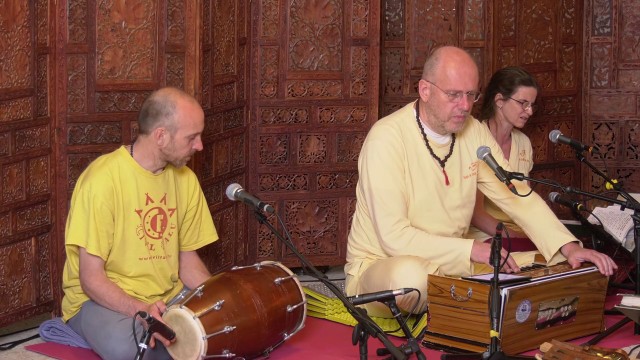
Evening Satsang with H.H. Vishwaguruji from Vienna, Austria. Bhajan singing.
Longing for the God
1:25 - 2:14 (49 min)
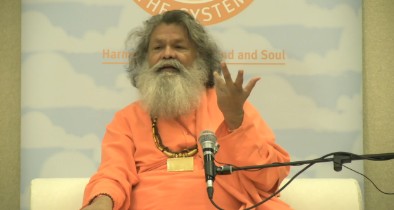
A spiritual discourse on the devotional path of bhakti, centered on the life and poetry of Meera Bai.
"In every temple, there is you; you are sitting, your statue is there... but still I can't see your face."
"O my Bhagavān, O Dātā means giver, I don't ask for anything, only one thing, please give me devotion."
The speaker reflects on the intense devotion of the saint Meera Bai, using her poetry and life story to illustrate the soul's longing for union with the divine. Themes of spiritual love (viraha), the transformative power of selfless service (seva), and the ultimate goal of oneness with Brahman are explored. The talk concludes with a call for universal spiritual education and compassion.
Filming location: London, UK
Live a healthy and spiritual life
2:20 - 3:06 (46 min)
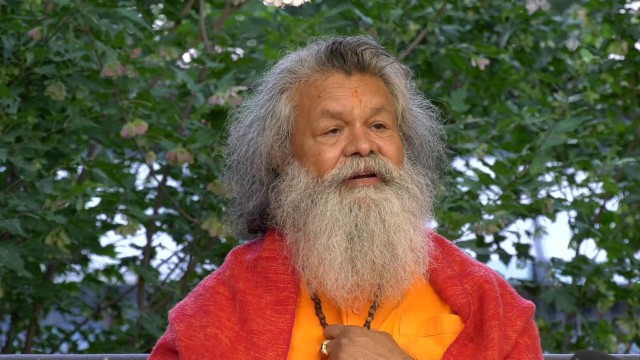
Evening satsang with Vishwaguruji from Strilky Ashram, Czech Republic. Because of the coronavirus in recent years, many people could not come, and I was also elsewhere sometimes. But even though we were in a different place, we all were practicing. Alcohol and especially meat are not good for us. We should not kill animals. The science of Yoga was given to people by Bhagawan Shiva.
The Soul and the Guru
3:10 - 3:53 (43 min)
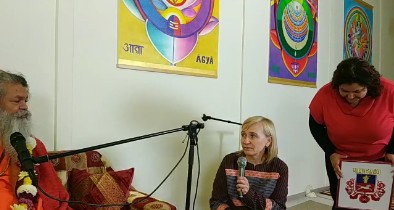
Evening satsang with Vishwaguruji from Cherkasy Ashram, Ukraine. We have many duties in the world. It's important to give the children culture and a good education. They should not go into bad society, they should become wise. One day the soul will leave behind the physical body. The karma and destiny will go with us. We are searching for the Master today. You can learn from different masters but can have only one Guru. Do not expect miracles.
Mother Earth
4:00 - 4:36 (36 min)
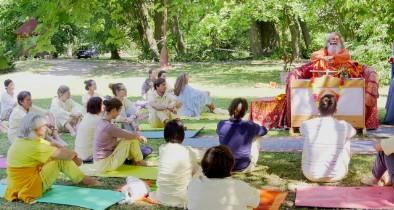
A guided outdoor yoga session focusing on connecting with the earth, followed by a spiritual discourse and ceremony.
"Feel like you are touching your mother's body. It is our mother."
"The clay says to the potter, 'Why are you tormenting me?' One day will come, that I will torment you within myself."
A yoga instructor guides participants through grounding postures, encouraging them to touch the clean soil and feel its healing energy. He shares a parable of a potter and the speaking clay, a German anecdote about allergy relief from farm life, and reflections on environmental harm. The session transitions into a celebration for Gurudev's birthday and Janmāṣṭamī, involving prayers, mantras, and a collective pūjā.
Filming location: Strilky, Czech Republic
When sataguru comes to our door
4:40 - 5:12 (32 min)
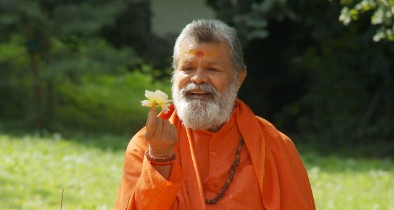
A satsang exploring the devotional bhajan "Kali Kali Āraṣavatahe Hari" and the nature of spiritual joy.
"If love is pure and selfless, it is limitless. If there is selfishness, then it is limited."
"Your one word expresses the entire universe... That is called Gagar me Sāgara in India."
Swami Maheshvarananda explains the bhajan written by Swami Lālā Nānjī upon the arrival of his Guru, Mahāprabhujī. He describes the immeasurable joy of a devotee using the analogy of plants reviving after rain, and expands on themes of pure love, the art of condensing vast wisdom into a few words (Gagar me Sāgara), and finding contentment. The talk includes personal anecdotes, a Hungarian joke about comparison, and a call to protect nature and cultivate happiness.
Filming location: Strilky, Czech Republic
Atma resides in all creatures
5:20 - 5:49 (29 min)
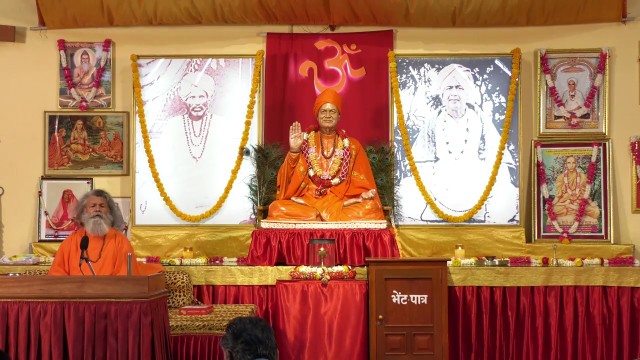
A spiritual discourse on the soul's journey and universal divinity.
"God is not there only once. God is not there only once. God is not there only once, but in our Sanātana Dharma, Where does it happen? It happens in the Paravara Brahma Ātmā."
"A drop of water and the whole ocean are the same inside... Therefore, what we are doing, pūjā, prārthanā, so Father, first, what is a mother? One God comes."
The speaker delivers a satsang, weaving together themes of non-duality, using the metaphor of a drop merging with the ocean to describe the soul's union with the divine. He discusses the human birth, the role of parents and gurus, the cyclical nature of existence, and advocates for compassion towards all beings, concluding with an anecdote about providing water for ants.
Filming location: Jadan, Rajasthan, India
Searching for God
5:55 - 6:53 (58 min)
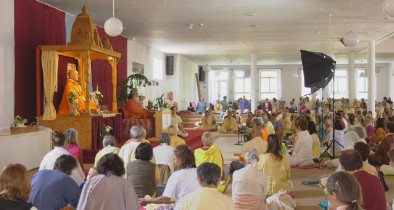
Vishwaguruji's morning Lecture, Strilky Ashram, Czech Republic. It takes nine months for the human body to be completed in the womb. This body is a place where the God is able to speak. This creation is the creation of God and God is residing in it. During the Kaliyuga (age of darkness), both the devik (positive) and ashuri (negative) shaktis are always present - we should avoid the negative energies. Do your practice, search for God.
Practicing from Strilky
7:00 - 7:41 (41 min)
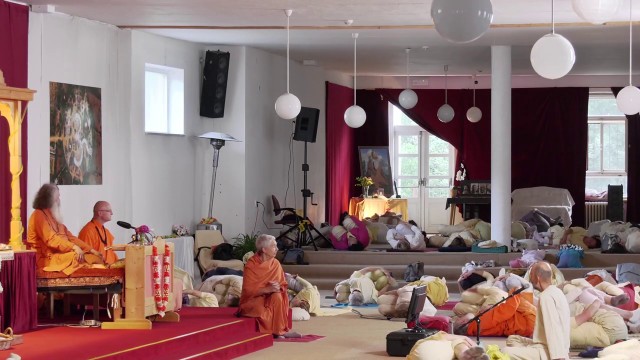
Evening satsang from Strilky Ashram, Czech Republic. Practice with Vishwaguruji and Swami Umapuriji.
How does Guru teach us?
7:45 - 8:47 (62 min)
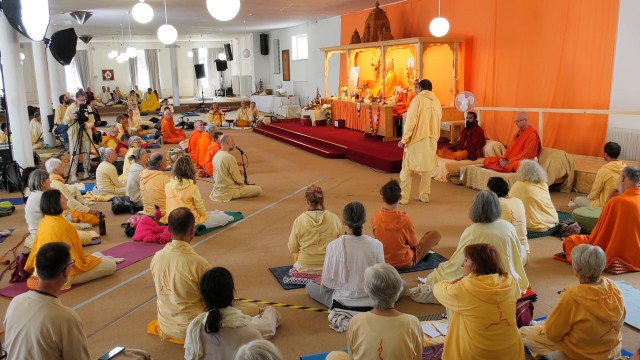
A morning satsang on spiritual discipline, human evolution, and devotion to the guru.
"Start the morning with one thought: 'I am a human.'"
"If you dig in one place, even if you find a big rock, you will come to water. But if you dig in seven different places every day, in the end you are completely confused."
A speaker addresses the assembly, emphasizing the importance of beginning the day with the conscious affirmation of one's humanity. He shares several teaching stories from Vishwaguruji, including a parable about seeing people's true nature through a peacock feather and an allegory about the need for persistence on a single spiritual path. The talk covers themes of non-violence (ahimsa), purifying human qualities, cutting the chain of karma through faith in the guru, and the foundational work required in spiritual life. He also recounts the early struggles of Gurudev (Vishwaguruji) spreading teachings in the West and announces the upcoming Kumbh Mela.
Filming location: Strilky, Czech Republic
Devas and Asuras
8:55 - 9:57 (62 min)
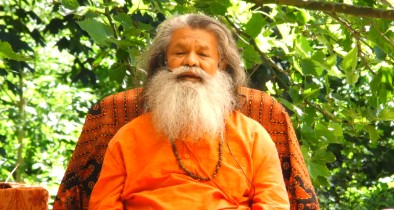
Morning satsang from Summer Retreat in Vep, Hungary. In holy scriptures we are often reading about fighting between devas and asuras. Vishwaguruji reveals the true meaning of these poems. Finally we should remove our bad qualities and live life without fear.
Yuga Yuga Jivo Maheshwarananda
10:05 - 10:12 (7 min)
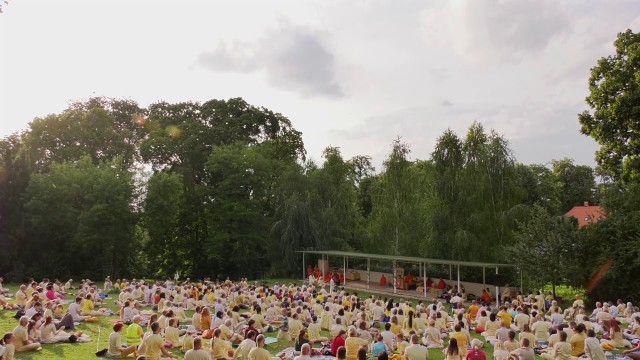
Evening satsang with Vishwaguruji from Strilky Ashram, Czech Republic. Bhajan singing on Gurupurnima satsang.
Vishwaguruji is in all of us
10:20 - 11:25 (65 min)
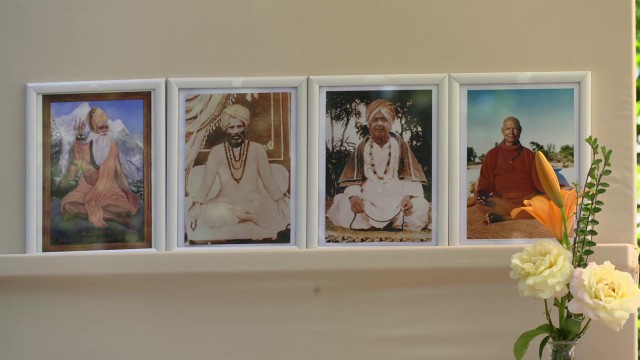
A satsang discourse on contentment, spiritual pitfalls, and the importance of mantra practice.
"A sannyāsī always renounces everything in life... That is how we all should try to be: happy with what we have, content with whatever we have."
"When Gurubhakti, and the devotion, and the spirituality, leave our house, which means us... What we need is always the kṛpā (grace) of Gurudev. That’s the most important thing in the universe."
Following opening prayers, the speaker narrates traditional stories to illustrate key themes: a contented sadhu who refuses Lord Shiva's boon, a greedy man who loses divine favor, and a lesson on not doubting divine wisdom. He warns that ego, greed, and jealousy destroy spiritual progress, emphasizing the need for humility and Guru's grace. The latter part focuses on the practice of Sanskrit mantras, described as an "antivirus program" and "brain gymnastic" that brushes away negative thoughts and brings peace, concluding with a collective chant.
Filming location: Strilky, Czech Republic
Pranayama and flute music
11:30 - 12:39 (69 min)
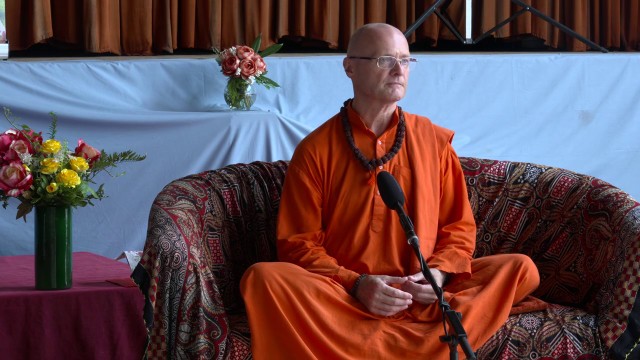
Morning satsang from Summer Yoga Retreat in Vep, Hungary. A short lecture by MMS. Vivekpuriji about the pranayama and Swami Madhuram about the flute music. Listening to flute music.
Dharma and Satsang
13:05 - 14:14 (69 min)
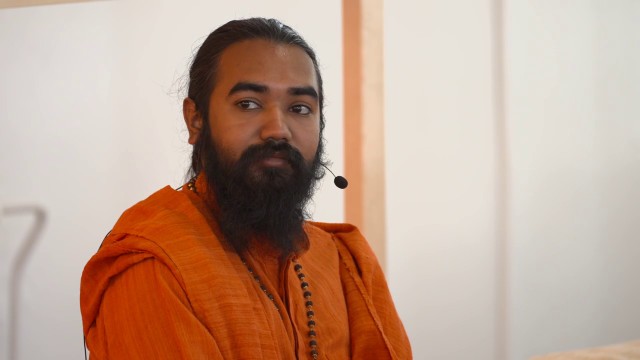
A satsang discourse on dharma, spiritual practice, and the importance of community.
"We always try to find the shortcuts, and we always try to find the easy way out."
"In the satsaṅg, on the full moon, usually we listen to Guru Gītā. Try to really listen to Guru Gītā. I have listened to Guru Gītā for more than 40 years, and I must say that every time I hear something new inside."
Following traditional invocations, a speaker addresses a gathering, weaving teachings on personal duty (dharma) with illustrative stories, including a sādhu persistently saving a scorpion and Nārada's lesson from Lord Viṣṇu. The talk emphasizes perseverance in one's path, learning from failures, and the critical role of regular satsang and deep, repetitive study of core teachings like the Guru Gītā over seeking novel techniques. A letter from the Indian Prime Minister congratulating the opening of Om Ashram is read. The session includes chanting and concludes with a universal peace mantra and final salutations.
Filming location: Strilky, Czech Republic
Satsang and Kusang
14:20 - 15:30 (70 min)
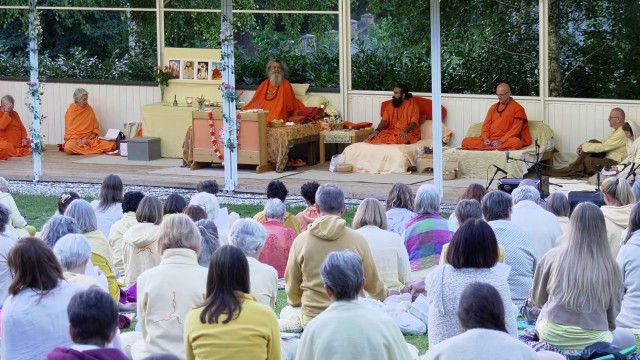
An evening satsang and mantra teaching session on the power of spiritual company and the Guru's grace.
"A spiritual person who was very dedicated towards spirituality can completely change his behavior just because of the food which he eats."
"Guru Kṛpā Hi Kevalaṁ Śāśvika Ānanda Maṅgalam. So, when you have Gurudev's kṛpā, then the śiṣya is always in happiness."
A Swami leads the gathering, first recounting a parable about a king's secretary whose life is ruined after his chef secretly feeds him meat, illustrating how negative influences (kusaṅga) and food can degrade spirituality. He emphasizes the importance of satsaṅga (good company), using the Guru's grace as the ultimate protection and guide. The discourse transitions into a mantra lesson, where the Swami teaches and corrects the pronunciation of a Sanskrit hymn dedicated to Lord Shiva.
Filming location: Strilky, Czech Republic
The meaning of Bhajan
15:35 - 17:02 (87 min)
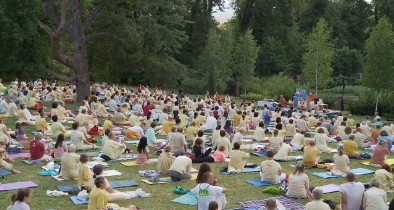
Satsang with Vishwaguruji Maheshwarananda, Summer Retreat in Strilky Ashram, Czech Republic. This satsang is about two powerful bhajans written by Holy Guruji (Sri Deep Niranjan Saba Dukha Bhanjan, Om Brahm Shiva Alakh Anadi). Vishwaguruji gives us introduction to different kinds of Samadhis and explains the topic about spiritual poems, bhajans, mantra and bija mantra. Bhajan singing and translation by Swami Gajanandji.
The Essence of Health and Harmony
17:10 - 17:53 (43 min)
A satsang discourse on holistic health, Ayurveda, and living harmoniously.
"Where there is water, there is God, and where there is God, there is life. Where there is life, there is light, and where there is light, there is good health."
"Health is not everything, but everything is nothing without health."
Swami Maheshwarananda (Swamiji) leads an evening talk, weaving together the arrival of rain, ancient wisdom, and modern life. He explains the Ayurvedic perspective on health as balance, lists sources of happiness like a good partner and neighbor, and offers analogies—like living as a lotus in water or a tongue between teeth—for maintaining detachment and harmony amidst life's challenges. He emphasizes daily yoga practice for all ages as a key to managing stress and well-being.
Filming location: Auckland, New Zealand
A Message of Peace from Prague
18:00 - 18:07 (7 min)

A Czech parliamentarian delivers a message of peace at a conference, drawing on spiritual and historical themes.
"There is only one God, the universal God, only one religion, humanity, and only one nation, humankind."
"Peace among nations is dependent on peace in human beings."
The speaker, a member of Parliamentarians for Nuclear Non-Proliferation and Disarmament (PNND), opens by quoting from Swamiji's Yoga in Daily Life. He shares an observation of harmony at Prague's Christmas market as a model for the world, then outlines diplomatic efforts for nuclear disarmament and addresses global conflicts. He conveys greetings from the Czech Prime Minister and concludes by thanking those who seek inner peace through yoga.
Filming location: Prague, Czech Republic
The Means Are the End: On Non-Violence, Patience, and Peace
18:15 - 18:29 (14 min)

A keynote address on non-violence, patience, and peace at a World Peace Council conference.
"Wrong means will always fetch wrong ends. We must understand the basic fundamental: it is the means which become the ends."
"Happiness is a peaceful state of mind. If you have a peaceful mind, you live in the present, and when you live in the present, you are happy."
Swapnil Kothari, a teacher from India, delivers a speech exploring non-violence as a conscious philosophy, not just a default position. He argues for the primacy of ethical means over ends, asserting that violence breeds violence while non-violence breeds compassion and inner peace. He uses personal anecdotes, historical references, and a humorous story about marital patience to illustrate the stamina required for this path.
Filming location: Prague, Czech Republic
The eternal journey of the Soul
18:35 - 19:31 (56 min)
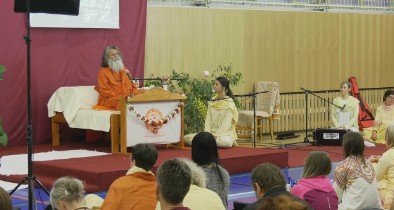
Evening Satsang with Vishwaguruji from Martin, Slovakia. We should ask ourselves: Who am I? From where did I come? Where I am going? In order to have liberation, we need the blessing of the Guru. Only to have a title is nothing. Growing of the ego is a danger for the spiritual aspirant. Know thyself as the Atma. Every life is like a dream, it is your reality. There are three levels of consciousness.
Yuga Yuga Jivo Maheshwarananda
19:35 - 19:42 (7 min)
Evening satsang with Vishwaguruji from Strilky Ashram, Czech Republic. Bhajan singing on Gurupurnima satsang.
What is excellent against stress
20:00 - 20:53 (53 min)
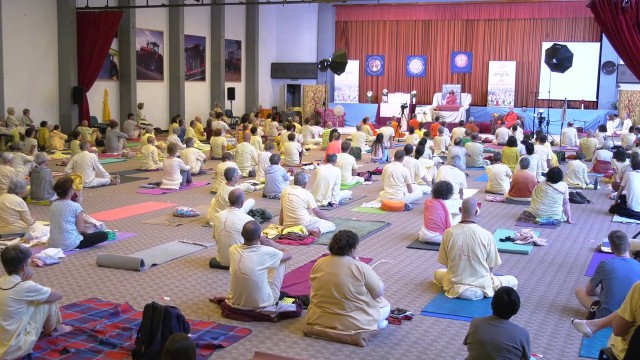
A satsang discourse on overcoming fear and stress through laughter, authenticity, and spiritual practice.
"Never take them seriously. Especially laugh at our own mistakes, problems, and fears."
"Spirituality without love is a terrible thing. I always remember... 'God, please protect me from spirituality without laughter.'"
The teacher shares stories and practical advice for dealing with internal struggles, emphasizing not to suppress fears but to face them with awareness and humor. He recounts the tale of a witch who controlled a village through fear of her rooster, illustrating how confronting false beliefs dispels their power. The talk connects this to daily spiritual practice, advising against empty ritual in favor of authentic feeling, as exemplified in the story of Krishna preferring a banana peel offered with love over a feast offered with pride.
Filming location: Vép, Hungary
The Nāḍīs, Cakras, and the Mūlādhāra Foundation
20:15 - 21:12 (57 min)
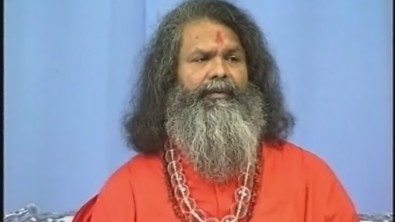
A spiritual lecture on the nāḍīs, cakras, and the foundational Mūlādhāra Cakra.
"The Mūlādhāra Cakra is at the bottom of the spinal column. It is a border between animal and human consciousness."
"Destiny was created first, and destiny is created individually. We should blame no one. We are ourselves responsible for our destiny."
The speaker continues a discourse from the previous day, focusing on the Mūlādhāra Cakra as the seat of destiny (prārabdha) and divine energy. He explains how this foundational energy influences life and can be purified through the threefold practice of svādhyāya (self-study), manana (contemplation), and abhyāsa (persistent practice), which remove the obstacles of impurity, distraction, and veils. The talk connects these concepts to Kuṇḍalinī Śakti, the role of Kriyā Yoga, and concludes with a symbolic discussion of the tilak mark.
Filming location: Umag, Croatia
Bhajans from Vep
21:00 - 21:24 (24 min)
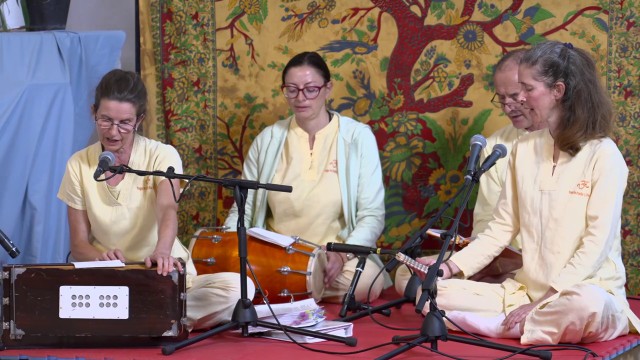
Yoga Summer Retreat from Vep, Hungary. Bhajan singing including Guruvara me cal usa una des.
We need Gurudev
21:20 - 22:14 (54 min)
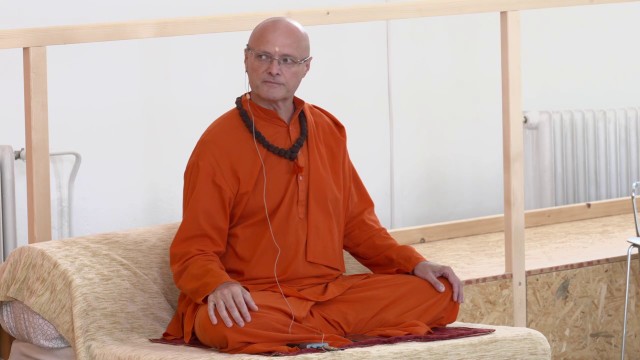
A satsang discourse on the necessity of the guru and the goal of Advaita philosophy.
"The moment you begin to think you have already heard and know everything, in that moment your free fall begins."
"Understand from this that the guru is not the physical body. It is most important to understand that the guru is that Guru-Tattva, the element of the guru."
A speaker leads a satsang, emphasizing the eternal student's attitude and the critical role of the embodied spiritual master (Guru-Tattva) as the essential guide. Using stories and analogies—such as the matchbox with a diamond, the friend with a boat, and the river merging into the ocean—the talk explains the guru's function and explores the ultimate goal of yoga: to transcend the cycle of rebirth and realize the Advaita (non-dual) union of the individual self with the cosmic Self.
Filming location: Strilky, Czech Republic
Singing Bhajans to the Masters
22:30 - 23:11 (41 min)
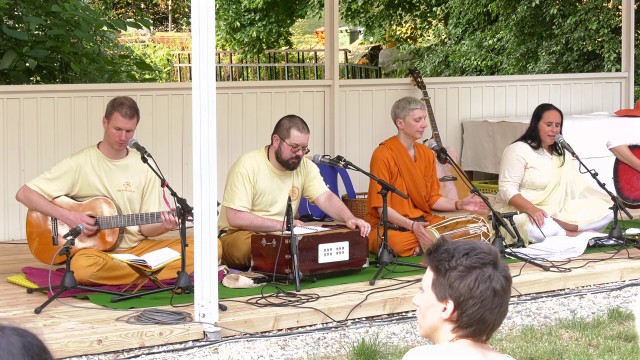
Evening satsang from Střílky Ashram, Czech Republic. Bhajans sung to the Master: Sobhāvo Satsaṅga Re, Yogi Jāno Kī Yoga Nidrā, Dhyān Karo, Hamẽ Hī Kam Satsaṅg Hī, Sataguru Sandeśo Moyē.
Bhajan singing from Strilky
23:15 - 23:50 (35 min)
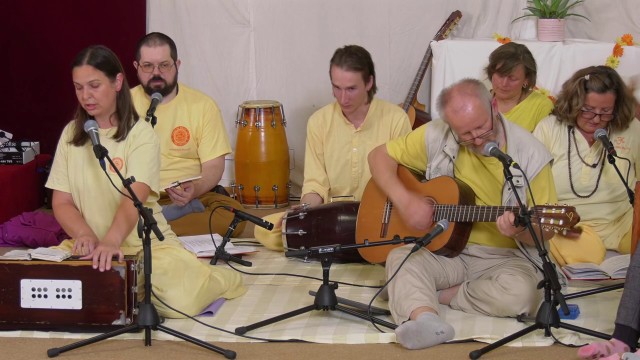
Evening satsang from Strilky Ashram, Czech Republic.
Bhajan evening from Strilky Ashram
23:55 - 0:21 (26 min)
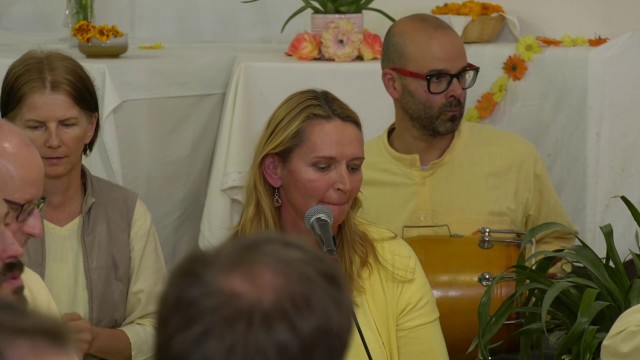
Evening satsang with Vishwaguruji from Strilky Ashram, Czech Republic.
American
Australian