
European
Bhajan singing in the presence of Vishwaguruji
0:10 - 1:45 (95 min)
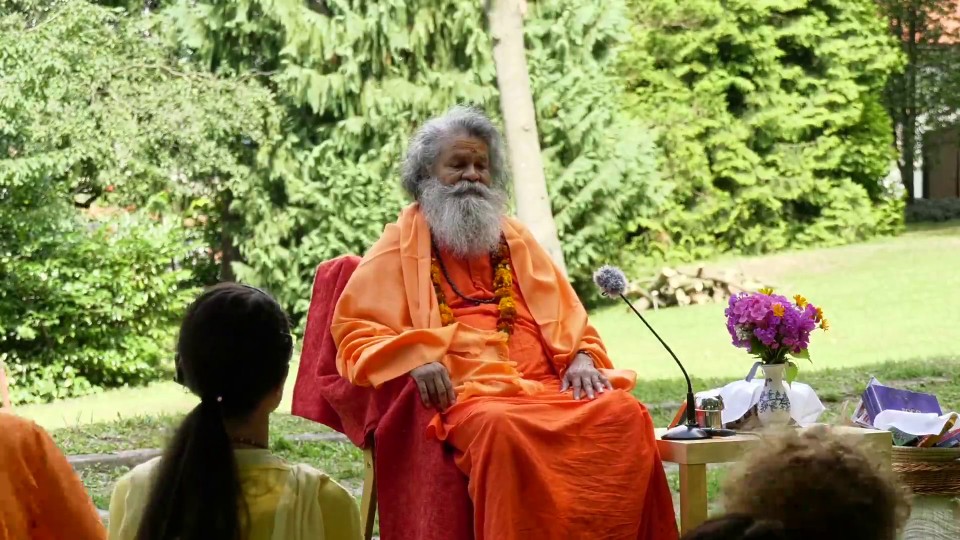
Morning satsang with Vishwaguruji from Strilky Ashram, Czech Republic.
Gurupurnima Satsang with Vishwaguruji (1/2)
1:50 - 3:54 (124 min)
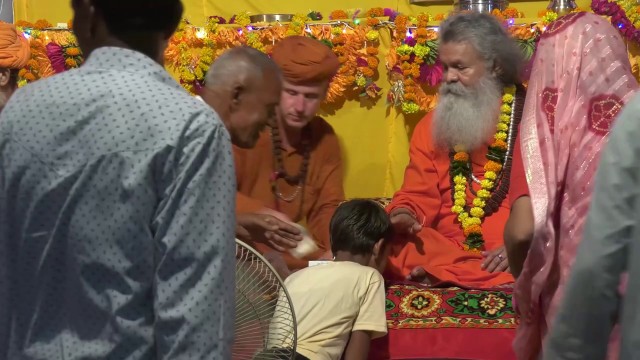
Gurupurnima Celebration with Vishwaguruji, Jadan Ashram, Pali, Rajasthan, India.
Satsang from Maha Kumbha Mela
4:00 - 4:39 (39 min)
Satsang from Illahabad
Turn Kali Yuga Into Satya Yuga
4:45 - 5:30 (45 min)
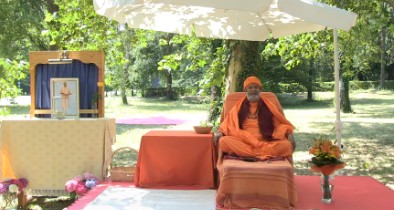
Morning satsang with Swamiji from Yoga Summer Retreat seminar from Vep, Hungary. When you live spiritual life your divine energy will avake. What is spirituality? The way, how you are living, when you are following Yoga in Daily Life. In that way you can turn Kali Yuga into Satya Yuga. Doesn't matter how hard is it, keep practicing.
Pilgrimage
5:35 - 6:22 (47 min)
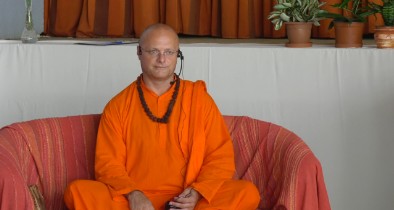
Morning satsang from Vep, Hungary.
The Paths and Practices of Haṭha Yoga
6:29 - 6:59 (30 min)
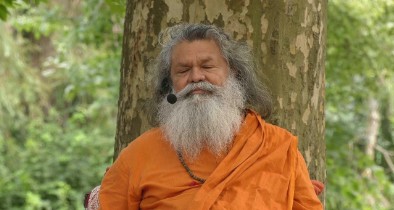
An introductory lecture on the philosophy and practices of Haṭha Yoga.
"According to Patañjali's teaching... the yogas are Karma Yoga, Bhakti Yoga, Jñāna Yoga, and Rāja Yoga."
"Haṭha Yoga pertains to the nervous system, specifically the three primary nāḍīs: Iḍā, Piṅgalā, and Suṣumṇā."
A spiritual teacher begins a weekend workshop by defining Haṭha Yoga's place among yoga's many paths. He explains multiple interpretations, including its definition as the union of the "Ha" (Iḍā) and "Tha" (Suṣumṇā) energies, and outlines its classical six cleansing techniques (Ṣaṭkarma). The talk provides practical guidance on practices like Netī and the foundational principle of beginning all practices on the left side to balance the lunar channel and calm the mind.
Filming location: Vép, Hungary
Morning Yoga practice, Umag, Croatia (2/9)
7:00 - 8:42 (102 min)
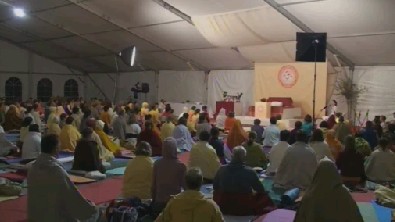
Morning Yoga practice from the international Yoga retreat Umag, Croatia on the 26th of September
We should not have duality
8:45 - 8:56 (11 min)
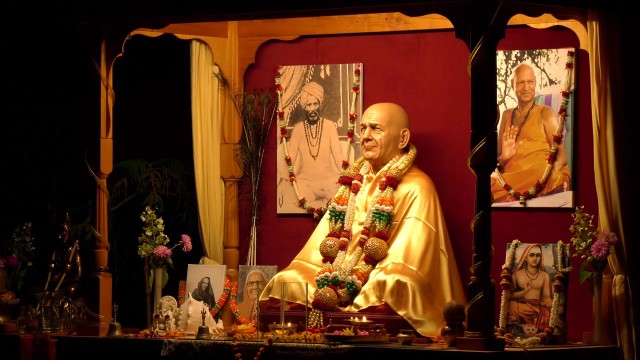
A satsang discourse on the eternal guru lineage and the nature of divinity.
"Other religions are also very good, but they have no God. Not living God."
"So there is one coming once, and there is another one which is forever coming."
The lecturer addresses devotees, reflecting on recent travel and attendance. He explains the concept of a living God through the eternal spiritual lineage (paramparā), contrasting it with his view of other faiths. Using the analogy of universal parents and unique biological mothers, he describes the relationship between the singular divine and the plurality of saints and gurus who manifest it continuously.
Filming location: Strilky, Czech Republic
The Purifying Path of Haṭha Yoga: An Introduction to Ṣaṭkarma
9:00 - 9:47 (47 min)

An instructional webcast introducing the Haṭha Yoga purification techniques (Ṣaṭkarma).
"Haṭha Yoga is not only that we clean and purify our whole system, our whole body, but it also has a very great effect on our nervous system."
"Haṭha means willpower to do these Haṭha Yoga techniques. And with this, you also get the willpower, the strength to persevere, to continue, to get rid of the laziness."
A teacher from the Śrīkī Ashram, joined by assistants, explains the purpose and benefits of the six purification acts. The session features a detailed, practical demonstration of Jala Netī (nasal cleansing with salt water) and Kapāla Bhāti, followed by an introduction to Agni Sāra and the Naulī Kriyā for digestive health. The instruction emphasizes using natural elements, proper technique, and the holistic effects on physical and energetic systems.
Filming location: Strilky, Czech Republic
Why harmony is lost?
9:55 - 10:29 (34 min)
A spiritual discourse on harmony, the soul's journey, and the divine mother principle.
"The first god is mother. 'Pitṛ Devo Bhava'—then comes the father, and so on."
"Life is a journey, not a destination. And this journey is the last milestone to enter... heaven."
Swamiji addresses a gathering, exploring themes of spiritual origin and parental harmony. He describes the soul's descent from the astral world, emphasizing the sacred duty of parents and the foundational love of the mother. The talk focuses on purifying consciousness by abandoning negative thoughts and judgment, culminating in an invitation to a guided meditation.
Filming location: New Zealand
Trust your Gurudev
10:35 - 11:26 (51 min)
A spiritual discourse on the influence of the moon and the supreme protection of the Guru.
"The moon has one of the strongest influences on our planet. Not only for the humans, but the trees, the animals, even the ocean."
"The highest is the guru tattva... the greatest power, the protection, is that what we call the bulletproof jacket. And that bulletproof jacket is Guru Kṛpā, protection."
The speaker delivers an evening satsang, beginning with the astrological and physical influence of the moon, particularly around Guru Pūrṇimā. Using analogies from air travel and oceanography, he transitions to the core theme: that the grace and protection of a true Guru surpass all planetary influences and astrological fears. He shares stories and teachings emphasizing that genuine spiritual progress requires personal effort and devotion, not reliance on external rituals or superstitions, and concludes with a prayer.
Filming location: Jadan, Rajasthan, India
Death is a transition
11:30 - 12:31 (61 min)
Morning satsang with Vishwaguruji from Strilky Ashram, Czech Republic. Lecture by Swami Avatarpuriji. Once we realize that death is basically a transition from this body to a higher place it is not scary. Who comes will go, that the universal law. A story about king Vidhur, who had a fear about what will happen when he dies. Learnig and translating mantras, a prayer to Lord Vishnu. Salutations to the infinite one, who has thousands forms... Lecture by Swami Vivekpuriji. What is a Guru, how we are feeling about the Guru?
How can we become a good yoga teacher?
11:35 - 12:55 (80 min)
Evening satsang with Vishwaguruji from Strilky Ashram, Czech Republic. Practising Bari Khatu Pranam and Sarva hitta asanas led by Vidya. All Yoga in Daily Life yoga teachers has some years practising behind them. A person must learn many years to become a doctor. A person also must learn many years to become a good teacher. Lifelong we are learning and practising yoga. Yoga practise checks your body and mind. To become a real yoga teacher we need a Guru. Nowadays children are not under the control of the parents. There are yoga teachers who have no proper knowledge of yoga. We can get energy from all of our koshas. The story about a king and a man who became a friend of a wild horse. People who know about Jyotish tell that Shiva will come
The four pillars of life
13:05 - 13:45 (40 min)
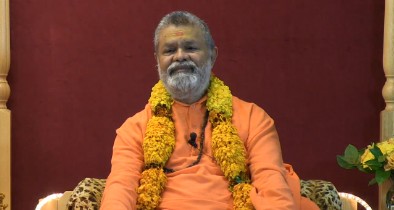
A discourse on the Vedic concepts of Puruṣa, Prakṛti, and the stages of life.
"Prakṛti is nature. Prakṛti is that which is created by God and is itself sustainable."
"Puruṣārtha is hard work, hard work to achieve something positive. And for that, you cannot do it in one year, two years, three years, or four years. It’s years and years and years."
A spiritual teacher delivers a satsang in Vienna, explaining the interplay between consciousness (Puruṣa) and nature (Prakṛti). He details the four human goals (Puruṣārthas)—Dharma, Artha, Kāma, Mokṣa—and the four corresponding life stages (Āśramas): Brahmacarya (student), Gṛhastha (householder), Vānaprastha (retirement), and Sannyāsa (renunciation). The talk emphasizes duty, selfless service, and the ultimate spiritual aim of life, illustrated with traditional teachings and personal anecdotes.
Filming location: Vienna, Austria
The form and the formless
13:50 - 14:42 (52 min)
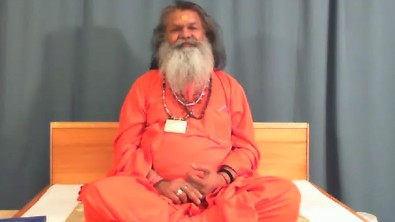
A spiritual discourse on purification, the body's energy systems, and mantra science.
"Any kind of illnesses you have, go and practice ṣaṭkarma: netī, dhautī, bastī, naulī, that kind of practice. This is inner purification."
"So, nirguṇa, it is a nādarūpa parabrahma. The resonance is the form of the Supreme."
A spiritual teacher addresses an assembly at an ashram, explaining the yogic science of purification. He begins by correlating the traditional four social classes (varnas) to different parts and functions of the human body, arguing the caste system is a bodily metaphor, not a social hierarchy. The core teaching outlines a threefold purification process: cleansing the physical body through Haṭha Yoga techniques like ṣaṭkarma, purifying the 72,000 nāḍīs (energy channels) through prāṇāyāma and mantra vibration, and finally cleansing the mind. He leads the audience in chanting exercises, such as feeling the vibration of "Oṃ," and emphasizes the importance of correct Sanskrit pronunciation for mantras to affect specific chakras. The talk expands to cover the five sheaths (kośas) and concludes that yoga is a practical science for realizing the formless reality within the temporary form.
Filming location: Melbourne, Australia
Turn Kali Yuga Into Satya Yuga
14:50 - 15:35 (45 min)
Morning satsang with Swamiji from Yoga Summer Retreat seminar from Vep, Hungary. When you live spiritual life your divine energy will avake. What is spirituality? The way, how you are living, when you are following Yoga in Daily Life. In that way you can turn Kali Yuga into Satya Yuga. Doesn't matter how hard is it, keep practicing.
The importance of the Om Ashram
15:40 - 16:30 (50 min)
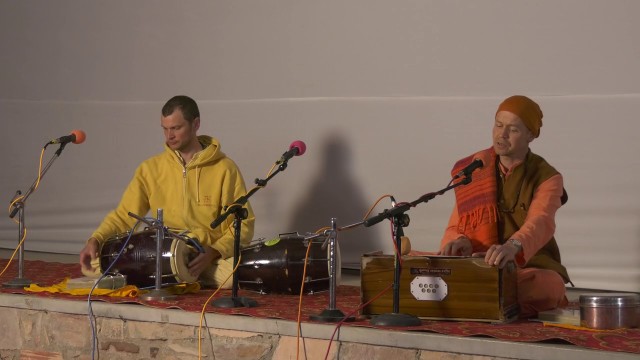
Evening satsang with Vishwaguruji from Jadan Ashram, Rajasthan, India. Welcoming words of Swami Gyaneshwarji, bhajan singing. Short talks about the features and the importance of the Om Ashram. Our eyes now can see our Gurudev and the result of the work done last 30 years. We are lucky ones to be here on this holy place and enjoying the darshan of Gurudev.
Why harmony is lost?
16:35 - 17:09 (34 min)
A spiritual discourse on harmony, the soul's journey, and the divine mother principle.
"The first god is mother. 'Pitṛ Devo Bhava'—then comes the father, and so on."
"Life is a journey, not a destination. And this journey is the last milestone to enter... heaven."
Swamiji addresses a gathering, exploring themes of spiritual origin and parental harmony. He describes the soul's descent from the astral world, emphasizing the sacred duty of parents and the foundational love of the mother. The talk focuses on purifying consciousness by abandoning negative thoughts and judgment, culminating in an invitation to a guided meditation.
Filming location: New Zealand
Pilgrimage
17:15 - 18:02 (47 min)
Morning satsang from Vep, Hungary.
Go back to Nature
18:10 - 19:00 (50 min)
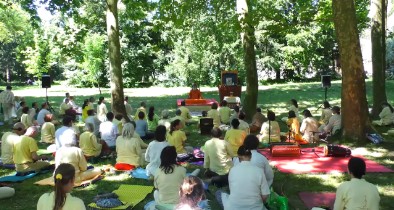
Morning satsang from Summer Retreat in Vep, Hungary. The natural environment has an immense amount of healthy prana, while using artificial things destroys the life energy.
The Significance of Pūrṇimā and the Guru Principle
19:05 - 19:54 (49 min)
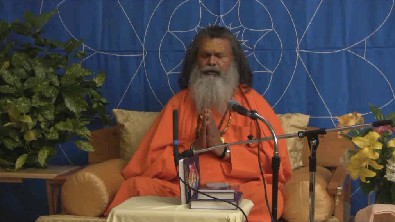
A satsang on the spiritual significance of the full moon (Pūrṇimā) and the Guru principle.
"Śiva means liberation. Śiva means the consciousness. Śiva means the beauty, and Śiva means the truth. Satyam Śivam Sundaram."
"Guru, who leads us from darkness to the light, Tamaso mā jyotir gamaya—lead us from the darkness to the light."
The lecturer delivers a discourse on the auspiciousness of Pūrṇimā, explaining its connection to Lord Śiva, the planet Jupiter (Guru), and the enlightenment of the Earth. He delves into the interplay of the mind (moon) and intellect (sun), the importance of balancing emotions, and the classical definitions of Haṭha Yoga as the six purification techniques. The talk includes practical guidance for yoga teachers, emphasizing relaxation and correct practice, and concludes with an invitation for Guru Pūrṇimā.
Guru's Darshan is the most precious
20:00 - 20:16 (16 min)
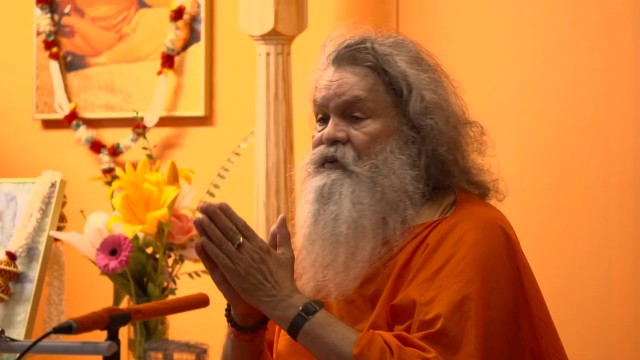
A spiritual discourse sharing a traditional parable about pilgrimage and divine grace.
"All day I am being bathed in by so many thousands and thousands of people. All of their sins come into me... When we come to our guru and we do seva... by the soil which touched his feet—when it touches us, we become pure."
"Gaṅgājī will give you much easier darśan. Whenever you are going on the way, always try to stay only at those houses where the householder has already had Gaṅgā snāna—a bath in the Gaṅgā."
A Swami addresses a satsang, recounting the story of two Brahmins on a pilgrimage to bathe in the Ganga. They follow strict advice on their journey, only to discover the river goddesses themselves—blackened by the sins of devotees—performing seva at a nearby ashram to be purified by their guru's foot-dust. The narrative illustrates that true purification comes from selfless service and guru's grace, not merely ritual.
Filming location: Strilky, Czech Republic
Understand your Atma
20:05 - 21:26 (81 min)
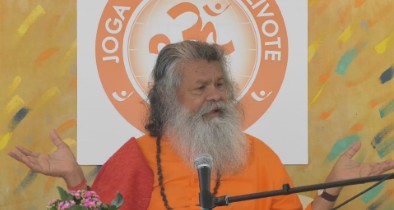
A spontaneous spiritual discourse on ancestry, karma, and yogic practice.
"Similarly, also the plants and the trees. They are in seed, and branches will go like that with one little seed, but we cut the branch and we put some other plant on it. That is confused."
"So, the human should understand animals, understand the trees, understand even the water. It has its path."
The lecturer addresses a morning gathering, speaking extemporaneously on themes of ancestral lineage, spiritual confusion in the modern age, and the law of karma. He uses analogies from nature, such as migrating birds and grafted plants, to illustrate the importance of balance and following one's true path. The talk transitions into a detailed explanation of prāṇāyāma techniques—Nāḍī Vedanā, Nāḍī Śodhana, and Anulom Vilom—for purifying the body's energy channels and achieving inner union. He concludes by discussing the omnipresent divine consciousness, referencing a prayer to the Guru.
Filming location: Slovakia
The Path of Conscious Living and Mercy
21:35 - 22:15 (40 min)
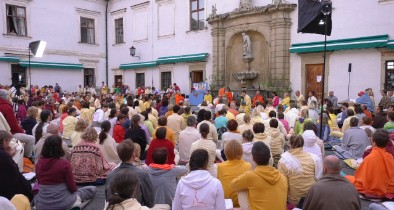
A satsang on spiritual development, karma, and conscious living.
"True spirituality purifies negative karmas and frees the soul. We are covered by vibrations, karmic influences, and ignorance."
"As humans among 8.4 million life forms, we possess intellect, vivekā, and karuṇā (mercy) in our hearts... Life is dear to everyone."
Swami Gajānandji addresses a global gathering at the ashram, discussing the distinction between religion and soul purification. He explains how unconscious actions, particularly harming life for food, create karmic burdens that obscure the soul. Using a bhajan by Saint Sūradāsa and teachings from the Bhagavad Gītā, he emphasizes the need for conscious action, discriminative wisdom (vivekā), and extending mercy to all beings to achieve liberation.
Filming location: Strilky, Czech Republic
Attributes of Shiva
22:20 - 22:28 (8 min)
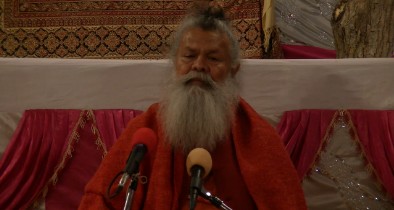
Evening satsang with Vishwaguruji from Khatu, Rajasthan, India. Shiva is the creator as well as the liberator; he is the merciful one.
Bhajans from Strilky
22:30 - 22:54 (24 min)
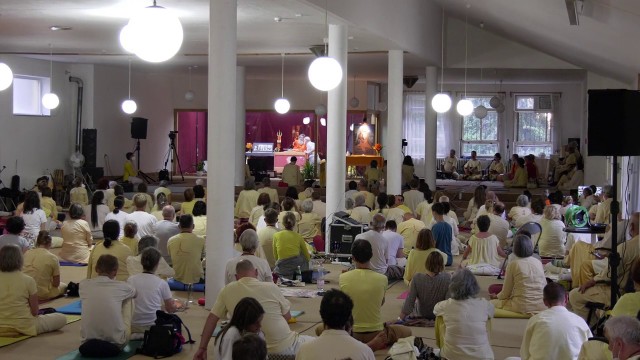
Evening satsang with Vishwaguruji from Strilky Ashram, Czech Republic.
Bhajan singing from Vep
23:00 - 23:23 (23 min)
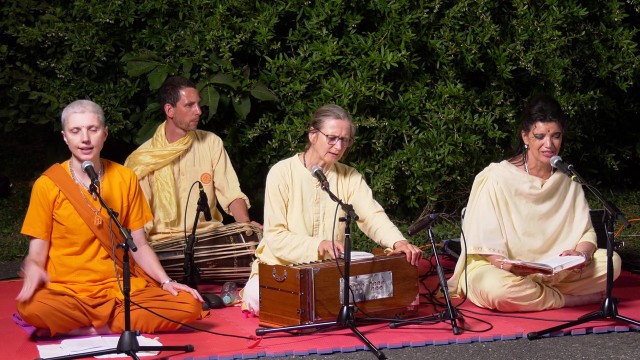
Morning satsang with Vishwaguruji from Vep, Hungary. Bhajan singing.
Bhajans from Rijeka
23:30 - 23:58 (28 min)
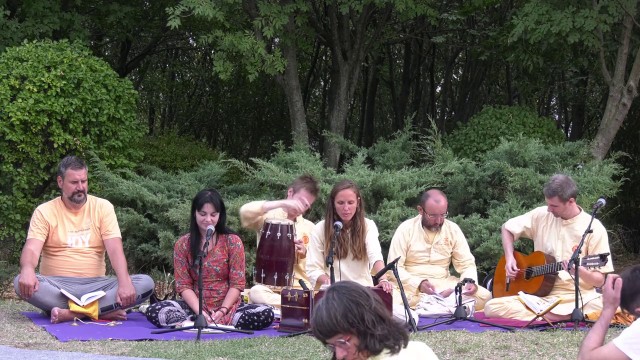
Evening satsang with Vishwaguruji from Rijeka Ashram, Croatia.
American
Australian