
European
My salutation to the Lord
0:05 - 0:10 (5 min)
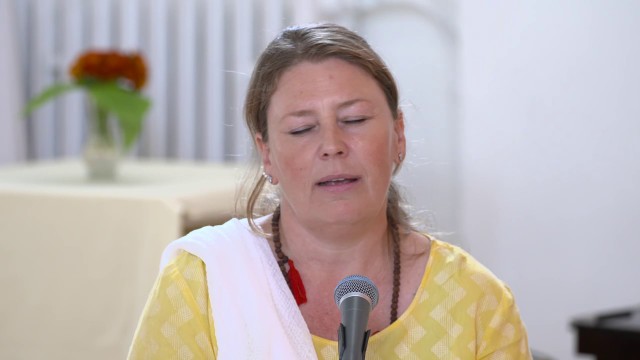
Evening satsang from Summer Yoga Retreat from Strilky, Czech Republic. Bhajan singing.
The blessed day of Gurupurnima
0:15 - 0:55 (40 min)
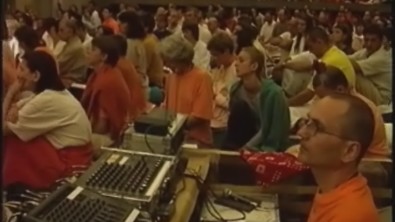
Lecture from Vep, Hungary
The Universal Embrace of Yoga and Spirituality
1:00 - 1:59 (59 min)
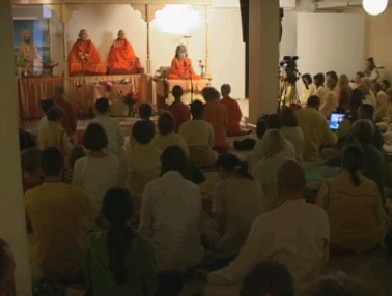
An evening satsang on the universal principles of yoga, karma, and selfless service.
"Yoga means unity. Yoga means harmony. Yoga means union. And Yoga also means balance."
"Through Sādhana and through Sevā—these two—spirituality grows."
Swami Ji from the Sri H. G. Ashram leads a discourse from Vienna, explaining yoga as a scientific path for harmony that connects the individual to the entire cosmos. He teaches that spiritual growth comes from balancing personal practice (Sādhana) with selfless service (Sevā), illustrating this with a story of Pārvatī's sacrifice. The talk covers interconnectedness, compassion, and overcoming the ego, concluding with a meditation.
Filming location: Vienna, Austria
How to train our mind?
2:05 - 2:26 (21 min)
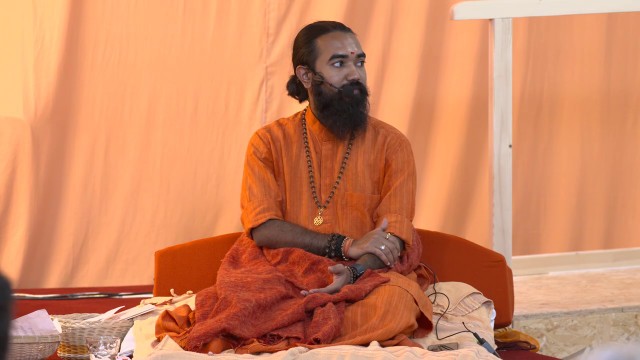
A spiritual discourse on taming the restless mind using a parable from Gurudeva.
"Our mind is chanchal. Chanchal means very restless, and that is normal for a human mind, but you need to learn how to train and tame your mind."
"In the same way, our minds are very restless, running around. We should just let it go; that is its job, to roam around and have thoughts continuously. Then, slowly, slowly, train your mind towards Guru Bhakti."
A speaker recounts Gurudeva's parable of a king's untamable horse and the patient trainer who tamed it through gentle, persistent companionship and reward. The story serves as an analogy for taming the restless mind through devotion to the Guru and the path of Bhakti, rather than forceful suppression. The session concludes with the guided recitation and explanation of a Sanskrit mantra focused on meditating on the Supreme Self within the heart.
Filming location: Strilky, Czech Republic
Bhajan singing on the Satsang
2:30 - 2:57 (27 min)
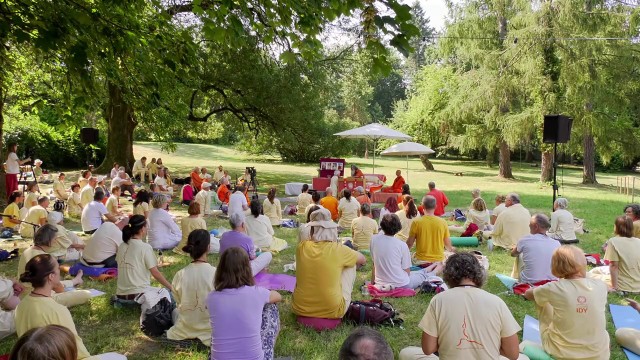
A devotional introduction and singing of a traditional bhajan.
"We can sing a very beautiful bhajan from Swāmī Lālā Nānjī. It is called Manarata Nāma, and it means, 'Oh my mind, repeat the name of God, repeat your mantra.'"
"Give your body and mind to Sāddhā Gurudeva, and he will destroy all your doubts and all your bad qualities. In the holy lotus feet of Satguru Deva reside all holy pilgrimages."
The speaker introduces a lesser-sung bhajan by Swāmī Lālā Nānjī, emphasizing the urgency of spiritual practice in human life. They explain the bhajan's theme of repeating the divine name and extol the glory and essential role of the true Guru in guiding devotees across the ocean of worldly existence. The session includes singing verses from the bhajan and concludes with salutations.
Filming location: Strilky, Czech Republic
Bhajans evening from the Strilky Ashram
3:05 - 4:08 (63 min)
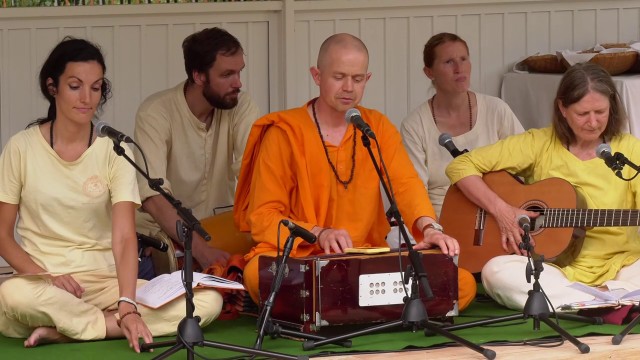
Evening satsang from Strilky Ashram, Czech Republic. Bhajan singing and translation.
Bhajan evening in the Strilky Ashram
4:15 - 5:08 (53 min)
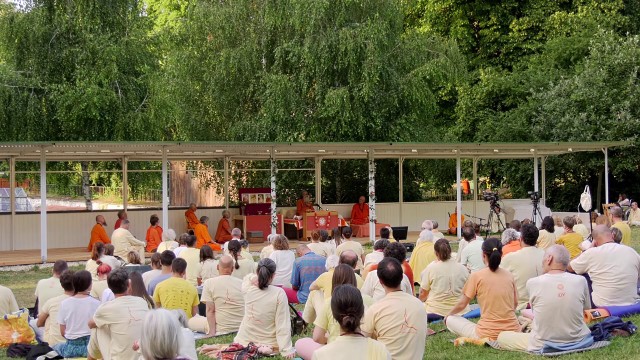
Evening satsang from Strilky Ashram, Czech Republic. Bhajan singing and translations. We shouldn't hold animals in a cage. They feel much pain there. Let them be free. We are also like that bird in the
Bhajan singing from Jadan
5:15 - 5:26 (11 min)
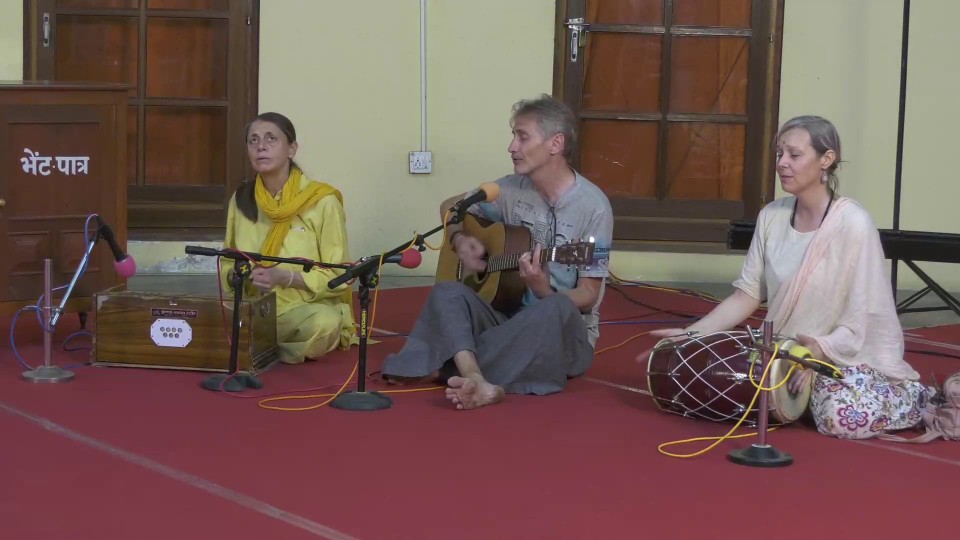
Evening satsang with Vishwaguruji from Jadan Ashram, Rajasthan, India.
If you have dedication, you get everything
5:30 - 6:34 (64 min)
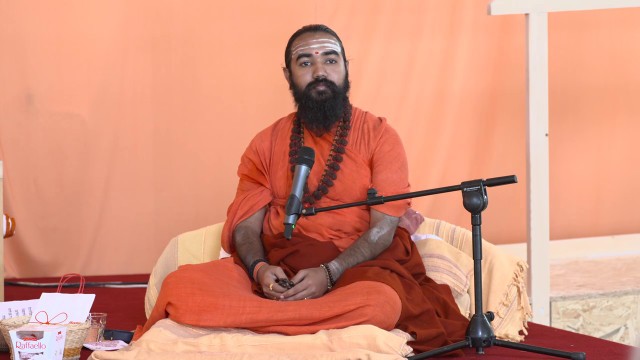
A morning satsang on simplicity, renunciation, and devotion.
"Life is simple. No need to complicate it. We just need two pieces of cloth, or even one."
"If you have true Guru Bhakti, if you have true dedication towards your Guru, if you believe in Him, then you will eventually get what you are waiting for."
The lecturer begins by demonstrating the traditional gati cloth worn by sadhus, explaining its symbolism and the meaning of the tripuṇḍ tilak. He shares a parable about a jealous priest and a magical conch to illustrate the folly of envy. The discourse then explores the life of Gautama Buddha as an exemplar of renunciation and dedication, followed by a story of the disciple Giri's devotion to Adi Shankaracharya. The session includes Sanskrit chants and concludes with a bhajan.
Filming location: Strilky, Czech Republic
The Universal Embrace of Yoga and Spirituality
6:40 - 7:39 (59 min)
An evening satsang on the universal principles of yoga, karma, and selfless service.
"Yoga means unity. Yoga means harmony. Yoga means union. And Yoga also means balance."
"Through Sādhana and through Sevā—these two—spirituality grows."
Swami Ji from the Sri H. G. Ashram leads a discourse from Vienna, explaining yoga as a scientific path for harmony that connects the individual to the entire cosmos. He teaches that spiritual growth comes from balancing personal practice (Sādhana) with selfless service (Sevā), illustrating this with a story of Pārvatī's sacrifice. The talk covers interconnectedness, compassion, and overcoming the ego, concluding with a meditation.
Filming location: Vienna, Austria
Seva will bring us to Brahmaloka
7:45 - 8:52 (67 min)
Satsang with Vishwaguru Maheshwarananda, Strilky Ashram, Czech Republic. God gives everything to everyone. We should have a happy life and happy united families. We should not kill any creatures in the name of God. Keep discipline and all beings will be happy. When we are doing real service (seva), it means that we shouldn’t expect anything. Unselfish seva will bring us to Brahmaloka.
Be Under His Shelter
9:00 - 10:05 (65 min)
A spiritual discourse on cultivating inner peace through faith, surrender, and overcoming inner obstacles.
"One who is always under divine shelter is safe. But how does one come under God's shelter?"
"If you have peace within, you can bring peace outside. Without inner peace, you cannot."
The speaker delivers a satsang, weaving together devotional songs, parables, and teachings to explore the path to inner peace. He discusses the necessity of true surrender and faith in God, illustrated by a story of an atheist climber. Using examples from Gandhi and analyses of inner fires like anger and desire, he explains how peace is developed through prayer, meditation, and purifying negative qualities like rāga (attachment) and krodha (anger). The talk emphasizes that world peace begins with individual inner peace.
Filming location: Wellington, New Zealand
Do good things and be happy
10:10 - 10:56 (46 min)
Evening satsang with Vishwaguruji from Strilky Ashram, Czech Republic. Bhajan singing. Bhajans are one of the best things in the world. When we sing good words come from our hearts and make other people happy. Sometimes people are happy also when they do bad things. The story of a sadhu and a tree. We should be peaceful and positive so we can go to God. Om Ashram is for the future generation. Half of iva was a woman and the other half was a man.
Practising fifth level of Yoga in Daily Life System
11:00 - 12:26 (86 min)
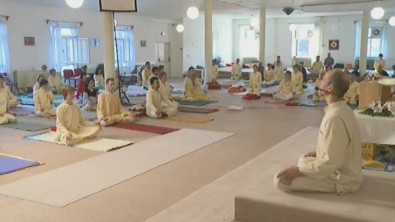
Morning practising. Fifth level of the System" Yoga in Daily Life" from Mahaprabhudeep Ashram, Strilky, Czech Republic on 9th of July 2010.
The Primacy of the Name in the Kali Yuga
12:30 - 13:04 (34 min)
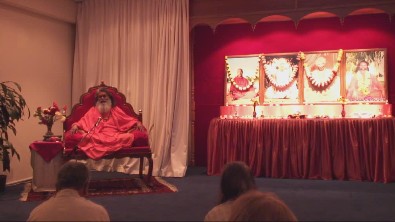
A discourse on the nature of the Kali Yuga and the power of the divine name.
"Kali Yuga is Kriyā Yuga. Kriyā Yuga means Karma Yuga. Karma is primary."
"Kali yuga kevala nāma ādhāra, sumira sumira nara hoi bhava pāra. (In the Kali Yuga, the name alone is the foundation; by repeating, repeating, a person crosses the ocean of existence.)"
Swami Maheshwarananda explains that the Kali Yuga is an age dominated by action (karma), but its true foundation is the repetition of God's name, as stated by Tulsidas. He shares a personal memory of his Guru appearing to him at the Strelky ashram and narrates a Puranic story about the sage Vishvamitra to illustrate the supreme value of satsang. The talk emphasizes that diligent spiritual practice (purushartha) is essential, yet liberation comes from anchoring oneself in the divine name.
Filming location: Wellington, New Zealand
How to train our mind?
13:10 - 13:31 (21 min)
A spiritual discourse on taming the restless mind using a parable from Gurudeva.
"Our mind is chanchal. Chanchal means very restless, and that is normal for a human mind, but you need to learn how to train and tame your mind."
"In the same way, our minds are very restless, running around. We should just let it go; that is its job, to roam around and have thoughts continuously. Then, slowly, slowly, train your mind towards Guru Bhakti."
A speaker recounts Gurudeva's parable of a king's untamable horse and the patient trainer who tamed it through gentle, persistent companionship and reward. The story serves as an analogy for taming the restless mind through devotion to the Guru and the path of Bhakti, rather than forceful suppression. The session concludes with the guided recitation and explanation of a Sanskrit mantra focused on meditating on the Supreme Self within the heart.
Filming location: Strilky, Czech Republic
Divine Lila, Gods Play
13:35 - 14:22 (47 min)
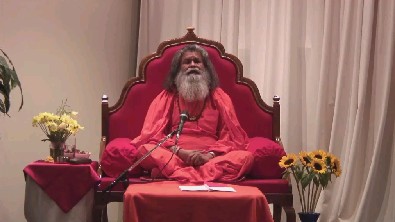
A spiritual discourse exploring divine play, devotion, and karma through storytelling.
"His friends were called gopas, what we call disciples or friends. And his female disciples are known as gopīs."
"There is no power in the entire universe that can tie me, or close me, or stop me. But there is only one power that I cannot break, and that is love."
The lecturer narrates the pastime of young Krishna being bound by a "rope of love" to illustrate God's voluntary surrender to pure devotion. He expands on the theme by explaining the protective power of a guru-given mantra and mala, and recounts a detailed karmic parable about a leper, a donation of ghee, and a storekeeper's theft to underscore the law of cause and effect. The talk concludes with reflections on truthfulness and a brief linguistic note.
Filming location: Wellington, New Zealand
In the service of Life
14:30 - 15:14 (44 min)
India, Summer 2005. Report about the Swamijis activities.
Be careful with the self-made Gurus
15:20 - 15:55 (35 min)
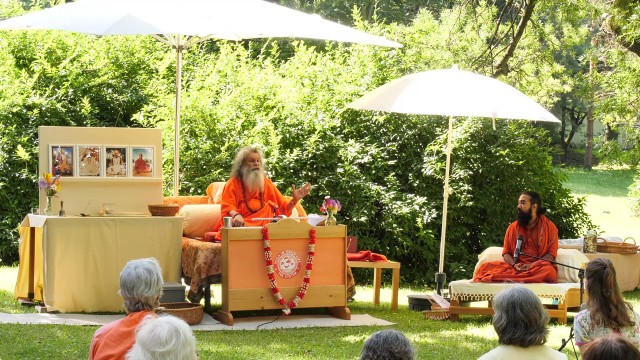
A spiritual discourse on the importance of discernment in seeking a true guru, illustrated with cautionary tales.
"Sometimes we just follow people by seeing their work, but not by understanding what they really are doing, and we follow blindly."
"It’s very important to find a real Satguru Dev, because nowadays, as we know, it’s Kali Yuga, and in Kali Yuga people are not so nice as they were once upon a time."
A speaker addresses a gathering, warning against blind faith in the spiritual search. He emphasizes the necessity of finding a genuine guru from an authentic lineage, contrasting this with self-serving imposters. He shares two parables: one about a blind sadhu whose devotional offering is eaten by a cat, leading to an unexamined ritual tradition, and another about a deceitful, nose-less fake guru who exploits disciples. The core message is to seek clarity, ask questions, and avoid following teachings without understanding.
Filming location: Strilky, Czech Republic
What is God?
16:00 - 16:58 (58 min)
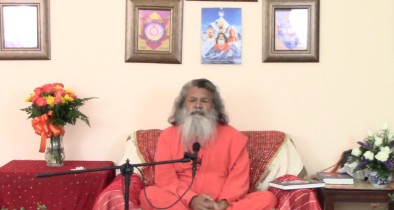
A spiritual discourse on the nature of God, human divinity, and traditional wisdom.
"A child asks a mother or father, 'What is the horizon? How far is it?' Have you ever reached or gone to the horizon?"
"Bhagavān Kṛṣṇa said to Arjuna: both are good, Nirākāra and Sākāra, the formless and with form. But he said, for you, Arjuna, it is easier to worship in form."
Swami Anand Arun explores the concepts of formless (Nirākāra) and personal (Sākāra) divinity, using the analogy of the unreachable horizon. He discusses the path of worship, the significance of divine forms and symbols in Hindu tradition, and the importance of sacred language and human relationships. The talk connects these themes to the science of the cakras, the significance of Vedic rituals like marriage, and the practical application of yoga and speech in daily life.
Filming location: USA
Outer Situation Reflects The Inner Situation
17:05 - 18:02 (57 min)
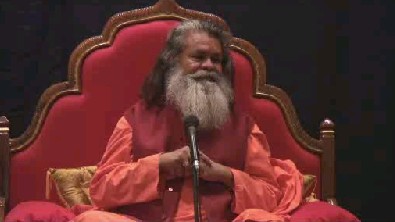
Satsang with Swamiji from Wellington, NZ. With the cleanness of our house we can see our inner condition. How we are keeping the ashram or the house in order, with this we can see our love and devotion. We can see if everything is in beauty. It is our inner beauty, the inner pureness, our inner clarity which is reflecting there. Doubts, desires and hidden wishes we did not clean up are spoiling our mind. If we are neglecting our sadhana, our duties, then tamas guna, the laziness takes over. It will grow more and more and we will find every self excuse for our mental pollution. Self enquiry meditation, which is taught in the Yoga in Daily life Yoga classes will help to clear up the question - not who am I but how am I. We have to search within, how is our inner world and how is our inner condition. Translation of the bhajan: Jag musafir dekh vo.
Yoga - The Path Of Liberation
18:10 - 18:40 (30 min)
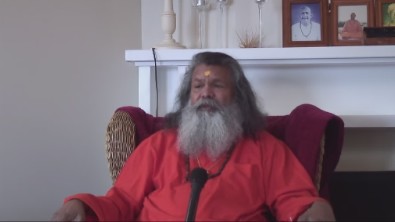
A spiritual discourse on karma, consciousness, and the path to liberation.
"Karma pradhāna hai. Karma is very important. One must not understand karma as negative. Karma is action."
"So, what we have to become is a witness, a knower, or an observer... You become a witness of everything."
In a morning satsang, Swami Madhav Krishna explains the fundamental nature of karma as all action and process in the universe, distinguishing it from mere negative consequence. He describes the journey from identification with the physical body and worldly attachments to realizing the still, witnessing consciousness (Ātman) that exists beyond the movement of energy (śakti). Using parables and analogies—including driving a car and the story of Dattātreya learning from a woman's bracelets—he elucidates concepts of non-duality, the blessing of divine energy from liberated beings, and the ultimate goal of Self-realization.
Filming location: Wellington, New Zealand
Be in the present and trust on your Guru
18:45 - 19:18 (33 min)
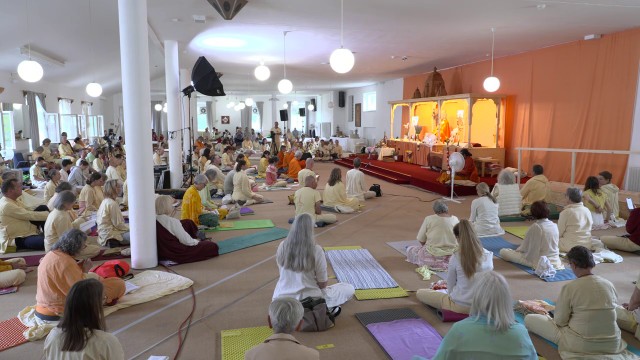
Morning satsang with Vishwaguruji from Strilky Ashram, Czech Republic. Kama krodha lobha moha ahamkara are our enemies. We should know our roots from where we started. The intensity of our destiny is in the hands of Gurudev. We should go without any expectation to Guudev. Story of a Guru and a disciple who thought he knows everything. What comes in our life it will go also.
Prashad
19:25 - 20:06 (41 min)
Swamiji in Sliac, 3rd April 2007.
All pilgrim places are at the lotus feet of Gurudev
20:10 - 20:57 (47 min)
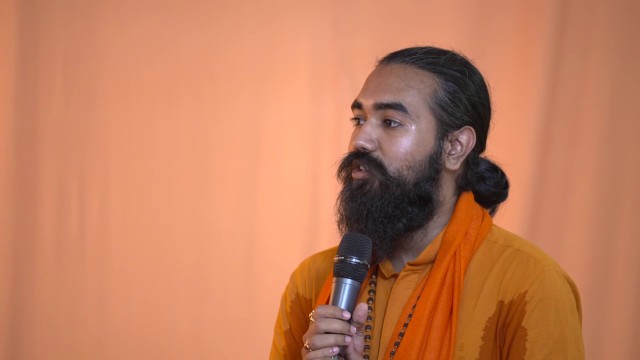
Evening satsang with Vishwaguruji from Strilky Ashram, Czech Republic. The greetings of Mahamandaleshwar Vishwaguruji and Swami Avatarpuriji in the Ashram. Utilize every minute of being here at the seminar. The opening words of Swami Avatarpuriji. Don't waste time, be in the satsang. All pilgrim places are at the lotus feet of Gurudev. If we have His darshan we have nothing to worry about.
Rishi
21:07 - 21:50 (43 min)
Swamiji in Sliac, 4th April 2007
Around the world - YIDL at the Budapest Carfree Day
22:00 - 22:03 (3 min)

One of the most important principles of Yoga in daily life is environment protection. Hence YIDL is present each year at the Budapest Carfree Day with a yoga tent.
Around the world - YIDL at the Budapest Vegetarian Festival 2011
22:10 - 22:15 (5 min)

Around the world -- YIDL at the Budapest Vegetarian Festival, 2011
Around the world - Yoga for Kids from Hungary
22:20 - 22:25 (5 min)

Yoga for Kids from Hungary.
Be satisfied and content whatever you have
22:30 - 23:43 (73 min)
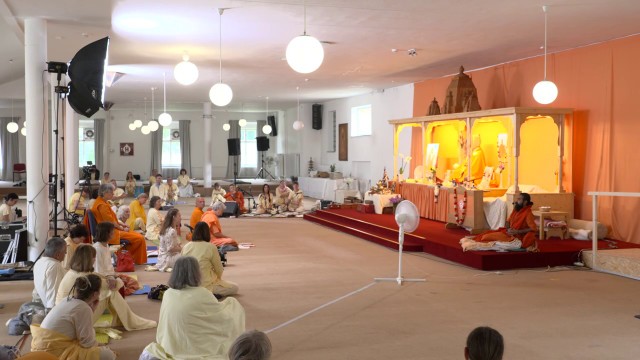
A satsang featuring spiritual stories and teachings on renunciation, ego, and the pitfalls on the spiritual path.
"Seeing you all the time indulged in these materialistic activities and always enjoying your life makes me sad."
"If you have ego, envy, or jealousy towards anything or anyone, then you get stuck in this māyā."
The lecturer narrates two primary parables. The first tells of King Gopichand, who renounces his kingdom at his mother's request and learns the true meaning of his mother's three advices for monastic life. The second, a cautionary tale, describes a powerful muni whose intense tapasya is destroyed by rising ego and desire, ultimately exploited by Kamadeva. The speaker weaves in related teachings, including a story of Lord Rama delivering justice to a dog, to emphasize controlling anger, speech, and the dangers of ego.
Filming location: Strilky, Czech Republic
How to train our mind?
23:50 - 0:11 (21 min)
A spiritual discourse on taming the restless mind using a parable from Gurudeva.
"Our mind is chanchal. Chanchal means very restless, and that is normal for a human mind, but you need to learn how to train and tame your mind."
"In the same way, our minds are very restless, running around. We should just let it go; that is its job, to roam around and have thoughts continuously. Then, slowly, slowly, train your mind towards Guru Bhakti."
A speaker recounts Gurudeva's parable of a king's untamable horse and the patient trainer who tamed it through gentle, persistent companionship and reward. The story serves as an analogy for taming the restless mind through devotion to the Guru and the path of Bhakti, rather than forceful suppression. The session concludes with the guided recitation and explanation of a Sanskrit mantra focused on meditating on the Supreme Self within the heart.
Filming location: Strilky, Czech Republic
American
Australian