
European
Sri Deep Narayan Mahaprahuji
0:05 - 0:12 (7 min)
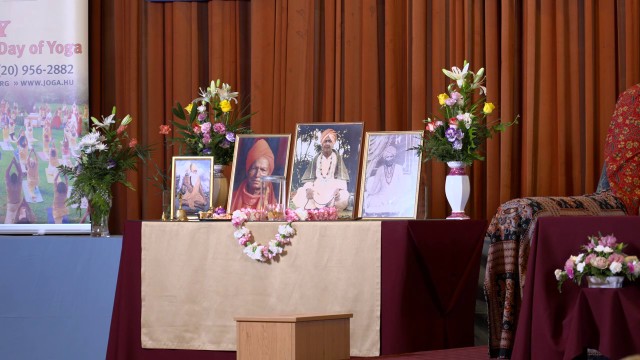
A devotional discourse on the power of the divine name and Guru's grace.
"For the beings of the world—the jīvas and jinn—His name itself is the boat to cross the ocean of existence."
"By always contemplating His name with grace, desire, anger, and greed are cut down."
The speaker offers praise to Śrī Dīp Nārāyaṇa Mahāprabhujī, described as a divine incarnation. The central theme is that constant remembrance and contemplation of this divine name serves as a vehicle for liberation, protecting devotees from worldly afflictions and illusion, and immersing them in divine absorption. The Guru's grace is presented as the essential means for this crossing.
Filming location: Vép, Hungary
A Call for Peace and Self-Realization
0:15 - 1:22 (67 min)
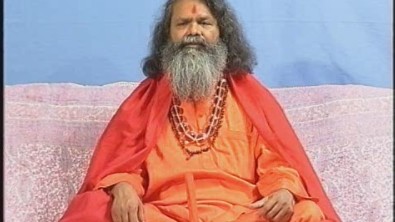
A public lecture on world peace, self-inquiry, and the science of yoga.
"With weapons, with guns, you cannot bring peace. But with flowers, and with love, you can bring peace to the world."
"Nothing belongs to us, says the wise man. The yogīs said, 'Nothing belongs to us. Everything is temporary. Even your body does not belong to you.'"
Swamiji addresses an evening gathering, calling for an end to violence and ignorance through self-realization. He explains the preciousness of human life, the futility of worldly conflict, and the path of yoga as a means to achieve inner and outer peace. The talk covers the nature of the mind, the five bodies, and includes a brief practical demonstration to feel energy in the palms.
Filming location: Croatia
In the cave of Sri Alakhpuriji
1:30 - 1:40 (10 min)
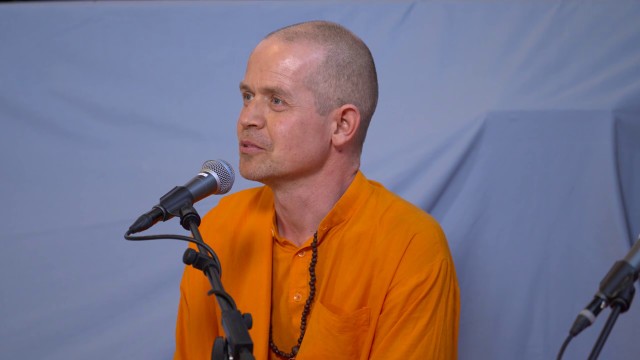
A personal story about receiving a devotional chant as a blessing.
"You go in and meditate; you will get good inspiration." "Print out this sentence in big letters and stick it on the place where you go the most, and read it every day."
The speaker recounts a Himalayan pilgrimage with Viśva Gurujī, where he was granted special permission to meditate in Śrī Alakpurījī's cave. After an uncomfortable period of cold, he later received the kīrtan as a blessing. He explains the chant's core meaning—"all you need is the Guru's grace"—and shares how he set the Sanskrit phrase to music, concluding by singing the devotional composition.
Filming location: Vép, Hungary
This ashram is your work
1:45 - 2:20 (35 min)
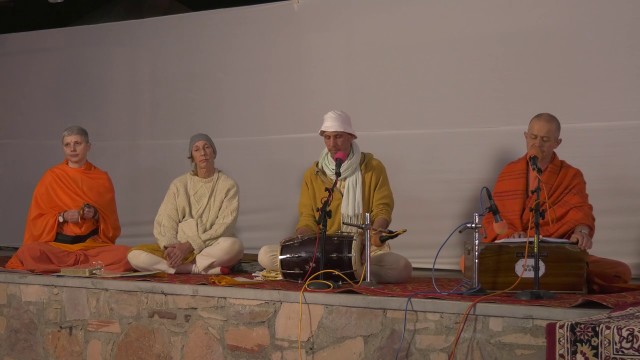
Evening satsang with Vishwaguruji from Jadan Ashram, Rajasthan, India. Bhajan singing. Welcoming words from Vishwaguruji. I was so happy how we made this Ashram, people from many many countries. Indian people are also coming and see how great it is.
Bhajans with Swami Gajanandji
2:30 - 3:09 (39 min)
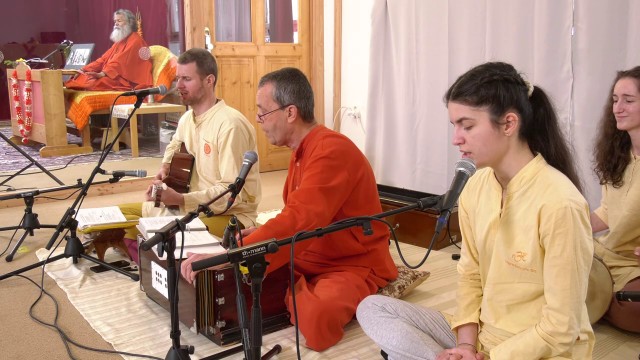
Morning satsang with Vishwaguruji from Strilky Ashram, Czech Republic.
Bhajans from Poprad
3:15 - 3:59 (44 min)
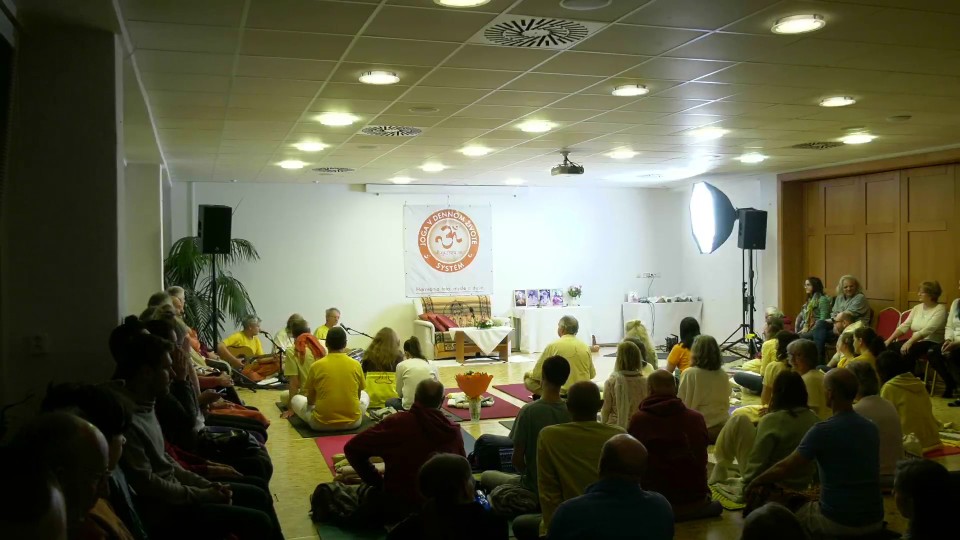
Bhajans from Tatra Hotel, Poprad, Slovakia.
Bhajan evening from Strilky Ashram
4:05 - 4:53 (48 min)
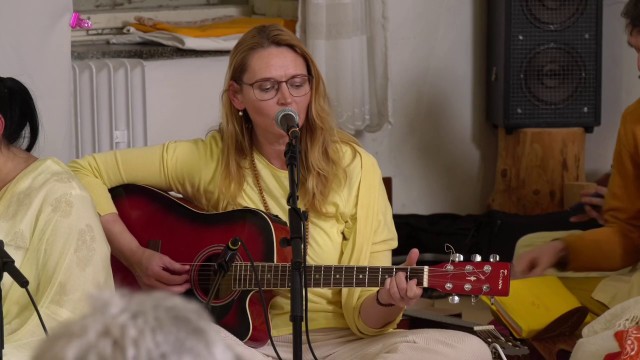
Evening satsang with Vishwaguruji from Strilky Ashram, Czech Republic. Bhajan singing.
The calling of Sri Alakhpuriji
5:00 - 5:11 (11 min)
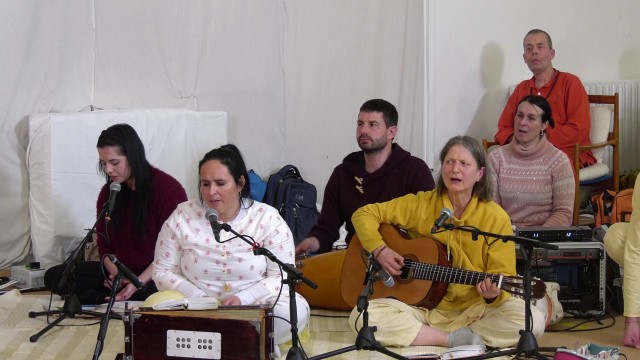
Evening satsang with Vishwaguruji from Strilky Ashram, Czech Republic. Bhajan Sataguru Alakha Puriji Avo.
Bhajans from Oosterhout
5:15 - 6:20 (65 min)
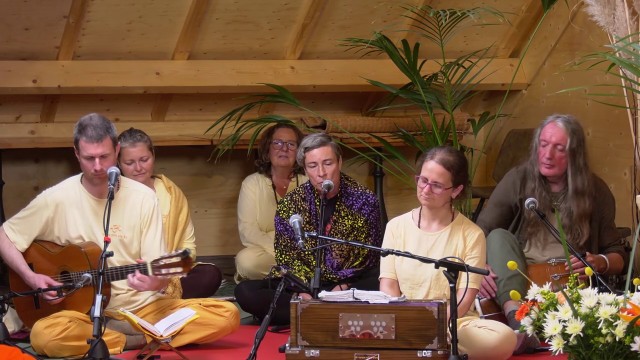
Evening satsang with Vishwaguruji from Oosterhout, Noord-Brabant, The Netherlands.
Be careful with the self-made Gurus
6:25 - 7:00 (35 min)
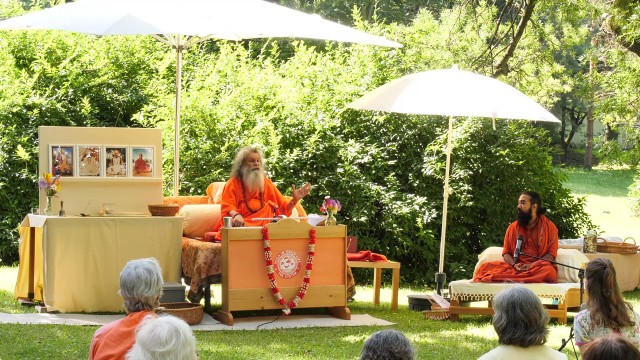
A spiritual discourse on the importance of discernment in seeking a true guru, illustrated with cautionary tales.
"Sometimes we just follow people by seeing their work, but not by understanding what they really are doing, and we follow blindly."
"It’s very important to find a real Satguru Dev, because nowadays, as we know, it’s Kali Yuga, and in Kali Yuga people are not so nice as they were once upon a time."
A speaker addresses a gathering, warning against blind faith in the spiritual search. He emphasizes the necessity of finding a genuine guru from an authentic lineage, contrasting this with self-serving imposters. He shares two parables: one about a blind sadhu whose devotional offering is eaten by a cat, leading to an unexamined ritual tradition, and another about a deceitful, nose-less fake guru who exploits disciples. The core message is to seek clarity, ask questions, and avoid following teachings without understanding.
Filming location: Strilky, Czech Republic
Guru Mahima
7:05 - 7:40 (35 min)
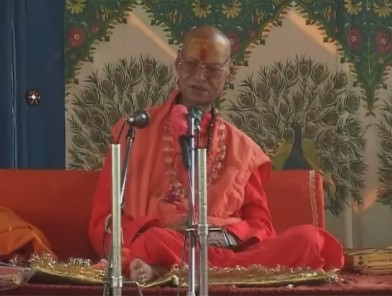
Satsang on the occasion of Gurupurnima in Jadan, India given by His Holiness Sri Swami Madhavananda Puriji.
Navaratri - Honoring the Divine Mother and speech on Kriya Yoga, Gold Coast
7:45 - 9:29 (104 min)
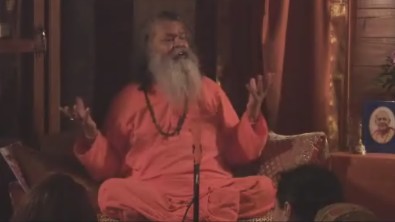
Navaratri is a nine day celebration of the divine mother - Shakti. Singing and translation of Holy Gurujis bhajan: "Jaya Matesvari Jaya Devi Candan." Ram Navami is a festival, celebrating the incarnation of Lord Rama. What is Kriya Yoga? How can Kriya help you? What does Kriya do in our body? In our mind? In our consciousness? In our intellect? On our soul? And how it leads us to the divine consciousness, the Atma? There are six Kriyas in Hatha Yoga techniques which are cleaning and purifying our body. Practicing the spiritual Kriya Yoga technique will purify our subconsciuosness. Kriya is one of the best, quickest and sure path of the human life. Kriya practicing awakens the Kundalini Shakti. Through divine prayers and spiritual Kriyas we can purify our destinies. It will uplift and enlighten our consciousness, then we become free from the Karmas. Recorded at bush retreat at Mudgeeraba, Gold Coast, Australia.
Yoga is a science
9:35 - 10:54 (79 min)
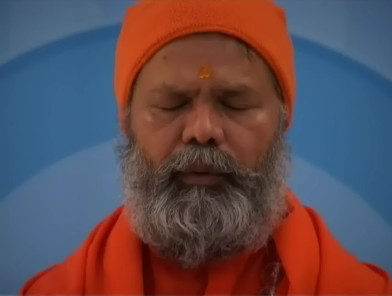
A spiritual lecture on Kuṇḍalinī, chakras, and the purpose of human life.
"Yoga is the science of body, mind, consciousness, and soul. Yoga without spirituality is like a body without a soul."
"Chakra is that which is purifying our body, mind, and consciousness. Chakra has to be purified through practice of mantra, prayers, or some yogic kriyās. Then the kuṇḍalinī will awake."
The teacher continues a multi-day seminar, delving into the nature of human consciousness through the lens of Kuṇḍalinī energy and the chakra system. He explains the five layers of the body (kośas), the persistence of karma using an analogy of salt in water, and the symbolism of the Mūlādhāra chakra—its red color, lotus imagery, and four petals representing the four aims of life: dharma, artha, kāma, and mokṣa. The discourse expands into themes of universal love, friendship, and living in the world with detachment, like a lotus in water.
Filming location: Australia
Morning practice from Strilky with relaxation
11:00 - 11:42 (42 min)
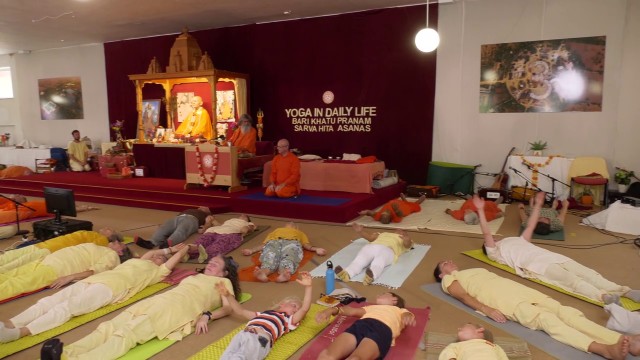
Morning satsang with Vishwaguruji from Strilky Ashram, Czech Republic. Practicig Sarva Hita asanas with MM. Swami Vivekpuriji. Including Marjari. Practicing Utthita Lolasan and Hasta Padangustasan from the second level. Vishwguruji gives instruction how to practice yoga.
Be careful with the self-made Gurus
11:50 - 12:25 (35 min)
A spiritual discourse on the importance of discernment in seeking a true guru, illustrated with cautionary tales.
"Sometimes we just follow people by seeing their work, but not by understanding what they really are doing, and we follow blindly."
"It’s very important to find a real Satguru Dev, because nowadays, as we know, it’s Kali Yuga, and in Kali Yuga people are not so nice as they were once upon a time."
A speaker addresses a gathering, warning against blind faith in the spiritual search. He emphasizes the necessity of finding a genuine guru from an authentic lineage, contrasting this with self-serving imposters. He shares two parables: one about a blind sadhu whose devotional offering is eaten by a cat, leading to an unexamined ritual tradition, and another about a deceitful, nose-less fake guru who exploits disciples. The core message is to seek clarity, ask questions, and avoid following teachings without understanding.
Filming location: Strilky, Czech Republic
If you have dedication, you get everything
12:30 - 13:34 (64 min)
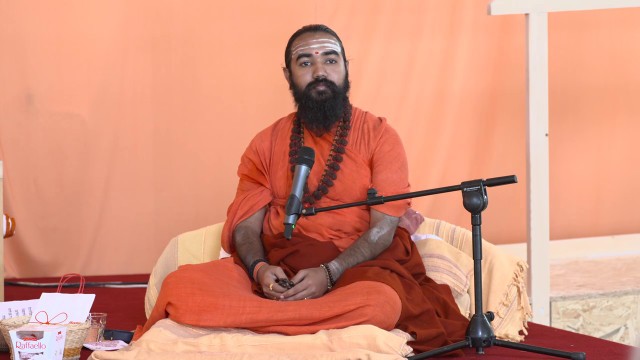
A morning satsang on simplicity, renunciation, and devotion.
"Life is simple. No need to complicate it. We just need two pieces of cloth, or even one."
"If you have true Guru Bhakti, if you have true dedication towards your Guru, if you believe in Him, then you will eventually get what you are waiting for."
The lecturer begins by demonstrating the traditional gati cloth worn by sadhus, explaining its symbolism and the meaning of the tripuṇḍ tilak. He shares a parable about a jealous priest and a magical conch to illustrate the folly of envy. The discourse then explores the life of Gautama Buddha as an exemplar of renunciation and dedication, followed by a story of the disciple Giri's devotion to Adi Shankaracharya. The session includes Sanskrit chants and concludes with a bhajan.
Filming location: Strilky, Czech Republic
A Guru gives everything that we need
13:40 - 14:41 (61 min)
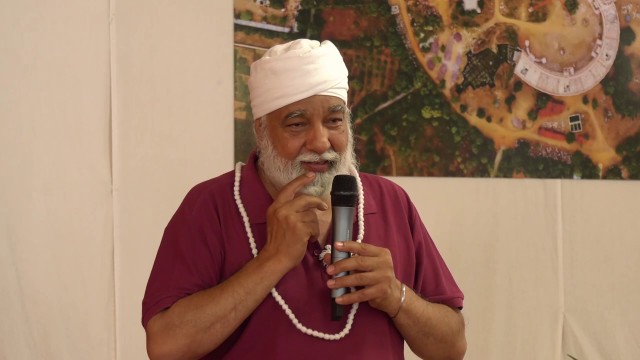
Evening satsang from Strilky Ashram, Czech Republic. The story of Krishna and Vidura's wife. Explanation and sing of bhajan Prabhu Prema Bina Nahi Ave. Strilky Ashram is a heaven on earth. We should know what Guru really means. Our biggest problems are our ego and jealousy. The real Guru mantra can liberate our minds. Our yoga name helps us to go towards our aims. We have to do seva (selfless service) in order to get the blessing. Miracles can happen to each of us. Karma is happening to every country. Yoga has become an industry in the world. There are some institutes which want to control yoga and ayurveda also. It should create a universal benchmark for yoga and ayurveda. In Britain, many people can legally use yoga and ayurveda as medicine. Bhajan explanation and singing Prabhu Mere Avaguna Chita Na Caro.
Renounce
14:45 - 15:51 (66 min)
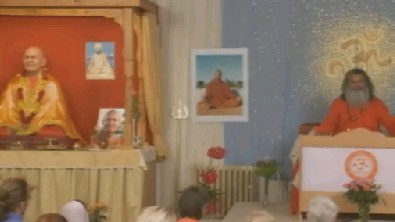
Webcast of Swamijis evening Satsang from Strilky Ashram, CZ on May 15th 2010. Enter the kingdom of the Lord through the gate of sacrifice, renounce.
We are eternal
15:55 - 16:55 (60 min)
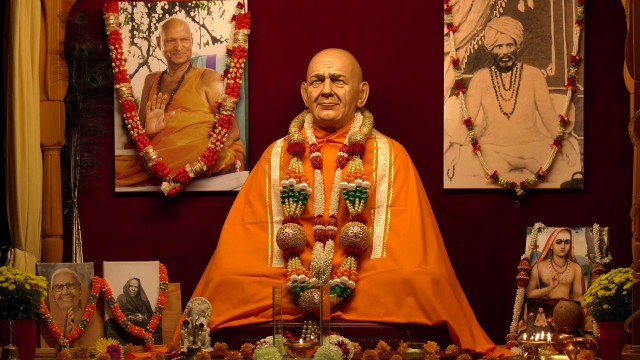
An evening satsang on spiritual oneness and the guru-disciple relationship.
"For only a certain time do we think in terms of 'mine,' 'yours,' and 'theirs.' And then, my dears, that will go away."
"It is like rain falling. There are many drops... But they come together, and all drops unite to become the water that is flowing."
The lecturer addresses a gathering, expounding on the fundamental unity of all beings using the metaphor of raindrops merging into the ocean. He shares a parable of a yogi and a skeptical professor to illustrate divine wisdom, and recounts personal stories and a disciple's dream about their guru, Swami Madhavanandji Bhagavan, emphasizing the eternal bond beyond physical presence. The talk blends teachings on non-duality with devotional remembrance on the anniversary of the guru's samadhi.
Filming location: Strilky, Czech Republic
Be the example
17:00 - 17:57 (57 min)
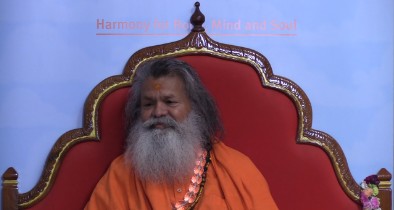
A commemorative satsang and panel discussion on Mahatma Gandhi and peace.
"Gandhiji said, 'Renounce and enjoy.' If you want to enjoy life, then renounce."
"He said, 'Betā, son, don't eat sweets, it is not good.' ...because, at that time, since then, I was also eating too many sweets."
Swami Avatarpuri opens a gathering in Wellington by honoring Mahatma Gandhi, illustrating his principles of renunciation, truth, and leading by example with personal anecdotes. Following his talk, other speakers, including a diplomat and members of the Yoga in Daily Life community, share reflections on Gandhi's legacy, connecting it to themes of peace (śānti), prayer, non-violence, and the embodiment of spiritual love in daily life and service.
Filming location: Wellington, New Zealand
Satsang from Spisska Nova ves
18:05 - 19:16 (71 min)
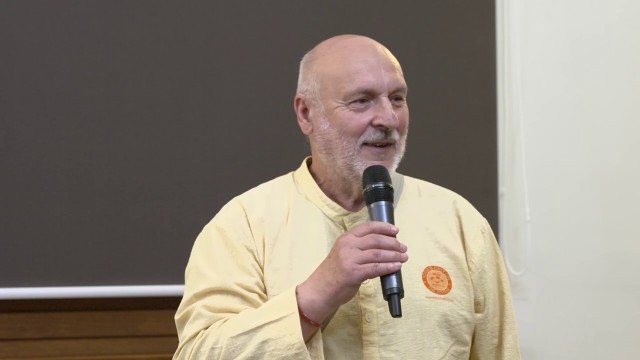
Evening satsang with Vishwaguruji from Spisska Nova Ves, Slovak Republic. Bhajan singing. Talk of the bhaktas about the construction and opening ceremony of the Om Ashram.
Daya ist unser dharma, Vienna
19:20 - 20:09 (49 min)
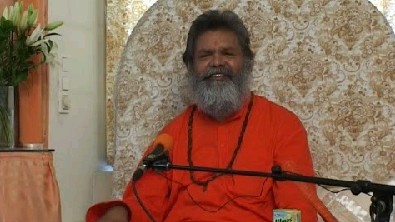
A spiritual discourse on the foundations of dharma, compassion, and the stages of life.
"Compassion is the root of Dharma, while the root of sin is ego."
"Dharma rakṣita, rakṣita: If you can protect your Dharma, then Dharma can protect you."
The speaker delivers a teaching on the essence of human duty (dharma), establishing compassion (dayā) as its fundamental root contrasted with the ego, which is the root of sin. Using the intellect (buddhi) and discernment (viveka) to navigate life's dilemmas is emphasized, illustrated by a story of a yogi and a hunter. The talk outlines the four traditional stages of life (āśramas) and stresses the integration of spiritual practice, like 24-hour Kriyā Yoga and self-inquiry, into one's daily existence to achieve liberation.
Filming location: Vienna, Austria
Practice and eat healthy food
20:15 - 21:13 (58 min)
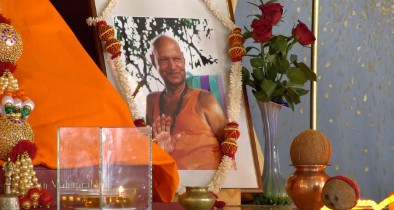
A spiritual discourse on yoga practice, holistic health, and traditional knowledge.
"Sarvāṅgāsana is very useful, very powerful, and especially, it is very good for the thyroid gland."
"We have everything with us, but to know how, that’s very important."
The lecturer leads a satsang, explaining the specific benefits and correct practice of postures like Sarvāṅgāsana and Viparītakaraṇī Mudrā. He expands into broader themes, lamenting the loss of traditional knowledge about European herbs and natural foods, and critiques modern lifestyles and medicine. The talk emphasizes the need for holistic understanding—of the body through appropriate yoga, and of nature through rediscovering local plants—for true health, weaving in personal anecdotes and spiritual reminders.
Filming location: Strilky, Czech Republic
This ashram is your work
21:20 - 21:55 (35 min)
Evening satsang with Vishwaguruji from Jadan Ashram, Rajasthan, India. Bhajan singing. Welcoming words from Vishwaguruji. I was so happy how we made this Ashram, people from many many countries. Indian people are also coming and see how great it is.
A Welcome Address on Peace and Yoga
22:00 - 22:07 (7 min)

A welcome address at a yoga and peace conference in Prague.
"Peace is a condition for which mankind has been longing to reach for thousands of years. But outer life circumstances are merely a reflection of the inner world of human beings."
"Through the system of Yoga in Daily Life given to us by Viśwa Gurujī, many thousands of people all over the world develop peace inside through practicing spiritual techniques."
A speaker from the International Śrī Svāmī Māta Vānanda Fellowship welcomes attendees, opening with a traditional peace mantra. The address frames world peace as an inner achievement, advocating for the "Yoga in Daily Life" system as a path to nonviolence. It honors the spiritual lineage of Viśwa Gurujī and Mahāprabhujī, and references the founding of a World Peace Council.
Filming location: Prague, Czech Republic
Part 1: The Role of Yoga and Meditation in Improving Quality of Life for Cancer Patients
22:15 - 23:22 (67 min)
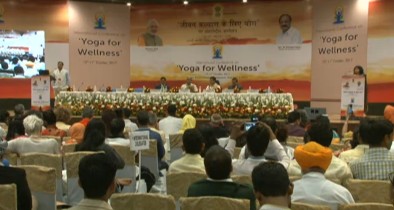
A medical lecture on the role of yoga and meditation as supportive care for cancer patients.
"We must note which specific yogic and meditative techniques were used, as these vary widely."
"Please do not give false hope that cancer will be cured... If a practitioner claims that prāṇāyāma, dhyāna, and some Ayurvedic herbs... can cure cancer, they are committing a grave sin against society."
A doctor from AIIMS Delhi presents a detailed analysis of scientific studies on yogic interventions for cancer patients, emphasizing they are complementary to standard treatments like chemotherapy. He strongly warns against practitioners falsely claiming yoga can cure cancer, shares data on benefits for quality of life and stress, and proposes a large-scale research trial combining yoga, meditation, and herbal products for cancer prevention and care.
Filming location: Delhi, India
In the cave of Sri Alakhpuriji
23:30 - 23:40 (10 min)
A personal story about receiving a devotional chant as a blessing.
"You go in and meditate; you will get good inspiration." "Print out this sentence in big letters and stick it on the place where you go the most, and read it every day."
The speaker recounts a Himalayan pilgrimage with Viśva Gurujī, where he was granted special permission to meditate in Śrī Alakpurījī's cave. After an uncomfortable period of cold, he later received the kīrtan as a blessing. He explains the chant's core meaning—"all you need is the Guru's grace"—and shares how he set the Sanskrit phrase to music, concluding by singing the devotional composition.
Filming location: Vép, Hungary
Tuma Sab Ke Dina Dayala
23:45 - 0:08 (23 min)
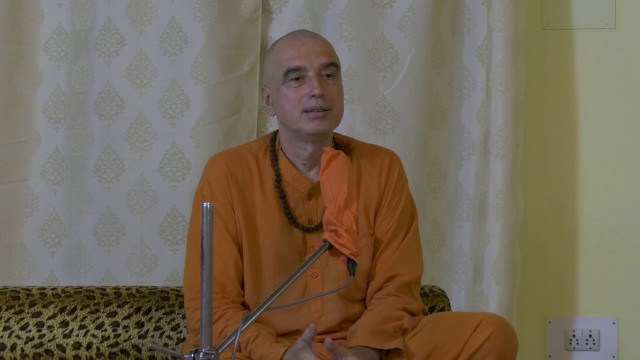
A spiritual discourse explaining a devotional bhajan and recounting a temple inauguration.
"O Śiva, O Devpurījī, did you forget about me in your bliss?" and "Śaraṇa Bali Hari means I am completely devoted to you."
The lecturer explains the meaning of a bhajan composed by Mahāprabhujī for his guru, Devpurījī, interpreting its lines as a devotee's heartfelt plea and a lesson in absolute surrender. He connects this to a recent journey to inaugurate the first statues of Devpurījī and Kṛṣṇānandajī Mahārāj at a disciple's ashram, describing the ceremony and reflecting on the spiritual lineage.
Filming location: Jadan, Rajasthan, India
American
Australian