
European
This ashram is your work
0:45 - 1:20 (35 min)
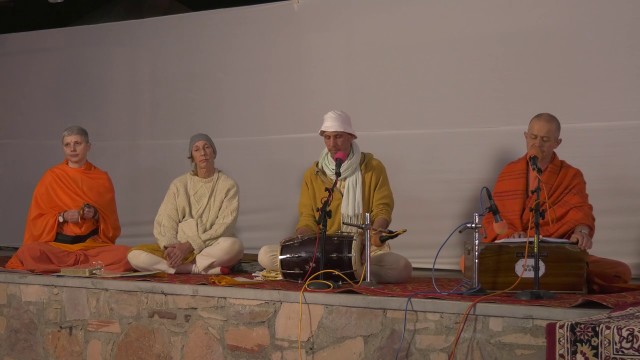
Evening satsang with Vishwaguruji from Jadan Ashram, Rajasthan, India. Bhajan singing. Welcoming words from Vishwaguruji. I was so happy how we made this Ashram, people from many many countries. Indian people are also coming and see how great it is.
We are eternal
1:25 - 2:25 (60 min)
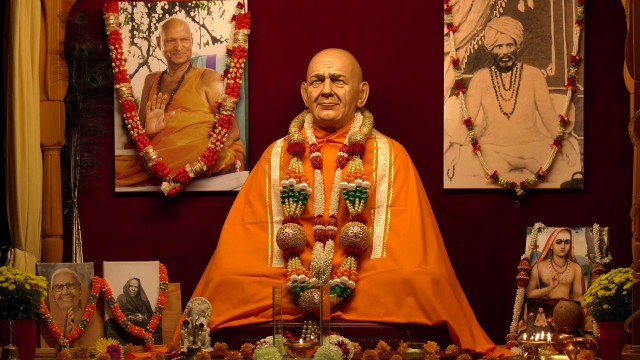
An evening satsang on spiritual oneness and the guru-disciple relationship.
"For only a certain time do we think in terms of 'mine,' 'yours,' and 'theirs.' And then, my dears, that will go away."
"It is like rain falling. There are many drops... But they come together, and all drops unite to become the water that is flowing."
The lecturer addresses a gathering, expounding on the fundamental unity of all beings using the metaphor of raindrops merging into the ocean. He shares a parable of a yogi and a skeptical professor to illustrate divine wisdom, and recounts personal stories and a disciple's dream about their guru, Swami Madhavanandji Bhagavan, emphasizing the eternal bond beyond physical presence. The talk blends teachings on non-duality with devotional remembrance on the anniversary of the guru's samadhi.
Filming location: Strilky, Czech Republic
Bhajan evening in Jadan Ashram
2:30 - 2:52 (22 min)
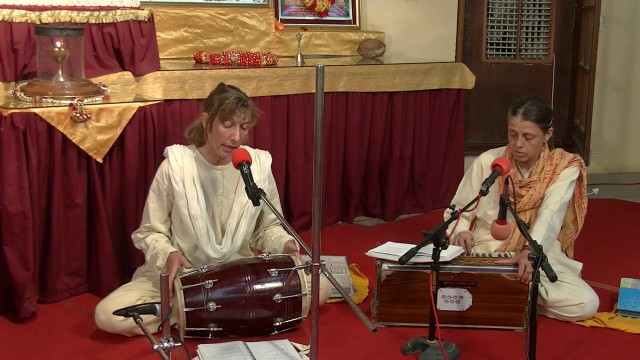
Evening satsang with Vishwaguruji from Jadan Ashram, Rajasthan, India. Bhajan singing.
Bhajan singing from Jadan Ashram
3:00 - 3:35 (35 min)
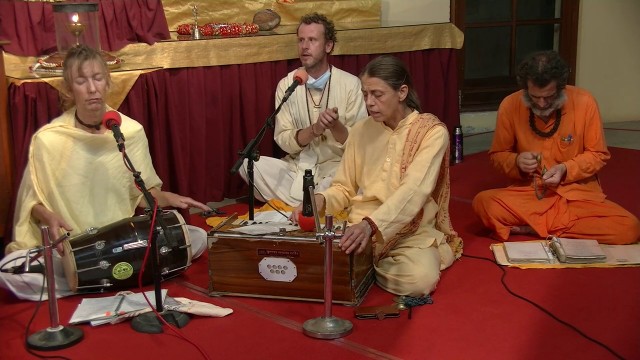
Evening Satsang with Vishwaguruji from Jadan Ashram, Rajasthan, India. Singing bhajans.
Bhajan evening in the Jadan Ashram
3:40 - 4:19 (39 min)
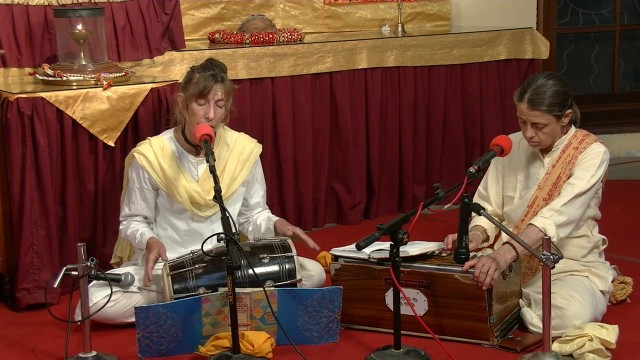
Evening satsang from Jadan Ashram, Rajasthan, India. Bhajan singing.
Bhajan singing in the Jadan Ashram
4:25 - 5:43 (78 min)
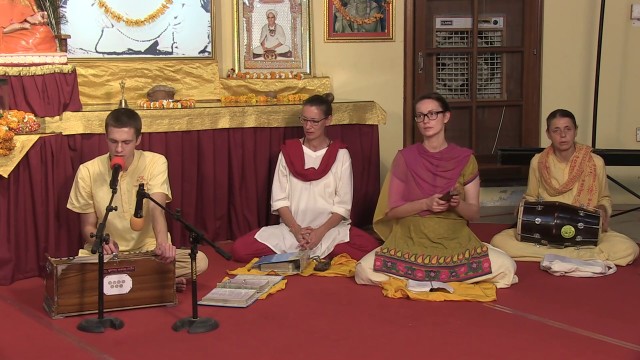
Evening satsang with Vishwaguruji from Jadan Ashram, Rajasthan, India. Bhajan singing evening.
In the dream of awakening
5:50 - 7:01 (71 min)
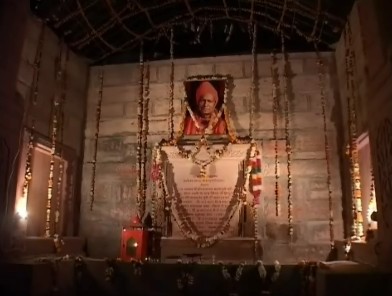
India, Winter 2004/2005. Report about the winter tour of Swamiji in India.
Svadhisthan chakra, Ljubljana
7:05 - 8:59 (114 min)
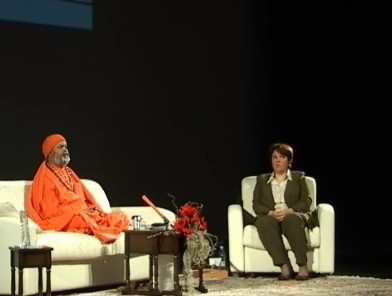
Public lecture about Svadhisthan chakra in Ljubljana, Slovenija in February 2005.
Divine knowledge
9:05 - 10:55 (110 min)
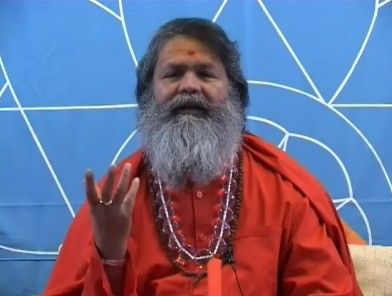
Johannesburg, South Africa in September 2004. Followed by "YIDL Lineage", "Unity in diversity". "Kundalini and Chakras". Finally follows a Lecture about Yoga Nidra followed by Awakening of the Healing powers.
Practising Asanas from Vep
11:00 - 11:57 (57 min)
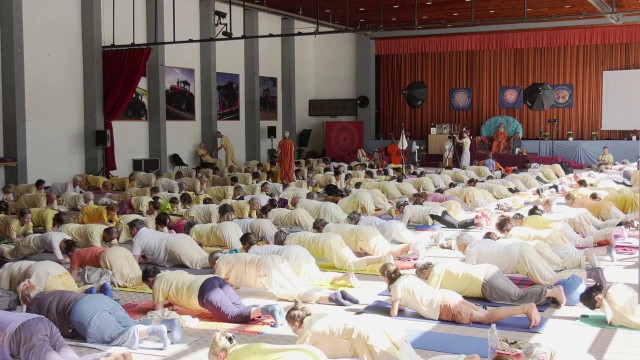
A guided yoga session with detailed instructions and corrections for group synchronization.
"Make your neck long; do not shorten it. Stabilize your lower back with your belly muscles."
"Śaśāṅkāsana is very, very good for our digestion. It works immediately, also for children."
An instructor leads a group through a series of yoga poses, including leg lifts, Śaśāṅkāsana (Rabbit Pose), Uttānapṛṣṭhāsana (a trunk-lifting pose), and a variation of Marjari (Cat Pose) on the forearms. The session focuses on precise alignment, breath coordination, and repeatedly attempts to get all participants to move in unison. It concludes with relaxation and permission to drink water.
Filming location: Vép, Hungary
Daya ist unser dharma, Vienna
12:05 - 12:54 (49 min)
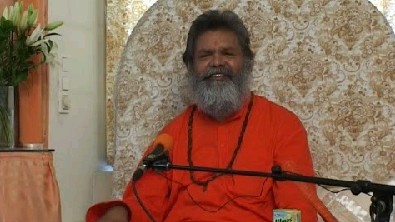
A spiritual discourse on the foundations of dharma, compassion, and the stages of life.
"Compassion is the root of Dharma, while the root of sin is ego."
"Dharma rakṣita, rakṣita: If you can protect your Dharma, then Dharma can protect you."
The speaker delivers a teaching on the essence of human duty (dharma), establishing compassion (dayā) as its fundamental root contrasted with the ego, which is the root of sin. Using the intellect (buddhi) and discernment (viveka) to navigate life's dilemmas is emphasized, illustrated by a story of a yogi and a hunter. The talk outlines the four traditional stages of life (āśramas) and stresses the integration of spiritual practice, like 24-hour Kriyā Yoga and self-inquiry, into one's daily existence to achieve liberation.
Filming location: Vienna, Austria
The Purifying Path of Haṭha Yoga: An Introduction to Ṣaṭkarma
13:00 - 13:47 (47 min)

An instructional webcast introducing the Haṭha Yoga purification techniques (Ṣaṭkarma).
"Haṭha Yoga is not only that we clean and purify our whole system, our whole body, but it also has a very great effect on our nervous system."
"Haṭha means willpower to do these Haṭha Yoga techniques. And with this, you also get the willpower, the strength to persevere, to continue, to get rid of the laziness."
A teacher from the Śrīkī Ashram, joined by assistants, explains the purpose and benefits of the six purification acts. The session features a detailed, practical demonstration of Jala Netī (nasal cleansing with salt water) and Kapāla Bhāti, followed by an introduction to Agni Sāra and the Naulī Kriyā for digestive health. The instruction emphasizes using natural elements, proper technique, and the holistic effects on physical and energetic systems.
Filming location: Strilky, Czech Republic
Renounce
13:55 - 15:01 (66 min)
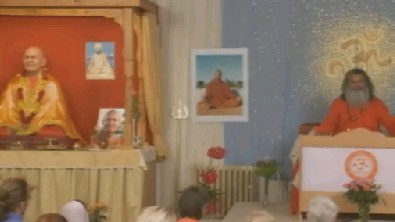
Webcast of Swamijis evening Satsang from Strilky Ashram, CZ on May 15th 2010. Enter the kingdom of the Lord through the gate of sacrifice, renounce.
Tuma Sab Ke Dina Dayala
15:05 - 15:28 (23 min)
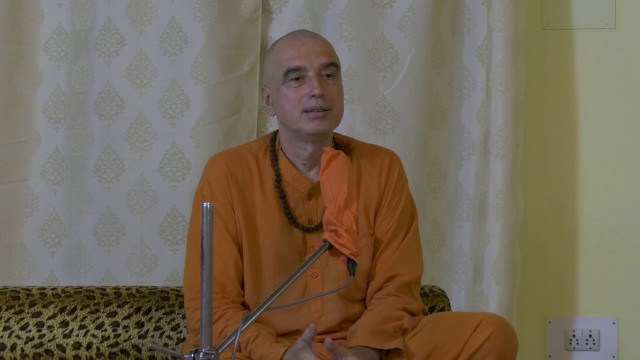
A spiritual discourse explaining a devotional bhajan and recounting a temple inauguration.
"O Śiva, O Devpurījī, did you forget about me in your bliss?" and "Śaraṇa Bali Hari means I am completely devoted to you."
The lecturer explains the meaning of a bhajan composed by Mahāprabhujī for his guru, Devpurījī, interpreting its lines as a devotee's heartfelt plea and a lesson in absolute surrender. He connects this to a recent journey to inaugurate the first statues of Devpurījī and Kṛṣṇānandajī Mahārāj at a disciple's ashram, describing the ceremony and reflecting on the spiritual lineage.
Filming location: Jadan, Rajasthan, India
Be careful with the self-made Gurus
15:35 - 16:10 (35 min)
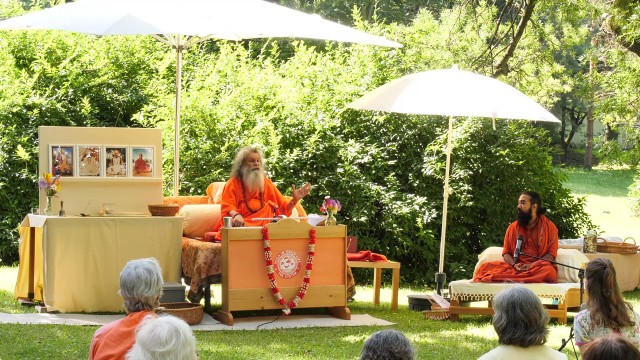
A spiritual discourse on the importance of discernment in seeking a true guru, illustrated with cautionary tales.
"Sometimes we just follow people by seeing their work, but not by understanding what they really are doing, and we follow blindly."
"It’s very important to find a real Satguru Dev, because nowadays, as we know, it’s Kali Yuga, and in Kali Yuga people are not so nice as they were once upon a time."
A speaker addresses a gathering, warning against blind faith in the spiritual search. He emphasizes the necessity of finding a genuine guru from an authentic lineage, contrasting this with self-serving imposters. He shares two parables: one about a blind sadhu whose devotional offering is eaten by a cat, leading to an unexamined ritual tradition, and another about a deceitful, nose-less fake guru who exploits disciples. The core message is to seek clarity, ask questions, and avoid following teachings without understanding.
Filming location: Strilky, Czech Republic
Be the example
16:15 - 17:12 (57 min)
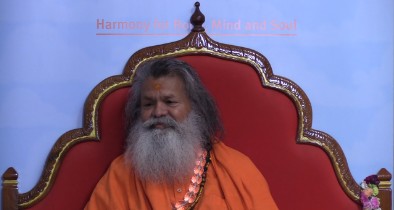
A commemorative satsang and panel discussion on Mahatma Gandhi and peace.
"Gandhiji said, 'Renounce and enjoy.' If you want to enjoy life, then renounce."
"He said, 'Betā, son, don't eat sweets, it is not good.' ...because, at that time, since then, I was also eating too many sweets."
Swami Avatarpuri opens a gathering in Wellington by honoring Mahatma Gandhi, illustrating his principles of renunciation, truth, and leading by example with personal anecdotes. Following his talk, other speakers, including a diplomat and members of the Yoga in Daily Life community, share reflections on Gandhi's legacy, connecting it to themes of peace (śānti), prayer, non-violence, and the embodiment of spiritual love in daily life and service.
Filming location: Wellington, New Zealand
Yoga is a science
17:20 - 18:39 (79 min)
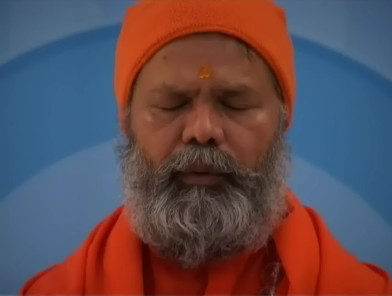
A spiritual lecture on Kuṇḍalinī, chakras, and the purpose of human life.
"Yoga is the science of body, mind, consciousness, and soul. Yoga without spirituality is like a body without a soul."
"Chakra is that which is purifying our body, mind, and consciousness. Chakra has to be purified through practice of mantra, prayers, or some yogic kriyās. Then the kuṇḍalinī will awake."
The teacher continues a multi-day seminar, delving into the nature of human consciousness through the lens of Kuṇḍalinī energy and the chakra system. He explains the five layers of the body (kośas), the persistence of karma using an analogy of salt in water, and the symbolism of the Mūlādhāra chakra—its red color, lotus imagery, and four petals representing the four aims of life: dharma, artha, kāma, and mokṣa. The discourse expands into themes of universal love, friendship, and living in the world with detachment, like a lotus in water.
Filming location: Australia
Practice and eat healthy food
18:45 - 19:43 (58 min)
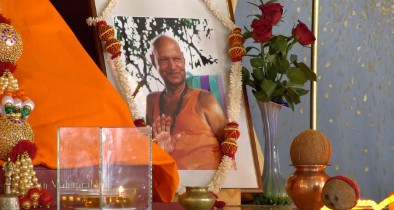
A spiritual discourse on yoga practice, holistic health, and traditional knowledge.
"Sarvāṅgāsana is very useful, very powerful, and especially, it is very good for the thyroid gland."
"We have everything with us, but to know how, that’s very important."
The lecturer leads a satsang, explaining the specific benefits and correct practice of postures like Sarvāṅgāsana and Viparītakaraṇī Mudrā. He expands into broader themes, lamenting the loss of traditional knowledge about European herbs and natural foods, and critiques modern lifestyles and medicine. The talk emphasizes the need for holistic understanding—of the body through appropriate yoga, and of nature through rediscovering local plants—for true health, weaving in personal anecdotes and spiritual reminders.
Filming location: Strilky, Czech Republic
Guru Mahima
19:50 - 20:25 (35 min)
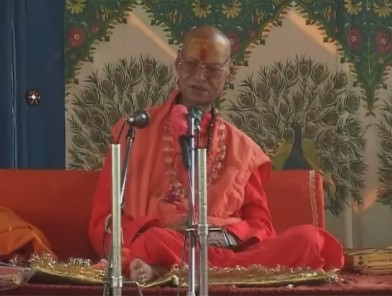
Satsang on the occasion of Gurupurnima in Jadan, India given by His Holiness Sri Swami Madhavananda Puriji.
We are eternal
20:30 - 21:30 (60 min)
An evening satsang on spiritual oneness and the guru-disciple relationship.
"For only a certain time do we think in terms of 'mine,' 'yours,' and 'theirs.' And then, my dears, that will go away."
"It is like rain falling. There are many drops... But they come together, and all drops unite to become the water that is flowing."
The lecturer addresses a gathering, expounding on the fundamental unity of all beings using the metaphor of raindrops merging into the ocean. He shares a parable of a yogi and a skeptical professor to illustrate divine wisdom, and recounts personal stories and a disciple's dream about their guru, Swami Madhavanandji Bhagavan, emphasizing the eternal bond beyond physical presence. The talk blends teachings on non-duality with devotional remembrance on the anniversary of the guru's samadhi.
Filming location: Strilky, Czech Republic
A Guru gives everything that we need
21:35 - 22:36 (61 min)
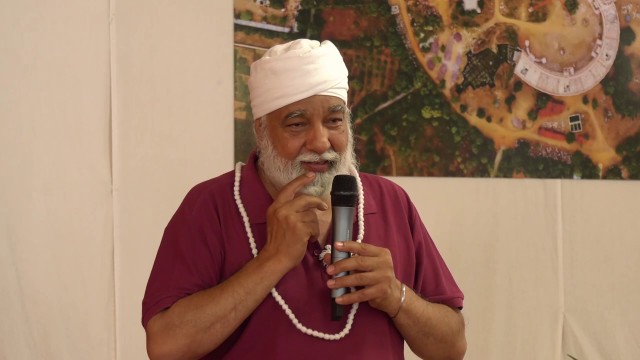
Evening satsang from Strilky Ashram, Czech Republic. The story of Krishna and Vidura's wife. Explanation and sing of bhajan Prabhu Prema Bina Nahi Ave. Strilky Ashram is a heaven on earth. We should know what Guru really means. Our biggest problems are our ego and jealousy. The real Guru mantra can liberate our minds. Our yoga name helps us to go towards our aims. We have to do seva (selfless service) in order to get the blessing. Miracles can happen to each of us. Karma is happening to every country. Yoga has become an industry in the world. There are some institutes which want to control yoga and ayurveda also. It should create a universal benchmark for yoga and ayurveda. In Britain, many people can legally use yoga and ayurveda as medicine. Bhajan explanation and singing Prabhu Mere Avaguna Chita Na Caro.
This ashram is your work
22:40 - 23:15 (35 min)
Evening satsang with Vishwaguruji from Jadan Ashram, Rajasthan, India. Bhajan singing. Welcoming words from Vishwaguruji. I was so happy how we made this Ashram, people from many many countries. Indian people are also coming and see how great it is.
Be satisfied and content whatever you have
23:20 - 0:33 (73 min)
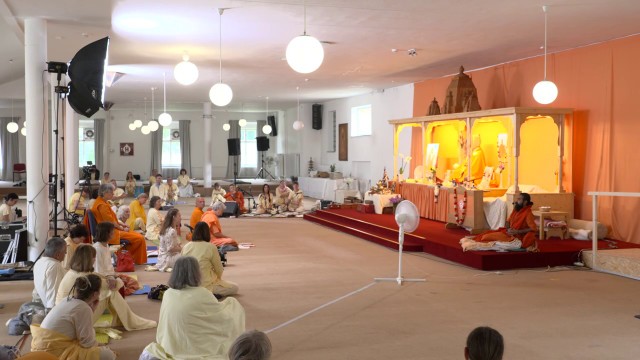
A satsang featuring spiritual stories and teachings on renunciation, ego, and the pitfalls on the spiritual path.
"Seeing you all the time indulged in these materialistic activities and always enjoying your life makes me sad."
"If you have ego, envy, or jealousy towards anything or anyone, then you get stuck in this māyā."
The lecturer narrates two primary parables. The first tells of King Gopichand, who renounces his kingdom at his mother's request and learns the true meaning of his mother's three advices for monastic life. The second, a cautionary tale, describes a powerful muni whose intense tapasya is destroyed by rising ego and desire, ultimately exploited by Kamadeva. The speaker weaves in related teachings, including a story of Lord Rama delivering justice to a dog, to emphasize controlling anger, speech, and the dangers of ego.
Filming location: Strilky, Czech Republic
American
Australian