
European
Narada cursed Vishnu
0:15 - 0:58 (43 min)
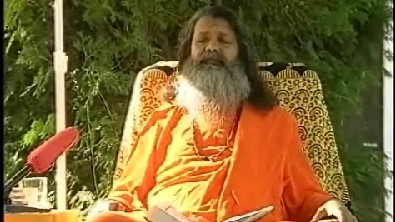
A narration of the mythological story of Nārada's curse upon Lord Viṣṇu, followed by a discourse on its spiritual meaning.
"You made me a monkey, and I tell you, when you will be in great trouble, only the monkey will help you, nobody else."
"The merciful Lord said, 'Nārada, that was all My icchā. It was My will.'"
The speaker recounts how the sage Nārada, enraged after being tricked by Viṣṇu's illusion (māyā), confronts the Lord to curse Him. In his anger, Nārada pronounces a curse that Viṣṇu will incarnate as Rāma, suffer separation from His wife, and be aided by monkeys. Viṣṇu accepts the curse, explaining it was His own divine will, and later dissolves the illusion. A remorseful Nārada seeks forgiveness, and Viṣṇu promises to give him a liberating Kriyā. The talk includes a tangential account of the churning of the ocean (Samudra Manthan) to illustrate Nārada's accusations.
Filming location: Vép, Hungary
In the cave of Sri Alakhpuriji
1:05 - 1:15 (10 min)
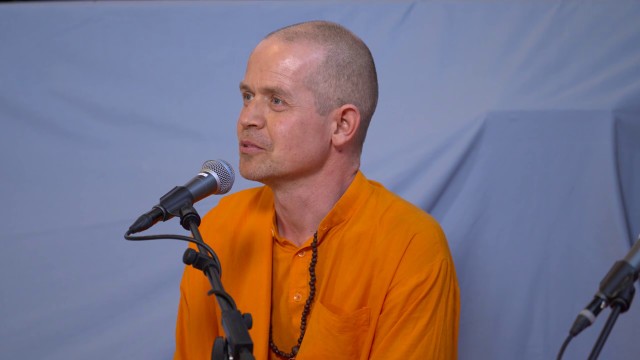
A personal story about receiving a devotional chant as a blessing.
"You go in and meditate; you will get good inspiration." "Print out this sentence in big letters and stick it on the place where you go the most, and read it every day."
The speaker recounts a Himalayan pilgrimage with Viśva Gurujī, where he was granted special permission to meditate in Śrī Alakpurījī's cave. After an uncomfortable period of cold, he later received the kīrtan as a blessing. He explains the chant's core meaning—"all you need is the Guru's grace"—and shares how he set the Sanskrit phrase to music, concluding by singing the devotional composition.
Filming location: Vép, Hungary
The Pearl of Everlasting Bliss
1:20 - 1:41 (21 min)
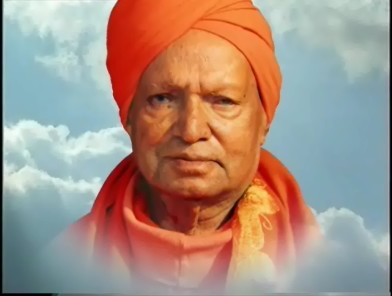
A biographical tribute to the life and legacy of Hindu saint Paramahaṁsa Śrī Svāmī Madhavānandajī.
"My eyes filled with tears, and I fell to my knees. I knew I had found the everlasting light of my life. I was home at last."
"All humans belong to one religion, and that is humanity... ahiṃsā paramo dharma: non-violence is the highest religion."
The narrative chronicles the spiritual journey of Swami Madhavānandaji, from his childhood in Rajasthan and transformative meeting with his guru, Bhagavān Śrīdīp Nārāyaṇa Mahāprabhujī, to his life of devotion, teaching, and global service. It details his initiation, his work establishing ashrams, and his teachings on non-dualism and universal love, culminating in his Mahāsamādhi in 2003 and the continuation of his lineage through his disciple, Swami Māheśvarānandajī.
Filming location: Rajasthan, India; Kathu Ashram, India; Bola Guda Ashram, India; Nepal
In the cave of Sri Alakhpuriji
1:45 - 1:55 (10 min)
A personal story about receiving a devotional chant as a blessing.
"You go in and meditate; you will get good inspiration." "Print out this sentence in big letters and stick it on the place where you go the most, and read it every day."
The speaker recounts a Himalayan pilgrimage with Viśva Gurujī, where he was granted special permission to meditate in Śrī Alakpurījī's cave. After an uncomfortable period of cold, he later received the kīrtan as a blessing. He explains the chant's core meaning—"all you need is the Guru's grace"—and shares how he set the Sanskrit phrase to music, concluding by singing the devotional composition.
Filming location: Vép, Hungary
Tuma Sab Ke Dina Dayala
2:00 - 2:23 (23 min)
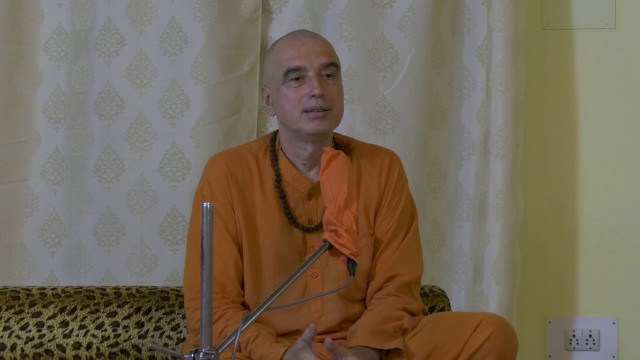
A spiritual discourse explaining a devotional bhajan and recounting a temple inauguration.
"O Śiva, O Devpurījī, did you forget about me in your bliss?" and "Śaraṇa Bali Hari means I am completely devoted to you."
The lecturer explains the meaning of a bhajan composed by Mahāprabhujī for his guru, Devpurījī, interpreting its lines as a devotee's heartfelt plea and a lesson in absolute surrender. He connects this to a recent journey to inaugurate the first statues of Devpurījī and Kṛṣṇānandajī Mahārāj at a disciple's ashram, describing the ceremony and reflecting on the spiritual lineage.
Filming location: Jadan, Rajasthan, India
Bhajan singing from Villach
2:30 - 3:13 (43 min)
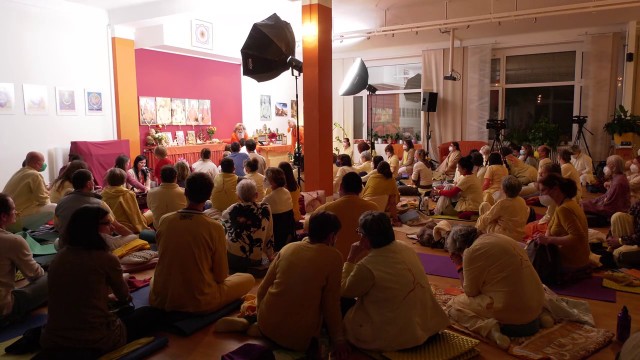
Evening program with Vishwaguruji from Villach, Austria. Bhajans.
Bhajans from Strilky
3:20 - 3:51 (31 min)
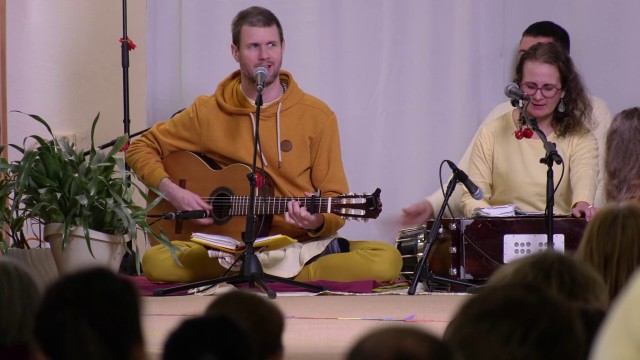
Bhajan singing from Strilky Ashram, Czech Republic.
Bhajan singing from Vep
3:55 - 4:22 (27 min)
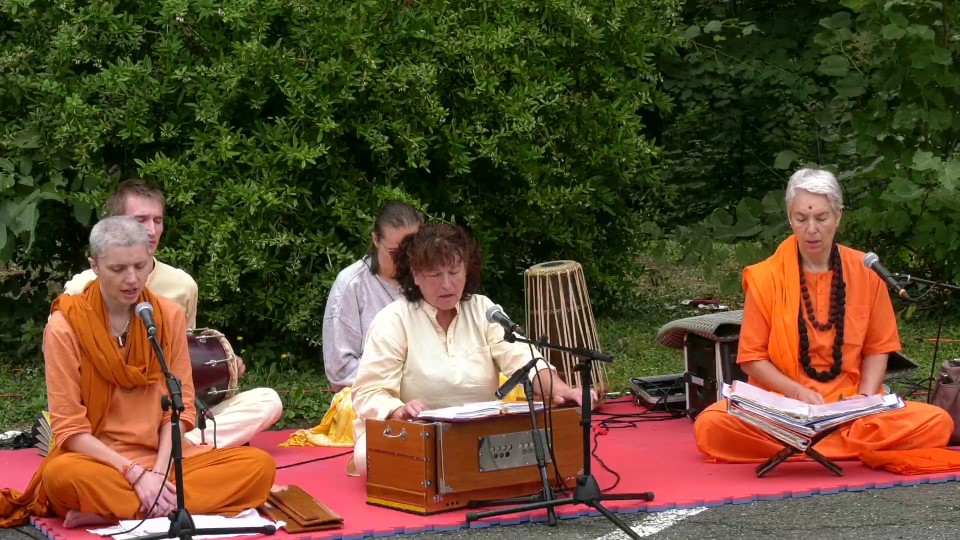
Morning satsang with Vishwaguruji from Vep, Hungary. Bhajan singing. Translation of the bhajan "Itna to karana Guruji"
Bhajans from Rijeka
4:30 - 4:50 (20 min)
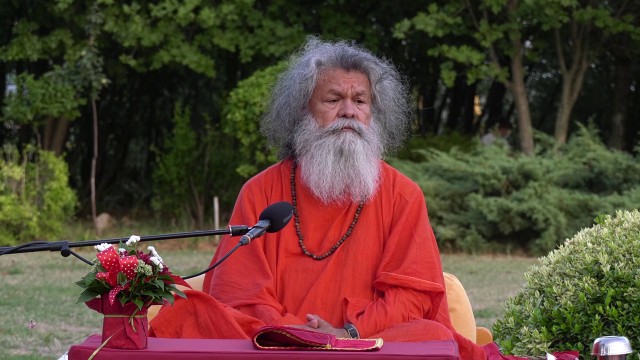
Evening satsang with Vishwaguruji from Rijeka Ashram, Croatia. Singing Bhajans.
Bhajans from Rijeka
4:55 - 5:23 (28 min)
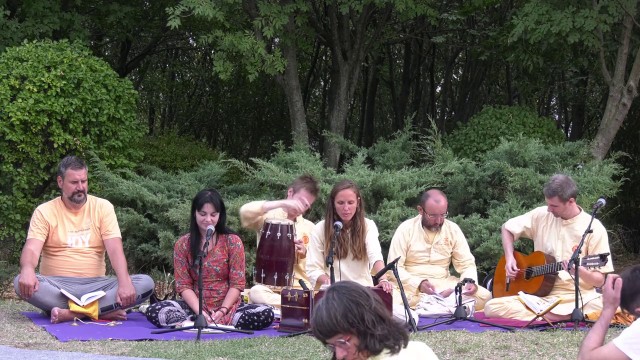
Evening satsang with Vishwaguruji from Rijeka Ashram, Croatia.
A Guru gives everything that we need
5:30 - 6:31 (61 min)
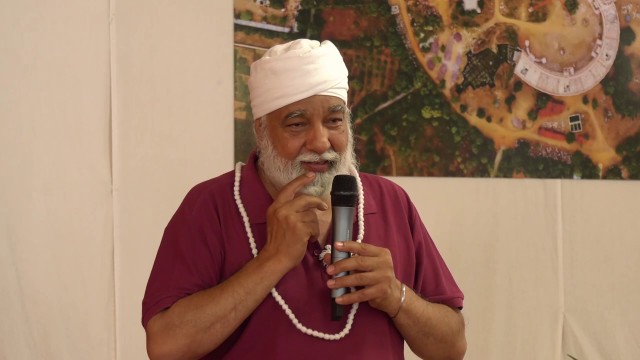
Evening satsang from Strilky Ashram, Czech Republic. The story of Krishna and Vidura's wife. Explanation and sing of bhajan Prabhu Prema Bina Nahi Ave. Strilky Ashram is a heaven on earth. We should know what Guru really means. Our biggest problems are our ego and jealousy. The real Guru mantra can liberate our minds. Our yoga name helps us to go towards our aims. We have to do seva (selfless service) in order to get the blessing. Miracles can happen to each of us. Karma is happening to every country. Yoga has become an industry in the world. There are some institutes which want to control yoga and ayurveda also. It should create a universal benchmark for yoga and ayurveda. In Britain, many people can legally use yoga and ayurveda as medicine. Bhajan explanation and singing Prabhu Mere Avaguna Chita Na Caro.
This ashram is your work
6:35 - 7:10 (35 min)
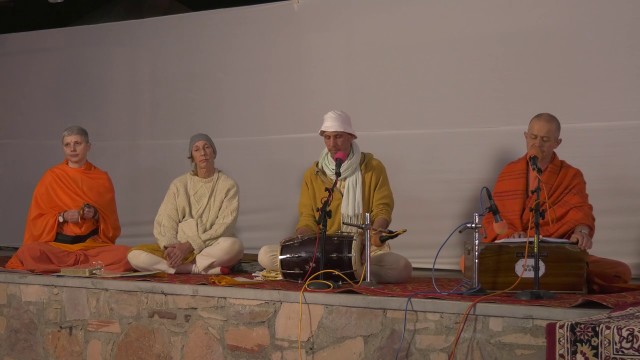
Evening satsang with Vishwaguruji from Jadan Ashram, Rajasthan, India. Bhajan singing. Welcoming words from Vishwaguruji. I was so happy how we made this Ashram, people from many many countries. Indian people are also coming and see how great it is.
In the dream of awakening
7:15 - 8:26 (71 min)
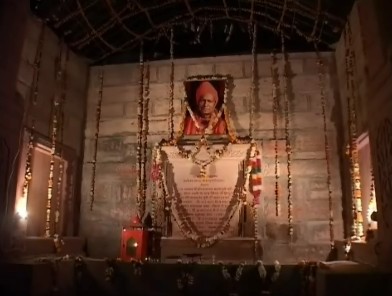
India, Winter 2004/2005. Report about the winter tour of Swamiji in India.
Be satisfied and content whatever you have
8:30 - 9:43 (73 min)
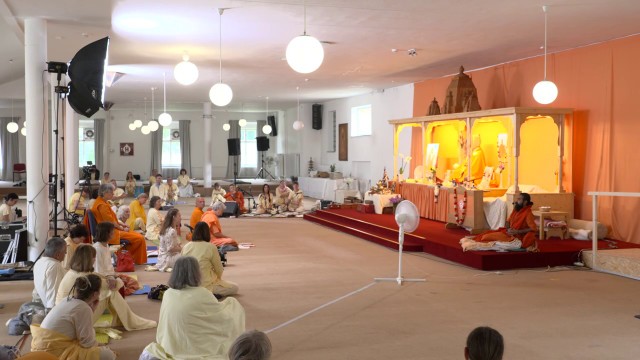
A satsang featuring spiritual stories and teachings on renunciation, ego, and the pitfalls on the spiritual path.
"Seeing you all the time indulged in these materialistic activities and always enjoying your life makes me sad."
"If you have ego, envy, or jealousy towards anything or anyone, then you get stuck in this māyā."
The lecturer narrates two primary parables. The first tells of King Gopichand, who renounces his kingdom at his mother's request and learns the true meaning of his mother's three advices for monastic life. The second, a cautionary tale, describes a powerful muni whose intense tapasya is destroyed by rising ego and desire, ultimately exploited by Kamadeva. The speaker weaves in related teachings, including a story of Lord Rama delivering justice to a dog, to emphasize controlling anger, speech, and the dangers of ego.
Filming location: Strilky, Czech Republic
Renounce
9:50 - 10:56 (66 min)
Webcast of Swamijis evening Satsang from Strilky Ashram, CZ on May 15th 2010. Enter the kingdom of the Lord through the gate of sacrifice, renounce.
Practising Asanas
11:00 - 11:47 (47 min)
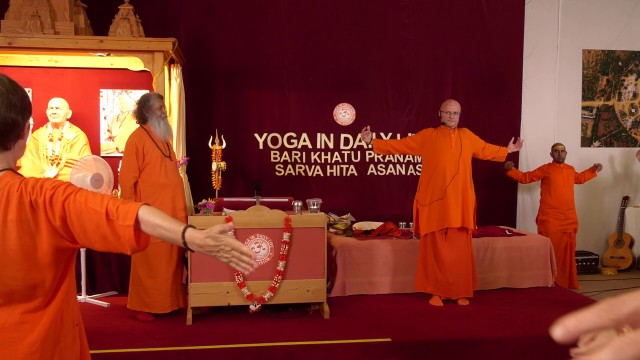
Evening satsang with Vishwaguruji from Strilky Ashram, Czech Republic. Practising asanas with Vishwaguruji and M.M. Swami Vivekpuriji. Streching in standing position, manduki asana.
Navaratri - Honoring the Divine Mother and speech on Kriya Yoga, Gold Coast
11:55 - 13:39 (104 min)
Navaratri is a nine day celebration of the divine mother - Shakti. Singing and translation of Holy Gurujis bhajan: "Jaya Matesvari Jaya Devi Candan." Ram Navami is a festival, celebrating the incarnation of Lord Rama. What is Kriya Yoga? How can Kriya help you? What does Kriya do in our body? In our mind? In our consciousness? In our intellect? On our soul? And how it leads us to the divine consciousness, the Atma? There are six Kriyas in Hatha Yoga techniques which are cleaning and purifying our body. Practicing the spiritual Kriya Yoga technique will purify our subconsciuosness. Kriya is one of the best, quickest and sure path of the human life. Kriya practicing awakens the Kundalini Shakti. Through divine prayers and spiritual Kriyas we can purify our destinies. It will uplift and enlighten our consciousness, then we become free from the Karmas. Recorded at bush retreat at Mudgeeraba, Gold Coast, Australia.
Divine knowledge
13:45 - 15:35 (110 min)
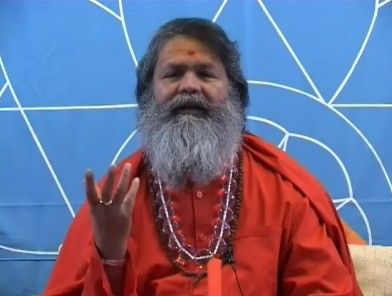
Johannesburg, South Africa in September 2004. Followed by "YIDL Lineage", "Unity in diversity". "Kundalini and Chakras". Finally follows a Lecture about Yoga Nidra followed by Awakening of the Healing powers.
We are eternal
15:40 - 16:40 (60 min)
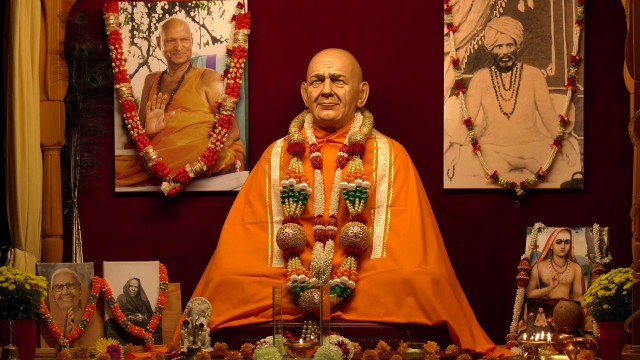
An evening satsang on spiritual oneness and the guru-disciple relationship.
"For only a certain time do we think in terms of 'mine,' 'yours,' and 'theirs.' And then, my dears, that will go away."
"It is like rain falling. There are many drops... But they come together, and all drops unite to become the water that is flowing."
The lecturer addresses a gathering, expounding on the fundamental unity of all beings using the metaphor of raindrops merging into the ocean. He shares a parable of a yogi and a skeptical professor to illustrate divine wisdom, and recounts personal stories and a disciple's dream about their guru, Swami Madhavanandji Bhagavan, emphasizing the eternal bond beyond physical presence. The talk blends teachings on non-duality with devotional remembrance on the anniversary of the guru's samadhi.
Filming location: Strilky, Czech Republic
Svadhisthan chakra, Ljubljana
16:45 - 18:39 (114 min)
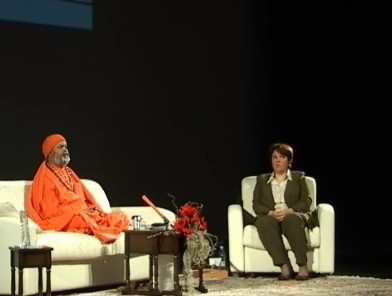
Public lecture about Svadhisthan chakra in Ljubljana, Slovenija in February 2005.
Yoga is a science
18:45 - 20:04 (79 min)
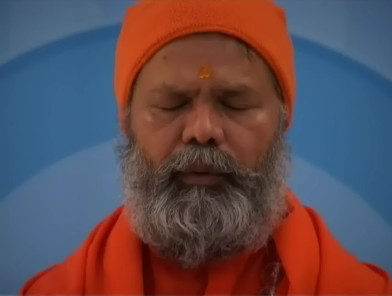
A spiritual lecture on Kuṇḍalinī, chakras, and the purpose of human life.
"Yoga is the science of body, mind, consciousness, and soul. Yoga without spirituality is like a body without a soul."
"Chakra is that which is purifying our body, mind, and consciousness. Chakra has to be purified through practice of mantra, prayers, or some yogic kriyās. Then the kuṇḍalinī will awake."
The teacher continues a multi-day seminar, delving into the nature of human consciousness through the lens of Kuṇḍalinī energy and the chakra system. He explains the five layers of the body (kośas), the persistence of karma using an analogy of salt in water, and the symbolism of the Mūlādhāra chakra—its red color, lotus imagery, and four petals representing the four aims of life: dharma, artha, kāma, and mokṣa. The discourse expands into themes of universal love, friendship, and living in the world with detachment, like a lotus in water.
Filming location: Australia
Practice and eat healthy food
20:10 - 21:08 (58 min)
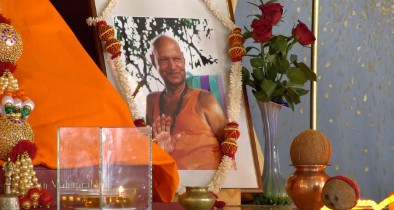
A spiritual discourse on yoga practice, holistic health, and traditional knowledge.
"Sarvāṅgāsana is very useful, very powerful, and especially, it is very good for the thyroid gland."
"We have everything with us, but to know how, that’s very important."
The lecturer leads a satsang, explaining the specific benefits and correct practice of postures like Sarvāṅgāsana and Viparītakaraṇī Mudrā. He expands into broader themes, lamenting the loss of traditional knowledge about European herbs and natural foods, and critiques modern lifestyles and medicine. The talk emphasizes the need for holistic understanding—of the body through appropriate yoga, and of nature through rediscovering local plants—for true health, weaving in personal anecdotes and spiritual reminders.
Filming location: Strilky, Czech Republic
Guru Mahima
21:15 - 21:50 (35 min)
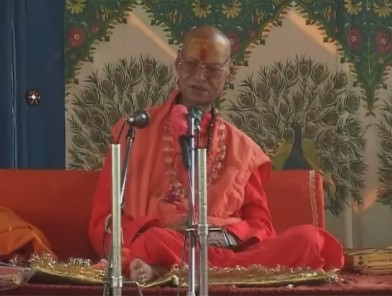
Satsang on the occasion of Gurupurnima in Jadan, India given by His Holiness Sri Swami Madhavananda Puriji.
The Healing Bridge: Integrating Yoga into Modern Medicine
22:00 - 22:09 (9 min)

A medical doctor shares his experience integrating the Yoga in Daily Life system into his clinical practice.
"After each surgery I perform... a quiet question always arises within me: 'What more could I have done for these patients beforehand?'"
"I advise them: 'Practice the Yoga in Daily Life system as a complete system.'... By engaging with the system as a whole, they resolve their own issues."
An orthopedic surgeon and yoga teacher addresses a spiritual gathering, explaining how he applies yogic principles on three levels: as preventive healthcare, as a supportive adjunct to surgery, and as a primary treatment for psychosomatic conditions. He argues that the modern world's rapid, restless pace creates ailments that a holistic yoga system can effectively address, sharing anecdotal evidence from his patients and expressing deep gratitude to the spiritual teachers who brought the system to his country.
Filming location: Prague, Czech Republic
The Silent Revolution: Yoga as the Antidote to Mind Pollution and Failed Leadership
22:15 - 22:38 (23 min)
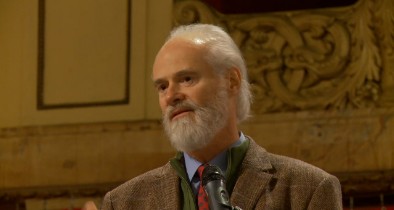
A keynote address proposing yoga as a solution to global leadership crises and mind pollution.
"The most dangerous threat to humanity today is not violence or terrorism, as the media suggests. The greatest damage comes from what I call mind pollution."
"Yoga is a systematic, conscious science of human development. Its main technique is gaining mastery over the mind, stopping the internal dialogue."
The speaker diagnoses widespread leadership failures—citing a lack of self-awareness and emotional intelligence—and argues that media sensationalism creates disproportionate fear. Presenting comparative mortality statistics, he contends that "mind pollution" is a greater threat than terrorism. He defines yoga as a holistic science for mastering the mind and accelerating human evolution, concluding with a call to integrate comprehensive yoga systems into global education and leadership training to foster peace.
Filming location: Prague, Czech Republic
The Pearl of Everlasting Bliss
22:45 - 23:06 (21 min)
A biographical tribute to the life and legacy of Hindu saint Paramahaṁsa Śrī Svāmī Madhavānandajī.
"My eyes filled with tears, and I fell to my knees. I knew I had found the everlasting light of my life. I was home at last."
"All humans belong to one religion, and that is humanity... ahiṃsā paramo dharma: non-violence is the highest religion."
The narrative chronicles the spiritual journey of Swami Madhavānandaji, from his childhood in Rajasthan and transformative meeting with his guru, Bhagavān Śrīdīp Nārāyaṇa Mahāprabhujī, to his life of devotion, teaching, and global service. It details his initiation, his work establishing ashrams, and his teachings on non-dualism and universal love, culminating in his Mahāsamādhi in 2003 and the continuation of his lineage through his disciple, Swami Māheśvarānandajī.
Filming location: Rajasthan, India; Kathu Ashram, India; Bola Guda Ashram, India; Nepal
Be the example
23:10 - 0:07 (57 min)
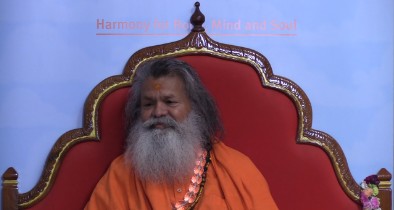
A commemorative satsang and panel discussion on Mahatma Gandhi and peace.
"Gandhiji said, 'Renounce and enjoy.' If you want to enjoy life, then renounce."
"He said, 'Betā, son, don't eat sweets, it is not good.' ...because, at that time, since then, I was also eating too many sweets."
Swami Avatarpuri opens a gathering in Wellington by honoring Mahatma Gandhi, illustrating his principles of renunciation, truth, and leading by example with personal anecdotes. Following his talk, other speakers, including a diplomat and members of the Yoga in Daily Life community, share reflections on Gandhi's legacy, connecting it to themes of peace (śānti), prayer, non-violence, and the embodiment of spiritual love in daily life and service.
Filming location: Wellington, New Zealand
American
Australian