
European
The Inner Conflict of Śiva
0:15 - 1:10 (55 min)
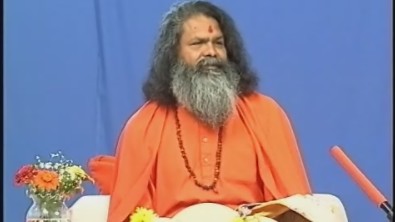
A narrative discourse exploring the inner conflict of Lord Śiva following Satī's test of Lord Rāma.
"Sometimes, to speak the truth is not easy. You hesitate to tell something; you do not want to lose face."
"Therefore, God, please, you can take everything away, or may I lose everything, but not one thing: my belief, my devotion to you."
The speaker recounts the mythological story where Satī, after testing Rāma by disguising herself as Sītā, lies to Śiva about her actions. Śiva, the knower of all, discovers the truth through his divine sight and is plunged into a profound inner conflict. He wrestles with a dilemma: to love Satī in her transformed state feels like a sin that would compromise his pure devotion (bhakti) to Rāma, yet he cannot reject his pure and faithful consort. The discourse uses this story to examine themes of truth, doubt, devotion, and the painful inner arguments that arise when faith is tested, concluding that only divine mercy can resolve such struggles.
The Precious Human Life and the Subtle Universe
1:15 - 1:27 (12 min)
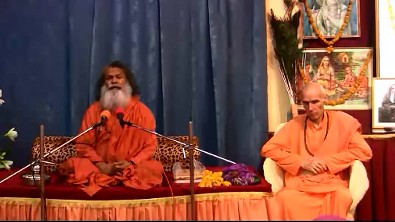
A spiritual discourse on the preciousness of human life and the subtle nature of creation.
"Human life is very precious. Among the 84 lakh (8.4 million) jīvas, human life is indeed invaluable."
"The entire infinite brahmāṇḍa is... It is compact; there is no restlessness inside it. There is no empty space."
A speaker addresses devotees, emphasizing the unique opportunity of human birth for spiritual practice (sādhana). He contemplates the vast, subtle universe filled with countless beings invisible to the eye, contrasting the transient, created world with the unchanging Ātmā (soul). The talk touches on the complexity of the body's energy system, referencing the 72,000 nāḍīs and the distinction between prāṇa and breath.
Filming location: Jadan, Rajasthan, India
Meditation for every creatures
1:30 - 2:33 (63 min)
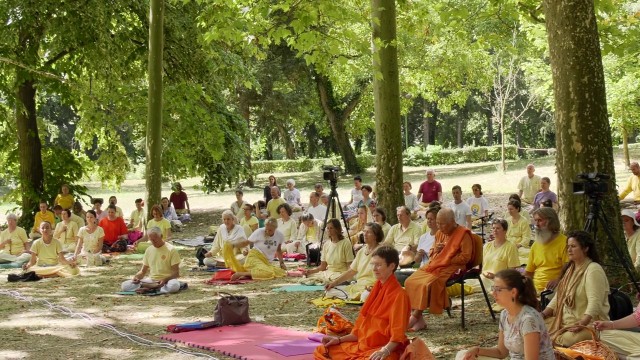
Morning satsang with Vishwaguruji from Vep, Hungary. We can't do too much for innocent creatures but we can give blessing from our heart for them in meditation. It is for every living beings. Silent meditation and relaxation.
Yuga Yuga Jivo Maheshwarananda
2:35 - 2:42 (7 min)
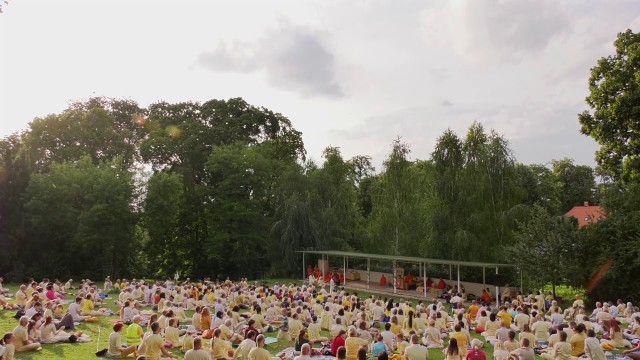
Evening satsang with Vishwaguruji from Strilky Ashram, Czech Republic. Bhajan singing on Gurupurnima satsang.
Sataguru rakho laj hamari
2:50 - 2:56 (6 min)
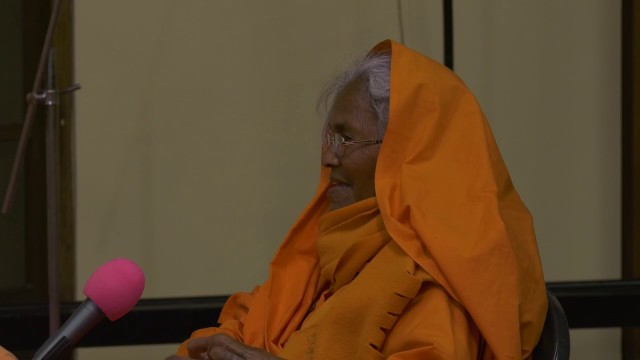
Evening satsang from Jadan Ashram, Rajasthan, India. Vishwaguruji"s sister sings Bhajans.
Repeat the name of Gurudev
3:00 - 3:27 (27 min)
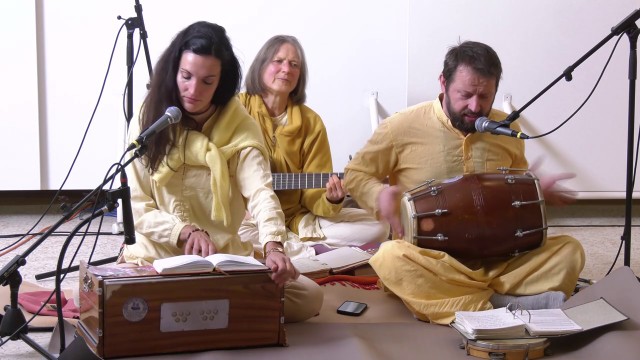
Evening satsang with Vishwaguruji from Vienna, Austria. Bhajan singinig to the Guru. Guru carano me arasatha tiratha he
Bhajan singing in the presence of the Master
3:30 - 4:17 (47 min)
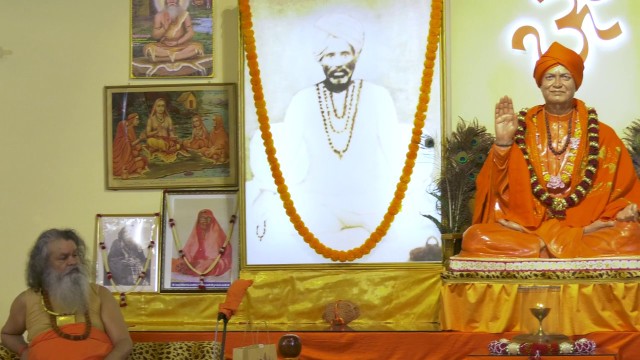
Evening satsang from Jadan Ashram, Rajasthan, India. Bhajan singing from Jadan. Including He nath ab to, Suno sakhi Sataguru aya, Guru carano me arasatha tiratha he
Guru bhakta jagata me na rahe
4:25 - 5:08 (43 min)
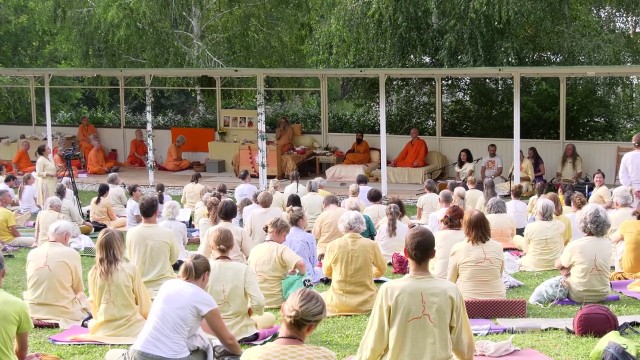
Evening satsang with Vishwaguruji from Strilky Ashram, Czech Republic. Bhajan singing on satsang, including bahajan Guru bhakta jagata me na rahe, Prema ka pyala Hari
Pyare darashana diyo aj
5:15 - 5:18 (3 min)
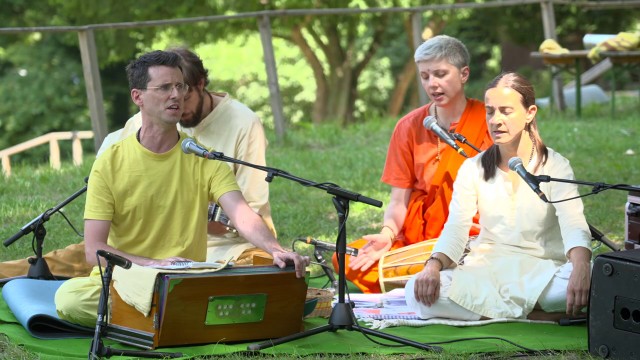
A spiritual song expressing longing for divine vision, followed by analytical remarks on the text's structure.
"Ākula vyākula fero re na dhinna" and "Darśan na dī chokhā. Darśan sannakā nindā, Nairin divasannā."
The content consists of poetic lyrics lamenting the agony of separation and the unfulfilled desire for divine sight (Darśan). This is followed by a separate section of critical remarks that analyze the song's text, pointing out its abrupt language shift, unclear referents, and narrative discontinuity.
Filming location: Strilky, Czech Republic
Bhajans from Vep
5:25 - 5:49 (24 min)
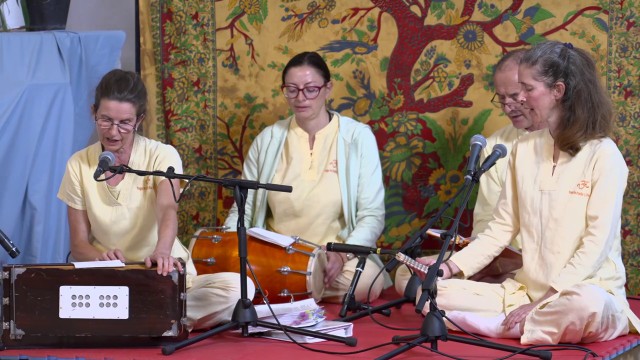
Yoga Summer Retreat from Vep, Hungary. Bhajan singing including Guruvara me cal usa una des.
A Guru gives everything that we need
5:55 - 6:56 (61 min)
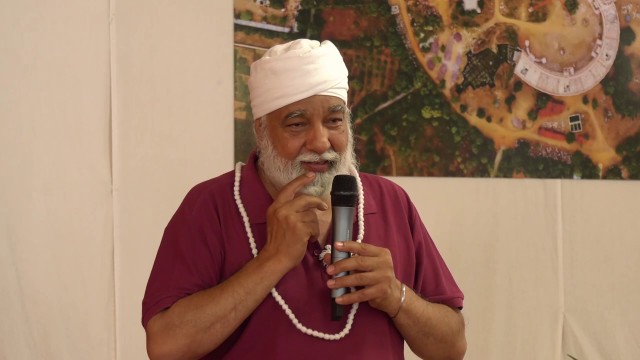
Evening satsang from Strilky Ashram, Czech Republic. The story of Krishna and Vidura's wife. Explanation and sing of bhajan Prabhu Prema Bina Nahi Ave. Strilky Ashram is a heaven on earth. We should know what Guru really means. Our biggest problems are our ego and jealousy. The real Guru mantra can liberate our minds. Our yoga name helps us to go towards our aims. We have to do seva (selfless service) in order to get the blessing. Miracles can happen to each of us. Karma is happening to every country. Yoga has become an industry in the world. There are some institutes which want to control yoga and ayurveda also. It should create a universal benchmark for yoga and ayurveda. In Britain, many people can legally use yoga and ayurveda as medicine. Bhajan explanation and singing Prabhu Mere Avaguna Chita Na Caro.
Divine knowledge
7:00 - 8:50 (110 min)
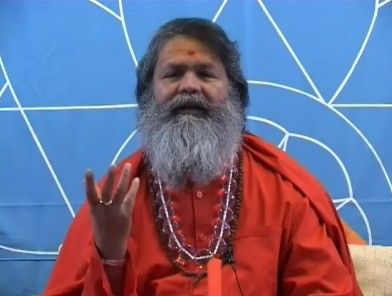
Johannesburg, South Africa in September 2004. Followed by "YIDL Lineage", "Unity in diversity". "Kundalini and Chakras". Finally follows a Lecture about Yoga Nidra followed by Awakening of the Healing powers.
Svadhisthan chakra, Ljubljana
8:55 - 10:49 (114 min)
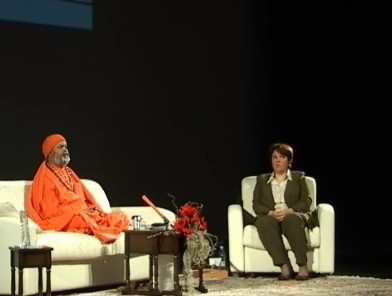
Public lecture about Svadhisthan chakra in Ljubljana, Slovenija in February 2005.
Fiji introduction
10:50 - 10:58 (8 min)

A Gentle Yoga Practice
11:00 - 12:07 (67 min)
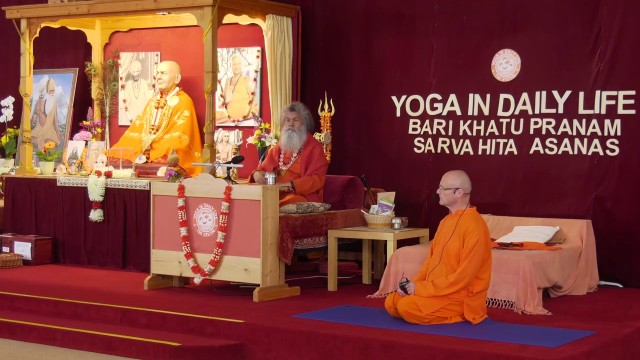
A guided gentle yoga class focusing on breath and alignment.
"Pavanamuktāsana is excellent for digestion." "When we start to breathe a little deeper, we immediately have more energy and less tension."
An instructor leads a group through a sequence of postures, including Pavanamuktāsana on the back and standing, Uttānāsana, and balancing poses like Ekapāda Uttānāsana. The guidance emphasizes anatomical awareness, the benefits for circulation and focus, and connects the physical practice to the cleansing of the nāḍīs for prāṇic flow. The session concludes with Bhujaṅgāsana and relaxation.
Filming location: Strilky, Czech Republic
You are Infinite, Pula
12:15 - 13:51 (96 min)
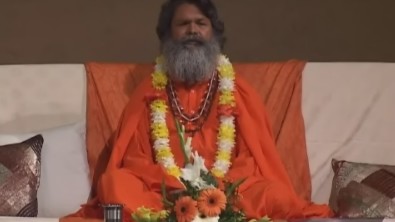
Public Lecture, Pula, Croatia, 2004
From darkness to light
13:55 - 15:10 (75 min)
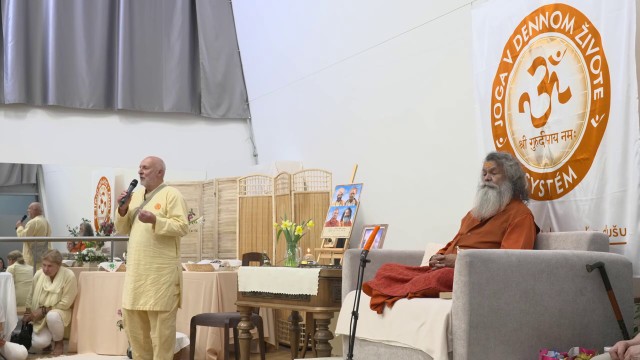
Evening satsang with Viswhaguruji from Presov, Slovak Republic. Bhajan singing. Talk about the meaning of the word Guru.
Practice and eat healthy food
15:15 - 16:13 (58 min)
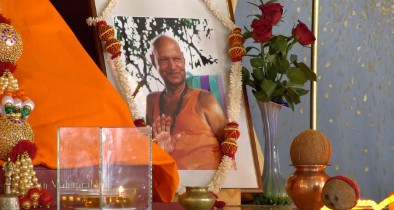
A spiritual discourse on yoga practice, holistic health, and traditional knowledge.
"Sarvāṅgāsana is very useful, very powerful, and especially, it is very good for the thyroid gland."
"We have everything with us, but to know how, that’s very important."
The lecturer leads a satsang, explaining the specific benefits and correct practice of postures like Sarvāṅgāsana and Viparītakaraṇī Mudrā. He expands into broader themes, lamenting the loss of traditional knowledge about European herbs and natural foods, and critiques modern lifestyles and medicine. The talk emphasizes the need for holistic understanding—of the body through appropriate yoga, and of nature through rediscovering local plants—for true health, weaving in personal anecdotes and spiritual reminders.
Filming location: Strilky, Czech Republic
Evening satsang from Om Ashram (2/2)
16:20 - 17:13 (53 min)

Evening satsang from main tent at Om Ashram, Rajasthan, India. Bhajan singing.
Be satisfied and content whatever you have
17:20 - 18:33 (73 min)
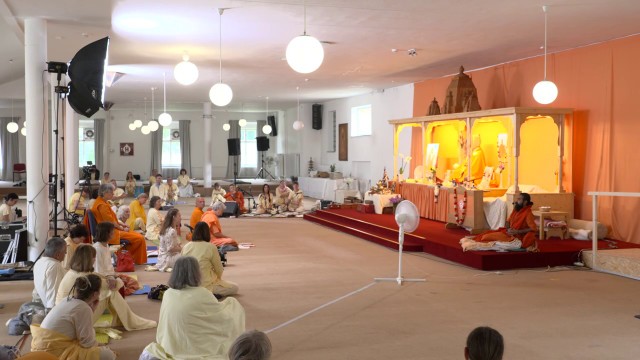
A satsang featuring spiritual stories and teachings on renunciation, ego, and the pitfalls on the spiritual path.
"Seeing you all the time indulged in these materialistic activities and always enjoying your life makes me sad."
"If you have ego, envy, or jealousy towards anything or anyone, then you get stuck in this māyā."
The lecturer narrates two primary parables. The first tells of King Gopichand, who renounces his kingdom at his mother's request and learns the true meaning of his mother's three advices for monastic life. The second, a cautionary tale, describes a powerful muni whose intense tapasya is destroyed by rising ego and desire, ultimately exploited by Kamadeva. The speaker weaves in related teachings, including a story of Lord Rama delivering justice to a dog, to emphasize controlling anger, speech, and the dangers of ego.
Filming location: Strilky, Czech Republic
We are eternal
18:40 - 19:40 (60 min)
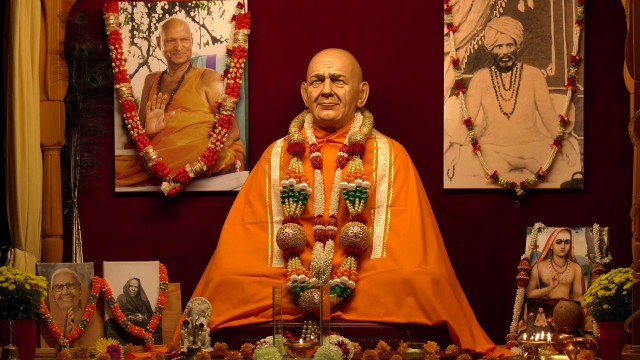
An evening satsang on spiritual oneness and the guru-disciple relationship.
"For only a certain time do we think in terms of 'mine,' 'yours,' and 'theirs.' And then, my dears, that will go away."
"It is like rain falling. There are many drops... But they come together, and all drops unite to become the water that is flowing."
The lecturer addresses a gathering, expounding on the fundamental unity of all beings using the metaphor of raindrops merging into the ocean. He shares a parable of a yogi and a skeptical professor to illustrate divine wisdom, and recounts personal stories and a disciple's dream about their guru, Swami Madhavanandji Bhagavan, emphasizing the eternal bond beyond physical presence. The talk blends teachings on non-duality with devotional remembrance on the anniversary of the guru's samadhi.
Filming location: Strilky, Czech Republic
In the cave of Sri Alakhpuriji
19:45 - 19:55 (10 min)
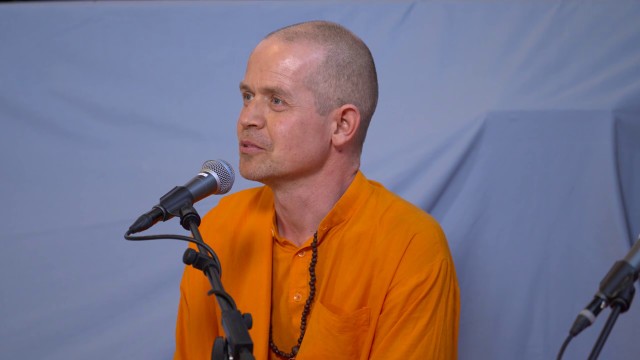
A personal story about receiving a devotional chant as a blessing.
"You go in and meditate; you will get good inspiration." "Print out this sentence in big letters and stick it on the place where you go the most, and read it every day."
The speaker recounts a Himalayan pilgrimage with Viśva Gurujī, where he was granted special permission to meditate in Śrī Alakpurījī's cave. After an uncomfortable period of cold, he later received the kīrtan as a blessing. He explains the chant's core meaning—"all you need is the Guru's grace"—and shares how he set the Sanskrit phrase to music, concluding by singing the devotional composition.
Filming location: Vép, Hungary
How did creation begin?
20:00 - 20:46 (46 min)
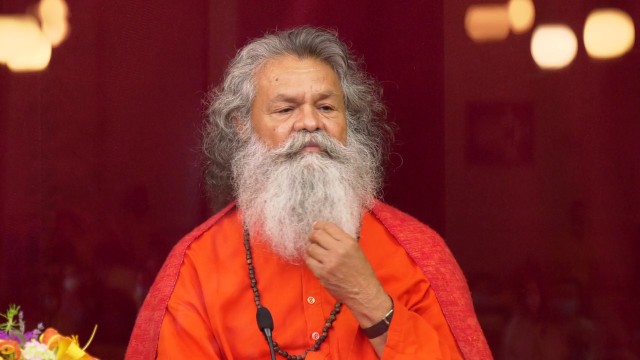
A spiritual discourse on the purpose of pilgrimage and the nature of yoga.
"You have come from a long distance, but you are not tired. Why are you not tired? Because you were coming here to Mahāprabhujī's ashram."
"Holy Gurujī said, 'One in all and all in one.' This means we came from different ways... but we have all come here and become one now."
A speaker welcomes visitors to the ashram, emphasizing the spiritual energy of the place and the unity of the gathering. The discourse then expands into a wide-ranging exploration of yoga, defining it not merely as physical practice but as the fundamental unity underlying all existence, from the cosmic emergence of Śiva from Parabrahma Paramātmā to the ethical principle of non-violence (ahiṃsā) exemplified by the Buddha. Stories of the Buddha and a devoted princess named Sundarī are shared to illustrate the path of purification and knowledge.
Filming location: Strilky, Czech Republic
Be the example
20:50 - 21:47 (57 min)
A commemorative satsang and panel discussion on Mahatma Gandhi and peace.
"Gandhiji said, 'Renounce and enjoy.' If you want to enjoy life, then renounce."
"He said, 'Betā, son, don't eat sweets, it is not good.' ...because, at that time, since then, I was also eating too many sweets."
Swami Avatarpuri opens a gathering in Wellington by honoring Mahatma Gandhi, illustrating his principles of renunciation, truth, and leading by example with personal anecdotes. Following his talk, other speakers, including a diplomat and members of the Yoga in Daily Life community, share reflections on Gandhi's legacy, connecting it to themes of peace (śānti), prayer, non-violence, and the embodiment of spiritual love in daily life and service.
Filming location: Wellington, New Zealand
Itna to karna guruji
21:50 - 21:57 (7 min)
Bhajan sang by Gajanand.
Around the world - Bhajans from Kailash(3/3)
22:00 - 22:47 (47 min)
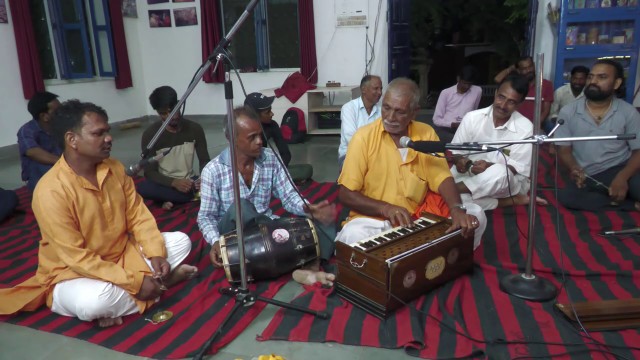
Evening satsang from Kaliash Ashram, Rajasthan, India. Bhajans on the occasion of Sri Devpuriji Mahasamadhi.
Tuma Sab Ke Dina Dayala
22:55 - 23:18 (23 min)
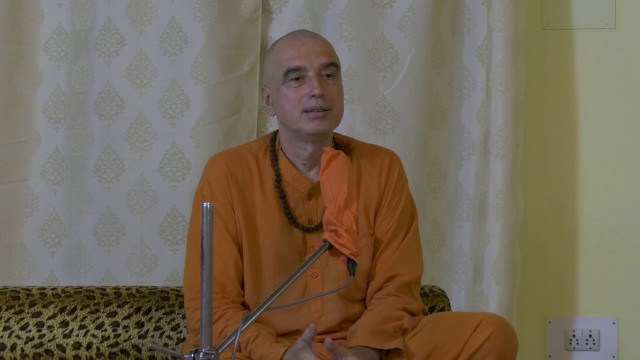
A spiritual discourse explaining a devotional bhajan and recounting a temple inauguration.
"O Śiva, O Devpurījī, did you forget about me in your bliss?" and "Śaraṇa Bali Hari means I am completely devoted to you."
The lecturer explains the meaning of a bhajan composed by Mahāprabhujī for his guru, Devpurījī, interpreting its lines as a devotee's heartfelt plea and a lesson in absolute surrender. He connects this to a recent journey to inaugurate the first statues of Devpurījī and Kṛṣṇānandajī Mahārāj at a disciple's ashram, describing the ceremony and reflecting on the spiritual lineage.
Filming location: Jadan, Rajasthan, India
Bandhas, Mudras and Kriyas
23:25 - 0:10 (45 min)
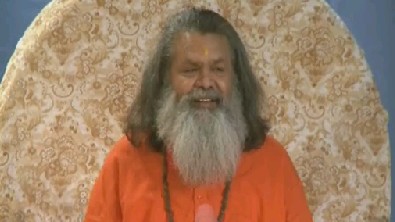
Swamijis lecture from weekend seminar in Vienna, Austria about Bandhas, Mudras and Kriyas recorded on 30th of May 2010.
American
Australian