
European
The Third Eye and the Awakening of the Mūlādhāra Cakra
0:15 - 0:53 (38 min)
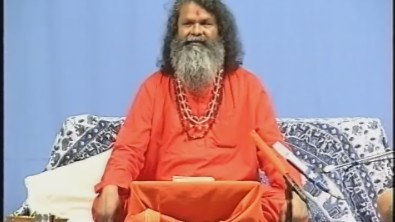
A spiritual discourse on the third eye and the Mūlādhāra Cakra.
"The third eye signifies wisdom. All your karmas will be burned, and everything becomes pure."
"When we begin to awaken the Mūlādhāra Cakra, it is a wonderful feeling. You feel like you are coming out of darkness, like a seed which was under the earth now begins to sprout."
The speaker delivers a teaching on subtle anatomy, beginning with the wisdom of the third eye before focusing on the foundational Mūlādhāra Cakra. Using the symbol's imagery—the lotus, the elephant of prosperity, the coiled serpent of time, and the Śiva Liṅga—they explain the cakra's role as the seat of dormant energy (Śakti) and its awakening as the start of the spiritual journey toward union with supreme consciousness. The talk includes practical spiritual advice, references to Gaṇeśa, and concludes with a chant.
Filming location: Umag, Croatia
Unity, love, forgiveness, and devotion
1:00 - 1:43 (43 min)

An evening satsang on unity, awareness, and forgiveness.
"Whenever Bhaktas come, unite, and sit together, that is Dīvālī, that is Christmas."
"More than anything, there is forgiveness. When we forgive people for what they have done, it's not for them, it's for us."
A swami addresses a full hall, emphasizing the power of collective devotion to transform the age. He discusses the importance of awareness in daily life, using personal anecdotes about zoning out while driving and reducing phone use. He stresses that selfless service (seva) requires devotion (bhava) and explains unity through the metaphor of beads on a thread of Guru Bhakti. He shares a story from the Ramayana about a dog seeking justice to illustrate forgiveness and the dangers of ego, concluding with teachings on living in the present and protecting dharma.
Filming location: Strilky, Czech Republic
How can I love myself?
1:50 - 2:23 (33 min)
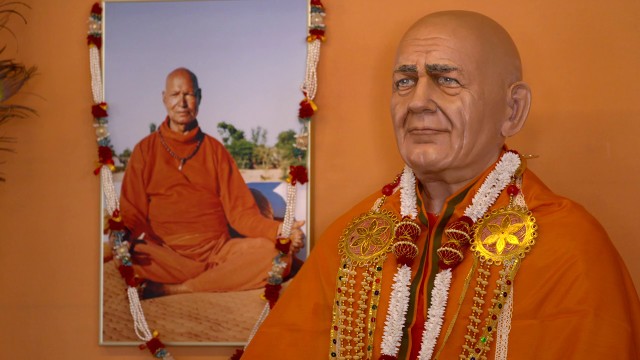
A satsang exploring the concept of self-love through the framework of the four aspects of divine grace (kripa).
"Swāmījī did not really use this word, but I know it comes from Holī Gurujī; he is always using that."
"Love each and every living being, if not more, then at least as much as yourself."
Guru Lilā, addressing the community, explains the four aspects of kripa: Deva Kripa (grace of the gods), Śāstra Kripa (grace of the scriptures), Guru Kripa (the Guru's grace), and Kuṭkī Kripa (self-grace). He focuses on Kuṭkī Kripa as self-love, arguing it is a prerequisite for loving others. He outlines a practical path to self-love through self-acceptance, self-understanding, and self-giving, linking it to core teachings. He shares an anecdote about a woman healing from ALS through self-love and concludes with a traditional story about Guru Nānak illustrating the complex workings of karma.
Filming location: Strilky, Czech Republic
Singing Bhajans to the Masters
2:30 - 3:11 (41 min)
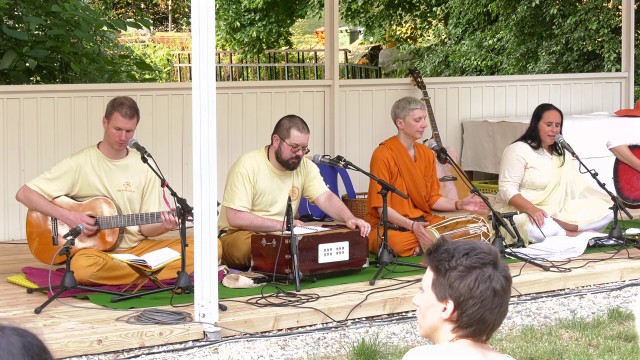
Evening satsang from Střílky Ashram, Czech Republic. Bhajans sung to the Master: Sobhāvo Satsaṅga Re, Yogi Jāno Kī Yoga Nidrā, Dhyān Karo, Hamẽ Hī Kam Satsaṅg Hī, Sataguru Sandeśo Moyē.
Bhajan singing from Strilky
3:15 - 3:50 (35 min)
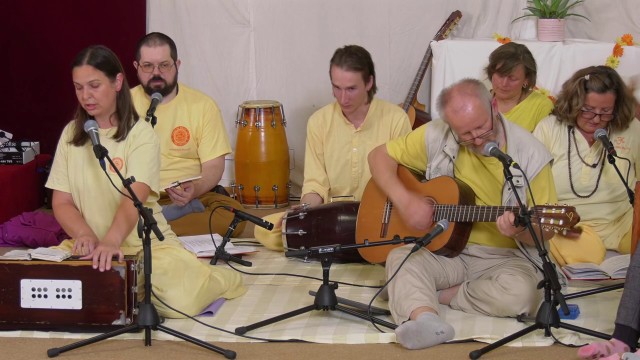
Evening satsang from Strilky Ashram, Czech Republic.
Bhajan evening from Strilky Ashram
3:55 - 4:21 (26 min)
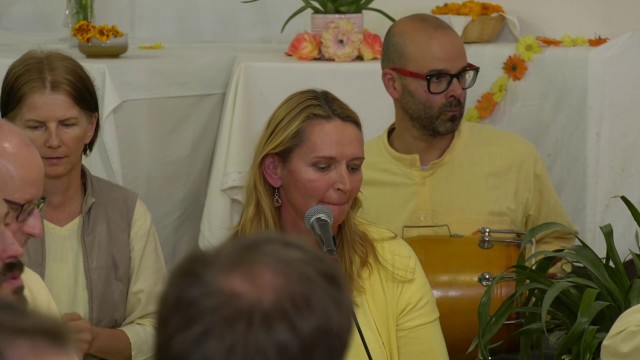
Evening satsang with Vishwaguruji from Strilky Ashram, Czech Republic.
Bhajan singing from Strilky Ashram
4:25 - 4:58 (33 min)
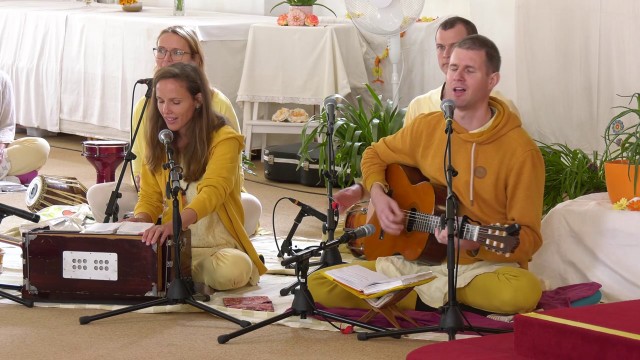
Morning satsang with Vishwaguruji from Strilky Ashram, Czech Republic.
Bhajan evening from Strilky
5:05 - 5:19 (14 min)
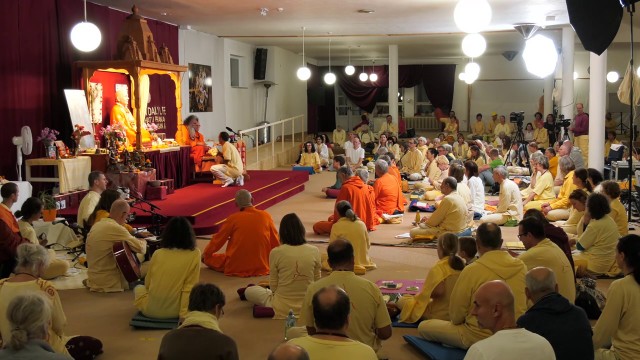
Evening satsang with Vishwaguruji from Strilky Ashram, Czech Republic.
Learning from Guruji
5:25 - 7:04 (99 min)
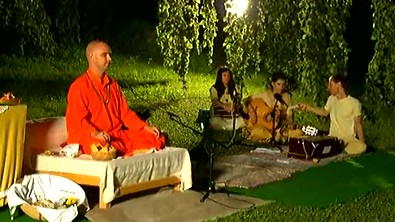
Evening Satsang with Mahamandaleshwar Swami Jasrajpuriji at Strilky Ashram, Czech Republic
The truth is tapas
7:10 - 8:16 (66 min)
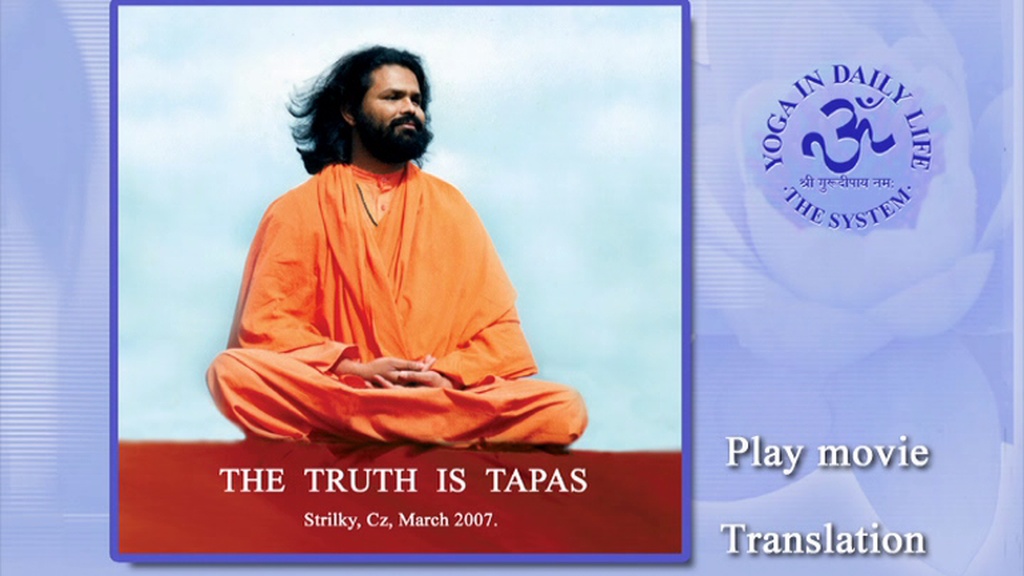
A spiritual discourse reflecting on the Kumbh Mela and warning against false spiritual powers.
"If you bathe during that constellation, the nectar still has an effect on you—meaning it cleans your karmas and blesses you with immortality."
"There is no austerity more than truth. To follow the truth is the biggest austerity, tapasyā—and no greater sin than to lie."
Swami Avatarpuri begins by describing his profound experience at the Kumbh Mela in Prayagraj, taking a sacred bath for all devotees. He then shifts to a cautionary theme, recounting stories of Holy Guruji exposing fraudulent fortune tellers and so-called healers. He warns devotees against those who claim siddhis (powers) like seeing auras or predicting futures, arguing these are obstacles to true spiritual progress. He advises focusing on genuine devotion and practice, sharing a personal story where Mahaprabhuji counseled him to be like a steadfast banyan tree, free from expectation.
Filming locations: Strelky Ashram, Czech Republic.
DVD 326
Purify your body from poison
8:20 - 9:34 (74 min)
An evening discourse on the Kuṇḍalinī, chakras, and the nature of happiness.
"Happiness is within ourselves. Peace is within ourselves. And unhappiness is from outside."
"It is said that in life, when we walk... beside you is walking your death. You can see it is like the shadow, the shadow of your body."
The speaker explores the sources of happiness and suffering, using the parable of a couple's 50-year misunderstanding over a piece of bread to illustrate how unspoken grievances create internal poison. He connects this to the Viśuddhi (throat) chakra, explaining its role in purification and relating it to the myth of Śiva drinking the ocean's poison. The talk emphasizes communication, forgiveness, and daily practices like prāṇāyāma to cleanse negativity and prevent physical and emotional ailments.
Filming location: Garrison, NY, USA
My Property Is In My Heart
9:40 - 10:55 (75 min)
Evening Satsang with Mahamandaleshwar Swami Jasrajpuriji at Strilky Ashram, Czech Republic
Morning Yoga practice, Umag, Croatia (3/9)
11:00 - 12:33 (93 min)
Morning Yoga practice from the international Yoga retreat Umag, Croatia, on the 27 of September
How could Tulsidas see Rama?
12:40 - 13:48 (68 min)
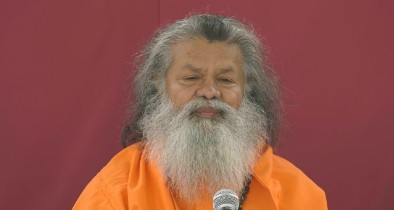
A spiritual discourse exploring the nature of the soul, divine vision, and the sanctity of the human body.
"The soul that comes into this mortal world is, in one way, caught in this body. It neither wants to go out of it nor likes being in it."
"In every temple is your statue, but I cannot see your face, my Lord... Therefore, we have to understand what human body God has given us. And that is within us, but we cannot see it."
The speaker delivers a teaching on the eternal soul (Ātmā) and the human condition, questioning common beliefs about the afterlife and divine perception. He narrates the transformative stories of the bandit-turned-sage Vālmīki and the poet Tulsīdās's missed encounter with Lord Rāma to illustrate the power of mantra and the need for spiritual alertness. The discourse emphasizes the human body as a sacred temple, discusses the law of karma, and concludes with a call for self-knowledge and devotion through chanting.
Filming location: Slovakia
Meditation with Vishwaguruji from "Yoga for Wellness" Conference, India
14:00 - 14:20 (20 min)
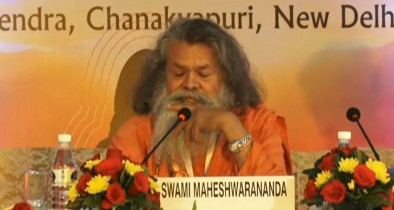
Vishwaguruji leads a Meditation at the International Conference 'Yoga for Wellness' organized by the Ministry of AYUSH, Government of India and held at Pravasi Bariyat Kendra in New Delhi. The inaugural session was attended by the Vice President of India.
Inaugurual session of the conference "Yoga for Wellness"
14:25 - 15:34 (69 min)
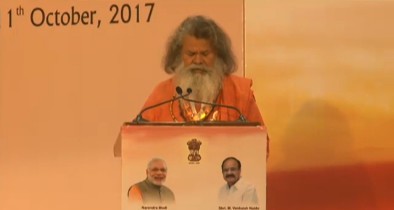
Inaugurual session of the conference on 'Yoga for Wellness' organized by the Ministry of AYUSH, Government of India and held at Pravasi Bariyat Kendra in New Delhi. The inaugural session was attended by the Vice President of India.
Raksha Bandhan is a promise we made to ourselves and others
15:40 - 15:55 (15 min)
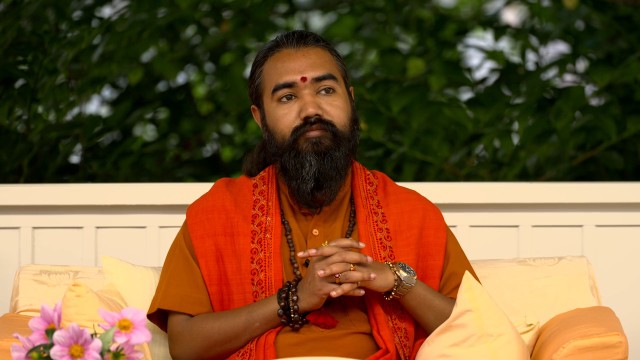
A satsang reflecting on the deeper meaning of Raksha Bandhan.
"The promises and vows we make during Rakṣābandhan are not only between brothers and sisters. It is also us telling ourselves to protect our mind from negativity, to protect our tongue from harsh words, and to protect our actions from adharma."
"Gurudev always said, 'Helping hands are better than folded hands.' So when we can, we promise to ourselves, we promise to our siblings, we promise to our friends, we promise to everyone, our guru. Then we must keep those promises and those vows."
Following morning celebrations, a speaker expands on the festival of Raksha Bandhan, explaining it as a universal vow of protection that extends beyond siblings to include oneself and one's guru. The talk emphasizes protecting one's mind and actions from negativity, and the importance of keeping one's vows through tangible action, illustrated by a story about a brother and sister. The discourse concludes with blessings for peace and unity.
F
Vegetarian cooking lesson 19
16:00 - 16:23 (23 min)
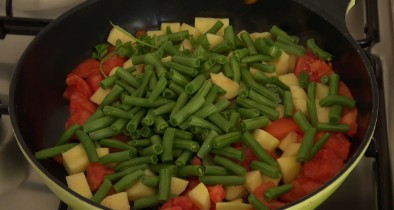
Vegetarian cooking lesson
How can I love myself?
16:30 - 17:03 (33 min)
A satsang exploring the concept of self-love through the framework of the four aspects of divine grace (kripa).
"Swāmījī did not really use this word, but I know it comes from Holī Gurujī; he is always using that."
"Love each and every living being, if not more, then at least as much as yourself."
Guru Lilā, addressing the community, explains the four aspects of kripa: Deva Kripa (grace of the gods), Śāstra Kripa (grace of the scriptures), Guru Kripa (the Guru's grace), and Kuṭkī Kripa (self-grace). He focuses on Kuṭkī Kripa as self-love, arguing it is a prerequisite for loving others. He outlines a practical path to self-love through self-acceptance, self-understanding, and self-giving, linking it to core teachings. He shares an anecdote about a woman healing from ALS through self-love and concludes with a traditional story about Guru Nānak illustrating the complex workings of karma.
Filming location: Strilky, Czech Republic
The Sole Necessity of Guru's Grace
17:10 - 17:57 (47 min)
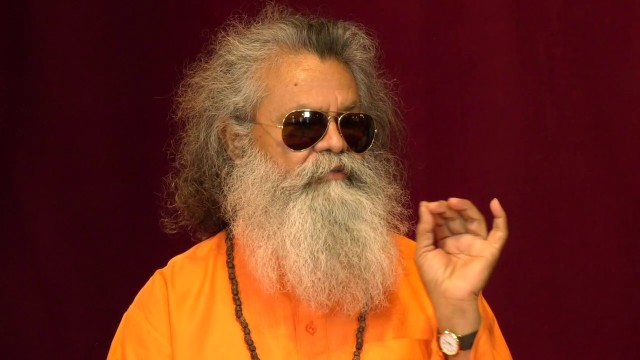
A spiritual discourse on the absolute necessity of the Guru's grace, illustrated with parables and observations on life.
"Without the grace of the Guru, nothing can be. We may think we can do without it and believe we are okay, but that is not how it is."
"Guru kṛpā hi kevalam. Guru’s grace... When Gurudeva’s blessing is there, then everything is possible."
The speaker, likely a swami, delivers a satsang emphasizing that all spiritual progress and worldly harmony depend solely on the Guru's grace. He expands the concept of Guru to include parents and the supportive community of village life, using anecdotes about street dogs and a detailed parable about a devoted disciple, his wife, and a test of sacrifice to illustrate the depth of true devotion and the singular source of blessing.
Filming location: Strilky, Czech Republic
The Journey of the Soul: From the Ocean to the Drop
18:05 - 18:59 (54 min)
A spiritual discourse using the water cycle as a metaphor for the soul's journey.
"This jīvā, the soul, is on the journey of the eternal."
"When this drop falls into the ocean, the Jīva becomes the Ātmā. This drop becomes the ocean."
Swami Avatarpuri gives a satsang, explaining the soul's separation from and longing to return to the divine source through an extended analogy of evaporation and rainfall. He emphasizes the purifying role of satsang and the Guru, shares anecdotes about introducing mantra in Eastern Europe and criticizes modern chemical pollution and vanity as spiritual impediments, concluding with a call for natural living and collective chanting.
Filming location: London, UK
Practice and try to purify your karma
19:05 - 19:55 (50 min)
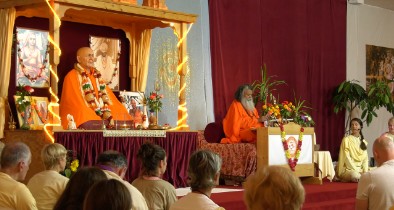
Evening satsang from Strilky Ashram, Czech Republic. There are many beautiful apples, but some of them are rotten because a wasp infected them. When a person is spoiled, the wisdom that he got is lost. In the shelter of Gurudev, if the faith is not strong enough, some problems immediately come. A story about Kabir Das and the butcher. Those who are doing, will get the karma. The story of a man who wants to make problems for someone. Children have truth in their heart. We have to give a good message to the world. The fruit will show the condition of the tree. Karuna from Czech Republic speaks about Yoga in Daily Life helping biathlon athletes.
Human mission is to realize God
20:00 - 20:53 (53 min)
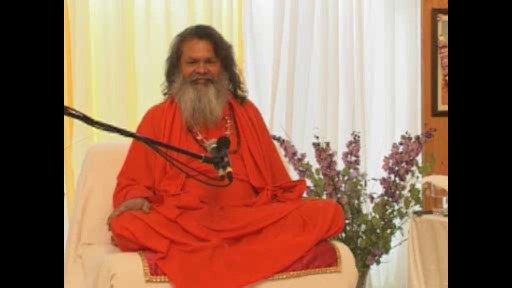
A satsang on the mission of human life and spiritual education.
"To be born, eat, drink, sleep, and procreate is not the sole aim of human life; other creatures are also expert at this."
"Rahiman dhāgā prem kā, mat todo chitkāya, toḍā phir jūḍe nahīṁ, jūḍe gāṁṭ paḍ jāya. (The thread of love, do not break it out of some doubt or anger. Once broken, it cannot be joined again. If joined, there will be a knot.)"
Swami Maheshwarananda welcomes parents and attendees, dedicating the gathering to supporting a disciple's new yoga center. He explores the unique purpose of human life, emphasizing the cultivation of kindness, forgiveness, and understanding. The discourse outlines three essential forms of education: from parents and family, from school for intellectual development, and spiritual knowledge (parā vidyā). He stresses that the ultimate human mission is to realize God and unity, advocating for a life of selfless service, maintaining loving relationships, and building a legacy of good deeds.
Filming location: London, UK
The Soul's Journey
21:00 - 21:53 (53 min)
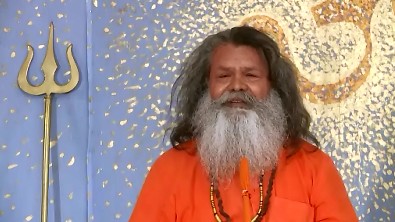
A spiritual discourse on the journey of the soul through birth, death, and karma.
"Our soul—not the Ātmā, but the soul... the soul is individual, not universal."
"Only two will follow us: our good or bad karmas. And that becomes destiny. And against destiny we have no power."
A spiritual teacher explains the nature of the individual soul (Jīvātmā) as a wave of the universal resonance. He describes its journey through time, bound by karma, its entry into a physical body, and the rare opportunity of human birth. He emphasizes the inescapable law of karma governed by body, mind, speech, and wealth, and concludes that liberation comes through spiritual practice and the Guru's grace, which dissolves the soul back into the Supreme.
Filming location: Strilky, Czech Republic
Around the World - Nadlac
22:00 - 22:08 (8 min)
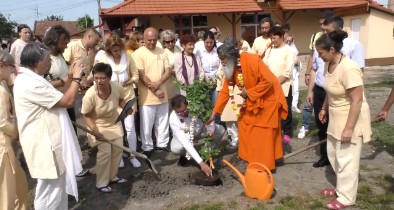
First Vishwagurujis visit to Romania.
Around the world - Opening of new YIDL center in Murska Sobota, Slovenia
22:15 - 22:57 (42 min)
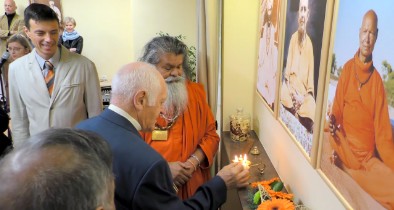
A ceremonial opening for a new yoga ashram in Slovenia, featuring addresses and spiritual teachings.
"Yoga is not specific to one country or one religion; yoga is universal."
"Yoga means balance, harmony, and unity... Yoga is a bright future for mankind, if they will use it."
Local representatives welcome guests and present symbolic gifts of bread, salt, and water. Swami Dayal Puri and the Indian Ambassador to Slovenia give speeches, celebrating the ashram's founding and explaining the ancient, universal science of yoga. The teachings cover yoga's origins in Shiva, its role in modern life for health and inner peace, and the importance of daily practice and willpower. The event concludes with Sanskrit mantras.
Filming locations: Murska Sobota, Prekmurje, Slovenia.
The Nature of Attachment, the Curse of Knowledge, and the Immortal Parrot
23:05 - 0:05 (60 min)
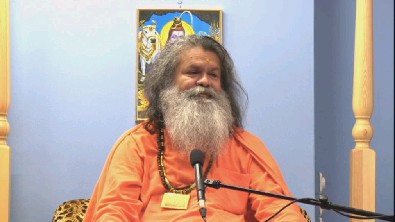
A spiritual discourse exploring attachment, divine knowledge, and a mythological story about immortality.
"Love is the greatest. That love is God, and God is love. Our love for our dear ones, parents, ancestors, sisters, brothers, friends, animals, house pets, even our car."
"Therefore, moha. Moha means ignorance, and moha means attachment."
The speaker delivers an evening satsang, weaving together philosophical teachings on attachment (moha) with the story of Shiva, Parvati, and the quest for immortal wisdom. He explains how attachment leads to suffering, illustrating this with the tale of Sati's self-immolation and Shiva's grief. The narrative then focuses on Parvati's insistence that Shiva teach her the secret of immortality, a secret that is accidentally overheard by a clever parrot, leading to the birth of the sage Shukadeva. The talk emphasizes the challenges of spiritual practice and the need for a true Guru.
Filming location: Vienna, Austria
American
Australian