
European
Always keep the distance
1:10 - 2:02 (52 min)
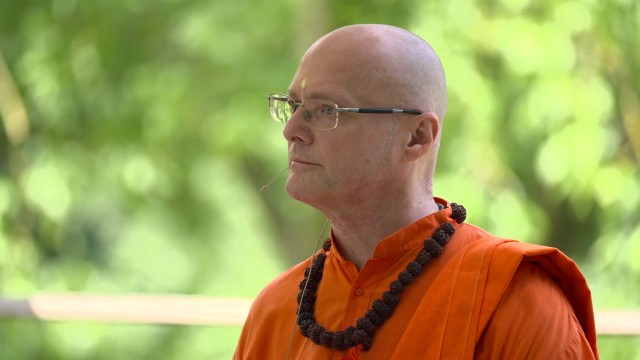
A satsang on using the world as a mirror for self-awareness and spiritual discipline.
"Through that reflection in the mirror—which is what this world means—we are able to correct ourselves."
"Everybody says that your life depends on the quality of your thoughts. Whether you will be in heaven or in hell depends only on the quality of your thoughts."
Swami Maheshvarananda leads a teaching session, exploring how to observe life without judgment. He explains a directive from Vishva Guruji using a parable of a man mistaking a drowning bear for a blanket, illustrating the need for wise detachment. He discusses how our thoughts shape our reality, using examples from daily life and classical texts like the Ramayana and Marcus Aurelius's Meditations, emphasizing disciplined thought transformation as core spiritual practice.
Filming location: Strilky, Czech Republic
Never think that you are a Guru
2:10 - 2:53 (43 min)
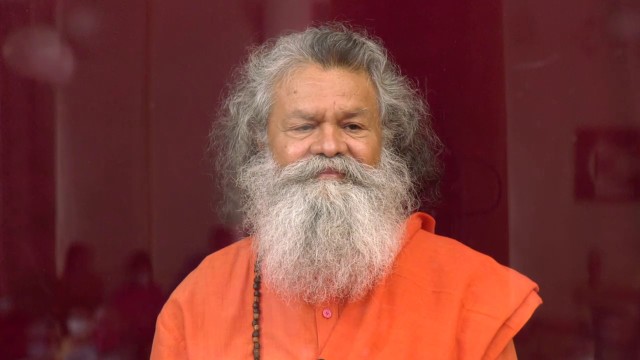
A satsang on the sacred practice of Kriyā and the necessity of the guru's grace.
"If I tell them, 'On the day you give up Guru Kṛpā, all sādhanā will be gone,' these people took the Kriyā and after one or two years they were gone."
"To become a disciple is not easy, not easy, not easy... we are also on that path of God, supreme, highest, and we are now walking on that path."
The lecturer addresses the gathering, emphasizing the gravity of Kriyā Anuṣṭhāna practice and the danger of undertaking it without genuine guru grace. Using metaphors of carrying a flame through a storm and walking a knife's edge, he illustrates the spiritual path's difficulty. He warns against students presuming to teach the technique, comparing it to a nurse performing heart surgery, and stresses that authentic practice comes only through the guru paramparā.
Filming location: Strilky, Czech Republic
Around the World - Nadlac
3:00 - 3:08 (8 min)
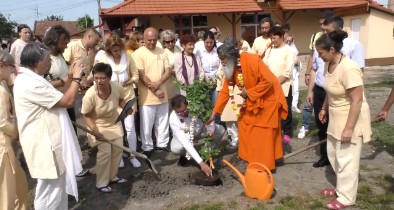
First Vishwagurujis visit to Romania.
World Peace is in Our Hands
3:15 - 3:20 (5 min)

A keynote address on global responsibility and the path to world peace.
"A world without peace will not survive. A world without distributing wealth will not survive. A world without taking care of our beautiful planet will not survive."
"World peace is in our hands... Peace is never achieved without good intentions and cooperation with others. Even more importantly, it requires coherence or balance with one’s self."
The speaker, representing Slovenia, addresses an international conference, arguing that creating resilient societies and active global citizenship is essential for survival. They share Slovenia's initiative to co-create a national vision aligned with the UN Sustainable Development Goals as a model of responsible action. The speech concludes by linking outer peace to inner balance, proposing yoga as a means to achieve it.
Filming location: Prague, Czech Republic
Be happy and feel oneness
3:25 - 4:07 (42 min)
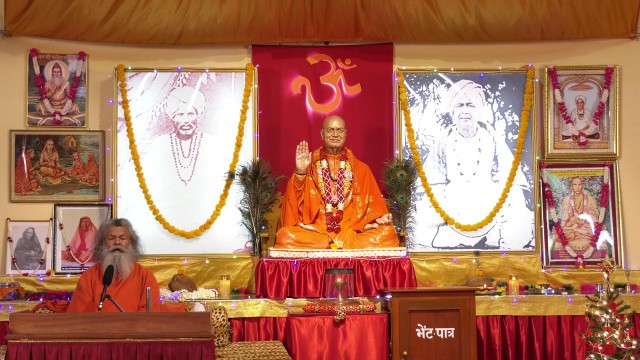
A New Year's reflection on human concepts, oneness, and inner peace.
"Where is the new year? The same sun, moon, and clouds remain, but humans try to make something again, to feel 'I am new.'"
"And when that oneness is realized, then there is nowhere to say 'this' or 'that.'... Everything is in our mental constructs."
The lecturer leads a satsang, questioning the human-made nature of the New Year and other divisions. He reflects on the eternal earth, the illusion of separation, and the conflicts between religions and individuals, urging everyone to realize fundamental oneness, be happy, and avoid making others angry. He uses metaphors like the ocean's surface versus its depths and concludes with travel plans for pilgrimage.
Filming location: Jadan, Rajasthan, India
The spiritual family
5:00 - 5:51 (51 min)
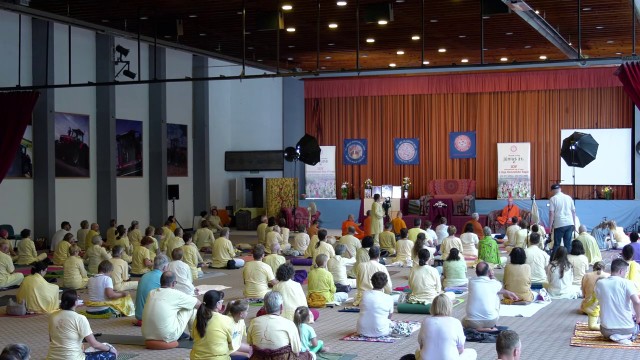
An opening talk at a spiritual seminar addressing the absence of the guru and the purpose of gathering.
"People are always complaining, 'Oh, Kali Yuga is not good, Kali Yuga is a terrible time.' But if you know how to utilize it, Kali Yuga is also excellent."
"We need to be like a Paramahaṁsa... We should be like that. In this world, we have so many things... we should be like the Haṁsa: take the pearls, take the milk, and leave the water."
A senior disciple addresses the assembled spiritual family at the Vép seminar, acknowledging the physical absence of Viśvagurūjī. He reframes the gathering as a vital opportunity to recharge, strengthen spiritual family bonds, and deepen personal practice. Key themes include extracting the essence from the Kali Yuga, the necessity of a supportive community for sādhanā, and using the seminar for introspection, mauna (silence), and focused practice of āsana and prāṇāyāma to calm the mind.
Filming location: Vép, Hungary
Yoga in Daily Life: Union, Harmony, and Self-Knowledge
5:15 - 6:32 (77 min)
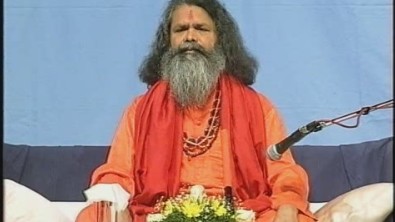
A public lecture on integrating yoga philosophy and practice into daily life, focusing on self-knowledge and chakra awakening.
"Yoga is a balancing principle which balances the entire universe. Where there is balance, there is harmony."
"Unless we change our qualities, we cannot become one with God. Human qualities are love, understanding, kindness, mercifulness, helping, spiritual, and so on."
Swami Paramadvaiti addresses an audience, explaining yoga as a science for achieving harmony and union with the cosmic consciousness. He discusses the nature of human problems, the journey of the individual soul, and the importance of cultivating positive qualities. The lecture then delves into practical yoga techniques for health and stress relief, before providing a detailed teaching on the energy body, focusing on the awakening and purification of the Svādhiṣṭhāna chakra and its associated emotions.
Filming location: Croatia
Sri Deep Narayan Mahaprahuji
6:00 - 6:07 (7 min)
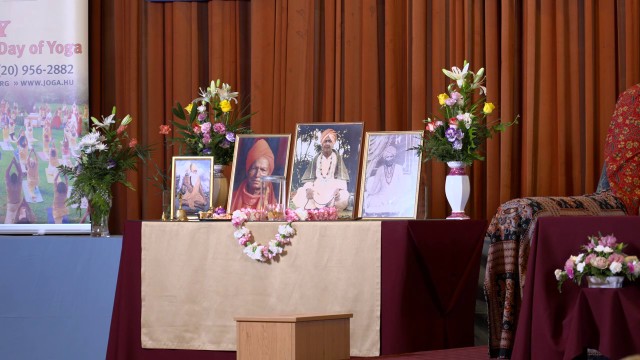
A devotional discourse on the power of the divine name and Guru's grace.
"For the beings of the world—the jīvas and jinn—His name itself is the boat to cross the ocean of existence."
"By always contemplating His name with grace, desire, anger, and greed are cut down."
The speaker offers praise to Śrī Dīp Nārāyaṇa Mahāprabhujī, described as a divine incarnation. The central theme is that constant remembrance and contemplation of this divine name serves as a vehicle for liberation, protecting devotees from worldly afflictions and illusion, and immersing them in divine absorption. The Guru's grace is presented as the essential means for this crossing.
Filming location: Vép, Hungary
Bhajans with Swami Gajanandji
7:30 - 8:09 (39 min)
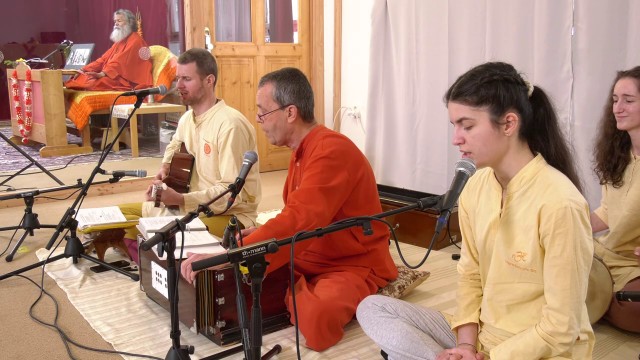
Morning satsang with Vishwaguruji from Strilky Ashram, Czech Republic.
Bhajans from Poprad
8:15 - 8:59 (44 min)
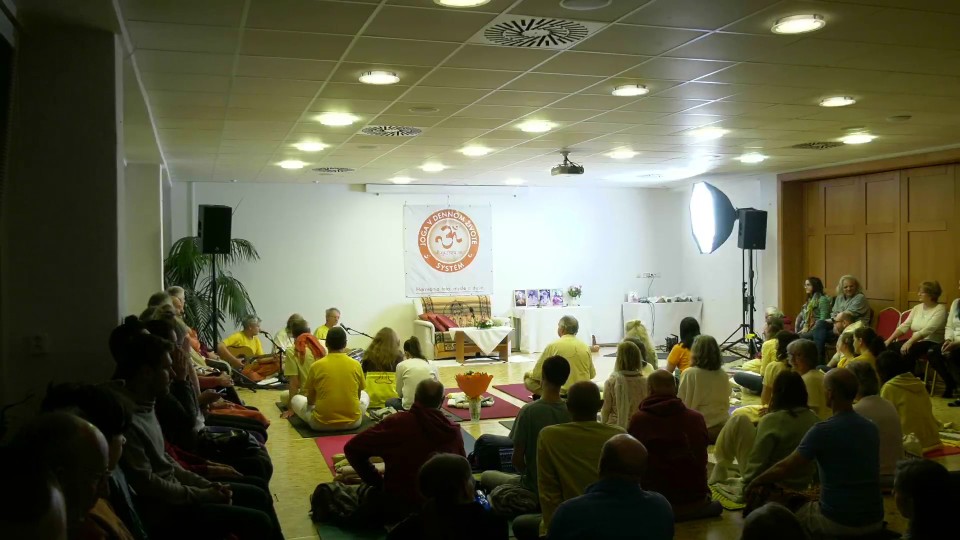
Bhajans from Tatra Hotel, Poprad, Slovakia.
Bhajan evening from Strilky Ashram
9:05 - 9:53 (48 min)
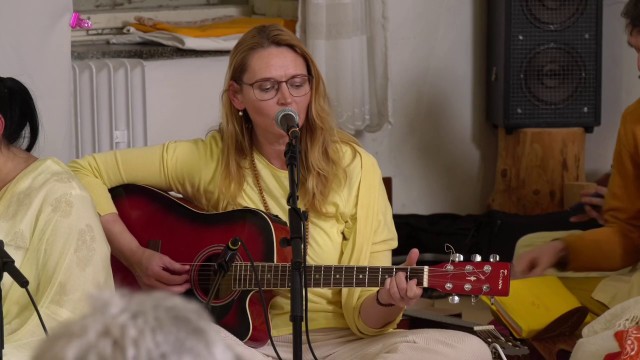
Evening satsang with Vishwaguruji from Strilky Ashram, Czech Republic. Bhajan singing.
The calling of Sri Alakhpuriji
10:00 - 10:11 (11 min)
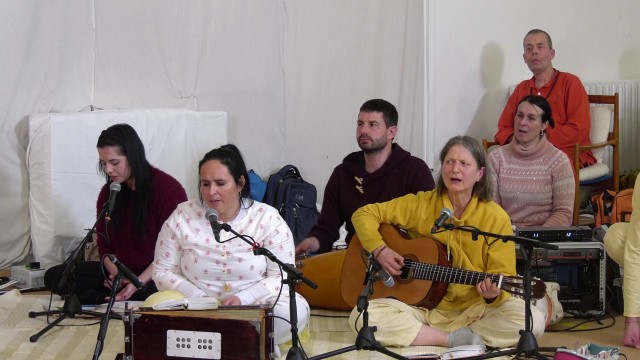
Evening satsang with Vishwaguruji from Strilky Ashram, Czech Republic. Bhajan Sataguru Alakha Puriji Avo.
Bhajans from Oosterhout
10:15 - 11:20 (65 min)
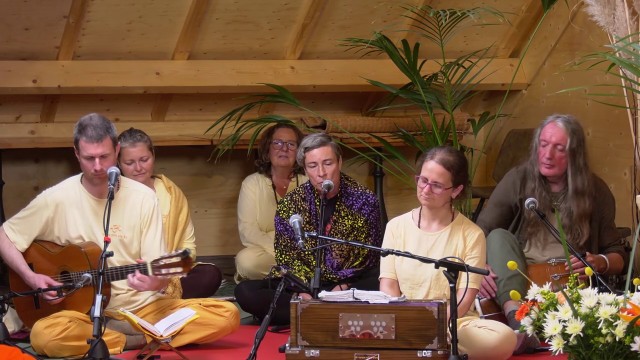
Evening satsang with Vishwaguruji from Oosterhout, Noord-Brabant, The Netherlands.
Remembering of Sri Devpurijis mahasamadhi day
11:25 - 12:44 (79 min)

A satsang gathering commemorating the Mahāsamādhi of Śrī Devpurījī.
"The entire paramparā is not a dead one that requires nothing from us. We have our Gurudev, our living Gurudev, who is the whole paramparā speaking through him to us."
"If you really open your heart and have lots of unconditional love, then you will find miracles are there all the time—but miracles not really meaning only good things."
Multiple devotees share personal reflections, stories, and expressions of gratitude for their Guru and spiritual lineage. A central theme is the living connection to the paramparā (lineage) through the living Guru, Viśva Gurujī, who embodies and transmits the blessings of all previous masters. Speakers discuss faith, obedience, personal transformation, and the experience of divine unity.
Filming location: Strilky, Czech Republic
Mahamrityunjaya Mantra And Swara Yoga
12:50 - 13:59 (69 min)
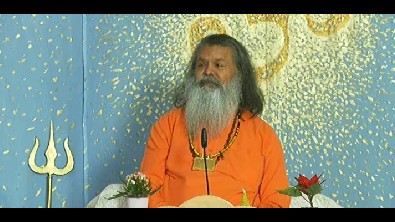
Morning Satsang with Swamiji from Strilky Ashram, Czech Republic. The Mahamrityunjaya mantra is known as the great death - conquering mantra, also called the Tryambakam mantra and is a verse of the Rig Veda. It is addressed to Lord Shiva. This mantra is a great protection and prevention of accidents and negative happenings. Swara Yoga enables us to understand the nature of breath and its influence on the body. Different modes of breathing leads to different types of actions, physical, mental and spiritual. Swara means sound of one's own breath and its fundamental application is to realize the breath as being the medium of the cosmic life force
Swara Yoga
14:05 - 14:42 (37 min)
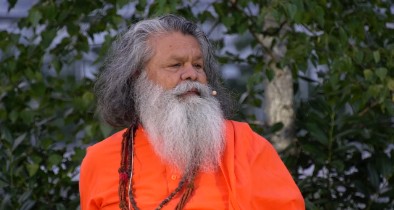
A teaching session on the theory and daily application of Svara Yoga, the yoga of the vital breath.
"Svara Yoga gives indications about your whole life. It provides information about your past and what is happening in the present, and it offers information about the future."
"When you want to see the moon, you should see it. The breath must flow through the right and left nostril. What to do if it is not? You cannot say, 'Moon, stop for a while; I will open my eyes then.' Time does not wait for anyone."
The lecturer explains this ancient science of breath rhythms, relating it to the Ida and Pingala nadis. He details practical techniques, such as checking the active nostril upon waking and stepping forward with the corresponding foot to ensure success in daily activities. The talk covers its predictive potential, warns against suicide, and uses the observation of the new moon as a key practice to harmonize with cosmic cycles for health and clarity.
Filming location: Strilky, Czech Republic
Svargaloka
14:50 - 15:55 (65 min)
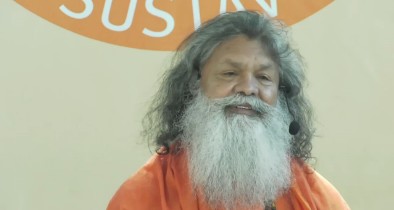
Morning satsang with Vishwaguruji from Rijeka, Croatia. There are only two things: Ayurveda and Yoga. Yoga will be successful through doing karma yoga. Karma means action. In kaliyuga we are have become slaves of money. Good actions lead us to Heaven/ Svarga Loka, while devotion to the master leads us to the highest world of Brahman - Brahma Loka.
Practicing from Strilky
16:00 - 17:31 (91 min)
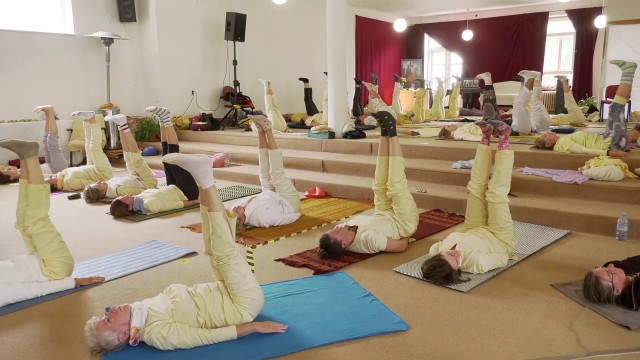
Morning satsang from Strilky Ashram, Czech Republic. Practice with Vishwaguruji and Swami Umapuriji.
Shiva changed poison into nectar
17:35 - 18:27 (52 min)
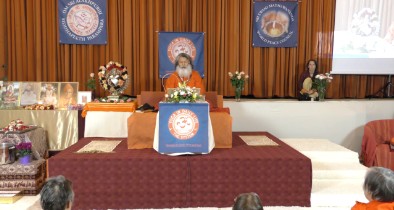
Evening satsang with Vishwaguruji from Vep, Hungary.
In honor of Sri Devpuriji's Mahasamadhi
18:35 - 19:21 (46 min)
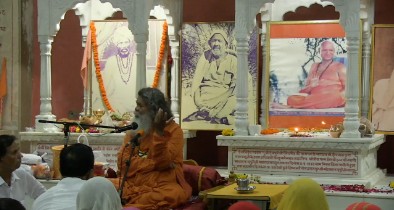
A spiritual discourse on the sacred lineage of Alag Purī and a Himalayan pilgrimage.
"In our renunciation, in our saints, there is no attachment. We do not speak of it as a great sorrow; we say that divine soul has merged with Brahman."
"The guru, Gurudev, never truly departs; even if he leaves the body, what does it matter? They have given the mantra, it is with you."
A spiritual teacher addresses a gathering on the holy day of Śrāvaṇa Dūj. He begins by honoring the departed saint Dev Purī Jī and the nature of renunciation. He shares his own spiritual journey and a "magic" of mental worship before Gurudev. The discourse shifts to social commentary on family, culture, and Hindu identity before focusing on the core theme: the sacred paramparā (lineage). He narrates the legendary abode of Alag Purī in the Himalayas, describing its association with Dev Purījī, Kubera, and the confluence of sacred rivers. He details a personal pilgrimage to the remote region, including visiting a cave, bathing in the Vashudhārā waterfall, and interactions with priests and officials, ultimately affirming the reality of this spiritual seat. He concludes by citing textual references like the Meghadūta and inviting all to sing bhajans.
Filming location: Rajasthan, India
How the energy circulating in our body
19:25 - 20:49 (84 min)
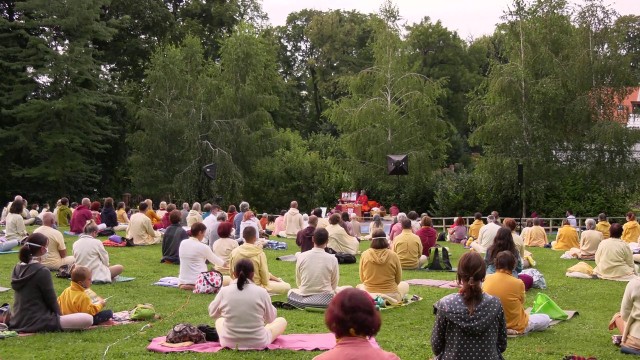
Evening satsang with Vishwaguruji from Strilky Ashram, Czech Republic. Moon is one of the Siva's symbols. Married couples have also that symbol of the moon on their head. In the Indian wedding ceremony, the female represents the Moon and the mail represents the Sun. Movements are in the nerve system to balance the Sun and Moon energy in the body in a serpent way. Snake is a symbol of its kind of movement. The Earth is held by a snake inbalance. When it moves a little there are many problems. Water and fire can not exist without each other. Practising kriya helps us to manifest our real human qualities. The story about two brothers who have educated themselves in different directions. In every petal of our chakras, there is a certain energy in it. Our roots are in the navel. In every chakra there is resonance. When we chant OM our tongue shouldn't move.
Nadis and pranayama
20:30 - 21:34 (64 min)
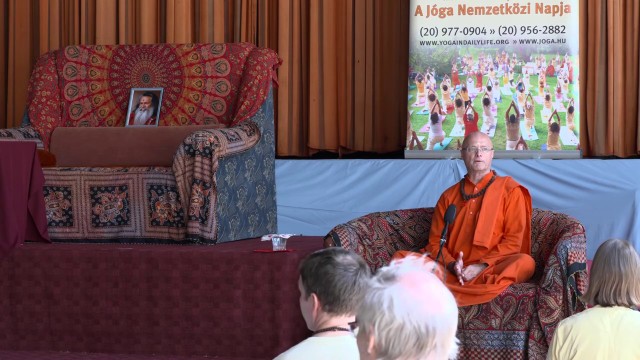
Morning satsang from Summer Yoga Retreat in Vep, Hungary. Lecture by M. M. Swami Vivekpuriji. If you are in good atmosphere you bring good atmosphere everywhere you come. Why we are starting pranayama with the right nostril? Try to inhale the divine, cosmic energy and trough positive thouhts and feelings exhale. Meditative bamboo flute music by Swami Madhuram.
Guru Tattva cleans everything
20:55 - 21:43 (48 min)
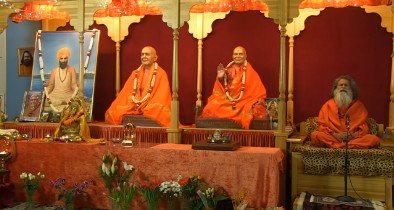
A Guru Purnima discourse on the essence of the Guru principle and spiritual practice.
"We have two Gurus. One is our Gurudev in saguṇa svarūpa, in a physical body... The second is nirguṇa, that is within ourself; the same Gurudev is within."
"So Holy Gurujī answered, 'In Ahmedabad, I was with Gurujī... When your mother comes, which temptation do you have? When your sister comes, what kind of temptation do you have?... So why don't you awaken that kind of thought in you, in which form you want to see?'"
A spiritual teacher delivers a satsang on Guru Purnima, exploring the dual nature of the Guru as both formless consciousness and physical guide. He discusses purifying the mind through sacred perception—seeing others as mother, sister, or daughter—to transform energy and dissolve ego. The talk weaves in teachings on the Nātha lineage, the power of Guru's words as divine nectar, and the necessity of surrendering the heart to achieve equal vision and liberation.
Filming location: Vienna, Austria
Value of Satsang and practicing
21:50 - 22:43 (53 min)
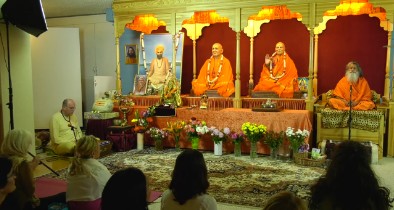
A satsang discourse on the rarity of spiritual community and the foundational science of yoga.
"Sant Samāgam Hari Kathā... these are rare."
"Yoga is that science whose original seed... is Śiva."
The lecturer leads a satsang in Vienna, emphasizing the preciousness of such spiritual gatherings. He explores yoga as a divine science, explaining how the Sanskrit alphabet resonates within the body's chakras and discussing the origins of consciousness as the union of Śiva and Śakti. The talk covers the importance of balanced practice, the nature of mental impurities (vikāras), and the karmic consequences of thought and action.
Filming location: Vienna, Austria
The way to Sri Devpuriji's cave
22:50 - 23:35 (45 min)
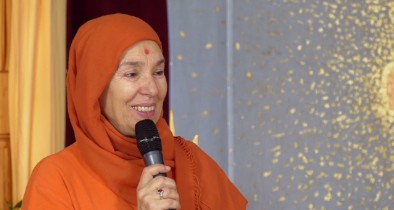
Evening satsang from Strilky Ashram, Czech Republic. Sadhvi Umapuri reports on the Sri Devpuriji cave trip. The journey started from Delhi towards Rishikesh - at the foot of the Himalayas - then Josimath and Badrinath, at an elevation of about 3000m. Sri Alakhpuriji's cave is located near Vasudhara Falls, in a beautiful valley near the 'last village' of India called Mana. Lakshmi Van is the first landmark towards Sri Devpuriji's cave, which is located at about 5000m, close to the peak called Neelkanth.
The nature of Vikara
23:40 - 0:32 (52 min)
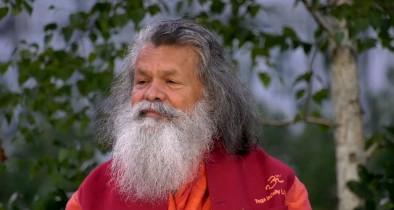
An evening satsang on the nature of vikāra (modifications) and the light of true knowledge.
"Vikāra is also in everyone. It is not easy to remove the vikāra. Physical vikāra is physical vikāra, and the mental vikāras are mental vikāras."
"Jñāna is one of the best protectors for our life... what to do and what not to do."
The lecturer leads a discourse exploring the physical and mental modifications that affect human beings. He discusses the anatomy of the body as vikāra, and the mental vikāras like anger, jealousy, and ego that lie dormant in the intellect. Using analogies like popcorn to describe anger and a story of a yogi and a skeptical scientist, he emphasizes the role of true wisdom (jñāna) and spiritual practice in overcoming these impurities. The talk concludes with a bhajan.
Filming location: Strilky, Czech Republic
American
Australian