
European
Singing Bhajans to the Masters
0:15 - 0:56 (41 min)
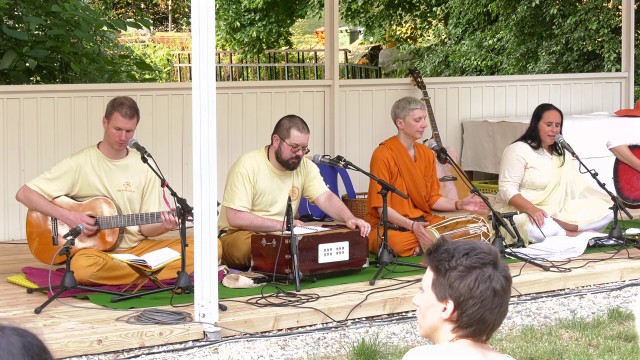
Evening satsang from Střílky Ashram, Czech Republic. Bhajans sung to the Master: Sobhāvo Satsaṅga Re, Yogi Jāno Kī Yoga Nidrā, Dhyān Karo, Hamẽ Hī Kam Satsaṅg Hī, Sataguru Sandeśo Moyē.
Gurupurnima Satsang with Vishwaguruji (2/2)
1:00 - 2:56 (116 min)
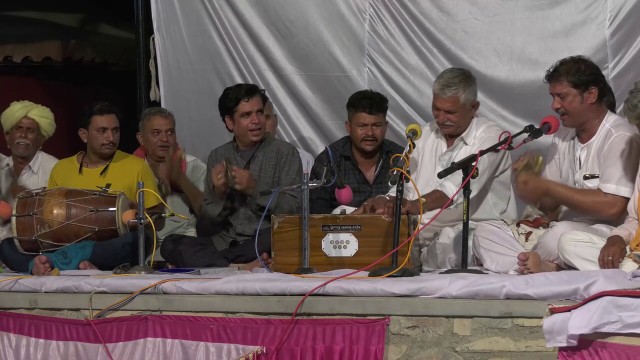
Gurupurnima satsang with Vishwaguruji from Jadan Ashram, Rajasthan, India.
Around the world - Yoga Class of Level 6, Zagreb
3:00 - 4:01 (61 min)
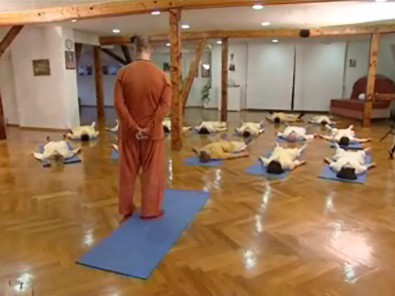
Yoga in Daily Life Class of Level 6 at Sri Devpuriji Ashram, Zagreb, Croatia.
Spiritual poems
4:05 - 4:55 (50 min)
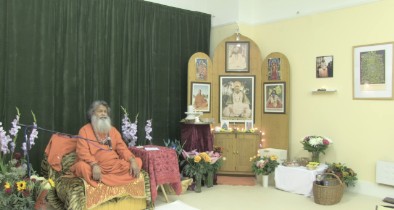
A discourse on spiritual writing, mindfulness, and awakening through a bhajan.
"One writer writes with the intellect and the present situation. The spiritual writer writes about all three times: past, present, and future."
"Chet means awake, be alert, be conscious. Don't run here and there in the world... You have to wake up and go inside."
The lecturer discusses the nature of spiritual writing, contrasting it with ordinary writing. He explains how saints compose bhajans and dohās from deep meditation and self-inquiry. Using the example of a bhajan by Holī Gurujī, he explores the theme of awakening from ignorance, urging listeners to use their human life for spiritual work. He shares a parable about a yogic king testing his courtiers' loyalty to illustrate how worldly attachments and promises are often betrayed.
Filming location: London, UK
Bhajan evening in Strilky Ashram
5:00 - 6:04 (64 min)
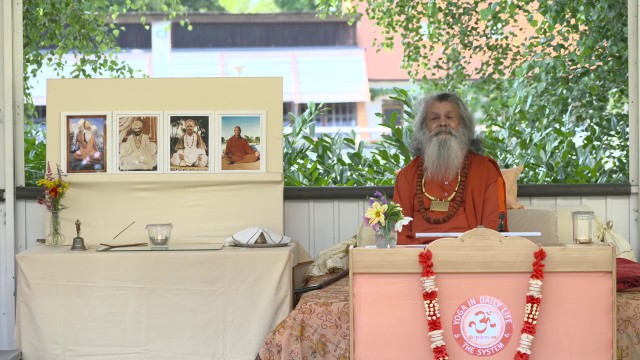
Evening satsang with Vishwaguruji from Strilky Ashram, Czech Republic.
The blessed day of Gurupurnima
5:15 - 5:55 (40 min)
A satsang discourse on the significance of Guru Pūrṇimā.
"Gu means darkness, and ru means light. When the darkness disappears, the light appears."
"Gurudev is the jewel of the Parāś, and the disciple is the iron. When the disciple comes to the Gurudev, he changes from iron into gold."
A speaker explains the cosmic and spiritual importance of Guru Pūrṇimā, describing the Guru as the highest principle and the day as the start of the spiritual year. He discusses the Guru's role in transforming the disciple, shares devotional poetry and bhajans about longing for the master, and uses the analogy of a farmer's harvest to describe how devotees should present their spiritual progress. The talk concludes with blessings for the congregation's spiritual practice.
Filming location: Vép, Hungary
Bhajan singing on the Satsang
6:00 - 6:27 (27 min)
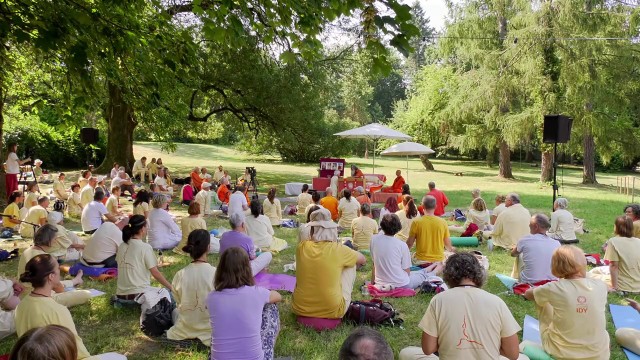
A devotional introduction and singing of a traditional bhajan.
"We can sing a very beautiful bhajan from Swāmī Lālā Nānjī. It is called Manarata Nāma, and it means, 'Oh my mind, repeat the name of God, repeat your mantra.'"
"Give your body and mind to Sāddhā Gurudeva, and he will destroy all your doubts and all your bad qualities. In the holy lotus feet of Satguru Deva reside all holy pilgrimages."
The speaker introduces a lesser-sung bhajan by Swāmī Lālā Nānjī, emphasizing the urgency of spiritual practice in human life. They explain the bhajan's theme of repeating the divine name and extol the glory and essential role of the true Guru in guiding devotees across the ocean of worldly existence. The session includes singing verses from the bhajan and concludes with salutations.
Filming location: Strilky, Czech Republic
Planting of peace tree in Gyor
7:10 - 7:24 (14 min)
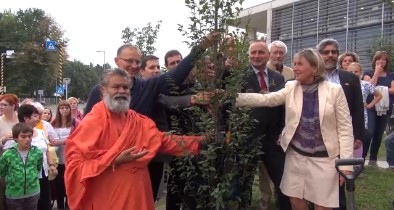
Planting of peace tree in Gyor, Hungary.
Bhajans for World Peace (2/3)
7:30 - 8:36 (66 min)
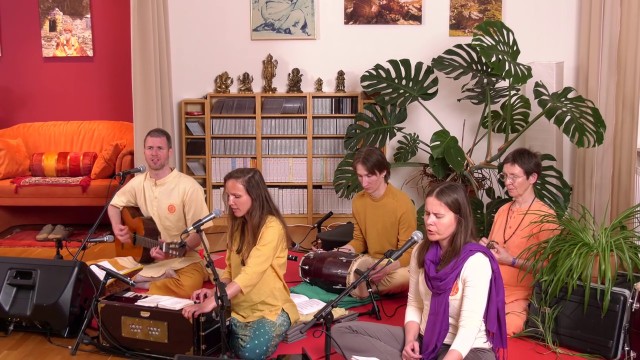
For world peace, first we need to find peace within ourselves. A recording of a live concert for world peace in YIDL center in Villach, Austria. Public concert lasted 6h with uninterrupted Bhajans. The concert was a part of a 24h of Bhajan Anushtana.
Bhajans for World Peace (3/3)
8:40 - 9:55 (75 min)
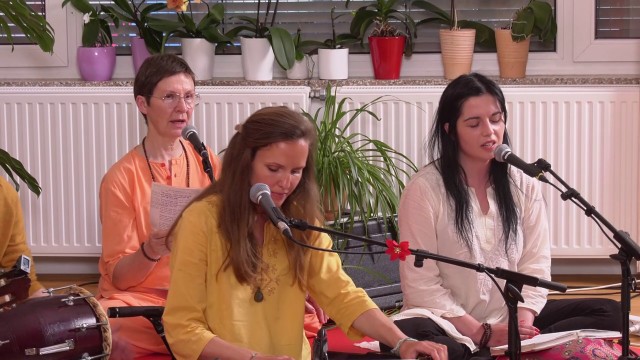
For world peace, first we need to find peace within ourselves. A recording of a live concert for world peace in YIDL center in Villach, Austria. Public concert lasted 6h with uninterrupted Bhajans. The concert was a part of a 24h of Bhajan Anushtana.
Bhajan evening from Vienna 1
10:00 - 10:28 (28 min)
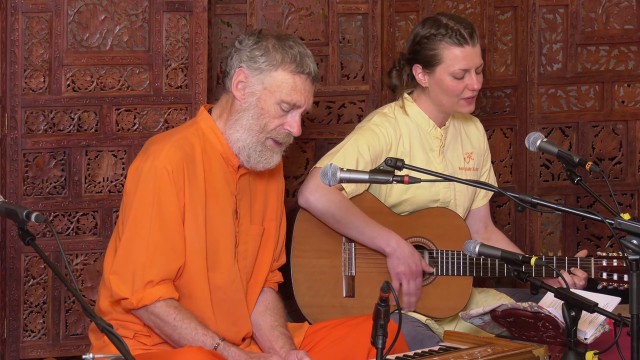
Evening Satsang with H.H.Vishwaguruji from Vienna, Austria. Bhajan singing.
Satsang and chanting of Hanuman Chalisa
10:35 - 11:52 (77 min)
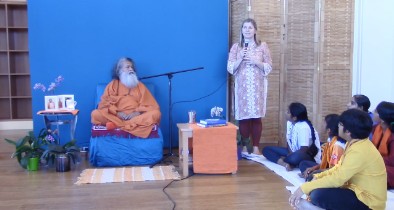
Program with Vishwaguru Maheshwarananda with chanting of Hanuman Chalisa and Bhagavad Gita Dhyana Sloka from San Francisco Bay Area, Oakland, USA.
Purification of Inner Karmic Pollution
12:00 - 13:14 (74 min)
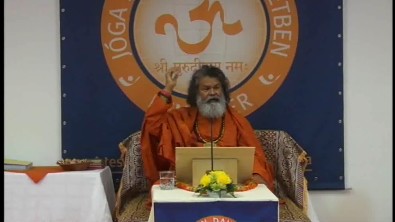
Budapest, Hungary. Consciously or unconsciously we are making mistakes. That is karmic pollution. It influences all our inner activities, our body, mind, intellect and consciousness. Pollution may influence us on many levels: mental, intellectual, emotional, social, political and so on. Do we have a chance to avoid that and how can we purify our inner karmic pollution?
Go back to Nature
13:20 - 14:10 (50 min)
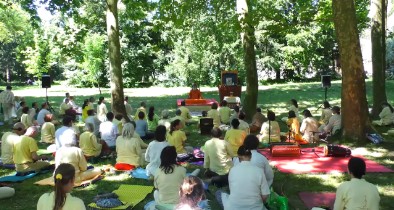
Morning satsang from Summer Retreat in Vep, Hungary. The natural environment has an immense amount of healthy prana, while using artificial things destroys the life energy.
This ashram is your work
14:15 - 14:50 (35 min)
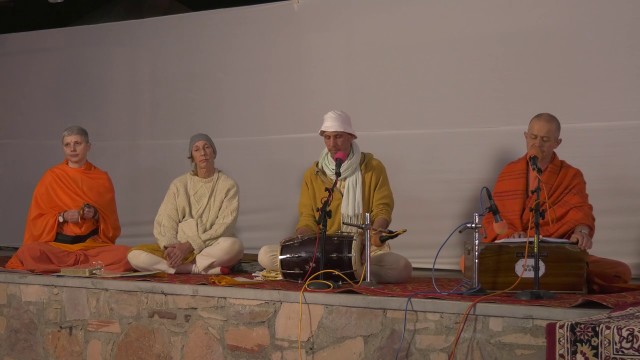
Evening satsang with Vishwaguruji from Jadan Ashram, Rajasthan, India. Bhajan singing. Welcoming words from Vishwaguruji. I was so happy how we made this Ashram, people from many many countries. Indian people are also coming and see how great it is.
The form and the formless
14:55 - 15:47 (52 min)
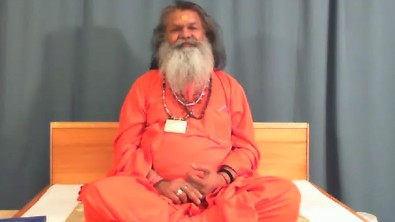
A spiritual discourse on purification, the body's energy systems, and mantra science.
"Any kind of illnesses you have, go and practice ṣaṭkarma: netī, dhautī, bastī, naulī, that kind of practice. This is inner purification."
"So, nirguṇa, it is a nādarūpa parabrahma. The resonance is the form of the Supreme."
A spiritual teacher addresses an assembly at an ashram, explaining the yogic science of purification. He begins by correlating the traditional four social classes (varnas) to different parts and functions of the human body, arguing the caste system is a bodily metaphor, not a social hierarchy. The core teaching outlines a threefold purification process: cleansing the physical body through Haṭha Yoga techniques like ṣaṭkarma, purifying the 72,000 nāḍīs (energy channels) through prāṇāyāma and mantra vibration, and finally cleansing the mind. He leads the audience in chanting exercises, such as feeling the vibration of "Oṃ," and emphasizes the importance of correct Sanskrit pronunciation for mantras to affect specific chakras. The talk expands to cover the five sheaths (kośas) and concludes that yoga is a practical science for realizing the formless reality within the temporary form.
Filming location: Melbourne, Australia
From darkness to light
15:55 - 17:10 (75 min)
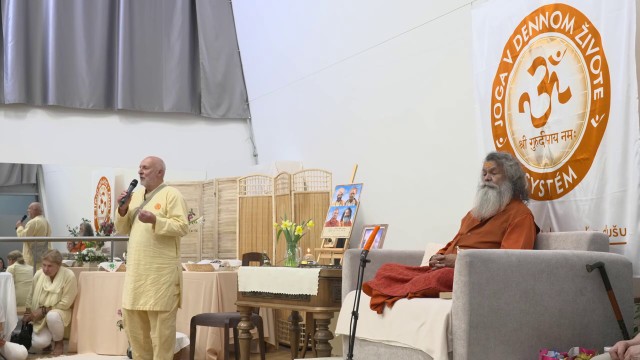
Evening satsang with Viswhaguruji from Presov, Slovak Republic. Bhajan singing. Talk about the meaning of the word Guru.
Satsang from Spisska Nova ves
17:15 - 18:26 (71 min)
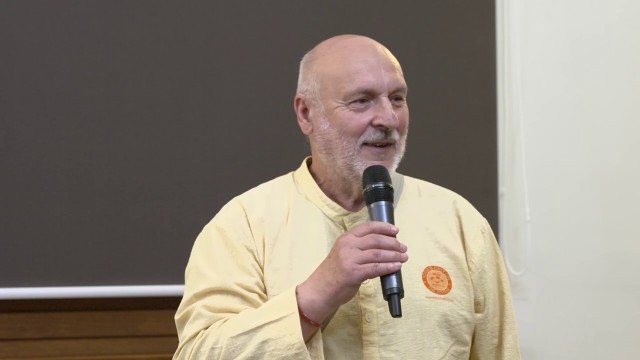
Evening satsang with Vishwaguruji from Spisska Nova Ves, Slovak Republic. Bhajan singing. Talk of the bhaktas about the construction and opening ceremony of the Om Ashram.
The importance of the Om Ashram
18:30 - 19:20 (50 min)
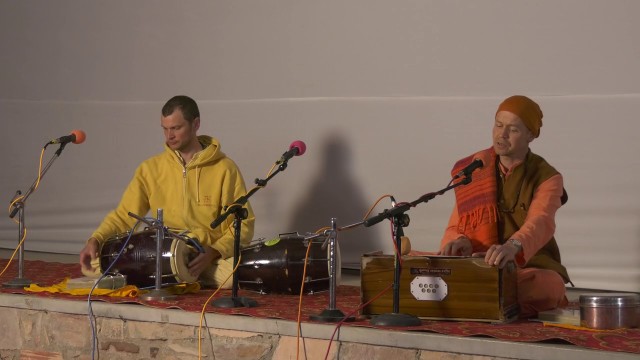
Evening satsang with Vishwaguruji from Jadan Ashram, Rajasthan, India. Welcoming words of Swami Gyaneshwarji, bhajan singing. Short talks about the features and the importance of the Om Ashram. Our eyes now can see our Gurudev and the result of the work done last 30 years. We are lucky ones to be here on this holy place and enjoying the darshan of Gurudev.
How To Practice Pranayam
19:25 - 20:22 (57 min)
A detailed lecture on the chakras, kuṇḍalinī, and yogic practices.
"Each and every atom which develops in our body is filtered, taken care of, and checked by that energy, and each and every blood cell is charged with that energy."
"Patañjali said to his students, 'Your yoga sādhanā can only be successful if you have a discipline, anuśāsan, 'atha yoga anuśāsanam.' 'Atha' means now, now and now, not tomorrow."
A spiritual teacher delivers an evening program, explaining the Ādyā Śakti (Kuṇḍalinī) as the divine energy governing the universe and the individual. He details the eight main chakras, the three principal nāḍīs (Iḍā, Piṅgalā, Suṣumṇā), and the foundational practices for purification. The talk provides practical instructions for Nāḍī Śodhana Prāṇāyāma, abdominal breathing, Ujjāyī Prāṇāyāma, and the effects of bandhas, emphasizing discipline, correct posture, and the necessity of a teacher for proper practice.
Live webcast from Strilky
20:30 - 22:00 (90 min)
Morning satsang with Vishwaguruji from Strilky Ashram, Czech Republic.
Soul is one
20:35 - 21:54 (79 min)
Evening satsang with Vishwaguruji from Vancouver, Canada. Respect is important, it should not be lost. Holy Guruji said: one in all and all in one. Our souls are the same, the soul will not die.
The four pillars of life
22:05 - 22:45 (40 min)
A discourse on the Vedic concepts of Puruṣa, Prakṛti, and the stages of life.
"Prakṛti is nature. Prakṛti is that which is created by God and is itself sustainable."
"Puruṣārtha is hard work, hard work to achieve something positive. And for that, you cannot do it in one year, two years, three years, or four years. It’s years and years and years."
A spiritual teacher delivers a satsang in Vienna, explaining the interplay between consciousness (Puruṣa) and nature (Prakṛti). He details the four human goals (Puruṣārthas)—Dharma, Artha, Kāma, Mokṣa—and the four corresponding life stages (Āśramas): Brahmacarya (student), Gṛhastha (householder), Vānaprastha (retirement), and Sannyāsa (renunciation). The talk emphasizes duty, selfless service, and the ultimate spiritual aim of life, illustrated with traditional teachings and personal anecdotes.
Filming location: Vienna, Austria
The Significance of Pūrṇimā and the Guru Principle
22:50 - 23:39 (49 min)
A satsang on the spiritual significance of the full moon (Pūrṇimā) and the Guru principle.
"Śiva means liberation. Śiva means the consciousness. Śiva means the beauty, and Śiva means the truth. Satyam Śivam Sundaram."
"Guru, who leads us from darkness to the light, Tamaso mā jyotir gamaya—lead us from the darkness to the light."
The lecturer delivers a discourse on the auspiciousness of Pūrṇimā, explaining its connection to Lord Śiva, the planet Jupiter (Guru), and the enlightenment of the Earth. He delves into the interplay of the mind (moon) and intellect (sun), the importance of balancing emotions, and the classical definitions of Haṭha Yoga as the six purification techniques. The talk includes practical guidance for yoga teachers, emphasizing relaxation and correct practice, and concludes with an invitation for Guru Pūrṇimā.
Why harmony is lost?
23:45 - 0:19 (34 min)
A spiritual discourse on harmony, the soul's journey, and the divine mother principle.
"The first god is mother. 'Pitṛ Devo Bhava'—then comes the father, and so on."
"Life is a journey, not a destination. And this journey is the last milestone to enter... heaven."
Swamiji addresses a gathering, exploring themes of spiritual origin and parental harmony. He describes the soul's descent from the astral world, emphasizing the sacred duty of parents and the foundational love of the mother. The talk focuses on purifying consciousness by abandoning negative thoughts and judgment, culminating in an invitation to a guided meditation.
Filming location: New Zealand
American
Australian