
European
There is life in every creature
1:00 - 1:57 (57 min)
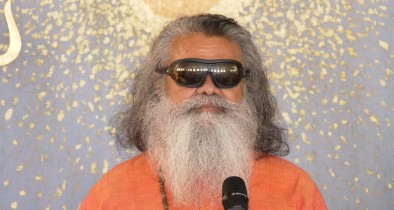
A spiritual discourse on the meaning of glory, respect, and human compassion.
"Glory means 'long live,' not merely in a physical sense, but forever."
"If you give glory to someone, it comes back to you."
A spiritual teacher explains the concept of "Jaya" or glory as an eternal honor offered to God, masters, and one another. Using parables and anecdotes—including a story of Mother Mary's mercy—he illustrates how offering respect and compassion uplifts both the giver and receiver. The talk broadens to discuss humanity, culture, and the importance of sāttvic nourishment for spiritual practices like Kuṇḍalinī yoga, touching upon the five bodily sheaths (kośas).
Filming location: Strilky, Czech Republic
The health of the bones
2:05 - 2:57 (52 min)
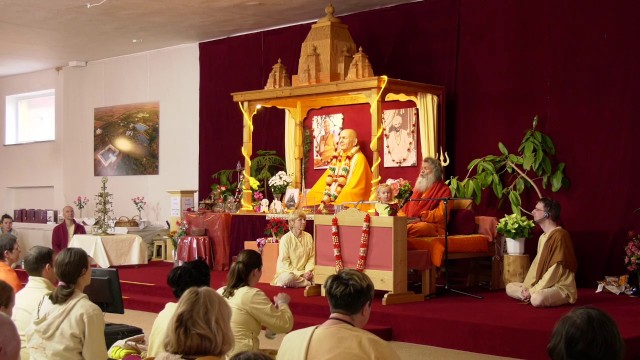
A spiritual talk on the purification of the body and mind, focusing on holy water and natural self-care.
"You can give this, what we call, the holy water. Give this to all your friends and everybody this Christmas."
"So bring the happiness... put a holy, a holy thought within us. 'Holy' means the clean and have a good energy."
Swami Ji offers a wide-ranging discourse, encouraging the use of holy water for purification and harmony during Christmas. He advises on caring for the physical body through natural means—like simple oils, yoga, and avoiding synthetic creams—linking it to the care of the subtle bodies (kośas). The talk includes personal anecdotes about habits and diet, emphasizing a return to simplicity and gratitude.
Filming location: Strilky, Czech Republic
How to think of black magic
3:05 - 3:52 (47 min)
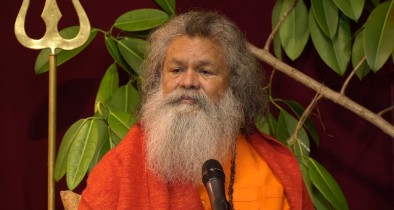
A satsang discourse debunking fear-based beliefs around black magic and ghosts through storytelling.
"People are very much frightened. They speak of ghosts and such things, and many claim they can take away the black magic which is supposedly on you."
"If we believe in God, then believe in God. God will give everything. God will never do anything negative for us."
Swami Ji narrates two cautionary tales to illustrate how fear and superstition are exploited. The first story tells of a village magician who manipulates a grieving widow, and the second describes a 'ghost' that turns out to be a moonlit chimney. He emphasizes that true spiritual practice, such as having a Guru Mantra and faith, offers protection, concluding that it is one's own fear, not external forces, that causes suffering.
Filming location: Strilky, Czech Republic
The way to Sri Devpuriji's cave
4:00 - 4:45 (45 min)
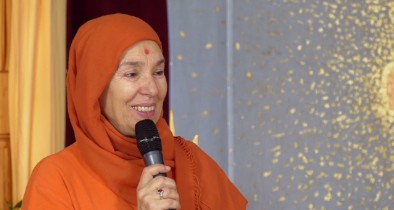
Evening satsang from Strilky Ashram, Czech Republic. Sadhvi Umapuri reports on the Sri Devpuriji cave trip. The journey started from Delhi towards Rishikesh - at the foot of the Himalayas - then Josimath and Badrinath, at an elevation of about 3000m. Sri Alakhpuriji's cave is located near Vasudhara Falls, in a beautiful valley near the 'last village' of India called Mana. Lakshmi Van is the first landmark towards Sri Devpuriji's cave, which is located at about 5000m, close to the peak called Neelkanth.
Unity in spirituality
4:50 - 5:33 (43 min)
A Christmas satsang reflecting on spiritual unity and personal mission.
"Meine Mission oder meine Aufgabe von dem höheren und höchsten Gott, durch meinen Meister, einen Botschaften, ohne irgendwelchen Dualismus, alle Religionen, alle spirituellen Organisationen, etc., alles ist eins."
"Religion means to realize your relation to God; this is called religion. Realize, realize your relation to God."
The lecturer addresses a diverse European gathering during the Christmas season. He shares stories from his early days of teaching yoga across Austria and Eastern Europe, including travels by train and experiences in communist Czechoslovakia. He reflects on the life of Jesus and Mother Mary to illustrate themes of faith, societal judgment, and the universal message of oneness among all religions and peoples. The talk weaves personal anecdotes with spiritual philosophy, concluding with blessings for Christmas and the New Year.
Filming location: Austria
Bhagwan Sri Deep Narayan Mahaprabhuji
5:40 - 6:47 (67 min)
Mahaprabhuji's Mahasamadhi anniversary satsang. Singing and translation of the bhajan, 'Prakash Punj Amrita Ke Sagar' - written by Holy Guruji about His master, Bhagwan Sri Deep Narayan Mahaprabhuji. Brahman is the everlasting and eternal Light. Its Saguna, form, is the most important for discilples. Because of negative thinking and impurities, some are not able to realize this. Vishwaguruji explains the mantra, Om Prabhu Deep Niranjan Saba Dukha Banjan, and tells his experineces with Sri Mahaprabhuji.
How to find peace
6:55 - 7:55 (60 min)
Evening program with Vishwaguruji from Bratislava, Slovak Republic. Peace is within our heart. The first step towards peace is good health, and health depends on our nourishment. Practicing yoga keeps the mind balanced, without nervousness and anxiety. Chanting mantras is a direct way to peace.
The way to Sri Devpuriji's cave
8:00 - 8:45 (45 min)
Evening satsang from Strilky Ashram, Czech Republic. Sadhvi Umapuri reports on the Sri Devpuriji cave trip. The journey started from Delhi towards Rishikesh - at the foot of the Himalayas - then Josimath and Badrinath, at an elevation of about 3000m. Sri Alakhpuriji's cave is located near Vasudhara Falls, in a beautiful valley near the 'last village' of India called Mana. Lakshmi Van is the first landmark towards Sri Devpuriji's cave, which is located at about 5000m, close to the peak called Neelkanth.
Take care of your spirituality
8:50 - 9:49 (59 min)
A spiritual discourse and bhajan explanation exploring the four yogas and the purpose of the human journey.
"Our bhajans, especially this one, contain all four parts of Yoga: Karma Yoga, Bhakti Yoga, Jñāna Yoga, and Rāja Yoga."
"Without bhakti yoga, you can't go. Jñāna yoga is very good, but it is just dry... Bhakti is, we are full of the juice, sweet, everything."
He describes the soul's cyclical journey and emphasizes Bhakti Yoga as the essential, living path to Brahmaloka, using stories, poems, and analogies—like the self-deluding nature of dry Jñāna and the protective flame of devotion—to illustrate key spiritual truths.
Filming location: Vép, Hungary
Bhagwan Sri Deep Narayan Mahaprabhuji
9:55 - 11:02 (67 min)
Mahaprabhuji's Mahasamadhi anniversary satsang. Singing and translation of the bhajan, 'Prakash Punj Amrita Ke Sagar' - written by Holy Guruji about His master, Bhagwan Sri Deep Narayan Mahaprabhuji. Brahman is the everlasting and eternal Light. Its Saguna, form, is the most important for discilples. Because of negative thinking and impurities, some are not able to realize this. Vishwaguruji explains the mantra, Om Prabhu Deep Niranjan Saba Dukha Banjan, and tells his experineces with Sri Mahaprabhuji.
How to become a Sanyas
11:10 - 12:23 (73 min)
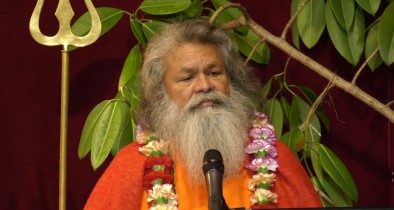
Evening satsang with Vishwaguruji from Strilky Ashram, Czech Republic. Our partner is God. There is only one door to the eternal and this is our practice. Mahaprabuji gave us the path of immortality. Animals are balancing our environment. Our life is becoming unnatural and unhealthy. Sadhus and saints must keep themselves to the principals. You have to work very much and do your sadhana if you were a swami and work very much. You should learn and teach further. People want to have a relationship from the heart to heart. Rishis have a wife. Sanyas have hard work and he gets many times hard words from Gurudev. Master put the iron to the fire and then put it out and beat it with a hammer. Final it will be beautiful. Iron becomes gold.
The ancient science of Yoga
12:30 - 13:44 (74 min)
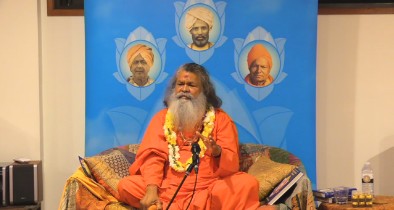
A spiritual discourse on the science of yoga, human consciousness, and self-realization.
"Yoga is a science of body, mind, and soul. It is the science of the human body."
"Yoga is the best for your life. You can do it for your health, for concentration, for some diseases, for happiness—many things."
A spiritual teacher addresses an audience, explaining yoga as a holistic science for human development. He discusses the uniqueness of human consciousness, tells a parable about faith and surrender to God, and outlines the Vedic concept of creation. The talk delves into yogic anatomy, including the 72,000 nerves, the three primary nāḍīs (Iḍā, Piṅgalā, Suṣumṇā), and the journey of the Kuṇḍalinī energy through the cakras. He clarifies misconceptions about Haṭha Yoga, demonstrates simple energy and circulation exercises for the hands, and encourages integrating practice into daily life.
Filming location: Gold Coast, Australia
Yoga and the five bodies
13:50 - 15:07 (77 min)
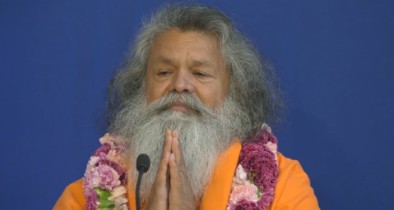
Morning satsang with Vishwaguruji from Salzburg, Austria. Yoga means oneness. We are the king of the universe of our five bodies. This kingdom is the Soul, countless lives are living within like there are immense of cells in a drop of blood. We have our limitations, one day we will go. Energy should be controlled by asana, pranayama, mantra, and meditation. Meditation and prayer give positive vibration if we are practicing three times a day.
The way to Sri Devpuriji's cave
15:10 - 15:55 (45 min)
Evening satsang from Strilky Ashram, Czech Republic. Sadhvi Umapuri reports on the Sri Devpuriji cave trip. The journey started from Delhi towards Rishikesh - at the foot of the Himalayas - then Josimath and Badrinath, at an elevation of about 3000m. Sri Alakhpuriji's cave is located near Vasudhara Falls, in a beautiful valley near the 'last village' of India called Mana. Lakshmi Van is the first landmark towards Sri Devpuriji's cave, which is located at about 5000m, close to the peak called Neelkanth.
Practicing Yoga Asanas
16:00 - 16:41 (41 min)
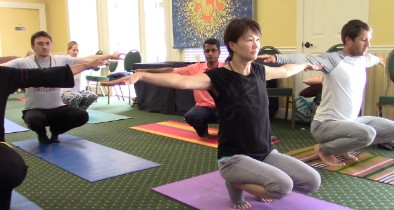
Morning practice with Vishwaguruji from Atlanta, Georgia, USA. Vishwaguruji leads practicing asanas that are good for the digestion, create balance and calm down the nervous system.
Practice yoga like a cosmic dance
16:45 - 17:09 (24 min)
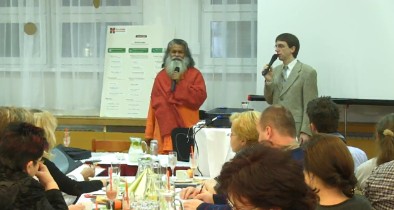
A keynote address on wellness through sattvic living and non-violence.
"Violence is against wellness, and wellness is not violence." "Sattvic quality makes the person very happy, healthy, and balanced."
Swami Maheshwarananda delivers a talk at a conference, opening and closing with Sanskrit peace mantras. He defines wellness as non-violence, beginning with non-violence towards oneself through diet and lifestyle. He explains the Ayurvedic and yogic principles of the three guṇas (sattvic, rajasic, tamasic), advocating for fresh, sattvic food, mindful movement like Yoga in Daily Life, and positive thinking. He emphasizes that being human means being a protector, and connects these practices to holistic health and ultimate liberation.
Filming location: Czech Republic
Unity in spirituality
17:15 - 17:58 (43 min)
A Christmas satsang reflecting on spiritual unity and personal mission.
"Meine Mission oder meine Aufgabe von dem höheren und höchsten Gott, durch meinen Meister, einen Botschaften, ohne irgendwelchen Dualismus, alle Religionen, alle spirituellen Organisationen, etc., alles ist eins."
"Religion means to realize your relation to God; this is called religion. Realize, realize your relation to God."
The lecturer addresses a diverse European gathering during the Christmas season. He shares stories from his early days of teaching yoga across Austria and Eastern Europe, including travels by train and experiences in communist Czechoslovakia. He reflects on the life of Jesus and Mother Mary to illustrate themes of faith, societal judgment, and the universal message of oneness among all religions and peoples. The talk weaves personal anecdotes with spiritual philosophy, concluding with blessings for Christmas and the New Year.
Filming location: Austria
There is life in every creature
18:05 - 19:02 (57 min)
A spiritual discourse on the meaning of glory, respect, and human compassion.
"Glory means 'long live,' not merely in a physical sense, but forever."
"If you give glory to someone, it comes back to you."
A spiritual teacher explains the concept of "Jaya" or glory as an eternal honor offered to God, masters, and one another. Using parables and anecdotes—including a story of Mother Mary's mercy—he illustrates how offering respect and compassion uplifts both the giver and receiver. The talk broadens to discuss humanity, culture, and the importance of sāttvic nourishment for spiritual practices like Kuṇḍalinī yoga, touching upon the five bodily sheaths (kośas).
Filming location: Strilky, Czech Republic
Mantra for harmony
19:10 - 19:58 (48 min)
Evening satsang with Vishwaguruji from Salzburg, Austria. Fear one of the biggest power and we can't get rid of it. There are many definitions of mantra and different kinds of talk. Satsang brings good things, a relaxed atmosphere. Go there, where there are welcoming and pleasant feelings. The best mantra is for harmony and respect.
How to find peace
20:05 - 21:05 (60 min)
Evening program with Vishwaguruji from Bratislava, Slovak Republic. Peace is within our heart. The first step towards peace is good health, and health depends on our nourishment. Practicing yoga keeps the mind balanced, without nervousness and anxiety. Chanting mantras is a direct way to peace.
How to sing Bhajan correctly
21:10 - 22:32 (82 min)
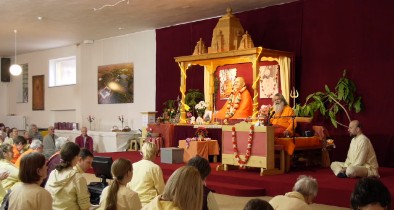
Morning satsang with Vishwaguruji from Strilky Ashram, Czech Republic. We need power. At first sing the leader of the bhajan and after the others. We should control everything. We should enjoy the bhajans. Mira drank the poison and begin to dance. We feel oneness during bhajan singing. Peace and bliss is the result of the Satsang. A story about a camel and a fox. Wishwaguruju learnt German from Mataji. We should control everything. Story about Rama and Hanuman. Practice your mantra five way.
Take care of your spirituality
22:40 - 23:39 (59 min)
A spiritual discourse and bhajan explanation exploring the four yogas and the purpose of the human journey.
"Our bhajans, especially this one, contain all four parts of Yoga: Karma Yoga, Bhakti Yoga, Jñāna Yoga, and Rāja Yoga."
"Without bhakti yoga, you can't go. Jñāna yoga is very good, but it is just dry... Bhakti is, we are full of the juice, sweet, everything."
He describes the soul's cyclical journey and emphasizes Bhakti Yoga as the essential, living path to Brahmaloka, using stories, poems, and analogies—like the self-deluding nature of dry Jñāna and the protective flame of devotion—to illustrate key spiritual truths.
Filming location: Vép, Hungary
How to think of black magic
23:45 - 0:32 (47 min)
A satsang discourse debunking fear-based beliefs around black magic and ghosts through storytelling.
"People are very much frightened. They speak of ghosts and such things, and many claim they can take away the black magic which is supposedly on you."
"If we believe in God, then believe in God. God will give everything. God will never do anything negative for us."
Swami Ji narrates two cautionary tales to illustrate how fear and superstition are exploited. The first story tells of a village magician who manipulates a grieving widow, and the second describes a 'ghost' that turns out to be a moonlit chimney. He emphasizes that true spiritual practice, such as having a Guru Mantra and faith, offers protection, concluding that it is one's own fear, not external forces, that causes suffering.
Filming location: Strilky, Czech Republic
American
Australian