
European
Foundations of Yoga in Daily Life
0:20 - 1:13 (53 min)
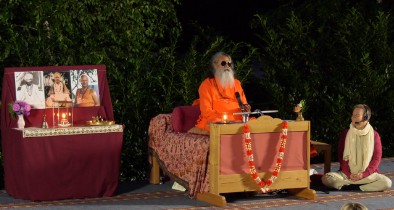
An evening satsang on integrating yoga into daily existence.
"Yoga in Daily Life is not only these two or three exercises; there is the flow of the nectar of the Gaṅgā."
"Don't depend on anyone. Depend on thyself. And thyself means that which gives us our life."
Swamiji welcomes attendees to the third seminar at the ashram, reflecting on the history of Střekov Castle. He shares personal stories of dietary experiments and spiritual tests to illustrate the practical application of yoga, emphasizing self-reliance, non-violence (ahiṃsā), and the unity of all spiritual paths. The talk blends personal anecdotes, philosophical points from Patañjali, and encouragement for consistent daily practice.
Filming locations: Střekov Castle, Ústí nad Labem, Czech Republic.
Advice for practicing Yoga
1:20 - 2:11 (51 min)
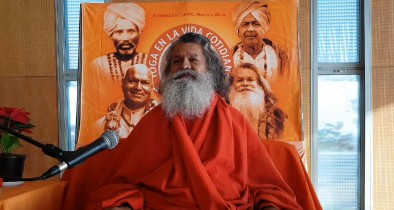
Satsang with Vishwaguruji from Barcelona, Spain. The body consists of five elements. These element are present within us and outside as well. There are different techniques to purify and balance the elements. We should take care of the body while practicing Yoga. Pranayama is also important to practice. It is said that every breath is counted.
What the natural environment gives us
2:15 - 3:03 (48 min)
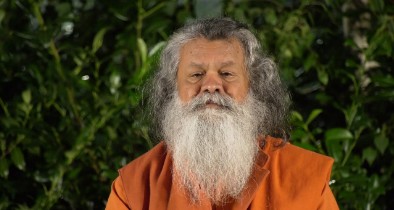
A spiritual discourse on connecting with nature and the purpose of retreat.
"You are walking. You are looking at our trees." "Walk for about ten minutes or half an hour without your shoes... So that you can get a touch of the Mother Earth."
A teacher addresses a group at an ashram, describing the pristine, pesticide-free environment rich with ancient apple trees and hundreds of plants. He emphasizes the health benefits of walking barefoot to connect with the earth's energy, discusses the principles of ahiṃsā (non-violence) towards all life, and contrasts a true, healthy retreat with modern living. The talk meanders through topics including prāṇāyāma, the nature of the mind, historical lifespans, and the sanctity of one's homeland, concluding with blessings from the lineage.
Filming location: Strilky, Czech Republic
Regular yoga practice leads to good health
3:10 - 3:54 (44 min)
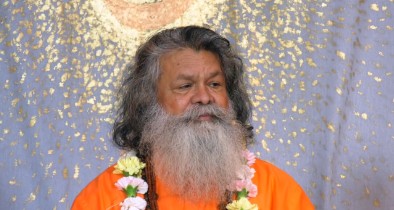
A year-end discourse on health, diet, and yogic living.
"Pahala sukha nirogi kaya. The first happiness is good health. Not money, property, or fine clothes. The best wealth is good health."
"If you have no time for cooking, you have no time for living; you are rushing toward death. We must first care for our body and life, not just run after professions."
Swami Maheshwarananda concludes the year 2018 with a webcast satsang, advocating for a vegan diet and yogic practice as foundations for personal and global peace. He links modern diseases to meat and alcohol consumption, prescribes prāṇāyāma as a universal remedy, and offers specific dietary advice on chilies, garlic, and seasonal eating. He encourages self-reflection and a resolve (saṅkalpa) for the new year, emphasizing health as the primary wealth.
Filming location: Strilky, Czech Republic
Follow the Guruvakyas and practice
4:00 - 4:58 (58 min)
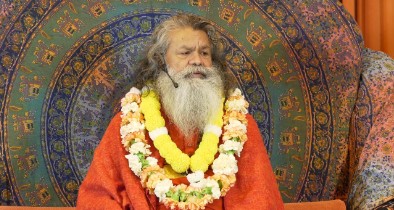
A spiritual discourse on the importance of consistent practice and good company.
"You were listening to what they were singing. It was beautiful. We are all on that path." and "If you are not practicing, you will not have success."
Swami Ji addresses a gathering after an evening of bhajans. He emphasizes that spiritual development comes from regular practice (sādhanā) and the company one keeps, using the proverb Jaisā kare saṅg, vaisā lāge raṅg. He shares personal anecdotes of his early morning practices with his Guru and warns against neglecting discipline, comparing it to medical treatments that only suppress illness if not fully addressed. The talk covers themes of karma, the human lifespan, and the necessity of following the Guru's guidance.
Filming location: Vép, Hungary
Take care of your spirituality
5:05 - 6:04 (59 min)
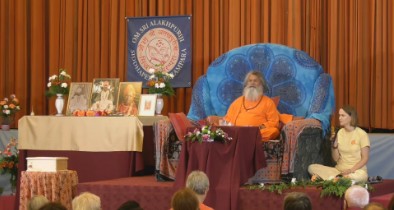
A spiritual discourse and bhajan explanation exploring the four yogas and the purpose of the human journey.
"Our bhajans, especially this one, contain all four parts of Yoga: Karma Yoga, Bhakti Yoga, Jñāna Yoga, and Rāja Yoga."
"Without bhakti yoga, you can't go. Jñāna yoga is very good, but it is just dry... Bhakti is, we are full of the juice, sweet, everything."
He describes the soul's cyclical journey and emphasizes Bhakti Yoga as the essential, living path to Brahmaloka, using stories, poems, and analogies—like the self-deluding nature of dry Jñāna and the protective flame of devotion—to illustrate key spiritual truths.
Filming location: Vép, Hungary
The power of Mantras
6:10 - 7:05 (55 min)
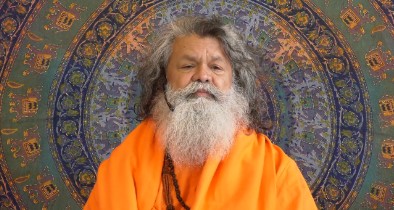
Morning satsang with Vishwaguruji from Weekend Seminar in Vep, Hungary. Mantras have a strong effect on the elements and the whole of Creation. If you speak nicely to a plant, it will be very happy. Sattvic food is especially important; we shouldn't consume dead bodies (meat), eggs, drugs, alcohol. We have destroyed many things already. Mantra is a purification. There is healing power in the mantras, sounds, colors, and natural environment. Chanting mantras such as the Gayatri Mantra can change our negative thinking as well.
Guru Gyan Data He
7:10 - 7:49 (39 min)
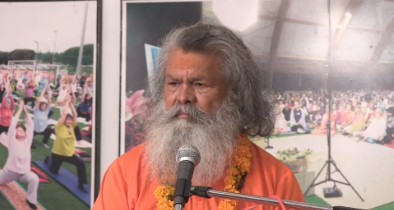
Evening satsang with Vishwaguruji from Jaipur, Rajasthan, India.
The power of Mantras
7:55 - 8:50 (55 min)
Morning satsang with Vishwaguruji from Weekend Seminar in Vep, Hungary. Mantras have a strong effect on the elements and the whole of Creation. If you speak nicely to a plant, it will be very happy. Sattvic food is especially important; we shouldn't consume dead bodies (meat), eggs, drugs, alcohol. We have destroyed many things already. Mantra is a purification. There is healing power in the mantras, sounds, colors, and natural environment. Chanting mantras such as the Gayatri Mantra can change our negative thinking as well.
Take care of your spirituality
8:55 - 9:54 (59 min)
A spiritual discourse and bhajan explanation exploring the four yogas and the purpose of the human journey.
"Our bhajans, especially this one, contain all four parts of Yoga: Karma Yoga, Bhakti Yoga, Jñāna Yoga, and Rāja Yoga."
"Without bhakti yoga, you can't go. Jñāna yoga is very good, but it is just dry... Bhakti is, we are full of the juice, sweet, everything."
He describes the soul's cyclical journey and emphasizes Bhakti Yoga as the essential, living path to Brahmaloka, using stories, poems, and analogies—like the self-deluding nature of dry Jñāna and the protective flame of devotion—to illustrate key spiritual truths.
Filming location: Vép, Hungary
Take care of your spirituality
10:00 - 10:59 (59 min)
A spiritual discourse and bhajan explanation exploring the four yogas and the purpose of the human journey.
"Our bhajans, especially this one, contain all four parts of Yoga: Karma Yoga, Bhakti Yoga, Jñāna Yoga, and Rāja Yoga."
"Without bhakti yoga, you can't go. Jñāna yoga is very good, but it is just dry... Bhakti is, we are full of the juice, sweet, everything."
He describes the soul's cyclical journey and emphasizes Bhakti Yoga as the essential, living path to Brahmaloka, using stories, poems, and analogies—like the self-deluding nature of dry Jñāna and the protective flame of devotion—to illustrate key spiritual truths.
Filming location: Vép, Hungary
Follow the Guruvakyas and practice
11:05 - 12:03 (58 min)
A spiritual discourse on the importance of consistent practice and good company.
"You were listening to what they were singing. It was beautiful. We are all on that path." and "If you are not practicing, you will not have success."
Swami Ji addresses a gathering after an evening of bhajans. He emphasizes that spiritual development comes from regular practice (sādhanā) and the company one keeps, using the proverb Jaisā kare saṅg, vaisā lāge raṅg. He shares personal anecdotes of his early morning practices with his Guru and warns against neglecting discipline, comparing it to medical treatments that only suppress illness if not fully addressed. The talk covers themes of karma, the human lifespan, and the necessity of following the Guru's guidance.
Filming location: Vép, Hungary
Take care of your spirituality
12:10 - 13:09 (59 min)
A spiritual discourse and bhajan explanation exploring the four yogas and the purpose of the human journey.
"Our bhajans, especially this one, contain all four parts of Yoga: Karma Yoga, Bhakti Yoga, Jñāna Yoga, and Rāja Yoga."
"Without bhakti yoga, you can't go. Jñāna yoga is very good, but it is just dry... Bhakti is, we are full of the juice, sweet, everything."
He describes the soul's cyclical journey and emphasizes Bhakti Yoga as the essential, living path to Brahmaloka, using stories, poems, and analogies—like the self-deluding nature of dry Jñāna and the protective flame of devotion—to illustrate key spiritual truths.
Filming location: Vép, Hungary
The power of Mantras
13:15 - 14:10 (55 min)
Morning satsang with Vishwaguruji from Weekend Seminar in Vep, Hungary. Mantras have a strong effect on the elements and the whole of Creation. If you speak nicely to a plant, it will be very happy. Sattvic food is especially important; we shouldn't consume dead bodies (meat), eggs, drugs, alcohol. We have destroyed many things already. Mantra is a purification. There is healing power in the mantras, sounds, colors, and natural environment. Chanting mantras such as the Gayatri Mantra can change our negative thinking as well.
Guru Gyan Data He
14:15 - 14:54 (39 min)
Evening satsang with Vishwaguruji from Jaipur, Rajasthan, India.
The power of Mantras
15:00 - 15:55 (55 min)
Morning satsang with Vishwaguruji from Weekend Seminar in Vep, Hungary. Mantras have a strong effect on the elements and the whole of Creation. If you speak nicely to a plant, it will be very happy. Sattvic food is especially important; we shouldn't consume dead bodies (meat), eggs, drugs, alcohol. We have destroyed many things already. Mantra is a purification. There is healing power in the mantras, sounds, colors, and natural environment. Chanting mantras such as the Gayatri Mantra can change our negative thinking as well.
Morning Yoga practice, Umag, Croatia (4/9)
16:00 - 17:26 (86 min)
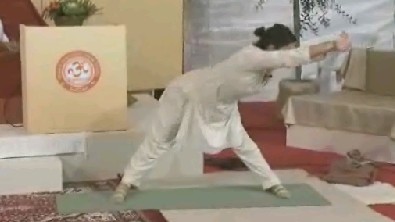
Morning Yoga practice from the international Yoga retreat Umag, Croatia on 28th of September 2010.
Worldly joy is just an illusion
17:30 - 18:40 (70 min)
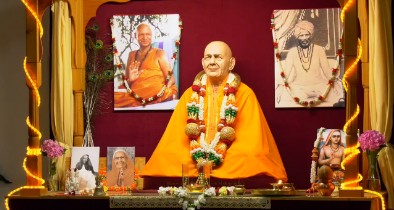
Evening satsang with Vishwaguruji from Strilky Ashram, Czech Republic. Singing and translation of the bhajan Suno Re Mena from Pad Birhani, the song book of Mahaprabhuji. You should enjoy meditation, the glory of God, but you are flying in the garden and just enjoying fruits. Singing and translation of the bhajan Bhajo Re Manva.
God Vishnu and God Shiva
18:45 - 19:46 (61 min)
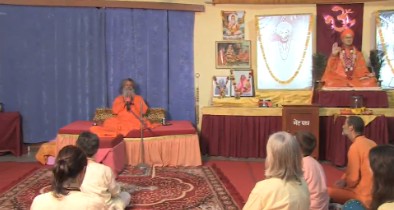
A spiritual discourse during Diwali, featuring a parable about devotion and a teaching on sacred sound.
"Lakshmi said to Vishnu, 'I have more bhaktas.'... 'We can make an experiment. Go to your bhaktas and let me know if this is really a bhakta.'"
"Therefore, do the sadhana, do the practice. It is not if it is beautiful or not, angry or not, old or not. You need that knowledge, and which knowledge? Not only the talking, but you are within thyself."
The speaker narrates a story where Lord Vishnu and Goddess Lakshmi test a merchant's devotion, revealing how greed for wealth can corrupt spiritual fidelity. The discourse then expands into a teaching on the importance of steadfast spiritual practice (sadhana) and explores the science of primordial sound (Om), connecting it to the body's chakras and Sanskrit letters.
Filming location: Jadan, Rajasthan, India
Advice for practicing Yoga
19:50 - 20:41 (51 min)
Satsang with Vishwaguruji from Barcelona, Spain. The body consists of five elements. These element are present within us and outside as well. There are different techniques to purify and balance the elements. We should take care of the body while practicing Yoga. Pranayama is also important to practice. It is said that every breath is counted.
What the natural environment gives us
20:45 - 21:33 (48 min)
A spiritual discourse on connecting with nature and the purpose of retreat.
"You are walking. You are looking at our trees." "Walk for about ten minutes or half an hour without your shoes... So that you can get a touch of the Mother Earth."
A teacher addresses a group at an ashram, describing the pristine, pesticide-free environment rich with ancient apple trees and hundreds of plants. He emphasizes the health benefits of walking barefoot to connect with the earth's energy, discusses the principles of ahiṃsā (non-violence) towards all life, and contrasts a true, healthy retreat with modern living. The talk meanders through topics including prāṇāyāma, the nature of the mind, historical lifespans, and the sanctity of one's homeland, concluding with blessings from the lineage.
Filming location: Strilky, Czech Republic
Foundations of Yoga in Daily Life
21:40 - 22:33 (53 min)
An evening satsang on integrating yoga into daily existence.
"Yoga in Daily Life is not only these two or three exercises; there is the flow of the nectar of the Gaṅgā."
"Don't depend on anyone. Depend on thyself. And thyself means that which gives us our life."
Swamiji welcomes attendees to the third seminar at the ashram, reflecting on the history of Střekov Castle. He shares personal stories of dietary experiments and spiritual tests to illustrate the practical application of yoga, emphasizing self-reliance, non-violence (ahiṃsā), and the unity of all spiritual paths. The talk blends personal anecdotes, philosophical points from Patañjali, and encouragement for consistent daily practice.
Filming locations: Střekov Castle, Ústí nad Labem, Czech Republic.
Parama Guru Swamiji
22:40 - 23:42 (62 min)
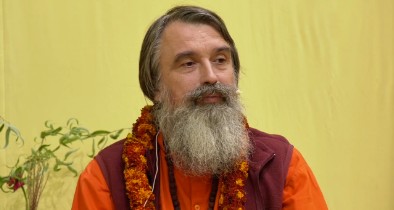
Evening satsang from weekend Yoga seminar in Kranj, Slovenia. Mahamandaleshwar Swami Gyaneshwar Puri explains the importance of the work of the Guru by translating the bhajan, "Parama Guru Swamiji".
The Glory of Rāma and the Eternal Dharma
23:50 - 0:43 (53 min)
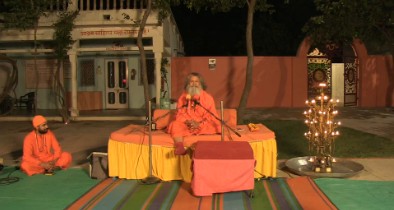
A spiritual discourse on the glory of Lord Rāma, the origin of the Rāmāyaṇa, and the nature of Sanātana Dharma.
"Vālmīki began to argue with a saint... The saint then asked, 'So what will you do?' He said, 'Come, and I will give you a mantra.'"
"Sanātan means one all and all in one. Love for all, also the trees, animals, air, water, humans, all in harmony, in peace, and in oneness."
A spiritual teacher narrates the story of the sage Vālmīki’s transformation through chanting the name of Rāma, leading to his samādhi and the divine revelation of the epic Rāmāyaṇa. The talk expands to discuss the timeless wisdom of the Vedas, critiques a fragmented modern worldview, and emphasizes the essential oneness underlying all religions, which is obscured by human ego. The discourse concludes with festive greetings for Dīpāvalī.
Filming location: Jadan, Rajasthan, India
American
Australian