
European
What the natural environment gives us
0:00 - 0:48 (48 min)
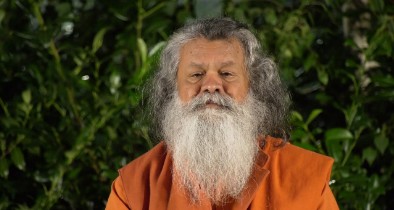
A spiritual discourse on connecting with nature and the purpose of retreat.
"You are walking. You are looking at our trees." "Walk for about ten minutes or half an hour without your shoes... So that you can get a touch of the Mother Earth."
A teacher addresses a group at an ashram, describing the pristine, pesticide-free environment rich with ancient apple trees and hundreds of plants. He emphasizes the health benefits of walking barefoot to connect with the earth's energy, discusses the principles of ahiṃsā (non-violence) towards all life, and contrasts a true, healthy retreat with modern living. The talk meanders through topics including prāṇāyāma, the nature of the mind, historical lifespans, and the sanctity of one's homeland, concluding with blessings from the lineage.
Filming location: Strilky, Czech Republic
Feelings between Guru and Disciple
0:55 - 1:53 (58 min)
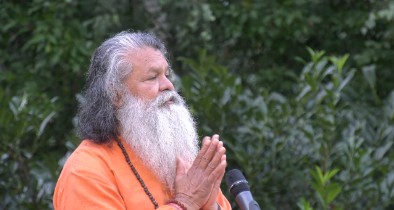
A satsang reflecting on the glory of past saints and the nature of true devotion.
"Gurujī said, 'Do not write anything confidential on a letter.'"
"If they ate all the butter... my cow is with me. The cow is still right here. Feed her with good feed, and milk... you can get as butter more and more fresh."
The speaker, likely a disciple, shares stories illustrating the miraculous nature and profound devotion of saints like Devpurījī and his own Gurujī, Mādhvānandjī. He recounts personal anecdotes, including Gurujī's long walks to visit devotees and a governor's reverence for him, to emphasize that the essence of bhakti is an internal, living practice. He cautions against overly relying on recordings or texts, using the analogy of a cow that continually gives milk to explain that sincere devotion itself is the perennial source of spiritual wealth.
Filming location: Strilky, Czech Republic
Around the world - Mataji's experiences with Holy Guruji and Swamiji
2:00 - 2:48 (48 min)

A devotee recounts her spiritual journey, from a divine call to finding her Guru.
"I turned to my right side, and I could see Śrī Kṛṣṇa in my heart, holding a small bowl... and asking for kheer." "He looked into my eyes and said, 'You are looking for a true guru, haven’t you?'"
Rukhswani, an Indian woman living in New Zealand, describes a 1992 vision of Lord Krishna compelling her to make a milk pudding, which leads her to a satsang with Swāmī Śrī Māheśvarañjī. She expresses her search for a true guru and later travels to India, where she meets Holy Gurujī, receives mantra-dīkṣā, and undertakes translation work for him. She shares stories of divine grace, obedience, and her profound emotional connection to her Guru over subsequent years.
Filming location: Wellington, New Zealand
How to control the problems
2:57 - 4:05 (68 min)
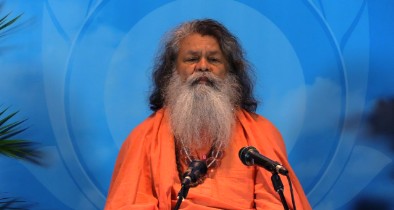
A spiritual discourse on the Viśuddhi Chakra and the five layers of human existence.
"This poison is when someone is giving you many negative thoughts, negative energy, negative words—all the words we are taking from others."
"In meditation, we have to go within ourself. Do not run away from you. Come to thyself. You will, you have to solve the problems."
The lecturer explains the Viśuddhi (throat) chakra as the center where emotional and psychic "poison" is stored, using the myth of Shiva drinking poison. He details how this manifests as fear and physical ailments, and prescribes inward-focused meditation as the remedy. He then expounds on the five kośas (sheaths)—from the physical to the bliss body—and emphasizes the necessity of a guru, practice (abhyāsa), and mantra for spiritual progress, concluding with the principle of non-duality.
Filming location: Brisbane, Australia
The Nāḍīs, Cakras, and the Mūlādhāra Foundation
4:15 - 5:12 (57 min)
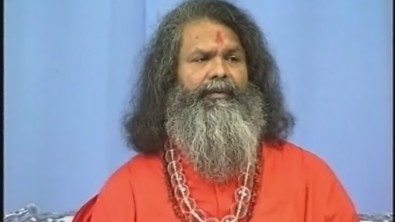
A spiritual lecture on the nāḍīs, cakras, and the foundational Mūlādhāra Cakra.
"The Mūlādhāra Cakra is at the bottom of the spinal column. It is a border between animal and human consciousness."
"Destiny was created first, and destiny is created individually. We should blame no one. We are ourselves responsible for our destiny."
The speaker continues a discourse from the previous day, focusing on the Mūlādhāra Cakra as the seat of destiny (prārabdha) and divine energy. He explains how this foundational energy influences life and can be purified through the threefold practice of svādhyāya (self-study), manana (contemplation), and abhyāsa (persistent practice), which remove the obstacles of impurity, distraction, and veils. The talk connects these concepts to Kuṇḍalinī Śakti, the role of Kriyā Yoga, and concludes with a symbolic discussion of the tilak mark.
Filming location: Umag, Croatia
Together with Holy Guruji
5:20 - 6:53 (93 min)
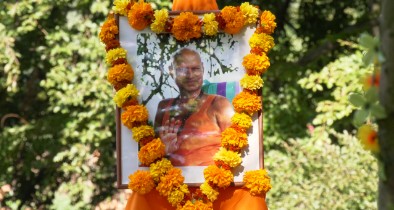
Holy Guruji Jayanti (birthday) morning satsang with Vishwaguruji from Strilky Ashram, Czech Republic. When Holy Guruji and Vishwaguruji were together it was like one soul, one heart. Swami Umapuriji tells some of her memories about Holy Guruji. Vishwaguruji explains the importance of good quality food and practical examples of how to keep the kitchen pure according to paak shastra. Explanation of Holy Guruji's bhajan (devotional song) Prema Ka Pyala Hari Kaba Mera Bharase.
Words express our devotion
7:00 - 7:15 (15 min)
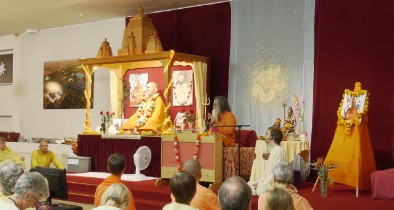
A satsang on the occasion of a holy incarnation day.
"It is said the divine comes to this earth. This is how we show our respect."
"Gurujī says: short and sweet. But we adore them, and that is why we give them glories."
A speaker addresses the gathering on the birth anniversary of their Guru, Swami Madhavānjī, referred to as Holy Gurujī. He reflects on the nature of divine names and incarnations, noting the simplicity of names like Śiva or Jesus, and contrasts transient worldly titles with the enduring respect for the divine essence. He mentions titles bestowed upon the Guru, like Hindu Dharm Samrāṭ, while emphasizing the underlying oneness beyond all designations. The talk concludes with a collective prayer.
Filming location: Strilky, Czech Republic
Together with Holy Guruji
7:20 - 8:53 (93 min)
Holy Guruji Jayanti (birthday) morning satsang with Vishwaguruji from Strilky Ashram, Czech Republic. When Holy Guruji and Vishwaguruji were together it was like one soul, one heart. Swami Umapuriji tells some of her memories about Holy Guruji. Vishwaguruji explains the importance of good quality food and practical examples of how to keep the kitchen pure according to paak shastra. Explanation of Holy Guruji's bhajan (devotional song) Prema Ka Pyala Hari Kaba Mera Bharase.
Chakras in the human
9:00 - 10:10 (70 min)
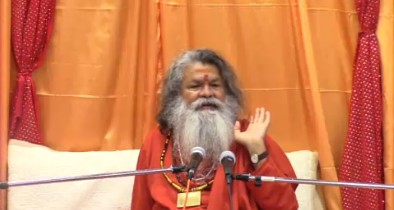
A lecture on the cosmic origin and holistic practice of yoga.
"Yoga is one of the first principles in creation." "That’s called yoga: our physical body, our mental body, and our subtle body. These are three, according to yogic science. Balance, complete."
Swami Paramananda addresses a temple gathering, invited to speak on yoga. He presents a cosmological view of yoga's origin from Anant Brahmāṇḍ (infinite universes), sound (Nāda), and the self-manifested Śiva. He explains the traditional concept of 8.4 million life forms and argues for a vegetarian diet to attain higher consciousness. The talk covers the need for a guru, the 72,000 nerve systems, the five kośas (sheaths), and a detailed, practical guide to the chakras—from the earth chakras in the feet to the higher centers. He concludes with practical techniques like chanting AUM and a stress-relief exercise, ending with a peace mantra.
Filming location: USA
How to Practice Anusthan
10:15 - 11:01 (46 min)
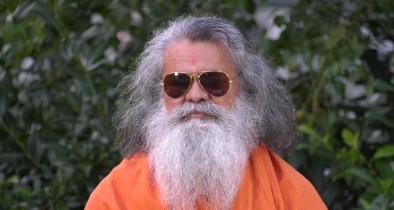
A discourse on the spiritual discipline of anuṣṭhāna during a retreat.
"You are only here for five days... So what can you think? That you will get mokṣa? That you will get vibrations?"
"A proper anuṣṭhāna—I tried once, twice, three times, four times, but I was not successful. That sādhanā lasts all week."
Swami Mahaprabhuji addresses retreat participants, using the analogy of a patient disobeying doctor's orders to illustrate the need for strict discipline in practice. He outlines an ideal daily schedule of nine hours of sādhanā, including detailed explanations of nāḍī śodhana (channel purification) through prāṇāyāma, and emphasizes dietary and behavioral simplicity. The talk blends stern guidance with humorous anecdotes about foraging for mushrooms and enjoying coffee, concluding with a promotion of the health benefits of Bārikhātu Praṇām.
Filming location: Strilky, Czech Republic
We are the cause of Mahapralaya
11:05 - 12:13 (68 min)
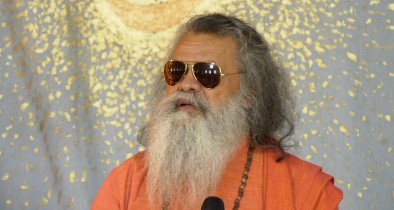
Morning satsang with Vishwaguruji from Strilky Ashram, Czech Republic. Siva's divine shakti always protect us with Maha mritju jaya mantra. If you have problems sing Prabu Deep Niranjan saba dukkha banyan mantra. Our dress should be proper and clean to express our respect for others not for our ego. Our culture is according to our climate. The best ointment to our eyes is the name of Gurudev. According to Mangilalji humans will be the cause of Mahapralaya but spiritual people will go to Brahmaloka before it. We destroy our earth by cutting many trees and digging out mines. We make very much pollution to the environment and slaughtering many animals to eat. Not scientists but normal people can save the world. Where there is a will there is the way.
Webcast from Strilky
12:20 - 13:27 (67 min)
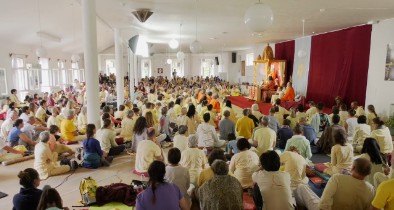
Morning satsang
Practice with trust
13:35 - 14:56 (81 min)
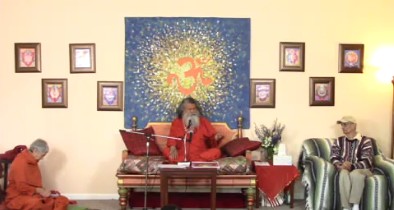
A spiritual discourse on human disconnection, the energy of the natural world, and yogic anatomy.
"We don’t know where our roots are. We have no roots now."
"Yoga is this: first, open your heart, open your feelings, and just say, 'How are you?'"
A teacher addresses an audience, lamenting the modern loss of roots and familial connection, contrasting it with the communal love observed in animals. He shifts to explaining the body's energy centers (chakras), using the Mūlādhāra and Svādhiṣṭhāna chakras as examples, weaving in mythological stories about Gaṇeśa and a crocodile to symbolize inner struggles. He emphasizes practical techniques like walking barefoot on earth or sand to connect with natural energy and concludes with a healing mantra.
Practice with Swamiji
15:00 - 16:07 (67 min)

Practice with Swamiji from Auckland, New Zealand.
The importance of healthy food
16:15 - 17:18 (63 min)
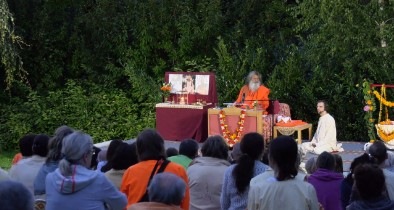
Evening satsang with Vishwaguruji from Strilky Ashram, Czech Republic. Whenever giving a lecture Vishwaguriji prays for guidance, protection and blessing of the Masters. If you do this before your sadhana, it will be very successful. There are many illnesses originating from how and what we are eating. To preserve the health of the body we should use proper nutrition, pure drinking water. The heart and soul is the same in everyone, it does not depend on the color of the skin.
We need purification
17:25 - 18:19 (54 min)
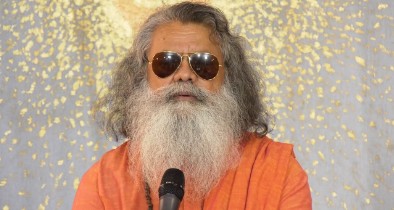
Evening satsang with Vishwaguruji from Strilky Ashram, Czech Republic. Vishwaguruji explains the bhajan Chaddarya Jhini Re Jhini of the saint Sri Kabirdas. We should purify ourselves. For that, we need to go through Tapasya - austerities. If we give milk to the snake it will turn into poison. If someone eats meat and you are intimate with this person, it is like you were eating. Keep yourself pure, reach the state of suddha, purity.
Feelings between Guru and Disciple
18:25 - 19:23 (58 min)
A satsang reflecting on the glory of past saints and the nature of true devotion.
"Gurujī said, 'Do not write anything confidential on a letter.'"
"If they ate all the butter... my cow is with me. The cow is still right here. Feed her with good feed, and milk... you can get as butter more and more fresh."
The speaker, likely a disciple, shares stories illustrating the miraculous nature and profound devotion of saints like Devpurījī and his own Gurujī, Mādhvānandjī. He recounts personal anecdotes, including Gurujī's long walks to visit devotees and a governor's reverence for him, to emphasize that the essence of bhakti is an internal, living practice. He cautions against overly relying on recordings or texts, using the analogy of a cow that continually gives milk to explain that sincere devotion itself is the perennial source of spiritual wealth.
Filming location: Strilky, Czech Republic
What Incarnation means
19:30 - 20:24 (54 min)
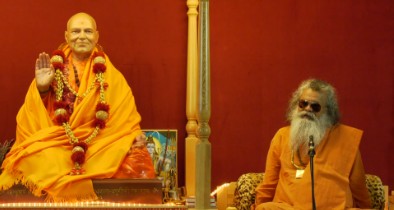
A spiritual discourse on the nature of the soul, creation, and Śiva.
"There is one who is not born from a mother and not from a father. Only that one can be called an incarnation, and that one is called Svayambhū."
"We all are one. It doesn't matter, the human or reptilian or the birds or any. There is a soul, jīva. Life, they are all one."
The lecturer speaks at the Yogandī Life center in Vienna on the anniversary of Gurudev Swami Madhavānandajī. He contemplates the concept of incarnation, explaining Śiva as the unmanifest Svayambhū who willed multiplicity into being through the five elements. Using the metaphor of the ocean and water cycle, he describes the singular soul within all life forms, discusses karma, and emphasizes the power of speech through a parable about the tongue and teeth.
Filming location: Vienna, Austria
Chakras and Awakening
20:30 - 21:30 (60 min)
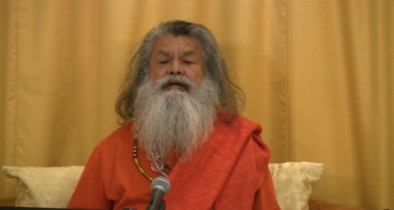
A guided energy practice and teaching session on the subtle body, self-realization, and non-duality.
"Energy will flow to the tips of the fingers... It is your energy, your being here. You are. You are the Divine."
"The soul is only one... Think, do not say that my soul is different and your soul is different... One in all and all in one."
Swami guides participants in arranging the space and leads a practice to feel energy between the palms. He then delivers a discourse on the five bodies (kośas), the chakras in humans and animals, and the nature of self-realization. He clarifies that true awakening is of clarity and joy, not physical sensations, and explains the non-dual concept of one universal soul using analogies of light and water, concluding with a story cautioning against spiritual ego.
Filming location: Alexandria, USA
The Responsibility and Path of a Yoga Teacher in the Yoga in Daily Life System
21:35 - 22:07 (32 min)
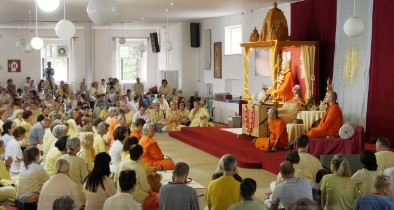
A discourse on the responsibility and conduct of a yoga teacher within the Yoga in Daily Life system.
"A yoga teacher, especially from Yoga in Daily Life, is something very different from a gym or aerobics instructor. It carries a great responsibility."
"We are like that channel... we are this instrument that Gurū Dev, that our paramparā, is using."
Swami Samyagdam shares guidance for yoga teachers, emphasizing the solemn duty to faithfully transmit the system's teachings without alteration. She outlines specific protocols, such as maintaining professional boundaries after class and teaching even a single student, stressing that the role is one of a selfless channel for the lineage's knowledge. The talk warns against using the training for personal gain and underscores the necessity of ongoing devotion through satsang.
Filming location: Strilky, Czech Republic
Heaven and Hell
22:15 - 23:06 (51 min)
An evening satsang on the illusory nature of time and the urgency of spiritual practice.
"In reality, there is no time. Who created time? Animals do not count it. We humans made time."
"Use it or lose it. This was my mantra, and so I was practicing. Till now, I am 103 years, I am still like this."
The lecturer leads the discourse, exploring the human construct of time and its unstoppable flow. He shares parables, including one of a Himalayan rishi who learns his vast knowledge is but a handful of sand compared to the whole, and another of a yogi whose pride ruins his sādhanā. The key theme is that our limited time must be used for sincere practice and humility, lest it be lost.
Filming location: Strilky, Czech Republic
Together with Holy Guruji
23:10 - 0:43 (93 min)
Holy Guruji Jayanti (birthday) morning satsang with Vishwaguruji from Strilky Ashram, Czech Republic. When Holy Guruji and Vishwaguruji were together it was like one soul, one heart. Swami Umapuriji tells some of her memories about Holy Guruji. Vishwaguruji explains the importance of good quality food and practical examples of how to keep the kitchen pure according to paak shastra. Explanation of Holy Guruji's bhajan (devotional song) Prema Ka Pyala Hari Kaba Mera Bharase.
American
Australian