
European
Foundations of Yoga in Daily Life
0:00 - 0:53 (53 min)
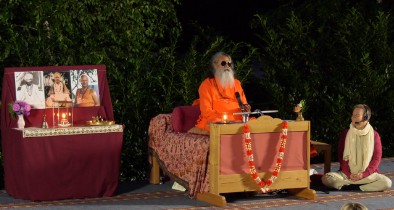
An evening satsang on integrating yoga into daily existence.
"Yoga in Daily Life is not only these two or three exercises; there is the flow of the nectar of the Gaṅgā."
"Don't depend on anyone. Depend on thyself. And thyself means that which gives us our life."
Swamiji welcomes attendees to the third seminar at the ashram, reflecting on the history of Střekov Castle. He shares personal stories of dietary experiments and spiritual tests to illustrate the practical application of yoga, emphasizing self-reliance, non-violence (ahiṃsā), and the unity of all spiritual paths. The talk blends personal anecdotes, philosophical points from Patañjali, and encouragement for consistent daily practice.
Filming locations: Střekov Castle, Ústí nad Labem, Czech Republic.
Strength of the Hatha Yogi
1:00 - 1:53 (53 min)
A morning satsang on the meaning and practice of Haṭha Yoga.
"Haṭha yoga has many meanings. So one is called 'haṭha,' meaning 'I will do, I will achieve, I will come through.'"
"In Haṭha Yoga, yogī... you have no fear, you have no anger, you have no anything, and you are divine in this world."
The lecturer leads a discourse exploring the multifaceted definitions of Haṭha Yoga. He begins by describing four types of "haṭha" or willpower: childish (Bāla), feminine (Triyā), royal (Rāja), and yogic (Yoga), illustrating the last with a story of a yogi unmoved by Lord Shiva. He then explains Haṭha Yoga as the union of the solar ("Ha") and lunar ("Tha") energies within the Ājñā Cakra, and outlines the six purification techniques (Shatkarmas) like Netī. The talk weaves together philosophy, subtle anatomy, and practical guidance.
Filming location: Strilky, Czech Republic
Heaven and Hell
2:00 - 2:51 (51 min)
An evening satsang on the illusory nature of time and the urgency of spiritual practice.
"In reality, there is no time. Who created time? Animals do not count it. We humans made time."
"Use it or lose it. This was my mantra, and so I was practicing. Till now, I am 103 years, I am still like this."
The lecturer leads the discourse, exploring the human construct of time and its unstoppable flow. He shares parables, including one of a Himalayan rishi who learns his vast knowledge is but a handful of sand compared to the whole, and another of a yogi whose pride ruins his sādhanā. The key theme is that our limited time must be used for sincere practice and humility, lest it be lost.
Filming location: Strilky, Czech Republic
What the natural environment gives us
2:55 - 3:43 (48 min)
A spiritual discourse on connecting with nature and the purpose of retreat.
"You are walking. You are looking at our trees." "Walk for about ten minutes or half an hour without your shoes... So that you can get a touch of the Mother Earth."
A teacher addresses a group at an ashram, describing the pristine, pesticide-free environment rich with ancient apple trees and hundreds of plants. He emphasizes the health benefits of walking barefoot to connect with the earth's energy, discusses the principles of ahiṃsā (non-violence) towards all life, and contrasts a true, healthy retreat with modern living. The talk meanders through topics including prāṇāyāma, the nature of the mind, historical lifespans, and the sanctity of one's homeland, concluding with blessings from the lineage.
Filming location: Strilky, Czech Republic
How to Practice Anusthan
3:50 - 4:36 (46 min)
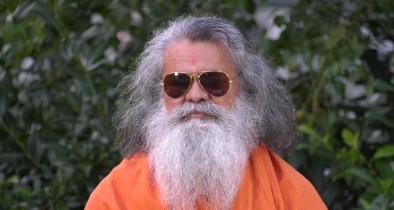
A discourse on the spiritual discipline of anuṣṭhāna during a retreat.
"You are only here for five days... So what can you think? That you will get mokṣa? That you will get vibrations?"
"A proper anuṣṭhāna—I tried once, twice, three times, four times, but I was not successful. That sādhanā lasts all week."
Swami Mahaprabhuji addresses retreat participants, using the analogy of a patient disobeying doctor's orders to illustrate the need for strict discipline in practice. He outlines an ideal daily schedule of nine hours of sādhanā, including detailed explanations of nāḍī śodhana (channel purification) through prāṇāyāma, and emphasizes dietary and behavioral simplicity. The talk blends stern guidance with humorous anecdotes about foraging for mushrooms and enjoying coffee, concluding with a promotion of the health benefits of Bārikhātu Praṇām.
Filming location: Strilky, Czech Republic
How to Practice Anusthan
4:40 - 5:26 (46 min)
A discourse on the spiritual discipline of anuṣṭhāna during a retreat.
"You are only here for five days... So what can you think? That you will get mokṣa? That you will get vibrations?"
"A proper anuṣṭhāna—I tried once, twice, three times, four times, but I was not successful. That sādhanā lasts all week."
Swami Mahaprabhuji addresses retreat participants, using the analogy of a patient disobeying doctor's orders to illustrate the need for strict discipline in practice. He outlines an ideal daily schedule of nine hours of sādhanā, including detailed explanations of nāḍī śodhana (channel purification) through prāṇāyāma, and emphasizes dietary and behavioral simplicity. The talk blends stern guidance with humorous anecdotes about foraging for mushrooms and enjoying coffee, concluding with a promotion of the health benefits of Bārikhātu Praṇām.
Filming location: Strilky, Czech Republic
Do not kill
5:30 - 6:40 (70 min)
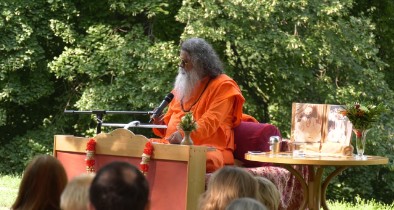
A satsang on Kriya Yoga, the nature of the self, and the unity of all life.
"Anything you do is a kriyā. While eating, when you are swallowing, it is a kriyā. When you speak, it is a kriyā."
"Gurujī said, 'one in all and all in one.' That depends on you. Your practice, you cannot think that it will be like this."
The lecturer continues the program's satsang, introducing the concept of Kriya Anushthana. He explains that all action is Kriya and explores the five senses (Jñānendriyas) as instruments of knowledge. Through anecdotes and a practical exercise where attendees locate their sense of 'I', he discusses the layers of the body, the soul (Ātmā, Jīvātmā), and the interconnectedness of all beings, using analogies of water cycles and a beehive to illustrate oneness. He advises on spiritual practice, warns against ego, and concludes with blessings.
Filming location: Strilky, Czech Republic
We need purification
6:45 - 7:39 (54 min)
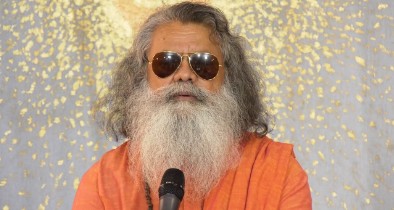
Evening satsang with Vishwaguruji from Strilky Ashram, Czech Republic. Vishwaguruji explains the bhajan Chaddarya Jhini Re Jhini of the saint Sri Kabirdas. We should purify ourselves. For that, we need to go through Tapasya - austerities. If we give milk to the snake it will turn into poison. If someone eats meat and you are intimate with this person, it is like you were eating. Keep yourself pure, reach the state of suddha, purity.
Do not kill
7:45 - 8:55 (70 min)
A satsang on Kriya Yoga, the nature of the self, and the unity of all life.
"Anything you do is a kriyā. While eating, when you are swallowing, it is a kriyā. When you speak, it is a kriyā."
"Gurujī said, 'one in all and all in one.' That depends on you. Your practice, you cannot think that it will be like this."
The lecturer continues the program's satsang, introducing the concept of Kriya Anushthana. He explains that all action is Kriya and explores the five senses (Jñānendriyas) as instruments of knowledge. Through anecdotes and a practical exercise where attendees locate their sense of 'I', he discusses the layers of the body, the soul (Ātmā, Jīvātmā), and the interconnectedness of all beings, using analogies of water cycles and a beehive to illustrate oneness. He advises on spiritual practice, warns against ego, and concludes with blessings.
Filming location: Strilky, Czech Republic
At the roots of our Parampara
8:00 - 9:32 (92 min)
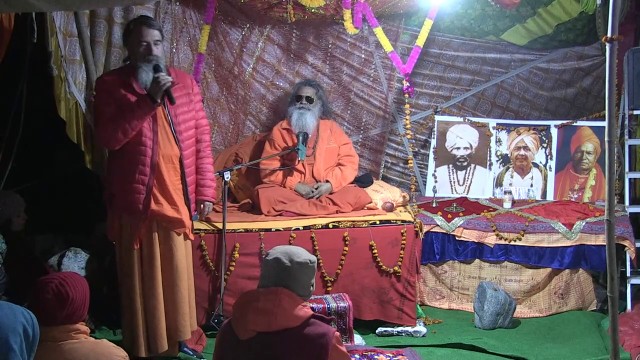
Evening satsang from Himalaya. Swami Dyaneswarpuri said that we should use our name Yoga in Daily Lide otherwise somebody else will do it. It is a big oportunity to visit in Badrinath with Vishwaguruji which is a very importana pilgrimage place in India. Sadwi shanti has felt love for her childhood towards mountens. She speaks about her journey in the Himalayas. She many times came back there and feel like her home. She tells her experiences in Sri Devpuriji's cave. Vishwaguruji's family had a brass plate which was special. There is difference between piano and harmonium. There are different customs when a girl or a boy is born in a willage. Vishwaguruji tells some stories from his childhood. Vishwaguruji has a rishi parampara in his family. Ravana was lerned but he has ego and desire. The story of Ravana and Vidhata Ravanas daughter and her husband. Furudev can change zhe desteny. Guru and disciple is one. In India there is living God. The story of Guruji and one of his discipe who w
We are the cause of Mahapralaya
9:00 - 10:08 (68 min)
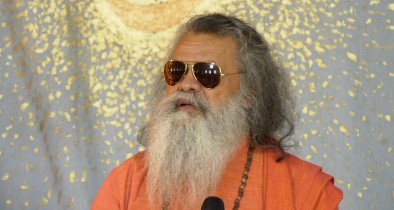
Morning satsang with Vishwaguruji from Strilky Ashram, Czech Republic. Siva's divine shakti always protect us with Maha mritju jaya mantra. If you have problems sing Prabu Deep Niranjan saba dukkha banyan mantra. Our dress should be proper and clean to express our respect for others not for our ego. Our culture is according to our climate. The best ointment to our eyes is the name of Gurudev. According to Mangilalji humans will be the cause of Mahapralaya but spiritual people will go to Brahmaloka before it. We destroy our earth by cutting many trees and digging out mines. We make very much pollution to the environment and slaughtering many animals to eat. Not scientists but normal people can save the world. Where there is a will there is the way.
Do not kill
10:15 - 11:25 (70 min)
A satsang on Kriya Yoga, the nature of the self, and the unity of all life.
"Anything you do is a kriyā. While eating, when you are swallowing, it is a kriyā. When you speak, it is a kriyā."
"Gurujī said, 'one in all and all in one.' That depends on you. Your practice, you cannot think that it will be like this."
The lecturer continues the program's satsang, introducing the concept of Kriya Anushthana. He explains that all action is Kriya and explores the five senses (Jñānendriyas) as instruments of knowledge. Through anecdotes and a practical exercise where attendees locate their sense of 'I', he discusses the layers of the body, the soul (Ātmā, Jīvātmā), and the interconnectedness of all beings, using analogies of water cycles and a beehive to illustrate oneness. He advises on spiritual practice, warns against ego, and concludes with blessings.
Filming location: Strilky, Czech Republic
We need purification
11:30 - 12:24 (54 min)
Evening satsang with Vishwaguruji from Strilky Ashram, Czech Republic. Vishwaguruji explains the bhajan Chaddarya Jhini Re Jhini of the saint Sri Kabirdas. We should purify ourselves. For that, we need to go through Tapasya - austerities. If we give milk to the snake it will turn into poison. If someone eats meat and you are intimate with this person, it is like you were eating. Keep yourself pure, reach the state of suddha, purity.
Advice for good health
12:30 - 13:38 (68 min)
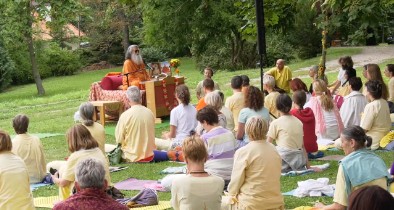
A satsang on Haṭha Yoga practices and natural wisdom, blending personal anecdotes with traditional teachings.
"Gurujī said, 'I am now in Mumbai, and I am going tomorrow morning by train. What is the constellation? If it is not good, then should we stop the train?'"
"Better to die, but with the salt. Yes, so Āyurveda, and Āyurveda is saying senda salt."
The lecturer leads the session, sharing stories about his Gurujī and the practical applications of Haṭha Yoga. He explains the importance of salt for health, details cleansing techniques like netī and kuñjal kriyā, and emphasizes learning from nature, illustrated by a folk tale about the origin of ocean salt. The talk connects yogic purification with Āyurvedic principles found in plants and natural elements.
Filming location: Strilky, Czech Republic
Do not kill
13:45 - 14:55 (70 min)
A satsang on Kriya Yoga, the nature of the self, and the unity of all life.
"Anything you do is a kriyā. While eating, when you are swallowing, it is a kriyā. When you speak, it is a kriyā."
"Gurujī said, 'one in all and all in one.' That depends on you. Your practice, you cannot think that it will be like this."
The lecturer continues the program's satsang, introducing the concept of Kriya Anushthana. He explains that all action is Kriya and explores the five senses (Jñānendriyas) as instruments of knowledge. Through anecdotes and a practical exercise where attendees locate their sense of 'I', he discusses the layers of the body, the soul (Ātmā, Jīvātmā), and the interconnectedness of all beings, using analogies of water cycles and a beehive to illustrate oneness. He advises on spiritual practice, warns against ego, and concludes with blessings.
Filming location: Strilky, Czech Republic
Morning Yoga practice, Umag, Croatia (6/9)
15:00 - 16:56 (116 min)
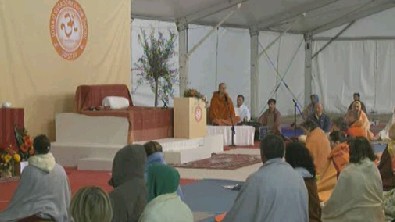
Morning Yoga practice from the international Yoga retreat Umag, Croatia on 30th of September
What the natural environment gives us
17:00 - 17:48 (48 min)
A spiritual discourse on connecting with nature and the purpose of retreat.
"You are walking. You are looking at our trees." "Walk for about ten minutes or half an hour without your shoes... So that you can get a touch of the Mother Earth."
A teacher addresses a group at an ashram, describing the pristine, pesticide-free environment rich with ancient apple trees and hundreds of plants. He emphasizes the health benefits of walking barefoot to connect with the earth's energy, discusses the principles of ahiṃsā (non-violence) towards all life, and contrasts a true, healthy retreat with modern living. The talk meanders through topics including prāṇāyāma, the nature of the mind, historical lifespans, and the sanctity of one's homeland, concluding with blessings from the lineage.
Filming location: Strilky, Czech Republic
Heaven and Hell
17:55 - 18:46 (51 min)
An evening satsang on the illusory nature of time and the urgency of spiritual practice.
"In reality, there is no time. Who created time? Animals do not count it. We humans made time."
"Use it or lose it. This was my mantra, and so I was practicing. Till now, I am 103 years, I am still like this."
The lecturer leads the discourse, exploring the human construct of time and its unstoppable flow. He shares parables, including one of a Himalayan rishi who learns his vast knowledge is but a handful of sand compared to the whole, and another of a yogi whose pride ruins his sādhanā. The key theme is that our limited time must be used for sincere practice and humility, lest it be lost.
Filming location: Strilky, Czech Republic
We need purification
18:50 - 19:44 (54 min)
Evening satsang with Vishwaguruji from Strilky Ashram, Czech Republic. Vishwaguruji explains the bhajan Chaddarya Jhini Re Jhini of the saint Sri Kabirdas. We should purify ourselves. For that, we need to go through Tapasya - austerities. If we give milk to the snake it will turn into poison. If someone eats meat and you are intimate with this person, it is like you were eating. Keep yourself pure, reach the state of suddha, purity.
The importance of healthy food
19:50 - 20:53 (63 min)
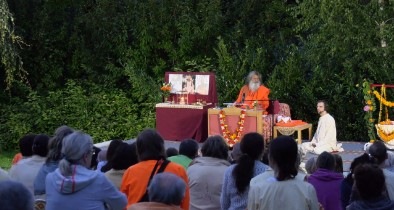
Evening satsang with Vishwaguruji from Strilky Ashram, Czech Republic. Whenever giving a lecture Vishwaguriji prays for guidance, protection and blessing of the Masters. If you do this before your sadhana, it will be very successful. There are many illnesses originating from how and what we are eating. To preserve the health of the body we should use proper nutrition, pure drinking water. The heart and soul is the same in everyone, it does not depend on the color of the skin.
Heaven and Hell
21:00 - 21:51 (51 min)
An evening satsang on the illusory nature of time and the urgency of spiritual practice.
"In reality, there is no time. Who created time? Animals do not count it. We humans made time."
"Use it or lose it. This was my mantra, and so I was practicing. Till now, I am 103 years, I am still like this."
The lecturer leads the discourse, exploring the human construct of time and its unstoppable flow. He shares parables, including one of a Himalayan rishi who learns his vast knowledge is but a handful of sand compared to the whole, and another of a yogi whose pride ruins his sādhanā. The key theme is that our limited time must be used for sincere practice and humility, lest it be lost.
Filming location: Strilky, Czech Republic
What the natural environment gives us
21:55 - 22:43 (48 min)
A spiritual discourse on connecting with nature and the purpose of retreat.
"You are walking. You are looking at our trees." "Walk for about ten minutes or half an hour without your shoes... So that you can get a touch of the Mother Earth."
A teacher addresses a group at an ashram, describing the pristine, pesticide-free environment rich with ancient apple trees and hundreds of plants. He emphasizes the health benefits of walking barefoot to connect with the earth's energy, discusses the principles of ahiṃsā (non-violence) towards all life, and contrasts a true, healthy retreat with modern living. The talk meanders through topics including prāṇāyāma, the nature of the mind, historical lifespans, and the sanctity of one's homeland, concluding with blessings from the lineage.
Filming location: Strilky, Czech Republic
Feelings between Guru and Disciple
22:50 - 23:48 (58 min)
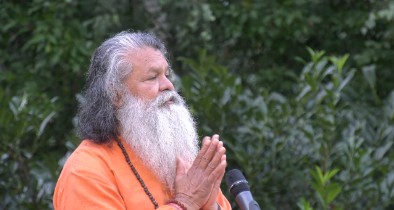
A satsang reflecting on the glory of past saints and the nature of true devotion.
"Gurujī said, 'Do not write anything confidential on a letter.'"
"If they ate all the butter... my cow is with me. The cow is still right here. Feed her with good feed, and milk... you can get as butter more and more fresh."
The speaker, likely a disciple, shares stories illustrating the miraculous nature and profound devotion of saints like Devpurījī and his own Gurujī, Mādhvānandjī. He recounts personal anecdotes, including Gurujī's long walks to visit devotees and a governor's reverence for him, to emphasize that the essence of bhakti is an internal, living practice. He cautions against overly relying on recordings or texts, using the analogy of a cow that continually gives milk to explain that sincere devotion itself is the perennial source of spiritual wealth.
Filming location: Strilky, Czech Republic
Foundations of Yoga in Daily Life
23:55 - 0:48 (53 min)
An evening satsang on integrating yoga into daily existence.
"Yoga in Daily Life is not only these two or three exercises; there is the flow of the nectar of the Gaṅgā."
"Don't depend on anyone. Depend on thyself. And thyself means that which gives us our life."
Swamiji welcomes attendees to the third seminar at the ashram, reflecting on the history of Střekov Castle. He shares personal stories of dietary experiments and spiritual tests to illustrate the practical application of yoga, emphasizing self-reliance, non-violence (ahiṃsā), and the unity of all spiritual paths. The talk blends personal anecdotes, philosophical points from Patañjali, and encouragement for consistent daily practice.
Filming locations: Střekov Castle, Ústí nad Labem, Czech Republic.
American
Australian