
European
Chakras in the human
0:55 - 2:05 (70 min)
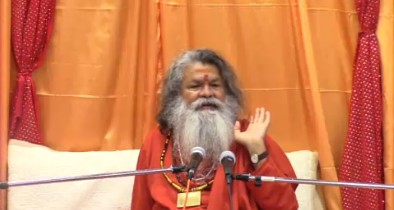
A lecture on the cosmic origin and holistic practice of yoga.
"Yoga is one of the first principles in creation." "That’s called yoga: our physical body, our mental body, and our subtle body. These are three, according to yogic science. Balance, complete."
Swami Paramananda addresses a temple gathering, invited to speak on yoga. He presents a cosmological view of yoga's origin from Anant Brahmāṇḍ (infinite universes), sound (Nāda), and the self-manifested Śiva. He explains the traditional concept of 8.4 million life forms and argues for a vegetarian diet to attain higher consciousness. The talk covers the need for a guru, the 72,000 nerve systems, the five kośas (sheaths), and a detailed, practical guide to the chakras—from the earth chakras in the feet to the higher centers. He concludes with practical techniques like chanting AUM and a stress-relief exercise, ending with a peace mantra.
Filming location: USA
The Means Are the End: On Non-Violence, Patience, and Peace
2:15 - 2:29 (14 min)
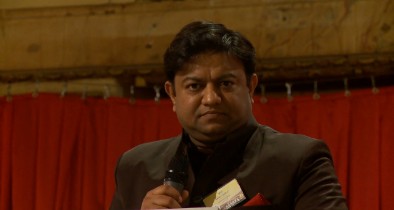
A keynote address on non-violence, patience, and peace at a World Peace Council conference.
"Wrong means will always fetch wrong ends. We must understand the basic fundamental: it is the means which become the ends."
"Happiness is a peaceful state of mind. If you have a peaceful mind, you live in the present, and when you live in the present, you are happy."
Swapnil Kothari, a teacher from India, delivers a speech exploring non-violence as a conscious philosophy, not just a default position. He argues for the primacy of ethical means over ends, asserting that violence breeds violence while non-violence breeds compassion and inner peace. He uses personal anecdotes, historical references, and a humorous story about marital patience to illustrate the stamina required for this path.
Filming location: Prague, Czech Republic
How is the real kundalini in you functioning?
2:35 - 4:24 (109 min)
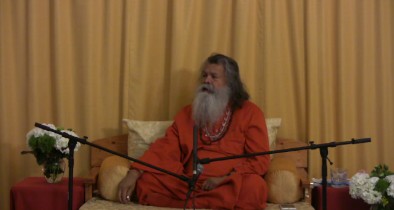
Morning satsang with Vishwaguruji from Alexandria, USA. First, you should know that you want to practice yoga and what yoga is. Yoga needs discipline. You should prepare yourself for yoga practicing. We shouldn't do anything against nature. Chakras give different sounds/mantras in different parts of the body. If you want to see God, see God in your family and friends. Brain strokes and heart attacks happen through the nerve system. Pranayam purifies this system. Don't use artificial things on your body. The subtle body is going with us after death. OM is in the consciousness of all Creation. The sun resonates with the sound of AUM. Our skin gives us all information about the whole universe. God is everywhere.
Words express our devotion
4:30 - 4:45 (15 min)
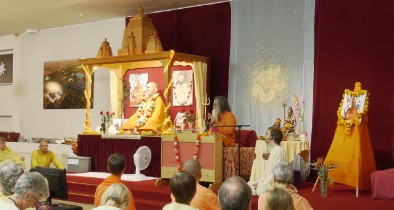
A satsang on the occasion of a holy incarnation day.
"It is said the divine comes to this earth. This is how we show our respect."
"Gurujī says: short and sweet. But we adore them, and that is why we give them glories."
A speaker addresses the gathering on the birth anniversary of their Guru, Swami Madhavānjī, referred to as Holy Gurujī. He reflects on the nature of divine names and incarnations, noting the simplicity of names like Śiva or Jesus, and contrasts transient worldly titles with the enduring respect for the divine essence. He mentions titles bestowed upon the Guru, like Hindu Dharm Samrāṭ, while emphasizing the underlying oneness beyond all designations. The talk concludes with a collective prayer.
Filming location: Strilky, Czech Republic
Jivatma is in the heart
4:30 - 5:12 (42 min)
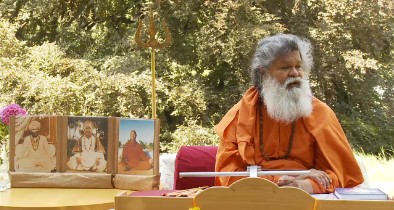
A spiritual discourse on the Anāhata Chakra, love, and liberation.
"The Anāhata Chakra is the center that connects thought, consciousness, intellect, emotions, happiness, and unhappiness."
"When the heart is fixed or placed in the body, then that light comes. That light means the light of life: Jīvan Jyoti."
Swami Ji leads a satsang exploring the heart center as the seat of the soul and the flame of divine love. Using medical analogies, poetry, and teachings from Gurudev, he explains the heart's central role, the fragility of true love compared to spoiled milk, and the journey of the soul seeking shelter. He concludes by translating a bhajan that celebrates liberation from karma through the Guru's grace and mantra practice.
Filming location: Strilky Ashram, Czech Republic
Yoga unites
5:20 - 6:03 (43 min)
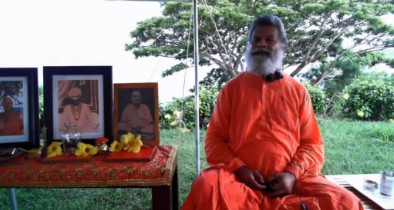
A spiritual discourse on the essence of yoga, the role of the guru, and the significance of spiritual practice.
"Yoga means union, union of Jīvātmā to Paramātmā. A drop of water again falls in the ocean and becomes one."
"Guru Nānak said, 'Your Guru's book is not a book. You are Gurudev himself.'"
The lecturer addresses attendees of a retreat and a global webcast at the start of a new year. He critiques the commercial misunderstanding of yoga in the West and emphasizes that true yoga is the spiritual union of the individual soul with the Divine. He explains the sacred role of a genuine guru, the importance of satsang, and gives detailed instructions on the spiritual significance and correct use of a prayer mala (rosary), illustrating his points with the story of Krishna and his devotee Sudama.
Filming location: Fiji Islands
The Glory of Gurudeva's Name
6:12 - 6:31 (19 min)
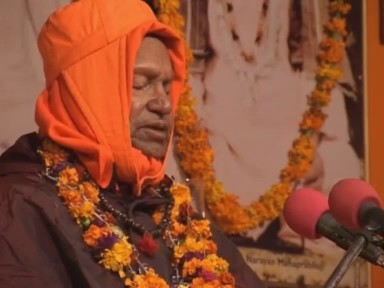
A satsang discourse on the essential role of the true Guru for liberation and bliss.
"Until today, no one in this world has attained the Ātmā-Paramātmā without Gurudev, and no one ever will." "If one chants the Guru's name with faith, one will surely reach the shore."
A speaker addresses the assembly, asserting that true happiness and Self-knowledge come only through grace of a Satguru. He illustrates this with stories of the powerful ascetic Sanghdev, who was liberated by Sant Gyaneshwar, and the egoistic tantric Bhaskarananda, who was humbled by Bhagavan Shri Dip Narayana Mahaprabhuji. The talk emphasizes that rituals and powers are insufficient without the Guru, who alone can dispel ignorance and bestow the bliss of liberation.
Filming location: Bari Khatu, Rajasthan, India
The Pearl of Everlasting Bliss
6:54 - 7:15 (21 min)
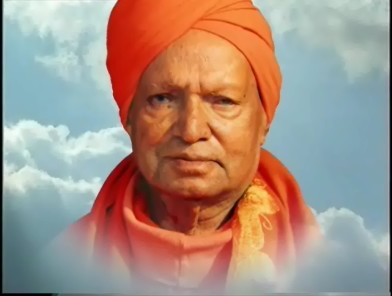
A biographical tribute to the life and legacy of Hindu saint Paramahaṁsa Śrī Svāmī Madhavānandajī.
"My eyes filled with tears, and I fell to my knees. I knew I had found the everlasting light of my life. I was home at last."
"All humans belong to one religion, and that is humanity... ahiṃsā paramo dharma: non-violence is the highest religion."
The narrative chronicles the spiritual journey of Swami Madhavānandaji, from his childhood in Rajasthan and transformative meeting with his guru, Bhagavān Śrīdīp Nārāyaṇa Mahāprabhujī, to his life of devotion, teaching, and global service. It details his initiation, his work establishing ashrams, and his teachings on non-dualism and universal love, culminating in his Mahāsamādhi in 2003 and the continuation of his lineage through his disciple, Swami Māheśvarānandajī.
Filming location: Rajasthan, India; Kathu Ashram, India; Bola Guda Ashram, India; Nepal
See God in your heart
7:17 - 8:12 (55 min)
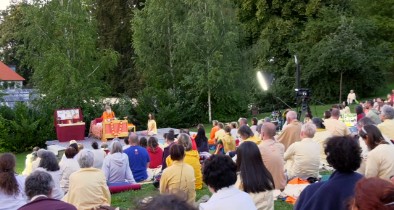
An evening satsang on the essence of Hatha Yoga, the soul's journey, and the necessity of a living guru.
"In every creature, every vegetation, in every stone and every water, there is God."
"Guru is Brahma, Guru is Vishnu, Guru is Shiva. All are they, who? Your Guru. And your Guru is inside."
The lecturer addresses disciples at an ashram meadow, weaving together the topics of Hatha Yoga's chakras and mantras, the transmigration of the soul through different bodies, and the nature of God. He contrasts formless divinity with the embodied, living guru who provides answers, asserting the unique presence of a living God in Sanatana Dharma. The talk includes personal anecdotes, references to scripture, and practical instructions for techniques like Neti.
Filming location: Strilky, Czech Republic
Chakras and Awakening
8:15 - 9:15 (60 min)
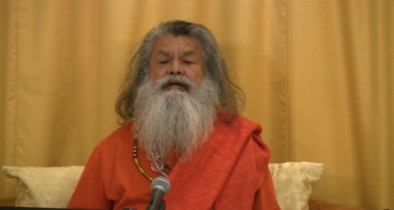
A guided energy practice and teaching session on the subtle body, self-realization, and non-duality.
"Energy will flow to the tips of the fingers... It is your energy, your being here. You are. You are the Divine."
"The soul is only one... Think, do not say that my soul is different and your soul is different... One in all and all in one."
Swami guides participants in arranging the space and leads a practice to feel energy between the palms. He then delivers a discourse on the five bodies (kośas), the chakras in humans and animals, and the nature of self-realization. He clarifies that true awakening is of clarity and joy, not physical sensations, and explains the non-dual concept of one universal soul using analogies of light and water, concluding with a story cautioning against spiritual ego.
Filming location: Alexandria, USA
Strength of the Hatha Yogi
9:20 - 10:13 (53 min)
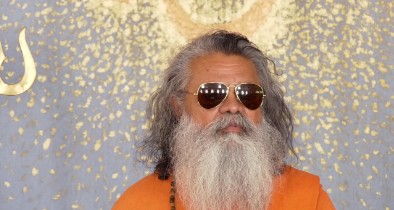
A morning satsang on the meaning and practice of Haṭha Yoga.
"Haṭha yoga has many meanings. So one is called 'haṭha,' meaning 'I will do, I will achieve, I will come through.'"
"In Haṭha Yoga, yogī... you have no fear, you have no anger, you have no anything, and you are divine in this world."
The lecturer leads a discourse exploring the multifaceted definitions of Haṭha Yoga. He begins by describing four types of "haṭha" or willpower: childish (Bāla), feminine (Triyā), royal (Rāja), and yogic (Yoga), illustrating the last with a story of a yogi unmoved by Lord Shiva. He then explains Haṭha Yoga as the union of the solar ("Ha") and lunar ("Tha") energies within the Ājñā Cakra, and outlines the six purification techniques (Shatkarmas) like Netī. The talk weaves together philosophy, subtle anatomy, and practical guidance.
Filming location: Strilky, Czech Republic
Webcast from Strilky
10:20 - 11:27 (67 min)
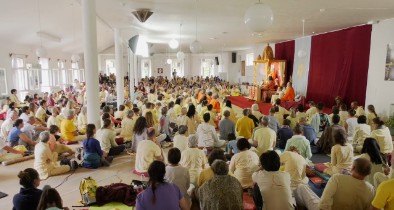
Morning satsang
Satsang from Strilky
11:35 - 12:40 (65 min)
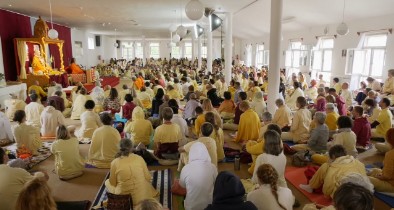
Morning satsang with Vishwaguruji from Strilky Ashram, Czech Republic.
The Awakening of Inner Powers: Yoga in Daily Life
12:45 - 14:02 (77 min)
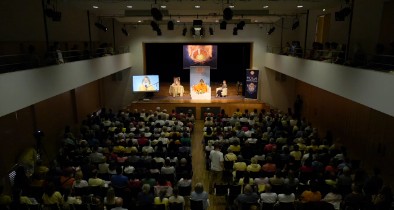
A public lecture on yoga philosophy and practical techniques for daily life.
"Yoga is the science of humans. The science of the yoga Veda is about ourselves, about our inner being."
"My Master Gurudev said, 'One in all and all in one.'"
Swami Paramadvaiti addresses an audience in Brno, exploring the concept of awakening inner power through the yogic model of the five bodies or kośas. He discusses the importance of nourishment, energy, mind, wisdom, and bliss, relating them to health, stress, and the unity of all life. The talk includes a practical demonstration of a technique to release tension by chanting OM with hands covering the ears.
Filming location: Brno, Czech Republic
Wisdom of the Holy Scriptures
14:10 - 15:11 (61 min)
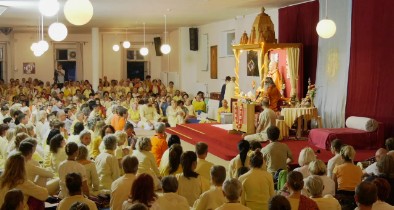
Evening satsang with Vishwaguruji from Strilky Ashram, Czech Republic. Many many Masters knew the past and present and wrote numerous books and scriptures. Some books were destroyed, but light can't be destroyed. Knowledge awakening within us is Guru Vidya. Our brain is slowly becoming sleepy and we don't realize this. Hatha Yoga is to purify ourselves.
The Oneness of Ātmā
15:15 - 16:07 (52 min)
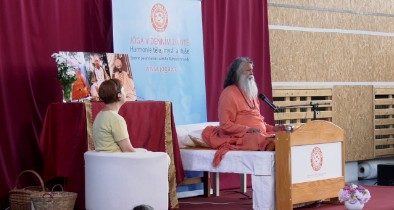
A spiritual discourse on the oneness of the soul and the nature of life.
"Our Gurudev, Holy Gurujī Madhavānandajī, said: 'One in all and all in one.'"
"Water is water; it does not matter which quality. Now, there are some machines, and they are purifying the water."
The lecturer leads a satsang exploring the non-difference between Paramātmā, ātmā, and jīvātmā, using the metaphor of seeds from a single cherry tree. He discusses the proliferation of life in water, on land, and in the air (Jalchar, Thalchar, Nabchar), the inherent violence in nature, and the unique human capacity for mercy and the dharma of non-violence (Ahiṃsā). The talk covers the purification of consciousness, the pitfalls of negative qualities in the chakras, and concludes with an intention to sing a bhajan and meditate.
Filming location: Prague, Czech Republic
Guru Purnima Satsang with Vishwaguruji
16:15 - 17:10 (55 min)
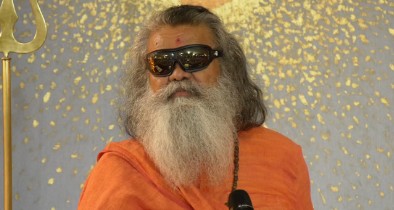
A satsang discourse on the spiritual power and purpose of bhajans, delivered on Guru Purnima.
"When you have problems with your practice... the best thing is to start with bhajans, because bhajans completely change our state of mind."
"In bhajans... usually a question and answer. Within the bhajans are the original words of great sages... it is also a way to preserve the original knowledge."
The speaker, addressing the gathering, explains how bhajans differ from emotional kirtan, serving as a vehicle of preserved wisdom that transforms the singer's energy and connects them to the sage who composed it. The talk also covers the importance of the Yoga in Daily Life certification program, a lost luggage anecdote, and a fundraising appeal for an ashram in Ukraine.
Filming location: Strilky, Czech Republic
Kundalini, chakras, and consciousness
17:15 - 18:16 (61 min)
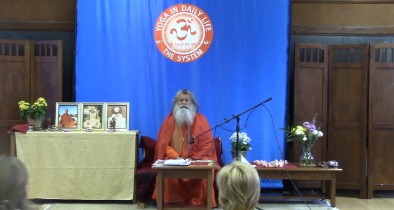
A spiritual discourse on the soul, consciousness, and the chakras, using the metaphor of water.
"Consider the ocean. The ocean is, let us say, forever water... this whole ocean is one soul, and it is inhaling and exhaling."
"Our soul is connected in three qualities... jīva, the soul... ātmā... and paramātmā. 'Param' means the highest of the highest."
The lecturer continues his teachings on kuṇḍalinī and consciousness, explaining the nature of the soul (jīva) through an extended metaphor of water evaporating from the ocean and returning via rain and rivers. He discusses the oneness of all life, the importance of the skin, the resonance of the sacred Oṃ sound, and the structure of the nervous system and chakras, relating these to spiritual awakening and divine consciousness.
Filming location: USA
The Responsibility and Path of a Yoga Teacher in the Yoga in Daily Life System
18:20 - 18:52 (32 min)
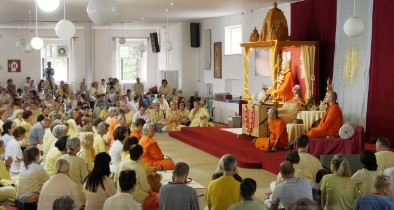
A discourse on the responsibility and conduct of a yoga teacher within the Yoga in Daily Life system.
"A yoga teacher, especially from Yoga in Daily Life, is something very different from a gym or aerobics instructor. It carries a great responsibility."
"We are like that channel... we are this instrument that Gurū Dev, that our paramparā, is using."
Swami Samyagdam shares guidance for yoga teachers, emphasizing the solemn duty to faithfully transmit the system's teachings without alteration. She outlines specific protocols, such as maintaining professional boundaries after class and teaching even a single student, stressing that the role is one of a selfless channel for the lineage's knowledge. The talk warns against using the training for personal gain and underscores the necessity of ongoing devotion through satsang.
Filming location: Strilky, Czech Republic
Live webcast from Strilky
18:30 - 20:00 (90 min)
Farewell Morning satsang with Vishwaguruji from Strilky Ashram, Czech Republic.
Advaita
19:00 - 19:57 (57 min)
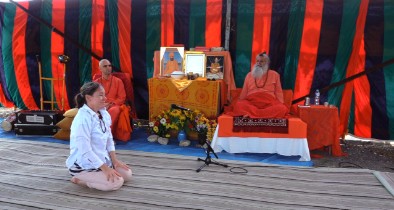
Evening satsang with Vishwaguruji from Yoga retreat in Dungog, Australia. There are 64 different kinds of kriyas but it was chosen only a few of them for Yoga in Daily Life. The teaching of the Masters says that the quality of the Jivatama, Atma and Paramatma is the same. That called non-duality, Advaita. Practicing Asanas.
Life is one
20:05 - 21:04 (59 min)
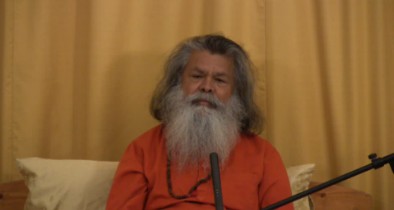
A spiritual discourse on the nature of life, the soul, and non-dual consciousness.
"Life is ever life. Death is ever death. So we are life, and we will always be life. But that is what we call life. So our body is just like we change the dress."
"Within you is the ocean of immortality."
A spiritual teacher addresses a gathering, using the day's rain as a starting point to explore profound themes of eternal life and the self. He explains the illusory nature of death, the layered nature of existence through the five kośas (sheaths), and the journey of the soul using analogies of water cycles and onions. He discusses the concepts of jīva, ātmā, and paramātmā, the principle of yoga as union, and concludes with a parable about resolving negativity to ultimately merge into the ocean of immortality.
Filming location: Alexandria, USA
How to Practice Anusthan
21:05 - 21:51 (46 min)
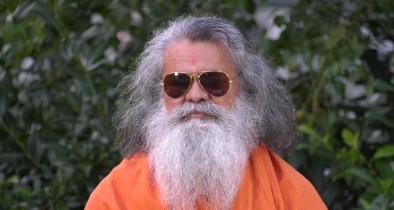
A discourse on the spiritual discipline of anuṣṭhāna during a retreat.
"You are only here for five days... So what can you think? That you will get mokṣa? That you will get vibrations?"
"A proper anuṣṭhāna—I tried once, twice, three times, four times, but I was not successful. That sādhanā lasts all week."
Swami Mahaprabhuji addresses retreat participants, using the analogy of a patient disobeying doctor's orders to illustrate the need for strict discipline in practice. He outlines an ideal daily schedule of nine hours of sādhanā, including detailed explanations of nāḍī śodhana (channel purification) through prāṇāyāma, and emphasizes dietary and behavioral simplicity. The talk blends stern guidance with humorous anecdotes about foraging for mushrooms and enjoying coffee, concluding with a promotion of the health benefits of Bārikhātu Praṇām.
Filming location: Strilky, Czech Republic
Heaven and Hell
21:55 - 22:46 (51 min)
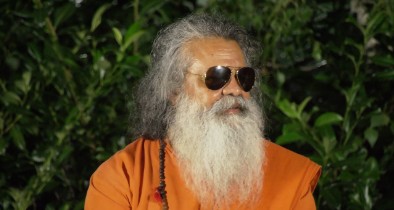
An evening satsang on the illusory nature of time and the urgency of spiritual practice.
"In reality, there is no time. Who created time? Animals do not count it. We humans made time."
"Use it or lose it. This was my mantra, and so I was practicing. Till now, I am 103 years, I am still like this."
The lecturer leads the discourse, exploring the human construct of time and its unstoppable flow. He shares parables, including one of a Himalayan rishi who learns his vast knowledge is but a handful of sand compared to the whole, and another of a yogi whose pride ruins his sādhanā. The key theme is that our limited time must be used for sincere practice and humility, lest it be lost.
Filming location: Strilky, Czech Republic
Feelings between Guru and Disciple
22:50 - 23:48 (58 min)
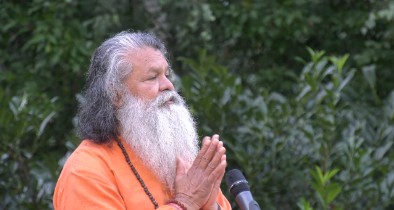
A satsang reflecting on the glory of past saints and the nature of true devotion.
"Gurujī said, 'Do not write anything confidential on a letter.'"
"If they ate all the butter... my cow is with me. The cow is still right here. Feed her with good feed, and milk... you can get as butter more and more fresh."
The speaker, likely a disciple, shares stories illustrating the miraculous nature and profound devotion of saints like Devpurījī and his own Gurujī, Mādhvānandjī. He recounts personal anecdotes, including Gurujī's long walks to visit devotees and a governor's reverence for him, to emphasize that the essence of bhakti is an internal, living practice. He cautions against overly relying on recordings or texts, using the analogy of a cow that continually gives milk to explain that sincere devotion itself is the perennial source of spiritual wealth.
Filming location: Strilky, Czech Republic
Kundalini, chakras, and consciousness
23:50 - 0:51 (61 min)
A spiritual discourse on the soul, consciousness, and the chakras, using the metaphor of water.
"Consider the ocean. The ocean is, let us say, forever water... this whole ocean is one soul, and it is inhaling and exhaling."
"Our soul is connected in three qualities... jīva, the soul... ātmā... and paramātmā. 'Param' means the highest of the highest."
The lecturer continues his teachings on kuṇḍalinī and consciousness, explaining the nature of the soul (jīva) through an extended metaphor of water evaporating from the ocean and returning via rain and rivers. He discusses the oneness of all life, the importance of the skin, the resonance of the sacred Oṃ sound, and the structure of the nervous system and chakras, relating these to spiritual awakening and divine consciousness.
Filming location: USA
American
Australian