
European
Where is our house?
0:00 - 0:53 (53 min)
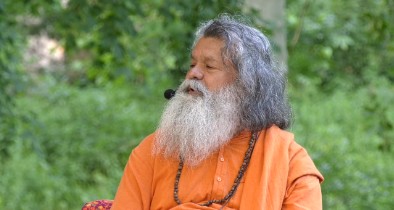
Evening satsang from Yoga Summer retreat in Vep, Hungary. Where to go? We always want to go somewhere. Where is our house? Story of a soldier in the winter night. The story of God and a bamboo tree. Where is a peaceful place? We should understand Devpuriji's and Mahaprabhuji's miracles. They were Avadhutas. To be with Gurudev and the darshan is very important. Where the light is lit, bugs will go there. Our Parampara is originated from Alakhpuriji from the Satya Yuga. It is very easy to miss the way on the spiritual path.
Wisdom and bhakti of the saints are in the Bhajans
1:00 - 1:55 (55 min)
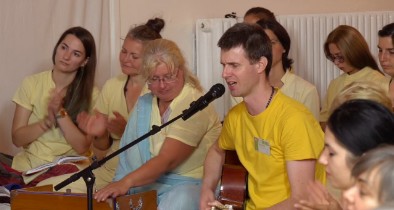
Evening satsang, Strilky Ashram, Czech Republic.Explanation of bhajans Hata Chora Mana and Juga Juga Jivo Maheshwarananda. Within bhajans is the knowledge and experience of the saints. Explanation of the bhajan Sabda Sanehi Mhari Jatra. Those who have Guru bhakti are always protected. The story of king Harichandra, Dhruva and Pralad.
Around the world - Satsang YC Blanicka
2:00 - 2:06 (6 min)
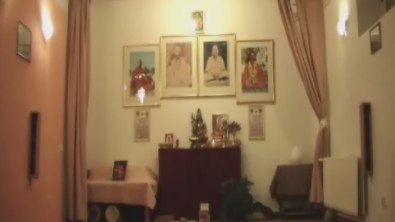
New Year satsang from Blanicka Yoga Centre Prague.
Around the world - Shivaratri at Jadan Ashram
2:10 - 2:17 (7 min)
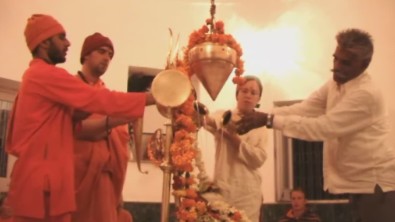
Guru Purnima Satsang with Vishwaguruji
2:23 - 3:18 (55 min)
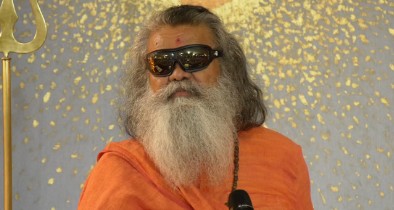
A satsang discourse on the spiritual power and purpose of bhajans, delivered on Guru Purnima.
"When you have problems with your practice... the best thing is to start with bhajans, because bhajans completely change our state of mind."
"In bhajans... usually a question and answer. Within the bhajans are the original words of great sages... it is also a way to preserve the original knowledge."
The speaker, addressing the gathering, explains how bhajans differ from emotional kirtan, serving as a vehicle of preserved wisdom that transforms the singer's energy and connects them to the sage who composed it. The talk also covers the importance of the Yoga in Daily Life certification program, a lost luggage anecdote, and a fundraising appeal for an ashram in Ukraine.
Filming location: Strilky, Czech Republic
The Responsibility and Path of a Yoga Teacher in the Yoga in Daily Life System
3:19 - 3:51 (32 min)
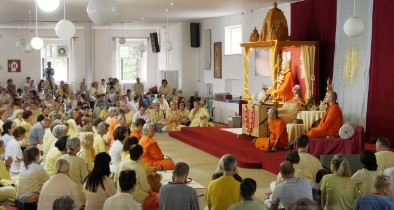
A discourse on the responsibility and conduct of a yoga teacher within the Yoga in Daily Life system.
"A yoga teacher, especially from Yoga in Daily Life, is something very different from a gym or aerobics instructor. It carries a great responsibility."
"We are like that channel... we are this instrument that Gurū Dev, that our paramparā, is using."
Swami Samyagdam shares guidance for yoga teachers, emphasizing the solemn duty to faithfully transmit the system's teachings without alteration. She outlines specific protocols, such as maintaining professional boundaries after class and teaching even a single student, stressing that the role is one of a selfless channel for the lineage's knowledge. The talk warns against using the training for personal gain and underscores the necessity of ongoing devotion through satsang.
Filming location: Strilky, Czech Republic
The Thirsty Horse and the Path of Spirituality
3:52 - 4:44 (52 min)
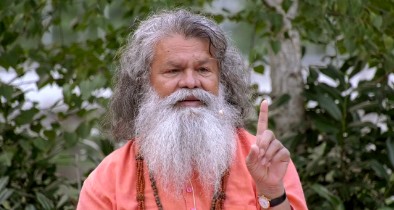
An evening satsang on overcoming worldly stress and pursuing spiritual practice.
"We are thirsty horses in this world, from little children to older people. We are all in this stress."
"If you want to quench your thirst for spirituality, then you should do it... amidst the sound of the generator... amidst this noise of the world."
The lecturer addresses the pervasive stress of modern life, using the parable of a thirsty horse afraid of a water pump to illustrate the need to practice spirituality amidst worldly noise. He discusses the inescapable realities of time and karma, explaining concepts of sin (pāpa) and piety (puṇya) and the impurities of the inner instrument (Antaḥkaraṇa). He narrates the transformative stories of the sage Valmiki, a bandit who became a seer through chanting, and the poet Tulsidas, who was inspired by his wife to turn his love toward God. The talk emphasizes continuing spiritual practice (sādhanā) with humility despite life's obligations.
Filming location: Strilky, Czech Republic
Wisdom of the Holy Scriptures
4:30 - 5:31 (61 min)
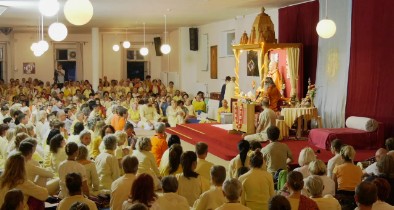
Evening satsang with Vishwaguruji from Strilky Ashram, Czech Republic. Many many Masters knew the past and present and wrote numerous books and scriptures. Some books were destroyed, but light can't be destroyed. Knowledge awakening within us is Guru Vidya. Our brain is slowly becoming sleepy and we don't realize this. Hatha Yoga is to purify ourselves.
You are king of your senses
4:50 - 5:42 (52 min)
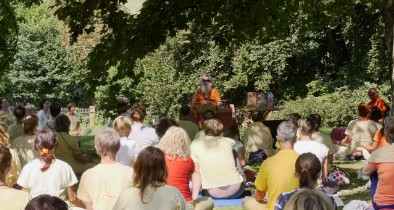
Morning satsang with Vishwaguruji from Strilky Ashram, Czech Republic. Relaxation and thinking about life aim and how to achieve it. The five bodies or koshas. Feeling oneness with the Supreme.
Nature of our Atma
5:50 - 6:55 (65 min)
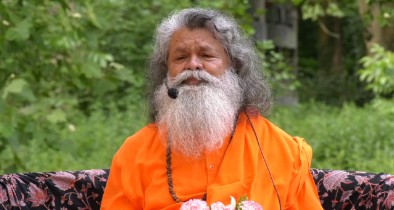
A spiritual discourse exploring the nature of mental habits (vṛtti) and the soul's (ātmā) oneness with the divine.
"Vṛtti is what you are doing. You have good food to eat. But after eating this and that, you go outside to eat some ice cream... So that is a vṛtti."
"Below is the ocean, Shiva, and this one drop is Jīva... Now, if this drop falls into the ocean, then this Jīva becomes Shiva."
Swami Vishwaguruji addresses a gathering, weaving together teachings on discipline, the nature of the mind, and the ultimate unity of the self. He uses anecdotes, like the reputation of his disciples and a story about a dinner party, to illustrate vṛtti. He then explains the soul's journey using the metaphor of a water droplet returning to the ocean (Śiva), discusses the concept of Svayambhū (self-manifested divinity), and concludes with prayers and mantras emphasizing meditation and inner purity.
Filming location: Vép, Hungary
The proper way of teaching Yoga
7:00 - 8:01 (61 min)
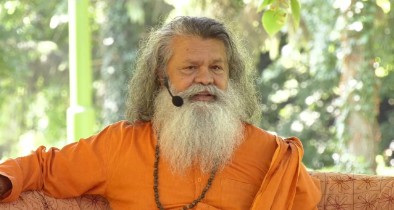
A spiritual discourse offering guidance for yoga teachers and students, emphasizing discipline and the teacher's role.
"A yoga teacher practicing Śarabha Āsana—our Śarabha Āsana is about forty-eight or forty-nine years old—and so our exercises and practice were very hard to change."
"And the teacher should be the one who takes you into your heart. Into whose heart? The teacher's heart."
Swami Ji addresses a gathering, instructing on the necessity of discipline (Aṣṭāṅga Yoga Anuśāsanam) and clear boundaries in yoga teaching. He advises separating students by level, warns against teacher attachment, and critiques the commercialization of practices like Kriyā Yoga. The talk blends practical advice with spiritual commentary, referencing Patañjali and using anecdotes about cultural differences to illustrate the need for focus and respect in practice.
Filming location: Vép, Hungary
Advice for practicing Yoga
8:05 - 8:56 (51 min)
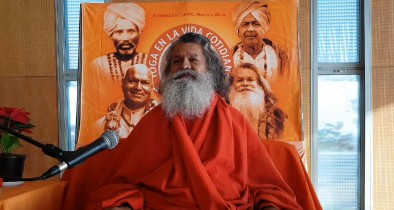
Satsang with Vishwaguruji from Barcelona, Spain. The body consists of five elements. These element are present within us and outside as well. There are different techniques to purify and balance the elements. We should take care of the body while practicing Yoga. Pranayama is also important to practice. It is said that every breath is counted.
Wisdom and bhakti of the saints are in the Bhajans
9:00 - 9:55 (55 min)
Evening satsang, Strilky Ashram, Czech Republic.Explanation of bhajans Hata Chora Mana and Juga Juga Jivo Maheshwarananda. Within bhajans is the knowledge and experience of the saints. Explanation of the bhajan Sabda Sanehi Mhari Jatra. Those who have Guru bhakti are always protected. The story of king Harichandra, Dhruva and Pralad.
The Master key
10:00 - 11:16 (76 min)
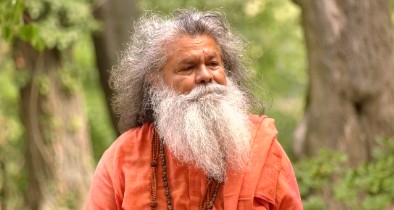
A satsang reflecting on learning, concentration, and the student-teacher relationship.
"Tons of theory cannot be compared with a gram of practice."
"To know how, we have everything, but we have an accident here of our spine... you have to get that inner key from the master."
The lecturer addresses attendees after a week of practice and philosophical talks. He questions how much they retained from the lectures, leading to a discussion on the limits of intellectual understanding versus experiential learning. Using stories, analogies like "honey on the elbow," and the parable of a master key in a stone gate, he emphasizes that true knowledge comes from a guru's direct transmission and dedicated practice, not merely scholarly theory.
Filming location: Strilky, Czech Republic
Bhagwan Sri Deep Narayan Mahaprabhuji
11:20 - 12:27 (67 min)
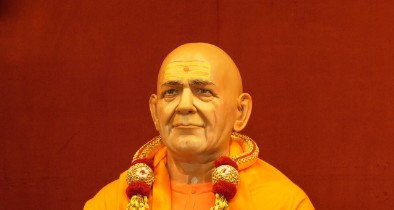
Mahaprabhuji's Mahasamadhi anniversary satsang. Singing and translation of the bhajan, 'Prakash Punj Amrita Ke Sagar' - written by Holy Guruji about His master, Bhagwan Sri Deep Narayan Mahaprabhuji. Brahman is the everlasting and eternal Light. Its Saguna, form, is the most important for discilples. Because of negative thinking and impurities, some are not able to realize this. Vishwaguruji explains the mantra, Om Prabhu Deep Niranjan Saba Dukha Banjan, and tells his experineces with Sri Mahaprabhuji.
Manas and family life
12:35 - 13:44 (69 min)
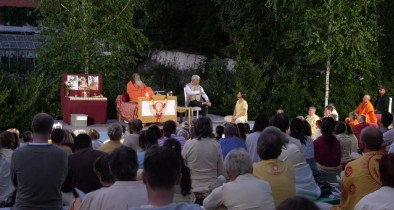
A spiritual discourse on the centrality of the mind (Manomaya Kośa) and its role in life, relationships, and society.
"The center of our life is the Manomaya Kośa." "We have to come back to our Manomaya Kośa."
The speaker, addressing a gathering, explains the five sheaths (kośas), focusing on the mental sheath as the seat of desire and perception. He discusses traditional life stages (āśramas), gender roles as expressions of cosmic principles (Puruṣa and Śakti), and the societal consequences of neglecting emotional and spiritual development. He illustrates the power of devotion and perception through a story of Lord Kṛṣṇa, Rukmiṇī, and Rādhā, and concludes by emphasizing mind control as the key to transforming all action into worship.
Filming location: Strilky, Czech Republic
Guru is Brahma
13:50 - 14:55 (65 min)
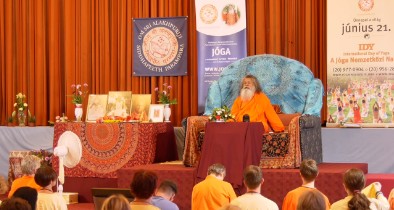
A spiritual discourse on the value of singular focus and devotion to the guru.
"If we have, and all of us have, a lot of pictures, we are something like these ten-year-old little guys who try to collect all Pokémons. Our mantra is 'Collect all.'"
"Therefore, it is said: 'Dhyāna mūlaṁ guru mūrtiḥ, pūjā mūlaṁ guru padam, mantra mūlaṁ guru vākyaṁ, mokṣa mūlaṁ guru kṛpā.'"
The speaker, Swami Vivek Puri, shares reflections from a satsang, emphasizing the spiritual power of focusing on one mantra and one form of the guru. He argues that collecting too many spiritual images dilutes their value and hinders clear visualization at critical moments like death. The talk expands into the profound reverence for the guru's feet (caraṇāmṛta), illustrated with stories from the tradition and the recent awarding of the Yoga Ratna to Vishva Guruji in London.
Filming location: Vép, Hungary
Practising fifth level of Yoga in Daily Life System
15:00 - 16:26 (86 min)
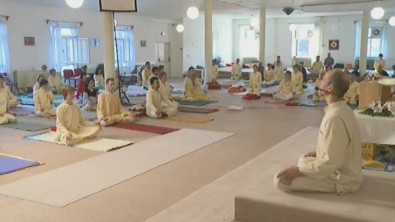
Morning practising. Fifth level of the System" Yoga in Daily Life" from Mahaprabhudeep Ashram, Strilky, Czech Republic on 9th of July 2010.
Sri Alakhpuriji and the Himalayas
16:30 - 16:58 (28 min)
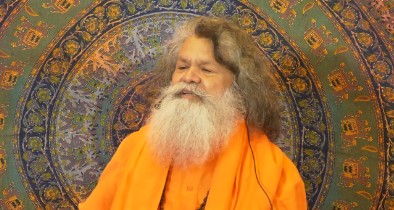
A spiritual discourse on the sacredness of the Earth and the Himalayas.
"Our Earth is a living planet, a Living Earth. If God incarnates, if God comes on this earth, God performs His miraculous things here."
"That place is indescribable... Between these beautiful, mighty mountains is a beautiful valley where Ālakpurījī is always residing."
Swami Maheshvarananda delivers a talk, venerating the Earth as a living, holy creation and detailing the profound spirituality of the Himalayas. He describes the region as the abode of divine incarnations like Śiva and great Siddhas such as Ālakpurījī, sharing anecdotes from pilgrimages and emphasizing the need for inner purity to experience this divine reality. The discourse concludes with a blessing for the journey.
Filming location: Vép, Hungary
The Purifying Path of Haṭha Yoga: An Introduction to Ṣaṭkarma
17:00 - 17:47 (47 min)

An instructional webcast introducing the Haṭha Yoga purification techniques (Ṣaṭkarma).
"Haṭha Yoga is not only that we clean and purify our whole system, our whole body, but it also has a very great effect on our nervous system."
"Haṭha means willpower to do these Haṭha Yoga techniques. And with this, you also get the willpower, the strength to persevere, to continue, to get rid of the laziness."
A teacher from the Śrīkī Ashram, joined by assistants, explains the purpose and benefits of the six purification acts. The session features a detailed, practical demonstration of Jala Netī (nasal cleansing with salt water) and Kapāla Bhāti, followed by an introduction to Agni Sāra and the Naulī Kriyā for digestive health. The instruction emphasizes using natural elements, proper technique, and the holistic effects on physical and energetic systems.
Filming location: Strilky, Czech Republic
Different aspect of discipline
17:55 - 19:15 (80 min)
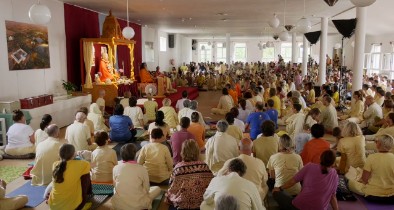
Morning satsang with Vishwaguruji from Strilky Ashram, Czech Republic. It is always relaxing and beautiful to be here on retreat. Utilize this feeling for spiritual sadhana. Children need fewer toys and more education to learn harmony and understanding. There are three points concerning family life. Discipline is very important to us. The water in different bottles is the same - similarly, Atma is one; Jiva Atma is one.
Strength of the Hatha Yogi
18:00 - 18:53 (53 min)
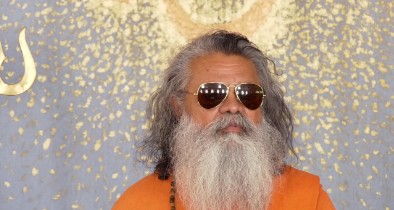
A morning satsang on the meaning and practice of Haṭha Yoga.
"Haṭha yoga has many meanings. So one is called 'haṭha,' meaning 'I will do, I will achieve, I will come through.'"
"In Haṭha Yoga, yogī... you have no fear, you have no anger, you have no anything, and you are divine in this world."
The lecturer leads a discourse exploring the multifaceted definitions of Haṭha Yoga. He begins by describing four types of "haṭha" or willpower: childish (Bāla), feminine (Triyā), royal (Rāja), and yogic (Yoga), illustrating the last with a story of a yogi unmoved by Lord Shiva. He then explains Haṭha Yoga as the union of the solar ("Ha") and lunar ("Tha") energies within the Ājñā Cakra, and outlines the six purification techniques (Shatkarmas) like Netī. The talk weaves together philosophy, subtle anatomy, and practical guidance.
Filming location: Strilky, Czech Republic
Nature of our Atma
19:20 - 20:25 (65 min)
A spiritual discourse exploring the nature of mental habits (vṛtti) and the soul's (ātmā) oneness with the divine.
"Vṛtti is what you are doing. You have good food to eat. But after eating this and that, you go outside to eat some ice cream... So that is a vṛtti."
"Below is the ocean, Shiva, and this one drop is Jīva... Now, if this drop falls into the ocean, then this Jīva becomes Shiva."
Swami Vishwaguruji addresses a gathering, weaving together teachings on discipline, the nature of the mind, and the ultimate unity of the self. He uses anecdotes, like the reputation of his disciples and a story about a dinner party, to illustrate vṛtti. He then explains the soul's journey using the metaphor of a water droplet returning to the ocean (Śiva), discusses the concept of Svayambhū (self-manifested divinity), and concludes with prayers and mantras emphasizing meditation and inner purity.
Filming location: Vép, Hungary
The proper way of teaching Yoga
20:30 - 21:31 (61 min)
A spiritual discourse offering guidance for yoga teachers and students, emphasizing discipline and the teacher's role.
"A yoga teacher practicing Śarabha Āsana—our Śarabha Āsana is about forty-eight or forty-nine years old—and so our exercises and practice were very hard to change."
"And the teacher should be the one who takes you into your heart. Into whose heart? The teacher's heart."
Swami Ji addresses a gathering, instructing on the necessity of discipline (Aṣṭāṅga Yoga Anuśāsanam) and clear boundaries in yoga teaching. He advises separating students by level, warns against teacher attachment, and critiques the commercialization of practices like Kriyā Yoga. The talk blends practical advice with spiritual commentary, referencing Patañjali and using anecdotes about cultural differences to illustrate the need for focus and respect in practice.
Filming location: Vép, Hungary
Understand and follow your Guruji
21:35 - 22:32 (57 min)
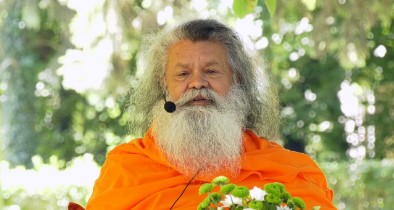
Morning Satsang from Yoga Summer Retreat from Vep, Hungary. Our path and exercises were designed to help us reach Self-realization. There are commercialized ways of anusthan but the result is not for sure. You should follow and understand the instruction of your Guruji, otherwise, you will go with empty hands. Best place for learning is at the feet of Gurudev. The relation between Atma, Jivatma and Jiva. You will get the light again when Jiva goes again into the heart.
Kapalabhati pranayama
22:40 - 23:33 (53 min)
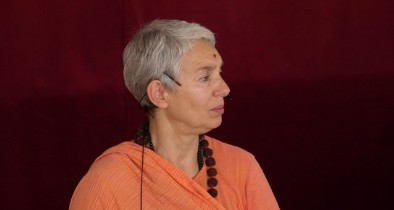
Morning Satsang, Strilky Ashram, Czech Republic. There are blessings, protection and guidance in our mantra. Explanation of the bhajan Milta He Saccha. One life is not enough to study our whole phenomenon. With the help of Gurudev, the divine name, and practice, we tune our frequency closer to the Oneness. In order to reach a high peak, we should not run and we need a guide, one who knows the way by heart and not from GPS! How to practice and utilize kapalabhati pranayama.
Where is our house?
23:40 - 0:33 (53 min)
Evening satsang from Yoga Summer retreat in Vep, Hungary. Where to go? We always want to go somewhere. Where is our house? Story of a soldier in the winter night. The story of God and a bamboo tree. Where is a peaceful place? We should understand Devpuriji's and Mahaprabhuji's miracles. They were Avadhutas. To be with Gurudev and the darshan is very important. Where the light is lit, bugs will go there. Our Parampara is originated from Alakhpuriji from the Satya Yuga. It is very easy to miss the way on the spiritual path.
American
Australian