
European
Why we do Anusthan
0:45 - 1:45 (60 min)
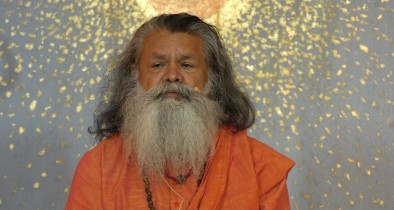
A discourse on the purpose and practice of Anuṣṭhāna, a spiritual observance.
"Anuṣṭhāna is when you make a saṅkalpa. Saṅkalpa means you promise yourself to undertake a practice for a certain purpose: for spiritual development, for good health, for success."
"We pray that all creatures should live in peace, harmony, and health. God protect all. This is our Anuṣṭhāna for this year."
A spiritual teacher explains the traditional practice of Anuṣṭhāna, a vowed observance for specific purposes like family harmony, health, or agricultural success. He contrasts its ideal use for unity and blessings with modern distortions, like praying for divorce. The talk expands to advocate for Anuṣṭhāna as a prayer for universal well-being, encompassing family, community, nature, and all living creatures, emphasizing harmony with the natural world and compassion for animals.
Filming location: Strilky, Czech Republic
Attributes of Shiva
1:50 - 1:58 (8 min)
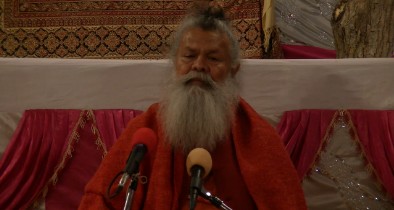
Evening satsang with Vishwaguruji from Khatu, Rajasthan, India. Shiva is the creator as well as the liberator; he is the merciful one.
Around the world - Opening of new YIDL center in Nadlac, Romania
2:00 - 2:40 (40 min)
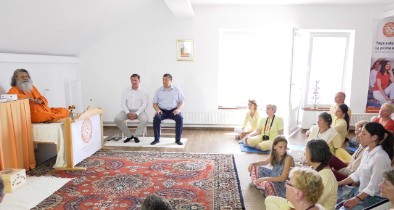
Morning satsang with Vishwaguruji from Nadlac, Romania.
Different aspect of discipline
2:45 - 4:05 (80 min)
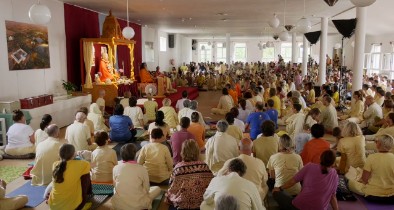
Morning satsang with Vishwaguruji from Strilky Ashram, Czech Republic. It is always relaxing and beautiful to be here on retreat. Utilize this feeling for spiritual sadhana. Children need fewer toys and more education to learn harmony and understanding. There are three points concerning family life. Discipline is very important to us. The water in different bottles is the same - similarly, Atma is one; Jiva Atma is one.
Narada cursed Vishnu
4:15 - 4:58 (43 min)
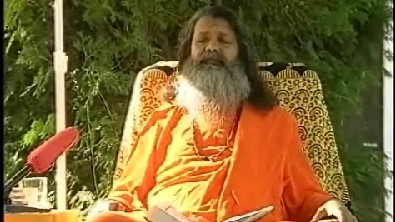
A narration of the mythological story of Nārada's curse upon Lord Viṣṇu, followed by a discourse on its spiritual meaning.
"You made me a monkey, and I tell you, when you will be in great trouble, only the monkey will help you, nobody else."
"The merciful Lord said, 'Nārada, that was all My icchā. It was My will.'"
The speaker recounts how the sage Nārada, enraged after being tricked by Viṣṇu's illusion (māyā), confronts the Lord to curse Him. In his anger, Nārada pronounces a curse that Viṣṇu will incarnate as Rāma, suffer separation from His wife, and be aided by monkeys. Viṣṇu accepts the curse, explaining it was His own divine will, and later dissolves the illusion. A remorseful Nārada seeks forgiveness, and Viṣṇu promises to give him a liberating Kriyā. The talk includes a tangential account of the churning of the ocean (Samudra Manthan) to illustrate Nārada's accusations.
Filming location: Vép, Hungary
The Serpent's Blessing: A Story of Kuṇḍalinī
4:30 - 5:25 (55 min)
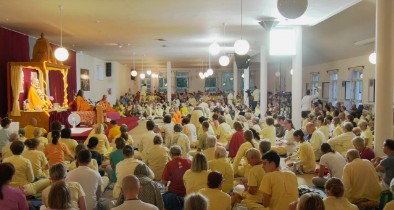
A satsang on the spiritual concept of Kundalini energy, using storytelling and cautionary advice.
"Don't run behind such things."
"God will give us what we need. And when God is giving, he is giving."
He narrates a detailed, allegorical story about a man who, seeking Kundalini awakening, is given a flute by a master, uses it to attract a cobra, and then loses the snake to a hypnotized monkey. The story serves as a warning against frivolous or greedy seeking of spiritual powers.
Filming location: Strilky, Czech Republic
Shiva and the Chakras
5:05 - 6:30 (85 min)
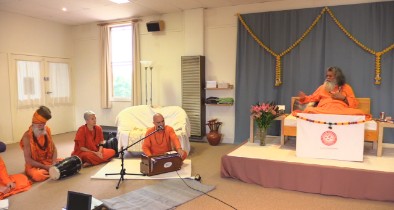
Evening satsang with Vishwaguruji from Melbourne, Australia. One of the best ways to memorize something is to create a little story about it. This is similar with songs. Vishwaguruji explains the meaning of the ancient story about the nectar of immortality rising from the churning of the ocean. The first lower chakras in the feet are the so-called earth chakras; chakras further up in the legs are connected with vegetation; and then continur up to the animal qualities.
Respect the family traditions
6:35 - 8:09 (94 min)
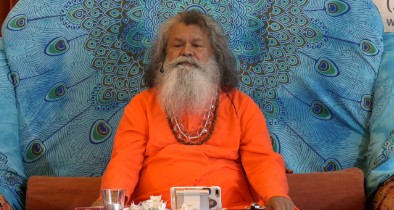
An evening satsang on the oneness of life, contrasting human existence with the natural world.
"Perhaps it is a prayer. They are giving out happiness."
"God gave them some knowledge, just nature, and they are following it."
The speaker observes the innate joy and wisdom in birds and ants, using them to reflect on human discontent and complexity. He explores themes of the singular life force (jīva) within all creatures, the spiritual concepts of ātmā and paramātmā, and the karmic responsibilities within family and marriage. The talk weaves between nature observations, spiritual philosophy, and social commentary, concluding with a bhajan.
Filming location: Vép, Hungary
The nature of the Guru
8:15 - 8:55 (40 min)
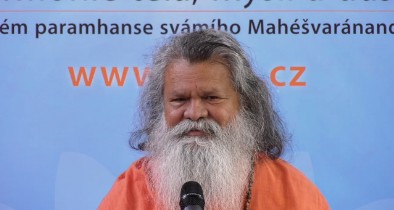
A spiritual discourse on the oneness of the soul and the path to supreme consciousness.
"Our ātmā, your ātmā, every ātmā is one ātmā."
"Step by step, our ātmā, our soul, will merge into the eternal. This is Gurudev's Vākya."
He describes the spiritual journey through the five layers of the body (kośas) toward higher states like Mahātmā and Paramātmā, emphasizing that this one soul exists in every being and element. The talk includes practical advice on meditation (dhun), avoiding negative speech, and humorous observations on language misunderstandings.
Filming location: Prague, Czech Republic
Kapalabhati pranayama
9:00 - 9:53 (53 min)
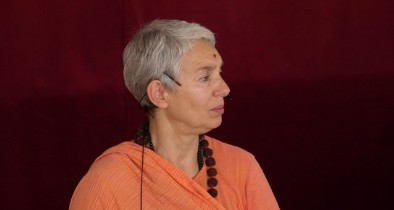
Morning Satsang, Strilky Ashram, Czech Republic. There are blessings, protection and guidance in our mantra. Explanation of the bhajan Milta He Saccha. One life is not enough to study our whole phenomenon. With the help of Gurudev, the divine name, and practice, we tune our frequency closer to the Oneness. In order to reach a high peak, we should not run and we need a guide, one who knows the way by heart and not from GPS! How to practice and utilize kapalabhati pranayama.
Sri Devpurijis miracle on Mount Abu
10:00 - 11:08 (68 min)
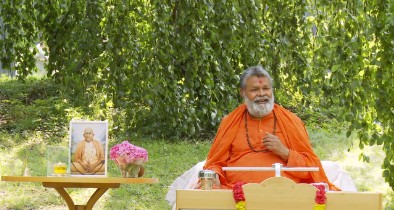
A satsang discourse on spiritual practice, tradition, and the power of sacred places.
"Our summer seminars here in Střílky are a sādhanā camp. Our main goal during these few weeks of retreat and holiday is to heal ourselves—not only physically but also mentally and spiritually."
"Try not to lose time at seminars on coffee, on nonsense talk... Not losing time means simply to enjoy, to be aware of your breathing, to repeat your mantra."
The lecturer addresses the gathering at the Strelka ashram, framing the summer retreat as a healing "sādhanā camp." He emphasizes using the time for deep practice, illustrated by the analogy of becoming a "wooden spoon" that retains the sweet taste of satsang. The talk commemorates the Mahāsamādhi of Bhagavān Sadāśiva Devpurījī and the divine day of Pārvatī, recounting a miraculous story of Devpurījī defending Hindu worship from a British officer at Mount Abu's Nakhī Talāb. He connects this to themes of cultural understanding, purification of the senses through yoga, and the enduring power of sacred sites like Guru Śikhar.
Filming location: Strilky, Czech Republic
Svargaloka
11:15 - 12:20 (65 min)
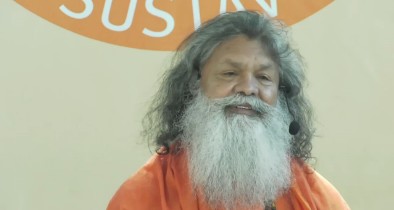
Morning satsang with Vishwaguruji from Rijeka, Croatia. There are only two things: Ayurveda and Yoga. Yoga will be successful through doing karma yoga. Karma means action. In kaliyuga we are have become slaves of money. Good actions lead us to Heaven/ Svarga Loka, while devotion to the master leads us to the highest world of Brahman - Brahma Loka.
We are all the light of Shiva
12:25 - 13:40 (75 min)
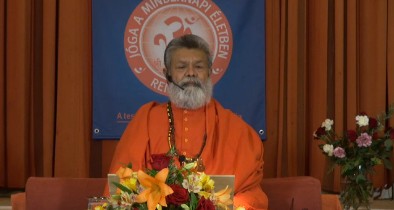
A spiritual discourse weaving philosophy, mythology, and practical teachings.
"There is no moon and sun, and no stars. That light is beyond the sun and moon. And that light is the light of self-realization."
"Gaṇeśa is the first remembered, and Gaṇeśa is that which removes all the obstacles... Therefore, in the foundation we put Ganesha."
Swami Ji delivers a satsang exploring non-dual awareness, symbolized as the ever-present light beyond celestial bodies. He explains the unity of Brahmā, Viṣṇu, and Śiva through analogies of human roles, and delves into the significance of Gaṇeśa as the foundational energy. The talk covers Vāstu Śāstra (architecture science), the symbolism of serpents (Nāga-Nāginī) representing Śiva and Śakti, and concludes with a lengthy, illustrative story about Shiva, Parvati, and the parrot in the Amarnath cave, which conveys lessons on mantra transmission, detachment, and the origin of the sage Sukadeva.
Filming location: Vép, Hungary
Mahamrityunjaya Mantra And Swara Yoga
13:45 - 14:54 (69 min)
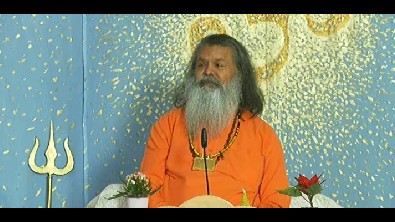
Morning Satsang with Swamiji from Strilky Ashram, Czech Republic. The Mahamrityunjaya mantra is known as the great death - conquering mantra, also called the Tryambakam mantra and is a verse of the Rig Veda. It is addressed to Lord Shiva. This mantra is a great protection and prevention of accidents and negative happenings. Swara Yoga enables us to understand the nature of breath and its influence on the body. Different modes of breathing leads to different types of actions, physical, mental and spiritual. Swara means sound of one's own breath and its fundamental application is to realize the breath as being the medium of the cosmic life force
Morning Yoga practice, Umag, Croatia (7/9)
15:00 - 16:54 (114 min)
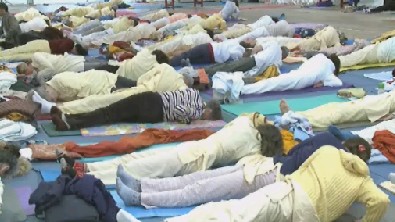
Morning Yoga practice from the international Yoga retreat Umag, Croatia on 1st of October
Shiva changed poison into nectar
17:00 - 17:52 (52 min)
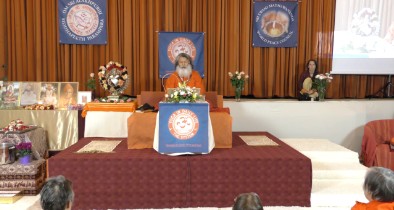
Evening satsang with Vishwaguruji from Vep, Hungary.
Guru Tattva cleans everything
18:00 - 18:48 (48 min)
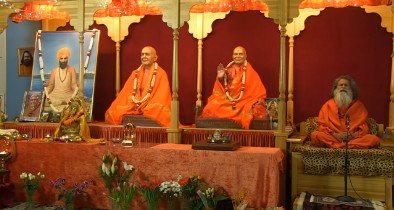
A Guru Purnima discourse on the essence of the Guru principle and spiritual practice.
"We have two Gurus. One is our Gurudev in saguṇa svarūpa, in a physical body... The second is nirguṇa, that is within ourself; the same Gurudev is within."
"So Holy Gurujī answered, 'In Ahmedabad, I was with Gurujī... When your mother comes, which temptation do you have? When your sister comes, what kind of temptation do you have?... So why don't you awaken that kind of thought in you, in which form you want to see?'"
A spiritual teacher delivers a satsang on Guru Purnima, exploring the dual nature of the Guru as both formless consciousness and physical guide. He discusses purifying the mind through sacred perception—seeing others as mother, sister, or daughter—to transform energy and dissolve ego. The talk weaves in teachings on the Nātha lineage, the power of Guru's words as divine nectar, and the necessity of surrendering the heart to achieve equal vision and liberation.
Filming location: Vienna, Austria
OM
18:55 - 19:47 (52 min)
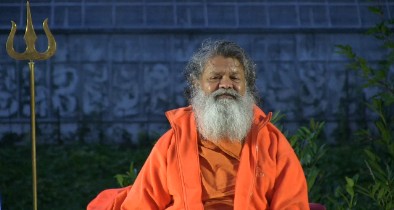
An evening satsang on the sacred sound OM and the nature of divinity.
"The Vedas say, Nāda-rūpa-parabrahma: the Supreme is the resonance. The entire universe is full of that resonance."
"Bhagavān Kṛṣṇa says that for being a physical being, it is good to worship Saguṇa, the one with form. Nirguṇa is in your Self and everywhere."
A spiritual teacher guides the gathering in OM chanting technique, explaining its origin at the navel. He delves into the nature of God, distinguishing between the personal (Saguṇa) and impersonal (Nirguṇa) divine, supported by references from the Bhagavad Gītā. The discourse explores the philosophy of sound, the role of consciousness and energy (icchā śakti) in creation, and the eternal nature of Sanātana Dharma and the guru-disciple tradition. The session concludes with practical announcements for the ashram schedule.
There is life in every creature
19:30 - 20:27 (57 min)
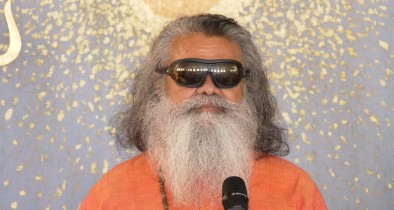
A spiritual discourse on the meaning of glory, respect, and human compassion.
"Glory means 'long live,' not merely in a physical sense, but forever."
"If you give glory to someone, it comes back to you."
A spiritual teacher explains the concept of "Jaya" or glory as an eternal honor offered to God, masters, and one another. Using parables and anecdotes—including a story of Mother Mary's mercy—he illustrates how offering respect and compassion uplifts both the giver and receiver. The talk broadens to discuss humanity, culture, and the importance of sāttvic nourishment for spiritual practices like Kuṇḍalinī yoga, touching upon the five bodily sheaths (kośas).
Filming location: Strilky, Czech Republic
Being a human
19:55 - 20:26 (31 min)
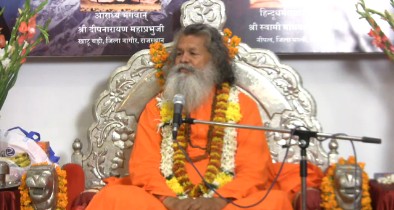
A spiritual discourse on human life, discipline, and the sacred culture of Jaipur.
"When it was established, about four or five hundred meters away, there was a small village called Sodala. From there, you could see a very small cottage, and then there was nothing—only sand and sand and sand."
"In the same way, when the human soul enters into the human body, God gives us freedom, but then we become bound to karma. And that karma is what we call action."
A spiritual teacher addresses devotees at the Shyamnagar ashram in Jaipur. He describes the ashram's founding and extols Jaipur as a sacred city of wisdom and festivals, specifically mentioning the upcoming Śrāvaṇī festival. He discusses the human journey, the importance of following traditional principles (saṃskāras) and discipline, and the inescapable nature of karma and divine awareness, illustrating points with a parable about a disciple, a pigeon, and a story about a king debating diet.
Filming location: Jaipur, Rajasthan, India
Value of Satsang and practicing
20:30 - 21:23 (53 min)
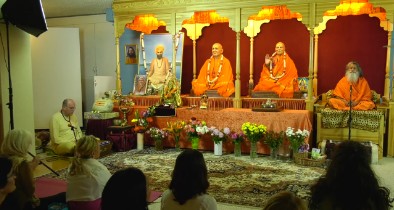
A satsang discourse on the rarity of spiritual community and the foundational science of yoga.
"Sant Samāgam Hari Kathā... these are rare."
"Yoga is that science whose original seed... is Śiva."
The lecturer leads a satsang in Vienna, emphasizing the preciousness of such spiritual gatherings. He explores yoga as a divine science, explaining how the Sanskrit alphabet resonates within the body's chakras and discussing the origins of consciousness as the union of Śiva and Śakti. The talk covers the importance of balanced practice, the nature of mental impurities (vikāras), and the karmic consequences of thought and action.
Filming location: Vienna, Austria
The nature of Vikara
21:30 - 22:22 (52 min)
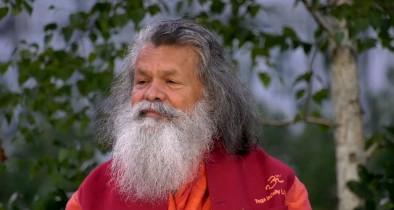
An evening satsang on the nature of vikāra (modifications) and the light of true knowledge.
"Vikāra is also in everyone. It is not easy to remove the vikāra. Physical vikāra is physical vikāra, and the mental vikāras are mental vikāras."
"Jñāna is one of the best protectors for our life... what to do and what not to do."
The lecturer leads a discourse exploring the physical and mental modifications that affect human beings. He discusses the anatomy of the body as vikāra, and the mental vikāras like anger, jealousy, and ego that lie dormant in the intellect. Using analogies like popcorn to describe anger and a story of a yogi and a skeptical scientist, he emphasizes the role of true wisdom (jñāna) and spiritual practice in overcoming these impurities. The talk concludes with a bhajan.
Filming location: Strilky, Czech Republic
You are king of your senses
22:30 - 23:22 (52 min)
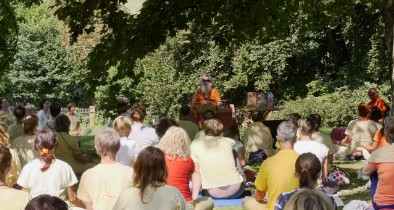
Morning satsang with Vishwaguruji from Strilky Ashram, Czech Republic. Relaxation and thinking about life aim and how to achieve it. The five bodies or koshas. Feeling oneness with the Supreme.
The way to Sri Devpuriji's cave
23:25 - 0:10 (45 min)

Evening satsang from Strilky Ashram, Czech Republic. Sadhvi Umapuri reports on the Sri Devpuriji cave trip. The journey started from Delhi towards Rishikesh - at the foot of the Himalayas - then Josimath and Badrinath, at an elevation of about 3000m. Sri Alakhpuriji's cave is located near Vasudhara Falls, in a beautiful valley near the 'last village' of India called Mana. Lakshmi Van is the first landmark towards Sri Devpuriji's cave, which is located at about 5000m, close to the peak called Neelkanth.
American
Australian