
European
Why we do Anusthan
0:40 - 1:40 (60 min)
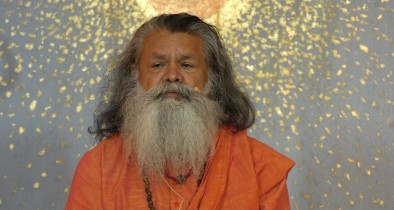
A discourse on the purpose and practice of Anuṣṭhāna, a spiritual observance.
"Anuṣṭhāna is when you make a saṅkalpa. Saṅkalpa means you promise yourself to undertake a practice for a certain purpose: for spiritual development, for good health, for success."
"We pray that all creatures should live in peace, harmony, and health. God protect all. This is our Anuṣṭhāna for this year."
A spiritual teacher explains the traditional practice of Anuṣṭhāna, a vowed observance for specific purposes like family harmony, health, or agricultural success. He contrasts its ideal use for unity and blessings with modern distortions, like praying for divorce. The talk expands to advocate for Anuṣṭhāna as a prayer for universal well-being, encompassing family, community, nature, and all living creatures, emphasizing harmony with the natural world and compassion for animals.
Filming location: Strilky, Czech Republic
Unity in Diversity
1:45 - 1:58 (13 min)

A promotional overview of the "Yoga in Daily Life" organization and its global humanitarian and peace initiatives.
"Yoga in Daily Life is a system of yoga and meditation designed for health and lifestyle management, based on four main principles: physical health, social health, mental health, and spiritual health."
"War arises out of greed for power or difference in religious beliefs. But no matter on what side of the wall someone dies, remember that a member of our human society has lost their life."
The video outlines the structure and charitable work of the international Yoga in Daily Life system, founded by Paramahaṁsa Svāmī Māheśvarānanda (Svāmījī). It details local, national, and global projects—from community classes to UN initiatives—and focuses on Svāmījī's advocacy for interfaith dialogue and peace, highlighting a major 2002 conference and a meeting with the Dalai Lama. The message centers on tolerance, unity in diversity, and Gandhian principles.
A Divine Call and the Search for a True Guru
2:00 - 2:48 (48 min)
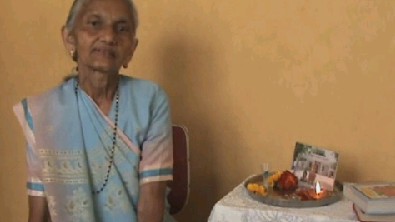
A devotee recounts her spiritual journey, from a divine call to finding her Guru.
"I turned to my right side, and I could see Śrī Kṛṣṇa in my heart, holding a small bowl... and asking for kheer." "He looked into my eyes and said, 'You are looking for a true guru, haven’t you?'"
Rukhswani, an Indian woman living in New Zealand, describes a 1992 vision of Lord Krishna compelling her to make a milk pudding, which leads her to a satsang with Swāmī Śrī Māheśvarañjī. She expresses her search for a true guru and later travels to India, where she meets Holy Gurujī, receives mantra-dīkṣā, and undertakes translation work for him. She shares stories of divine grace, obedience, and her profound emotional connection to her Guru over subsequent years.
Filming location: Wellington, New Zealand
Pranayama and Kundalini
2:55 - 4:07 (72 min)
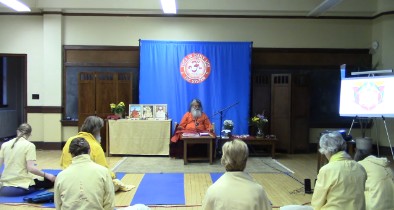
Evenining satsang with Vishwaguruji from Garrison, NY, USA. There are three nadis or nerves that are very important. Different levels of nadi sodhan pranayama should be practiced for about three months after each other. The Soul is in the prison of the elements, closed in the body. After becoming free it follows the destiny.
Only wisdom can digest ego
4:15 - 5:13 (58 min)
Lecture from Vep, Hungary
Wisdom and bhakti of the saints are in the Bhajans
5:00 - 5:55 (55 min)
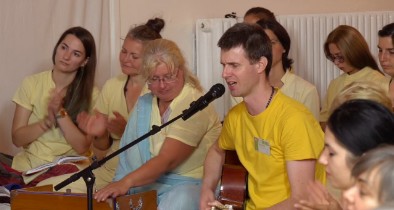
Evening satsang, Strilky Ashram, Czech Republic.Explanation of bhajans Hata Chora Mana and Juga Juga Jivo Maheshwarananda. Within bhajans is the knowledge and experience of the saints. Explanation of the bhajan Sabda Sanehi Mhari Jatra. Those who have Guru bhakti are always protected. The story of king Harichandra, Dhruva and Pralad.
Consciousness and Space
5:20 - 5:52 (32 min)
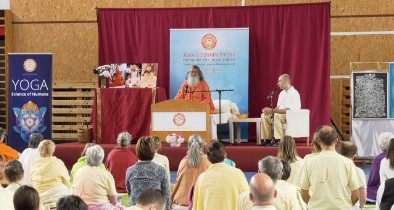
A spiritual discourse on the non-dual nature of consciousness, using the metaphor of water.
"In reality, space does not expand. Because it has no limitation, nothing that can expand and contract. Similarly, that consciousness."
"Eko'ham, dvitīyo nāsti. I am one. Rest is the duality."
The speaker explores the oneness of Ātmā and Paramātmā, arguing that true consciousness and space are limitless and indivisible. Using analogies of a mālā's thread and the water cycle—from ocean to vapor to rain and back—they illustrate how individual souls (jīvā) appear separate but are fundamentally one. The talk references bhajans by Mahāprabhujī's disciples and concludes with reflections on destiny, karma, and the spiritual path of Kriyā.
Filming location: Prague, Czech Republic
Pranayama and Kundalini
6:00 - 7:12 (72 min)
Evenining satsang with Vishwaguruji from Garrison, NY, USA. There are three nadis or nerves that are very important. Different levels of nadi sodhan pranayama should be practiced for about three months after each other. The Soul is in the prison of the elements, closed in the body. After becoming free it follows the destiny.
Respect the family traditions
7:20 - 8:54 (94 min)
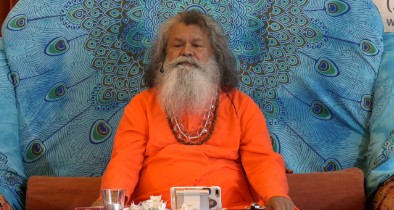
An evening satsang on the oneness of life, contrasting human existence with the natural world.
"Perhaps it is a prayer. They are giving out happiness."
"God gave them some knowledge, just nature, and they are following it."
The speaker observes the innate joy and wisdom in birds and ants, using them to reflect on human discontent and complexity. He explores themes of the singular life force (jīva) within all creatures, the spiritual concepts of ātmā and paramātmā, and the karmic responsibilities within family and marriage. The talk weaves between nature observations, spiritual philosophy, and social commentary, concluding with a bhajan.
Filming location: Vép, Hungary
Atma is in every creature
9:00 - 10:02 (62 min)
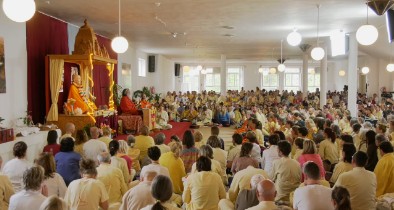
A satsang discourse on spiritual lineage, the nature of the self, and practical wisdom.
"Śrī Guru Ātmā Parāptamā Ho Mātma Puruṣottama, Sakal Jag ke Antaryāmī, Cara Car kī Ātmā Prabhu... in this one line, everything is covered."
"To which doctor will you go? To the doctor in the picture, or to a real, alive doctor?"
Swami Vishwaguruji addresses the gathering, weaving teachings on the essence of the Guru and the universal Ātmā (soul) from the paramparā (lineage) with humorous, practical advice on topics from kingship and knowledge to hair and modern fashion. A disciple then reflects on the profound value of having a living Guru to transmit these teachings.
Filming location: Strilky, Czech Republic
The soul and sound
10:10 - 11:43 (93 min)
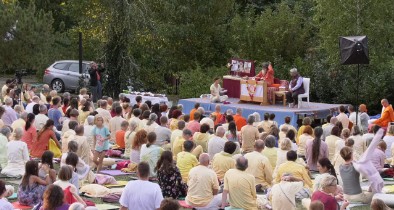
Evening satsang from Strilky Ashram, Czech Republic. Sri Gulabji spoke about the formation of the soul according to the ancient Vedic scriptures. The soul is covered by the five koshas, or bodies. At the beginning of the universe, there was only one matter called Brahma. When Shakti awakened, it created the bindu, with the centre and its surroundings. Communication can take place without sound, for example when the child is in the mother's womb. Vishwaguruji explains how to study and understand the scriptures.
Respect the family traditions
11:50 - 13:24 (94 min)
An evening satsang on the oneness of life, contrasting human existence with the natural world.
"Perhaps it is a prayer. They are giving out happiness."
"God gave them some knowledge, just nature, and they are following it."
The speaker observes the innate joy and wisdom in birds and ants, using them to reflect on human discontent and complexity. He explores themes of the singular life force (jīva) within all creatures, the spiritual concepts of ātmā and paramātmā, and the karmic responsibilities within family and marriage. The talk weaves between nature observations, spiritual philosophy, and social commentary, concluding with a bhajan.
Filming location: Vép, Hungary
Shiva and the Chakras
13:30 - 14:55 (85 min)
Evening satsang with Vishwaguruji from Melbourne, Australia. One of the best ways to memorize something is to create a little story about it. This is similar with songs. Vishwaguruji explains the meaning of the ancient story about the nectar of immortality rising from the churning of the ocean. The first lower chakras in the feet are the so-called earth chakras; chakras further up in the legs are connected with vegetation; and then continur up to the animal qualities.
Morning Yoga practice, Umag, Croatia (3/9)
15:00 - 16:33 (93 min)
Morning Yoga practice from the international Yoga retreat Umag, Croatia, on the 27 of September
Why we do Anusthan
16:40 - 17:40 (60 min)
A discourse on the purpose and practice of Anuṣṭhāna, a spiritual observance.
"Anuṣṭhāna is when you make a saṅkalpa. Saṅkalpa means you promise yourself to undertake a practice for a certain purpose: for spiritual development, for good health, for success."
"We pray that all creatures should live in peace, harmony, and health. God protect all. This is our Anuṣṭhāna for this year."
A spiritual teacher explains the traditional practice of Anuṣṭhāna, a vowed observance for specific purposes like family harmony, health, or agricultural success. He contrasts its ideal use for unity and blessings with modern distortions, like praying for divorce. The talk expands to advocate for Anuṣṭhāna as a prayer for universal well-being, encompassing family, community, nature, and all living creatures, emphasizing harmony with the natural world and compassion for animals.
Filming location: Strilky, Czech Republic
Bhagwan Shiva in Fiji
17:45 - 17:59 (14 min)
A spiritual discourse on the sacred geography of Fiji.
"On this island resides Bhagavān Śiva. There is a beautiful mountain between Raki Raki and Nandi... this divine Śakti is residing on that mountain."
"At the peak of that mountain, there is a beautiful lake, akin to Mānasarovara near Kailāśa mountain. The water of that lake is utterly pure, without pollution."
The lecturer describes the island of Fiji as an ancient, sacred landscape inhabited by Lord Shiva and the Divine Mother. He details a mountain formation visible from Nadi Airport as a monument of Shakti and a holy lake with Shiva's footprint at its peak. He also mentions the growing Nag stone in Lambasa. A Fijian devotee, Jayaprakash, confirms the stories, adding context about the Nag Mandir and the blessings of the islands.
Filming location: Fiji Islands
Around the world - Yoga exercises specifically for women
18:00 - 18:36 (36 min)
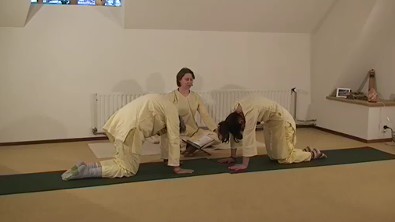
A guided yoga session focused on asanas for menstrual well-being and pelvic health.
"From my own experience, I can confirm it is truly helpful."
"Feel the effect of this exercise; it is also very good to do in the morning for a stiff back."
An instructor leads a gentle sequence designed for menstrual concerns, beginning with relaxation and yogic breathing in Anandāsana. The practice includes apānāsana (for the lower back and pelvic area), marjari (cat pose), hip-opening preparatory poses, and mālāsana (a squatting pose), with a personal anecdote shared about its benefits. The session continues with setu āsana (bridge pose) and a side-lying balance pose, concluding with a short relaxation and a final Om.
Around the world - Practice in Ukraine
18:40 - 19:30 (50 min)
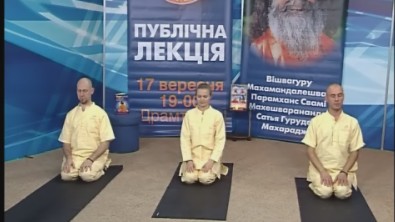
A guided yoga practice session from the Yoga in Daily Life system.
"Physical relaxation leads to spiritual relaxation. Relaxation is an important element for the proper practice of yogic exercises."
"Ānanda Āsana translates as 'the posture of bliss.' Observe how bliss flows throughout your entire body."
An instructor leads a comprehensive sequence of postures (āsanas), breathwork (prāṇāyāma), and relaxation. The practice begins and ends with Ānanda Āsana for deep relaxation, and includes abdominal breathing, spinal twists, stretches, and joint mobility exercises while lying, sitting, and standing. The session concludes with a final relaxation and a moment of gratitude.
Filming location: UK
Kapalabhati pranayama
19:30 - 20:23 (53 min)
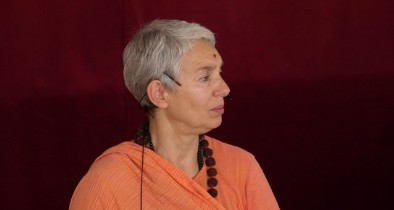
Morning Satsang, Strilky Ashram, Czech Republic. There are blessings, protection and guidance in our mantra. Explanation of the bhajan Milta He Saccha. One life is not enough to study our whole phenomenon. With the help of Gurudev, the divine name, and practice, we tune our frequency closer to the Oneness. In order to reach a high peak, we should not run and we need a guide, one who knows the way by heart and not from GPS! How to practice and utilize kapalabhati pranayama.
We are here to learn more
19:35 - 19:55 (20 min)
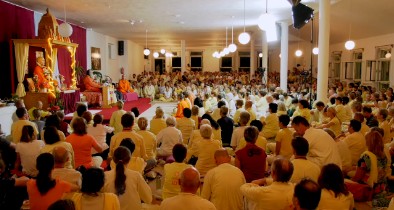
An introductory welcome and opening talk for a spiritual gathering featuring guest speaker Dr. Gulabji Kothari.
"Gulābjī will be with us for a few days and will perhaps give one talk a day, where you may also ask questions."
"Yoga is the science for humans, not merely āsanas and prāṇāyāma, but something beyond."
Swami Maheshwarananda welcomes attendees and honored guest Dr. Gulabji Kothari, a Vedic scholar, to the program. He introduces other visiting swamis and teachers, emphasizing the global reach of Yoga in Daily Life. The core theme is the human intellect's need for spiritual teaching and the deeper science of yoga for realizing the soul. Dr. Kothari gives brief remarks, expressing happiness to be in the Czech Republic and previewing the next day's topic on the body, karma, and the selfless transformation of the individual.
Filming location: Strilky, Czech Republic
Vegetarian cooking lesson 20
20:00 - 20:18 (18 min)
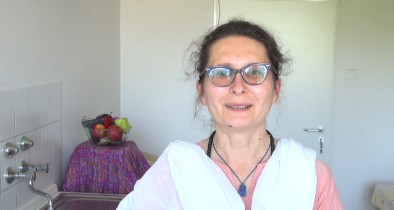
Vegetarian cooking lesson
The nature of the Guru
20:25 - 21:05 (40 min)
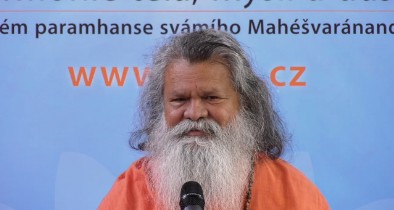
A spiritual discourse on the oneness of the soul and the path to supreme consciousness.
"Our ātmā, your ātmā, every ātmā is one ātmā."
"Step by step, our ātmā, our soul, will merge into the eternal. This is Gurudev's Vākya."
He describes the spiritual journey through the five layers of the body (kośas) toward higher states like Mahātmā and Paramātmā, emphasizing that this one soul exists in every being and element. The talk includes practical advice on meditation (dhun), avoiding negative speech, and humorous observations on language misunderstandings.
Filming location: Prague, Czech Republic
Maya is a big cheater
21:10 - 22:22 (72 min)
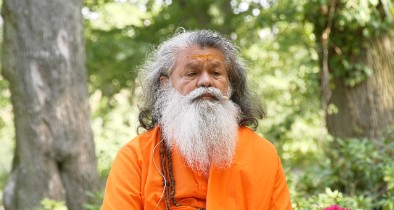
A spiritual discourse weaving astrology, philosophy, and cautionary tales about illusion.
"God or the Sun does not make a difference between humans and animals. So do not think the sun is only for us; that is human thinking."
"Māyā is illusion. Such an illusion that you think that is all. I cannot be without this: my money, my wife, my husband."
Swami Maheshvaranand leads a morning satsang, beginning with the astrological significance of the day. He discusses planetary influences on all life, the importance of discerning auspicious signs, and the pervasive, deceptive power of Māyā (illusion), illustrated with the parable of a deadly snake. He explores liberation through the teachings of Kabīr and Maṅgīlālji, emphasizing sādhanā and transcending duality to merge with Brahman, thus escaping the cycle of rebirth and even the great dissolution (Mahāpralaya). The talk includes a story about Kabīr witnessing a grinding mill, and concludes with a devotee sharing a testimony about a charitable school project.
Filming location: Strilky, Czech Republic
Going to Brahmaloka
22:30 - 23:29 (59 min)
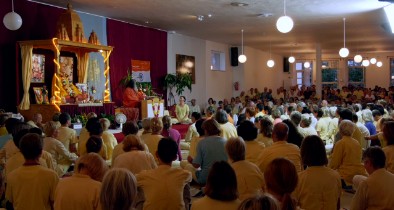
An introductory talk on yoga philosophy and practice at an ashram.
"Even if you are an advanced practitioner, you should do the beginner exercises at least once a week, or you must practice them before performing advanced postures."
"Tons of theory is nothing; a gram of practice."
The lecturer addresses attendees, clarifying misconceptions about terms like Aṣṭāṅga and Haṭha Yoga while emphasizing the foundational importance of basic practices in the "Yoga in Daily Life" system. He discusses the challenges of Vairāgya (detachment) and Jñāna Yoga, using anecdotes and humor to illustrate the gap between theory and practice, and outlines the week's upcoming program of Kriyā Yoga, meditation, and fasting.
Filming location: Strilky, Czech Republic
Pranayama and Kundalini
23:35 - 0:47 (72 min)
Evenining satsang with Vishwaguruji from Garrison, NY, USA. There are three nadis or nerves that are very important. Different levels of nadi sodhan pranayama should be practiced for about three months after each other. The Soul is in the prison of the elements, closed in the body. After becoming free it follows the destiny.
American
Australian