
European
The source of our knowledge is Gurudev
0:10 - 1:10 (60 min)
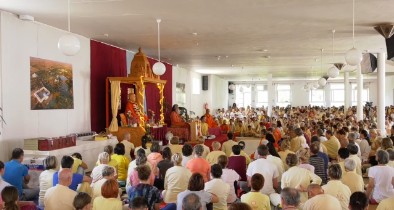
Morning satsang with Vishwaguruji from Strilky Ashram, Czech Republic. We can't step twice into the same river because the water continues flowing. The source of the water is not the water well, it is coming from the ocean. Similarly, the source of our knowledge is Gurudev. Brahmanandji was very learned and was thinking that he is the best Guru. But, in the presence of Gurudev, the truth becomes clear. There is immense energy, power, and ability residing in the human body.
Consciousness and Space
1:15 - 1:47 (32 min)
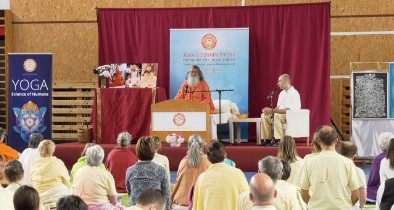
A spiritual discourse on the non-dual nature of consciousness, using the metaphor of water.
"In reality, space does not expand. Because it has no limitation, nothing that can expand and contract. Similarly, that consciousness."
"Eko'ham, dvitīyo nāsti. I am one. Rest is the duality."
The speaker explores the oneness of Ātmā and Paramātmā, arguing that true consciousness and space are limitless and indivisible. Using analogies of a mālā's thread and the water cycle—from ocean to vapor to rain and back—they illustrate how individual souls (jīvā) appear separate but are fundamentally one. The talk references bhajans by Mahāprabhujī's disciples and concludes with reflections on destiny, karma, and the spiritual path of Kriyā.
Filming location: Prague, Czech Republic
Watering the Garden of bhaktas
1:50 - 1:57 (7 min)
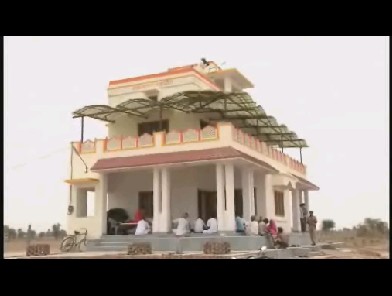
"On the 9th and 10th July 2009, Swamiji made a short tour to visit our ashrams in Nipal and Bola Guda. In the villages, towns and cities on the way He was eagerly awaited by his bhaktas"
Around the world - Yoga for senior HU
2:00 - 2:22 (22 min)
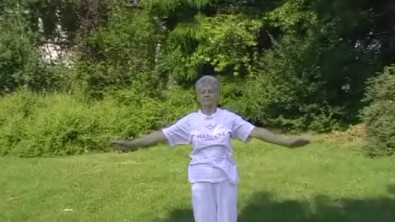
Yoga Asanas, Pranayam and meditation presented by 78 years old Hack Antalne and her expirences with practising Yoga in daily life. Production in August 2010 by Tata YIDL group, Nyergesujfalu, Hungary.
Om Ashram
2:30 - 2:39 (9 min)
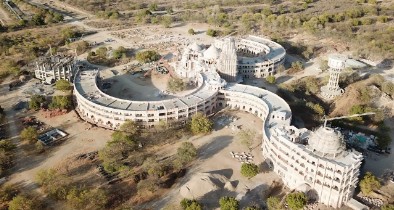
A promotional video about the Omkara Mahavira, a large-scale world peace monument and humanitarian complex under construction in Rajasthan.
"Since 1993, this structure has been under construction for the welfare of humanity, the protection of animals and nature, for teaching yoga, meditation, and philosophy."
"To bring this vision to full fruition, it needs everybody’s contribution. You are not a drop in the ocean. You are the entire ocean in a single drop."
The video details the vision of yogi Paramahamsa Swami Maheshvarananda to build the world's largest Om symbol, which will contain 108 residential compartments. It highlights the existing, operational facets of the site including a free school and college, a hospital, and a large artificial lake for water conservation. The narrative connects this to the global activities of the "Yoga in Daily Life" system, such as tree planting and animal shelters, framing the entire project as a holistic effort for peace, health, and environmental revival. It concludes with a call for donations to complete the monument.
Filming locations: Jhadan, Rajasthan, India.
Manas and family life
2:45 - 3:54 (69 min)
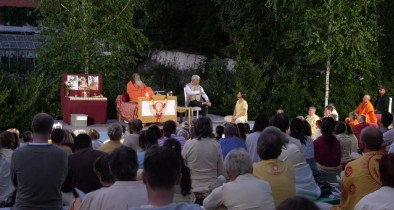
A spiritual discourse on the centrality of the mind (Manomaya Kośa) and its role in life, relationships, and society.
"The center of our life is the Manomaya Kośa." "We have to come back to our Manomaya Kośa."
The speaker, addressing a gathering, explains the five sheaths (kośas), focusing on the mental sheath as the seat of desire and perception. He discusses traditional life stages (āśramas), gender roles as expressions of cosmic principles (Puruṣa and Śakti), and the societal consequences of neglecting emotional and spiritual development. He illustrates the power of devotion and perception through a story of Lord Kṛṣṇa, Rukmiṇī, and Rādhā, and concludes by emphasizing mind control as the key to transforming all action into worship.
Filming location: Strilky, Czech Republic
Om Ashram
4:00 - 4:09 (9 min)
A promotional video about the Omkara Mahavira, a large-scale world peace monument and humanitarian complex under construction in Rajasthan.
"Since 1993, this structure has been under construction for the welfare of humanity, the protection of animals and nature, for teaching yoga, meditation, and philosophy."
"To bring this vision to full fruition, it needs everybody’s contribution. You are not a drop in the ocean. You are the entire ocean in a single drop."
The video details the vision of yogi Paramahamsa Swami Maheshvarananda to build the world's largest Om symbol, which will contain 108 residential compartments. It highlights the existing, operational facets of the site including a free school and college, a hospital, and a large artificial lake for water conservation. The narrative connects this to the global activities of the "Yoga in Daily Life" system, such as tree planting and animal shelters, framing the entire project as a holistic effort for peace, health, and environmental revival. It concludes with a call for donations to complete the monument.
Filming locations: Jhadan, Rajasthan, India.
In the bliss of bhajans
4:15 - 5:26 (71 min)
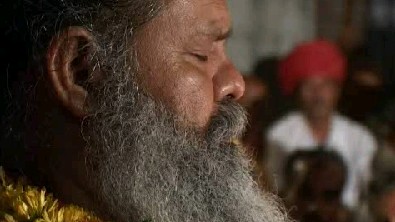
Bhajans from different ashrams in India
Science of development into the Supreme
5:30 - 6:26 (56 min)
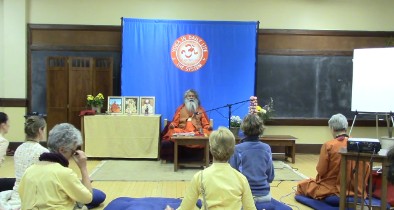
Evenining satsang with Vishwaguruji from Garrison, NY, USA. Firstly, we should understand our whole being. For that we need Masters, practice and realize ourselves: Who am I? The best meditation is to come within thyself. There are five bodies or layers accompanying the Soul. Knowledge has no end.
Message of the three monkeys
6:30 - 7:36 (66 min)
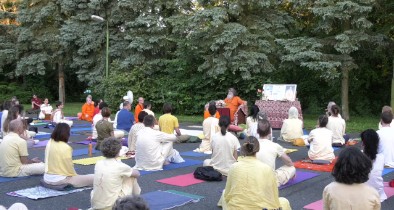
A spiritual discourse on the universal ātmā and the misuse of the label "fanatic."
"Every ātmā, each and every entity—where there is life, there is ātmā too." "Do not speak badly. If someone tells you something bad, you can either stop them, plug your ears, or don’t give any commentary."
A spiritual teacher leads a satsang, beginning with the principle that the soul (ātmā) exists in all living beings, advocating for respect for all life. The talk then focuses on refuting the negative label of "fanatic," arguing it is often misapplied to genuine devotion, humility, and non-violence. He uses parables, including one about Gandhi, and shares personal anecdotes to illustrate that true spirituality involves seeing good, speaking good, and serving others (seva), while criticizing hypocrisy.
Filming location: Vép, Hungary
The Master key
7:40 - 8:56 (76 min)
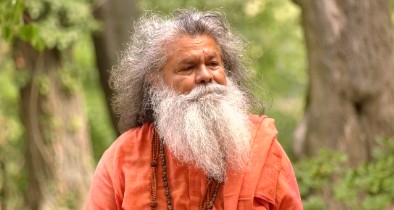
A satsang reflecting on learning, concentration, and the student-teacher relationship.
"Tons of theory cannot be compared with a gram of practice."
"To know how, we have everything, but we have an accident here of our spine... you have to get that inner key from the master."
The lecturer addresses attendees after a week of practice and philosophical talks. He questions how much they retained from the lectures, leading to a discussion on the limits of intellectual understanding versus experiential learning. Using stories, analogies like "honey on the elbow," and the parable of a master key in a stone gate, he emphasizes that true knowledge comes from a guru's direct transmission and dedicated practice, not merely scholarly theory.
Filming location: Strilky, Czech Republic
The Master key
9:00 - 10:16 (76 min)
A satsang reflecting on learning, concentration, and the student-teacher relationship.
"Tons of theory cannot be compared with a gram of practice."
"To know how, we have everything, but we have an accident here of our spine... you have to get that inner key from the master."
The lecturer addresses attendees after a week of practice and philosophical talks. He questions how much they retained from the lectures, leading to a discussion on the limits of intellectual understanding versus experiential learning. Using stories, analogies like "honey on the elbow," and the parable of a master key in a stone gate, he emphasizes that true knowledge comes from a guru's direct transmission and dedicated practice, not merely scholarly theory.
Filming location: Strilky, Czech Republic
Manas and family life
10:20 - 11:29 (69 min)
A spiritual discourse on the centrality of the mind (Manomaya Kośa) and its role in life, relationships, and society.
"The center of our life is the Manomaya Kośa." "We have to come back to our Manomaya Kośa."
The speaker, addressing a gathering, explains the five sheaths (kośas), focusing on the mental sheath as the seat of desire and perception. He discusses traditional life stages (āśramas), gender roles as expressions of cosmic principles (Puruṣa and Śakti), and the societal consequences of neglecting emotional and spiritual development. He illustrates the power of devotion and perception through a story of Lord Kṛṣṇa, Rukmiṇī, and Rādhā, and concludes by emphasizing mind control as the key to transforming all action into worship.
Filming location: Strilky, Czech Republic
Respect the family traditions
11:35 - 13:09 (94 min)
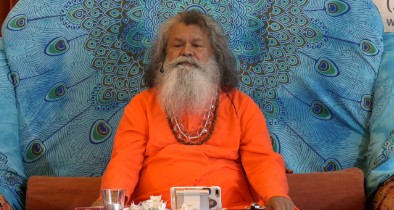
An evening satsang on the oneness of life, contrasting human existence with the natural world.
"Perhaps it is a prayer. They are giving out happiness."
"God gave them some knowledge, just nature, and they are following it."
The speaker observes the innate joy and wisdom in birds and ants, using them to reflect on human discontent and complexity. He explores themes of the singular life force (jīva) within all creatures, the spiritual concepts of ātmā and paramātmā, and the karmic responsibilities within family and marriage. The talk weaves between nature observations, spiritual philosophy, and social commentary, concluding with a bhajan.
Filming location: Vép, Hungary
Harmonious life and successful sadhana
13:15 - 14:54 (99 min)
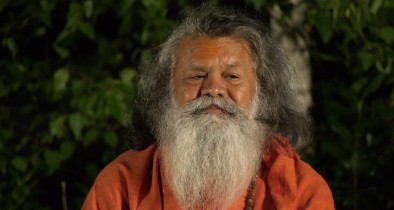
A spiritual discourse on harmonizing family life with spiritual practice (sādhanā) and the challenges of the modern mind.
"The most crucial starting point is learning to be in the present. This is the foundation of sādhanā: to emerge from the past, let go of the future, and sit quietly in the present."
"When 'I' am important, life becomes hell. When 'you' are important, life is heaven."
Swami Gulabpuri (Gulābjī) addresses a seminar, examining how distractions like mobile phones and ego-driven expectations disrupt concentration and family harmony. He explains the need to live in the present, reduce the sense of "I," and perform selfless duty (dharma) as the foundation for spiritual progress. Following his talk, Swami Vivekpuri and then the presiding Swamiji share closing reflections, emphasizing personal transformation, non-violence (ahiṃsā), and the value of selfless service within the spiritual community.
Filming location: Strilky, Czech Republic
Human being is miraculous - Yoga Practice
15:00 - 16:32 (92 min)
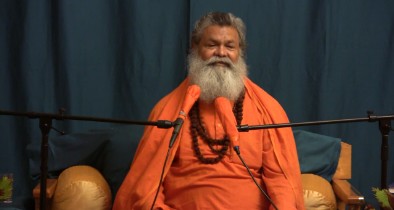
Morning program with Vishwaguruji from Alexandria, Virginia, USA. Folded hands awaken our awareness about real human qualities. Vishwaguruji starts leading practice with remembering: what makes us human?
A hatha yogi is one with Nature
16:40 - 17:35 (55 min)
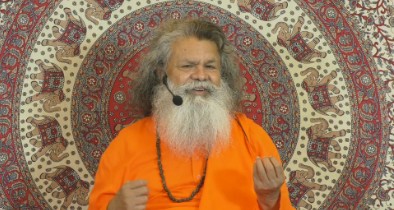
A spiritual talk expanding the concept of Hatha Yoga to include childcare, discipline, and natural healing.
"Discipline is not only for the yogīs. Discipline is not only for humans. Discipline is for all animals."
"The hatha yogī is going with this nature, and we are opposite the nature."
Swami Ji uses anecdotes about infant care, such as proper holding to avoid displacing a collarbone, to illustrate the foundational need for discipline (anuśāsanam). He expands this into principles for life and Hatha Yoga, emphasizing natural remedies, particularly the neem tree, for nervous system health and purification. The talk connects physical well-being to living in harmony with nature, concluding with a mantra.
Filming location: Vép, Hungary
Being a human
17:40 - 18:11 (31 min)
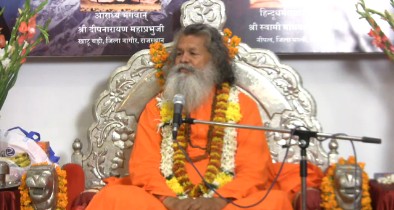
A spiritual discourse on human life, discipline, and the sacred culture of Jaipur.
"When it was established, about four or five hundred meters away, there was a small village called Sodala. From there, you could see a very small cottage, and then there was nothing—only sand and sand and sand."
"In the same way, when the human soul enters into the human body, God gives us freedom, but then we become bound to karma. And that karma is what we call action."
A spiritual teacher addresses devotees at the Shyamnagar ashram in Jaipur. He describes the ashram's founding and extols Jaipur as a sacred city of wisdom and festivals, specifically mentioning the upcoming Śrāvaṇī festival. He discusses the human journey, the importance of following traditional principles (saṃskāras) and discipline, and the inescapable nature of karma and divine awareness, illustrating points with a parable about a disciple, a pigeon, and a story about a king debating diet.
Filming location: Jaipur, Rajasthan, India
Message of the three monkeys
18:15 - 19:21 (66 min)
A spiritual discourse on the universal ātmā and the misuse of the label "fanatic."
"Every ātmā, each and every entity—where there is life, there is ātmā too." "Do not speak badly. If someone tells you something bad, you can either stop them, plug your ears, or don’t give any commentary."
A spiritual teacher leads a satsang, beginning with the principle that the soul (ātmā) exists in all living beings, advocating for respect for all life. The talk then focuses on refuting the negative label of "fanatic," arguing it is often misapplied to genuine devotion, humility, and non-violence. He uses parables, including one about Gandhi, and shares personal anecdotes to illustrate that true spirituality involves seeing good, speaking good, and serving others (seva), while criticizing hypocrisy.
Filming location: Vép, Hungary
Science of development into the Supreme
19:25 - 20:21 (56 min)
Evenining satsang with Vishwaguruji from Garrison, NY, USA. Firstly, we should understand our whole being. For that we need Masters, practice and realize ourselves: Who am I? The best meditation is to come within thyself. There are five bodies or layers accompanying the Soul. Knowledge has no end.
Consciousness and Space
20:25 - 20:57 (32 min)
A spiritual discourse on the non-dual nature of consciousness, using the metaphor of water.
"In reality, space does not expand. Because it has no limitation, nothing that can expand and contract. Similarly, that consciousness."
"Eko'ham, dvitīyo nāsti. I am one. Rest is the duality."
The speaker explores the oneness of Ātmā and Paramātmā, arguing that true consciousness and space are limitless and indivisible. Using analogies of a mālā's thread and the water cycle—from ocean to vapor to rain and back—they illustrate how individual souls (jīvā) appear separate but are fundamentally one. The talk references bhajans by Mahāprabhujī's disciples and concludes with reflections on destiny, karma, and the spiritual path of Kriyā.
Filming location: Prague, Czech Republic
Karma and liberation
21:05 - 21:41 (36 min)
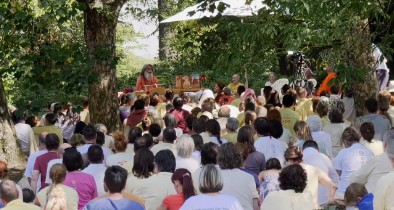
A spiritual discourse on nature, karma, and a prophetic vision of planetary destruction.
"These beautiful trees, which are very, very old, are like our grandparents. And grandparents love more than the parents."
"Humans are now so cruel that they are chopping animals like grass and destroying nature, mountains, and everything. And pollution in the ocean."
Swami Madhvaranji leads a satsang in a forest, speaking on the sacredness of nature, which he calls the "grandparents." He explains the karmic cycles of Svarga and Naraka Loka, emphasizing non-violence and the guru's grace for liberation. He then shares a vivid vision of an impending pralaya (cosmic dissolution), describing how human exploitation like drilling and mining will destabilize the earth, leading to a catastrophic flood. He urges prayer, meditation, and kindness to all creatures.
Filming location: Strilky, Czech Republic
The source of our knowledge is Gurudev
21:45 - 22:45 (60 min)
Morning satsang with Vishwaguruji from Strilky Ashram, Czech Republic. We can't step twice into the same river because the water continues flowing. The source of the water is not the water well, it is coming from the ocean. Similarly, the source of our knowledge is Gurudev. Brahmanandji was very learned and was thinking that he is the best Guru. But, in the presence of Gurudev, the truth becomes clear. There is immense energy, power, and ability residing in the human body.
Overview of practicing yoga
22:50 - 23:38 (48 min)
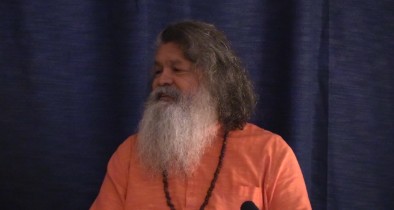
A lecture on the essence and practice of yoga in daily life.
"Yoga in Daily Life has eight steps and is very simple."
"Help is one of the best yogas... your soul, your life, your heart, and your body will bless you."
Swami Maheshwarananda (Swāmījī) delivers a talk on his global "Yoga in Daily Life" system. He clarifies the true meaning of Haṭha Yoga as the six purification techniques (ṣaṭkarma) and outlines the main paths: Karma Yoga (selfless service), Haṭha Yoga, Rāja Yoga, and Jñāna Yoga. He emphasizes daily practice, dedicating time for health and harmony, and explains specific techniques like Netī for sinus health.
Filming location: Auckland, New Zealand
System of the chakras and the sound
23:45 - 0:45 (60 min)
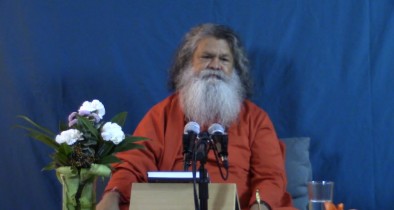
Evening satsang with Vishwaguruji from Vancouver, Canada. Manipur is the center of the system of chakras. There are fifty-two letters in Devanagrik Alphabet. The source of the vibration or the origin of sound is the navel. Practical introduction into the nada yoga by chanting AUM.
American
Australian