
European
Follow the Guruvakyas and practice
0:55 - 1:53 (58 min)
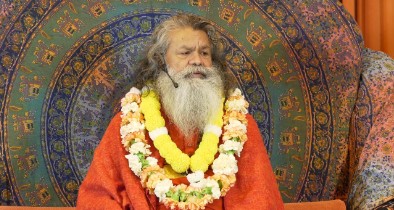
A spiritual discourse on the importance of consistent practice and good company.
"You were listening to what they were singing. It was beautiful. We are all on that path." and "If you are not practicing, you will not have success."
Swami Ji addresses a gathering after an evening of bhajans. He emphasizes that spiritual development comes from regular practice (sādhanā) and the company one keeps, using the proverb Jaisā kare saṅg, vaisā lāge raṅg. He shares personal anecdotes of his early morning practices with his Guru and warns against neglecting discipline, comparing it to medical treatments that only suppress illness if not fully addressed. The talk covers themes of karma, the human lifespan, and the necessity of following the Guru's guidance.
Filming location: Vép, Hungary
Around the world - Yoga against backpain SLO
2:00 - 2:36 (36 min)

A lecture on spinal anatomy, common causes of back pain, and a concise daily yoga routine.
"The most common among all these incorrect postures is this one... we sit every day like this for eight hours at the computer at work."
"One āsana, and ten minutes. Ten minutes. Now you all have to admit that you have ten minutes."
A medical professional delivers a detailed educational talk, explaining spinal structure, the biomechanics of injury from poor posture and lifting, and the development of acute versus chronic pain. He then introduces a preventative ten-minute yoga sequence, demonstrated by an assistant named Lena, which includes stretching, twisting, and strengthening exercises like the cat pose, emphasizing mindful movement to alleviate and prevent spinal issues.
Filming location: Slovenia
Juga Juga Jivo - Gurupurnima 2016
2:40 - 2:46 (6 min)
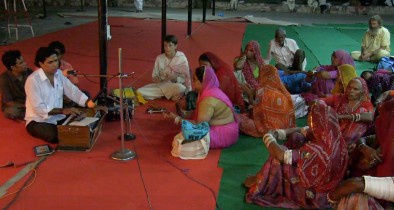
The blessed day of Gurupurnima
2:50 - 3:30 (40 min)
A satsang discourse on the significance of Guru Pūrṇimā.
"Gu means darkness, and ru means light. When the darkness disappears, the light appears."
"Gurudev is the jewel of the Parāś, and the disciple is the iron. When the disciple comes to the Gurudev, he changes from iron into gold."
A speaker explains the cosmic and spiritual importance of Guru Pūrṇimā, describing the Guru as the highest principle and the day as the start of the spiritual year. He discusses the Guru's role in transforming the disciple, shares devotional poetry and bhajans about longing for the master, and uses the analogy of a farmer's harvest to describe how devotees should present their spiritual progress. The talk concludes with blessings for the congregation's spiritual practice.
Filming location: Vép, Hungary
Do not change your Gurudev
3:35 - 4:07 (32 min)
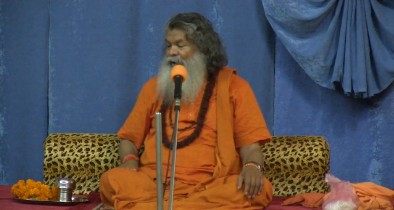
An evening satsang on the necessity of the Guru's grace for liberation.
"Ultimately, the door is opened by the Satguru Dev. It does not matter what you do... But finally, what arrives is solely the Guru's grace: Guru Kṛpāhi Kevalam."
"Therefore, it is said, 'Mokṣa Mūlam Guru Kṛpā.'... if you want to attain mokṣa... then surrender to only the one."
A spiritual teacher delivers a discourse emphasizing that all spiritual practices are secondary to the Guru's grace for achieving liberation. Using stories of Krishna, Paramahaṁsa Rāmakṛṣṇa, and the saint Mīrā Bāī, he illustrates the need for complete surrender to one's master, like a child to a parent, as the sole path to true knowledge and mokṣa.
Filming location: Jadan, Rajasthan, India
A Call for Peace and Self-Realization
4:15 - 5:22 (67 min)
A public lecture on world peace, self-inquiry, and the science of yoga.
"With weapons, with guns, you cannot bring peace. But with flowers, and with love, you can bring peace to the world."
"Nothing belongs to us, says the wise man. The yogīs said, 'Nothing belongs to us. Everything is temporary. Even your body does not belong to you.'"
Swamiji addresses an evening gathering, calling for an end to violence and ignorance through self-realization. He explains the preciousness of human life, the futility of worldly conflict, and the path of yoga as a means to achieve inner and outer peace. The talk covers the nature of the mind, the five bodies, and includes a brief practical demonstration to feel energy in the palms.
Filming location: Croatia
Love is life
5:30 - 6:10 (40 min)
Satsang from Vep, Hungary
We should respect Time
6:15 - 6:46 (31 min)
Evening satsang with Vishwaguruji from Vep, Hungary. The river Alakhnand flows in the Himalaya and connects us with the Supreme. We should respect the Time which was given us to realize our aim. Time doesn’t wait for us. Satsang and improvement in the practice will help. Concentrate on your development instead of saying bad words.
Gurupurnima celebration with Swami Jasraj
6:50 - 7:02 (12 min)
A discourse on the significance of Guru Pūrṇimā and spiritual renewal.
"Guru Pūrṇimā is the day in the year when we look back at what we have done during the past year and offer the fruits of our sādhanā as dakṣiṇā to Gurudev."
"We can have a life and then try to make our spirituality fit around it. Or, our first priority can be our spirituality, our spiritual life, our practice, and our relationship with Swāmījī."
A speaker addresses a gathering on Guru Pūrṇimā, explaining the day as a time for offering the fruits of one's spiritual practice and taking new resolutions. Using analogies like the Tour de France and Apple's design philosophy, the discourse emphasizes structuring one's entire life around the spiritual path, optimizing every aspect to maximize progress. The talk concludes with a reflection on the installation of a Śiva Liṅga and a call to cherish the spiritual opportunity provided by the Guru.
Filming location: India
Gurupurnima Blessing
7:10 - 7:17 (7 min)
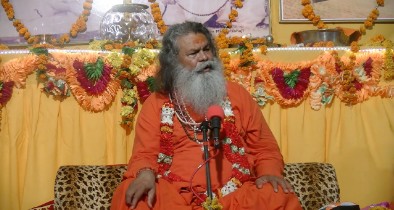
A spiritual discourse on the meaning of Guru Pūrṇimā, extending into social commentary on home cooking.
"'Gu' is darkness, and 'Ru' is the light. It is that light which dispels darkness."
"In this modern world, we cannot survive; we cannot do anything without a Guru. But 'Guru' does not mean only a sādhu or a ṛṣi. It is everything that gives you knowledge: how to drive a car... how to cook."
The speaker explains the traditional meaning of Guru Pūrṇimā as the journey from darkness to light. He then expands the definition of 'Guru' to include any source of practical knowledge, using the example of cooking to argue that modern life has lost essential skills. He criticizes the trend of eating restaurant food, praises the divinity of a mother's home-cooked food, and urges all families to cook at home for health and economy.
Filming location: Jadan, Rajasthan, India
Guru Purnima 2015
7:25 - 7:28 (3 min)
Summary of morning program on the occasion of Gurupurnima 2015 in Vep, Hungary.
Juga Juga Jivo - Gurupurnima 2016
7:35 - 7:41 (6 min)
Respect the family traditions
7:45 - 9:19 (94 min)
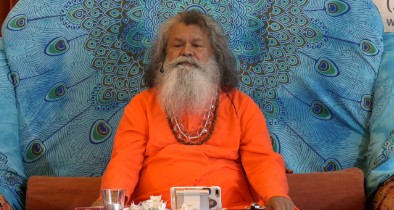
An evening satsang on the oneness of life, contrasting human existence with the natural world.
"Perhaps it is a prayer. They are giving out happiness."
"God gave them some knowledge, just nature, and they are following it."
The speaker observes the innate joy and wisdom in birds and ants, using them to reflect on human discontent and complexity. He explores themes of the singular life force (jīva) within all creatures, the spiritual concepts of ātmā and paramātmā, and the karmic responsibilities within family and marriage. The talk weaves between nature observations, spiritual philosophy, and social commentary, concluding with a bhajan.
Filming location: Vép, Hungary
Message of the three monkeys
9:25 - 10:31 (66 min)
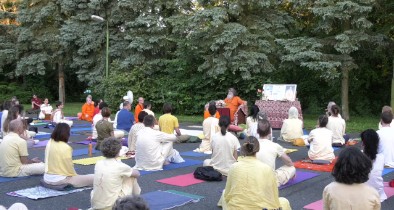
A spiritual discourse on the universal ātmā and the misuse of the label "fanatic."
"Every ātmā, each and every entity—where there is life, there is ātmā too." "Do not speak badly. If someone tells you something bad, you can either stop them, plug your ears, or don’t give any commentary."
A spiritual teacher leads a satsang, beginning with the principle that the soul (ātmā) exists in all living beings, advocating for respect for all life. The talk then focuses on refuting the negative label of "fanatic," arguing it is often misapplied to genuine devotion, humility, and non-violence. He uses parables, including one about Gandhi, and shares personal anecdotes to illustrate that true spirituality involves seeing good, speaking good, and serving others (seva), while criticizing hypocrisy.
Filming location: Vép, Hungary
How universe reflects in the human body
10:35 - 11:56 (81 min)
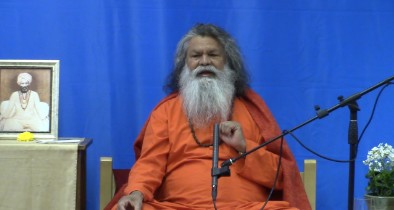
A spiritual talk on health, chakras, and cosmology, incorporating practical exercises.
"These are all energy centers, connected to glands and more. We come to our foot soles and all the centers within them."
"In the Vedas, the Vedas are the first scriptures written. There is one scripture more, written before that, in the Sanskrit language, thousands of years ago."
The lecturer leads a session, beginning with a foot sole rubbing exercise to activate body energy. He explains a chakra system starting from the feet (earth chakra) upward, linking it to health, and prescribes walking on earth or gravel for vitality. The discourse expands into yogic science, discussing the moon's influence, the nature of the soul, and a cosmological narrative of creation involving Śiva, Viṣṇu, and Brahmā, referencing scriptures like the Mahāśiva Purāṇa and Vālmīki Rāmāyaṇa.
Filming location: USA
Chakras are the source of koshas
12:00 - 13:15 (75 min)
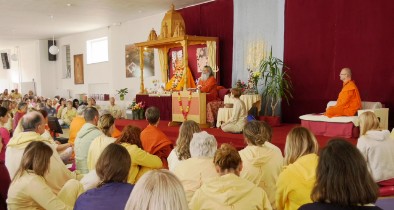
Morning satsang with Vishwaguruji from Strilky Ashram, Czech Republic. God has given us everything to awakening the kundalini. We should maintain these capabilities. Story of a man who made pots by clay. Whatever you do the karma comes back to you good or bad. Story of Gandhi and a child who ate too much sugar. Best samadhi is the fire samadhi. The hair and the nail are in the akasha. Yoga is a human science. Energy is more than the physical body. We need living prana. Prana is life and life is the soul. Do not eat junk food.
Respect the family traditions
13:20 - 14:54 (94 min)
An evening satsang on the oneness of life, contrasting human existence with the natural world.
"Perhaps it is a prayer. They are giving out happiness."
"God gave them some knowledge, just nature, and they are following it."
The speaker observes the innate joy and wisdom in birds and ants, using them to reflect on human discontent and complexity. He explores themes of the singular life force (jīva) within all creatures, the spiritual concepts of ātmā and paramātmā, and the karmic responsibilities within family and marriage. The talk weaves between nature observations, spiritual philosophy, and social commentary, concluding with a bhajan.
Filming location: Vép, Hungary
Morning Yoga practice, Umag, Croatia (9/9)
15:00 - 16:14 (74 min)
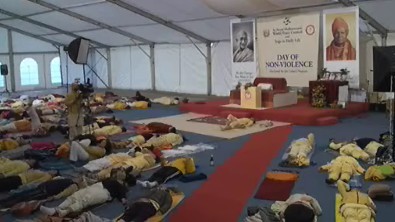
Morning Yoga practice from the international Yoga retreat Umag, Croatia
A hatha yogi is one with Nature
16:20 - 17:15 (55 min)
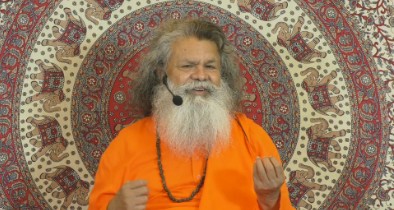
A spiritual talk expanding the concept of Hatha Yoga to include childcare, discipline, and natural healing.
"Discipline is not only for the yogīs. Discipline is not only for humans. Discipline is for all animals."
"The hatha yogī is going with this nature, and we are opposite the nature."
Swami Ji uses anecdotes about infant care, such as proper holding to avoid displacing a collarbone, to illustrate the foundational need for discipline (anuśāsanam). He expands this into principles for life and Hatha Yoga, emphasizing natural remedies, particularly the neem tree, for nervous system health and purification. The talk connects physical well-being to living in harmony with nature, concluding with a mantra.
Filming location: Vép, Hungary
Pranayama and Kundalini
17:20 - 18:32 (72 min)
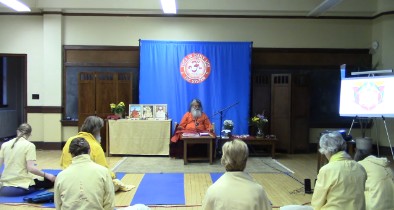
Evenining satsang with Vishwaguruji from Garrison, NY, USA. There are three nadis or nerves that are very important. Different levels of nadi sodhan pranayama should be practiced for about three months after each other. The Soul is in the prison of the elements, closed in the body. After becoming free it follows the destiny.
Message of the three monkeys
18:40 - 19:46 (66 min)
A spiritual discourse on the universal ātmā and the misuse of the label "fanatic."
"Every ātmā, each and every entity—where there is life, there is ātmā too." "Do not speak badly. If someone tells you something bad, you can either stop them, plug your ears, or don’t give any commentary."
A spiritual teacher leads a satsang, beginning with the principle that the soul (ātmā) exists in all living beings, advocating for respect for all life. The talk then focuses on refuting the negative label of "fanatic," arguing it is often misapplied to genuine devotion, humility, and non-violence. He uses parables, including one about Gandhi, and shares personal anecdotes to illustrate that true spirituality involves seeing good, speaking good, and serving others (seva), while criticizing hypocrisy.
Filming location: Vép, Hungary
Pranayama and Kundalini
19:50 - 21:02 (72 min)
Evenining satsang with Vishwaguruji from Garrison, NY, USA. There are three nadis or nerves that are very important. Different levels of nadi sodhan pranayama should be practiced for about three months after each other. The Soul is in the prison of the elements, closed in the body. After becoming free it follows the destiny.
Good and bad destiny and karma
21:10 - 21:56 (46 min)
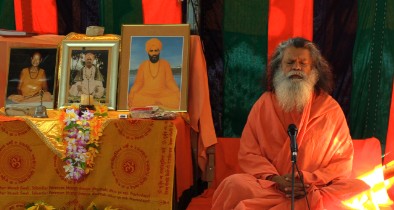
A spiritual discourse on destiny, karma, and religious tradition, incorporating stories and teachings.
"Someone has such a, what we call, good luck, so it comes in your hands... but what you have in yourself, no one can take away. They cannot take your destiny."
"Sanātana Dharma is declared as a living religion, and other religions are dead religions. I would not say death, but finished."
The lecturer leads an evening satsang, exploring the concept of destiny through the lens of karma and consciousness. He narrates a lengthy, illustrative story about the poet Kalidasa, from shepherd to prince to scholar, to demonstrate destiny's unpredictable nature. The talk expands into a comparative discussion of world religions, asserting the perpetual living tradition of Sanātana Dharma in contrast to others he describes as concluded.
Filming location: Australia
System of the chakras and the sound
22:00 - 23:00 (60 min)
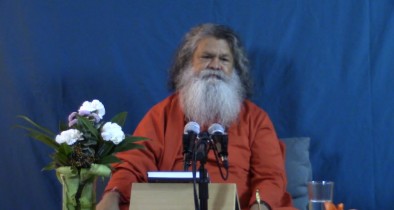
Evening satsang with Vishwaguruji from Vancouver, Canada. Manipur is the center of the system of chakras. There are fifty-two letters in Devanagrik Alphabet. The source of the vibration or the origin of sound is the navel. Practical introduction into the nada yoga by chanting AUM.
Agya Chakra
23:05 - 0:17 (72 min)
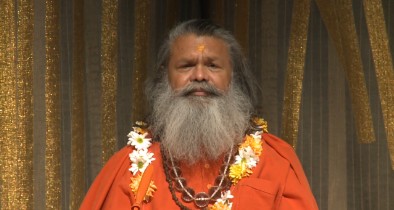
A spiritual lecture on the science of yoga, consciousness, and the Ājñā Chakra.
"Yoga is the science of body, mind, and consciousness. Yoga is something which is beyond our imagination."
"Literally, yoga means balance, harmony, and unity. These three are the main things in the universe."
Swami Gajananda delivers an evening discourse, explaining yoga as the unifying principle of the cosmos, stemming from the divine sound Oṁ. He details the human energy system, focusing on the Ājñā Chakra (the third eye), its significance for spiritual mastery, and methods like Prāṇāyāma to balance it. The talk weaves together cosmology, mythology, and practical guidance, concluding with a tribute to the guru's grace.
Filming location: Prague, Czech Republic
American
Australian