
European
Atma is in every creature
0:30 - 1:32 (62 min)
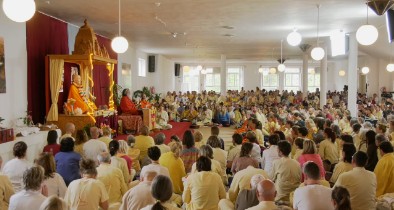
A satsang discourse on spiritual lineage, the nature of the self, and practical wisdom.
"Śrī Guru Ātmā Parāptamā Ho Mātma Puruṣottama, Sakal Jag ke Antaryāmī, Cara Car kī Ātmā Prabhu... in this one line, everything is covered."
"To which doctor will you go? To the doctor in the picture, or to a real, alive doctor?"
Swami Vishwaguruji addresses the gathering, weaving teachings on the essence of the Guru and the universal Ātmā (soul) from the paramparā (lineage) with humorous, practical advice on topics from kingship and knowledge to hair and modern fashion. A disciple then reflects on the profound value of having a living Guru to transmit these teachings.
Filming location: Strilky, Czech Republic
Hatha Yoga is in every kind of Yoga
1:35 - 1:58 (23 min)
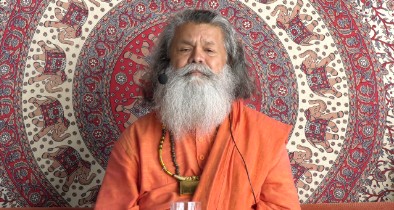
A satsang discourse on the integral and demanding path of Haṭha Yoga.
"If you practice Bhakti Yoga, that is also Haṭha Yoga inside, because you must maintain your devotion continuously; it should not decrease but increase."
"So, bhakti yoga cannot be successful without haṭha yoga. And then it must be what we call the real devotion. That is a test. The heart has to be very pure."
The speaker explains that true spiritual devotion (bhakti) requires the steadfastness and discipline of Haṭha Yoga, using analogies of an airplane's smooth ascent and the steady flight of a swan contrasted with a noisy crow. He illustrates this with a story of a young girl, Karmabai, whose forceful and pure devotion compelled Lord Krishna to accept her offering, demonstrating that genuine love demands unwavering resolve. The talk concludes that all yoga paths are included within this disciplined approach.
Filming location: Vép, Hungary
Around The World - Vegetarianism and top sport, Part 1
2:00 - 2:24 (24 min)

A practical cooking demonstration and discussion on vegetarian nutrition for athletes from a yogic perspective.
"In our yoga tradition, everyone is vegetarian for moral reasons. For us, ahiṃsā paramo dharma—non-injury is the highest duty."
"The foundation of healthy vegetarian cooking is quality ingredients... Higher quality food is better utilized by the body, yielding better results."
Swami Avatarpuri, in the kitchen of Sridev Purījī Ashrama, explains the principles of a vegetarian diet tailored for elite sports performance. He emphasizes digestibility, energy provision, and muscle support, highlighting key ingredients like whole grains, tofu, and legumes. The talk covers the medicinal use of spices like turmeric and cumin, addresses protein and vitamin sources, and concludes by framing vegetarianism as a complete and health-supporting lifestyle rooted in the principle of non-harm.
Filming location: Zagreb, Croatia
Unity
2:30 - 3:16 (46 min)
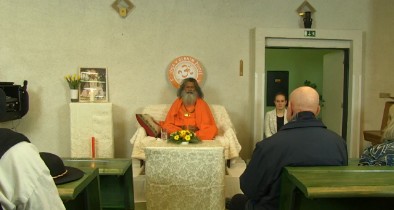
A public lecture on yoga and the purpose of human life.
"Yoga means union, oneness. Where there is duality, there is fighting. Where there is unity, there is peace, harmony, and God-consciousness."
"God gave us happiness for free... So why do we not search within us and become happy? And for that, there is yoga."
His Holiness Vishwaguruji Mahamandaleshwara Swami Maheshvarananda delivers a lecture after an 18-year absence, exploring the goal of human life as union with the formless, omnipresent God. He explains the holistic yoga path—from physical postures and breath control to concentration and the necessity of guided meditation—using parables and emphasizing that happiness and peace are already within. The talk concludes with a blessing for a happy and healthy life.
Filming location: Czech Republic
The fruit of immortality
3:20 - 4:11 (51 min)
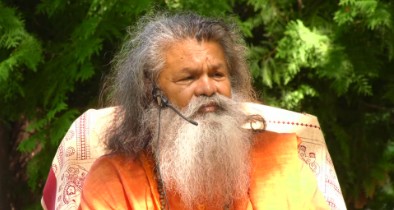
A spiritual discourse on the paradox of vairāgya (dispassion) and renunciation.
"You are the luckiest ones, for you have not yet attained Self-Realization. After Realization, life is completely different."
"Without satsaṅg (holy company), there is no vairāgya. You cannot attain vairāgya without satsaṅg."
Swami Madhavananda (Devpuriji) leads a satsang exploring the difficult nature of true dispassion. He explains that vairāgya is essential for a renunciate but warns it is fragile without the support of spiritual community. Using teachings from Shankaracharya and a detailed parable about a king, a magical fruit, and a chain of betrayals, he illustrates how worldly attachments prevent liberation and how profound disappointment can itself become a catalyst for renunciation. The talk also covers the significance of proper rituals for homes and temples.
Filming location: Vép, Hungary
You become that
4:00 - 5:13 (73 min)
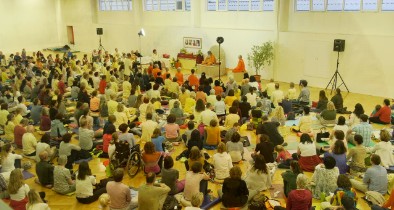
Evening satsang with Vishwaguruji from Ljubljana, Slovenia. There are three tattwas in our body tamas, rajas and sattva. We can cross the ocean of worldly life with the energy of mantras and bhajans. Explanation of mantra Om Namo Sri Prabu Deep Narayanam. Energy and wisdom are in the nail of the big toe of the Master. Human lost the love towards the earth. Vedas know the length of the Sun's life. Nowadays there are less positive and more negative forces. A story about Visnu and a rishi. A story about a Master who had a problem with his heart and his disciple. Explanation of bhajan I will be thine always.
Build your intellect supportive
4:15 - 5:31 (76 min)
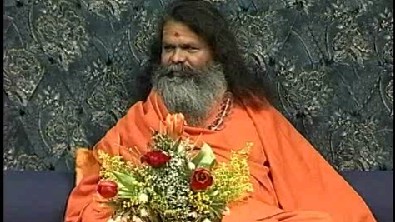
A spiritual discourse on maintaining clarity of purpose and guarding against negative influences.
"Your aim should be clear. Nothing can change me. The sun and moon can change their direction, but I will not change my direction."
"One stupid thought, one stupid person can destroy all your spiritual sādhanā, which you made years and years long with great confidence and with great love."
Swami Ji addresses the community, explaining how a lack of clear aim allows the intellect to be distracted and how negative gossip and jealousy can spoil one's spiritual practice, like lemon curdling milk. He narrates the story of Nārada creating doubt between Śiva and Pārvatī to illustrate the destructive power of negative talk, and emphasizes the need for humility, love, and avoiding harmful company to protect one's spiritual progress.
Filming location: Vép, Hungary
Unity
5:35 - 6:21 (46 min)
A public lecture on yoga and the purpose of human life.
"Yoga means union, oneness. Where there is duality, there is fighting. Where there is unity, there is peace, harmony, and God-consciousness."
"God gave us happiness for free... So why do we not search within us and become happy? And for that, there is yoga."
His Holiness Vishwaguruji Mahamandaleshwara Swami Maheshvarananda delivers a lecture after an 18-year absence, exploring the goal of human life as union with the formless, omnipresent God. He explains the holistic yoga path—from physical postures and breath control to concentration and the necessity of guided meditation—using parables and emphasizing that happiness and peace are already within. The talk concludes with a blessing for a happy and healthy life.
Filming location: Czech Republic
The Yogic Anatomy and Practice
6:25 - 7:39 (74 min)
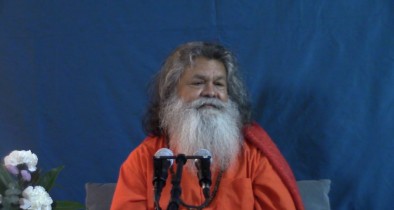
An evening satsang on Kundalini, chakras, and the layers of human existence.
"Humans can realize that energy which God is."
"God is not to be seen here as physical in front of us... God is in you, God is in me, but it is hidden within ourselves."
The lecturer leads a discourse exploring the subtle body, the five kośas (sheaths), and the path of yoga. He begins with a participatory exercise on locating the soul, discusses the 72,000 nerve systems and chakras, and outlines various yoga paths including Hatha, Karma, and Jñāna Yoga. The talk weaves in practical advice, analogies, and traditional teachings, emphasizing self-realization and the divine within.
Filming location: Vancouver, Canada
Relation of the Master and disciple
7:45 - 8:54 (69 min)
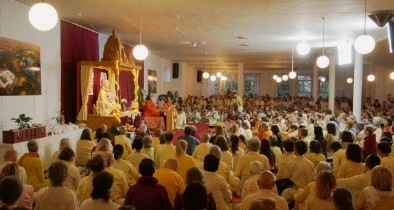
A discourse on the essence of worship and the guru principle.
"Ārādhya means that God or that Master whom we are worshipping."
"Guru Brahma, Guru Viṣṇu, Guru Devo Maheśvara, Guru Sākṣāt Parabrahma, therefore Guru is that Parabrahma."
The lecturer explains the meaning of "Ārādhya" as the personal deity or master one worships, emphasizing the underlying unity of all genuine spiritual paths. He elaborates on the Guru Tattva (guru principle) through the mantra "Guru Brahma, Guru Vishnu, Guru Devo Maheshvara," describing the guru as the source of knowledge (Brahma), protection (Vishnu), and liberation (Shiva). The talk includes parables, such as the story of a monkey destroying a bird's nest out of ego, to illustrate the importance of receiving knowledge with humility and the necessity of a living guru-disciple relationship within a true paramparā (lineage).
Filming location: Strilky, Czech Republic
Purify your body from poison
9:00 - 10:14 (74 min)
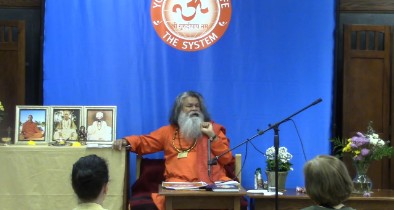
An evening discourse on the Kuṇḍalinī, chakras, and the nature of happiness.
"Happiness is within ourselves. Peace is within ourselves. And unhappiness is from outside."
"It is said that in life, when we walk... beside you is walking your death. You can see it is like the shadow, the shadow of your body."
The speaker explores the sources of happiness and suffering, using the parable of a couple's 50-year misunderstanding over a piece of bread to illustrate how unspoken grievances create internal poison. He connects this to the Viśuddhi (throat) chakra, explaining its role in purification and relating it to the myth of Śiva drinking the ocean's poison. The talk emphasizes communication, forgiveness, and daily practices like prāṇāyāma to cleanse negativity and prevent physical and emotional ailments.
Filming location: Garrison, NY, USA
The fruit of immortality
10:20 - 11:11 (51 min)
A spiritual discourse on the paradox of vairāgya (dispassion) and renunciation.
"You are the luckiest ones, for you have not yet attained Self-Realization. After Realization, life is completely different."
"Without satsaṅg (holy company), there is no vairāgya. You cannot attain vairāgya without satsaṅg."
Swami Madhavananda (Devpuriji) leads a satsang exploring the difficult nature of true dispassion. He explains that vairāgya is essential for a renunciate but warns it is fragile without the support of spiritual community. Using teachings from Shankaracharya and a detailed parable about a king, a magical fruit, and a chain of betrayals, he illustrates how worldly attachments prevent liberation and how profound disappointment can itself become a catalyst for renunciation. The talk also covers the significance of proper rituals for homes and temples.
Filming location: Vép, Hungary
The Yogic Anatomy and Practice
11:15 - 12:29 (74 min)
An evening satsang on Kundalini, chakras, and the layers of human existence.
"Humans can realize that energy which God is."
"God is not to be seen here as physical in front of us... God is in you, God is in me, but it is hidden within ourselves."
The lecturer leads a discourse exploring the subtle body, the five kośas (sheaths), and the path of yoga. He begins with a participatory exercise on locating the soul, discusses the 72,000 nerve systems and chakras, and outlines various yoga paths including Hatha, Karma, and Jñāna Yoga. The talk weaves in practical advice, analogies, and traditional teachings, emphasizing self-realization and the divine within.
Filming location: Vancouver, Canada
Relation of the Master and disciple
12:35 - 13:44 (69 min)
A discourse on the essence of worship and the guru principle.
"Ārādhya means that God or that Master whom we are worshipping."
"Guru Brahma, Guru Viṣṇu, Guru Devo Maheśvara, Guru Sākṣāt Parabrahma, therefore Guru is that Parabrahma."
The lecturer explains the meaning of "Ārādhya" as the personal deity or master one worships, emphasizing the underlying unity of all genuine spiritual paths. He elaborates on the Guru Tattva (guru principle) through the mantra "Guru Brahma, Guru Vishnu, Guru Devo Maheshvara," describing the guru as the source of knowledge (Brahma), protection (Vishnu), and liberation (Shiva). The talk includes parables, such as the story of a monkey destroying a bird's nest out of ego, to illustrate the importance of receiving knowledge with humility and the necessity of a living guru-disciple relationship within a true paramparā (lineage).
Filming location: Strilky, Czech Republic
Turn Kaliyuga into Satyayuga
13:50 - 14:52 (62 min)
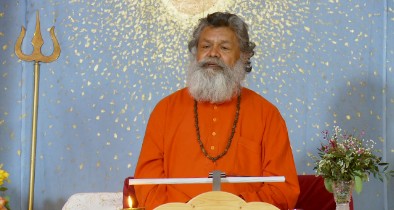
A spiritual discourse on dharma, yoga, and conscious living.
"Life is not a question of what we do, what we have, what we acquire, but a state of completion, a state of contentment."
"The presence of dharma on this earth has brought duality and fighting: anger, hate, jealousy."
The speaker delivers a wide-ranging talk, using parables and teachings to explore the nature of life as a play of duality and the path of dharma. He discusses the obstacles of ego and illusion, the universal principles of yoga for health and harmony, and the urgent need for ethical and spiritual education for children to foster environmental care, family unity, and peace. The talk concludes with an emphasis on yoga as a practical science for a harmonious life.
Practicing of the system 'Yoga in Daily Life', Level 1 - Part 4
15:00 - 16:04 (64 min)
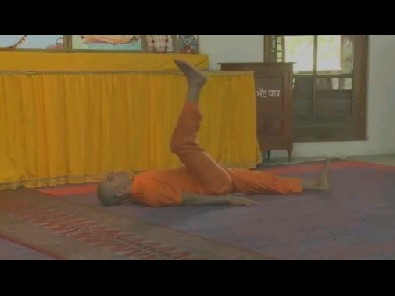
Practicing of the system "Yoga in Daily Life", Level 1 - Part 4, in Om Vishwa Deep Gurukul Swami Maheshwaranand Ashram, Jadan, Rajasthan, India on 23rd of October 2009.
The Essence of the Vedas and the Generosity of Nature
16:10 - 17:07 (57 min)
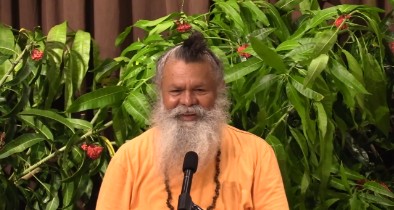
A closing satsang and farewell address at a yoga retreat in Fiji.
"If you give good things, comfort, pleasure, and help in every aspect to every creature... good will come back to you."
"Look at this tree, this coconut, the tiny grass on earth. You do not know the power it holds as an herb."
Swami Avatarpuri (Swāmījī) distills the essence of Vedic philosophy into the principle of karma, using the selfless generosity of nature—a lake (Sarvar), a tree (Tarvar), a saint, and the rain—as a teaching metaphor. He shares a story about a healing herb, advises students to deeply integrate their retreat experiences before teaching others, and leads a final blessing. A student then expresses gratitude on behalf of all attendees, thanking the Swami, the staff, and the Fijian community.
Filming location: Fiji Islands
Keep the original message of Yoga
17:15 - 18:43 (88 min)
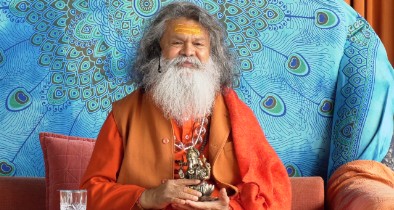
Morning satsang with Vishwaguruji from Vep, Hungary. We worship the Moon, the Sun and all of the creatures. One in All - the Jiva is everywhere. The speech of the Ambassador of India to Hungary Mr. Kumar Tuhin. It is important to keep the original message of the Yoga. It is Sanatana Dharma, India is the cradle of culture. If we are doing only physical asanas we are not going to be successful at all. Sanatana Dharma stands above the duality. Ayurveda and yoga are much elder than five thousand years.
Bhakti Yoga
18:50 - 19:39 (49 min)
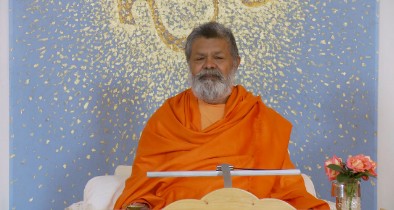
Evening Satsang with Sri Vishwaguru Mahamandaleshwar Paramhans Swami Maheshwarananda from Strilky Ashram, Czech Republic.
Chakras are the source of koshas
19:45 - 21:00 (75 min)
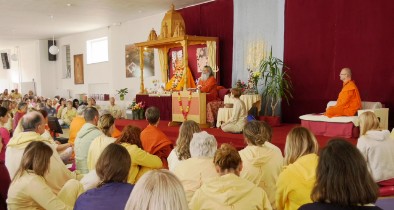
Morning satsang with Vishwaguruji from Strilky Ashram, Czech Republic. God has given us everything to awakening the kundalini. We should maintain these capabilities. Story of a man who made pots by clay. Whatever you do the karma comes back to you good or bad. Story of Gandhi and a child who ate too much sugar. Best samadhi is the fire samadhi. The hair and the nail are in the akasha. Yoga is a human science. Energy is more than the physical body. We need living prana. Prana is life and life is the soul. Do not eat junk food.
The first wealth is health
21:05 - 21:54 (49 min)
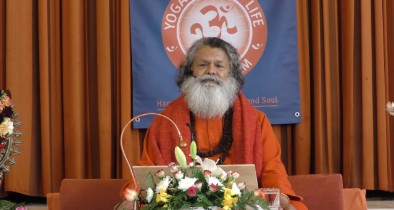
Morning satsang with Vishwaguruji from Vep, Hungary. This lecture explains what is important to our life.The first happiness is a healthy body. Money is also important up to a certain extent, to buy the things that are really needed. Mutual understanding in the household is a great fortune as well.
Peace Tree planting in Villach
22:00 - 22:17 (17 min)
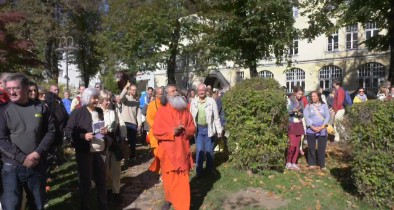
A spiritual ceremony for the planting of a "Peace Tree" in a park.
"You have chosen the tree well. It will be beautiful. It has a long life, right? About 350 years at least."
"This tree is peace. Second is nonviolence. Nonviolence, let's say ahiṁsā, please, nonviolence, and we need that very much."
A spiritual teacher, accompanied by a group, dedicates a newly planted tree as a "Peace Tree." After reading a German peace prayer attached to the tree, the leader chants mantras for peace (Oṁ Śānti) and universal well-being, and explains the tree's symbolism as a steadfast, parental presence representing peace and nonviolence. He blesses the tree, suggesting positive wishes made while circling it may be fulfilled, and declares it a spiritual center or "navel." The event concludes with a group photo and final blessings.
Filming location: Austria
Yagya
22:25 - 23:24 (59 min)
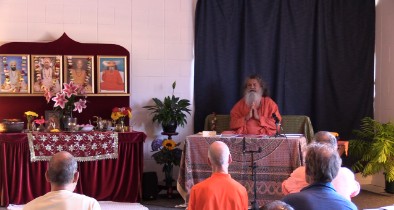
A spiritual discourse on marriage, dharma, and spiritual practice.
"Thus, it is said that for a yajña, you must have a couple, a husband and wife. But husband and wife must be very sympathetic."
"Therefore, it is said there that you have to promise. Promise—promise—it does not matter which religion. In every religion there is the promise, and you cannot break your promise."
Swami Ji addresses a gathering, weaving together themes of the sacred marital bond, its significance for spiritual practice like yajña, and the cosmic principles of dharma and justice (Dharmarāja). He cautions against breaking marital vows, discusses the roles of guru and disciple, and critiques certain modern religious practices. The talk includes practical announcements for an upcoming ceremony and concludes with an invitation to support the new ashram.
Filming location: Auckland, New Zealand
Avoid manipulated products
23:30 - 0:48 (78 min)
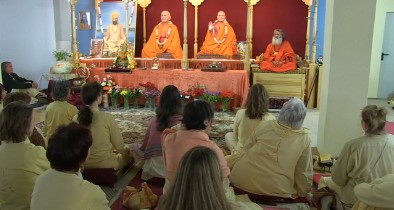
A satsang discourse on the roots of ill health and the supreme value of spiritual community.
"98% of us do not live healthily. So what shall we expect? Our body is suffering. Our mind is suffering."
"Lucky are those who can come to satsaṅg. And unlucky are those who cannot come. Satsaṅg is so pleasant."
The lecturer addresses the gathering, analyzing modern causes of disease from artificial food and polluted water to the manipulation of animals and crops. He stresses the need for disciplined control of the senses, particularly taste. The discourse culminates in a lengthy parable about the ṛṣis Viśvāmitra and Vasiṣṭha, illustrating through a divine test that the blessings of one minute in satsang are more powerful than 62,000 years of solitary tapasyā (austerities).
Filming location: Vienna, Austria
American
Australian