
European
The Essence of the Vedas and the Generosity of Nature
0:05 - 1:02 (57 min)
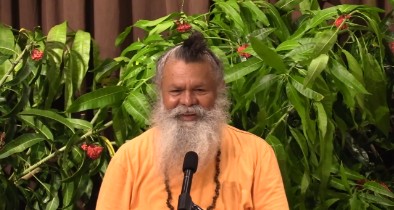
A closing satsang and farewell address at a yoga retreat in Fiji.
"If you give good things, comfort, pleasure, and help in every aspect to every creature... good will come back to you."
"Look at this tree, this coconut, the tiny grass on earth. You do not know the power it holds as an herb."
Swami Avatarpuri (Swāmījī) distills the essence of Vedic philosophy into the principle of karma, using the selfless generosity of nature—a lake (Sarvar), a tree (Tarvar), a saint, and the rain—as a teaching metaphor. He shares a story about a healing herb, advises students to deeply integrate their retreat experiences before teaching others, and leads a final blessing. A student then expresses gratitude on behalf of all attendees, thanking the Swami, the staff, and the Fijian community.
Filming location: Fiji Islands
Value of Satsang and practicing
1:10 - 2:03 (53 min)
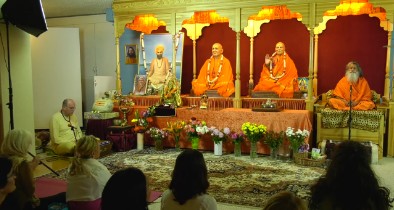
A satsang discourse on the rarity of spiritual community and the foundational science of yoga.
"Sant Samāgam Hari Kathā... these are rare."
"Yoga is that science whose original seed... is Śiva."
The lecturer leads a satsang in Vienna, emphasizing the preciousness of such spiritual gatherings. He explores yoga as a divine science, explaining how the Sanskrit alphabet resonates within the body's chakras and discussing the origins of consciousness as the union of Śiva and Śakti. The talk covers the importance of balanced practice, the nature of mental impurities (vikāras), and the karmic consequences of thought and action.
Filming location: Vienna, Austria
Atma is in every creature
2:10 - 3:12 (62 min)
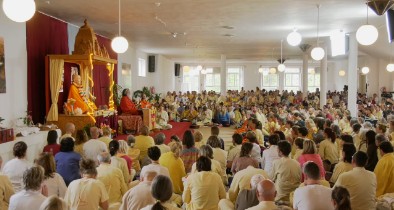
A satsang discourse on spiritual lineage, the nature of the self, and practical wisdom.
"Śrī Guru Ātmā Parāptamā Ho Mātma Puruṣottama, Sakal Jag ke Antaryāmī, Cara Car kī Ātmā Prabhu... in this one line, everything is covered."
"To which doctor will you go? To the doctor in the picture, or to a real, alive doctor?"
Swami Vishwaguruji addresses the gathering, weaving teachings on the essence of the Guru and the universal Ātmā (soul) from the paramparā (lineage) with humorous, practical advice on topics from kingship and knowledge to hair and modern fashion. A disciple then reflects on the profound value of having a living Guru to transmit these teachings.
Filming location: Strilky, Czech Republic
Yagya
3:20 - 4:19 (59 min)
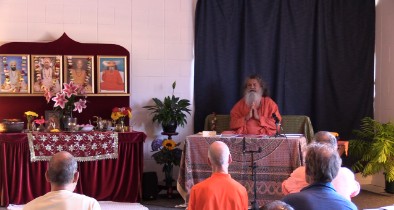
A spiritual discourse on marriage, dharma, and spiritual practice.
"Thus, it is said that for a yajña, you must have a couple, a husband and wife. But husband and wife must be very sympathetic."
"Therefore, it is said there that you have to promise. Promise—promise—it does not matter which religion. In every religion there is the promise, and you cannot break your promise."
Swami Ji addresses a gathering, weaving together themes of the sacred marital bond, its significance for spiritual practice like yajña, and the cosmic principles of dharma and justice (Dharmarāja). He cautions against breaking marital vows, discusses the roles of guru and disciple, and critiques certain modern religious practices. The talk includes practical announcements for an upcoming ceremony and concludes with an invitation to support the new ashram.
Filming location: Auckland, New Zealand
Relation of the Master and disciple
4:25 - 5:34 (69 min)
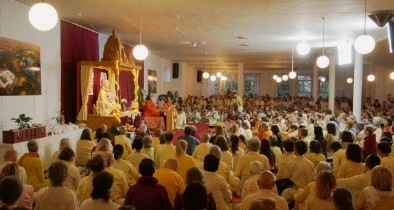
A discourse on the essence of worship and the guru principle.
"Ārādhya means that God or that Master whom we are worshipping."
"Guru Brahma, Guru Viṣṇu, Guru Devo Maheśvara, Guru Sākṣāt Parabrahma, therefore Guru is that Parabrahma."
The lecturer explains the meaning of "Ārādhya" as the personal deity or master one worships, emphasizing the underlying unity of all genuine spiritual paths. He elaborates on the Guru Tattva (guru principle) through the mantra "Guru Brahma, Guru Vishnu, Guru Devo Maheshvara," describing the guru as the source of knowledge (Brahma), protection (Vishnu), and liberation (Shiva). The talk includes parables, such as the story of a monkey destroying a bird's nest out of ego, to illustrate the importance of receiving knowledge with humility and the necessity of a living guru-disciple relationship within a true paramparā (lineage).
Filming location: Strilky, Czech Republic
Chakras and the Kundalini
5:40 - 6:39 (59 min)
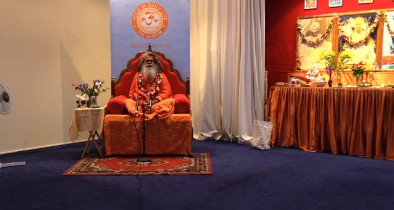
A spiritual discourse on the science of chakras and kuṇḍalinī.
"Yoga is the science of humans. Yoga is the first creation."
"Kuṇḍalinī and cakra science is a great... and we will come tomorrow."
Swami Ji addresses an evening gathering, introducing the profound subjects of chakras and kuṇḍalinī as part of the science of yoga. He explains these concepts through metaphors of resonance, the elements, and the oneness of the soul, while also discussing how emotional and psychological tensions manifest as physical ailments in specific energy centers. The talk promises a detailed exploration over the coming days.
Filming location: Wellington, New Zealand
Maya is a big cheater
6:45 - 7:57 (72 min)
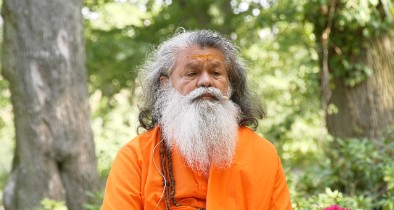
A spiritual discourse weaving astrology, philosophy, and cautionary tales about illusion.
"God or the Sun does not make a difference between humans and animals. So do not think the sun is only for us; that is human thinking."
"Māyā is illusion. Such an illusion that you think that is all. I cannot be without this: my money, my wife, my husband."
Swami Maheshvaranand leads a morning satsang, beginning with the astrological significance of the day. He discusses planetary influences on all life, the importance of discerning auspicious signs, and the pervasive, deceptive power of Māyā (illusion), illustrated with the parable of a deadly snake. He explores liberation through the teachings of Kabīr and Maṅgīlālji, emphasizing sādhanā and transcending duality to merge with Brahman, thus escaping the cycle of rebirth and even the great dissolution (Mahāpralaya). The talk includes a story about Kabīr witnessing a grinding mill, and concludes with a devotee sharing a testimony about a charitable school project.
Filming location: Strilky, Czech Republic
The first wealth is health
8:05 - 8:54 (49 min)
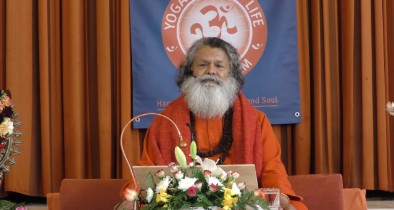
Morning satsang with Vishwaguruji from Vep, Hungary. This lecture explains what is important to our life.The first happiness is a healthy body. Money is also important up to a certain extent, to buy the things that are really needed. Mutual understanding in the household is a great fortune as well.
Maya is a big cheater
9:00 - 10:12 (72 min)
A spiritual discourse weaving astrology, philosophy, and cautionary tales about illusion.
"God or the Sun does not make a difference between humans and animals. So do not think the sun is only for us; that is human thinking."
"Māyā is illusion. Such an illusion that you think that is all. I cannot be without this: my money, my wife, my husband."
Swami Maheshvaranand leads a morning satsang, beginning with the astrological significance of the day. He discusses planetary influences on all life, the importance of discerning auspicious signs, and the pervasive, deceptive power of Māyā (illusion), illustrated with the parable of a deadly snake. He explores liberation through the teachings of Kabīr and Maṅgīlālji, emphasizing sādhanā and transcending duality to merge with Brahman, thus escaping the cycle of rebirth and even the great dissolution (Mahāpralaya). The talk includes a story about Kabīr witnessing a grinding mill, and concludes with a devotee sharing a testimony about a charitable school project.
Filming location: Strilky, Czech Republic
The Yogic Anatomy and Practice
10:20 - 11:34 (74 min)
An evening satsang on Kundalini, chakras, and the layers of human existence.
"Humans can realize that energy which God is."
"God is not to be seen here as physical in front of us... God is in you, God is in me, but it is hidden within ourselves."
The lecturer leads a discourse exploring the subtle body, the five kośas (sheaths), and the path of yoga. He begins with a participatory exercise on locating the soul, discusses the 72,000 nerve systems and chakras, and outlines various yoga paths including Hatha, Karma, and Jñāna Yoga. The talk weaves in practical advice, analogies, and traditional teachings, emphasizing self-realization and the divine within.
Filming location: Vancouver, Canada
Relation of the Master and disciple
11:40 - 12:49 (69 min)
A discourse on the essence of worship and the guru principle.
"Ārādhya means that God or that Master whom we are worshipping."
"Guru Brahma, Guru Viṣṇu, Guru Devo Maheśvara, Guru Sākṣāt Parabrahma, therefore Guru is that Parabrahma."
The lecturer explains the meaning of "Ārādhya" as the personal deity or master one worships, emphasizing the underlying unity of all genuine spiritual paths. He elaborates on the Guru Tattva (guru principle) through the mantra "Guru Brahma, Guru Vishnu, Guru Devo Maheshvara," describing the guru as the source of knowledge (Brahma), protection (Vishnu), and liberation (Shiva). The talk includes parables, such as the story of a monkey destroying a bird's nest out of ego, to illustrate the importance of receiving knowledge with humility and the necessity of a living guru-disciple relationship within a true paramparā (lineage).
Filming location: Strilky, Czech Republic
The first wealth is health
12:55 - 13:44 (49 min)
Morning satsang with Vishwaguruji from Vep, Hungary. This lecture explains what is important to our life.The first happiness is a healthy body. Money is also important up to a certain extent, to buy the things that are really needed. Mutual understanding in the household is a great fortune as well.
Atma is in every creature
13:50 - 14:52 (62 min)
A satsang discourse on spiritual lineage, the nature of the self, and practical wisdom.
"Śrī Guru Ātmā Parāptamā Ho Mātma Puruṣottama, Sakal Jag ke Antaryāmī, Cara Car kī Ātmā Prabhu... in this one line, everything is covered."
"To which doctor will you go? To the doctor in the picture, or to a real, alive doctor?"
Swami Vishwaguruji addresses the gathering, weaving teachings on the essence of the Guru and the universal Ātmā (soul) from the paramparā (lineage) with humorous, practical advice on topics from kingship and knowledge to hair and modern fashion. A disciple then reflects on the profound value of having a living Guru to transmit these teachings.
Filming location: Strilky, Czech Republic
Practicing Yoga Asanas
15:00 - 15:41 (41 min)
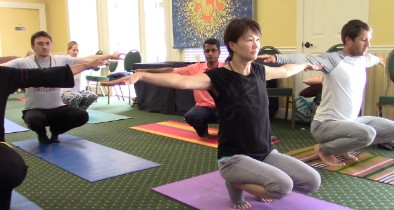
A yoga instruction session focusing on the practice and benefits of Vajrāsana and Vīrāsana.
"This Vajrāsana is designed especially to strengthen or to activate that Vajra Nāḍī."
"This will repair our digestion. This will repair our headache problems, also many, many things. This looks very simple, but it is very powerful."
An instructor guides students through the physical postures of Vajrāsana (thunderbolt pose) and Vīrāsana (hero pose), explaining their effects on the Vajra Nāḍī energy channel, digestion, and sciatic nerve. The session includes detailed alignment instructions, benefits for concentration and alertness, and transitions into other balancing postures and a forward bend before concluding.
Filming location: USA
Attachment towards God
15:45 - 16:29 (44 min)
A spiritual discourse on the nature of sacred attachment and family.
"Attachment is something which is great. The one attachment I am talking about is the oneness that lasts till eternity. It is like the attachment of a river to the ocean."
"This is real yoga. Yoga means union, oneness. Separation means no yoga. Husband and wife can become great, like a god."
The lecturer addresses the community, redefining attachment not as a worldly flaw but as a divine, eternal bond, using the metaphor of a river flowing to the ocean. He emphasizes the spiritual importance of lasting family unity, criticizes separation for the sake of children, and expands the discussion to include attachment to God, ancestors, and the universal presence of the divine across cultures. He illustrates this with stories from his travels to Cuba and Fiji.
Filming location: Strilky, Czech Republic
The Essence of the Vedas and the Generosity of Nature
16:35 - 17:32 (57 min)
A closing satsang and farewell address at a yoga retreat in Fiji.
"If you give good things, comfort, pleasure, and help in every aspect to every creature... good will come back to you."
"Look at this tree, this coconut, the tiny grass on earth. You do not know the power it holds as an herb."
Swami Avatarpuri (Swāmījī) distills the essence of Vedic philosophy into the principle of karma, using the selfless generosity of nature—a lake (Sarvar), a tree (Tarvar), a saint, and the rain—as a teaching metaphor. He shares a story about a healing herb, advises students to deeply integrate their retreat experiences before teaching others, and leads a final blessing. A student then expresses gratitude on behalf of all attendees, thanking the Swami, the staff, and the Fijian community.
Filming location: Fiji Islands
Value of Satsang and practicing
17:40 - 18:33 (53 min)
A satsang discourse on the rarity of spiritual community and the foundational science of yoga.
"Sant Samāgam Hari Kathā... these are rare."
"Yoga is that science whose original seed... is Śiva."
The lecturer leads a satsang in Vienna, emphasizing the preciousness of such spiritual gatherings. He explores yoga as a divine science, explaining how the Sanskrit alphabet resonates within the body's chakras and discussing the origins of consciousness as the union of Śiva and Śakti. The talk covers the importance of balanced practice, the nature of mental impurities (vikāras), and the karmic consequences of thought and action.
Filming location: Vienna, Austria
Yagya
18:40 - 19:39 (59 min)
A spiritual discourse on marriage, dharma, and spiritual practice.
"Thus, it is said that for a yajña, you must have a couple, a husband and wife. But husband and wife must be very sympathetic."
"Therefore, it is said there that you have to promise. Promise—promise—it does not matter which religion. In every religion there is the promise, and you cannot break your promise."
Swami Ji addresses a gathering, weaving together themes of the sacred marital bond, its significance for spiritual practice like yajña, and the cosmic principles of dharma and justice (Dharmarāja). He cautions against breaking marital vows, discusses the roles of guru and disciple, and critiques certain modern religious practices. The talk includes practical announcements for an upcoming ceremony and concludes with an invitation to support the new ashram.
Filming location: Auckland, New Zealand
Purify your body from poison
19:45 - 20:59 (74 min)
An evening discourse on the Kuṇḍalinī, chakras, and the nature of happiness.
"Happiness is within ourselves. Peace is within ourselves. And unhappiness is from outside."
"It is said that in life, when we walk... beside you is walking your death. You can see it is like the shadow, the shadow of your body."
The speaker explores the sources of happiness and suffering, using the parable of a couple's 50-year misunderstanding over a piece of bread to illustrate how unspoken grievances create internal poison. He connects this to the Viśuddhi (throat) chakra, explaining its role in purification and relating it to the myth of Śiva drinking the ocean's poison. The talk emphasizes communication, forgiveness, and daily practices like prāṇāyāma to cleanse negativity and prevent physical and emotional ailments.
Filming location: Garrison, NY, USA
Chakras and the Kundalini
21:05 - 22:04 (59 min)
A spiritual discourse on the science of chakras and kuṇḍalinī.
"Yoga is the science of humans. Yoga is the first creation."
"Kuṇḍalinī and cakra science is a great... and we will come tomorrow."
Swami Ji addresses an evening gathering, introducing the profound subjects of chakras and kuṇḍalinī as part of the science of yoga. He explains these concepts through metaphors of resonance, the elements, and the oneness of the soul, while also discussing how emotional and psychological tensions manifest as physical ailments in specific energy centers. The talk promises a detailed exploration over the coming days.
Filming location: Wellington, New Zealand
Believe
22:10 - 23:29 (79 min)
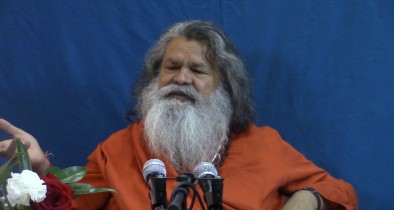
Evening satsang with Vishwaguruji from Vancouver, Canada. Healing power of the mantras. Sooner or later we do believe. God is different for us, but there is only one God. Concentration on the different parts of the body.
Unity
23:35 - 0:21 (46 min)
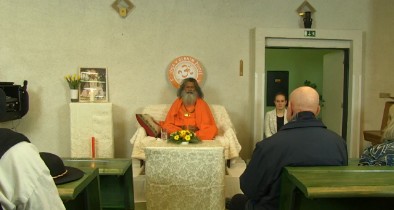
A public lecture on yoga and the purpose of human life.
"Yoga means union, oneness. Where there is duality, there is fighting. Where there is unity, there is peace, harmony, and God-consciousness."
"God gave us happiness for free... So why do we not search within us and become happy? And for that, there is yoga."
His Holiness Vishwaguruji Mahamandaleshwara Swami Maheshvarananda delivers a lecture after an 18-year absence, exploring the goal of human life as union with the formless, omnipresent God. He explains the holistic yoga path—from physical postures and breath control to concentration and the necessity of guided meditation—using parables and emphasizing that happiness and peace are already within. The talk concludes with a blessing for a happy and healthy life.
Filming location: Czech Republic
American
Australian